

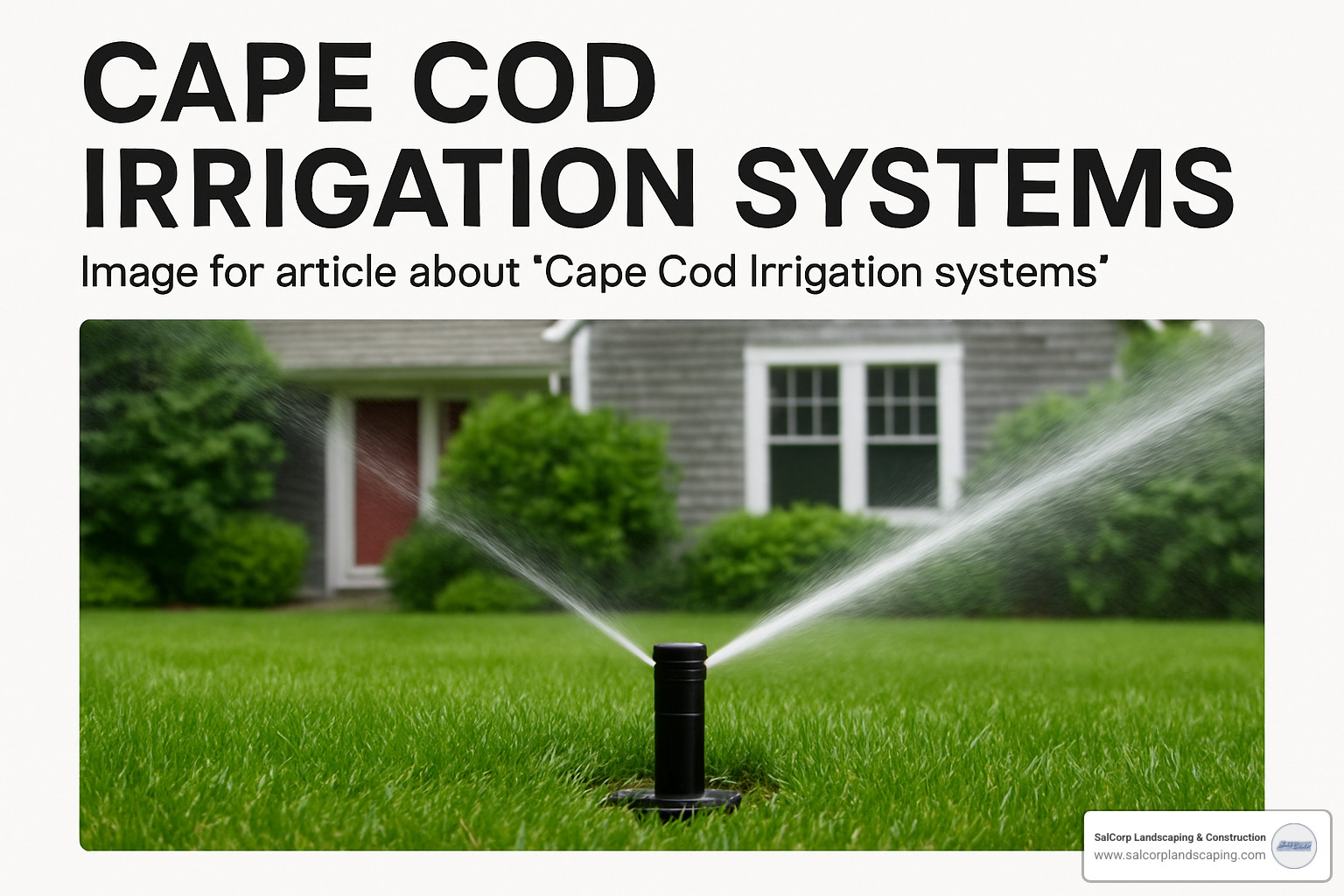
Cape Cod Irrigation Systems: 10 Powerful Ways for Lush Lawns 2025
Keeping Your Cape Cod Lawn Thriving with Professional Irrigation
Looking for reliable Cape Cod irrigation systems providers? Here’s a quick overview of what professional irrigation services typically include:
- Full-Service Providers: Professional irrigation companies offer comprehensive installation, maintenance, and repair services custom to Cape Cod’s unique environment.
- Specialized Services: Most Cape Cod irrigation companies provide spring start-ups, mid-season checks, winterization, and smart technology integration.
- System Types: Professional installers typically offer conventional sprinkler systems, drip irrigation, and smart controller options custom to Cape Cod’s unique sandy soil conditions.
Cape Cod irrigation systems face unique challenges due to the region’s distinctive coastal environment. With sandy soils that drain quickly, salt air exposure that can affect equipment, and seasonal weather extremes, proper irrigation is essential for maintaining a lush, healthy landscape. More than half of the average home’s daily water consumption goes to irrigation, and billions of gallons are wasted nationwide through inefficient systems and runoff.
Cape Cod’s soil composition requires special consideration when designing an irrigation system. The force of gravitational water movement through the region’s sandy soil means more frequent watering may be necessary to keep plant roots properly hydrated. Professional irrigation companies understand these local conditions and can design systems that deliver precise amounts of water exactly where needed.
Smart technology has revolutionized irrigation on Cape Cod, with wireless rain sensors that can skip watering cycles when adequate rainfall has occurred, preventing overwatering and conserving precious resources. Drip irrigation systems introduce water directly to root systems, resulting in minimal waste compared to traditional overhead watering methods.
I’m Sal Musto, owner of SalCorp Landscaping & Construction, and I’ve helped countless Cape Cod property owners implement effective Cape Cod irrigation systems that withstand our unique coastal conditions while maintaining beautiful landscapes. My team specializes in designing custom solutions that account for soil composition, plant selection, and local weather patterns to ensure optimal performance year-round.
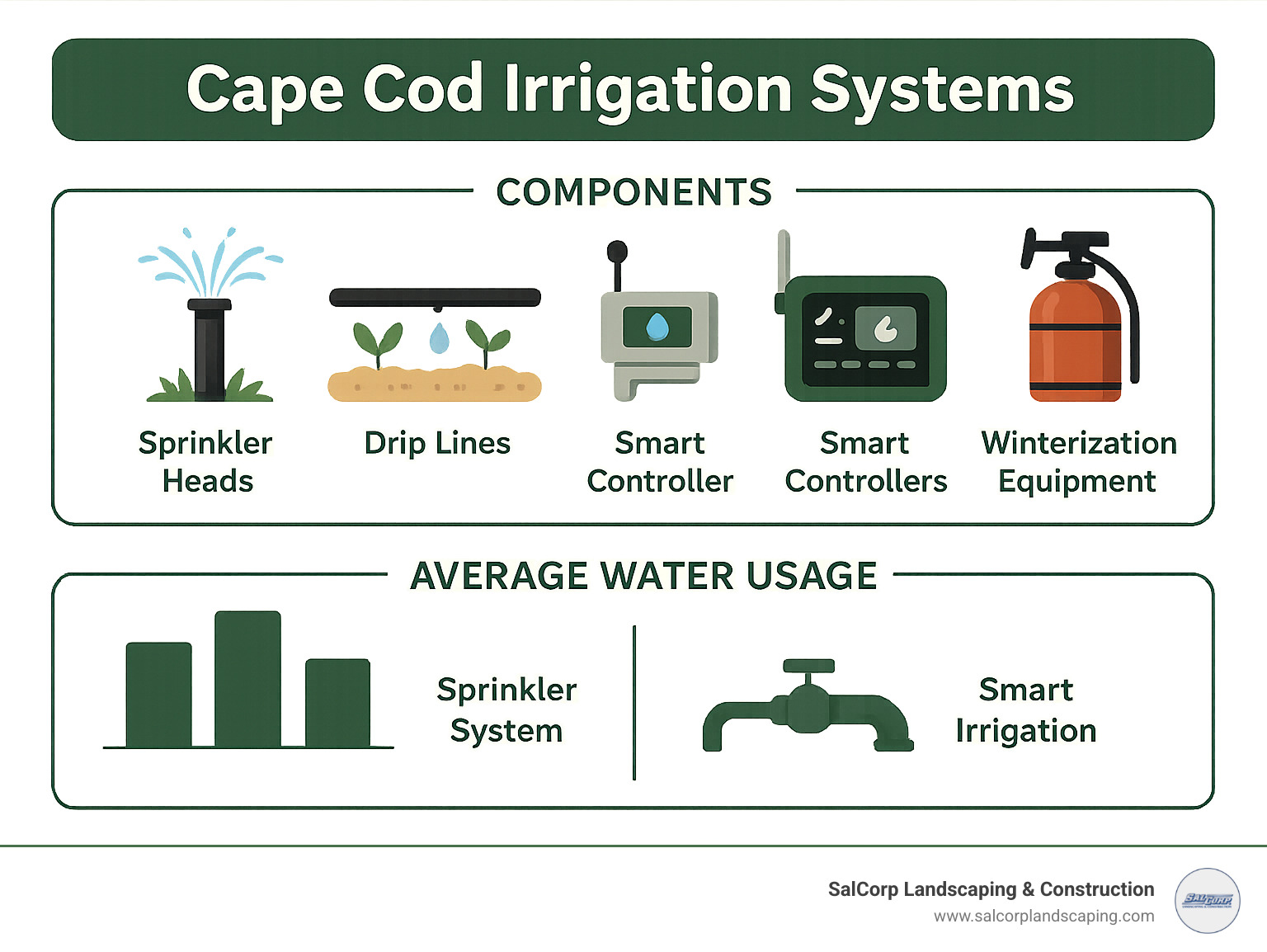
Cape Cod irrigation systems terms to remember:
– Cape Cod Hardscaping
– Cape Cod deck design
– Cape Cod front yard landscaping
Why Cape Cod’s Coastal Environment Makes Irrigation Tricky
Have you ever wondered why keeping your Cape Cod lawn lush can feel like a full-time job? You’re not alone! The Cape’s unique coastal environment creates irrigation challenges that most inland homeowners simply don’t face.
Sandy Soils That Won’t Hold Water
If you’ve ever tried digging in your Cape Cod yard, you’ve met our infamous sandy soil firsthand. Formed 16,000-20,000 years ago during the last ice age, our region’s predominantly sandy composition is like a sieve for water. Unlike clay-rich soils that act like a sponge, our sandy loam allows water to quickly percolate downward, away from thirsty plant roots.
“It’s like trying to water a colander,” as one of our clients perfectly described it. This unique challenge means Cape Cod irrigation systems need more frequent but shorter watering cycles to prevent waste while keeping plants hydrated.
Salt Air Exposure
That refreshing ocean breeze we all love? It’s quietly working against your irrigation system. The salt-laden air gradually corrodes metal components in sprinkler systems while simultaneously stressing plants, increasing their water requirements. At SalCorp, we specifically select corrosion-resistant materials rated for coastal environments when designing irrigation systems that can withstand our salty conditions year after year.
Wind Exposure and Evaporation
Standing on a Cape Cod beach, you’ve felt those persistent ocean winds. These same breezes accelerate evaporation across your landscape, with water disappearing into the atmosphere before plants can drink it up. This effect is particularly pronounced during summer months when tourism peaks and your landscape needs to look its absolute best.
Smart Cape Cod irrigation systems account for these wind patterns by incorporating low-angle spray heads, drip irrigation lines, and strategic early morning watering times when winds are typically calmer and evaporation rates lower.
Seasonal Extremes
Living on Cape Cod means embracing dramatic seasonal changes that your irrigation system must steer:
- Summers that can bring unexpected drought conditions
- Winters cold enough to freeze and crack unprotected pipes
- Spring and fall shoulder seasons with wildly unpredictable rainfall patterns
A properly designed irrigation system needs built-in flexibility to adapt throughout our changing Cape Cod year, from high summer to the depths of winter.
Groundwater Protection Concerns
The Cape Cod aquifer system isn’t just important—it’s literally our lifeline, providing drinking water for most residents. This makes water conservation and groundwater protection critical priorities when designing irrigation solutions.
Excessive watering can create runoff containing fertilizers and lawn chemicals that may eventually reach our precious groundwater. This environmental consideration is why we design Cape Cod irrigation systems with precise application rates and incorporate smart technology that prevents overwatering.
The Cape Cod Canal and surrounding waterways represent vital ecosystems that benefit from responsible irrigation practices that minimize runoff and protect our unique coastal environment.

Cape Cod Irrigation Systems: Sprinkler, Drip & Smart Solutions
Let’s talk about keeping your Cape Cod landscape lush and vibrant, even with those challenging sandy soils and salty breezes! I’ve seen how the right irrigation system can transform a struggling yard into the envy of the neighborhood.
Types of Irrigation Systems for Cape Cod Properties
When it comes to watering solutions for Cape properties, we’re really looking at three main players in the game.
Conventional Sprinkler Systems remain the trusty workhorses for most Cape Cod lawns. I like to think of them as the reliable old friends of the irrigation world. These systems use various sprinkler head types to distribute water across your lawn areas and can be strategically zoned to address different watering needs throughout your property. Today’s modern sprinklers are leagues ahead of older models, with precision nozzles that significantly reduce misting and wind drift – a huge plus when those ocean breezes kick up!
Drip Irrigation has become the darling of garden enthusiasts across the Cape. These systems deliver water directly to your plants’ root zones with minimal waste. Given Cape Cod’s quick-draining sandy soils, drip irrigation is like giving your gardens a slow, steady drink exactly where they need it most. I’ve seen flower beds absolutely transform within weeks of installing these efficient systems.
Smart Irrigation Systems represent the cutting edge of Cape Cod irrigation systems. Imagine having a system that actually thinks about when to water your lawn! These sophisticated setups incorporate weather data, soil moisture readings, and programmable controllers to make automated watering decisions. They can slash water usage by up to 60% compared to conventional timer-based systems – perfect for environmentally conscious homeowners and anyone looking to trim those utility bills.
| System Type | Water Efficiency | Initial Cost | Maintenance Needs | Best Applications |
|---|---|---|---|---|
| Conventional Sprinkler | Moderate (70-80%) | $$ | Moderate | Large lawn areas |
| Drip Irrigation | High (90%+) | $ | Low | Gardens, beds, containers |
| Smart Systems | Very High (Up to 60% savings) | $$$ | Low-Moderate | Whole property integration |
Choosing a Sprinkler System for Cape Cod Lawns
Selecting the right sprinkler system for a Cape Cod lawn isn’t one-size-fits-all. The region’s sandy soil, variable water pressure, and that persistent salt air all play important roles in determining what will work best.
Rotary Sprinkler Heads are my go-to recommendation for larger lawn areas on Cape properties. They rotate to distribute water in patterns from 90 to 360 degrees, and they’re particularly well-suited to our local conditions. They deliver water at a slower rate, giving our sandy Cape soil time to actually absorb the moisture instead of having it run straight through. Their larger water droplets also stand up better to those coastal winds we all know too well. Many models let you adjust both the arc and radius, so you can get precise coverage exactly where you need it.
Pop-up Spray Heads shine in smaller or irregularly shaped lawn areas. These stationary heads deliver water quickly and evenly over compact spaces. The newer models include pressure-regulating features that prevent that fine misting that just blows away. When working near the coast, I often recommend low-angle nozzle options that reduce the impact of those persistent sea breezes.
When it comes to zone design considerations, proper planning is absolutely critical for Cape Cod irrigation systems. We typically separate sunny areas from shaded spots (which need up to 30% less water), different plant types from each other, slopes from flat areas (slopes need shorter, more frequent cycles), and areas with varying soil conditions. Water pressure varies significantly across Cape communities, so professional system design always includes pressure testing to ensure optimal efficiency.
Drip Irrigation for Beds & Gardens
Drip irrigation has completely revolutionized how we water gardens and planting beds across Cape Cod. By delivering water directly to the root zone, these systems reduce water usage by up to 70% compared to overhead watering. They also minimize disease risk by keeping foliage dry and allow precise watering of individual plants based on their specific needs. They’re particularly effective with Cape Cod’s sandy soils by applying water slowly enough for proper absorption.
The versatility of drip systems makes them perfect for so many applications beyond traditional garden beds. On Cape properties, we regularly install them for raised planters (which can be challenging for water retention), window boxes that quickly dry out in coastal winds, potted plants on decks and patios, vegetable gardens for food safety, and even small grass areas where conventional sprinklers just aren’t practical.
The disease prevention benefits alone make drip irrigation worth considering. Many plant diseases absolutely thrive in wet conditions, especially when foliage remains damp. By keeping leaves dry while hydrating roots, drip irrigation eliminates this risk entirely.
For more information about our irrigation installation services in specific areas, visit our Irrigation Systems Holliston MA page.
Smart Cape Cod Irrigation Systems for Maximum Savings
Smart irrigation technology has truly transformed how Cape Cod irrigation systems operate, offering unprecedented water efficiency and convenience. These systems combine sensors, weather data, and advanced controllers to make real-time watering decisions.
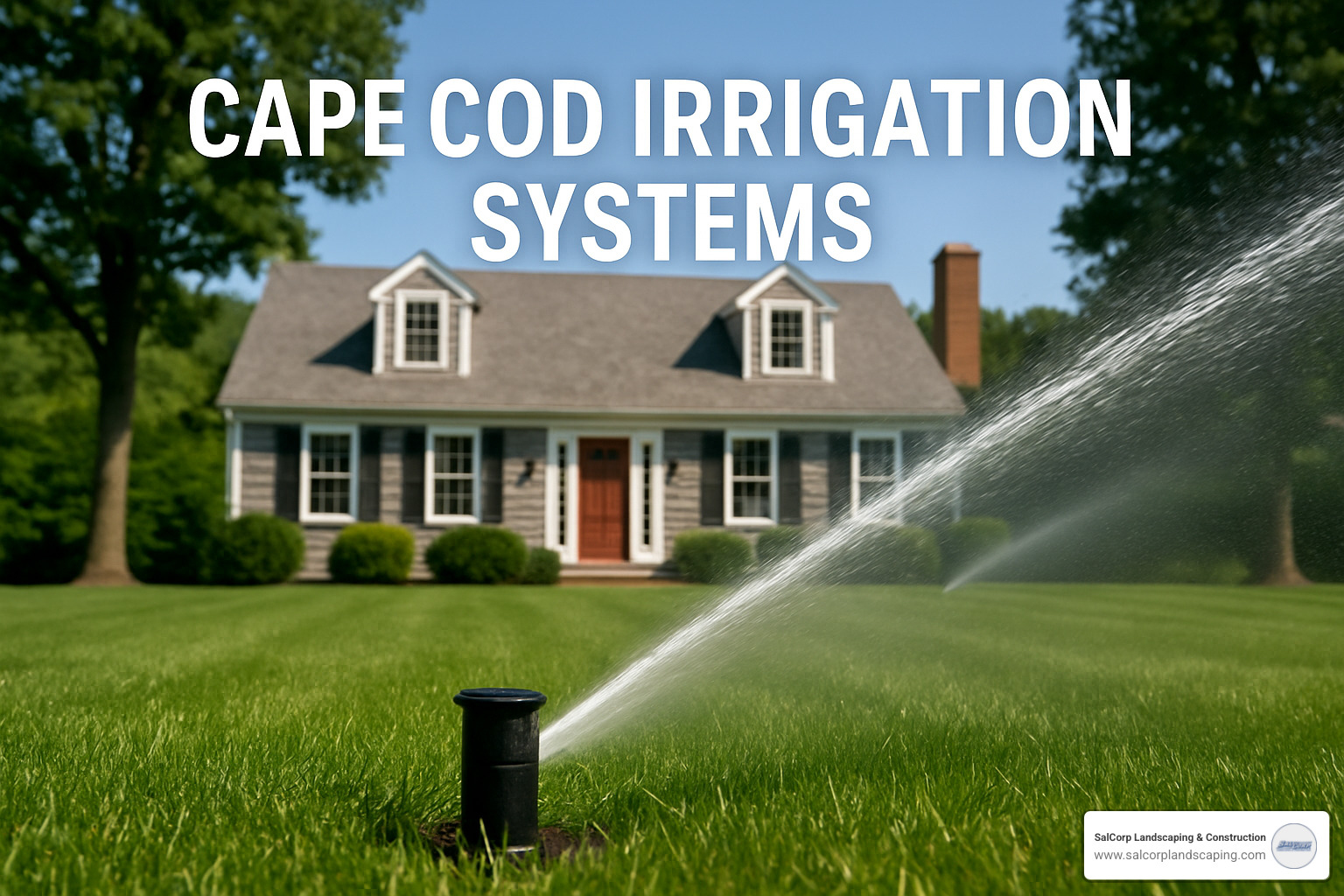
Weather-Based Scheduling is one of my favorite smart features. These controllers connect to local weather data or on-site weather stations to adjust watering schedules automatically. They’ll skip irrigation cycles when rain is predicted (no more embarrassing sprinklers running during a downpour!), increase watering during hot, dry periods, and some systems even factor in wind speed to prevent watering during gusty conditions.
The mobile app control aspect of smart systems is particularly valuable for Cape Cod’s many seasonal residents. You can adjust zones and schedules remotely, receive alerts about system issues, view water usage reports, and track savings – all from your smartphone, whether you’re on-property or hundreds of miles away.
Advanced smart systems include flow meters and leak detection that can spot underground leaks before they become visible, automatically shut down zones with abnormal flow, and track water usage to help identify savings opportunities. I’ve seen these features save clients thousands of gallons of wasted water – and the associated costs.
The most sophisticated Cape Cod irrigation systems now use predictive watering technology with algorithms that actually learn your landscape’s specific needs over time. They factor in soil moisture, plant types, and microclimate data to continuously optimize watering schedules for maximum efficiency.
According to industry data, smart irrigation controllers can reduce water usage by 20-50% compared to traditional timer-based systems, while maintaining or even improving landscape health. For Cape Cod properties, where water conservation is increasingly important, these smart systems represent the future of responsible landscape management.
Designing & Installing a New System: Step-by-Step Guide
There’s something magical about watching a properly designed irrigation system bring your Cape Cod landscape to life. But behind that magic lies careful planning and expert installation. Let me walk you through how we approach creating efficient, long-lasting Cape Cod irrigation systems that stand up to our unique coastal challenges.
Site Survey and Assessment
Every great irrigation system begins with listening and looking. When I visit your property, I’ll spend time understanding not just what you want, but what your landscape actually needs.
We start with a thorough property mapping, documenting existing features and utilities so we know exactly what we’re working with. Cape Cod’s notorious sandy soil requires special attention, so we analyze soil composition to understand how water will move through your specific property.
Water pressure and flow testing is absolutely critical – I’ve seen too many systems fail because this step was rushed. We’ll also identify those tricky microclimates that make Cape properties unique – the windy corner that dries out quickly, or the shaded area that needs less frequent watering.
Before drawing a single line, we’ll catalog your existing plants. Your hydrangeas, beach roses, and ornamental grasses all have different thirst levels, and your irrigation design should respect those differences.
System Design Process
With your property’s unique profile in hand, we create a custom irrigation design that makes every drop count.
We carefully select and place sprinkler heads for perfect coverage without wasteful overlap. Zone creation is where the real artistry happens – grouping similar areas together while separating spaces with different water needs. Getting pipe sizing right ensures proper water flow throughout your system, while choosing the right controller puts you in command of your watering schedule.
Backflow prevention isn’t the most exciting topic, but it’s absolutely essential for protecting your drinking water. For more information about backflow requirements and testing, you can visit Cape Cod Backflow.
Installation Process
Installing Cape Cod irrigation systems is a methodical process that requires attention to detail at every step.
We handle all the necessary permits required by your town and ensure all underground utilities are properly marked before the first shovel hits the ground. Most Cape communities require a licensed plumber to install the backflow preventer, which we coordinate for you.
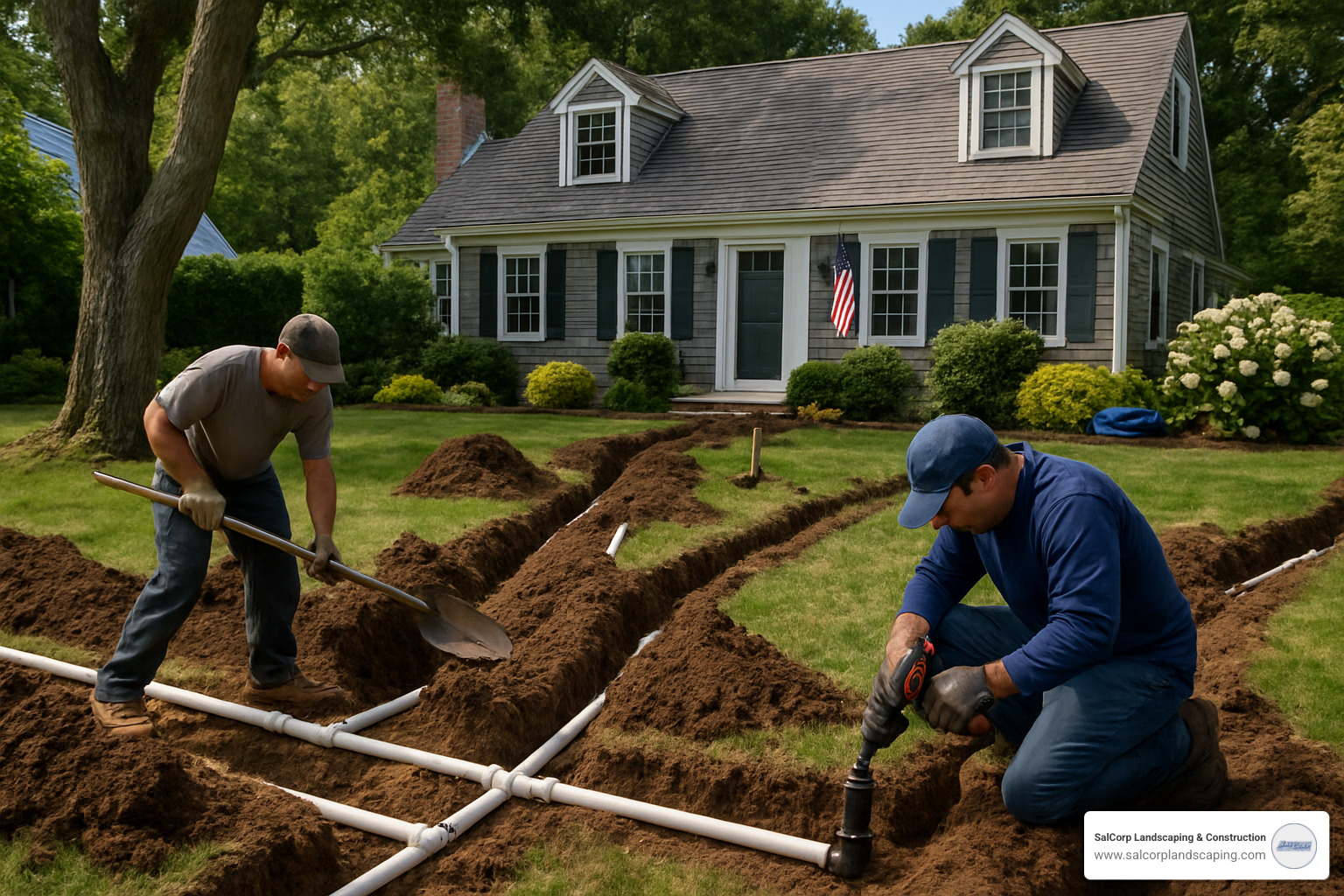
The actual installation involves careful trenching, pipe laying, valve box placement, and head installation. We take extra care around existing landscape features and root systems. Once the hardware is in place, we mount and program your controller, thoroughly test each zone, and make final adjustments to ensure perfect coverage.
From Concept to Completion on Cape Properties
The journey to a perfect irrigation system begins with an in-depth design consultation. I’ll walk your property with you, discussing your specific needs and preferences while identifying priority areas. This is when we’ll talk about technology options and help you make informed decisions about system components.
Based on your property’s unique characteristics and your preferences, we’ll recommend specific equipment from trusted manufacturers like Toro, Irritrol, Hunter, Rainbird, and Weathermatic. These brands have proven their reliability in Cape Cod’s challenging coastal conditions.
One of the most important design elements is hydro-zoning – grouping plants with similar water needs together. Your front lawn might bake in full sun while your backyard enjoys afternoon shade. Your perennial beds have different needs than your vegetable garden. By creating separate zones for these areas, we ensure each gets precisely the water it needs – no more, no less.
Typical Pricing on Cape Cod (estimates only)
While every property tells its own story, these general price ranges will help you budget for a new Cape Cod irrigation system. Please note that these are industry averages based on internet data and not actual costs for SalCorp Landscaping.
Materials for a standard residential system typically range from $2,000-$5,000, covering everything from pipes and fittings to sprinkler heads, valves, controllers, and backflow prevention devices.
Professional installation labor generally ranges from $1,500-$4,500, with factors like property size, soil conditions, accessibility challenges, and seasonal timing affecting the final cost.
Adding smart irrigation technology – the brains that make your system truly efficient – typically adds $800-$2,400 to the project. This includes weather-based controllers, soil moisture sensors, flow meters, and mobile app integration that puts control at your fingertips.
For larger properties or those with complex landscaping needs, high-end systems with multiple controllers, extensive drip zones, advanced filtration, custom programming, and integrated landscape lighting can cost up to three times the average ranges listed above.
While the initial investment may seem substantial, a properly designed irrigation system adds significant value to your property while reducing long-term water costs and landscape maintenance expenses. The peace of mind that comes from knowing your landscape is getting exactly what it needs – even when you’re not there to see it – is something my Cape Cod clients tell me is priceless.
Year-Round Maintenance for Cape Cod Irrigation Systems
Keeping your Cape Cod irrigation system running smoothly throughout the year isn’t just about having green grass—it’s about protecting your investment and conserving our precious water resources. With Cape Cod’s distinct seasons, from our harsh winters to hot summer days, your irrigation system needs specialized care to perform at its best.
Spring Start-Up Checklist
After months of winter dormancy, your irrigation system needs a proper wake-up call. Think of spring start-up as the annual physical for your sprinklers—identifying small issues before they become expensive problems.
When we perform spring activations, we focus on four key areas:
First, we tackle the controller programming. This means resetting the date and time (especially important after power outages), updating your watering schedules to match spring conditions, replacing those backup batteries that keep your programs safe, and checking for any error codes that might indicate electrical problems.
Next comes the physical inspection. Winter can be rough on sprinkler heads—they often get buried under soil or mulch, knocked sideways by snow removal equipment, or damaged by freezing temperatures. We carefully expose each head, straighten any that have shifted, and look for cracks or damage to exposed components. Your backflow preventer—that critical safety device that keeps irrigation water from contaminating your drinking water—gets special attention to ensure it survived the winter intact.
The pressure testing phase is where we carefully bring your system back to life. We gradually pressurize the lines to prevent water hammer (that loud banging in pipes that can cause damage), check for any leaks in both main and lateral lines, and verify each zone is receiving the right amount of pressure. If needed, we’ll adjust pressure regulators to optimize performance.
Finally, we evaluate how everything performs in action. We run each zone individually, adjust spray patterns for perfect coverage, clean out any nozzles clogged with debris, and check that all drip irrigation emitters are flowing properly.
For more information about our seasonal maintenance services in nearby communities, visit our Irrigation Systems Natick MA page.
Mid-Season Performance Tune-Up
By mid-summer, your Cape Cod irrigation system is working its hardest. This is when problems often develop, but a thorough check-up can keep everything running smoothly during the most critical growing period.
During a mid-season tune-up, we start by checking system pressure and flow rates during operation. These measurements tell us if your system is performing according to its design specifications. A drop in pressure or flow might indicate a developing leak underground that needs addressing before it becomes a major issue.
Zone optimization is particularly important as plants grow and conditions change. We’ll fine-tune your watering times based on how your plants are actually performing, not just theoretical needs. As plants grow taller and wider, spray patterns often need adjustment to maintain proper coverage. We’ll also check for and clear any clogged nozzles and inspect drip lines for kinks or blockages that might have developed.
For properties with smart irrigation technology, we don’t just look at the physical components—we analyze the data. We’ll review water usage patterns, check system alerts, verify that weather sensors are responding correctly, and update programming based on seasonal needs.
Your controller settings likely need adjustment as summer progresses. We modify watering schedules based on current weather patterns, adjust run times to match changing plant water requirements, program rain delays during wet periods, and set soak cycles for areas prone to runoff.
Many homeowners don’t realize that this mid-season attention can improve system efficiency by 15-30%—translating to significant water savings during peak demand periods when every drop counts.
Winterization Before the Freeze
If there’s one maintenance service you should never skip, it’s proper winterization of your Cape Cod irrigation system. Our freezing winter temperatures can be devastating to irrigation components that still contain water. Even a small amount of water left in the system can expand when frozen, causing pipes to crack, valves to split, and sprinkler heads to break.
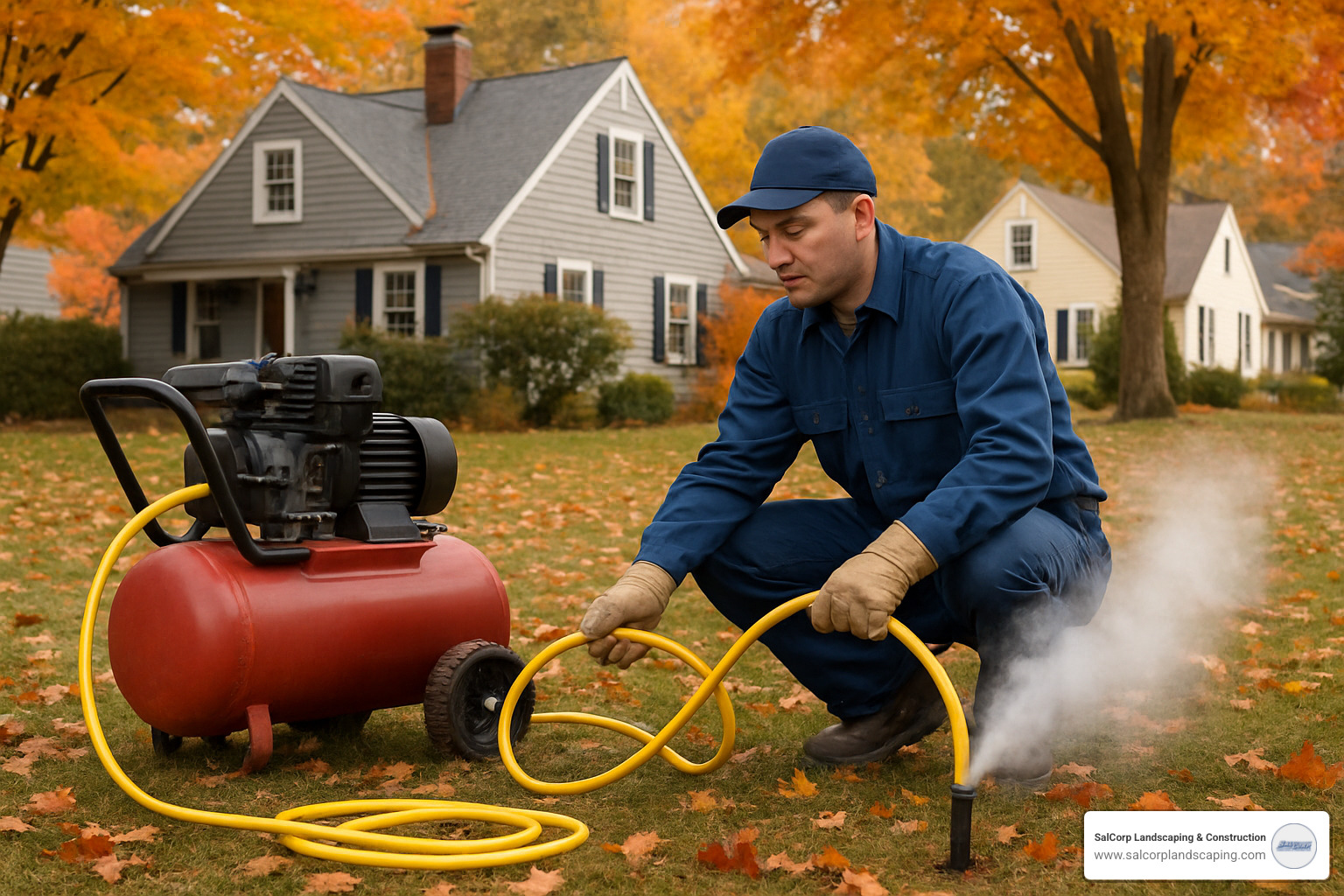
The winterization process begins with a proper system shutdown. We turn off the water supply to the irrigation system, shut down the controller (many smart controllers now have specific winterization modes), relieve system pressure, and drain manual drain points.
The most critical step is the compressed air blowout. This thorough method ensures all water is removed from your system. We carefully connect an air compressor to your irrigation system, regulate the air pressure (never exceeding 80 PSI to prevent damage), and systematically blow out each zone until all water is expelled. We then verify that every component is completely dry and ready for winter.
Certain components need extra protection. We insulate above-ground backflow preventers, remove and store particularly sensitive components when possible, protect valve boxes from freeze damage, and secure controller cabinets against winter weather.
Before we leave, we document any issues that might need attention in spring, record your current controller settings for easy restoration next season, update maintenance records for warranty purposes, and help you schedule next year’s start-up service.
Industry data shows that proper winterization prevents approximately 80% of spring repair issues. The modest cost of professional winterization service pales in comparison to the potential expense of repairing freeze damage, which can often run into thousands of dollars if multiple zones or the main line are affected.
At SalCorp Landscaping, we’ve seen too many systems damaged by improper or skipped winterization. As one client told me after skipping this service, “I’ll never make that mistake again—the repair bill was ten times what winterization would have cost.”
Smart Tech, Sustainability & Water Regulations
Cape Cod’s precious water resources demand thoughtful management, especially when it comes to irrigation. Today’s smart technology and sustainable practices aren’t just good for the environment—they can significantly reduce your water bills while keeping your landscape lush and healthy.
Water Conservation Regulations
If you’ve spent time on Cape Cod, you’re probably familiar with the seasonal water restrictions that pop up, especially during summer months when the population swells. These regulations vary by town, but typically include:
Most Cape communities implement odd/even day watering schedules based on your street address. You’ll also find time-of-day restrictions that prohibit watering during peak evaporation hours (usually 9am-5pm). During severe drought conditions, complete watering bans may be enacted, and many towns now require special permits for new irrigation system installation.
I’ve found that staying ahead of these regulations saves homeowners headaches down the road. At SalCorp, we design systems that maximize efficiency while complying with all local requirements, ensuring your landscape thrives even with water restrictions in place.
Rebates and Incentives
Here’s some good news for your wallet: many Cape Cod water districts offer financial incentives for water-efficient irrigation upgrades. These often include rebates for smart controller installations, rain sensor retrofits, drip irrigation conversions, and efficiency upgrades following professional water audits.
These programs can make upgrading to water-saving technology much more affordable. One Cape homeowner I worked with received nearly 30% of their smart irrigation investment back through local rebate programs—a welcome surprise that accelerated their return on investment considerably.
Sustainable Landscaping Integration
Cape Cod irrigation systems work best when paired with sustainable landscaping practices that complement our unique coastal environment.
Rain gardens have become increasingly popular on Cape properties, collecting stormwater runoff and allowing it to slowly infiltrate into our sandy soils rather than rushing into storm drains or nearby waterways. A well-designed rain garden holds about an inch of water and drains completely within a few hours, filtering water through plant roots before it reaches the groundwater.
Native plant selection makes a tremendous difference in irrigation needs. Plants that evolved in Cape Cod’s coastal environment naturally develop deeper root systems to access groundwater, adapt better to our sandy soils, resist local pests and diseases, and provide habitat for beneficial wildlife. If you’re looking for inspiration, the Monomoy National Wildlife Refuge showcases many beautiful native species that thrive with minimal supplemental watering.
Beyond technology, smart water management includes proper soil preparation with organic matter to improve water retention in our sandy soils. I always recommend generous mulching to reduce evaporation, mowing at higher settings (around 2.5 inches) to promote deeper root growth, and integrated pest management approaches that maintain plant health with minimal chemical use.
Integrating Landscape Lighting with Irrigation
“Why dig twice?” That’s what I often ask homeowners considering both irrigation and landscape lighting. Many modern Cape Cod irrigation systems now incorporate landscape lighting, creating a comprehensive outdoor management system that improves both beauty and functionality.
The integration offers several practical advantages. First, lighting and irrigation can share trenches, significantly reducing installation disruption to your established landscape. Both systems can use the same smart controller technology, and wiring can be installed simultaneously, saving considerable labor costs.
Today’s landscape lighting uses energy-efficient LED technology that consumes up to 80% less electricity than traditional lighting. These bulbs typically last 15-25 years, dramatically reducing maintenance needs. They also produce less heat, making them safer around plants, and come in various color temperatures to create different moods throughout your landscape.
Quality landscape lighting systems use direct burial cable rated for wet conditions, waterproof connectors that withstand irrigation spray, sealed fixtures that prevent moisture intrusion, and transformers located in protected areas—all essential considerations in Cape Cod’s humid coastal environment.
For more information about our integrated irrigation and lighting services, visit our Irrigation Systems page.
Latest Innovations to Watch
The irrigation industry continues to evolve with exciting new technologies that improve efficiency and convenience:
Soil moisture sensors installed at root level measure actual soil moisture content, not just weather conditions. They prevent irrigation when soil is already adequately moist, can be placed in multiple zones for microclimate management, and connect wirelessly to smart controllers. I’ve seen these sensors reduce water usage by up to 40% on some Cape properties while actually improving plant health.
Automatic flow shutoff systems detect abnormal water flow and immediately shut down zones with potential leaks. They send alerts directly to your phone or email, document water usage patterns for analysis, and prevent both water waste and property damage. This feature is particularly valuable for seasonal residents who aren’t always on-property to spot irrigation problems.
Voice control integration now allows newer smart irrigation systems to work with Amazon Alexa, Google Home, Apple HomeKit, and other smart home ecosystems. Imagine checking your system status or adjusting watering schedules using simple voice commands while preparing dinner or relaxing on your deck.
Perhaps most impressive are controllers that use satellite ET (evapotranspiration) data to measure real-time evaporation rates, connect to local weather station networks for hyperlocal conditions, analyze historical data to predict watering needs, and employ machine learning to continuously improve watering efficiency.
These innovations continue to make Cape Cod irrigation systems more efficient, convenient, and environmentally responsible—allowing you to maintain a beautiful landscape while being a good steward of our fragile coastal environment.
Frequently Asked Questions about Cape Cod Irrigation Systems
What are the warning signs my irrigation system needs repair?
If you’ve ever walked outside to find your lawn resembling a small lake, you already know one obvious sign that your Cape Cod irrigation system needs attention! But many warning signs are more subtle and catching them early can save you from costly repairs and water waste.
Water issues are often the most visible indicators something’s wrong. You might notice water gushing from the ground (creating what I call “unexpected fountains”), puddles forming in areas away from sprinkler heads, or water continuing to flow even after your system shuts off. These are all clear SOS signals from your irrigation system.
Performance problems tell another story. When sprinkler heads refuse to pop up fully or won’t retract after watering, they’re essentially saying, “I need help!” Likewise, if you notice zones not activating on schedule or your controller displaying error codes (or randomly resetting itself), it’s time to call in the professionals.
Your landscape itself often communicates irrigation problems through its health. Those mysterious yellowing patches that form perfect circles or arcs? They typically match sprinkler coverage gaps. Excessive fungal growth suggests overwatering, while erosion around sprinkler heads points to leaks or pressure issues.
Perhaps the most telling sign comes in your mailbox – a sudden spike in your water bill without changes in your usage habits should raise immediate concerns. Many Cape Cod homeowners find irrigation leaks only after receiving an eye-popping water bill.
Most irrigation professionals can respond quickly to these issues – in fact, industry data shows that 43% of service calls are handled the same day, with 87% addressed within 24 hours. Quick response prevents minor issues from becoming major headaches.
How much water can smart controllers save on Cape Cod?
Smart irrigation controllers are truly game-changers for water conservation on Cape Cod. Think of them as the difference between using a precision instrument and a sledgehammer – both get water to your landscape, but one does it with remarkable efficiency.
The savings are impressive: most Cape Cod irrigation systems see water reductions of 20-50% after upgrading to smart controllers. Some manufacturers even claim up to 60% reduction in water usage. For perspective, a typical Cape property might save thousands of gallons monthly during summer – that’s enough to fill several hot tubs!
Your actual savings depend on several factors. If your current system is already fairly efficient, you’ll see more modest improvements. Local rainfall patterns, your property’s soil composition (our sandy Cape Cod soil often shows greater benefits from smart technology), and your landscape’s plant types all influence potential savings.
While smart controllers require an upfront investment, most systems pay for themselves within 1-3 seasons through reduced water bills. Many Cape Cod water utilities sweeten the deal by offering rebates for smart irrigation technology adoption. Beyond the financial benefits, you’re also contributing to water conservation efforts in our environmentally sensitive coastal region.
The benefits extend beyond your wallet. Smart controllers deliver more precise watering, resulting in healthier plants, reduced runoff and erosion, and even lower fertilizer needs (since nutrients aren’t being constantly washed away). For seasonal residents, the remote management capability is particularly valuable – you can monitor and adjust your system from anywhere with an internet connection.
Do I need permits or annual backflow testing for my irrigation system?
The world of permits and testing requirements isn’t exactly thrilling, but understanding these necessities helps ensure your Cape Cod irrigation system operates safely and legally.
Most Cape towns require permits for new irrigation installations. These typically include building permits for the physical system, plumbing permits for backflow devices, and sometimes electrical permits for hardwired controllers. Properties near environmentally sensitive areas may need conservation commission approval as well. Don’t worry about navigating this bureaucratic maze alone – professional irrigation contractors are familiar with local regulations and typically handle permitting for you.
Backflow prevention is where things get serious. These devices are crucial safety components that prevent irrigation water (which may contain fertilizers or other chemicals) from flowing backward into your drinking water. Think of them as one-way valves protecting your family’s health.
Cape Cod regulations are quite strict about backflow preventers, typically requiring:
– Professional installation by a licensed plumber
– Annual testing by a certified backflow tester
– Documentation filed with your local water department
– Immediate repair if testing reveals any issues
This annual testing requirement isn’t optional – it’s about public health protection. Testing typically costs between $75-150 per device and should be scheduled before your spring system activation each year.
The consequences of skipping permits or backflow testing can be severe, including municipal fines, mandatory system shutdown until compliance is achieved, and potential liability issues if contamination occurs. It can even complicate matters when selling your property.
For detailed information about backflow requirements in your specific town, I recommend consulting your local water department or visiting resources like Cape Cod Backflow.
At SalCorp Landscaping, we ensure all our irrigation installations meet or exceed local code requirements, giving you peace of mind that your system is both effective and compliant.
Conclusion
Creating and maintaining effective Cape Cod irrigation systems requires specialized knowledge of our unique coastal environment, soil conditions, and seasonal challenges. At SalCorp Landscaping & Construction, we bring over two decades of hands-on experience to every irrigation project, ensuring your landscape receives precisely the water it needs while being mindful of conservation.
I’m proud to run an owner-operated business where I personally oversee every system we design and install. There’s something special about being directly involved in changing a property and knowing the work was done right. Our approach isn’t just about installing sprinklers—it’s about creating a comprehensive water management solution custom to Cape Cod’s distinctive conditions.
When you work with us, you’re getting a partner who understands that sandy soils need different solutions than clay, that salt air affects equipment choices, and that proper winterization isn’t optional in our climate—it’s essential.
Smart technology has revolutionized what’s possible with modern irrigation. The systems we install today can reduce water usage by up to 60% compared to older technology, all while maintaining healthier, more vibrant landscapes. That’s good for your wallet, good for your property, and good for our fragile Cape Cod environment.
An irrigation system works best when it’s part of a thoughtfully designed outdoor space. The most efficient watering system complements your hardscaping elements, works in harmony with native plantings, and improves your outdoor living areas. To see how we integrate these elements, check out our hardscaping services that pair beautifully with irrigation systems.
Whether you’re installing your first irrigation system, upgrading outdated equipment, or simply need reliable seasonal maintenance, our team serves communities throughout Cape Cod and beyond with the attention to detail your property deserves. We’re not just installing pipes and sprinklers—we’re helping you protect your landscape investment, conserve water, and improve your property’s value for years to come.
When you choose a professional irrigation solution custom-designed for Cape Cod’s unique environment, you’re making a smart investment that pays dividends every time you look out at your lush, healthy landscape—without the worry of wasted water or inefficient coverage. That’s the peace of mind we deliver with every system we install.
