

Cape Cod outdoor fireplaces: Top 10 Stunning 2025 Picks
Why Cape Cod Outdoor Fireplaces Transform Your Property
Cape Cod outdoor fireplaces offer property owners the perfect solution for extending outdoor entertaining seasons and creating warm gathering spaces that withstand coastal weather. Whether you’re managing commercial properties or enhancing your home’s outdoor living areas, these fire features provide both aesthetic appeal and practical warmth during cool Cape evenings.
Top Cape Cod Outdoor Fireplace Options:
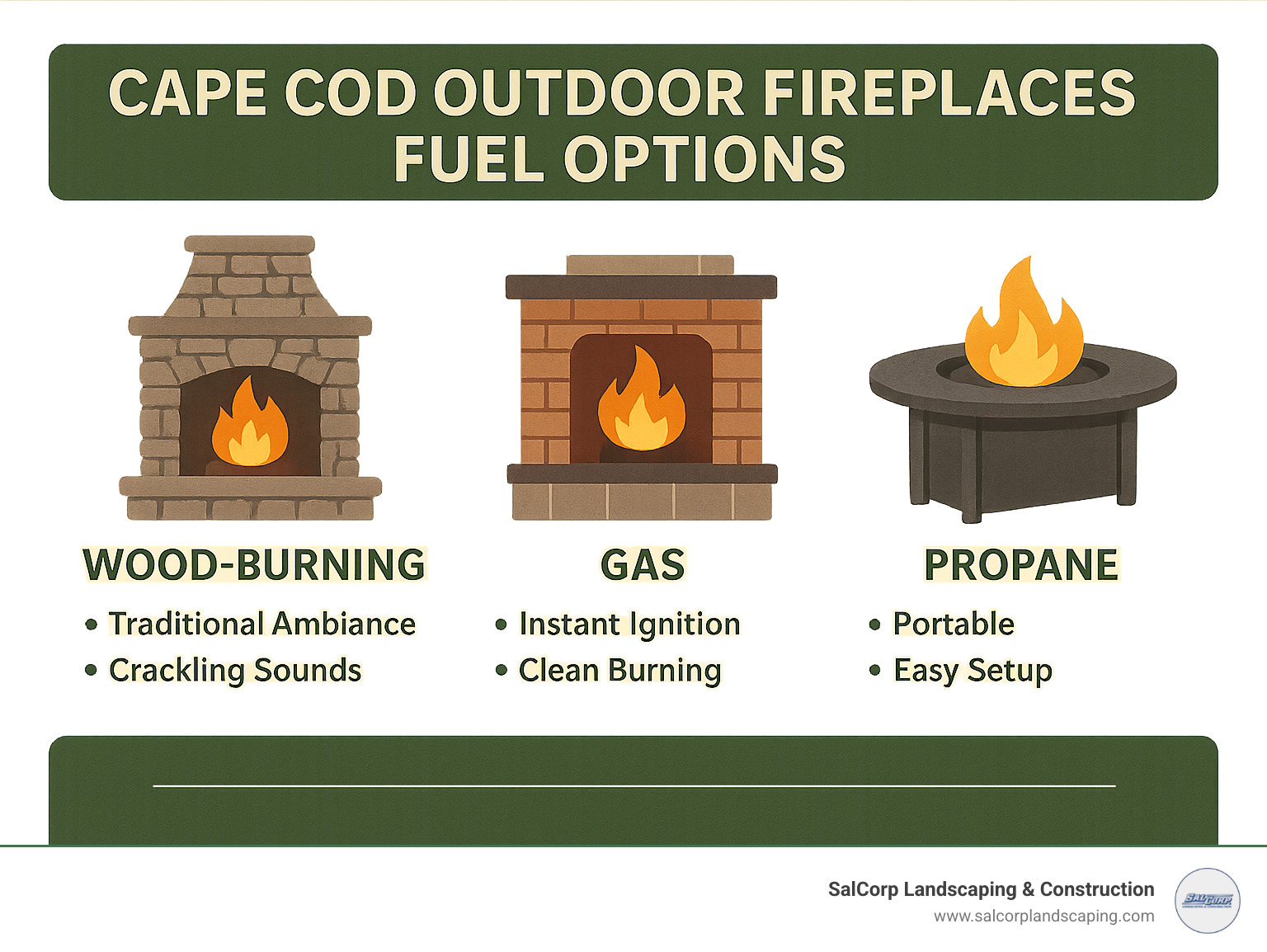
– Gas fireplaces: Instant ignition, clean burning, minimal maintenance
– Wood-burning units: Traditional ambiance with crackling sounds and natural heat
– Propane fire tables: Portable, easy setup, perfect for smaller spaces
– Custom stone fireplaces: Built-in masonry solutions for permanent installations
– Modular kits: Pre-assembled options like the Unilock Romanstack for quick installation
The Cape’s coastal climate and seasonal property use make outdoor fireplaces especially valuable. As one local installer notes, “There’s nothing like gathering with friends and family around the warmth of a fire pit” – and this sentiment drives the growing popularity of these features across Cape Cod properties.
Key considerations include:
– Local permit requirements and town bylaws
– Fuel type selection (wood, natural gas, or propane)
– Professional installation for gas line connections
– Wind-resistant designs for coastal conditions
I’m Sal Musto, owner of SalCorp Landscaping & Construction, and over the past two decades, I’ve helped countless property owners design and install Cape Cod outdoor fireplaces that improve both residential and commercial outdoor spaces.
Cape Cod outdoor fireplaces terminology:
– Cape Cod Hardscaping
– Cape Cod landscape lighting
– Cape Cod deck design
Most Popular Outdoor Fire Features on Cape Cod
The Cape Cod market has evolved significantly, with gas fire pits becoming more popular than wood fire pits due to their safety, ease of use, and low maintenance requirements.
Popular fire feature categories include:
Fire Pits: These remain the most sought-after backyard feature, ranging from simple portable bowls to elaborate built-in stone circles. Fire pits work particularly well for casual gatherings and can accommodate larger groups.
Outdoor Fireplaces: Free-standing fireplaces create dramatic focal points and provide directional heat that’s perfect for seating areas. These can be built as simple kits or fully custom structures using local stone materials.
Fire Tables: Combining functionality with style, fire tables serve as both heating elements and surfaces for drinks and snacks. They’re especially popular in smaller Cape Cod yards where space optimization matters.
Modular Kits: Pre-assembled options like stone veneer kits offer the appearance of custom masonry at a fraction of the installation time.
Wood-Burning Fire Pits & Fireplaces
Wood-burning units deliver the classic outdoor fire experience with crackling sounds, dancing flames, and that unmistakable campfire aroma. They’re perfect for property owners who prioritize ambiance and don’t mind the additional maintenance requirements.
Key considerations for wood-burning features:
– Seasoned hardwood burns cleaner and produces less smoke
– Ember management requires spark screens and proper clearances
– Ash removal and cleanup needed after each use
– Local burn ban restrictions may apply during dry periods
The main drawback is the smoke factor – consistent Cape Cod breezes can blow smoke directly onto guests, sometimes requiring seat changes during gatherings.
Gas Fire Pits & Fireplaces
Gas-powered fire features have become increasingly popular on Cape Cod. They offer instant ignition, precise heat control, and eliminate the smoke and ash associated with wood burning.
Advantages of gas fire features:
– No embers or flying sparks when operated correctly
– Instant on/off control with adjustable flame height
– Clean burning with no smoke or ash cleanup
– Better aesthetic options with decorative lava rocks, river stones, or fire glass
– Consistent heat output regardless of weather conditions
Gas units can connect to your home’s natural gas line for unlimited fuel supply, or use propane tanks for installations where gas lines aren’t practical.
Propane Fire Tables & Bowls
Portable propane fire features offer the ultimate flexibility for Cape Cod properties, especially rental homes or seasonal cottages. These units use standard 20-pound propane cylinders and can be moved as needed.
Benefits of propane fire features:
– Quick setup with no permanent installation required
– Easy off-season storage in garages or sheds
– Deck-friendly designs that meet clearance requirements
– Perfect for testing whether you enjoy fire features before committing to permanent installation
Many clients start with portable propane units to determine their usage patterns before investing in permanent installations.
Cape Cod outdoor fireplaces: Fuel Options Compared
Choosing the right fuel type for your Cape Cod outdoor fireplaces can make the difference between a fire feature you love using and one that sits idle most of the season. After helping hundreds of Cape Cod homeowners with their outdoor fire installations, I’ve learned that the best choice depends entirely on how you actually plan to use your space.
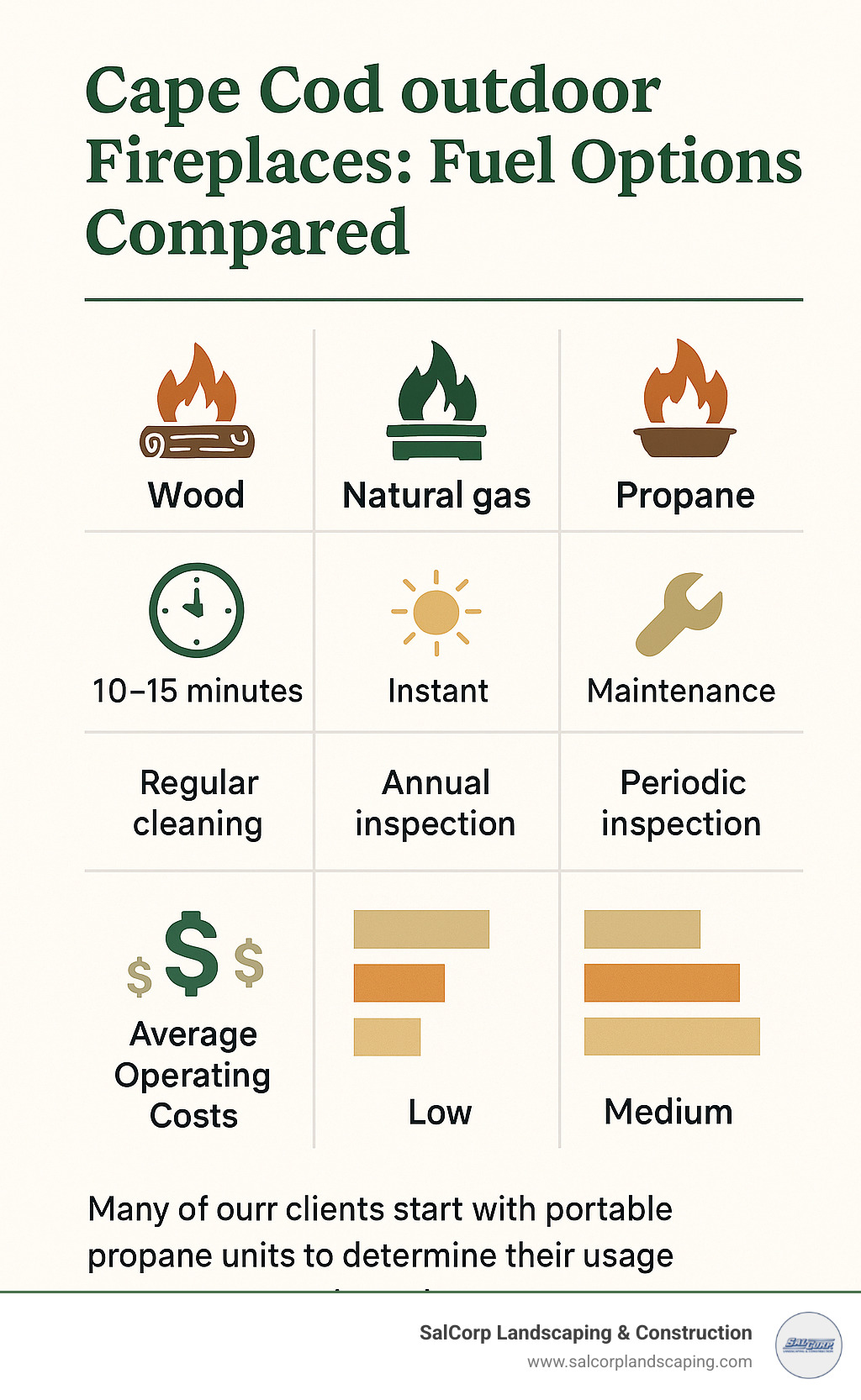
Wood-burning units take about 15 minutes of prep time with kindling and paper before you have a proper fire. Once burning, they deliver classic campfire heat. The downside? You’ll spend time cleaning ash and dealing with smoke that shifts with Cape Cod’s coastal winds.
Natural gas fireplaces offer instant flames that you can adjust to the perfect height. The heat output stays consistent all evening, and when you’re done, you simply turn it off – no cleanup required.
Propane fire features light quickly like gas units and burn cleanly, but you can move them around your property as needed. A standard 20-pound tank gives you about 8-10 hours of burn time.
From a safety standpoint, gas and propane units have a clear advantage. They don’t throw sparks or embers, which matters with Cape Cod’s frequent breezes. For detailed information about outdoor fire safety standards, you can check out Scientific research on outdoor fire safety.
Wood vs. Gas – What Suits Your Lifestyle?
Most clients think they want wood until they actually live with it for a season. Wood-burning fireplaces are wonderful if you truly enjoy the ritual of fire building and don’t mind the maintenance.
But if you want to use your fire feature more than once or twice a month, gas will probably make you happier. Gas fireplaces eliminate the “should we bother lighting a fire tonight?” question that keeps many wood-burning units cold.
Ambiance-wise, wood wins with its crackling sounds and dancing flames. Gas flames are beautiful but more predictable. However, gas units let you focus entirely on your guests and conversation instead of managing the fire.
Connecting to a Home Gas Line
If you’re leaning toward natural gas, the installation requires planning but delivers long-term convenience. Licensed plumbers handle all gas line work, typically involving trenching from your home’s gas meter to your fire feature location.
Trench depth usually runs 18-24 inches, depending on local codes. The plumber will install proper shutoff valves, size the pipes correctly for your fire feature’s BTU requirements, and conduct pressure testing to ensure safety.
For comprehensive planning that coordinates gas line installation with your overall outdoor space design, check out our More info about hardscaping services.
Portable Propane Solutions for Renters
Renters and seasonal property users have found their perfect match with propane fire features. Standard 20-pound tanks are available at hardware stores throughout Cape Cod, and the quick disconnect fittings make swapping tanks simple and safe.
These units require no property modifications whatsoever. You can set them up on decks, patios, or lawn areas as long as you maintain proper clearance distances from structures and overhangs.
Choosing Cape Cod outdoor fireplaces for Small Yards
Space planning becomes critical when you’re working with compact Cape Cod lots. Vertical designs maximize heat output while minimizing footprint, and setback rules typically require 10-15 feet from structures, which most properties can accommodate with thoughtful placement.
Fire tables work exceptionally well in smaller spaces because they serve double duty as both heating elements and functional surfaces. The key is choosing designs that make your small yard feel larger rather than cramped.
Design Trends & Must-Have Features for 2024
The Cape Cod outdoor fireplace landscape is evolving beautifully in 2024, with homeowners embracing designs that honor the Cape’s coastal heritage while incorporating modern conveniences. After two decades of installing fire features across the Cape, I’ve noticed a clear shift toward cleaner lines and smarter technology.
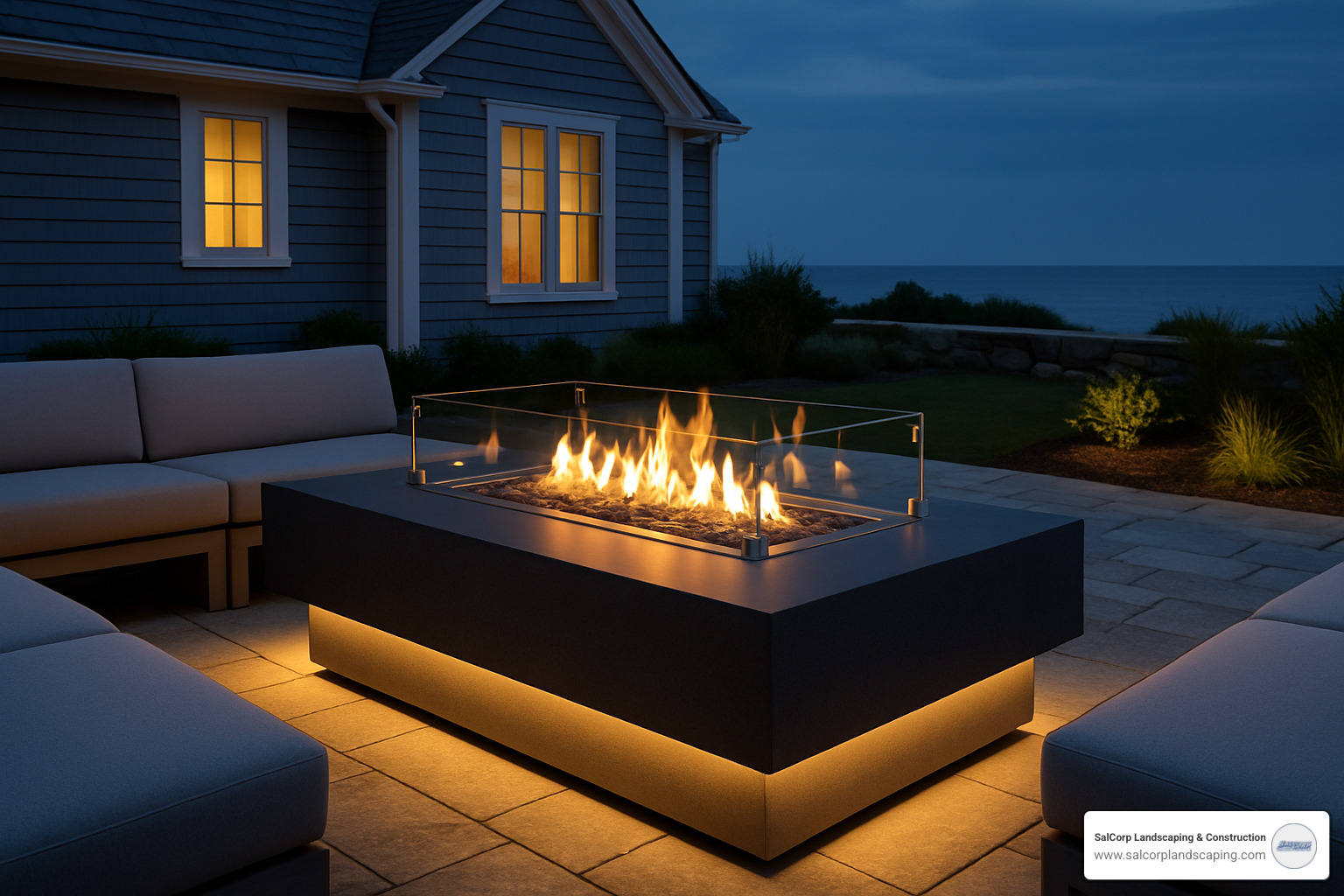
This year’s standout trends include thin-stone veneer applications that capture the look of traditional Cape Cod stonework without the weight and complexity of full masonry construction. We’re also seeing tremendous interest in low-profile seating walls that integrate seamlessly with fire features.
Integrated lighting has become almost standard in our installations. LED systems tucked beneath cap stones or built into seating walls extend the usable hours of outdoor spaces well into the evening.
The decorative elements inside fire features have gotten much more sophisticated. Lava rock and fire glass combinations create stunning visual effects that look great even when the fire isn’t lit.
Wind guards have become essential rather than optional on Cape Cod. Our coastal breezes can make even the best fire features challenging to enjoy without proper wind protection.
Smart ignition technology now allows smartphone apps to control everything from initial lighting to flame height adjustment.
Coastal-Inspired Stone & Veneer Finishes
The beauty of Cape Cod’s natural landscape provides endless inspiration for fire feature design. We source materials that echo the weathered stone foundations of historic Cape homes and the smooth granite outcroppings that dot our shoreline.
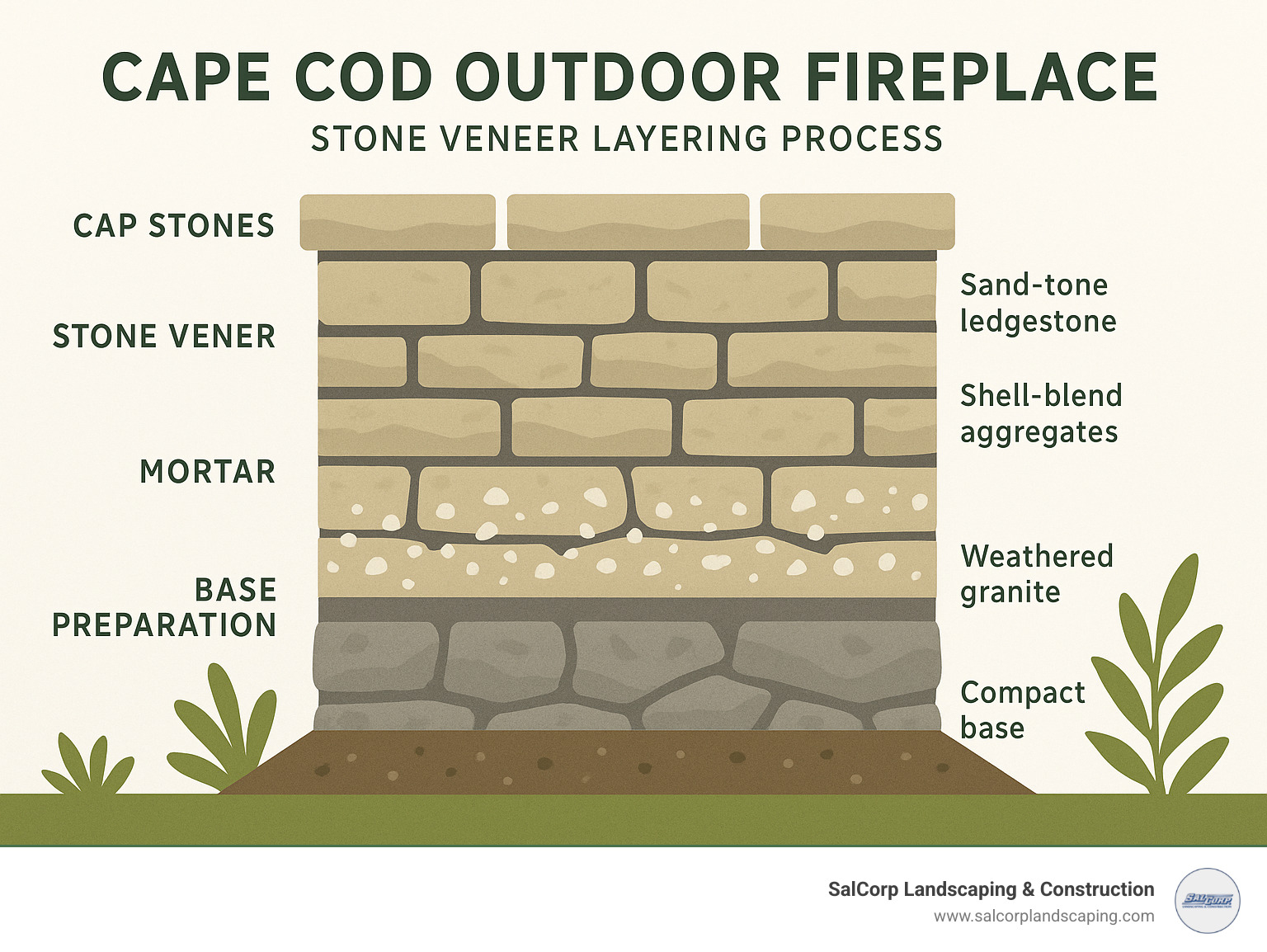
Sand-tone ledgestone remains incredibly popular because it mirrors the horizontal lines found in traditional Cape Cod architecture. These stones stack beautifully and age gracefully in our salt air environment.
Shell-blend aggregates offer something truly unique to coastal properties. These materials incorporate actual shell fragments that catch firelight and create subtle sparkles reminiscent of moonlight on water.
Weathered granite provides the ultimate in durability while delivering that classic New England aesthetic. We often use granite for cap stones and accent elements because it handles our freeze-thaw cycles without cracking.
Accessories That Lift the Experience
The difference between a basic fire feature and an extraordinary outdoor gathering space often comes down to thoughtful accessories.
Spark arrestors aren’t just recommended anymore – they’re required for wood-burning units in most Cape Cod towns. Modern versions are much more attractive than basic mesh screens of the past.
Cooking grates transform fire pits into outdoor kitchens. Swing-arm grates make it easy to move food in and out of the heat zone.
Protective covers prevent water damage, salt corrosion, and debris accumulation. Cape Cod weather can be harsh, and quality covers are essential for maintaining your investment.
Ambient LED uplighting creates layered illumination that makes outdoor spaces feel magical after dark.
For detailed information about heat-resistant materials and safety standards, visit Scientific research on heat-resistant materials.
Installation, Regulations & Costs on the Cape
Installing Cape Cod outdoor fireplaces requires navigating local regulations that vary from town to town across the Cape. Each municipality has its own set of bylaws regarding outdoor fire features, and most require permits for permanent installations.
The permit process typically starts with submitting a site plan that shows your fire feature location and required clearances from structures and property lines. You’ll need to arrange for utility mark-out through Dig Safe and specify spark arrestor details for wood-burning units.
Based on internet research, outdoor fireplace projects typically range from $1,000 for simple portable units up to $15,000 or more for elaborate custom installations, with labor costs averaging between $1,500 and $8,000. These are general market ranges and not specific to our pricing at SalCorp Landscaping & Construction.
Several factors influence installation costs, including fuel type complexity (gas lines require more work than simple wood-burning pits), stone and material selection, site preparation requirements (rocky Cape soil can be challenging), and seasonal demand during peak construction months.
For experienced masonry contractors who understand Cape Cod requirements, visit our More info about masonry contractors page.
Permit & Safety Checklist
Getting your Cape Cod outdoor fireplace installation right starts with proper preparation. Contact your local building department early in the planning process – some towns have waiting periods for permits.
Before breaking ground, schedule your utility mark-out through Dig Safe. This free service identifies underground gas, electric, and water lines that could cause expensive problems if hit during excavation.
Safety equipment planning should happen upfront. Wood-burning units need spark arrestors that meet local fire department specifications. Gas installations require proper ventilation and leak detection systems.
Professional consultation often saves money in the long run. Licensed gas fitters handle natural gas connections safely and legally. Certified masons ensure stone work will withstand Cape Cod’s freeze-thaw cycles.
DIY Kits vs. Pro Builds
The DIY versus professional installation decision often comes down to complexity and your comfort level with construction projects. Simple fire pit kits can be manageable weekend projects for handy homeowners, but gas line connections and substantial masonry work require professional expertise.
DIY kits offer cost savings and the satisfaction of completing the project yourself. However, even “simple” installations need proper foundation preparation, precise leveling, and compliance with local safety codes.
Professional installation provides peace of mind through warranty coverage, guaranteed code compliance, and proper gas line installation with required testing.
The hidden costs of DIY projects often include foundation preparation (Cape Cod’s rocky soil can be challenging), tool rental, permit applications, and fixing mistakes.
Are Cape Cod outdoor fireplaces Worth the Investment?
Cape Cod outdoor fireplaces consistently prove their worth through both immediate lifestyle improvements and long-term property value increases. The ability to extend your outdoor entertaining season by several months makes these features particularly valuable in our climate.
Property value benefits include improved curb appeal, expanded usable outdoor space, and differentiation in the real estate market. The lifestyle benefits often exceed financial considerations – extended outdoor entertaining seasons mean more family gatherings and quiet evenings by the fire.
Year-round usability sets Cape Cod installations apart from regions with harsher winters. Our moderate coastal climate allows fire feature use from early spring through late fall, and even during mild winter days.
Maintenance & Long-Term Value
Proper maintenance ensures your Cape Cod outdoor fireplace provides years of reliable service while maintaining its appearance and safety. Cape Cod’s coastal environment requires specific attention to salt air exposure and seasonal weather changes.

Essential maintenance tasks:
– Spring inspection: Check for winter damage, clean debris, test ignition systems
– Summer surface cleaning: Remove salt residue, clean stone surfaces, trim vegetation
– Fall preparation: Deep clean, inspect gaskets and seals, prepare for winter storage
– Winter protection: Cover units, disconnect propane tanks, protect from freeze damage
Fuel-specific maintenance:
Wood-burning units:
– Remove ash after each use
– Annual chimney and flue cleaning
– Inspect and replace spark screens as needed
– Check mortar joints for cracks or deterioration
Gas units:
– Clean burner ports to remove debris and salt buildup
– Test gas connections for leaks
– Inspect control valves and ignition systems
– Professional annual inspection recommended
Propane units:
– Check tank connections and hoses
– Store tanks properly during off-season
– Inspect and clean burner assemblies
– Test safety shutoff systems
Seasonal Care Schedule
Cape Cod’s seasonal climate requires specific maintenance timing to ensure optimal performance and longevity.
Spring (March-May):
– Uncover and inspect for winter damage
– Clean salt and debris from surfaces
– Test gas connections and ignition systems
– Check structural integrity of stone and mortar
Summer (June-August):
– Monthly cleaning of fire glass or lava rock
– Monitor and clean burner ports
– Check for insect nests or debris accumulation
– Maintain proper clearances from growing plants
Fall (September-November):
– Deep clean all surfaces before winter
– Inspect and seal stone surfaces if needed
– Check gaskets and weatherstripping
– Prepare gas systems for winter shutdown
Winter (December-February):
– Cover units to protect from snow and ice
– Disconnect and store propane tanks indoors
– Monitor for ice damage to stone surfaces
– Keep access paths clear for emergency use
Troubleshooting Common Issues
Understanding common problems helps you maintain your fire feature properly and know when to call professionals.
Uneven flame patterns:
– Clean blocked burner ports
– Check gas pressure settings
– Inspect for debris in gas lines
Soot buildup on glass or stone:
– Indicates incomplete combustion
– Check air intake clearances
– Clean burner assembly
Cracking mortar or stone:
– Normal settling in first year
– Freeze-thaw damage from moisture
– Foundation settling issues
– Requires professional assessment
Moisture intrusion:
– Check chimney cap and flashing
– Inspect stone sealing
– Verify proper drainage around base
Frequently Asked Questions about Cape Cod Outdoor Fireplaces
Over the years, I’ve heard the same questions come up repeatedly when homeowners are considering Cape Cod outdoor fireplaces. Let me share the answers to the three most common concerns that come up during our initial consultations.
Do I need a permit for a backyard fireplace on Cape Cod?
The short answer is yes – most permanent outdoor fireplace installations on Cape Cod require permits. I always tell clients to contact their local building department before we start any project, because each town has slightly different requirements.
Building permits are typically required for permanent structures, while gas permits are necessary when we’re connecting to your home’s natural gas line. If we’re adding integrated lighting to your fire feature, you’ll also need an electrical permit. Some elaborate designs that include water features may even require plumbing permits.
The good news is that portable fire pits and bowls usually don’t need permits – they’re considered temporary installations. But if we’re building something permanent with stone or connecting gas lines, permits are definitely part of the process.
I recommend starting the permit process early. Fees typically run between $50 and $200 depending on your town, and approval can take anywhere from two to four weeks. Most towns also require a final inspection before you can light your first fire, but that’s just to ensure everything meets safety standards.
How much space should I leave around the fire feature?
This is probably the most practical question I get, and the answer depends on what type of fire feature you’re installing and what fuel it uses. Cape Cod towns generally follow similar safety guidelines, but there’s some variation.
For wood-burning units, you’ll need 10 to 15 feet of clearance from any structures like your house, garage, or shed. Gas units are a bit more forgiving – usually 5 to 10 feet is sufficient since there’s no risk of flying sparks or embers.
Property line clearances typically require 5 to 10 feet depending on your specific town’s bylaws. Above your fire feature, you’ll want at least 10 feet of clearance from any overhead structures like pergolas, tree branches, or power lines.
One thing many people don’t consider is clearance from combustible materials. Keep your fire feature at least 3 to 5 feet away from wooden decks, outdoor furniture, or plantings that could catch fire.
Gas fire features generally allow smaller clearances because there’s no spark risk, but you still need to consider heat output and how Cape Cod’s coastal winds might affect flame direction and heat distribution.
What’s the lifespan of a professionally built stone fireplace?
This question always makes me smile because it shows people are thinking long-term about their investment. A properly built stone fireplace using quality materials can easily last 20 to 30 years or more with regular maintenance.
Cape Cod’s coastal environment does present some challenges with salt air exposure, but quality construction methods and materials handle these conditions very well. The key factors that affect lifespan include material quality – natural stone and high-grade manufactured materials simply last longer than cheaper alternatives.
Construction methods make a huge difference too. Proper foundations and the right mortar selection prevent premature failure. Maintenance consistency is probably the biggest factor under your control – regular cleaning and sealing can significantly extend your fireplace’s life.
Your usage patterns also matter. Moderate use preserves components better than heavy daily use, though even frequently used fireplaces last decades when properly maintained.
The firebox and burner components may need replacement every 10 to 15 years depending on use, but the stone structure itself can last much longer. When we handle the installation professionally with quality materials, we typically provide warranties covering both workmanship and major components, giving you peace of mind about your investment.
Conclusion
Cape Cod outdoor fireplaces transform ordinary backyards into extraordinary gathering spaces that bring families and friends together throughout the year. There’s something magical about watching flames dance against the backdrop of a Cape Cod evening, whether you’re roasting marshmallows with the kids or sharing stories with old friends under the stars.
The beauty of these fire features lies in their versatility. A gas fireplace offers the convenience of instant warmth when you want to step outside after dinner, while a wood-burning unit provides that authentic crackling soundtrack that makes any gathering feel special. Even a simple propane fire table can turn your deck into the neighborhood’s favorite hangout spot.
What matters most is choosing the right fit for your lifestyle and property. If you love the idea of a fire feature but worry about maintenance, gas might be your perfect match. If you’re drawn to the traditional experience and don’t mind tending the flames, wood-burning could be ideal. There’s no wrong choice – just the right choice for you.
At SalCorp Landscaping & Construction, we’ve spent over two decades helping Cape Cod property owners create outdoor spaces that truly work for their lives. As an owner-operated business, I personally ensure every project gets the attention it deserves, from that first conversation about your vision through the final inspection of your completed fireplace.
We understand Cape Cod’s unique challenges – the salt air, the seasonal weather changes, and those local regulations that can seem confusing. Our team handles all the details, from permits and gas line connections to selecting materials that will weather beautifully in our coastal environment.
Your outdoor fireplace should feel like it’s always belonged on your property, seamlessly blending with your landscape and architecture. That’s where our comprehensive approach makes the difference – we don’t just install fire features, we create complete outdoor living experiences that increase your property value while enriching your daily life.
Ready to extend your outdoor season and create those memorable moments that make Cape Cod living so special? Let’s talk about turning your backyard into the warm, welcoming space you’ve been dreaming about.
For comprehensive landscape design services that integrate perfectly with your new outdoor fireplace, visit our More info about Cape Cod landscape design page to see how we can create cohesive outdoor living spaces that maximize your property’s potential.
