Commercial and Residential Landscaping: Top 5 Best Practices

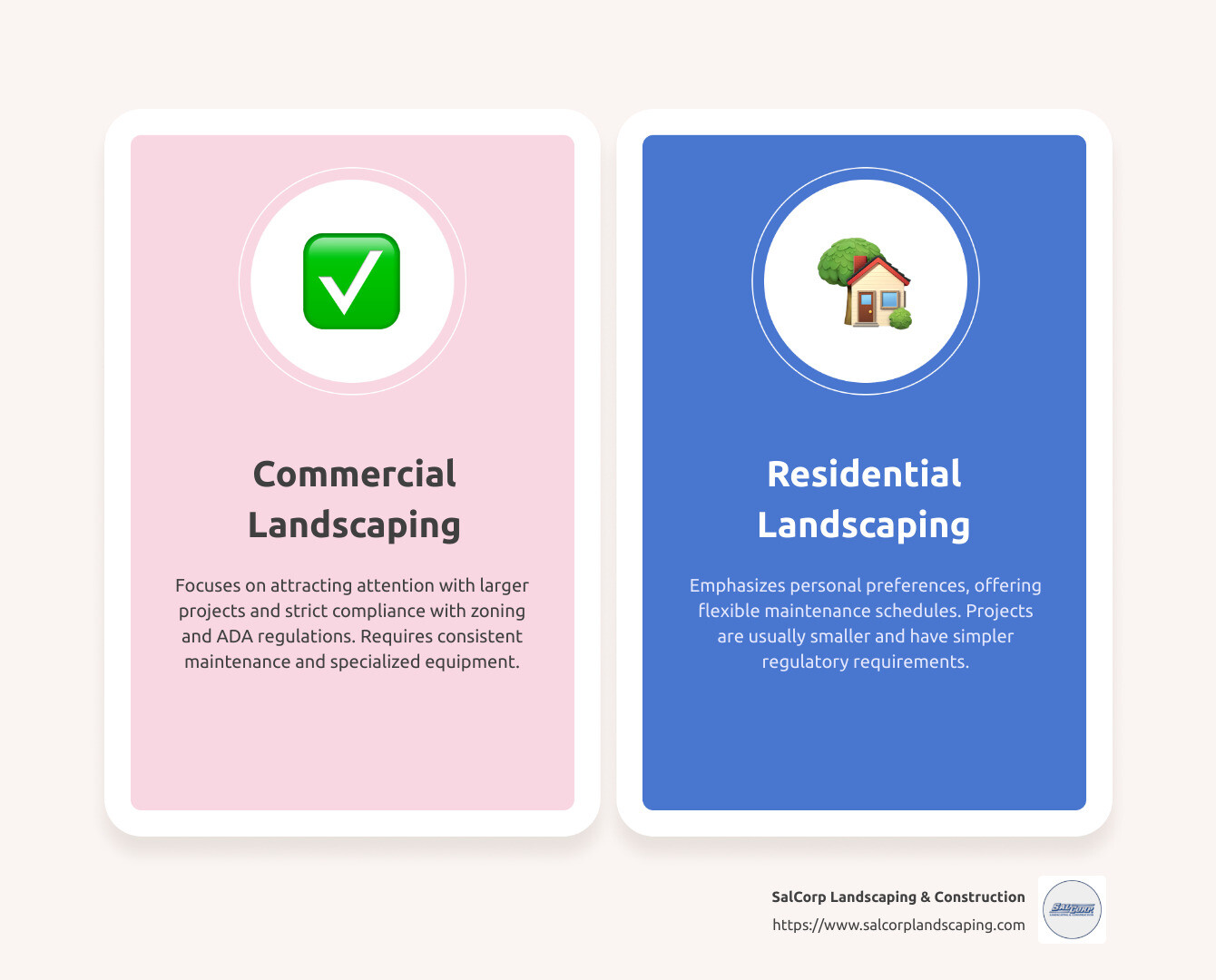
Commercial and residential landscaping might seem similar at first glance, but they cater to distinct needs and complexities. Here’s a quick overview:
- Size and Scope: Commercial projects are usually larger, often requiring specialized equipment.
- Design Goals: Commercial focuses on attracting attention, while residential emphasizes personal preference.
- Maintenance: Commercial properties demand regular upkeep, whereas residential spaces often have flexible schedules.
- Regulations: Commercial projects must comply with stricter zoning and ADA regulations.
For those managing properties in Massachusetts, the seasonal challenges require expertise not just in landscaping but also in commercial snow management. This involves proactive planning to ensure safety and accessibility during harsh winters.
I’m Sal Musto, and with over 20 years of experience, I’ve built SalCorp Landscaping & Construction into a trusted name in commercial and residential landscaping across Canton, Dedham, and beyond. This journey is driven by a passion to create beautiful, functional outdoor spaces.
Commercial and residential landscaping terms explained:
– commercial landscaping maintenance
– commercial landscape design
– commercial landscape lighting
Design Goals
Commercial Landscape Design Goals
Commercial landscape design is all about creating spaces that are not only visually appealing but also functional for businesses. Think about places like office buildings, shopping centers, hotels, and restaurants. The main goal here is to improve the property’s aesthetic appeal, making it inviting to customers and tenants. A beautiful landscape can make a big first impression and even increase property value.
For example, a hotel might use lush gardens and water features to create a serene atmosphere for guests. A shopping center, on the other hand, might focus on open, welcoming pathways to guide shoppers to its stores.
Creating an inviting atmosphere is key. It’s not just about the plants and flowers; it’s about how the space feels. Does it draw people in? Does it make them want to stay longer? These are critical questions for commercial landscaping.
Residential Landscape Design Goals
When it comes to residential landscape design, the focus shifts to personal spaces. Here, the goal is to create a functional outdoor space that reflects the homeowner’s lifestyle and preferences. It’s about making a private home feel uniquely personal.
Imagine a backyard designed for a family that loves to entertain. It might include a cozy patio for gatherings, a play area for kids, and a garden filled with the homeowner’s favorite plants. Each element is chosen to improve the homeowner’s lifestyle.
Homeowners often prioritize privacy and comfort. They want spaces where they can relax and enjoy their personal time. This might mean adding tall shrubs for privacy or creating intimate seating areas.
In both commercial and residential settings, the design goals are about more than just looks. They’re about creating spaces that work for the people who use them every day. Whether it’s a busy shopping center or a peaceful backyard, effective landscape design considers both form and function.
Space Considerations
Commercial Space Considerations
When it comes to commercial landscaping, space is often larger and more complex. Think of expansive office parks, shopping centers, and hotel grounds. These properties need to accommodate a high volume of people, which means accessibility is crucial.
Parking and traffic flow are key elements. Larger properties require well-planned parking areas that are easy to steer. Smooth traffic flow helps ensure that visitors can move around the space without frustration.

Accessibility for disabled individuals is also a top priority. Commercial landscapes must comply with ADA standards to ensure everyone can enjoy the space comfortably.
Residential Space Considerations
In residential landscaping, the focus is on creating private outdoor spaces custom to the homeowner’s needs. Unlike commercial properties, residential spaces are typically smaller and more intimate.
Homeowners often desire areas for family activities. This might include a play area for children, a garden for relaxation, or a patio for entertaining guests. Each space is designed to improve family use and personal enjoyment.
Privacy is another important consideration. Homeowners may use landscaping elements like tall hedges or fences to create secluded areas. This ensures they can enjoy their outdoor space without feeling exposed.
In both commercial and residential settings, understanding the unique space considerations is essential. It’s about making the most of the available area while meeting the specific needs of the property and its users.
Budget and Maintenance
Commercial Budget and Maintenance
When it comes to commercial landscaping, the budget and maintenance needs often reflect the scale and complexity of the property. Large-scale features such as fountains, sculptures, and extensive outdoor lighting systems are common in commercial settings. These elements not only improve the aesthetic appeal but also require significant investment and upkeep.
Maintenance requirements for commercial properties are typically more demanding due to the higher wear and tear from constant use. Regular tasks include pruning, fertilization, and water management. Commercial landscapes often integrate advanced irrigation systems to manage water usage efficiently, which is crucial for maintaining lush greenery while being environmentally responsible.
Due to the size and scope, commercial landscapes often need a dedicated team to ensure everything stays in top condition. This includes routine checks and immediate responses to any issues that arise, ensuring the property remains inviting and functional.
Residential Budget and Maintenance
In contrast, residential landscaping is usually more modest in scope. Homeowners often have smaller budgets and prefer flexible maintenance plans that align with their personal preferences and schedules. Residential projects focus on creating functional and beautiful outdoor spaces that reflect the homeowner’s lifestyle.
Water usage in residential settings is generally less intensive, allowing for simpler irrigation systems. Homeowners may prioritize drought-resistant plants to further reduce water needs and maintenance efforts.
Pruning and fertilization in residential landscapes are custom to the specific plants and trees chosen by the homeowner. This personalized approach allows for a thriving garden that meets the aesthetic and functional desires of the family.
Moreover, residential landscapes offer the flexibility to adjust and change elements over time. This adaptability means homeowners can start with a basic design and gradually add features like patios or small water elements as their budget and preferences evolve.
Understanding the differences in budget and maintenance between commercial and residential landscaping helps in planning and executing projects that meet the specific needs and constraints of each type of property. This ensures that both commercial and residential landscapes remain beautiful and functional throughout the year.
Regulations and Compliance
Commercial Regulations
Commercial landscaping involves navigating a maze of regulations and compliance requirements. Zoning laws dictate how land can be used and developed, impacting the scope of landscaping projects. For instance, a shopping center or office building must adhere to specific zoning laws that may restrict certain features or require additional permits.
Parking requirements are another critical factor. Commercial properties must ensure ample parking space, which can influence landscape design. These spaces need to be well-lit and accessible to accommodate all visitors, including those with disabilities.
ADA compliance is non-negotiable in commercial settings. Landscaping must facilitate easy access for individuals with disabilities, requiring features like ramps, slip-resistant surfaces, and clear walkways. This not only ensures legal compliance but also promotes inclusivity.
Additionally, commercial properties must often meet strict environmental regulations. This can include sustainable practices like using native plants, efficient irrigation systems, and minimizing chemical use. These regulations aim to reduce the environmental footprint of large-scale landscapes.
Residential Regulations
Residential landscaping, while still subject to regulations, generally faces fewer complexities. Local regulations often govern aspects like fence height, tree removal, and water usage. These are typically less stringent than those for commercial properties, allowing homeowners more flexibility in their designs.
Zoning laws in residential areas focus on maintaining neighborhood aesthetics and property values. They might dictate the types of structures that can be built or the distance a garden feature must be from the property line.
Parking requirements are usually less of a concern in residential settings, as homeowners have more control over their space. However, in some neighborhoods, regulations may exist to prevent excessive street parking or ensure driveway access is maintained.
While ADA compliance is not typically a requirement for private homes, homeowners should still consider accessibility in their landscape designs, especially if they plan to age in place or accommodate guests with mobility challenges.
In summary, understanding the regulations and compliance requirements is crucial for both commercial and residential landscaping projects. This ensures that all designs are not only beautiful and functional but also legally sound, providing peace of mind for property owners and enhancing community harmony.
Frequently Asked Questions about Commercial and Residential Landscaping
How do you categorize landscaping expenses?
Landscaping expenses can be grouped into several categories, each reflecting different aspects of maintaining and enhancing outdoor spaces.
1. Building Maintenance:
These expenses include routine tasks like mowing, pruning, and fertilization. For commercial properties, regular maintenance ensures the landscape remains attractive and safe for employees and visitors. In residential settings, these tasks help keep gardens beautiful and healthy.
2. Environmental:
This category covers expenses related to sustainable practices, such as installing efficient irrigation systems or using eco-friendly materials. Both commercial and residential landscapes can benefit from these practices, reducing water usage and minimizing chemical impact on the environment.
3. Marketing:
For commercial properties, landscaping can be a marketing tool. A well-designed landscape can attract customers and improve brand image. Expenses might include seasonal plantings or decorative elements that improve the property’s visual appeal.
4. Other:
This broad category can include costs for special projects, like installing water features or lighting systems. These elements can improve the functionality and aesthetics of both commercial and residential landscapes.
What is the best business structure for landscaping?
Choosing the right business structure is crucial for landscaping businesses. It affects personal finances, liability, and tax obligations.
1. LLC (Limited Liability Company):
An LLC is a popular choice for landscaping businesses. It provides liability protection, meaning personal assets are generally protected if the business incurs debt or legal issues. This structure also offers flexibility in management and tax options.
2. Personal Finances:
By separating personal and business finances, owners can protect personal assets and simplify accounting. An LLC or corporation can help achieve this separation, reducing personal risk.
3. Assets Protection:
Protecting assets is essential, especially in a field with potential liabilities like landscaping. Choosing the right business structure can shield personal assets from business-related risks.
What are the cons of owning a landscaping business?
While landscaping can be a rewarding industry, it comes with its challenges.
1. Accountability:
Business owners are responsible for all aspects of the operation. This includes managing employees, ensuring customer satisfaction, and maintaining quality standards.
2. One-Person Band:
Especially in smaller businesses, owners may find themselves juggling multiple roles—from marketing to operations. This can be overwhelming without the right support and systems in place.
3. Managing Marketing:
Effective marketing is essential to attract clients and grow the business. However, it requires time, effort, and expertise. Owners must balance marketing with other business demands.
4. Financial Considerations:
Landscaping businesses face various financial challenges, such as seasonal fluctuations in demand and managing cash flow. Careful financial planning is essential to steer these challenges successfully.
By addressing these common questions, property owners and aspiring business owners can better understand the nuances of commercial and residential landscaping. This knowledge helps in making informed decisions, whether you’re maintaining a landscape or considering starting a landscaping business.
Conclusion
At SalCorp Landscaping & Construction, we pride ourselves on being more than just a service provider; we are your partner in changing outdoor spaces into stunning landscapes. With over 20 years of experience, our owner-operated team is dedicated to delivering comprehensive outdoor space solutions custom to meet the unique needs of each client.
Whether you’re a business owner looking to improve your commercial property or a homeowner dreaming of a beautiful garden retreat, we have the expertise and resources to bring your vision to life. Our services extend beyond basic landscaping to include hardscaping, commercial snow management, and sustainable practices. We operate our own machinery, ensuring efficiency and precision in every project.
Based in Walpole, Massachusetts, we proudly serve various communities across the state, including Canton, Dedham, Foxborough, and more. Our commitment to excellence and customer satisfaction is unwavering. We work closely with you to understand your goals and preferences, ensuring that every project not only meets but exceeds your expectations.
In commercial and residential landscaping, choosing the right partner is crucial. At SalCorp, we believe in creating landscapes that are not only beautiful but also functional and sustainable. Our approach combines innovative design, meticulous attention to detail, and a deep understanding of the local environment.
Ready to transform your outdoor space? Find how SalCorp Landscaping & Construction can help you achieve your landscaping dreams. Let us show you the difference that dedication and expertise can make.