

Commercial Hardscape: 5 Best Practices for Success
Commercial hardscape is pivotal in crafting the first impressions of any business. The visual appeal of corporate landscapes — encompassing both soft and hard features — plays an indispensable role in attracting and impressing clients, customers, and visitors. Here’s what you need to know quickly:
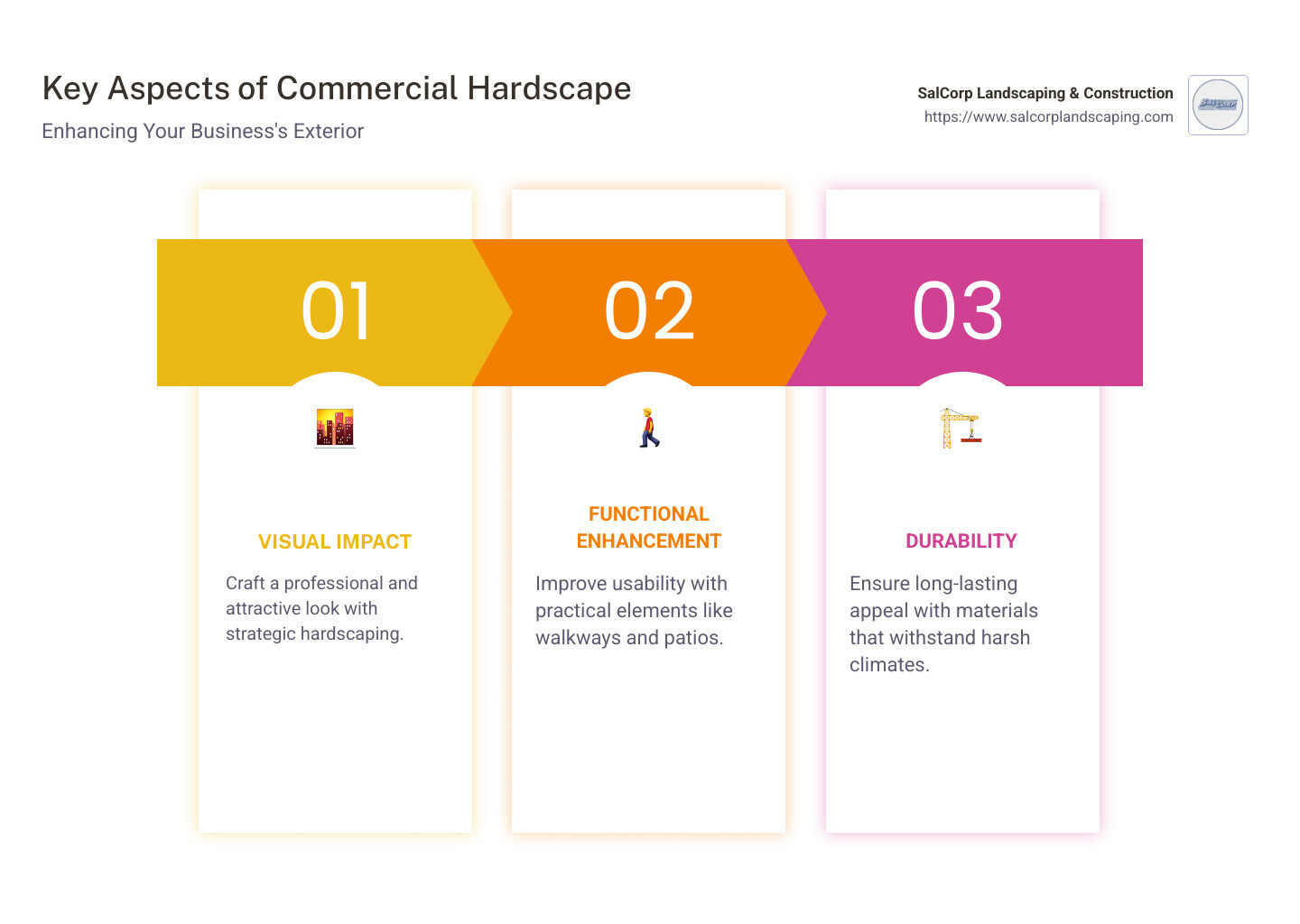
- Visual Impact: Hardscape contributes to the overall aesthetic, offering a clean, professional look.
- Functional Improvement: Walkways, patios, and retaining walls not only beautify but also add usability.
- Durability: These elements stand up to harsh climates and intensive use, ensuring a long-lasting impression.
My name is Sal Musto, and with years of expertise in commercial hardscape projects, I’m committed to helping you transform your outdoor spaces. As someone deeply involved in landscaping and construction, I ensure every project is carefully planned to improve both beauty and functionality.
What is Commercial Hardscape?
Commercial hardscape refers to the non-living elements of landscape design. These are the structures and surfaces that complement the greenery and softscape in outdoor spaces. Unlike plants, trees, and grass, hardscape components are made from materials like stone, concrete, brick, and wood.
Definition and Elements
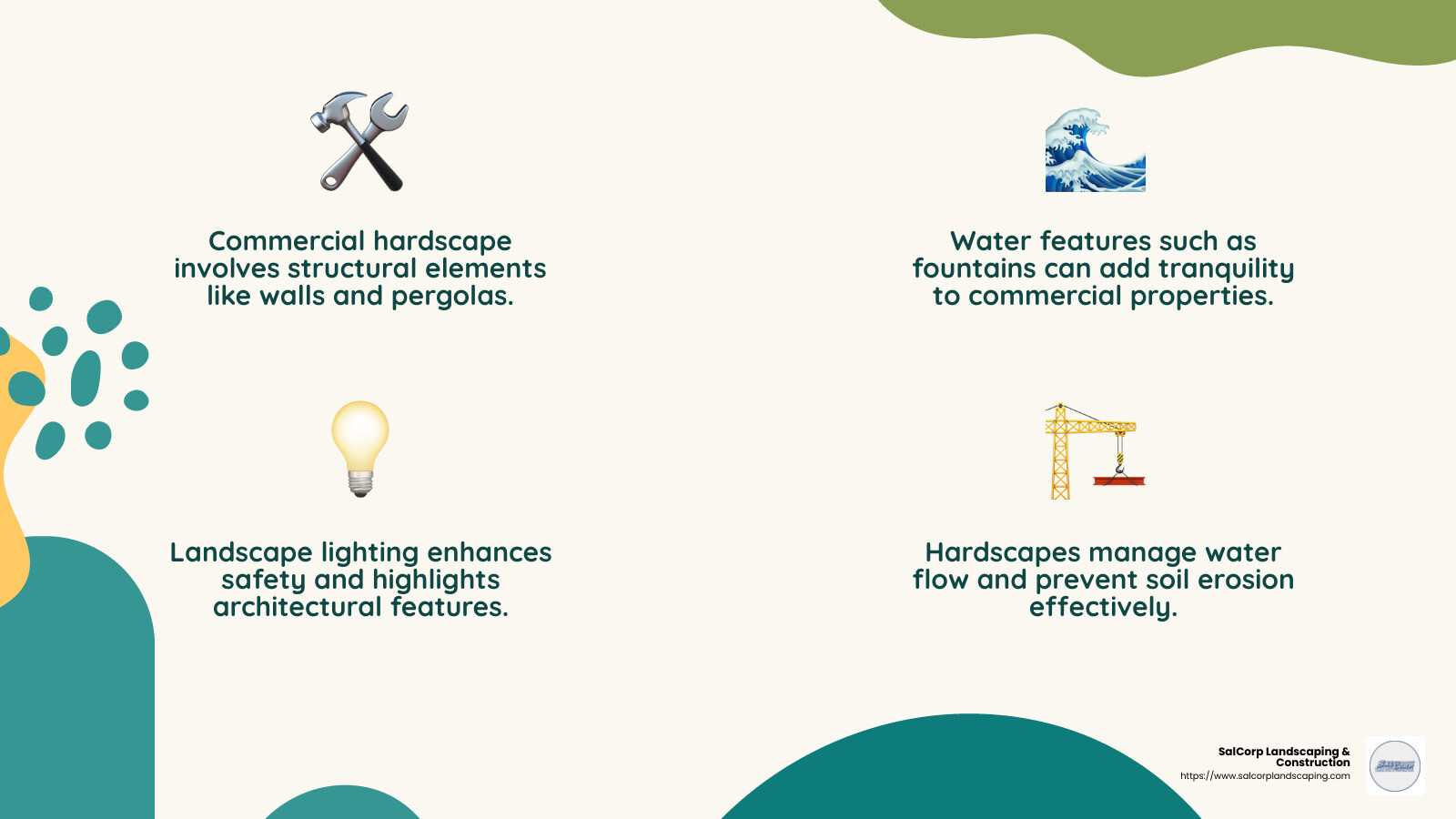
At its core, commercial hardscape involves designing and constructing the “hard” elements that shape the look and functionality of outdoor areas. This includes:
- Walkways and Pathways: These guide foot traffic and connect different parts of a property.
- Patios and Decks: Provide spaces for relaxation and social activities.
- Retaining Walls: Help manage soil erosion and define garden areas.
- Water Features: Like fountains or ponds, these add tranquility and aesthetic appeal.
- Pergolas and Arbors: Offer shade and structure to outdoor spaces.
- Lighting: Improves safety and highlights architectural features.
Hardscape Category
Hardscape is a crucial category in landscape architecture. It transforms outdoor areas into functional, attractive spaces. The category includes anything non-living that contributes to the layout and design of a landscape. Here’s how it breaks down:
- Structural Elements: Walls, fences, and pergolas.
- Surfaces: Walkways, driveways, and patios.
- Decorative Features: Water elements, sculptures, and lighting.
Importance
The importance of commercial hardscape lies in its ability to improve both the aesthetic and practical aspects of a property. As highlighted by SalCorp Landscaping & Construction, well-designed hardscapes manage water flow, prevent erosion, and require less maintenance. This means they not only look great but also save time and resources in the long run.
Incorporating these elements into your business space can significantly boost its curb appeal and functionality, making it more inviting for customers and clients.
Understanding the role of hardscape is essential for creating outdoor spaces that are both beautiful and practical. In the next section, we’ll explore the benefits of integrating these elements into your commercial property.
Benefits of Commercial Hardscape
Commercial hardscape offers numerous advantages that go beyond mere aesthetics. Let’s explore how these elements can transform your business space.
Practicality and Regular Use
Commercial hardscape elements like walkways and patios provide practical solutions for everyday use. They create clear, durable paths that guide visitors safely through your property. This means less wear and tear on natural landscapes, reducing maintenance time and costs.
Improved Property Appearance
A well-designed hardscape can lift the visual appeal of any commercial area. By incorporating elements like neat walkways and water features, businesses can create inviting spaces that attract customers and clients. As noted, “A well-designed commercial landscape speaks volumes about the business it represents.”
Safety and Security
Safety is a top priority for any business. Hardscape design can improve security by using features like lighting and bollards to improve visibility at night. Retaining walls and barriers also offer protection against intruders and natural elements like erosion and flooding.
Boost in Property Value
Investing in commercial hardscape not only improves aesthetics but also increases property value. Attractive, well-maintained landscapes make properties more appealing to potential buyers or renters, often leading to higher market values.
Improved Curb Appeal
First impressions matter. A stunning hardscape design improves curb appeal, making your business stand out. This inviting exterior can draw more foot traffic and positively influence customer perceptions even before they enter your building.
“Improving curb appeal can attract more customers, potentially increasing revenue.”
Maintenance Efficiency
Hardscape elements are designed to be durable and low-maintenance. They resist wear and tear better than traditional landscapes, ensuring a longer lifespan with minimal effort. This efficiency saves time and resources, allowing businesses to focus on other priorities.
Durability
Using durable materials like stone, concrete, and brick ensures that hardscape features withstand the test of time. These materials are built to handle heavy foot traffic and harsh weather conditions, providing a stable and reliable outdoor environment for years to come.
Incorporating commercial hardscape into your business space offers a range of benefits, from enhancing safety and security to boosting property value and curb appeal. In the next section, we’ll explore the key elements that make up a successful hardscape design.
Key Elements of Commercial Hardscape
When planning a commercial hardscape, consider the key elements that will improve both functionality and aesthetics. Let’s break down some of the most impactful components you can incorporate into your business space.
Patios
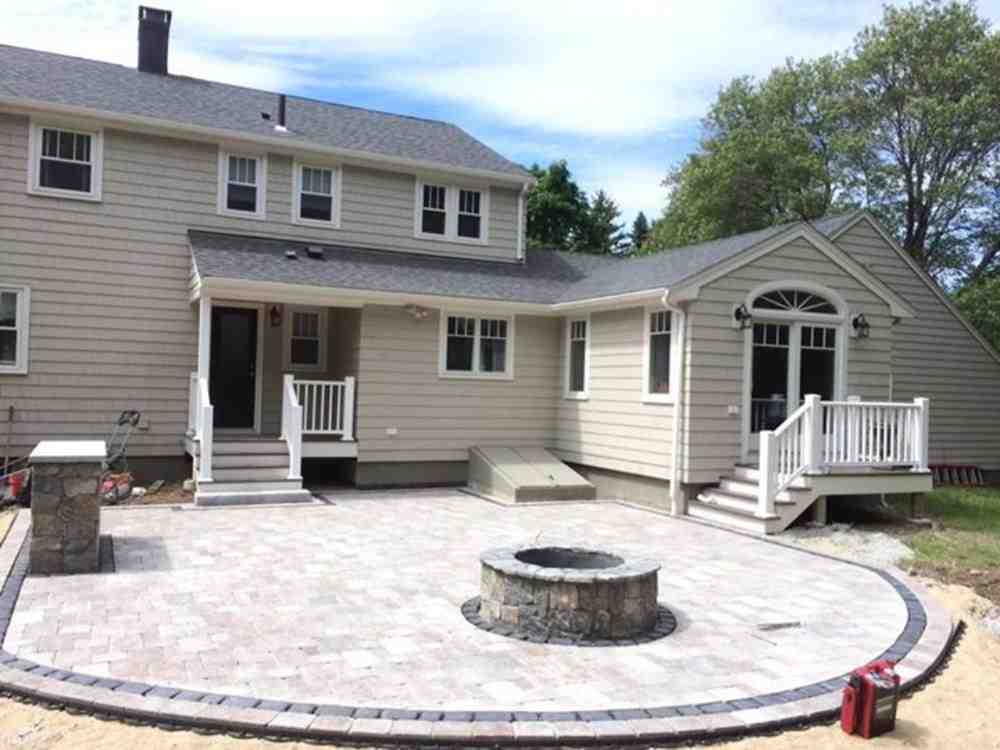
Patios serve as the heart of outdoor commercial spaces. They provide a flat, durable area for seating, dining, and social gatherings. Using materials like concrete pavers or natural stone, you can create a welcoming environment that encourages visitors to linger and enjoy.
Walkways
Walkways guide visitors safely across your property. They can be straight or curved, adding a natural flow to the landscape. Materials like brick or flagstone are popular choices for their durability and aesthetic appeal. Walkways not only improve navigation but also add an element of design to the overall landscape.
Retaining Walls
Retaining walls are crucial for managing sloped terrains. They prevent soil erosion and create usable flat spaces for additional landscaping or activities. Constructed from stone, concrete blocks, or treated timbers, these walls can be both functional and decorative, enhancing the property’s structure and style.
Water Features
Water features, such as fountains or ponds, add tranquility and elegance to any commercial landscape. They serve as focal points and create a calming atmosphere for visitors. Incorporating natural stone and aquatic plants can help these features blend seamlessly into the surroundings.
Fire Pits
Fire pits offer warmth and a cozy gathering spot for evening events. Made from materials like natural stone or concrete blocks, they can be simple or elaborate in design. Fire pits improve the outdoor experience, making spaces more inviting and enjoyable.
Landscape Lighting
Landscape lighting improves safety and highlights architectural and landscaping features. It extends the usability of outdoor spaces into the evening and improves the overall ambiance. Well-placed lighting can make pathways safer and accentuate the beauty of your hardscape design.
Pergolas
Pergolas provide shade and structure to outdoor areas. They can be made from wood or metal and are often used to define seating areas or walkways. Pergolas add vertical interest to a landscape and can be adorned with climbing plants for added beauty.
Benches
Benches offer convenient seating options for visitors. They can be placed along walkways, in gardens, or near water features. Made from wood, metal, or stone, benches are both practical and decorative, inviting guests to relax and enjoy the surroundings.
Rocks and Bricks
Rocks and bricks are versatile materials that can be used in various hardscape elements, from pathways to decorative borders. They add texture and color to the landscape, complementing other materials and enhancing the overall design.
Pavers
Pavers are a popular choice for walkways, patios, and driveways. They come in various shapes, sizes, and colors, offering flexibility in design. Pavers are durable and easy to maintain, making them ideal for high-traffic areas.
Wood
Wood adds a natural, warm feel to outdoor spaces. It is commonly used for decks, pergolas, and benches. While wood requires more maintenance to prevent weather damage, it offers a cost-effective and aesthetically pleasing option for many hardscape elements.
By thoughtfully incorporating these elements into your commercial hardscape, you can create a functional, beautiful environment that improves your business’s exterior. In the next section, we’ll explore best practices for designing a successful hardscape.
Best Practices for Commercial Hardscape Design
When designing a commercial hardscape, consider several key factors to ensure a successful and sustainable project. Let’s explore some best practices that can guide you through the process.
Urban Planning
Urban planning is the backbone of any successful commercial hardscape design. It involves understanding the space’s purpose and how it fits within the surrounding environment. Considerations include:
- Traffic Flow: Ensure that walkways and paths are intuitive and facilitate easy movement for both pedestrians and vehicles.
- Accessibility: Design with accessibility in mind, making sure that all areas are reachable for everyone, including those with disabilities.
- Environmental Impact: Plan to minimize the impact on the natural environment by preserving existing trees and integrating green spaces.
Aesthetics
Aesthetics play a crucial role in creating an inviting and professional atmosphere. Here are some tips to improve visual appeal:
- Consistency: Stick to a cohesive theme that aligns with your business’s brand and style.
- Color and Texture: Use a mix of colors and textures to create visual interest. For example, combine natural stone with wood elements for a balanced look.
- Focal Points: Incorporate features like water elements or sculptures to draw attention and create a memorable impression.
Material Selection
Choosing the right materials is vital for durability and aesthetics. Consider the following:
- Durability: Select materials that can withstand the local climate and high foot traffic. Concrete pavers and natural stone are excellent choices for their strength and longevity.
- Maintenance: Opt for materials that require minimal upkeep, such as TRUEGRID permeable pavers, which are both eco-friendly and low-maintenance.
- Sustainability: Consider eco-friendly materials, like recycled plastic pavers, to reduce environmental impact.
Professional Design
Hiring experienced professionals can make a significant difference in the outcome of your hardscape project. Here’s why:
- Expertise: Professionals bring valuable knowledge in design principles and local regulations.
- Customization: They can tailor the design to meet your specific needs and preferences.
- Efficiency: Professionals can streamline the process, saving time and reducing potential issues.
Maintenance
Regular maintenance ensures that your hardscape remains attractive and functional. Keep these tips in mind:
- Routine Checks: Schedule regular inspections to identify and address any wear or damage promptly.
- Cleaning: Keep surfaces clean to maintain their appearance and prevent deterioration.
- Seasonal Care: Adapt your maintenance routine to seasonal changes, such as clearing snow or adjusting irrigation systems.
By following these best practices, you can create a commercial hardscape that not only improves your property’s appearance but also provides long-term value and functionality. Next, we’ll explore some top design ideas to inspire your project.
Top Commercial Hardscape Design Ideas
Creating an eye-catching commercial hardscape requires a blend of creativity and practicality. Here are some standout design ideas that can transform your business’s exterior and leave a lasting impression.
Terraced Slopes
Terraced slopes are perfect for properties with uneven terrain. By cutting terraces into a sloping hill, you create multiple levels that can host greenery, flowers, or shrubs. At the base, consider adding a water feature like a fountain or a lazy river to improve visual appeal. This design not only maximizes space but also adds a dynamic element to your landscape.
Natural Wood
Natural wood is a versatile material that complements any setting. Use it to build bridges over water features or create rustic walkways and railings. Unlike concrete or asphalt, wood adds warmth and a natural feel to your hardscape. Its organic look blends seamlessly with surrounding greenery, offering a welcoming atmosphere for visitors.
Pergolas
Pergolas serve as both functional and aesthetic elements in commercial landscapes. They provide shade and a space for seating while adding visual interest. Choose from various styles, such as Roman pergolas with drapes and vines, or minimalist wooden structures. Pergolas can turn an ordinary space into a charming retreat, perfect for outdoor meetings or relaxation.
Paver Art
Paver art is an innovative way to incorporate branding into your hardscape. By using permeable stone pavers, you can create designs or logos that stand out. This technique not only personalizes your space but also adds a unique artistic element. It’s a great way to make your business memorable and visually appealing.
Water Features
Water features like fountains and decorative pools introduce tranquility and elegance. They serve as focal points, drawing attention and creating a soothing ambiance. Large format pavers can outline these features, adding structure and style. The sound of flowing water can transform a busy commercial area into a peaceful oasis, enhancing the overall experience for visitors.
These design ideas illustrate how a well-thought-out commercial hardscape can lift your business’s exterior. By integrating these elements, you can create inviting spaces that reflect your brand’s identity and attract more visitors. In the next section, we’ll address common questions about commercial hardscapes to further guide your project planning.
Frequently Asked Questions about Commercial Hardscape
What is an example of a hardscape?
Hardscape refers to the non-living elements of a landscape. These include structures like patios, walkways, retaining walls, water features, fire pits, landscape lighting, and pergolas. Each of these elements serves a specific function while adding visual appeal.
- Patios are outdoor spaces typically made from materials like concrete, stone, or pavers. They provide a flat area for seating, dining, or entertaining.
- Walkways guide visitors through the landscape. They can be crafted from bricks, stone, or wood, each offering different aesthetic and functional benefits.
- Retaining walls are used to hold back soil and create level areas on sloped terrain. They can be constructed from rocks, bricks, or concrete.
- Water features such as fountains or ponds add a calming element to the environment and can be the centerpiece of a design.
- Fire pits offer a gathering area for warmth and ambiance, often made from durable materials like stone or brick.
- Landscape lighting highlights features at night, enhancing safety and aesthetics.
- Pergolas provide shade and a visual focal point, often made from wood or metal.
What does hardscape mean?
Hardscape encompasses the solid, man-made parts of an outdoor landscape. Unlike plants or grass, these are the non-living elements that give structure and functionality to outdoor spaces. Common materials used in hardscaping include concrete, rocks, bricks, pavers, stone, and wood. These materials create durable and long-lasting features that improve both the utility and beauty of a property.
What is the difference between hardscape and paving?
While both hardscape and paving involve solid materials, they serve different purposes in landscape design. Hardscape refers to all non-living elements, including vertical structures like retaining walls and pergolas, as well as decorative features like water fountains.
Paving, on the other hand, specifically involves creating flat surfaces for walking or driving. This includes patios, walkways, and driveways. Paving materials like concrete, pavers, and asphalt are chosen for their durability and functionality.
In planning a commercial landscape, it’s crucial to integrate both hardscape and paving to create a balanced and practical environment. Both elements play a vital role in guiding movement, defining spaces, and enhancing the overall aesthetic of the property.
In the next section, we’ll dig into best practices for designing a commercial hardscape, focusing on urban planning, material selection, and maintenance strategies to ensure your project is both beautiful and sustainable.
Conclusion
In commercial hardscape, the right design can transform any outdoor space into a functional and aesthetically pleasing environment. At SalCorp Landscaping & Construction, we specialize in crafting comprehensive outdoor space solutions that cater to the unique needs of businesses across Massachusetts. Our expertise in hardscaping, combined with over 20 years of experience, allows us to deliver exceptional results that improve both the appearance and functionality of commercial properties.
Commercial hardscape is more than just adding a few walkways or patios. It’s about creating spaces that invite people in, provide areas for relaxation or gatherings, and improve the overall value of your property. Whether it’s a modern office complex or a retail space, thoughtful hardscape design can significantly boost curb appeal and create a welcoming atmosphere for clients and employees alike.
Our services extend to various communities, including Walpole, Canton, Dedham, Foxborough, Mansfield, Medfield, Norfolk, Norwood, Sharon, and Westwood. We take pride in being an owner-operated business, which means you receive personalized attention and a commitment to quality that’s best. Our team uses top-notch materials to ensure durability and longevity, making your investment worthwhile.
Whether you’re looking to add a stunning water feature, install a series of neat walkways, or create a cozy patio area, our team is here to bring your vision to life. We understand that every property is unique, which is why we offer customized solutions custom to your specific needs and preferences.
If you’re ready to transform your commercial space with expert hardscaping services, contact us today to explore how we can help. Let SalCorp Landscaping & Construction be your trusted partner in creating beautiful and functional outdoor spaces that stand the test of time.
