Commercial Irrigation Installation: 10 Powerful Benefits 2025
Maximizing Property Value with Expert Irrigation Solutions
Commercial irrigation installation involves the professional design and implementation of water delivery systems for business properties, shopping centers, office parks, and other commercial landscapes. When done correctly, it can save 20-40% on water costs while maintaining healthy, attractive grounds.
Key elements of a commercial irrigation installation:
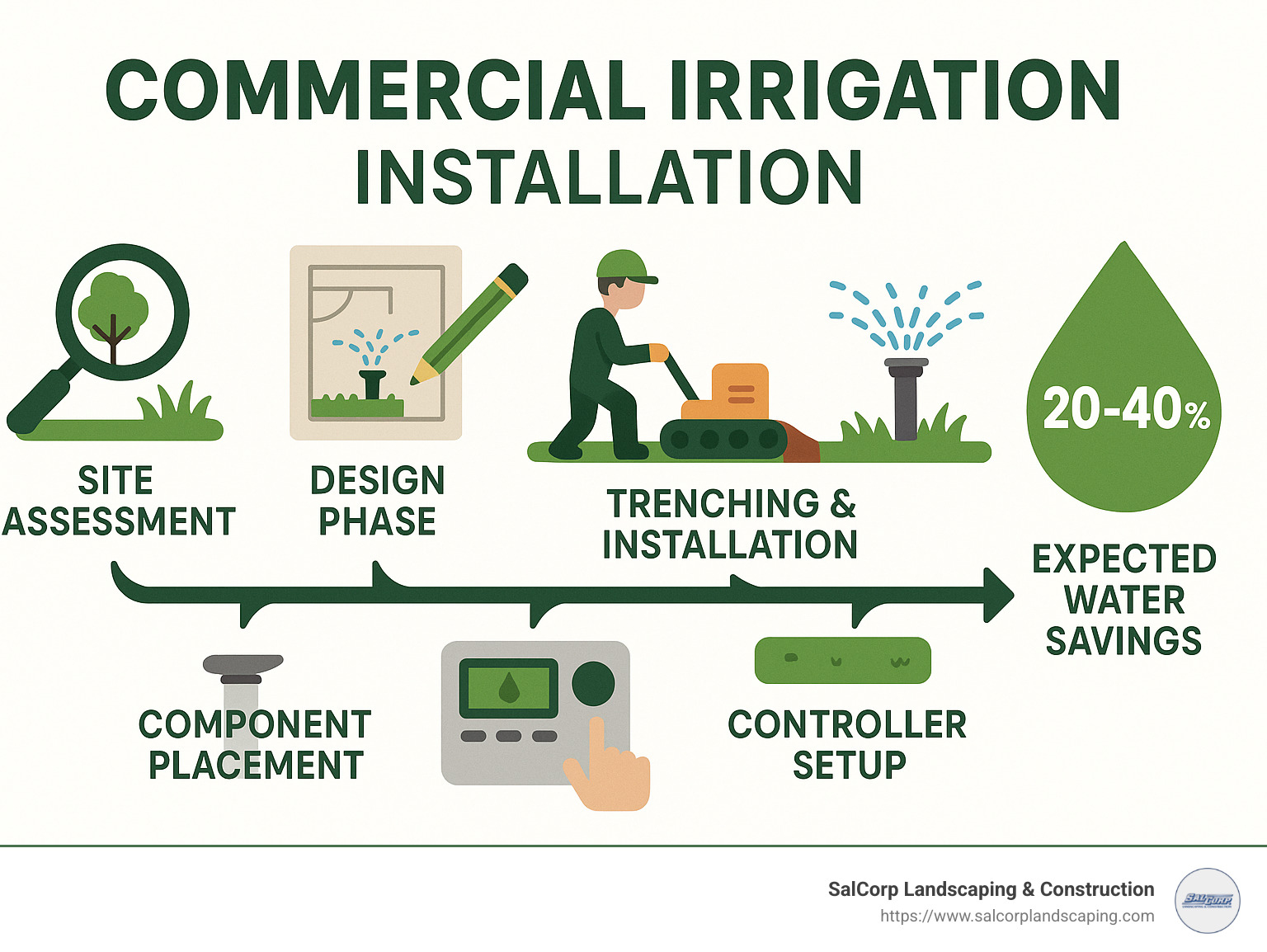
- Site assessment – Analysis of landscape needs, soil, plant types
- System design – Custom planning for water-efficient zones
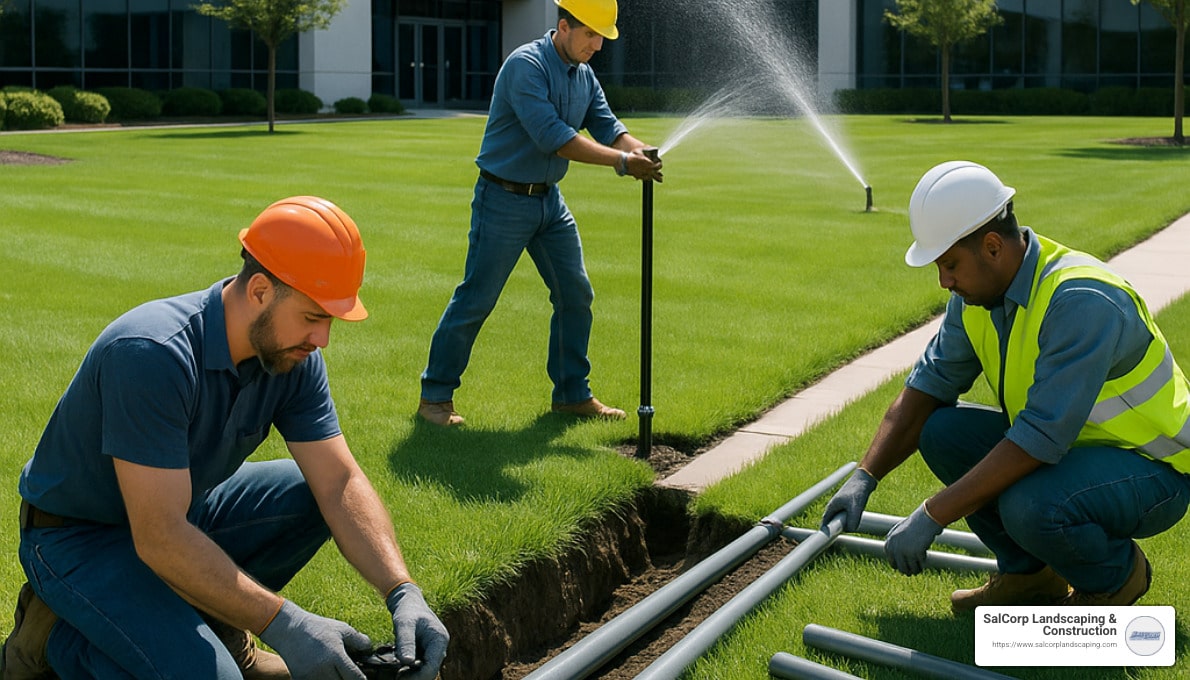
- Professional installation – Trenching, piping, sprinkler placement
- Controller programming – Setting up smart technology for optimal watering
- Testing and adjustments – Ensuring complete coverage and correct operation
A well-designed commercial irrigation system does more than just water plants—it improves property value, reduces maintenance costs, and demonstrates environmental responsibility. Today’s systems incorporate smart technology that adjusts to weather conditions, detects leaks, and can be controlled remotely, making property management significantly easier.
Why invest in professional installation? A leak as small as a dime in an underground sprinkler line can waste 6,300 gallons of water per month. Professional installation ensures proper design, quality components, and code compliance that prevents such waste.
I’m Sal Musto, owner of SalCorp Landscaping & Construction, with over two decades of experience designing and installing commercial irrigation systems that balance water conservation with beautiful landscape management across Massachusetts commercial properties.
What Is Commercial Irrigation Installation?
Commercial irrigation installation is much more than just setting up sprinklers. It’s the art and science of creating a complete water delivery system specifically designed for business properties, office parks, shopping centers, and other commercial landscapes.
Think of it as building an underground network that delivers water exactly where and when your landscape needs it. These systems are carefully engineered with pipes running beneath the surface, connected to various watering devices that pop up only when needed, all controlled by smart technology that makes decisions based on weather and plant needs.
“I like to tell my clients that a good commercial irrigation installation works like the circulatory system for your landscape,” says Sal Musto, owner of SalCorp Landscaping & Construction. “It delivers just the right amount of water exactly where it’s needed, keeping plants healthy while eliminating waste.”
A complete commercial system typically includes underground piping networks, strategically placed sprinklers or drip emitters, zoned control valves, smart controllers, environmental sensors, and required safety devices like backflow preventers. All these components work together to create an efficient, automated watering solution that keeps your property looking its best.
Importance of Commercial Irrigation Installation for Businesses
For business owners and property managers, investing in professional irrigation delivers benefits that go far beyond just watering plants.
First impressions matter in business, and nothing says “professional” like well-maintained grounds. A lush, green landscape creates curb appeal that attracts customers and tenants alike. Studies show that attractive landscaping can boost property values by 5-12% – a significant return on your irrigation investment.
Your tenants will thank you too. Office workers with views of well-maintained green spaces report higher job satisfaction and less stress. In retail environments, pleasant outdoor areas encourage customers to linger and often spend more. Since the pandemic, quality outdoor spaces have become even more valuable workplace amenities.
The financial benefits are clear as well. Manual watering is labor-intensive and wasteful. A properly designed commercial irrigation installation typically reduces water consumption by 20-40% compared to manual methods or outdated systems. Those savings add up quickly on your utility bills.
Modern systems also provide drought resilience. Smart controllers adjust watering schedules based on actual weather data, ensuring your landscape stays healthy even during water restrictions. This demonstrates environmental stewardship – increasingly important for businesses committed to sustainability goals and potentially contributing to LEED certification points.
How Commercial Irrigation Installation Differs from Residential
While the basic principles might seem similar, commercial irrigation installation is a different animal from residential systems in several important ways.
Scale and capacity represent the most obvious difference. Commercial systems must handle much higher flow rates and cover significantly larger areas. This requires larger pipes, more powerful components, and industrial-grade equipment built for continuous operation in demanding conditions.
The complexity of zones also increases dramatically. Commercial properties typically feature diverse landscape elements – from large turf areas to ornamental plantings, tree installations, and sometimes specialized features like green roofs. Each requires different watering approaches, resulting in more sophisticated zone designs.
Regulatory requirements are much stricter for commercial properties. These systems must meet commercial-grade backflow prevention standards, steer more complex permit processes, and often comply with specific water conservation ordinances that apply to business users.
The control systems represent perhaps the biggest leap forward. While home systems might use simple timers, commercial systems often employ sophisticated central controllers that:
- Monitor flow rates to detect leaks immediately
- Integrate with weather stations for real-time adjustments
- Provide remote access via smartphone or computer
- Generate detailed reports for water management
- Connect with building management systems
Finally, maintenance needs are more rigorous. Commercial systems require regular backflow testing, systematic zone inspections, and often contracted service agreements to ensure continuous proper operation.
“At SalCorp, we design commercial systems with both performance and simplicity in mind,” explains Musto. “Even with all this sophisticated technology, we make sure property managers can easily understand and control their systems while we handle the technical maintenance.”
Main Types of Commercial Irrigation Systems
When planning a commercial irrigation installation, understanding the different system types available is crucial for making informed decisions that match your property’s specific needs. Each system has distinct advantages for different landscape elements.
Spray & Rotor Sprinkler Systems
Spray and rotor systems are the backbone of any serious commercial landscape irrigation setup, especially for those expansive turf areas that make your property shine. Think of these as the reliable workhorses that keep your lawns lush and green.
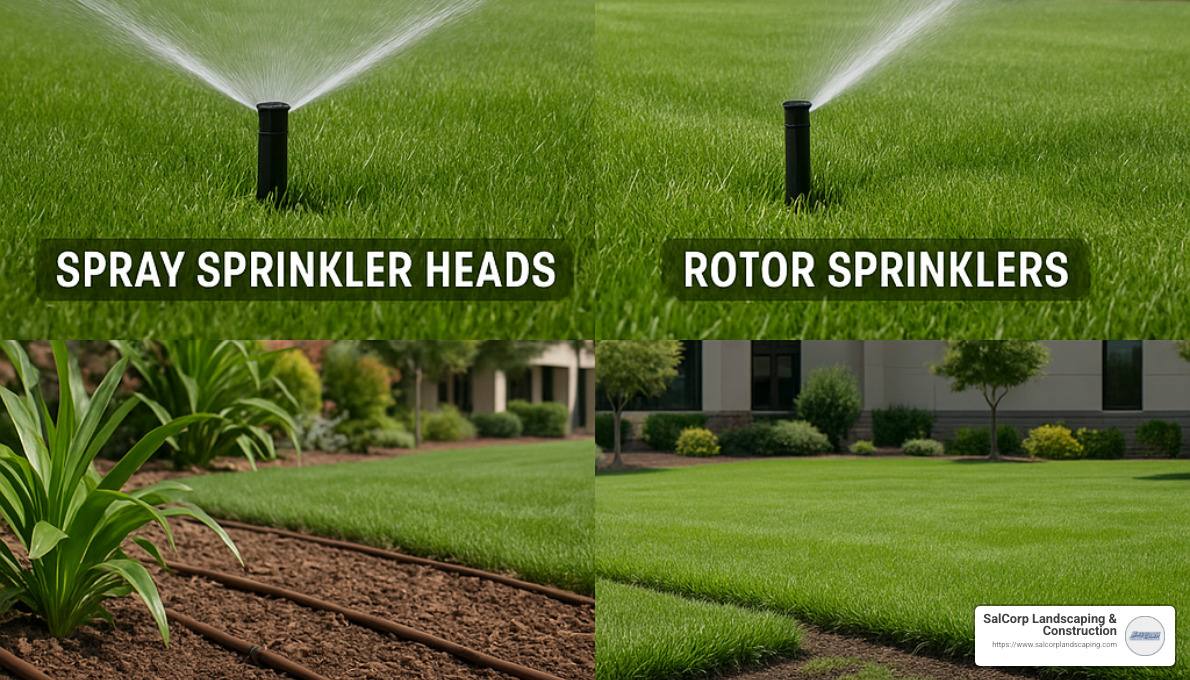
Spray heads are your go-to solution for smaller spaces, with a typical coverage radius of 4-15 feet. They’re perfect for those narrow strips between buildings or smaller turf areas where precision matters. They deliver water in a fixed pattern and work with a higher precipitation rate, meaning they put down more water in less time. For proper coverage, we typically space them about 18 feet apart to create that essential head-to-head coverage pattern.
On the flip side, rotor heads are the long-distance runners of the irrigation world. With an impressive reach of 25-30 feet (and some commercial models stretching beyond 65 feet), these rotating stream sprinklers are ideal for those wide-open spaces like corporate lawns and sports fields. They work at a gentler pace with lower precipitation rates and offer adjustable arc patterns for customized coverage. We recommend placing them around 14 feet apart for that perfect overlap.
“I always tell my clients that head-to-head coverage isn’t just a fancy term – it’s the secret sauce for uniform watering,” says Sal Musto, owner of SalCorp. “Each sprinkler’s spray should reach the adjacent heads, creating a consistent blanket of water across your entire property.”
Today’s modern spray and rotor systems have come a long way in fighting Massachusetts’ notorious winds. We now use nozzles with multi-trajectory streams and larger water droplets that stand up to breezy conditions, ensuring the water reaches its target even on those gusty spring days.
Drip & Soaker Solutions
When it comes to your property’s planting beds, medians, and non-turf areas, drip irrigation and soaker systems are worth their weight in gold. These water-sipping systems deliver moisture directly to where it matters most – the root zone.
Drip irrigation works like a charm for planting beds, shrub areas, and even those impressive green walls that are becoming popular in corporate settings. The beauty of drip is its precision – delivering water directly to the soil through small emitters. This targeted approach can slash water usage by up to 60% compared to traditional sprinklers. As a bonus, it naturally suppresses weed growth and reduces plant disease by keeping foliage nice and dry. Just remember that these systems need proper filtration to prevent clogging, along with regular check-ups to ensure everything’s flowing smoothly.
Soaker hoses offer a simpler alternative that works wonderfully for linear plantings like hedge rows and foundation plants. These porous hoses “weep” water along their entire length, providing a steady moisture strip that’s perfect for rows of plants. While they’re easier to install and great for retrofit projects, they typically don’t last as long as professional drip systems and offer less precise control.
I’ve seen how drip systems transform commercial properties here in Massachusetts. Not only do they conserve water through minimal evaporation and runoff, but they also create healthier plants with fewer weeds competing for resources – a win-win for both your budget and your landscape’s appearance.
Smart & ET-Based Systems
The game-changer in modern commercial irrigation installation has undoubtedly been the evolution of smart controllers, especially those leveraging evapotranspiration (ET) data to make intelligent watering decisions.
ET-based controllers are like having a meteorologist and plant scientist working together to manage your irrigation system. They analyze temperature, rainfall, humidity, and wind data to calculate exactly how much water your plants need – no more, no less. These brilliant devices can trim water usage by 30-50% compared to traditional timers by automatically adjusting watering schedules based on actual conditions. Some connect with on-site weather stations, while others tap into regional weather data – either way, they’re making real-time decisions based on science, not guesswork.
The true magic happens when you add smart system components to the mix. Flow sensors act like watchful guardians, monitoring water use and alerting you to potential leaks before they become costly disasters. Soil moisture sensors take the guesswork out of watering by measuring actual root zone moisture levels. Rain sensors prevent your system from running during a downpour (and save you from those embarrassing moments when sprinklers run during rainfall), while freeze sensors protect your system during those cold New England winters. The cherry on top? Mobile interfaces that let you monitor and control everything from your smartphone, whether you’re in the office or on vacation.
“An ET-based system is like upgrading from a flip phone to a smartphone,” explains Sal. “Once you experience the convenience and savings, you’ll wonder how you ever managed without it.”
Many of our commercial clients across Massachusetts have reported water savings of 20-40% after upgrading to smart irrigation controllers. The best part? These systems typically pay for themselves through reduced water bills within just a few years – making them as smart for your budget as they are for water conservation.
Want to learn more about the various irrigation systems available? Check out our detailed guide on irrigation systems or explore the cutting-edge Hunter technology that we often recommend for commercial applications.
Planning & Commercial Irrigation Installation Step-by-Step
Successful commercial irrigation installation follows a methodical process that ensures optimal system performance and longevity. At SalCorp Landscaping & Construction, we’ve refined this process through decades of experience serving Massachusetts commercial properties.

Assessing Your Property’s Water Needs
The foundation of effective irrigation design begins with a comprehensive assessment of your property’s specific requirements.
When we visit your site, we start with a thorough evaluation. We’ll walk the grounds, measuring your total irrigable area and identifying the different landscape zones—from open turf areas to densely planted beds and tree installations. We pay special attention to sun and shade patterns, as these create microclimates that significantly affect water needs. Those south-facing beds? They’ll need different watering than the shady north side of your building.
Soil type makes a huge difference in how we approach your irrigation design. Sandy soils drain quickly—sometimes too quickly—requiring more frequent but shorter watering cycles. Clay soils, on the other hand, hold moisture longer but are prone to runoff if watered too quickly. The ideal loam soil offers balanced water retention, but is less common in many Massachusetts commercial properties.
“The plants you’ve chosen for your landscape essentially dictate your watering needs,” explains our irrigation specialist. “Your Kentucky bluegrass lawn might need water every other day during summer heat, while those mature oak trees might need deep watering just once a month.”
Understanding your water supply is perhaps the most critical step. We’ll test your water pressure (measured in PSI) and available flow rate (measured in GPM – gallons per minute). A simple yet effective way to determine your property’s water capacity is what we call the bucket test. With a pressure gauge set at 35 PSI on an outside faucet, we time how long it takes to fill a 5-gallon bucket, then calculate your GPM using the formula: (gallons × 60) ÷ seconds.
For example: If filling a 5-gallon bucket takes 18 seconds, your flow rate would be (5 × 60) ÷ 18 = 16.67 GPM. This information becomes the foundation for every design decision we make.
Designing Efficient Zones & Selecting Components
Once we understand your property’s water needs and supply capabilities, we develop a comprehensive irrigation design that balances efficiency with effectiveness.
Zone planning is both an art and a science. We separate areas based on plant water requirements, sun exposure, soil conditions, and available water pressure. The cardinal rule we never break: never mix different types of irrigation heads in the same zone. Spray heads, rotors, and drip emitters all have different precipitation rates and should be controlled separately to avoid drowning some plants while leaving others thirsty.
Component selection can make or break a system’s longevity. In Massachusetts, we typically recommend polyethylene piping over PVC due to our freeze-prone climate. The pipe diameter matters tremendously—too small, and you’ll have pressure issues; too large, and you’re wasting money on materials.
For sprinkler heads, we match the tool to the job. Spray heads work beautifully for smaller areas with a 10-15 foot radius, while rotor heads efficiently cover larger expanses of 25-30+ feet. We also consider specialty nozzles for unique applications, like low-precipitation nozzles for sloped areas prone to runoff.
The “brains” of your system—controllers and sensors—have seen incredible innovation in recent years. We often recommend smart controllers with weather-based adjustments that can reduce water usage by 20-40%. Rain sensors prevent the embarrassing and wasteful scenario of sprinklers running during a downpour, while flow sensors can detect leaks before they become costly problems.
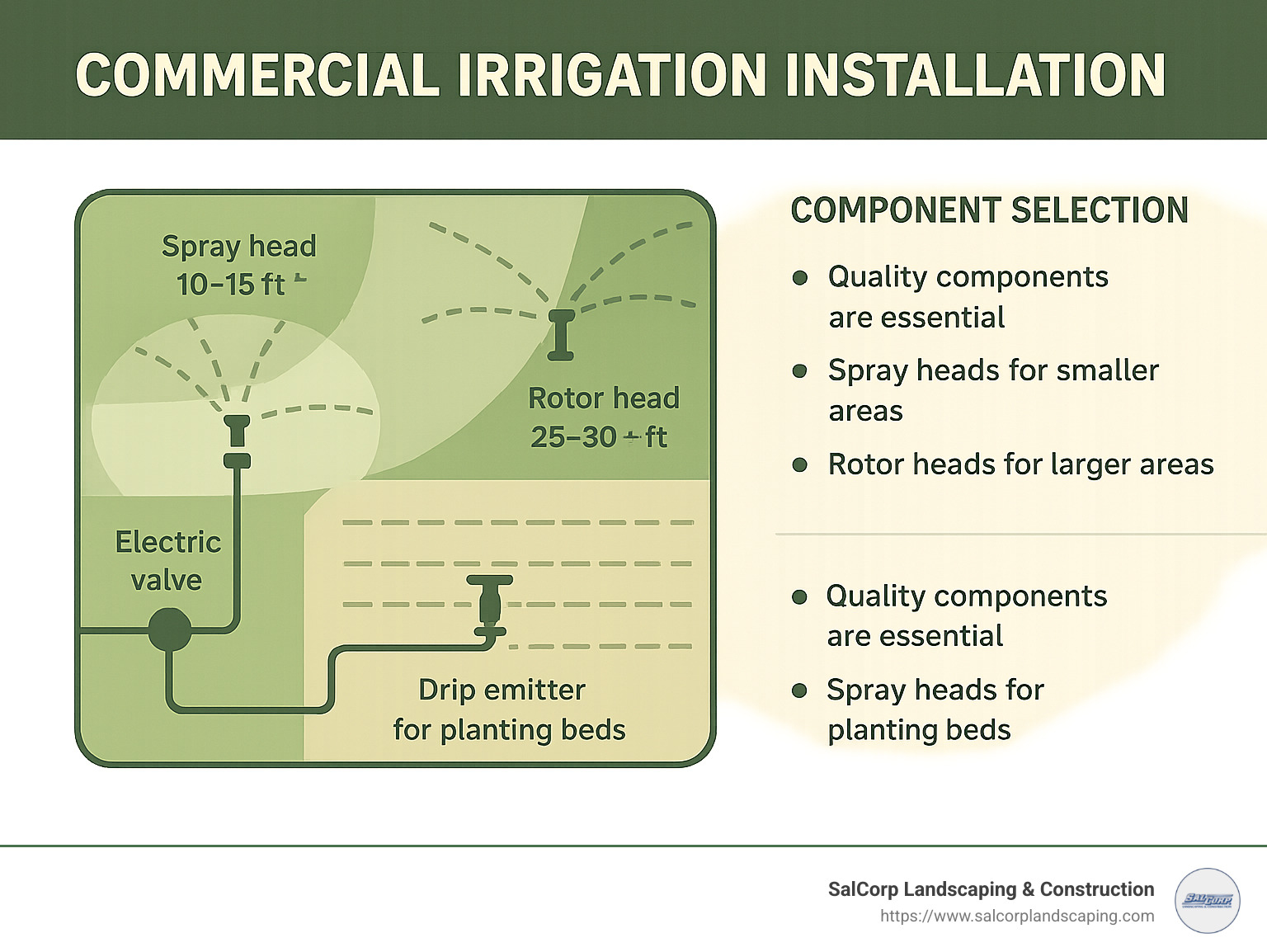
Every professional commercial irrigation installation includes detailed computer-aided design (CAD) drawings. These blueprints specify pipe routing and sizing, valve and head locations, controller placement, zone assignments, water source connections, and backflow prevention details. Beyond guiding our installation team, these plans become valuable documentation for future maintenance and modifications—a resource you’ll appreciate years down the road.
Average Installation Costs & Budget Factors
Let’s talk about the investment in a commercial irrigation installation. While every project is unique, understanding the main cost drivers helps in budget planning.
Property size naturally affects cost, but not always linearly. Larger properties require more materials and labor, but economies of scale often reduce per-square-foot costs for very large areas. A 10-acre office park won’t cost ten times more than a 1-acre property.
The number of zones in your system significantly impacts price. More zones mean more valves, more wiring, and more sophisticated controllers—but also more precise water management that saves money long-term. We find that most commercial properties benefit from having more zones rather than fewer, even with the additional upfront cost.
Your choice of system type and components creates another variable. Basic systems with standard components cost less initially, but smart systems with weather-based controllers offer greater long-term savings. While drip irrigation typically costs less per square foot than sprinkler systems, the ideal solution often combines both approaches.
Site conditions can throw curveballs into any budget. Existing mature landscaping requires careful trenching to avoid damage. Rocky soil (a common challenge in Massachusetts) increases installation time. Limited site access might affect equipment use and labor requirements.
Based on industry data, commercial property managers should expect a significant investment that varies widely depending on the above factors. According to HomeAdvisor, the U.S. average cost to install a sprinkler system on a one-acre lot is around $10,280, while commercial systems for larger properties with advanced features can range from $30,000 to $120,000+. These figures represent average internet ranges and not actual costs for SalCorp Landscaping.
A general industry rule of thumb suggests budgeting approximately $1,000 per zone for commercial sprinkler systems, with larger systems benefiting from economies of scale that reduce the per-zone cost.
The good news? The return on investment is substantial. Many of our Massachusetts commercial clients find that their irrigation system investment pays for itself within 3-5 years through water savings alone. Add in reduced labor costs for landscape maintenance, extended plant life with fewer replacements needed, improved property value, and higher tenant satisfaction, and the value proposition becomes clear.
As one property manager told us after we completed their office park installation: “It’s not just about saving water—it’s about saving time, saving plants, and ultimately saving money while looking good doing it.”
Maximizing Water Efficiency, Compliance & Sustainability
In today’s environmentally conscious world, water conservation isn’t just good for the planet—it’s essential for your bottom line. A thoughtfully designed commercial irrigation installation does more than just keep your landscape green; it demonstrates your commitment to sustainability while significantly reducing operating costs.
Environmental & Regulatory Checkpoints
Navigating the regulatory landscape can be as complex as designing the irrigation system itself. In Massachusetts, your commercial irrigation installation must clear several important problems:
The permitting process varies by municipality, but typically includes plumbing permits for backflow prevention devices and electrical permits for controller installation. Some sensitive areas may require conservation commission approval. Don’t be surprised if permit processing stretches from a few days to several weeks—it’s important to build this time into your project timeline.
“Understanding local regulations before beginning your commercial irrigation installation is essential,” says our permitting specialist. “We handle the entire permitting process for our clients to ensure compliance and avoid delays.”
Backflow prevention is non-negotiable for commercial properties. These critical devices protect the public water supply by preventing irrigation water from flowing back into potable water systems. They require annual testing and certification, must be installed by licensed professionals, and need proper protection from our harsh Massachusetts winters.
Many Massachusetts communities have also implemented water conservation ordinances that directly impact how and when you can water your property. These might include restricted watering days or hours, prohibition of irrigation during rainfall, requirements for smart controllers or rain sensors, and special permits for new system installation.
The EPA’s WaterSense program offers valuable guidelines for water-efficient irrigation. Working with a WaterSense-certified professional ensures your system meets established standards for efficiency and performance, potentially helping you qualify for rebates or incentives in some areas.
Long-Term ROI of Efficient Commercial Irrigation Installation
The upfront investment in quality irrigation technology delivers impressive returns that compound over time:
Water bill reduction is the most immediate and measurable benefit. A properly designed and maintained commercial system typically delivers 20-40% reduction in water usage compared to conventional systems. This translates directly to lower utility costs, with even greater savings in communities that implement tiered water rates for high-volume users.
“One of our office park clients in Walpole reduced their summer water bills by over 30% after upgrading to a smart irrigation system,” shares our water management specialist. “The system paid for itself in just over three years, and they continue to see those savings year after year.”
Landscape longevity and quality improvements are equally valuable, though sometimes less obvious on a balance sheet. Precise irrigation dramatically improves plant health by eliminating stress from under or overwatering, reducing disease pressure through appropriate watering timing, promoting deeper root growth for greater drought tolerance, and minimizing erosion and soil compaction. The result? A more resilient landscape that requires fewer replacements and maintains its aesthetic appeal.
Some insurance providers have begun recognizing the risk-reduction benefits of modern irrigation systems. Properties with automatic shut-off features that prevent water damage, flow monitoring that detects leaks before they cause property damage, and documented professional maintenance programs may qualify for reduced premiums.
For properties pursuing LEED certification, efficient irrigation systems can contribute valuable points in the Water Efficiency category. Strategies like reduced potable water use for irrigation, rainwater harvesting and reuse systems, and advanced irrigation technology all support sustainability goals while enhancing your property’s green credentials.
The beauty of investing in water-efficient irrigation isn’t just the environmental benefit—it’s the rare opportunity to make a business decision that improves both your property’s appearance and your financial outlook simultaneously. With water rates continuing to rise in many Massachusetts communities, the case for efficiency becomes stronger every year.
Maintenance, Seasonal Care & Troubleshooting
A commercial irrigation installation is like a high-performance vehicle—it runs beautifully when properly maintained but can quickly develop issues if neglected. In Massachusetts, where we experience all four seasons in their full glory, your irrigation system needs specific attention throughout the year to keep it performing at its best.
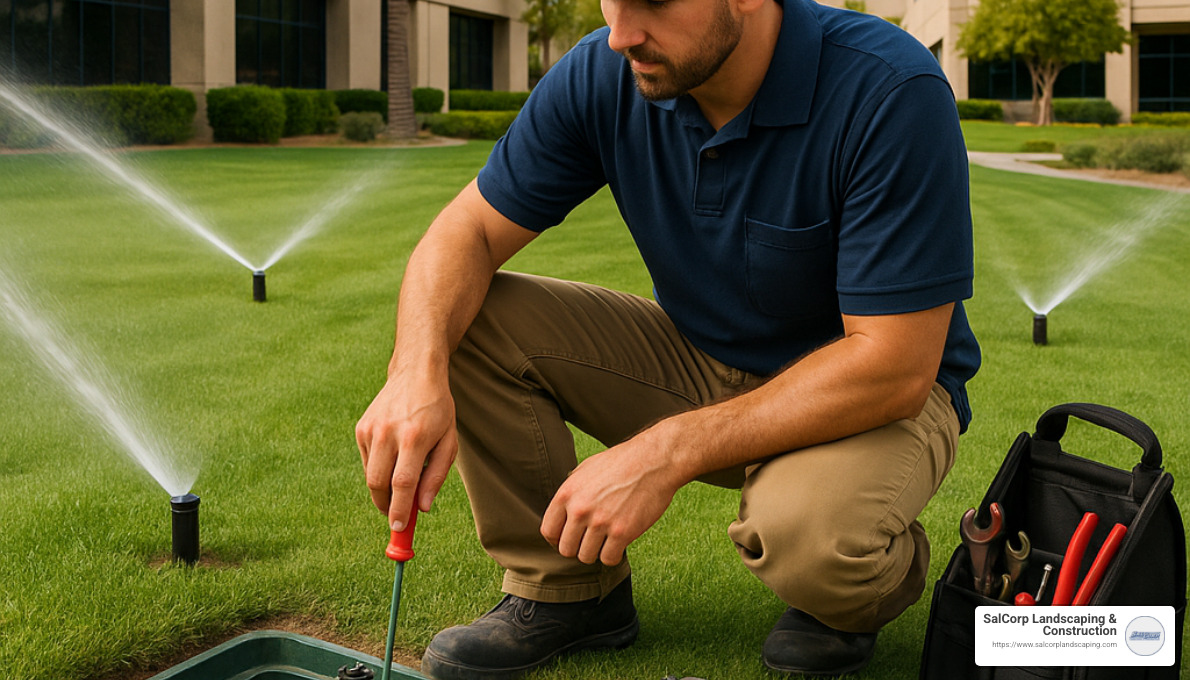
Winterizing & Reactivating Systems in Cold Climates
If you’ve lived through a Massachusetts winter, you know how unforgiving the freezing temperatures can be. When it comes to your irrigation system, winter preparation isn’t just recommended—it’s essential.
Fall Winterization: The Frost Protection Plan
The winterization process typically begins in late October or early November, before the first hard freeze. At SalCorp, we take a methodical approach to ensure every drop of water is removed from your system.
First, we shut down the water supply and relieve pressure throughout the system. This initial step prevents water from entering the system during winter months.
Next comes the critical compressed air blow-out. Using specialized equipment, we carefully force compressed air through each zone to push out any remaining water. This requires a delicate touch—too much pressure can damage components, while too little leaves water behind to freeze and crack pipes.
“I’ve seen what happens when systems aren’t properly winterized,” says Sal Musto, our founder. “A single frozen valve can burst and flood an area when it thaws, or worse, damage underground pipes that require extensive excavation to repair.”
We also pay special attention to backflow prevention devices, which are particularly vulnerable to freezing damage. These are either properly drained and insulated or, when possible, removed and stored for the winter.
Before we leave, we document the system’s condition and note any repairs that might be needed in spring. This proactive approach allows us to order parts during the off-season and ensure your system is ready to go when the growing season returns.
Spring Activation: Waking Up Your System
When the soil thaws and the threat of hard freezes passes (typically mid-April in Massachusetts), it’s time to bring your irrigation system back to life—carefully.
We begin with a thorough visual inspection of all accessible components, looking for any damage that might have occurred over winter. Controllers, sensors, and exposed pipes all get checked before we introduce any water to the system.
The pressurization process is handled with care. We slowly open the main water valve to allow water to gradually fill the pipes. This prevents water hammer—a sudden pressure surge that can damage components. As each zone fills, we watch for leaks or abnormal operation.
Once water is flowing, we perform a zone-by-zone test to verify that every sprinkler head is functioning properly. Clogged nozzles are cleaned, heads are adjusted for proper coverage, and any winter damage is addressed.
The final step involves programming your controller for spring conditions. We update watering schedules based on current weather patterns and seasonal needs, and ensure all smart features and sensors are communicating properly.
“Spring activation is about more than just turning the water back on,” our service manager explains. “It’s a comprehensive checkup that sets the stage for efficient operation throughout the growing season.”
Common Issues & Quick Fixes
Even the best commercial irrigation installation will develop occasional issues. Knowing what to watch for helps catch small problems before they become major headaches.
When Sprinklers Spray Incorrectly
If you notice uneven spray patterns or reduced coverage, clogged nozzles are often the culprit. These can be cleaned by removing the nozzle and rinsing it with clean water. A soft toothbrush can help remove stubborn mineral deposits.
In Massachusetts, our water often contains minerals that can build up in nozzles over time. Regular cleaning as part of your maintenance routine can prevent this issue from affecting your landscape’s health.
The Mystery of Wet Spots
Soggy areas where there shouldn’t be water often indicate broken lateral lines. These breaks typically occur from freezing damage or accidental damage from landscaping equipment. While minor breaks can sometimes be repaired without extensive excavation, larger issues may require professional attention.
“We had a client who noticed a particularly green, lush patch of lawn in an otherwise properly maintained area,” recalls our technician. “When we investigated, we found a hairline crack in a lateral line that was essentially ‘micro-irrigating’ that spot 24/7. Their water bill dropped noticeably after we fixed it.”
When Pressure Drops
If your sprinklers aren’t reaching as far as they used to, pressure issues may be to blame. This can stem from municipal water pressure fluctuations, leaks in the system, or too many heads operating on a single zone.
A quick check of your system’s pressure gauge (if equipped) can help diagnose this issue. For systems without gauges, watching how water emerges from the heads can provide clues—weak, dribbling spray suggests pressure problems.
Technology Troubles
Modern controllers are essentially specialized computers, and like all technology, they occasionally encounter issues. Error codes, blank screens, or systems that don’t run on schedule often indicate controller problems.
Most controllers have a reset procedure that can resolve minor glitches. Checking power connections and replacing backup batteries are simple fixes that often restore normal operation. For more complex smart controllers, ensuring proper WiFi connectivity may be necessary.
For Massachusetts commercial properties, we recommend a three-part annual maintenance program:
- Spring activation (April)
- Mid-season checkup (July)
- Fall winterization (October/November)
This schedule ensures your commercial irrigation installation performs efficiently throughout the growing season and is properly protected during our harsh winters.
Preventative maintenance is always less expensive than emergency repairs. A small investment in regular system checks can prevent costly water waste and landscape damage while extending the life of your irrigation investment.
Selecting a Qualified Commercial Irrigation Contractor
Finding the right partner for your commercial irrigation installation can make all the difference between a system that delivers years of efficient performance and one that creates ongoing headaches. This isn’t just about getting the lowest bid—it’s about finding a contractor with the right expertise, credentials, and approach to ensure your investment pays off.
Questions to Ask Before Signing
When you’re interviewing potential irrigation contractors, think of it as hiring an important team member rather than simply shopping for a service. The right questions will reveal whether they’re truly qualified for your project.
Start with their experience and specialization. “How long have you been installing commercial systems, and what percentage of your work is commercial versus residential?” Many contractors primarily handle residential jobs, which don’t require the same expertise as commercial projects. Ask to see examples of similar properties they’ve serviced—a contractor who works regularly with office parks will better understand your needs if you manage one.
Credentials matter in irrigation work. Verify they’re properly licensed and insured for commercial projects in Massachusetts. Ask about specific irrigation certifications, particularly from the Irrigation Association or if they’re an EPA WaterSense partner. These certifications demonstrate a commitment to water-efficient practices and ongoing professional education.
Dig into their technical knowledge. Quality contractors should be comfortable discussing smart controllers, ET-based systems, and how they’d integrate with your existing building management systems. If they seem vague about advanced technology, they might not be equipped to install the most efficient system for your property.
The design process reveals a lot about their professionalism. Will they provide detailed CAD drawings? How do they determine zone layouts? What brands do they recommend and why? A thorough contractor will explain their reasoning and help educate you about the options rather than simply pushing a one-size-fits-all solution.
Warranty and support are crucial for long-term success. What guarantees do they offer on both parts and labor? How quickly do they respond to emergency calls during peak season? Ask whether they’ll train your maintenance staff on basic system operation and troubleshooting.
“A truly professional irrigation contractor should be asking you as many questions as you’re asking them,” notes Sal Musto of SalCorp Landscaping & Construction. “They need to understand your property’s specific needs, your water conservation goals, and your maintenance capabilities to design the right system.”
Red-Flag Warning Signs
Watch out for these concerning signs that might indicate a contractor isn’t right for your commercial irrigation installation:
They dodge permit discussions. Quality contractors handle permitting as part of their service. If they suggest skipping permits or leaving that responsibility to you, they may be cutting corners elsewhere or lack familiarity with commercial requirements.
Their proposal lacks specifics. Be wary of quotes with vague descriptions like “commercial-grade materials” without detailing brands, models, and quantities. You deserve to know exactly what you’re paying for, and detailed proposals reflect thorough planning.
Their bid seems too good to be true. While everyone appreciates saving money, unusually low bids often mean corners will be cut—whether through inferior components, inexperienced labor, or incomplete scope. As the saying goes: “The bitterness of poor quality remains long after the sweetness of low price is forgotten.”
They seem unfamiliar with backflow prevention requirements. Commercial properties must comply with specific backflow prevention standards to protect public water supplies. If a contractor seems unsure about these requirements or suggests residential-grade solutions, they likely lack commercial expertise.
They skip the site analysis. Each property has unique characteristics that should inform irrigation design. Be cautious of contractors who propose “standard” systems without conducting a thorough site assessment, measuring your property, or testing your water pressure and flow rates.
They can’t provide references from similar properties. Past performance is one of the best indicators of future results. Ask for references from commercial clients with properties similar to yours, and take the time to contact them about their experience.
At SalCorp Landscaping & Construction, we believe in complete transparency throughout the commercial irrigation installation process. We want our clients to fully understand our recommendations and how to maximize their irrigation investment. Our comprehensive approach includes detailed site analysis, custom system design, professional installation, and ongoing support to ensure your landscape thrives while conserving water.
More info about commercial lawn care
Frequently Asked Questions about Commercial Irrigation Installation
How many zones will my property need?
This is one of the most common questions we hear, and the answer depends on several key factors unique to your property.
Your available water supply is the first consideration. We’ll measure your property’s water pressure and flow rate (GPM) to determine how many sprinkler heads can operate at once. If your sprinklers collectively need more water than your supply can deliver, we’ll need to create multiple zones that run sequentially.
Landscape diversity also plays a crucial role. Think of your property as a collection of micro-environments, each with different watering needs. Turf areas typically need more frequent watering than mature trees, while annual flowers have different requirements than established shrubs. Creating separate zones for these different plant types prevents both overwatering and underwatering.
Sun exposure matters tremendously in irrigation design. That south-facing bed baking in full Massachusetts summer sun needs a very different watering schedule than the shady north side of your building. Separate zones allow us to deliver precisely the right amount of water to each area.
Topography can’t be overlooked either. Water follows gravity, so sloped areas often need their own zones with carefully calibrated run times to prevent wasteful runoff while ensuring proper coverage.
“Most commercial properties we work with in Massachusetts require at least 4-8 zones,” explains our irrigation designer. “Larger corporate campuses or retail centers might need 12-20 zones or more for optimal efficiency.”
During our comprehensive site assessment, we’ll calculate your property’s specific requirements based on a thorough water audit and landscape analysis, so you’ll know exactly what you need before we begin.
Can smart irrigation tie into my building-management system?
Absolutely! Modern smart irrigation technology is designed to play nicely with sophisticated building management systems (BMS). This integration creates a more holistic approach to property management.
Most quality commercial controllers can connect through industry-standard protocols like BACnet, which allows your irrigation system to communicate seamlessly with your building automation platform. Many systems also offer API connections that enable data sharing between different software platforms.
The benefits of this integration are substantial:
“One of our clients, a technology company in Needham, saw immediate improvements after integrating their irrigation system with their existing building management platform,” shares our technology specialist. “Their facility team now receives automated alerts for any irrigation issues alongside their HVAC and security notifications. They can monitor water usage patterns alongside other building metrics, making it much easier to spot anomalies that might indicate leaks or system problems.”
The level of integration possible depends on both your irrigation controller capabilities and your existing BMS platform. During our initial consultation, we’ll evaluate your specific requirements and recommend solutions that provide the connectivity you need without unnecessary complexity or cost.
How often should my system be inspected?
For commercial properties in Massachusetts, regular inspections are essential to protect your irrigation investment and ensure optimal performance through our challenging seasonal changes.
We recommend a three-point seasonal inspection schedule:
Spring Activation (March-April) is crucial after our harsh winters. This comprehensive inspection includes restoring water to the system gradually to prevent pressure surges, checking every component for winter damage, programming your controller for spring conditions, and conducting required backflow testing and certification.
Mid-Season Evaluation (June-July) catches issues during peak demand when your system is working hardest. We’ll clean and adjust nozzles for optimal spray patterns, fine-tune run times based on how your plants have developed, and make any needed adjustments to keep your landscape thriving through summer heat.
Fall Winterization (October-November) is absolutely essential in our Massachusetts climate. We’ll properly shut down your system, remove all water using compressed air to prevent freezing damage, document any repairs needed before spring, and set your controller to winter mode.
Between these major service points, we recommend monthly quick checks during the operating season. Your maintenance staff can help by watching for obvious issues like sprinklers that aren’t popping up properly, unusually wet or dry areas, or water running onto sidewalks or parking areas.
“Regular inspections are truly the best insurance policy for your irrigation investment,” emphasizes our service coordinator. “We can identify and correct many problems before they cause landscape damage or waste significant amounts of water.”
Many of our commercial clients find that a comprehensive maintenance agreement delivers the best value, including scheduled inspections and priority service for any issues that arise between visits. This proactive approach typically saves money in the long run by extending system life and preventing costly emergency repairs.
Conclusion
Investing in a professional commercial irrigation installation goes far beyond simply burying some pipes and adding sprinklers. It represents a thoughtful, comprehensive approach to water management that carefully balances the health of your landscape with responsible resource conservation and long-term property value improvement.
Modern smart irrigation systems have transformed how commercial properties manage their outdoor spaces, offering property managers unprecedented control and efficiency. These advanced systems make it possible to maintain stunning landscapes while demonstrating genuine environmental stewardship – something increasingly important to tenants, visitors, and stakeholders alike.
At SalCorp Landscaping & Construction, we bring more than 20 years of hands-on experience to commercial irrigation projects throughout Massachusetts. There’s a significant advantage to working with our owner-operated business: we maintain our own equipment and employ a highly trained staff who understand the unique challenges of New England’s climate and soil conditions. This allows us to provide truly comprehensive solutions from the initial design consultation through expert installation and ongoing seasonal maintenance.
Our approach to commercial irrigation installation stands apart through:
Truly customized design that addresses your property’s specific needs rather than one-size-fits-all solutions. We consider everything from soil composition to plant types to sun exposure patterns when creating your system.
Water-efficient components carefully selected to reduce consumption and lower your operating costs year after year. The savings on water bills alone often justify the investment within just a few years.
Smart technology integration that automatically adjusts to changing weather conditions, ensuring your landscape receives precisely what it needs – no more, no less – even during Massachusetts’ unpredictable weather patterns.
Code-compliant installation meeting all regulatory requirements, including proper backflow prevention and adherence to local water conservation ordinances. We handle all permitting so you don’t have to steer that complex process.
Comprehensive training for your facility staff so they understand how to operate and monitor your new system effectively. We don’t just install and leave – we ensure you’re comfortable managing your investment.
Ongoing seasonal support to ensure continued performance and efficiency throughout the system’s lifetime. Our maintenance programs are designed to maximize the longevity of your irrigation investment.
Your landscape creates the first impression visitors have of your commercial property. A properly designed and installed irrigation system ensures that impression is consistently positive while simultaneously controlling operating costs and conserving our precious water resources.
Ready to transform your commercial property with a state-of-the-art irrigation system? Contact SalCorp Landscaping & Construction today to schedule your personal site assessment and consultation. Our friendly team proudly serves communities throughout Massachusetts, including Boston, Walpole, Foxborough, Norwood, and surrounding areas.
More info about our commercial landscaping services