Why Commercial Landscape Designs Are Crucial for Your Business
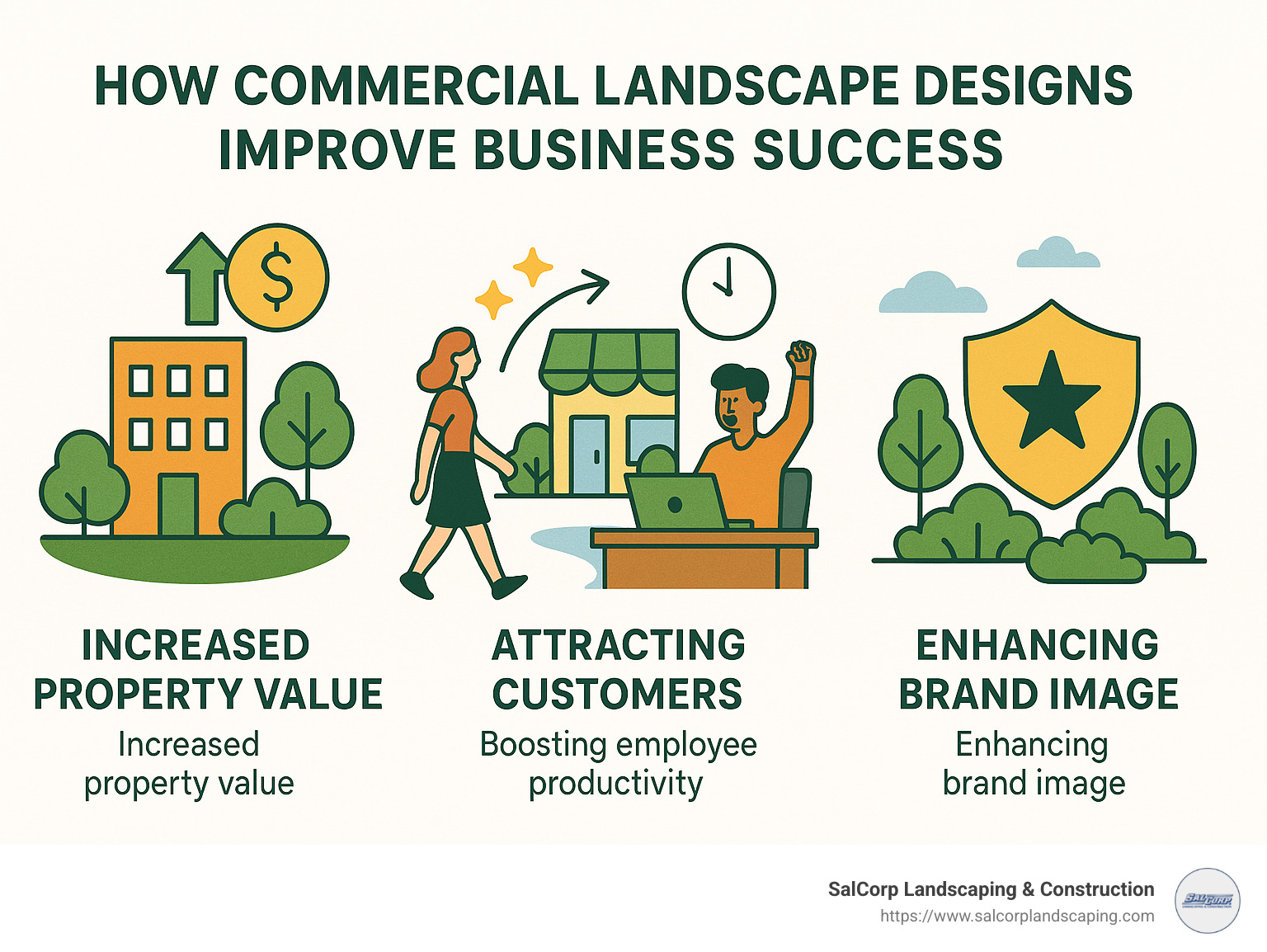
Commercial landscape designs can significantly impact your business’s success by helping you attract more customers, improve employee productivity, and boost your property’s value.
Here’s what great commercial landscape designs can do for your business, at a glance:
- Attract Customers: Quality landscaping helps make an excellent first impression, encouraging visitors to stop in and stay longer.
- Support Employees: Landscaping with plants has shown up to a 23% boost in employee productivity and concentration.
- Increase Property Value: Thoughtful outdoor spaces can raise property values by as much as 15% and lift rental rates by about 7%.
- Strengthen Your Brand: 80% of customers prefer brands committed to sustainability—your landscape shows your values in action.
I’m Sal Musto, owner of SalCorp Landscaping & Construction, and over the past two decades, I’ve worked hands-on delivering expert commercial landscape designs that lift the functionality and curb appeal of Massachusetts businesses. My team and I understand how a visually appealing outdoor space can directly affect your business’s success.
Key terms for commercial landscape designs:
– commercial landscape lighting
– commercial hard landscaping
– commercial landscape contractors
The Importance of Commercial Landscape Design
Think about the last time you visited a business: what was the first thing you noticed? Chances are, it was the outside appearance—the landscaping, cleanliness, and overall curb appeal. Like it or not, we all judge books by their covers, and when it comes to your business, the exterior speaks volumes about your brand.
That’s why thoughtful commercial landscape designs aren’t just about planting a few flowers or having a neatly mowed lawn. They’re about creating a space that truly reflects your company’s values, improves your brand image, and supports your business goals.
In fact, studies show that well-planned, attractive outdoor spaces can significantly boost a property’s value—sometimes by as much as 15%. That’s a meaningful increase, highlighting that great landscaping isn’t just aesthetic—it’s smart business too.
But the impact doesn’t end there. A carefully planned landscape design draws people in, creates a welcoming atmosphere, and encourages them to linger, explore, or visit again. Whether customers, clients, or even potential employees, a beautifully designed exterior leaves a warm, lasting first impression that sticks with people.
Your landscaping also says something important about your brand image and its values. At SalCorp Landscaping & Construction, our lead designer always says, “Commercial landscape design is essential for portraying a brand’s identity and values. Creating inviting outdoor spaces is critical for both client impressions and employee well-being.” Today’s customers care deeply about sustainability and eco-consciousness, and a thoughtfully designed outdoor space can visually communicate your commitment to these values.
Here in Massachusetts, we experience every season vividly—from vibrant springs and lush summers, to colorful autumns and snowy winters. Effective commercial landscape designs adapt to our climate’s distinct shifts, providing year-round beauty and practicality. At SalCorp, we’ve spent over 20 years helping businesses create inviting outdoor spaces that look stunning all year long.
Commercial landscape designs are about more than just appearances. They’re about setting your business up for long-term success—from improving property value and attracting customers, to building a solid brand and even boosting employee happiness. Investing in a professionally designed landscape isn’t just good for looks—it’s great for business.
Benefits of Investing in Commercial Landscaping
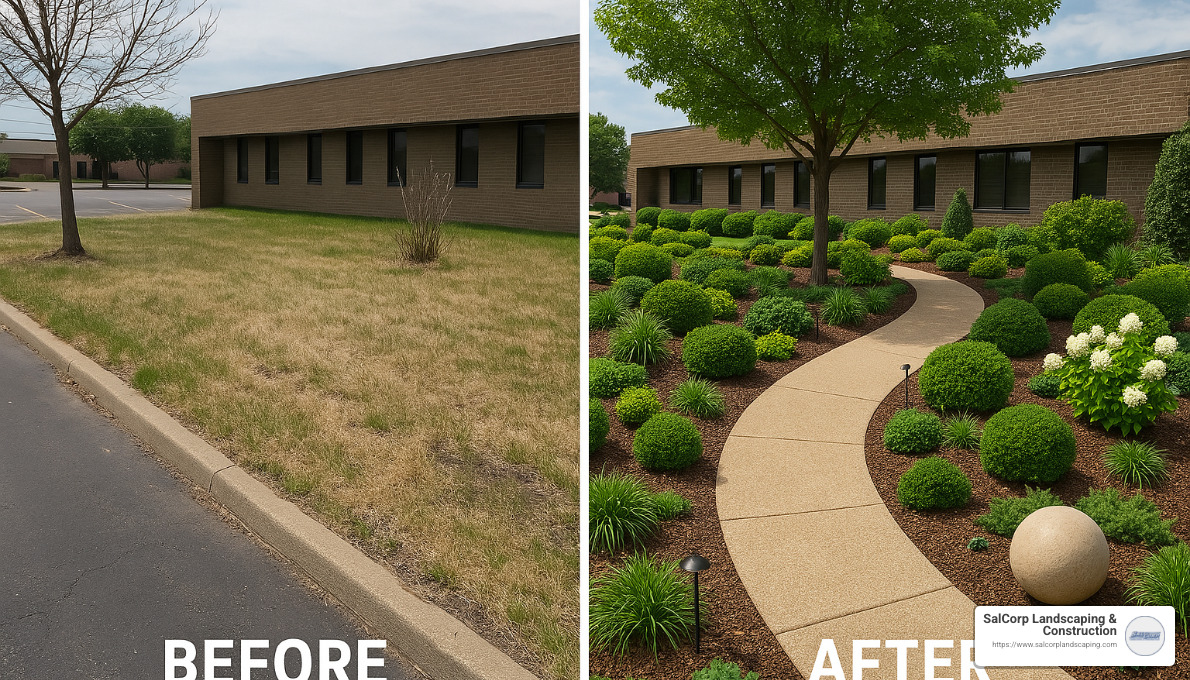
When you invest in professional commercial landscape design, you’re not just making your property look prettier – you’re making a strategic business decision with real returns. Let’s look at how thoughtful landscaping directly benefits your bottom line:
Enhancing Employee Productivity and Concentration
Ever notice how a walk outside can clear your head? There’s science behind that feeling.
Plants do more than just look nice – they actually help your team perform better. A survey conducted by Plantsatwork found that plants can help to relieve stress and improve production levels. Your employees’ concentration and productivity can be positively influenced, with the research showing concentration levels may increase by up to 23%.
This isn’t just about adding a few desk plants. When you extend greenery to your outdoor spaces, you create environments where your team can recharge, collaborate, or simply breathe fresh air.
One of our clients in Dedham shared: “After SalCorp renovated our office landscape, we noticed employees taking lunch outdoors and holding small team meetings in the new seating areas. The change in their energy and focus when they return to work is remarkable.”
For maximum impact, consider creating designated outdoor workspaces with comfortable seating, shade structures, and Wi-Fi connectivity. These spaces can become productive hubs during Massachusetts’ beautiful spring and fall days.
Attracting and Appealing to More Customers
Your landscape literally sets the stage for customer experience. First impressions happen before anyone walks through your door.
Research published by the Urban Forestry/Urban Greening department at The University of Washington found that shoppers claimed they would spend 9-12% more on products and services in central business districts where there is a quality tree canopy.
Think about that – a well-designed landscape could potentially increase your sales by nearly 10%!
When customers feel good about your environment, that positive feeling extends to your entire business. For restaurants, retail shops, and hotels, attractive outdoor spaces can also increase your capacity and create memorable experiences that keep people coming back.
I’ve seen restaurants in Walpole transform small, unused patches into charming patio spaces that become their most requested seating areas. These spaces don’t just look nice – they generate real revenue.
Increasing Property Value
If you own your commercial property, quality landscaping is one of the smartest investments you can make.
Thoughtfully designed outdoor spaces can increase property values by as much as 15%. Additionally, workplaces with higher standards of landscaping have rental rates up to 7% higher than comparable properties with basic or neglected landscapes.
This value comes from both beauty and function. Features like efficient irrigation systems, sustainable plantings, and durable hardscaping all contribute to a property that requires less maintenance while offering more usability – factors that are highly attractive to potential buyers or tenants.
At SalCorp, we’ve helped property owners throughout Massachusetts transform underperforming spaces into valuable assets that command premium rates and attract quality tenants.
Enhancing Business Reputation and Brand Image
Your landscape speaks volumes about your company values – especially in today’s environmentally conscious marketplace. One study revealed that 80% of people are more likely to choose a brand with a positive approach to environmental sustainability.
Your outdoor space is a highly visible demonstration of your priorities. By incorporating native plantings, water conservation systems, and pollinator-friendly gardens, you communicate your environmental values without saying a word.
Commercial landscape design can also directly reflect your brand identity. From selecting plants in your company colors to creating outdoor spaces that complement your industry and company culture, your landscape becomes a powerful extension of your marketing efforts.
As one Boston client told us: “We view our landscape as the first touchpoint in our customer experience journey. The calm, organized, and beautiful entrance to our building sets expectations for the level of service clients will receive inside.”
In Massachusetts, where businesses face intense competition, these subtle but powerful brand signals can give you a meaningful edge over competitors who neglect their outdoor spaces.
Effective Commercial Landscape Designs Ideas
Now that you see why commercial landscape designs are so valuable, let’s dive into some practical ideas that can transform your outdoor space into an inviting, functional extension of your business.
Create a Welcoming Entrance
Your entryway is like a welcoming handshake—it sets the tone for visitors before they even enter your building. An effective entrance should clearly guide people inside, while also showcasing your business style and personality.
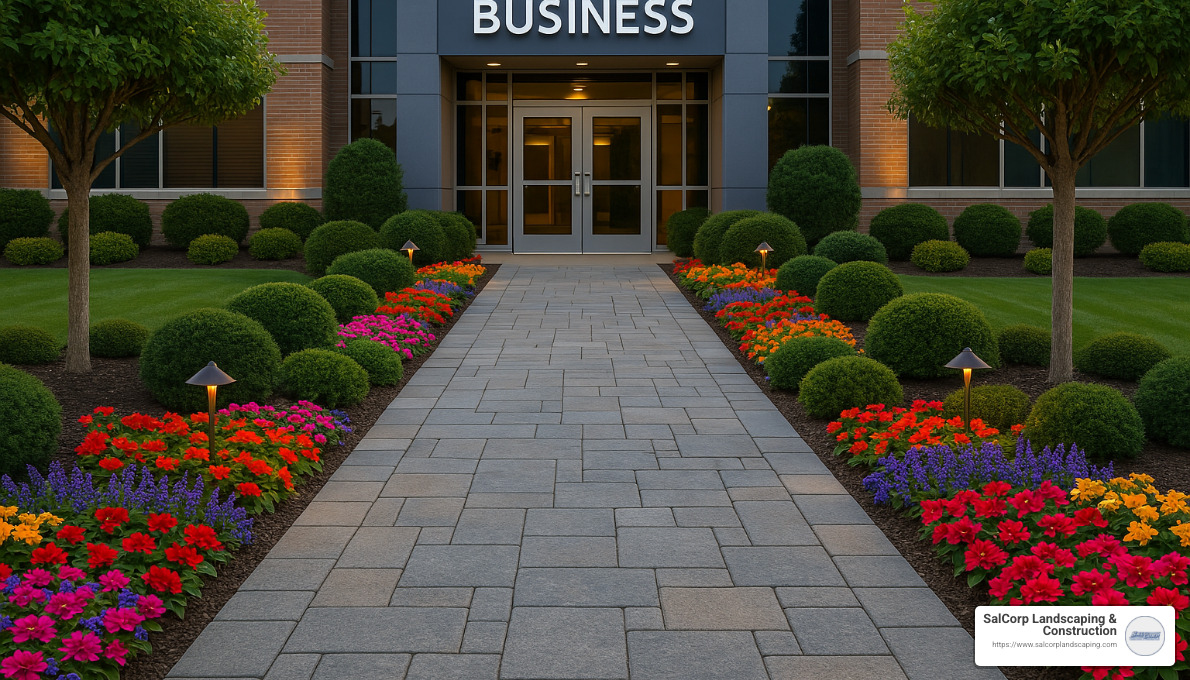
Consider clear, well-marked pathways to guide visitors naturally toward your main doors. Using strategic plantings to frame the entrance and decorative seasonal planters adds visual interest and communicates your attention to detail. Adding focal points like water features, sculptures, or unique specimen plants helps give your entryway a memorable touch.
Don’t forget adequate lighting for safety and an inviting atmosphere after dark. At SalCorp Landscaping & Construction, we’ve helped many businesses throughout Massachusetts create welcoming entrances that perfectly reflect their brand. For example, we recently designed an entrance for a medical facility in Norwood, featuring calming blue and green plantings, comfortable seating, and a gentle water feature to convey tranquility and care to incoming patients.
Incorporate Landscape Lighting
Good commercial landscape designs don’t stop working just because the sun goes down. The right landscape lighting extends the usability and beauty of your outdoor areas into the evening hours.
Thoughtful outdoor lighting not only improves your property’s aesthetics but also improves safety and security by providing clear visibility. Highlighting architectural features, large trees, or specific landscape elements creates ambiance and adds visual drama that visitors appreciate. Energy-efficient LED lights are a popular choice, offering long-lasting performance with low electricity usage. Smart systems let you easily adjust timing or brightness right from your smartphone.
One Framingham restaurant owner noted, “Proper lighting transformed our property. It made our outdoor dining area usable at night, and the uplighting on our building and mature trees creates a magical atmosphere.”
Use Sustainable Practices and Native Plants
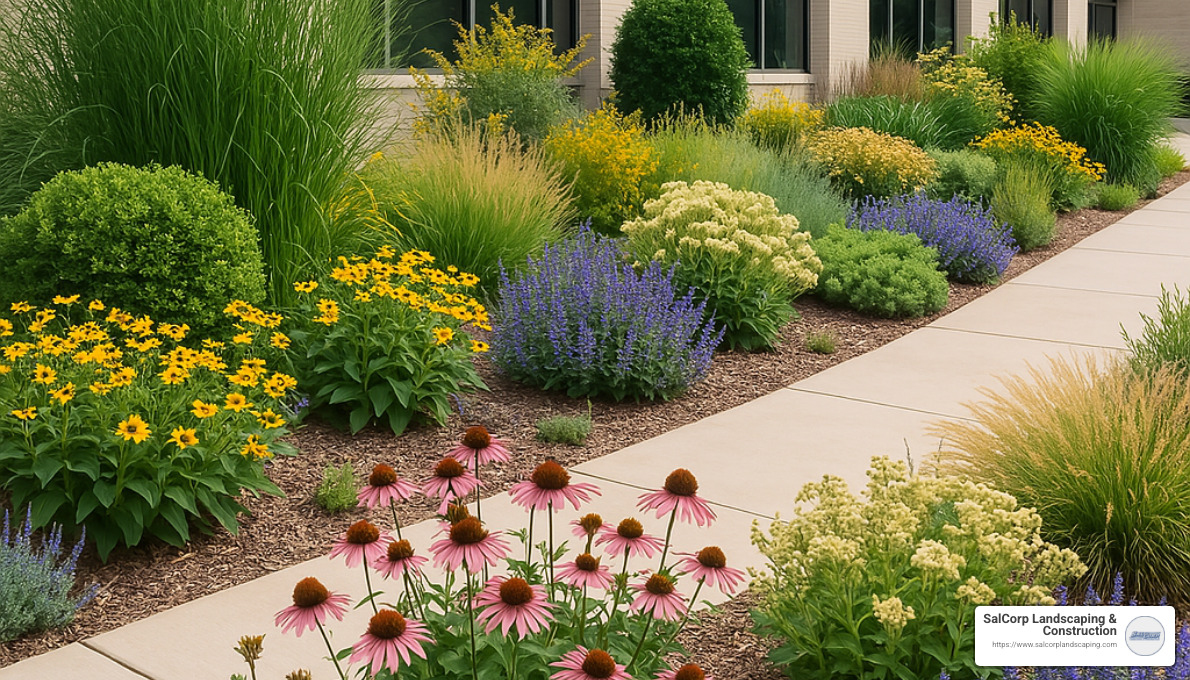
Sustainability is no longer just a buzzword—it’s an essential part of responsible commercial landscape designs. Incorporating native plants reduces maintenance, conserves resources, and demonstrates your business’s commitment to environmental stewardship.
Native plants require less water and maintenance because they’re naturally adapted to our local Massachusetts climate. They also support local wildlife, such as pollinators and birds, and provide seasonal interest throughout the year. Some great native choices here in Massachusetts include Red Maple, Inkberry Holly, Black-eyed Susan, New England Aster, and Switchgrass.
Beyond plants, sustainable landscaping practices you can incorporate include smart irrigation systems, permeable paving to manage rainwater runoff, rain gardens, solar-powered lighting, and composting yard waste. At SalCorp, we’ve helped businesses across Massachusetts implement beautiful, eco-friendly landscapes that reflect their values while keeping maintenance costs manageable.
Integrate Hardscaping Elements
An effective landscape isn’t just about plants. Hardscaping—the non-living parts of your landscaping like walkways, seating areas, patios, and retaining walls—adds structure, functionality, and visual interest to your outdoor space year-round.
Well-designed walkways and paths guide visitors clearly around your property, while seating areas encourage employees and customers to gather comfortably. Retaining walls can manage slopes and create attractive visual features. Water features can lend a relaxing sensory experience, while pergolas and shade structures extend the usability of your outdoor areas.
Materials like gabion walls (wire cages filled with stones) and wood retaining walls are trending right now, while classic brick, natural stone, and concrete pavers remain practical and timeless choices. The key is to balance functionality with aesthetics, ensuring that each element complements your building’s architecture and brand identity.
At SalCorp, we recently completed a modern hardscape project for a Boston tech company, featuring clean lines, geometric patterns, and minimalist water elements to reflect the brand’s innovative style.

Add Color and Character
Color brings your landscape to life. Seasonal flower rotations, vibrant foliage plants, and carefully chosen structures or containers in brand colors can all add visual interest and make your outdoor areas more memorable.
Consider using your company colors in flower beds, containers, or even decorative glass accents in water features. At SalCorp, we integrated a client’s blue and orange brand colors through strategic plant selections and decorative elements, subtly reinforcing their brand identity.
When choosing colors, think about the emotional responses they evoke. Cool colors like blues and greens offer a calming feel, perfect for healthcare providers. Energetic reds and oranges might be better for restaurants or retail spaces that want to create excitement and energy.
Highlight Your Building’s Architecture
Your landscape should work hand-in-hand with your building’s architecture, complementing and enhancing its best features. Thoughtful plantings, strategic uplighting, and vertical plant elements (such as vines or espaliered trees) can emphasize your building’s height or architectural details.
Foundation plantings help soften building edges, while complementary landscaping materials echo your building’s style, creating a unified visual experience. At SalCorp, we designed a historic building’s landscape in Concord to respect its traditional character while meeting modern needs. The results were stunning—today it’s one of our favorites!
Create Outdoor Spaces for Interaction
Outdoor gathering spaces have become hugely popular in recent years, and for good reason: they provide relaxing and inspiring meeting spaces for employees, customers, and guests.
Comfortable, durable seating arrangements, shade structures, Wi-Fi connectivity, and acoustic considerations all help make these spaces appealing and practical for informal meetings or breaks. Privacy plantings and planters add a pleasant atmosphere that encourages lingering.
For a corporate campus in Wellesley, SalCorp designed a series of outdoor “rooms” with varying purposes, from quiet reflection areas to casual meeting spots. Employees love the chance to work outdoors when weather allows, boosting their happiness and creativity.

Incorporate Your Brand Image into the Landscape Design
Your outdoor space is a fantastic opportunity to subtly reinforce your brand identity. Use brand colors for plants or containers, incorporate logo motifs into paving or structures, or create themed areas or gardens that reflect your company’s values.
SalCorp recently worked with a children’s educational center, designing a playful landscape with bright colors, interactive features, and whimsical elements that reflect their joyful learning philosophy. The landscape became part of their marketing, featured in promotional photos and videos.
Just remember that branding in landscaping should be subtle rather than overwhelming—think sophisticated and thoughtful rather than a loud billboard.
Plan for Maintenance
Let’s face it: even the most beautiful commercial landscape designs won’t stay that way without consistent care. Planning for maintenance from the outset ensures your landscape stays beautiful and functional long-term.
Choose low-maintenance plants, efficient irrigation systems, and easy access points for equipment. Consider seasonal factors like leaf cleanup and snow management. At SalCorp, we offer comprehensive landscape maintenance plans custom to your budget and property needs. As our maintenance director says, “The secret to commercial landscaping success lies in consistent, knowledgeable care. We proactively solve problems before they become visible, keeping your property pristine year-round.”
Current Trends and Future of Commercial Landscape Designs
The world of commercial landscape design is always evolving, with exciting new approaches emerging in response to our changing climate, technological breakthroughs, and shifting workplace expectations. Staying ahead of these trends can help you make smart, forward-looking decisions about your outdoor spaces that will serve your business well into the future.
Sustainable and Climate-Resilient Designs
What was once considered a passing trend has now become fundamental to good landscape design. Sustainability is no longer optional—it’s expected. But the conversation has evolved beyond just being “green” to creating landscapes that can withstand and adapt to our changing climate conditions.
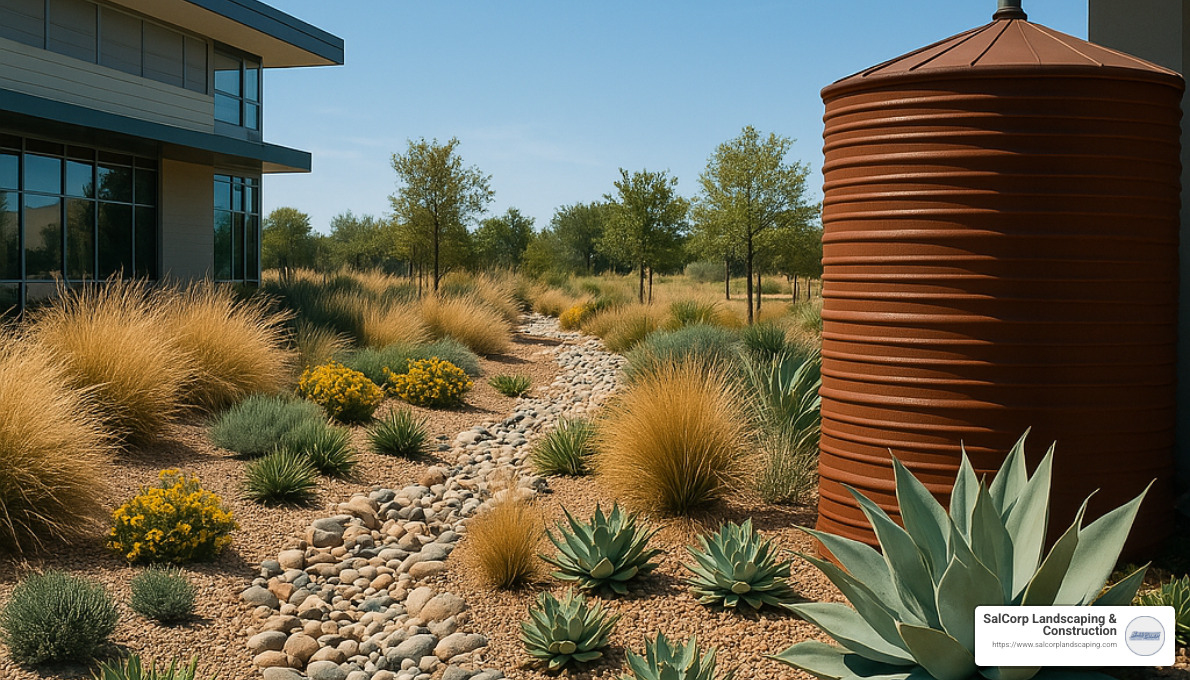
“We’re moving beyond sustainable to regenerative,” shares our design team at SalCorp. “The goal isn’t just to do less harm but to actively improve environmental conditions through our landscape choices.”
Climate-resilient commercial landscapes now feature drought-tolerant plantings that thrive with minimal watering, sophisticated stormwater systems that capture and reuse rainwater, and heat-resistant materials that won’t buckle under extreme temperatures. We’re also seeing increased emphasis on expanding tree canopies to provide natural cooling and creating diverse plant communities that can adapt as conditions change.
For Massachusetts businesses, these approaches are particularly important as we face more extreme temperatures, intense rain events, and unpredictable seasonal patterns. At SalCorp, we keep our finger on the pulse of these developments, helping our clients prepare their outdoor spaces not just for today, but for the conditions we’ll face tomorrow.
Incorporating Smart Technology in Landscapes
Technology is revolutionizing how we manage commercial landscapes, making everything more efficient, responsive, and data-driven. Gone are the days of sprinklers running during rainstorms or lights staying on when no one’s around.
Today’s smart landscape technologies include weather-responsive irrigation that automatically adjusts watering based on real-time conditions and forecasts. Remote monitoring systems allow property managers to check on landscape health and system performance from anywhere. App-controlled features let you adjust lighting, water features, and other elements with a tap on your phone.
“The integration of technology into landscapes allows for more precise management with less waste,” explains our operations manager. “For our commercial clients, this means lower resource consumption, reduced costs, and better landscape performance.”
We’re even seeing the emergence of soil sensors that detect moisture levels and plant stress before problems become visible, and robotic maintenance equipment handling routine tasks like mowing and snow removal.
At SalCorp, we help our clients evaluate which technologies make sense for their specific needs. Not every business needs the latest high-tech solution, but thoughtfully implemented smart systems can significantly improve both the appearance and efficiency of your landscape.
Biophilic Design and Multi-Sensory Experiences
As more research confirms the benefits of connecting with nature for human health and wellbeing, biophilic design is gaining serious momentum in commercial settings. This approach goes beyond just adding plants—it’s about creating meaningful connections between people and the natural world.
The future of commercial landscape designs lies in creating rich, multi-sensory experiences that engage visitors on multiple levels. Rather than just looking nice, today’s best commercial landscapes engage all the senses:
Visual interest comes through varied plantings, integrated art installations, and thoughtfully designed focal points. Sound elements like water features, wind chimes, or areas that attract songbirds add another dimension to the experience. Fragrant plants strategically placed near seating areas or entrances create memorable moments, while textural variety in plants and materials invites touch and exploration.
Some forward-thinking businesses are even incorporating edible landscapes that produce herbs, fruits, or vegetables—which can be particularly appropriate for restaurants, healthcare facilities, or educational institutions.
“Multi-sensory landscapes create memorable experiences that strengthen connections to places and brands,” notes our design director. “They transform ordinary commercial properties into destinations.”
We recently designed a healing garden for a healthcare facility in Braintree that perfectly illustrates this approach. The space incorporates gentle sounds from a bubbling water feature, fragrant plants like lavender and roses, and varied textural elements that provide comfort and interest for patients and visitors. The result isn’t just a pretty garden—it’s a therapeutic environment that actively contributes to the healing process.
By embracing these emerging trends in commercial landscape design, businesses can create outdoor spaces that aren’t just beautiful, but also resilient, efficient, and deeply engaging. At SalCorp Landscaping & Construction, we’re excited to help our Massachusetts clients steer these innovations and create landscapes that will serve them well for years to come.
How to Choose the Right Commercial Landscape Design for Your Business
Choosing the right commercial landscape design may seem daunting at first—especially if landscaping isn’t exactly your area of expertise. But don’t worry—I’m here to break it down into simple, manageable steps to help you create an outdoor space that’s perfect for your business.
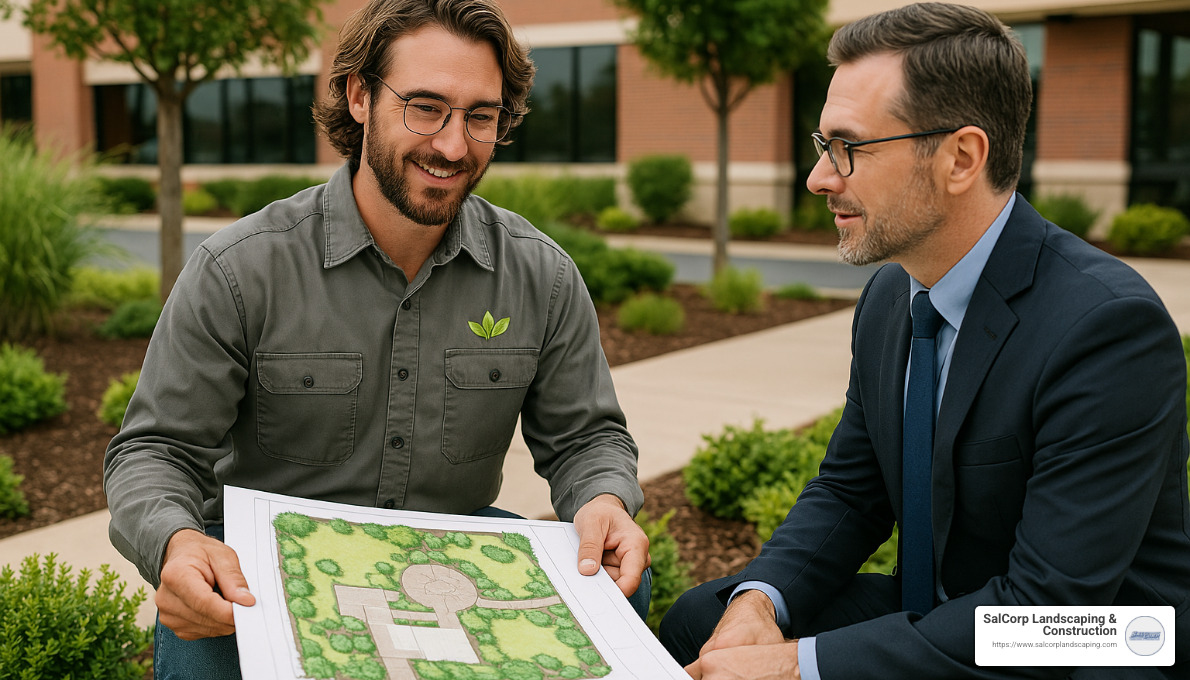
Start by taking a good look at your current landscape. What’s working well, and what makes you cringe when you drive up to your business each morning? Maybe your front entrance is inviting, but behind the building is an eyesore you’ve been hoping no one notices. Identifying these strengths and weaknesses upfront helps set clear priorities for your landscape redesign.
Next, think about what you really want your landscaping to achieve. Do you want to create a welcoming spot that attracts more customers? Maybe you’re looking to boost employee morale and productivity by providing relaxing outdoor spaces for breaks. Perhaps sustainability is a top priority for your brand—or you simply want to boost your property’s value (did you know quality landscaping can increase commercial property values by up to 15%?). Clearly defining your goals helps guide design choices and keeps the project aligned with your vision.
Speaking of vision, your landscape is an extension of your brand. Consider your brand identity and how your outdoor spaces can reflect your company’s personality and values. If your business prides itself on sustainability, native plants and environmentally-friendly practices can show your customers your commitment firsthand. Or maybe vibrant flowers in your brand colors can subtly reinforce your visual identity every time clients walk through the doors.
Evaluating your site conditions is another critical step. Understanding the specific characteristics of your property—such as sunlight exposure, drainage, soil type, and climate—will significantly impact what plants and features will thrive on your site. This is where teaming up with experts really helps (and let’s face it, most of us could use a little professional guidance when it comes to soil drainage!).
Of course, we all need to keep costs in mind. It’s important to establish a realistic budget framework upfront—one that factors in both your initial investment and ongoing maintenance needs. Average commercial landscaping projects can range widely from as low as $5,000 for basic improvements to over $50,000 for extensive redesigns (based on online data—not SalCorp’s actual pricing). Having a clear budget ensures you invest wisely and get the most value for your money. If your dream landscape feels overwhelming budget-wise, don’t stress! You can always break your project into phases. A phased approach allows you to achieve your vision incrementally, spreading out costs while working toward a cohesive final result.
With these insights in mind, your next step is to consult with experienced professionals who specialize in commercial landscaping. Here at SalCorp Landscaping & Construction, we’ve been creating custom outdoor solutions for Massachusetts businesses for over 20 years. As an owner-operated company, we use our own machinery and have deep local knowledge—which means your project will be completed efficiently, reliably, and with a personal touch. (Plus, we pride ourselves on being fun to work with—landscaping doesn’t have to be stressful!)
Finally, don’t forget to plan for the long term. Landscaping isn’t just about immediate impact; it’s an investment that grows and evolves over time. Think about how your plants will mature, how business needs might shift, and how ongoing maintenance fits into your operational plan.
As our design team often says, “The most successful commercial landscapes balance immediate beauty and impact with long-term performance.” At SalCorp Landscaping, we work closely with you to understand your vision, budget, and timeline—and deliver a landscape that looks amazing today and even better tomorrow.
Ready to transform your property? Check out our detailed insights on Commercial Landscaping Cost to get a better understanding of what to expect, or reach out to our friendly team at SalCorp Landscaping & Construction—we can’t wait to bring your landscape dreams to life!
Frequently Asked Questions about Commercial Landscape Designs
How Can Commercial Landscaping Improve Employee Productivity?
A thoughtfully designed commercial landscape can do more than just make your property look great—it can positively impact your employees’ productivity and overall well-being. Green spaces and natural elements are known to significantly reduce stress, helping employees feel calmer and more focused. In fact, research has shown that environments with plants can boost concentration levels by up to 23%.
Additionally, incorporating plants outdoors or near windows helps improve air quality, creating a healthier workplace. Comfortable, inviting outdoor areas can serve as alternative workspaces, giving employees the freedom to step outside for meetings, lunch, or breaks. These outdoor spaces can spark creativity, lessen monotony, and encourage physical movement, contributing to a happier, more productive team.
One SalCorp client from Needham shared their experience, saying, “After implementing new landscape features, including an outdoor break area and walking path, we saw a 15% reduction in sick days and notably improved team morale.” Clearly, investing in quality commercial landscape designs is an investment in your employees’ well-being and your company’s success.
What Are the Benefits of Using Native Plants in Commercial Landscaping?
Choosing native plants in your commercial landscape design brings multiple advantages that save you money and help the environment. Because native plants are naturally suited to our local climate here in Massachusetts, they typically require far less water, fertilizer, and pest control. This reduced maintenance translates to time savings and lower landscaping costs in the long run.
Native plants also support local wildlife, such as pollinators and birds, enhancing biodiversity right on your property. Additionally, they add seasonal interest as different species bloom, change colors, or produce berries throughout the year. Native plants are generally more resilient against pests, diseases, and weather extremes, ensuring your landscape stays beautiful no matter what Mother Nature throws at it.
Beyond the practical benefits, native plantings create a sense of regional character unique to Massachusetts. Our horticulture specialist at SalCorp has seen these advantages firsthand, noting, “We’ve transitioned several corporate campuses to predominantly native plantings. Not only have we seen maintenance costs decrease by approximately 30%, but we’ve also documented increased wildlife activity, which has become a point of interest and enjoyment for employees.”
For more ideas on choosing native plants, check out this helpful guide from the Illinois Extension on drought-tolerant plants.
How Does Commercial Landscaping Increase Property Value?
Great commercial landscape designs don’t just look attractive—they directly increase your property’s value in several meaningful ways. First and foremost, professional landscaping boosts curb appeal, making your property more appealing to potential buyers or tenants. A beautifully landscaped exterior creates an inviting first impression, signaling that the property is well-maintained and cared for.
Thoughtful outdoor design also adds functional improvements. Features like outdoor meeting areas, clearly defined walkways, seating spaces, and smart stormwater management systems increase usability for your property—something prospective tenants greatly value.
Sustainable landscaping practices, such as drought-resistant plantings and efficient irrigation systems, can significantly reduce operating costs by decreasing water consumption, maintenance needs, and even energy use through strategic shade placement.
Additionally, a professionally landscaped commercial property stands out from the competition, giving you a competitive advantage. Studies have shown that attractive, well-maintained outdoor spaces can increase property values by as much as 15%. Similarly, commercial properties that invest in landscaping typically enjoy higher rental rates, up to 7% higher than comparable properties with basic landscapes.
A property manager from Wellesley confirmed this benefit, stating, “We view our landscape investments as essential to maintaining the Class A status of our office park. The return on investment is clear in our ability to attract and retain premium tenants.”
To better understand potential costs associated with commercial landscaping, you can refer to average market costs here: Commercial Landscaping Cost. Actual project costs may vary widely, but investing thoughtfully in your outdoor spaces consistently delivers measurable long-term returns.
Conclusion
At first glance, it might seem that commercial landscape design is just about making your business look nice. But as we’ve explored, it’s actually a strategic investment—a way to boost your property’s value, attract more customers, improve employee productivity, and strengthen your overall brand identity.
Across Massachusetts, savvy business owners are realizing that thoughtfully designed outdoor spaces can set them apart from competitors. Your landscape speaks volumes about your values, your attention to detail, and the quality of experience customers can expect when they step inside your business. Whether it’s the inviting entrance that makes newcomers feel welcome right away, or the beautifully maintained grounds that signal you care—every element tells your story.
At SalCorp Landscaping & Construction, we’ve spent over 20 years helping businesses like yours throughout Massachusetts create outdoor spaces they’re genuinely proud of. As an owner-operated company, we bring a personal touch to every project. We use our own equipment and our experienced crews, ensuring your landscape vision becomes a reality—exactly as you imagined (or even better!).
Whether you’re aiming to improve your curb appeal, create inviting outdoor areas for employees and visitors, accept sustainable practices to showcase your commitment to the environment, or completely reimagine your outdoor space, our team has the skills and resources to get it done.
The investment you make in your outdoor spaces today continues to pay dividends for years to come. Think about those mature trees providing shade and beauty, efficient irrigation systems saving water (and money!), and thoughtfully designed spaces supporting your day-to-day operations and reflecting your brand’s unique character.
Ready to see the magic of professional commercial landscape designs for yourself? Contact SalCorp Landscaping & Construction to schedule your consultation. Let’s transform your business into a place people can’t wait to visit—and your employees are happy to call their second home.