Commercial Lawn Care Contracts: 2024’s Top Must-Know Guide

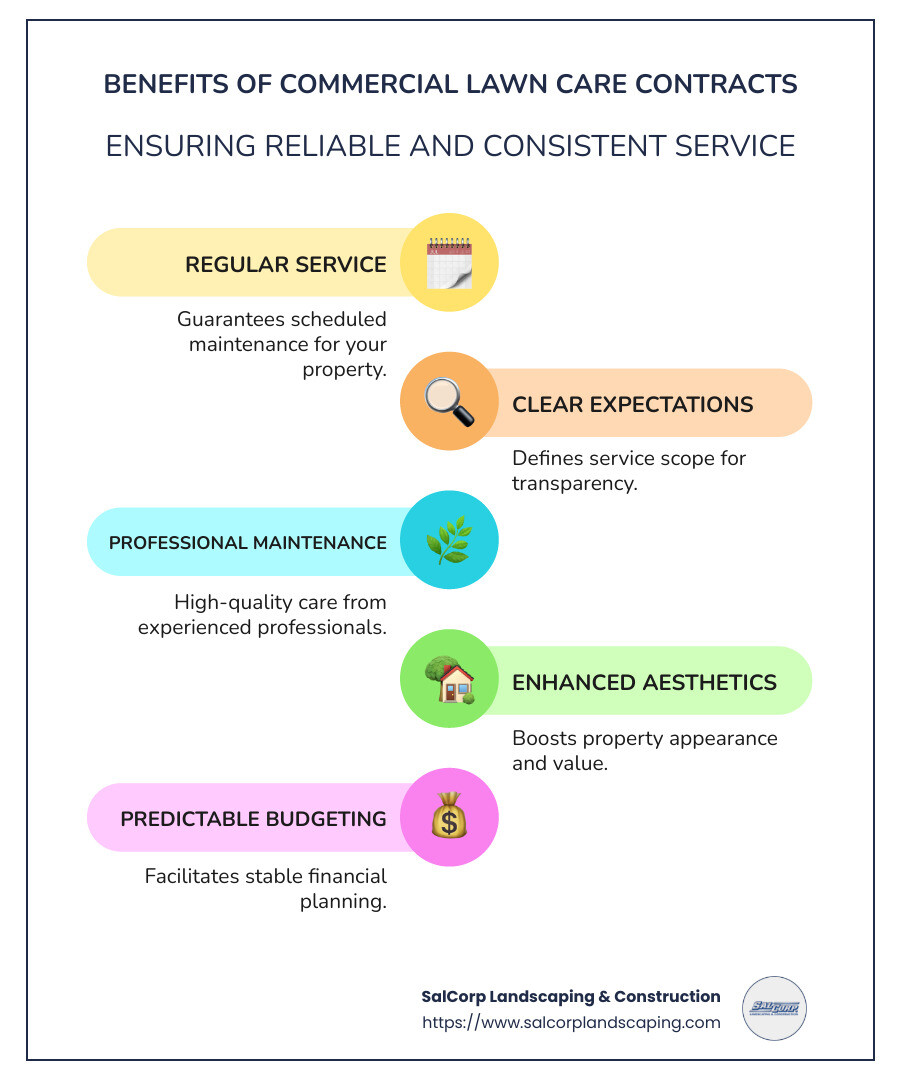
Commercial lawn care contracts are vital for property managers seeking consistent and reliable landscaping services for their properties. These contracts offer structured agreements that outline a schedule and scope of services, ensuring predictable maintenance and clear expectations. By securing a commercial lawn care contract, you benefit from guaranteed regular service, professional upkeep of large areas, and a significant boost in property value and appearance.
- Ensures regular and consistent service
- Provides clear expectations and professional maintenance
- Improves property aesthetics and value
- Facilitates predictable budgeting and payments
I’m Sal Musto. With over two decades in landscaping and construction, I’ve guided SalCorp Landscaping & Construction in establishing itself as a trusted industry leader. Our focus on commercial lawn care contracts allows us to deliver the comprehensive outdoor solutions you need for year-round beauty and functionality.
What is a Commercial Lawn Care Contract?
A commercial lawn care contract is a formal agreement between a landscaping company and a business or property manager. This contract outlines the services provided, payment terms, and duration of the agreement. It’s like a playbook for maintaining the property’s outdoor spaces, ensuring everyone knows their role and responsibilities.
Key Elements of a Commercial Lawn Care Contract
- Scope of Services
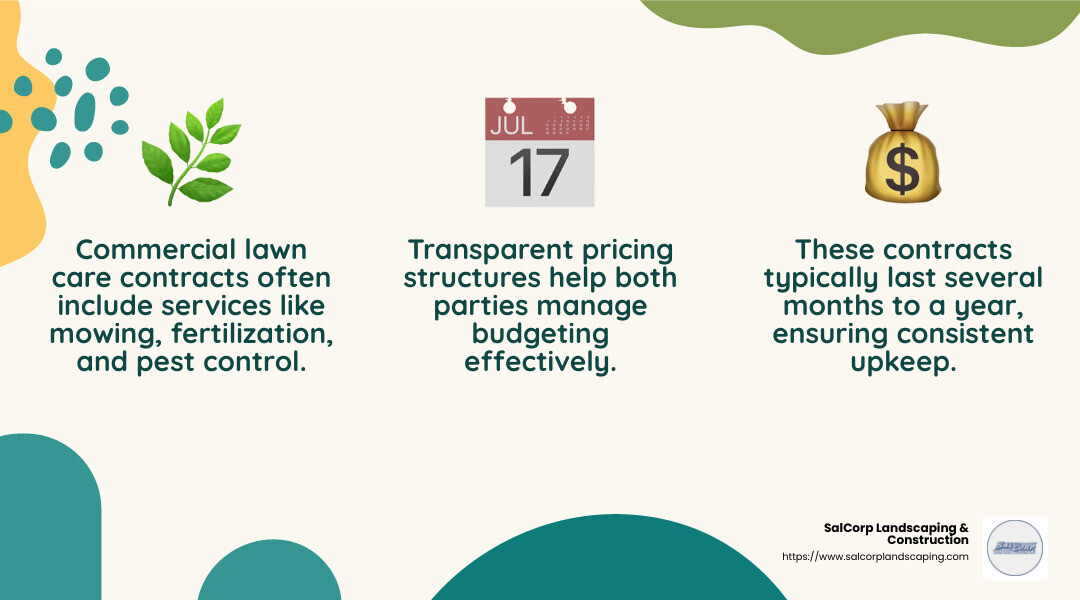
The contract specifies what services will be performed. This could include mowing, fertilization, pest control, and seasonal cleanups. Each task should be clearly listed, much like a detailed shopping list, to avoid surprises. - Duration
Typically, these contracts span several months to a year. This long-term commitment ensures consistent care and helps with budgeting for both parties. - Pricing
Pricing is calculated based on several factors, including time, labor, and equipment costs. It’s crucial to establish a fair and transparent pricing structure. This may involve a total contract price or itemized costs for each service. - Payment Details
Payment terms should be clearly outlined, specifying when and how payments will be made. Whether it’s monthly or quarterly, having a set schedule helps maintain a smooth business relationship.
These contracts are more than just paperwork; they’re a blueprint for maintaining a professional and attractive landscape. By setting clear expectations, both parties can enjoy a hassle-free partnership, leading to beautifully maintained properties and satisfied clients.
Next, we’ll dive into the benefits of commercial lawn care contracts, exploring how they guarantee work, increase revenue, and ensure clearer expectations for everyone involved.
Benefits of Commercial Lawn Care Contracts
Transitioning to commercial lawn care contracts offers several advantages that can significantly boost your business. Let’s explore these benefits:
Guaranteed Work
One of the most appealing aspects of commercial contracts is the consistency they provide. Unlike residential jobs, which can be sporadic, commercial contracts often involve long-term agreements. These contracts usually last for several months or even a year, ensuring a steady stream of work. This consistency allows you to plan your schedule and resources more effectively, reducing downtime and improving efficiency.
More Revenue
Commercial properties typically generate higher revenue compared to residential ones. Why? Because they are often larger and require more frequent maintenance. Businesses prioritize maintaining a professional appearance, and they’re willing to invest in regular lawn care to achieve it. This means that, with commercial contracts, you can expect higher earnings per customer.
Clearer Expectations
Commercial contracts set clear expectations for both parties. With a detailed scope of services, everyone knows what’s included and what’s not. This clarity reduces misunderstandings and ensures that both you and your client are on the same page. It also helps in establishing a professional relationship, as both parties are aware of their responsibilities and the standards expected.
Fewer Individual Requests
In residential lawn care, you might find yourself dealing with numerous individual requests, which can be time-consuming and disrupt your workflow. However, with commercial contracts, the services are predefined, reducing the number of ad-hoc requests. This allows you to focus on delivering high-quality service without constant interruptions, leading to greater efficiency and customer satisfaction.
By embracing the structure and reliability of commercial lawn care contracts, your business can enjoy a more predictable and profitable operation. Next, we’ll explore how to secure these valuable contracts and expand your commercial client base.
How to Get Commercial Lawn Care Contracts
Securing commercial lawn care contracts requires more than just offering excellent services. It’s about building strong relationships and leveraging your network. Here’s how you can do it:
Research and Build a Prospects List
Start by identifying potential commercial clients in your area. A local Google search can help you find businesses that might need your services. Look for office parks, retail centers, and other commercial properties with landscaping needs.
Don’t overlook the power of your existing residential client referrals. If you’ve done a stellar job, these clients can connect you with their workplaces or other commercial contacts. This approach often leads to warm introductions, which are more effective than cold outreach.
Start Reaching Out
Once you’ve identified potential clients, it’s time to make contact. Phone calls and emails are traditional but still effective methods. However, don’t underestimate the power of modern tools like LinkedIn. It’s an excellent platform for connecting with property managers and decision-makers.
Consider using postcards and flyers to introduce your services. These can be left at reception desks or mailed directly to businesses.
But the real magic happens in meetings. Attend local business events, Chamber of Commerce gatherings, or real estate board meetings. These are prime opportunities to network and meet potential clients face-to-face. As mentioned by experts in the field, attending community events can transform cold calls into warm ones, making your outreach more effective.
Ask for Referrals
Your current clients and network are invaluable resources. Don’t hesitate to ask for referrals. Happy clients are often willing to recommend your services to others, especially if you make it easy for them.
Property managers and network connections can also be great sources of referrals. If you’ve built a good relationship, they might introduce you to other businesses in need of lawn care services. Referrals often come with a level of trust that can significantly ease the sales process.
By focusing on relationship-building, effective outreach, and leveraging your existing network, you can open up the door to lucrative commercial lawn care contracts. Next, we’ll discuss the crucial aspect of pricing these contracts effectively.
How to Price Commercial Lawn Care Contracts
Pricing commercial lawn care contracts can be a complex task, but get it right to ensure profitability and client satisfaction. Here’s a breakdown of the key factors to consider:
Time
Time is a critical component in pricing. Begin by conducting thorough walkthroughs of the client’s property. This helps you understand the specific needs and any special procedures required. Discuss with the client to identify any unique services they might need, such as seasonal plantings or specialized treatments. By accurately estimating the time needed for each task, you can ensure your pricing reflects the true effort involved.
Labor
Labor costs are often the largest part of the pricing equation. This includes the hourly rates for your on-site staff and your rate as the business owner. Research the average hourly rates for commercial lawn care in your area to remain competitive. Don’t forget to factor in the number of workers required and the hours they will work. Your pricing should also include a margin for profit to ensure the sustainability of your business.
Equipment
Equipment costs are another significant factor. Commercial lawn care requires specialized equipment, which comes with costs for maintenance, repairs, and eventual replacement. Many contractors include an equipment fee in their pricing to cover these expenses over time. This fee can be a flat rate or a percentage of the total cost, depending on your business model.
Overhead Costs
Overhead costs encompass everything from office expenses to vehicle maintenance and marketing. These costs should be distributed across all your contracts. By doing so, you ensure that each contract contributes to covering your business’s fixed costs.
Profit Margins
Finally, consider your desired profit margins. A typical landscaping business operates with a profit margin of 5% to 12%. Ensure your pricing strategy includes a healthy margin that allows for growth and reinvestment into your business. Avoid the temptation to undercut competitors by sacrificing your profit margins; this can lead to unsustainable business practices.
By carefully considering these elements, you can set a pricing structure that covers all costs while providing value to your clients. In the next section, we’ll explore how to bid for commercial lawn care contracts effectively.
How to Bid for Commercial Lawn Care Contracts
Bidding for commercial lawn care contracts involves several key steps to ensure you present a compelling proposal that meets client needs and expectations. Let’s break down the process:
Conduct a Walkthrough
The first step in the bidding process is conducting a walkthrough of the client’s property. This is your opportunity to tour the site and gain an accurate understanding of the service requirements.
During the walkthrough, take detailed notes on the current state of the lawn, landscaping features, and any specific challenges or unique needs. Discuss with the client what services they expect, such as regular mowing, fertilization, or seasonal cleanups. This will help you tailor your proposal to their exact needs and avoid any surprises later on.
Create and Submit Your Proposal
Once you have a thorough understanding of the client’s needs, it’s time to create your proposal. Your proposal should be clear, professional, and well-organized. Here are key elements to include:
- Services: Clearly outline the services you will provide. Be specific about the tasks included, such as mowing, edging, trimming, and any additional services like pest control or irrigation management.
- Taxes and Fees: Include any applicable taxes and fees. Transparency here builds trust with the client.
- Discounts: If you offer any discounts, such as for long-term contracts or referrals, make sure to highlight them.
- Accurate Quotes: Provide a detailed breakdown of costs. This should reflect all aspects of your pricing strategy, including time, labor, equipment, and overhead costs.
Submit your proposal in a timely manner, and consider using digital tools like Jobber or DocuSign to streamline the process.
Stay Tuned for Contract Decision
After submitting your proposal, the waiting game begins. Clients will review your proposal alongside others, considering factors like budget, services offered, and overall value.
During this period, be prepared to answer any questions or provide additional information. Sometimes, clients may request adjustments to the proposal or negotiate terms. Be flexible but ensure any changes align with your business goals.
Once the client makes a decision, they will proceed to the contract signing. At this stage, ensure all terms are clearly defined and agreed upon. Having a well-drafted contract protects both parties and sets the stage for a successful partnership.
By following these steps, you can confidently bid for commercial lawn care contracts and increase your chances of securing profitable work. Next, we’ll explore how to create a comprehensive contract that covers all necessary details.
How to Create a Commercial Lawn Care Contract
Creating a well-structured commercial lawn care contract is crucial for setting clear expectations and ensuring a smooth working relationship. Let’s explore the tools and elements needed to craft a comprehensive contract.
Creating a Contract Using Jobber and DocuSign
When it comes to creating contracts, using digital tools like Jobber and DocuSign can simplify the process significantly. These platforms offer pre-built templates that can be customized to fit your specific needs.
- Jobber: This software is designed for service-based businesses and offers robust features for creating and managing contracts. You can start with pre-built templates and customize them to include specific details about your services. Jobber also integrates with other tools, making it easy to manage contracts alongside scheduling and invoicing.
- DocuSign: Once your contract is ready, DocuSign allows for easy digital signatures. This not only speeds up the process but also provides a secure way to get contracts signed and stored digitally.
Steps to Create a Contract
- Template Creation: Start by selecting a pre-built template in Jobber. These templates are designed to cover common service agreements and can save you time.
- Customization: Tailor the template to include your business information, client details, and specific services offered. Make sure to adjust the scope of services, maintenance schedule, and any special terms that apply.
- Integration: Use Jobber’s integration features to connect with other tools you use, ensuring seamless management of your contracts and related business processes.
- Digital Signatures: Once the contract is customized, use DocuSign to facilitate digital signatures. This ensures a quick and secure signing process, reducing delays and paperwork.
What to Include in Commercial Mowing Contracts
A comprehensive contract should cover all critical aspects of the service agreement. Here are the essential elements:
- Business Information: Include your company name, address, contact information, and any relevant licensing or insurance details.
- Client Details: Clearly state the client’s name, address, and contact information. This ensures both parties are correctly identified.
- Service Scope: Define the services you will provide, such as mowing, edging, fertilization, and seasonal cleanups. Be specific to avoid any misunderstandings.
- Maintenance Schedule: Outline the frequency of services, whether weekly, bi-weekly, or monthly. This helps manage client expectations and scheduling.
- Pricing and Payment Terms: Specify the total cost, payment schedule, and any applicable taxes or fees. Transparency in pricing builds trust and avoids disputes.
- Terms and Conditions: Include any legal terms, such as liability limitations, cancellation policies, and dispute resolution procedures. This section protects both parties and clarifies the rules of engagement.
- Signatures: Ensure both parties sign the contract. This formalizes the agreement and indicates mutual consent to the terms outlined.
By using tools like Jobber and DocuSign, and including these essential elements, you can create a solid commercial lawn care contract that sets the stage for a successful business relationship. Next, we’ll explore tips for keeping commercial clients happy and maintaining long-term partnerships.
Tips for Keeping Commercial Clients Happy
In commercial lawn care contracts, keeping your clients happy is key to long-term success. Here are some practical tips to ensure client satisfaction and foster strong business relationships.
Demonstrate Care
Showing genuine care for your clients’ properties can set you apart. Regularly communicate with your clients to understand their needs and preferences. Listening actively and responding promptly to their concerns builds trust and demonstrates your commitment to their satisfaction.
Consider scheduling regular check-ins or sending follow-up emails after completing a job. This not only shows that you care about the quality of your work but also provides an opportunity for clients to give feedback.
Use Quoting Software
Accurate and transparent quoting is crucial. Using quoting software ensures consistency and precision in your estimates, helping you avoid misunderstandings. These tools can generate detailed quotes that outline the scope of work, pricing, and any additional services.
With software, you can easily adjust quotes based on client feedback or changes in the project scope, ensuring that both parties are on the same page.
Implement a CRM System
A Customer Relationship Management (CRM) system helps keep all client information organized and accessible. By using a CRM, you can track client interactions, preferences, and service history. This makes it easier to personalize your communication and anticipate client needs.
A CRM also streamlines scheduling, invoicing, and follow-ups, allowing you to focus more on delivering excellent service rather than administrative tasks.
Maintain a Job Checklist
A job checklist ensures that no detail is overlooked during service delivery. Before starting a job, review the checklist to confirm that all tasks are understood and prioritized. This reduces the chance of errors and ensures consistency in service quality.
For instance, if a contract includes mowing, edging, and fertilization, the checklist should detail each step, including any unique requirements for specific properties. This attention to detail demonstrates professionalism and reliability.
By focusing on these strategies, you can improve client satisfaction and foster lasting relationships. Up next, we’ll explore frequently asked questions about commercial lawn care contracts to further clarify this essential aspect of your business.
Frequently Asked Questions about Commercial Lawn Care Contracts
Navigating commercial lawn care contracts can be daunting. Here, we address some common questions to help you better understand this business area.
How do you bid for commercial lawn care work?
Bidding for commercial lawn care work is all about understanding your client’s needs and presenting a compelling proposal. Start by conducting a thorough walkthrough of the property. This helps you grasp the specific requirements, from mowing and edging to specialized treatments. During this visit, engage with potential clients to understand their expectations and any unique needs they might have.
Once you have a clear understanding, prepare a detailed proposal. Outline the services you will provide, the benefits of choosing your company, and a transparent pricing structure. Make sure your proposal is professional and well-formatted, as this reflects your attention to detail and reliability. Your goal is to show how your services align perfectly with their needs.
How do you get commercial property to mow?
Securing commercial properties often requires a proactive approach. Start by leveraging your existing network. Reach out to former residential clients who might have connections to commercial properties. Networking is key, so consider attending community events or joining local business associations to meet potential clients.
Additionally, conduct market research to identify businesses in your area that might need lawn care services. Direct outreach, such as phone calls, emails, or even postcards, can be effective. Tailor your marketing efforts to highlight how your services meet the specific needs of commercial properties.
Is a mowing business profitable?
Yes, a mowing business can be quite profitable, especially when focusing on commercial contracts. Commercial properties often require regular and extensive maintenance, which translates to consistent revenue streams. According to industry insights, commercial clients typically offer higher revenue per customer compared to residential clients due to larger lot sizes and more frequent service needs.
Furthermore, commercial contracts offer predictability and stability. Unlike project-based residential jobs, commercial agreements often span months or even years, providing a steady workload and income. By efficiently managing costs and maintaining high service standards, a mowing business can achieve profitability and growth.
These FAQs provide a clearer picture of how to succeed with commercial lawn care contracts. Understanding the bidding process, securing clients, and recognizing the profitability potential are critical steps in building a thriving lawn care business.
Conclusion
In commercial lawn care contracts, relationships are the bedrock of success. Building strong connections with property managers and decision-makers is crucial. As we’ve seen, cold calls might not be the most effective strategy. Instead, engaging in networking events and becoming involved with organizations like real estate groups can open doors to lucrative opportunities.
For SalCorp Landscaping & Construction, based in Walpole, Massachusetts, nurturing these relationships is a core strategy. With over 20 years of experience, we understand that each commercial property has unique needs. Our comprehensive outdoor space solutions are designed to meet these needs, providing custom services that range from landscape design to hardscaping and snow management.
Our owner-operated business model ensures personalized attention and high-quality service. We use our own machinery, which allows us to maintain control over the quality and timing of our work. This commitment to excellence is why businesses across Massachusetts trust us with their commercial landscaping needs.
In conclusion, the key to thriving in the commercial lawn care industry is building and maintaining strong relationships. By understanding client needs and delivering exceptional service, SalCorp Landscaping & Construction continues to be a trusted partner for businesses seeking reliable and professional landscaping solutions.
Explore our comprehensive offerings and learn how we can transform your commercial property by visiting our Commercial Landscaping Services.