Why Cultured Stone Installation is Changing Massachusetts Homes and Businesses
Cultured stone installation involves applying manufactured stone veneer to walls, creating the look of natural stone without the prohibitive cost and weight. Also known as cast stone, it’s made by pouring a lightweight concrete mix into molds and staining it to mimic real stone.
The benefits are significant. Cultured stone is lightweight, making installation faster and less labor-intensive. It’s also cost-effective, highly durable, and offers incredible aesthetic versatility. You can achieve any look, from the rustic charm of Fieldstone and River Rock to the clean lines of Ledgestone and Limestone.
This adaptability makes it perfect for both interior applications like fireplaces and accent walls, and exterior applications such as home facades, chimneys, and outdoor kitchens. A proper installation results in a durable finish that’s up to 40% lighter than natural stone and can carry a 50-year warranty.
I’m Sal Musto of SalCorp Landscaping & Construction. With over two decades of experience in cultured stone installation across Walpole and Massachusetts, I know what it takes to deliver a project that meets the highest standards of craftsmanship. This guide will walk you through the process for a professional installation that lasts.
Easy cultured stone installation glossary:
The Complete Guide to Cultured Stone Installation
This section provides a step-by-step guide to ensure your project is a success, from initial prep to the final touches.
Step 1: Essential Tools, Materials, and Surface Preparation
Before placing the first stone, proper preparation is crucial for a lasting finish. A solid foundation is key to a beautiful and durable cultured stone installation.
Essential Tools & Materials:
- Tools: Safety glasses, gloves, dust mask, tape measure, level, chalk line, wheelbarrow, mixing hoe, trowels, hawk, mason’s hammer or wet saw, grinder, grout bag, jointing tool, and a whisk broom.
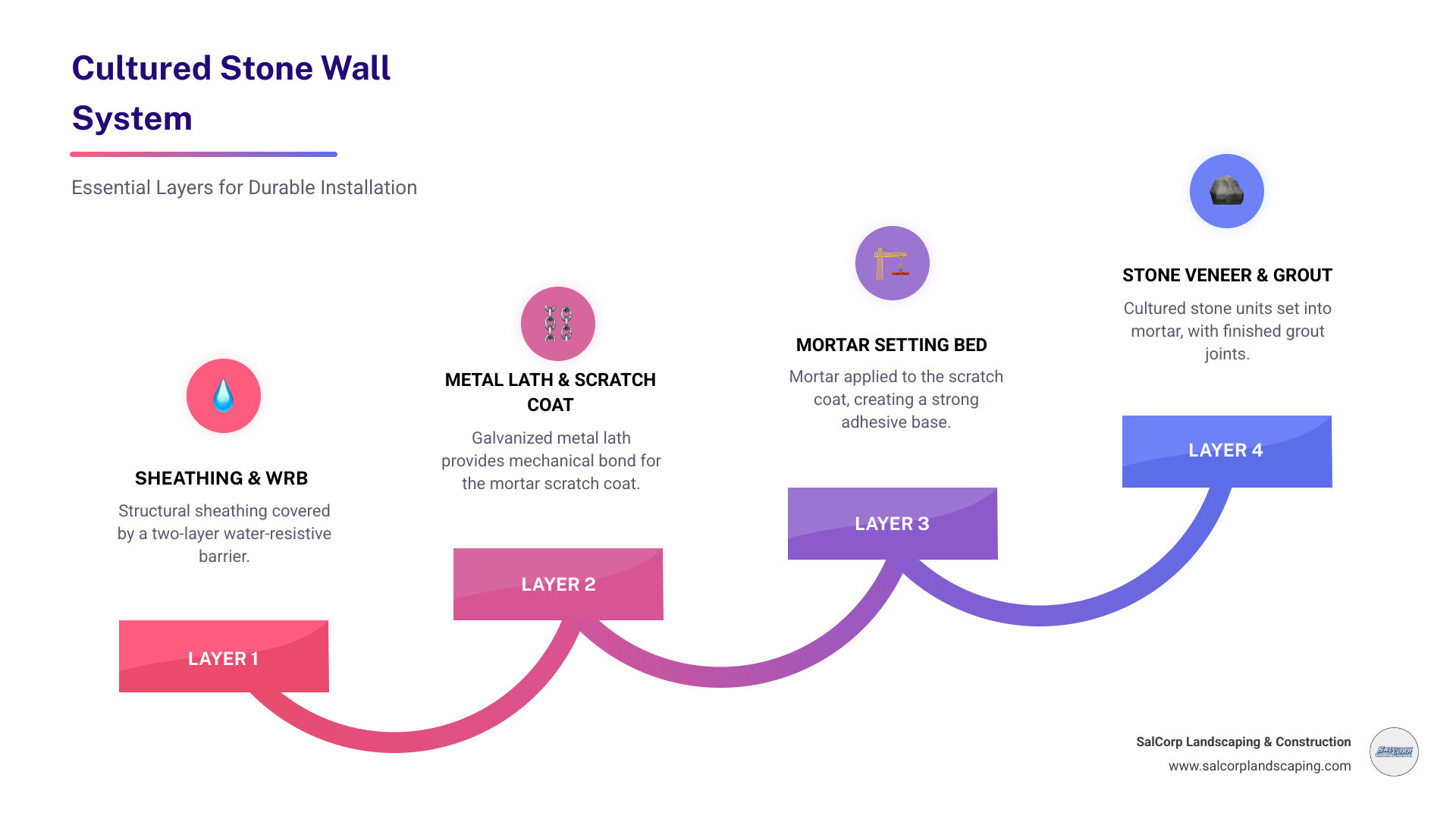
- Materials: Cultured stone units, Type S or N mortar (meeting ASTM C270), galvanized metal lath, a two-layer water-resistive barrier (WRB), weep screed for exteriors, corrosion-resistant fasteners, and a breathable stone sealer.
Proper surface preparation dictates the longevity of your project and is not a step to be rushed.
Critical Surface Preparation Steps:
- Clean the Surface: The wall must be free of all dirt, dust, paint, or grease that could compromise the mortar’s bond.
- Apply Water-Resistive Barrier (WRB): For exterior walls, apply a two-layer WRB in a shingle-like fashion with proper overlaps (2″ horizontal, 6″ vertical). This creates a drainage plane to manage incidental moisture.
- Install Weep Screed: At the base of exterior walls, a weep screed is installed to provide an exit point for water, directing it away from the structure. It should be placed 4 inches above the ground or 2 inches above a paved surface.
- Install Metal Lath: Fasten galvanized metal lath over the WRB, securing it to framing studs every 6 inches vertically. The lath acts as a skeleton for the mortar, and it should be lapped at all seams and wrapped around corners for continuous support.
These steps are essential for wood-framed structures. For masonry surfaces like concrete block, a WRB and lath may still be necessary if the surface is painted or smooth to ensure a strong mechanical bond.
Step 2: Applying the Scratch Coat and Mortar
With the surface prepped, the next step is applying the scratch coat—a vital layer for a strong cultured stone installation.
Purpose of the Scratch Coat:
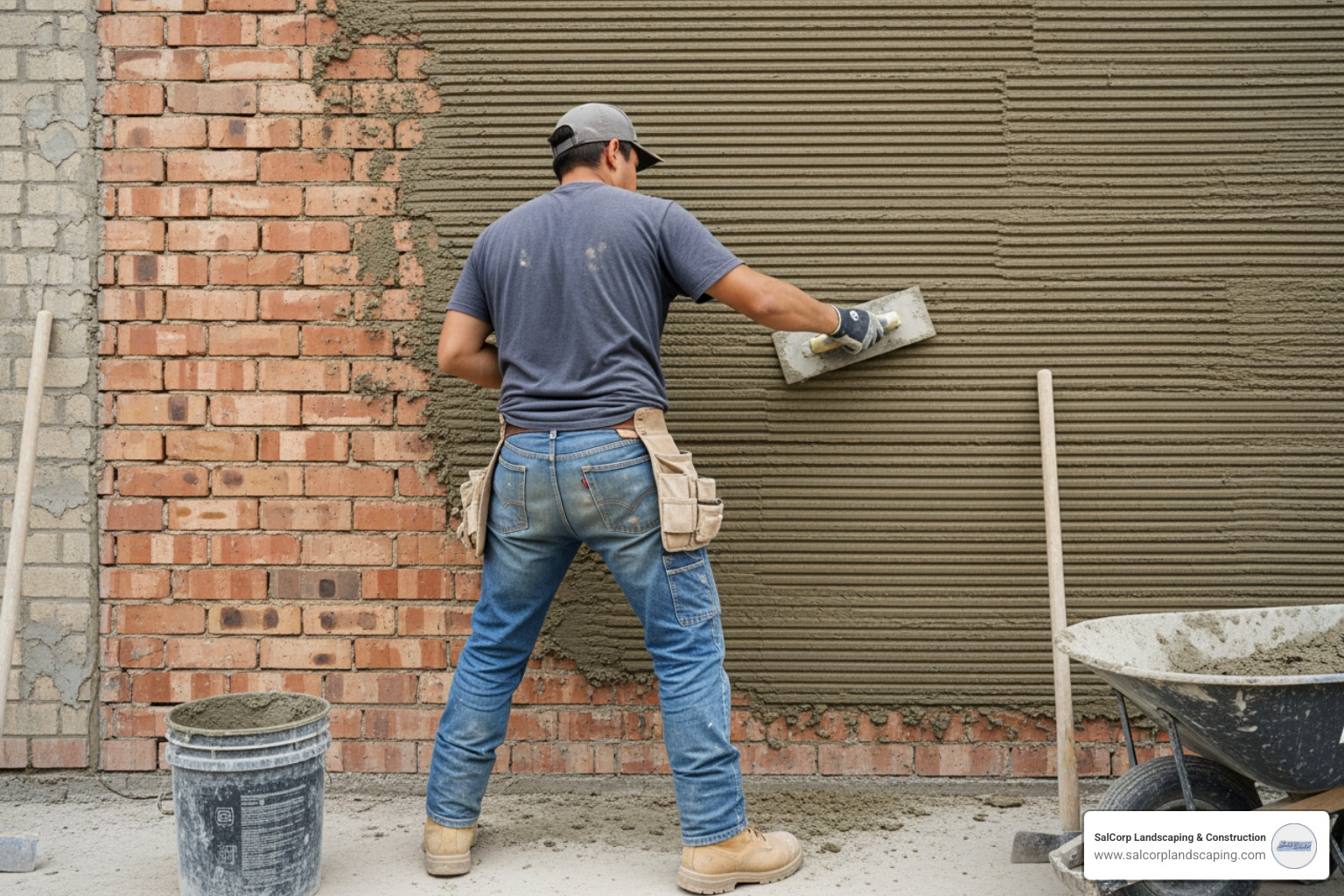
This rough layer of mortar is applied over the metal lath to create a stable, textured base for the stone veneer. It ensures strong adhesion, adds moisture protection, and fully embeds the lath for crack resistance.
Applying the Scratch Coat:
- Mix the Mortar: Mix your Type S or N mortar to a thick, creamy consistency, similar to peanut butter. It should be stiff enough to hold its shape on a trowel.
- Spread Evenly: Using a trowel, apply the mortar over the lath to a uniform thickness of ½ to ¾ inch.
- Score the Surface: While the mortar is still wet, use a rake or notched trowel to create horizontal grooves. These “scratches” provide a mechanical key for the next layer of mortar.
- Cure Properly: Allow the scratch coat to cure for at least 24 hours. In hot or dry weather, lightly mist it with water to prevent it from drying too quickly.
A well-applied scratch coat is the unsung hero of a durable installation. For more insights on materials, explore our resources on hardscape materials.
Step 3: Best Practices for a Professional Cultured Stone Installation
With the scratch coat cured, it’s time to install the stone. This step combines precision with artistry to ensure a professional and lasting cultured stone installation.
Setting the Stones:
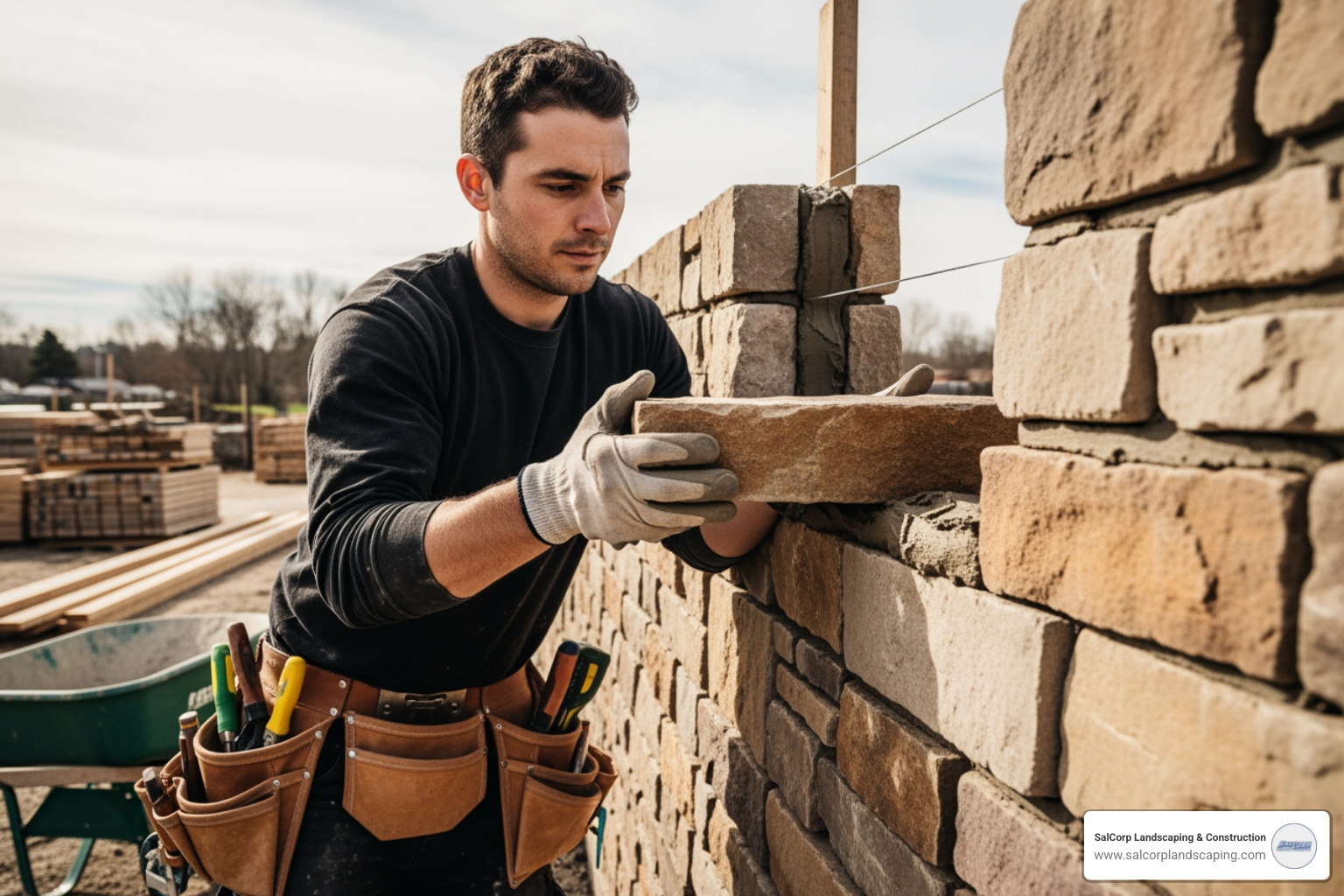
- Apply Mortar: To achieve a strong bond (minimum 50 psi), apply a ½ to ¾ inch layer of mortar to the entire back of each stone (a technique called “back-buttering”). This ensures 100% coverage.
- Press Firmly: Press the mortared stone into the scratch coat with a slight wiggling motion. This ensures full contact and squeezes out air pockets. A small amount of mortar should ooze out around the edges.
- Work from the Bottom-Up: Start at the bottom of the wall and work your way up. This provides support for subsequent stones and prevents mortar from dripping onto the finished work.
- Install Corners First: If your project has outside corners, install these L-shaped pieces first to establish a clean guide for the rest of the stones.
Achieving a Natural Look:
- Blend Stones: Always pull stones from several different boxes at once to ensure a natural blend of colors and textures.
- Stagger Joints: Avoid aligning vertical joints to prevent unnatural-looking lines. A staggered pattern looks more organic and is structurally sound.
- Maintain Consistent Gaps: Aim for a consistent joint width, typically not exceeding ½ inch. For tight-fitted styles, follow the manufacturer’s specific instructions.
- Cut and Trim as Needed: Use a masonry saw or hammer to trim stones to fit. Disguise cut edges with mortar during installation.
Step 4: Grouting, Sealing, and Finishing Touches
Finalizing your cultured stone installation with proper grouting and sealing protects the work and improves its beauty.
Grouting and Finishing:
- Fill the Joints: Use a grout bag to pipe mortar into the joints, filling them completely without smearing the stone faces.
- Tool the Grout: Once the grout is firm to the touch (“thumb-print” dry), use a jointing tool to compact the grout and create a clean, concave shape that sheds water.
- Clean Up: After tooling, use a dry whisk broom to brush away any excess mortar crumbs before they harden. Never use a wet sponge, which can cause staining.
Sealing the Stone:
After the entire installation has fully cured (which may take several weeks), apply a breathable, high-quality stone sealer. This protects the stone and grout from moisture and staining. Always test the sealer on a small, inconspicuous area first.
Common Mistakes to Avoid During Cultured Stone Installation
Our decades of experience have taught us which pitfalls can compromise a cultured stone installation. Avoid these common errors:
- Improper Mortar Mixing: Mortar that is too wet or too dry will create a weak bond. Follow mix ratios to achieve a consistent, peanut-butter-like texture.
- Inadequate Surface Prep: Skipping steps like cleaning, applying a WRB, or installing a scratch coat will lead to failure. The stone is only as strong as the surface beneath it.
- Ignoring Water Management: Forgetting a weep screed or proper flashing allows water to get behind the stone, leading to rot and damage. Cultured stone is part of a water-managed system, not a waterproof barrier.
- Inconsistent Joint Spacing: Uneven or overly wide joints (over ½ inch) look unprofessional. Plan your layout and maintain consistent spacing.
- Not Blending Stones: Installing from one box at a time can create color patches. Mix stones from several boxes for a natural, harmonious look.
- Ignoring Manufacturer Instructions: Product-specific guidelines are critical for performance and warranty compliance. Always follow the manufacturer’s specific instructions to ensure the 50-Year Limited Warranty is valid.
- Disregarding Weather: Avoid installing in temperatures below 40°F, as freezing can ruin the mortar’s bond. In extreme heat, dampen surfaces to prevent the mortar from drying too quickly.
Maintaining Your Cultured Stone and Professional Expertise
A beautiful cultured stone installation is a long-term investment. While proper installation is the most critical factor, simple care will keep it looking its best for decades.
Long-Term Care and When to Call an Expert
- Regular Cleaning: Clean your cultured stone as needed using a soft bristle brush, water, and a mild detergent. Avoid pressure washers, harsh chemicals, and acid-based cleaners.
- Periodic Inspection: Occasionally check for cracked grout or loose stones. Addressing minor issues early prevents larger problems.
- Efflorescence Removal: A white, powdery substance called efflorescence can sometimes appear. It can usually be removed by scrubbing with a dry, stiff brush or a diluted vinegar solution, followed by a thorough rinse.
- Re-Sealing: If water no longer beads on the surface, it may be time to re-apply a breathable sealer, especially for exterior surfaces.
The Value of Professional Installation:
A DIY cultured stone installation is fraught with potential pitfalls that can lead to water damage, an unprofessional finish, and costly repairs. Hiring an expert ensures the job is done right the first time.
At SalCorp Landscaping & Construction, we bring over 20 years of owner-operated experience to every project in Massachusetts. We guarantee:
- Expertise and Precision: We master the nuances of surface prep, mortar mixing, and water management.
- Code Compliance: Our installations meet all local building codes and manufacturer specifications, including achieving the required 50 psi bond strength.
- Warranty Assurance: We install products according to manufacturer guidelines, ensuring your 50-Year Limited Warranty remains valid.
- Efficiency and Quality: Our experienced crews and owned machinery allow us to deliver high-quality results efficiently.
To ensure a flawless finish that adds lasting value to your property, partner with an experienced masonry contractor. If you’re considering a cultured stone installation in Walpole, Lakeville, or other Massachusetts towns, we invite you to transform your home with expert masonry services. We are ready to bring your vision to life.