

Drainage Ditch: Top 5 Essential Benefits in 2024

A drainage ditch is an essential feature in landscape design that plays a crucial role in water management and erosion control. By guiding excess water away from property and infrastructure, these channels prevent waterlogging, preserve soil integrity, and maintain the aesthetic appeal of outdoor spaces. Whether you’re dealing with seasonal rainwater or runoff in low-lying areas, drainage ditches significantly reduce erosion and improve the sustainability of gardens and landscapes.
- What Is a Drainage Ditch?
- A channel that directs water flow, often found by roadsides and fields.
- Purpose and Benefits:
- Regulates water flow and prevents flooding.
- Minimizes soil erosion and protects landscape.
- Types Include:
- Surface and sub-surface systems.
- Two-stage designs for better nutrient and sediment control.
I’m Sal Musto, the owner of SalCorp Landscaping & Construction. With two decades of experience in creating and maintaining drainage systems, I ensure that every drainage ditch we design improves both functionality and aesthetics. Let’s explore how these systems protect your property and landscape.
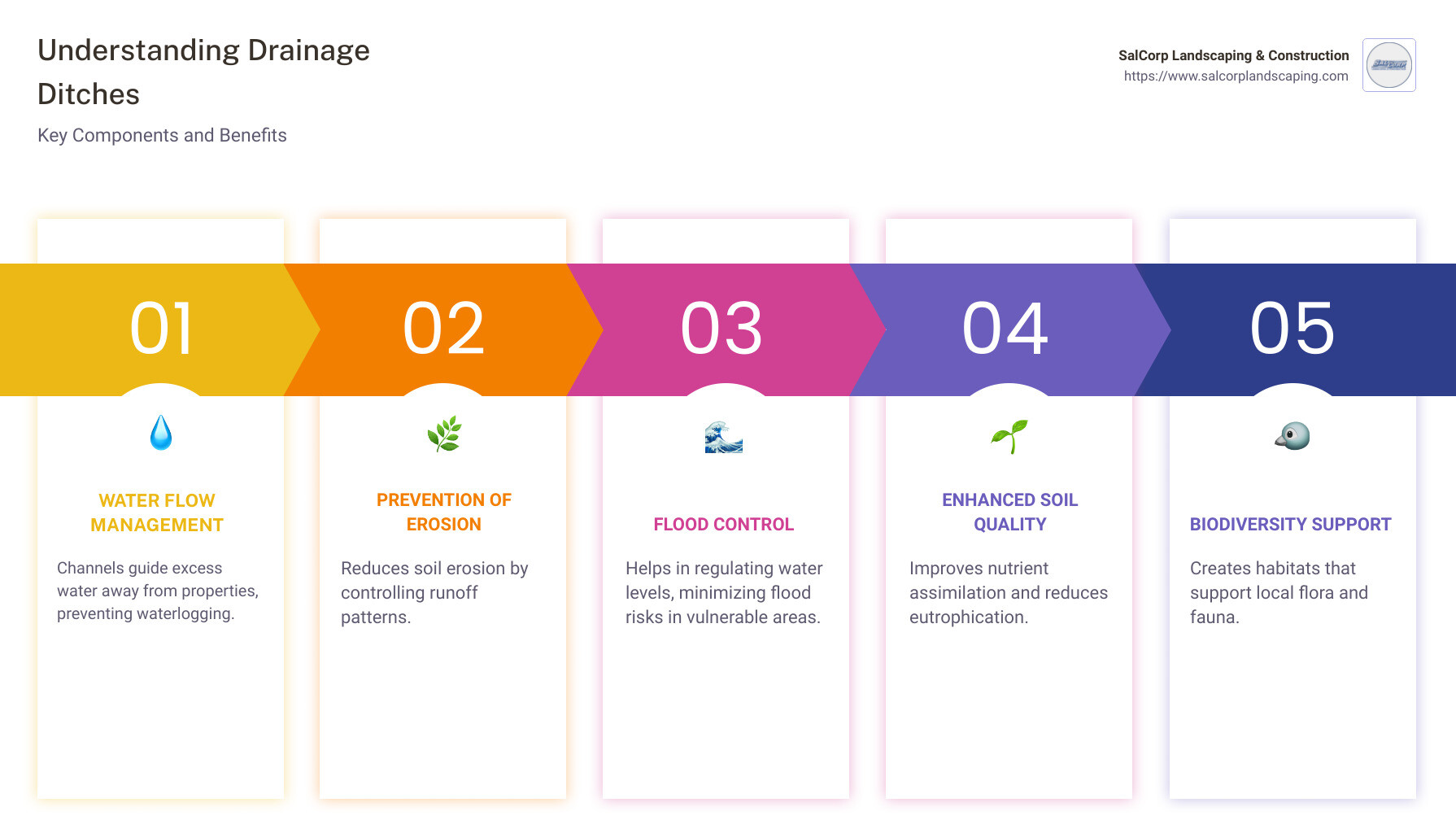
Glossary for drainage ditch:
– outdoor water drainage solutions
– sloped yard drainage
– types of drainage
What is a Drainage Ditch?
A drainage ditch is a specially designed channel that helps manage water flow and prevent flooding. These ditches are often found in low-lying areas, roadsides, and fields. They play a vital role in landscape design by directing water away from properties, reducing soil erosion, and maintaining healthy plant life.
Types of Drainage Ditches
Drainage ditches come in various types, each serving a unique purpose.
- Surface Systems: These are visible channels that guide water over the land. They are perfect for areas where water needs to be moved efficiently across open spaces, such as fields and roadsides.
- Sub-Surface Systems: Hidden beneath the ground, these systems use pipes and gravel to transport water. They are ideal for areas requiring discreet water management, like residential lawns.
- Two-Stage Drainage Ditch: This innovative design features grass benches on either side of the channel, acting as floodplains. These benches slow down water flow, improving water quality and stability. This type of ditch is especially useful for managing runoff and sediment in agricultural lands.
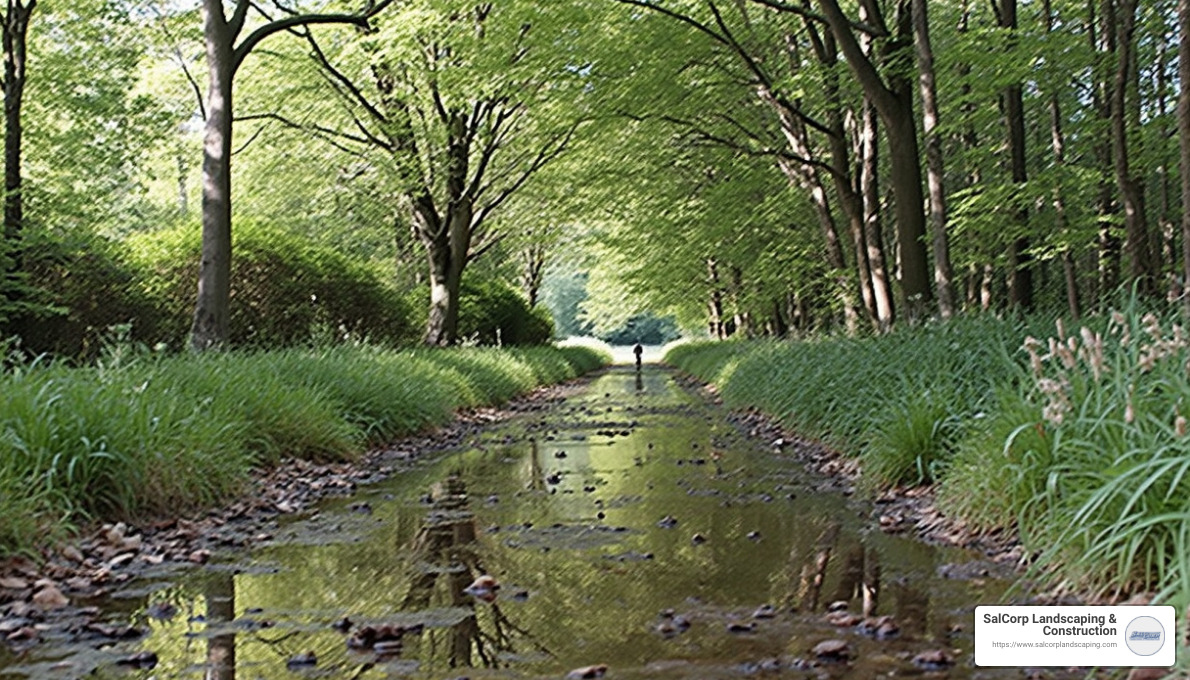
- Conventional Ditch: A simple, traditional design that consists of a single trench. While effective in moving water, it can struggle with erosion and sediment control during heavy rains.
Drainage ditches are crucial for plant irrigation, ensuring that water reaches where it’s needed without causing damage. By choosing the right type of ditch, you can protect your landscape from the adverse effects of uncontrolled water flow.
In the next section, we’ll explore how to construct a drainage ditch, covering everything from trench depth to material selection.
How to Construct a Drainage Ditch
Building a drainage ditch is a straightforward process that can help manage water flow and prevent flooding on your property. Here’s a simple guide to get you started.
Materials Needed
Before you begin, gather these essential materials:
- Crushed Rock and Gravel: These materials form the base of your ditch, allowing water to flow smoothly. Gravel comes in various sizes, so choose larger stones for stability.
- Perforated Pipe: This pipe is placed at the bottom of the ditch to collect and transport water. The perforations allow water to enter the pipe from the surrounding soil.
- Fabric Filter: Lay this over the gravel to prevent soil from clogging the pipe. It acts as a barrier, keeping the drainage system efficient.
- Topsoil: Use this to cover the ditch once construction is complete. It helps blend the ditch into the surrounding landscape.
Construction Steps
- Determine the Trench Depth and Slope: The trench should be deep enough to effectively collect water, typically twice as wide as it is deep. The slope is crucial for water flow; a gradual decline from the highest point to the exit ensures efficient drainage.
- Excavate the Trench: Using a shovel or machinery, dig the trench along the marked path. Ensure the sides are gently sloping to prevent erosion.
- Lay the Gravel Base: Fill the bottom of the trench with a layer of crushed rock or gravel. This layer supports the pipe and facilitates water movement.
- Install the Perforated Pipe: Place the pipe on top of the gravel base. Ensure the perforations face downward to collect water effectively.
- Cover with Fabric Filter: Lay the fabric filter over the pipe and gravel. This prevents soil from entering the system, maintaining its functionality.
- Add Topsoil and Larger Stones: Cover the fabric filter with topsoil, then place larger stones along the sides of the ditch. This stabilizes the ditch and prevents erosion.
By following these steps, you can construct a functional drainage ditch that effectively manages water flow on your property. In the next section, we’ll discuss the benefits of drainage ditches, including flood control and improved growing conditions.
Benefits of Drainage Ditches
Environmental Benefits
Drainage ditches offer numerous environmental advantages that go beyond just managing water flow. Let’s explore some key benefits:
Flood Control and Soil Saturation Reduction
By directing excess water away from low-lying areas, drainage ditches help prevent flooding. This is crucial in maintaining soil health, as less waterlogged soil means reduced risk of erosion and better conditions for plant growth. The two-stage drainage ditch design, with its linear benches, further improves flood control by creating additional space for water to spread out, reducing the likelihood of overflow.
Erosion Prevention and Improved Growing Conditions
Erosion is a major concern for landscapes, but drainage ditches can help mitigate this issue. By channeling water through a designated path, they reduce the force of water on the soil, preventing erosion. Additionally, the improved drainage helps maintain optimal soil moisture levels, promoting healthier root systems and better growing conditions for plants.
Water Quality and Nutrient Assimilation
Drainage ditches also play a role in enhancing water quality. The interaction of water with soil and sediment along the ditch helps filter out contaminants. The benches in a two-stage drainage ditch act like mini floodplains, trapping sediments and nutrients before they reach larger water bodies. This process, known as nutrient assimilation, reduces the risk of nutrient overload in waterways, which can lead to problems like eutrophication.
Reduced Eutrophication and Biodiversity
Eutrophication, caused by excess nutrients like nitrogen and phosphorus, can lead to harmful algal blooms and oxygen-depleted waters. By reducing nutrient runoff, drainage ditches help prevent these issues, supporting healthier aquatic ecosystems. This in turn promotes biodiversity, as aquatic life thrives in balanced, oxygen-rich environments.
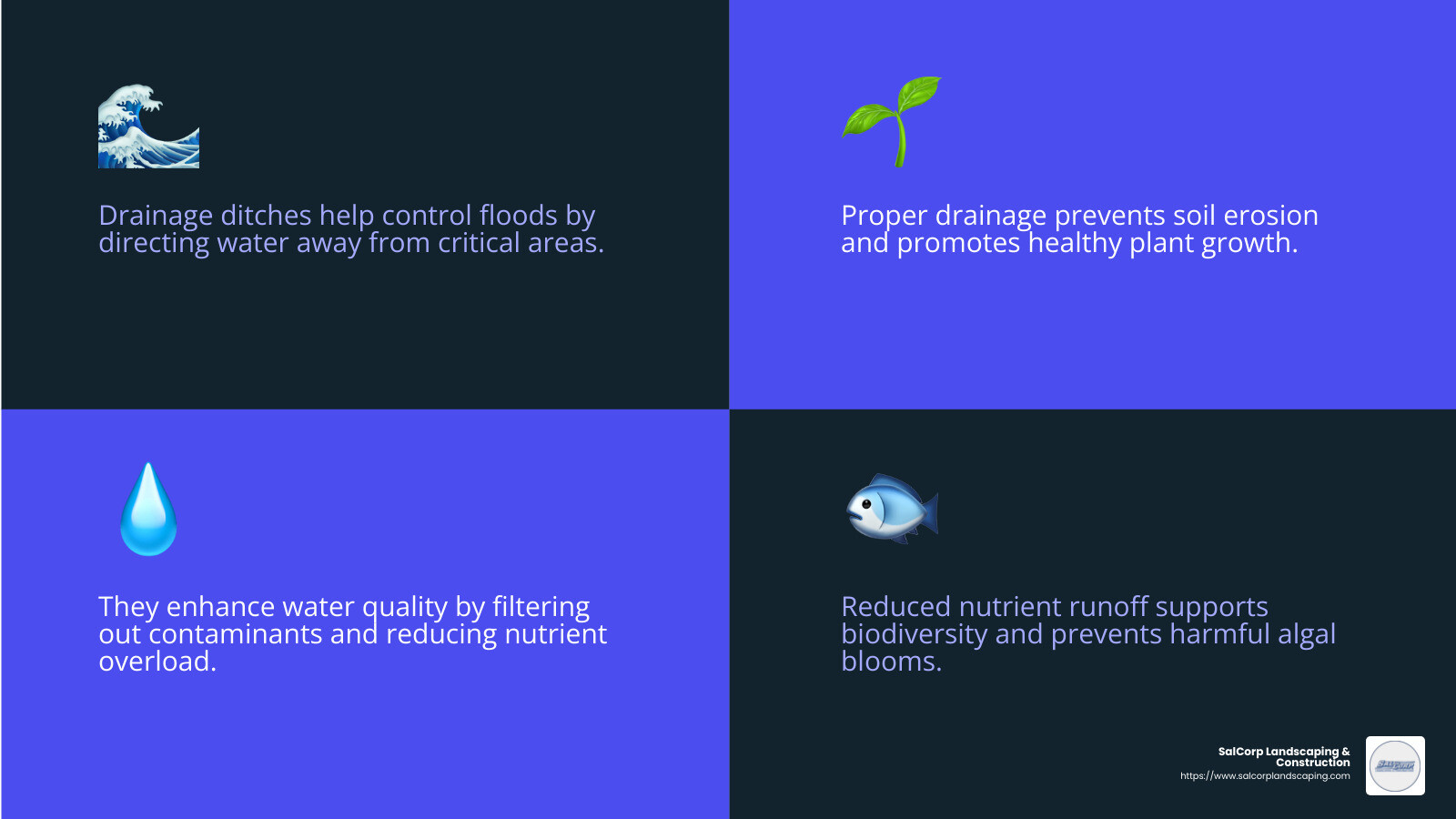
In summary, drainage ditches are not just functional landscape features; they are essential components for environmental sustainability. They manage water, protect soil, and improve ecosystems, making them a valuable addition to any landscape design. Next, we’ll explore common issues that can arise with drainage ditches and how to address them effectively.
Common Issues with Drainage Ditches
Drainage ditches are crucial for managing water and preventing erosion, but they can face several challenges. Let’s look at some common issues and how to solve them.
Erosion and Sedimentation
Erosion occurs when water flows too quickly through a ditch, wearing away the soil and causing sediment to build up. This can lead to blockages and reduce the ditch’s effectiveness. To combat this, rock weirs and flumes can be used. Rock weirs are small, dam-like structures that slow down water flow, while flumes are chute-like structures lined with rocks to protect the soil from splashes.
Bank Widening
Over time, the banks of a drainage ditch can widen due to constant water flow, leading to instability. Grade stabilization structures can help maintain the shape and stability of the banks. These structures include cattle panel, treated wood, or concrete block setups that reinforce the ditch’s sides.
Maintenance Costs
Keeping a drainage ditch in good condition can be costly. Regular maintenance is essential to prevent issues like blockages and erosion. However, using bioengineering techniques and bank revegetation can reduce long-term costs. Planting native vegetation along the ditch can stabilize the soil and reduce erosion naturally, minimizing the need for frequent repairs.
Solutions to Common Issues
- Rock Weirs and Flumes: Slow down water flow and protect soil from erosion.
- Grade Stabilization Structures: Reinforce banks to prevent widening and maintain shape.
- Bank Revegetation: Use plants to stabilize soil and reduce erosion naturally.
- Bioengineering Techniques: Combine vegetation with structural elements for sustainable erosion control.
By addressing these common issues with smart solutions, drainage ditches can function effectively and remain low-maintenance. These strategies not only solve immediate problems but also improve the long-term sustainability of drainage systems.
Next, we’ll dive into frequently asked questions about drainage ditches to clear up any lingering doubts.
Frequently Asked Questions about Drainage Ditches
What is a drainage ditch?
A drainage ditch is a man-made channel designed to redirect water away from areas where it might cause problems. These ditches help manage water flow, prevent flooding, and control erosion. They can be found in low-lying areas, along roadsides, and in fields. Besides protecting infrastructure, they also support plant irrigation by directing water where it’s needed.
There are different types of drainage ditches, including surface systems, sub-surface systems, and two-stage drainage ditches. Each type serves a specific purpose and is suited to different environments and needs.
How deep does a drainage ditch need to be?
The depth of a drainage ditch is crucial for its effectiveness. Generally, a ditch should be about twice as wide as it is deep. This ensures that water can flow smoothly without causing erosion. The slope of the ditch is also important; it should follow the natural flow of water, with the highest point where water collects and the lowest where it exits.
For most residential projects, a trench depth of 18 to 24 inches is sufficient, but this can vary based on the specific site conditions and goals. A gentle slope is key to maintaining a steady flow of water without causing erosion or sediment buildup.
How do you make a good drainage ditch?
Constructing a good drainage ditch involves several steps:
- Plan and Mark: Start by planning the course of the ditch, ensuring it follows the natural slope of the land. Mark the path with spray paint to guide your digging.
- Dig the Trench: Clear away any vegetation and dig a trench that is twice as wide as it is deep. Ensure the sides are gently sloping to prevent collapse.
- Add a Gravel Base: Line the bottom of the trench with large crushed rock or gravel. This helps with drainage and prevents erosion.
- Install a Drain Pipe: For improved drainage, especially in areas with heavy rainfall, a perforated pipe can be placed at the bottom of the trench.
- Cover with More Gravel: Add another layer of gravel over the pipe to further aid water flow.
- Topsoil and Finish: If desired, cover the gravel with topsoil and plant grass or other vegetation to stabilize the soil and improve aesthetics.
Maintenance is key to a long-lasting drainage ditch. Regularly check for blockages, erosion, and sediment buildup. Clearing debris and checking the slope ensures the ditch continues to function effectively.
By following these steps and maintaining your drainage ditch, you can effectively manage water on your property and prevent issues like flooding and erosion.
Conclusion
At SalCorp Landscaping & Construction, we understand that a well-designed drainage ditch is more than just a trench; it’s a strategic investment in your property’s health and longevity. Our expertise in landscape design and sustainability ensures that we create solutions that not only address immediate water management needs but also offer long-term benefits.
Long-Term Maintenance
A drainage ditch, like any other landscape feature, requires regular maintenance to remain effective. We prioritize easy-to-maintain designs that reduce upkeep costs over time. By choosing the right materials and construction techniques, we ensure that your drainage system remains efficient and durable.
Cost-Benefit Analysis
Investing in a drainage ditch can save you money in the long run. By preventing water damage and erosion, you avoid costly repairs and maintain the integrity of your landscape. Our team at SalCorp Landscaping & Construction conducts thorough cost-benefit analyses to ensure that every project delivers maximum value.
Optimal Locations
Choosing the right location for a drainage ditch is crucial. We leverage our extensive knowledge of Massachusetts’ diverse landscapes to identify optimal sites that naturally support effective water flow. This strategic placement not only improves the function of the ditch but also integrates seamlessly with the surrounding environment.
Sustainable Design
Sustainability is at the core of what we do. Our drainage solutions incorporate eco-friendly practices, like using permeable materials and native plants, to support local ecosystems. By designing with sustainability in mind, we help protect natural resources while enhancing the aesthetic appeal of your outdoor space.
If you’re ready to explore how a drainage ditch can improve your property, contact us today. At SalCorp Landscaping & Construction, we’re committed to creating landscapes that are as beautiful as they are functional, ensuring that your investment pays off now and in the future.
