

Your Guide to Affordable Retaining Walls
Building a retaining wall is a fantastic way to transform your landscape, whether you’re looking to tame a slope, create terraced garden beds, or simply add a striking visual element to your yard. However, the cost can often be a major concern. The good news is that you don’t have to break the bank to build a structure that is both functional and beautiful. Finding the cheapest way to build a retaining wall is all about smart material choices, clear planning, and understanding the scope of your project.
For many homeowners in Massachusetts communities like Walpole, Norwood, Wellesley, and Framingham, the most budget-friendly options involve a bit of DIY spirit. However, it’s crucial to balance the upfront cost of materials with the long-term durability and safety of the wall. The cheapest option on day one is not always the cheapest over 10-20 years. A poorly constructed wall that fails after just a few seasons will ultimately cost far more in repairs and replacement than investing in proper materials and construction methods from the start.
When considering your budget retaining wall project, understand that the total cost involves more than just the materials themselves. You’ll need to factor in site preparation, which includes excavation and grading, the foundation materials like compacted gravel base, proper drainage systems to prevent water buildup behind the wall, and potentially equipment rental if you’re taking the DIY route. Additionally, depending on your location in Massachusetts and the height of your wall, you may need to obtain building permits, which can add to your overall project cost.
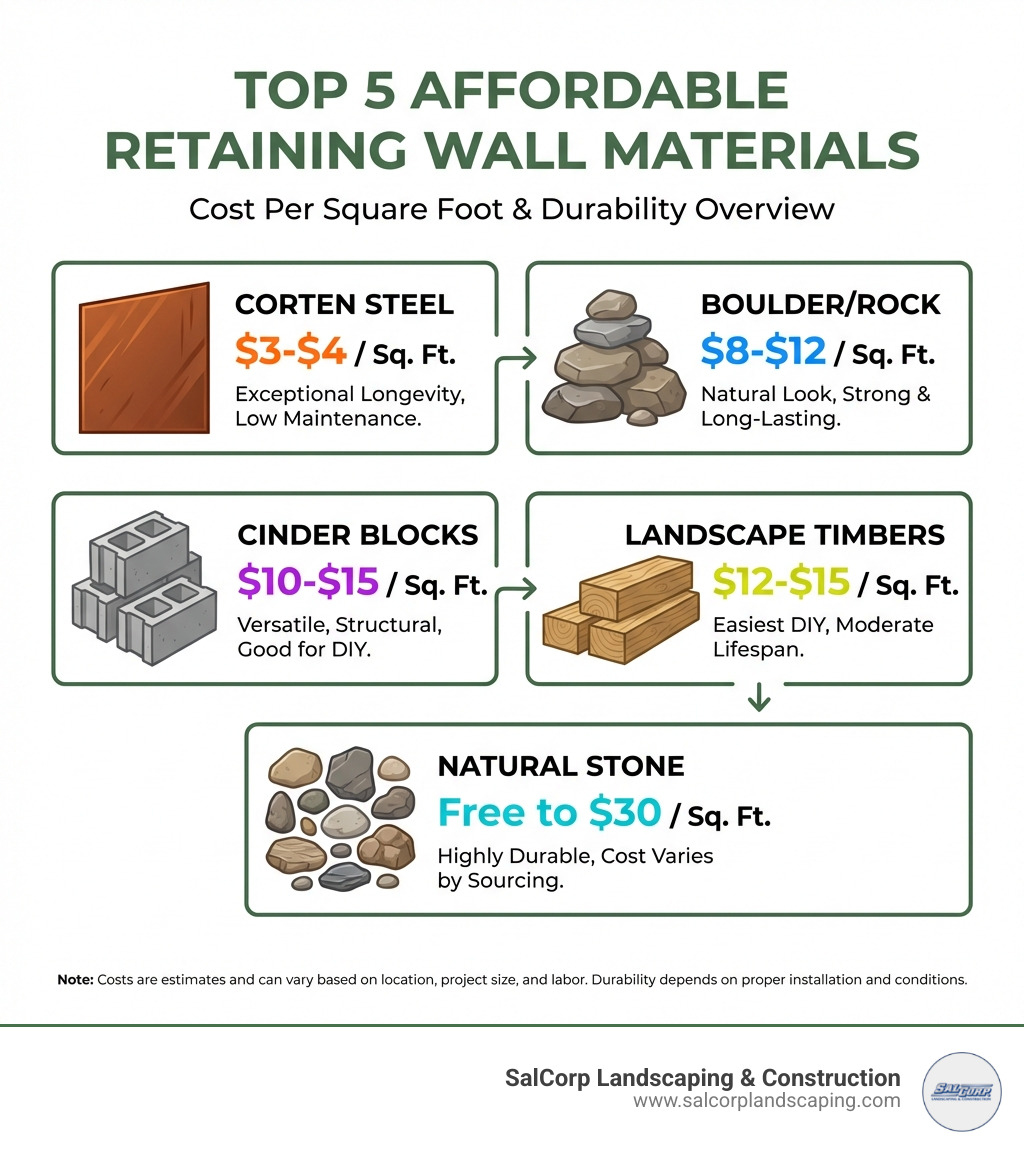
Here are some of the most cost-effective materials to consider (price ranges below are average internet-based estimates for materials only and are not SalCorp pricing; actual costs can vary widely by supplier, project size, and market conditions):
- Corten Steel: Surprisingly affordable for certain applications, with material costs often starting from roughly $3-$15+ per square foot based on online estimates, offering a unique, rustic look and exceptional durability when installed correctly. This weathering steel develops a protective rust patina that actually prevents further corrosion, making it an excellent long-term investment despite its industrial appearance.
- Boulder/Rock: If you have access to a local source or on-site boulders, this can be a very economical option. Internet-based averages often range from about $8-$30+ per square foot of face area, providing a natural, timeless aesthetic. The key to keeping costs down with boulder walls is sourcing materials locally to minimize transportation expenses.
- Cinder Blocks (CMUs): A classic DIY choice, cinder blocks are versatile and strong. Internet pricing commonly falls in the $5-$20+ per square foot range for materials, depending on block type and finish. These concrete masonry units can be stacked, mortared, or even filled with concrete for added strength, and they can be faced with stucco or stone veneer for a more attractive appearance.
- Landscape Timbers: Often the go-to for simple, straight walls, pressure-treated wood timbers are easy to work with and can be relatively affordable. Online sources frequently show material costs between $12-$35+ per square foot. While they may not last as long as stone or concrete options, they’re perfect for smaller walls and can be replaced section by section as needed.
- Free Natural Stone: The ultimate budget option if you can legally and safely source it yourself from your property. The main cost is your own labor and basic supplies, but the result is a one-of-a-kind, natural stone wall that can last for generations when properly constructed.
For smaller walls, typically under 3 feet in height, a DIY approach using materials like interlocking concrete blocks or landscape timbers can be the most economical path. These materials are designed with the homeowner in mind, featuring user-friendly installation systems that don’t require specialized tools or extensive masonry experience. The key is to carefully weigh the cost of materials against your own time, skill level, local building requirements in towns like Canton, Sharon, or Franklin, and the long-term performance you expect from the wall.
If you want a deeper dive into material types and general performance characteristics, the overview on retaining wall design and use cases is a helpful neutral reference, but local conditions in Massachusetts will ultimately determine what works best for your yard. Our New England climate, with its freeze-thaw cycles and varying soil conditions from coastal areas to inland regions, requires special consideration when selecting materials and construction methods.
Why Building a Retaining Wall on a Budget Matters
Whether you’re a homeowner in Norfolk looking to create more usable yard space or a property manager in Framingham dealing with erosion, a retaining wall is a significant investment. While national averages for professionally installed walls cited online can range anywhere from about $3,200 on the low end to well over $15,000 or more on complex projects, making smart choices can save you thousands over the life of the wall. These are broad, internet-based averages and not SalCorp Landscaping pricing.
It is not about cutting corners; it is about understanding the value and longevity of different materials and construction methods. The reality is simple: cheap doesn’t have to mean flimsy. A well-planned, properly installed budget-friendly wall can be just as effective and long-lasting as a more expensive one. The difference often lies in the aesthetic choices and the amount of labor you’re willing to invest yourself versus hiring professionals.
The secret lies in:
- Proper site preparation and excavation that ensures a level, stable foundation
- A solid, compacted gravel base that provides drainage and prevents settling
- Adequate drainage to relieve hydrostatic pressure that can cause wall failure
- Choosing the right material and wall height for your specific needs and soil type
- Understanding local building codes and obtaining necessary permits
- Regular maintenance to address minor issues before they become major problems
I’m Sal, owner of SalCorp Landscaping & Construction. With over 20 years of experience building beautiful and durable landscapes across Massachusetts communities like Walpole, Medfield, Mansfield, Newton, and beyond, I’ve seen it all. I’ve helped countless homeowners and businesses find the cheapest way to build a retaining wall that stands the test of time.
Because we are owner-operated and run our own machinery, we can efficiently handle everything from design and permitting support to excavation, installation, and final landscaping. My team and I understand local soil conditions, drainage challenges, and building codes, and we know which budget-friendly solutions deliver real, lasting value and which ones lead to costly repairs down the road. We’ve worked with every material imaginable, from basic landscape timbers to engineered block systems, and we can help you determine the most cost-effective solution for your specific situation.
Know your cheapest way to build a retaining wall terms:
