Retaining wall stone options: Ultimate Smart Choices 2025
The Great Debate: Natural Stone vs. Manufactured Concrete Blocks
When considering Retaining wall stone options, there are two main categories: natural stones quarried from the earth and manufactured concrete blocks engineered for specific designs.
Here are the primary types of materials available:
- Natural Stone: This includes materials like armour stone, limestone blocks, fieldstone, and various types of cut or dimensional stone (such as granite or bluestone). They offer unique textures, colors, and an organic look.
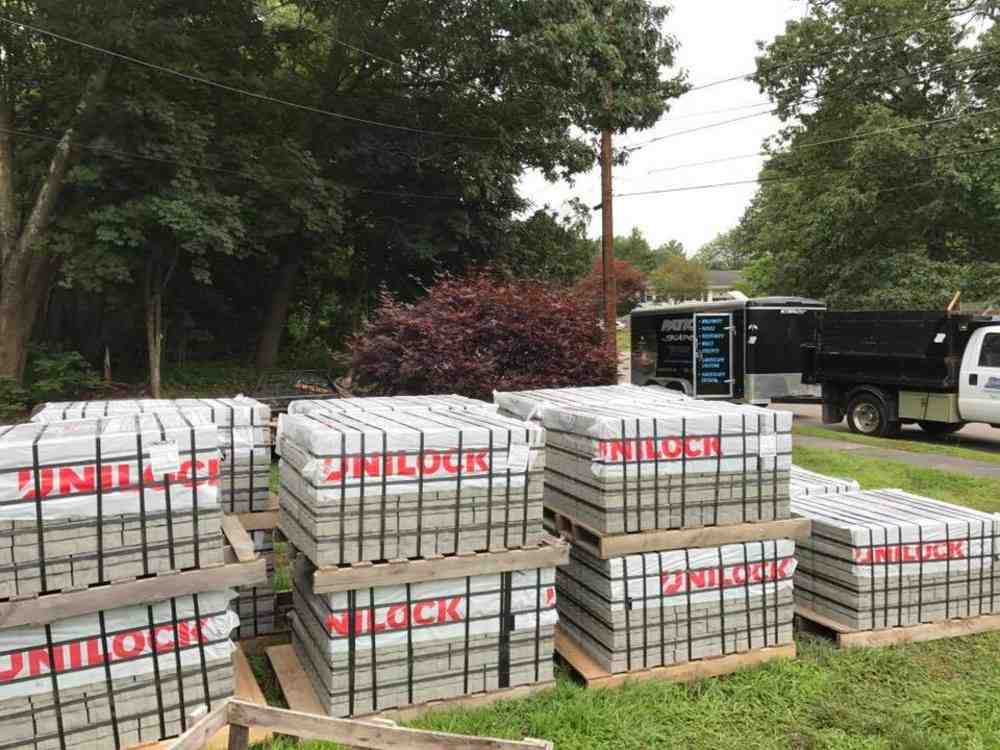
- Manufactured Concrete Blocks: These man-made products are designed for retaining walls, often with interlocking features. Popular brands include Allan Block, Unilock, Belgard, Keystone, and Rosetta. These Segmental Retaining Wall (SRW) systems often mimic the look of natural stone.
Choosing the right material impacts your landscape’s look, the wall’s durability, the installation process, and the overall cost. Both natural and manufactured options have distinct advantages depending on your project’s needs and budget.
With over two decades of experience, I’m Sal Musto of SalCorp Landscaping & Construction. I’ve seen how the right Retaining wall stone options transform a landscape, and my team is committed to the highest standards of quality on every project.
Essential Retaining wall stone options terms:
Choosing between natural stone and manufactured concrete blocks is a key first step. The best choice depends on your project’s specific needs, aesthetic preferences, and budget.
Aesthetics: Natural stone offers an unparalleled organic beauty, with each unique piece creating a one-of-a-kind, timeless look. It’s ideal for rustic or deeply integrated designs. Manufactured concrete blocks provide uniformity and versatility. Available in a vast array of colors and textures—many mimicking natural materials—they allow for precise patterns and a more contemporary or formal appearance.
Durability: Both options are impressively durable. Properly installed natural stone can last for generations, like the ancient dry stone walls that still stand today. Manufactured concrete blocks are engineered for strength and longevity, designed to withstand significant pressure and freeze-thaw cycles. Premium blocks boast a minimum compressive strength of 5000 PSI, providing decades of reliable service.
Cost Comparison: Generally, natural stone has a higher material cost and requires more specialized labor, as fitting irregular shapes takes more time. Manufactured concrete blocks are typically more budget-friendly per square foot. Their standardized, interlocking designs can lead to faster installation and lower labor costs, especially for smaller projects.
Installation Difficulty: Installing a natural stone wall is an art form requiring significant skill, experience, and often heavy machinery. Fitting irregular stones for a stable structure is not a DIY task. Manufactured concrete blocks (SRW systems) are designed for easier installation. Their uniform, interlocking features make them more approachable for experienced homeowners on small projects, but professional installation is always recommended for walls over a few feet high.
Here’s a quick comparison to help you weigh your options:
| Criteria | Natural Stone | Manufactured Concrete Blocks |
|---|---|---|
| Aesthetics | Unique & Natural | Uniform & Versatile |
| Durability | Generational Lifespan | Engineered Strength |
| Average Cost | Higher Material & Labor | More Budget-Friendly |
| Installation | Requires Skill & Machinery | DIY-Friendly for small walls |
The choice between natural stone and manufactured concrete blocks is a blend of practical considerations and personal taste. Both offer robust solutions for your retaining wall needs.
Exploring Natural Retaining Wall Stone Options
For a timeless, organic appeal, natural Retaining wall stone options are best. Quarried directly from the earth, these materials bring a unique character to any landscape, from rugged fieldstone to precisely cut stone.
Natural materials are the original building blocks, offering unparalleled durability and a beauty that improves with age. When we work with natural stone, we are crafting a piece of art that blends seamlessly with its surroundings.
More info about our landscaping and masonry services
Fieldstone & Boulders: The Rustic Choice

Fieldstone embodies the classic, rustic New England landscape. These natural stones, collected from fields or local sites, feature irregular shapes, varied sizes, and a charming, weathered patina. Along with larger boulders, they are perfect for creating walls that look as if they grew organically from the landscape.
The beauty of fieldstone is its untamed, rustic charm, making it a fantastic choice for cottage gardens and woodland settings. Its earthy tones and irregular shapes blend into lush plantings. For installation, fieldstone walls are often dry-stacked, meaning stones are carefully fitted together without mortar. This technique relies on gravity, friction, and the skill of our masons to create a strong, stable structure. Each stone is hand-selected and placed to ensure stability and proper drainage. For larger boulders, we use heavy machinery for precise placement. Fieldstone is especially well-suited for garden walls, gentle terracing, and natural-looking borders.
Armour Stone & Limestone Blocks: The Heavy Hitters
For projects demanding robust support or a bold statement, armour stone and large limestone blocks are the heavy hitters of the natural stone world. They offer immense strength and a formidable presence.
Armour stone consists of very large, often irregularly shaped stones like granite, used for serious structural applications. Limestone blocks are quarried and can be saw-cut or guillotined for more consistent dimensions while retaining a natural, rugged face. For example, saw-cut limestone blocks with a consistent bed depth are excellent for building sturdy walls. Wiarton Limestone Blocks are prized for their uniform heights and depths, making them easier to stack and level.
Due to their significant weight and size, these large stones are primarily used for gravity walls, where the mass of the stone itself holds back the earth. This type of project requires heavy machinery for transport and placement. They are ideal for powerful structural support, creating terraced landscapes, protecting shorelines, or serving as striking freestanding features. The result is a wall of unparalleled strength and visual impact.
More info about excavation services
Cut Stone & Dimensional Stone: The Polished Professional
For a more refined, formal, or contemporary aesthetic, cut and dimensional stone are perfect allies. These options combine the beauty of natural material with the precision of craftsmanship.
Unlike the raw shapes of fieldstone, cut stone (like granite, bluestone, or limestone) is sawn or guillotined into specific, uniform shapes and sizes. This includes products like dimensional drywall, which offers precise dimensions for construction. The uniformity of cut stone allows for clean lines, crisp edges, and a polished look.
This style is perfect for formal garden walls, neat patio surrounds, sophisticated raised planting beds, or retaining walls that complement modern architecture. The consistent dimensions create a predictable and sleek appearance, offering a refined alternative to the rugged charm of other natural stones. The finished wall has a deliberate, architectural quality.
More info about brick front steps
A Guide to Manufactured Retaining Wall Stone Options
While natural stone offers classic beauty, manufactured concrete blocks have revolutionized the industry. These engineered solutions are versatile, functional, and a fantastic choice for many projects. Designed for consistency and easier installation, they offer a wide range of aesthetic possibilities, often mimicking natural materials.
At SalCorp Landscaping & Construction, we view manufactured blocks as a smart, reliable choice. They are engineered to meet specific performance standards, ensuring your wall is built to last. These products are a type of concrete product often referred to as Segmental Retaining Wall (SRW) systems due to their modular, interlocking nature.
More info about hardscape materials
Interlocking Concrete Blocks (SRW): The Versatile Workhorse

Modern Retaining wall stone options often bring to mind interlocking concrete blocks, or Segmental Retaining Walls (SRW). These are the versatile workhorses of landscaping, suitable for everything from a small garden border to massive commercial structures.
SRW blocks are precisely engineered units designed to be dry-stacked without mortar. They rely on weight, friction, and interlocking mechanisms (lips or pins) for stability. Brands like Allan Block, Unilock, Belgard, and Keystone offer sophisticated systems built on a crushed stone foundation with proper drainage. For taller walls, geogrid reinforcement is used. A key advantage in Massachusetts is that these mortarless walls often don’t require frost footings, simplifying installation.
One of the biggest benefits of SRW blocks is the variety of colors, textures, and styles available. You can find blocks that mimic natural stone, feature a rugged split-face, or offer a sleek, contemporary finish. This provides immense design flexibility for any project. They are perfect for creating terraced gardens, building raised patios, or managing a slope.
Their modular design makes them relatively straightforward to install for smaller projects, making them popular for experienced DIY enthusiasts. However, for any wall over a couple of feet high or bearing significant loads, professional installation is crucial to ensure structural integrity. With proper engineering, SRW walls can be built to incredible heights, a testament to their strength.
Retaining Wall Ideas for Sloped Backyards
Large-Format Concrete Systems: The Natural Impersonator
For projects requiring greater scale and aesthetic sophistication, large-format concrete systems are the answer. They are designed to provide the grandeur and texture of natural stone with the consistency and engineering of manufactured products.
Unlike standard SRW blocks, many large-format systems use a wet-cast concrete process. This allows for incredibly detailed textures that replicate natural chiseled stone, quarried rock, or weathered outcroppings. Brands like Rosetta Hardscapes, with their “Outcropping” product, excel at creating large-scale blocks that combine sculpted strength with natural aesthetics. With dozens of unique face patterns, they avoid repetition and improve the natural illusion.
While mimicking nature, these systems are engineered for top performance. They offer consistent dimensions, making installation more predictable than with irregular natural stone. Their substantial weight contributes to gravity wall stability, and they are often designed for demanding applications, including submerged structures.
Due to their size and weight, large-format concrete systems require heavy equipment for transport and placement. They are the ideal choice for large-scale projects, commercial applications, or any high-impact retaining wall that needs to look like it was carved from a mountainside.
More info about commercial retaining walls
Key Considerations Before You Build
Choosing your Retaining wall stone options is just one piece of the puzzle. Before laying the first stone, critical factors like project planning, engineering, and installation details must be considered. These pillars ensure your new retaining wall is not only stunning but also durable, effective, and safe.
Building a retaining wall is a significant investment, and you want to do it right from the ground up.
Budgeting for Your Wall: Material and Labor Costs
Understanding the budget for your retaining wall is crucial, as costs can vary significantly based on several key factors.
- Wall Height and Length: Taller and longer walls require more material and labor. Walls over a few feet high often need engineering and reinforcement like geogrid.
- Material Choice: Natural stone typically has a higher material and labor cost compared to manufactured concrete blocks.
- Site Access: Difficult-to-reach sites can increase labor costs due to the need for manual handling or specialized equipment.
- Excavation: The amount of earth moved for the foundation and drainage system will impact the overall cost.
- Labor Costs: Hiring skilled masons or experienced hardscapers is an investment in a quality, lasting result.
- Drainage and Backfill: Essential systems like gravel and perforated pipe add to material costs but are vital for the wall’s longevity.
While costs in Massachusetts vary, national averages provide a useful benchmark. A typical project can range from $1,677 to $6,765, with a per-linear-foot average between $114 and $173. For a 60-foot long, 4-foot high retaining wall, costs can range from $6,000 to over $18,000, depending on the design, site conditions, and material choice.
Please note: The cost data presented here is based on national averages and should be used for estimation purposes only. These figures are not a direct quote for services from SalCorp Landscaping & Construction. For a precise estimate custom to your project in Massachusetts, please contact us for a personalized consultation.
How Much Does a Retaining Wall Cost?
The Foundation of Success: Installation Essentials
Regardless of your chosen Retaining wall stone options, the success and durability of your wall depend entirely on proper installation. A wall is only as good as its foundation and drainage. Here are the key elements for a solid wall.
- Compacted Gravel Base: This is the literal bedrock of your wall. A properly compacted gravel layer provides a stable, level, and free-draining foundation for the first course of stones.
- Perforated Pipe (Drainage): Water is the enemy of retaining walls. Hydrostatic pressure can cause bulging, cracking, or collapse. A perforated pipe behind the wall is crucial for directing water safely away.
- Geogrid Reinforcement: For taller or heavily loaded walls, this synthetic fabric is laid in layers within the backfill, locking the wall into the earth and providing incredible tensile strength.
- Batter Angle: Many retaining wall systems are built with a slight lean, or “batter,” into the hillside. This angle significantly increases the wall’s stability against soil pressure.
- Building Permits: In many Massachusetts towns, walls over a certain height (often 2-4 feet) require a building permit and possibly an engineer’s review. This ensures the wall is structurally sound and meets safety codes. Failing to get a permit can lead to fines or demolition orders.
You may need a permit if your wall is over a certain height
Frequently Asked Questions about Retaining Wall Stones
It’s natural to have questions when starting a retaining wall project. Here are some of the most common inquiries we receive, with insights from our years of experience.
What is the most durable material for a retaining wall?
For sheer durability, a properly constructed natural stone wall can last for centuries. When built by a skilled artisan using traditional methods, a wall made of dense granite or fieldstone can flex with the earth, ensuring a generational lifespan.
High-strength manufactured concrete blocks are also incredibly durable. They are engineered to withstand significant pressure and harsh weather, like Massachusetts winters. While a poured concrete wall can last 40 years or more, it can develop large cracks if not installed perfectly. Pressure-treated lumber walls have a much more limited lifespan compared to stone or concrete.
For any of these Retaining wall stone options, proper installation and drainage are the absolute keys to durability.
What is the cheapest retaining wall to build?
Generally, the cheapest retaining wall is a low, short wall using less expensive materials and labor. Pressure-treated lumber was historically a budget option, but its lifespan is limited (10-20 years), and materials like railroad ties have environmental concerns.
For a more cost-effective stone-like appearance, smaller, interlocking concrete blocks (SRW systems) are typically more budget-friendly than natural stone. These systems are often designed for DIY installation on small garden walls, which can reduce labor costs.
However, choosing the absolute cheapest option can compromise longevity and safety, potentially leading to higher costs for repairs or replacement down the road. Investing a bit more initially often provides better long-term value.
Can I build a retaining wall myself?
This depends on the size and purpose of your wall. For small, decorative garden walls under 2 feet high that aren’t supporting significant loads, a DIY build with manufactured interlocking blocks can be feasible. These are great for raised flower beds or simple borders.
However, we strongly recommend professional installation for any wall that is structural, exceeds 2 feet in height, or holds back a substantial amount of earth. Retaining walls are complex structures requiring engineering knowledge, proper foundation and drainage, and often geogrid reinforcement. An incorrect build can lead to failure, posing serious safety risks and resulting in expensive repairs.
Our team at SalCorp Landscaping & Construction has over 20 years of experience building retaining walls across Massachusetts. We have the expertise, machinery, and knowledge of local building codes to ensure your wall is beautiful, structurally sound, and built to last. For any project beyond a simple garden border, we’re here to help you build it right.
Conclusion
You’ve now explored Retaining wall stone options. Choosing the right material is about blending beauty with practicality to ensure your wall looks fantastic and stands strong for years.
We’ve covered the timeless allure of natural stone—from rustic fieldstone to commanding armour stone—and the versatility of engineered options like interlocking SRW blocks and large-format systems.
The journey doesn’t end with material selection. As we’ve covered, smart budgeting and essential installation practices—like a strong foundation, proper drainage, and reinforcement—are the non-negotiable secrets to a wall that lasts.
Your choice of Retaining wall stone options is a personal one, balancing your aesthetic vision with your budget and the wall’s function. That’s where we come in. At SalCorp Landscaping & Construction, we’ve helped homeowners across Massachusetts bring their visions to life for over 20 years. As an owner-operated business with our own state-of-the-art machinery, we have the hands-on expertise to help you select the perfect materials and build a retaining wall that’s both beautiful and engineered to last. We take pride in every project, ensuring your investment is one you’ll enjoy for decades.