

Eco Landscaping Near Me: 10 Best Ways for Amazing 2025 Yards
Changing Your Outdoor Space with Sustainable Practices
Looking for eco landscaping near me? Here’s what you need to know:
- Definition: Eco landscaping uses sustainable practices and native plants to create environmentally-friendly outdoor spaces
- Benefits: Reduces water usage by up to 50%, increases property values by up to 15%, and supports 3x more pollinator species
- Key Elements: Native plants, rain gardens, permeable surfaces, composting, and water conservation systems
- Finding Professionals: Search for certified ecological landscapers, check Ecological Landscape Alliance directories, and review portfolios of sustainable projects
Eco landscaping near me is a sustainable approach to outdoor design that works with nature rather than against it. This growing trend combines beauty with environmental responsibility, creating landscapes that thrive with minimal resources while supporting local ecosystems.
Unlike traditional landscaping that often relies on resource-intensive lawns, chemical treatments, and non-native plants, eco-friendly approaches prioritize native species, water conservation, and natural processes. The results are stunning outdoor spaces that require less maintenance while providing greater environmental benefits.
“Sustainable landscaping can be both functional and beautiful.” — Sustainable Roots Landscaping Co.
The demand for ecological landscaping has surged as homeowners recognize both the environmental and economic advantages. Properties with eco-landscaping can use up to 50% less water than conventional landscapes, while potentially increasing property values by up to 15%. Additionally, replacing traditional lawns with native plant gardens can reduce maintenance time and costs by 30-50%.
I’m Sal Musto, owner of SalCorp Landscaping & Construction, and I’ve witnessed how eco landscaping near me has transformed properties throughout Massachusetts into beautiful, sustainable outdoor spaces that thrive year after year. My team specializes in implementing ecological landscaping solutions that respect our local environment while creating stunning outdoor retreats.
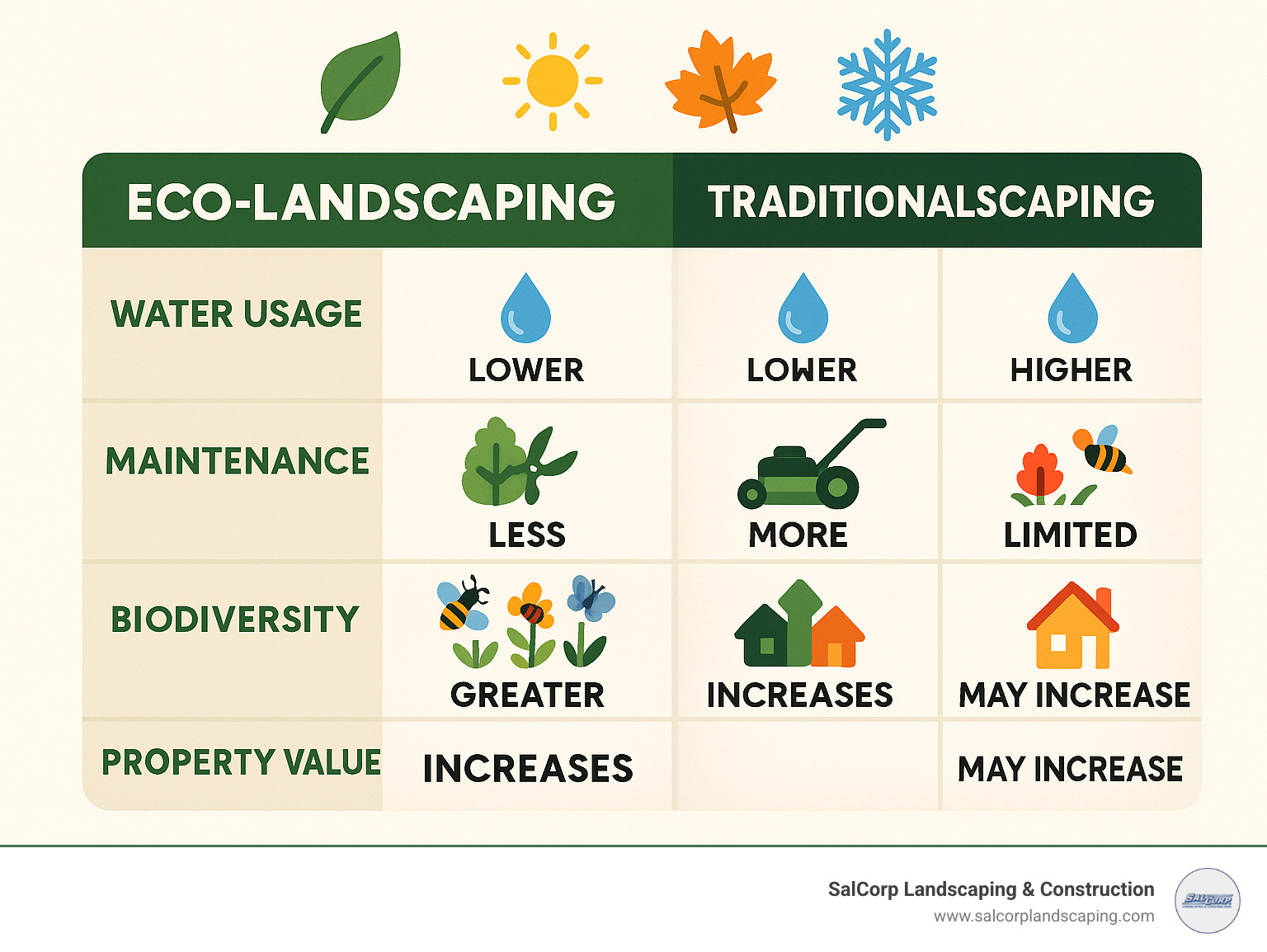
Quick eco landscaping near me definitions:
– curbing company near me
– landscape firms near me
– turf lawn care near me
Eco Landscaping Fundamentals: Definition, Benefits & Core Practices
Have you ever wondered what makes a landscape truly sustainable? Eco landscaping near me isn’t just a trend—it’s a thoughtful approach that works with nature rather than against it. At its heart, this philosophy accepts native plants, conserves precious water, minimizes chemical use, and creates vibrant habitats that support local wildlife while still giving you a beautiful outdoor space to enjoy.

When I walk through a well-designed ecological landscape, I’m always struck by how alive it feels. The gentle buzz of bees, the flutter of butterflies, and the rich mix of textures all work together to create something magical. The fundamental elements of eco landscaping near me create this magic through several key practices.
Native plant selection forms the backbone of any ecological landscape. These plants evolved in your local Massachusetts environment, so they naturally require less water, fertilizer, and maintenance while providing perfect habitat for local wildlife. They’re right at home in your yard because, well, they are home!
When water conservation is a priority (and when isn’t it?), xeriscaping techniques use drought-tolerant plants and efficient irrigation to dramatically reduce water consumption. Many of our clients are amazed to see their water bills drop by 30-50% after implementing these approaches.
One of my favorite features to install are rain gardens—shallow depressions filled with deep-rooted native plants that capture and filter stormwater runoff. Not only do they prevent flooding and erosion, but they create stunning focal points in the landscape that change beautifully with the seasons.
For driveways and patios, permeable pavers offer a sustainable alternative to traditional concrete. Unlike solid surfaces that create runoff, these allow water to seep into the ground, replenishing groundwater and reducing flooding. Plus, they come in beautiful designs that can complement any home style.
“Half of Earth’s most fertile soil has been lost to erosion in the last 150 years,” notes Jane Purnell, an ecological landscaping expert. This sobering statistic highlights why sustainable approaches aren’t just nice-to-have—they’re essential for our future.
Traditional vs Eco Landscaping: Key Differences
Understanding what sets ecological landscaping apart helps explain why so many of our Massachusetts clients are making the switch:
| Feature | Traditional Landscaping | Eco Landscaping |
|---|---|---|
| Plant Selection | Non-native ornamentals, turf grass | Native and adapted species |
| Water Usage | High consumption, overhead sprinklers | 50% less water, drip irrigation |
| Maintenance | Weekly mowing, frequent fertilizing | 30-50% less maintenance time |
| Wildlife Support | Limited habitat value | Supports 3x more pollinator species |
| Soil Management | Chemical fertilizers, pesticides | Compost, organic amendments |
| Stormwater | Runoff to storm drains | On-site infiltration and capture |
| Energy Use | Gas-powered equipment | Manual or electric tools |
| Long-term Costs | Higher water and maintenance bills | Lower resource requirements |
Traditional landscapes often create what we in the industry call “green deserts”—spaces that look green but provide minimal ecological function. You know the type: vast expanses of turf grass that need constant mowing, gas-powered equipment producing emissions, chemical treatments that harm beneficial insects, and thirsty plants that need regular watering regardless of rainfall patterns.
In contrast, eco landscaping near me focuses on creating integrated designs with closed nutrient loops and rich biodiversity. As one of our Walpole clients told me after their eco-landscape installation, “I used to spend every weekend mowing and maintaining my lawn. Now I actually enjoy my yard, and so do the birds and butterflies!”
Why Eco Landscaping Benefits Homeowners & Planet
The advantages of ecological landscaping extend far beyond just good looks, offering real benefits for both your property and our shared environment.
For you as a homeowner, the benefits are immediately noticeable. Lower utility bills come from strategic tree placement and reduced lawn areas, with cooling costs often dropping by 15-35%. You’ll also enjoy reduced maintenance costs since native landscapes typically require 30-50% less upkeep than conventional lawns.
Many of our clients are pleasantly surprised to learn about the potential for increased property values. According to multiple studies, thoughtfully designed sustainable landscapes can boost property values by up to 15%. Plus, by eliminating chemical pesticides and fertilizers, you create healthier outdoor spaces where children and pets can play safely.
The environmental benefits are equally impressive. Water conservation is perhaps the most obvious—native landscapes can reduce irrigation needs by up to 50% compared to conventional lawns. Effective stormwater management through rain gardens and permeable surfaces captures rainfall where it falls, reducing flooding and pollution in our Massachusetts watersheds.
Your eco-friendly yard also contributes to carbon sequestration—native plants, especially trees and deep-rooted perennials, capture and store carbon dioxide. And let’s not forget the joy of creating wildlife habitat that provides food, shelter, and breeding grounds for birds, insects, and other creatures.
The scientific research on soil erosion further underscores why what we do matters. When we replace shallow-rooted turf with deep-rooted native plants, we help rebuild soil health and prevent erosion—a critical service to our environment.
Core Sustainable Techniques You’ll See
When you work with our team at SalCorp Landscaping & Construction on an eco landscaping near me project, you’ll encounter several key sustainable techniques that form the foundation of our approach.
Strategic mulching is often the unsung hero of sustainable landscapes. We use organic mulches to suppress weeds naturally, retain soil moisture during dry spells, and gradually build soil health as they decompose. It’s like a slow-release vitamin for your soil!
For irrigation, we focus on efficiency. Drip systems and smart controllers deliver water exactly where and when plants need it, reducing waste by up to 60%. One client in Franklin told me, “I used to water my lawn constantly in summer. Now my irrigation system runs half as often, and my plants look better than ever.”
When designing lighting for your property, we recommend LED landscape lighting that consumes up to 80% less electricity than traditional fixtures while lasting much longer. They create the same beautiful effects with a fraction of the energy use.
We take a living systems approach to soil management. Rather than viewing soil as just dirt, we nurture it as a complex ecosystem with compost tea and organic amendments rather than synthetic fertilizers. The results speak for themselves in plant health and vigor.
For properties with limited space, vertical gardens can create living walls that maximize plant density while providing cooling and air-purifying benefits. These are especially popular for urban properties or spaces where ground planting isn’t possible.

For larger properties throughout Massachusetts, we often implement green infrastructure elements like bioswales that channel water to where it’s needed most while preventing erosion during our increasingly heavy New England rainstorms. These features not only function beautifully but add visual interest to the landscape year-round.
Want to learn more about how we incorporate these sustainable techniques into beautiful landscape designs? Check out our Landscape Design services.
Eco Landscaping Near Me: Finding & Choosing Professionals
Looking for eco landscaping near me in Massachusetts can feel overwhelming. With so many companies suddenly claiming to be “green,” how do you separate genuine ecological landscapers from those just riding the sustainability trend? The difference matters – truly sustainable landscaping requires specialized knowledge and a genuine commitment to environmental practices.
Vetting Pros for Eco Landscaping Near Me

When I meet with potential clients at their properties, I often hear stories about previous landscapers who promised “eco-friendly” solutions but delivered standard practices with a green marketing spin. True ecological landscaping goes much deeper than swapping in a few native plants.
Start by checking for specific eco-friendly credentials. Professionals serious about sustainable practices typically hold certifications like Ecological Landscape Alliance (ELA) membership, NOFA Organic Land Care Professional certification, or Permaculture Design Certification. These aren’t just fancy titles – they represent hundreds of hours of specialized training in working with natural systems.
Next, dive into their portfolio with an ecological eye. Look beyond pretty pictures to spot truly sustainable elements: diverse native plantings (not just one or two token species), thoughtful water management features, sustainable materials, and wildlife habitat integration. A genuine eco-landscaper’s projects should look beautiful while clearly serving ecological functions.
“When SalCorp first showed me their portfolio, I noticed they weren’t just showcasing perfect lawns – they were proud of their meadow installations and rain gardens,” shared one Foxborough client. “That’s when I knew they actually understood ecological landscaping.”
The initial consultation reveals volumes about a landscaper’s ecological knowledge. They should ask detailed questions about your site’s conditions and your goals, not just offer a one-size-fits-all solution. Be ready with your own questions too: How do they handle pest management without chemicals? What native plants work best for your specific soil and light conditions? How will they manage stormwater on your property?
Always check references specifically about ecological outcomes. Ask past clients not just if they’re happy with how things look, but how the landscape has performed environmentally: Has it attracted wildlife? Reduced water usage? Required less maintenance than their previous conventional landscape?
For a comprehensive starting point in your search, the Find an Eco Pro directory maintained by the Ecological Landscape Alliance lists qualified professionals committed to sustainable practices.
Community Resources & Directories for Eco Landscaping Near Me
Your journey toward eco landscaping near me extends beyond hiring professionals. Massachusetts offers rich community resources to support sustainable landscape changes.
Local land trusts and conservation organizations provide invaluable guidance custom to our region. Massachusetts Audubon Society offers excellent native plant recommendations specific to different habitats across the state. The Trustees of Reservations regularly hosts hands-on sustainable landscaping workshops where you can see ecological principles in action. Your local watershed association can provide targeted advice for water-friendly landscaping that protects our streams and rivers.
Native plant expertise is readily available through organizations like the Native Plant Trust (formerly New England Wild Flower Society), which maintains both demonstration gardens and nurseries where you can see and purchase locally appropriate plants. Their staff can help you select species perfectly matched to your property’s conditions. Smaller specialized native plant nurseries often provide personalized consultation as well.
Many Massachusetts municipalities now offer incentives for ecological landscaping. Depending on your town, you might qualify for stormwater credits for installing rain gardens, water conservation rebates for replacing lawn with natives, or even property tax reductions for certified wildlife habitats. Our team at SalCorp can help steer these local programs to maximize your benefits.
Educational opportunities abound if you want to deepen your own knowledge. The Ecological Landscape Alliance hosts regional workshops throughout the year. Massachusetts Master Gardener Association offers sustainable gardening guidance through their helplines and demonstration gardens. And numerous garden tours feature exemplary ecological landscapes that can provide inspiration for your own property.
One resource worth special mention is the Green Corridor initiative. Though based in Connecticut, several Massachusetts communities are adopting similar approaches to connect individual eco-landscapes into broader environmental corridors. Learn More about Green Corridor to find how your property might contribute to larger conservation networks in our region.
Here in Walpole and surrounding communities, we at SalCorp Landscaping & Construction actively participate in local sustainability networks. We’re always happy to connect you with resources specific to your location and goals. After all, creating truly sustainable landscapes isn’t just about individual properties – it’s about weaving together a healthier ecological fabric across our Massachusetts communities.
Implementation, Plant Selection, Costs & Maintenance Roadmap
Changing your property with eco landscaping near me is an exciting journey that unfolds over seasons rather than days. Let me walk you through how we bring sustainable landscapes to life in Massachusetts, from the first shovel of soil to the flourishing ecosystem your yard will become.
Step-by-Step: From Lawn to Eco Oasis

The change begins with understanding what you already have. We start with a thorough site analysis, examining everything from soil composition to sun patterns. This detective work reveals your property’s unique story – where water naturally flows, which areas stay sunny or shaded throughout the day, and what might be lurking beneath the surface.
With this knowledge in hand, we develop a thoughtful design that works with your land’s natural tendencies rather than fighting against them. This might include functional zones based on how you use your outdoor space, carefully selected plant communities that will thrive in your specific conditions, and smart water management features.
When it comes to removing existing lawn, we have several gentle approaches. For smaller areas, sheet mulching (layering cardboard and mulch) works wonders – it’s like tucking your old lawn in for a long nap while preparing the soil beneath. For larger spaces, we might recommend sod cutting or solarization techniques that avoid harmful chemicals.
“The change wasn’t overnight – it was more like watching a story unfold over the seasons,” shared one of our Wellesley clients. “SalCorp guided us through each phase, explaining what to expect and when. By year two, it looked like it had always been there.”
The soil preparation phase is perhaps the most crucial yet overlooked step. We focus on building living soil by adding organic matter, decompacting damaged areas, and creating proper drainage. This underground work pays dividends for years to come.
Next comes the visible change – installing permeable pathways, rain garden basins, and other hardscape elements that manage water beautifully. Then the planting begins, typically starting with trees and shrubs before adding perennial layers. We often recommend a sectional approach for larger properties, converting one area at a time to make the process more manageable and allow you to learn from each phase.
Throughout establishment, we’ll guide you through the initial care that helps your new landscape take root. For more information about our irrigation expertise, which is crucial during this period, visit our Irrigation Systems page.
Average Costs & Incentives (Internet Data)
When planning your eco landscaping near me project, understanding potential investments helps set realistic expectations. Based on internet data (not SalCorp’s specific pricing), ecological landscaping typically involves these investment ranges:
Design services generally run $1,500–$6,000 depending on your property’s size and complexity. The installation components vary widely: native plant gardens average $12–$40 per square foot installed, while rain gardens might cost $3–$15 per square foot. Permeable driveways, which allow water to seep through rather than run off, typically range from $8–$30 per square foot.

For complete property changes, internet data suggests small urban lots might range from $5,000–$15,000, standard suburban properties from $8,000–$30,000, and larger properties potentially $15,000–$60,000+. These figures represent averages based on internet data, not actual costs for SalCorp Landscaping.
The good news? Your investment often qualifies for helpful incentives. Many Massachusetts water districts offer rebates for removing lawn and installing water-efficient landscapes. Some municipalities provide stormwater credits for properties that manage rainfall on-site. Energy companies sometimes offer incentives for strategic tree planting, and in certain cases, native plant restoration may qualify for conservation easements with tax advantages.
The long-term math makes ecological landscaping particularly appealing. While initial investments may be comparable to conventional landscaping, you’ll typically see water bill reductions up to 50%, maintenance time and costs cut by 30-50%, and property value increases up to 15%.
As one Newton homeowner told us: “Our water bill dropped by almost 40% the first summer, and we’ve spent maybe a quarter of the time on maintenance compared to our old lawn. The initial investment is paying for itself faster than we expected.”
Maintenance Checklist for Long-Term Success
One of the most beautiful aspects of ecological landscaping is how maintenance requirements naturally decrease as your landscape matures. That said, proper seasonal care ensures your outdoor space thrives year after year.
In spring, we focus on renewal – removing winter debris, cutting back last year’s perennial growth, and applying a light organic mulch refresher where needed. This is also the perfect time to hand-remove any emerging invasive species before they establish and test your soil for any needed amendments.
Summer maintenance shifts to monitoring irrigation, adjusting for rainfall patterns, and continuing vigilant (but usually decreasing) removal of invasive species. We recommend monthly “pest scout” walks to identify and address issues early, when gentle interventions are most effective.
By fall, your ecological landscape starts preparing for dormancy. This is when we leave most perennial seedheads and stems in place for winter wildlife habitat rather than cutting everything back. It’s also the ideal time for planting new trees and shrubs. We’ll help you collect leaf litter for composting or use as natural mulch in beds – nature’s perfect recycling system.
Winter requires minimal maintenance, giving you time to enjoy observing the birds and wildlife using your landscape. It’s a wonderful season for planning next year’s additions or modifications while your garden rests.
“The biggest maintenance difference I’ve noticed,” says a client from Dedham, “is that ecological landscapes don’t need constant attention. Instead of weekly mowing and edging, we do a few focused sessions each season. It’s more about guiding the landscape than fighting against it.”
For more comprehensive maintenance support, visit our Landscape Maintenance page to learn how SalCorp can help keep your ecological landscape thriving through every season.
Frequently Asked Questions about Eco Landscaping
How long does an eco landscape take to establish?
When clients ask me about timeframes for eco landscaping near me, I often explain the natural three-year progression that most ecological landscapes follow:
The first year is what we affectionately call the “sleep” year. Your new plants are busy establishing strong root systems underground rather than putting on a show above ground. This invisible work is crucial but requires patience—and regular watering, even for drought-tolerant species. Don’t worry about those empty spaces between plants; they’re intentional and temporary.
Year two brings the “creep” phase, when your patience starts paying off. Plants begin spreading and filling in those gaps. You’ll notice your maintenance tasks decreasing as root systems develop deeper resilience. The landscape takes shape but still has that somewhat deliberate, “newly installed” appearance.
By year three, we reach the exciting “leap” stage. This is when the change really happens—plants reach mature sizes, some begin self-seeding, and the whole ecosystem starts functioning more independently. The designed plant communities develop that natural, cohesive look that makes ecological landscapes so beautiful.
One of my Walpole clients put it perfectly: “SalCorp prepared us well for the patience required. The first year wasn’t very impressive visually, but by year three, the change was remarkable. Now in year five, it’s absolutely stunning and practically maintains itself.”
For larger woody plants like trees and shrubs, full establishment might take 5-7 years, but you’ll enjoy an attractive, functional landscape much sooner than that.
Will eco landscaping increase my property value?
The short answer? Yes—and quite significantly. Multiple studies show that thoughtfully designed eco landscaping near me can boost property values by up to 15%. This value increase stems from several tangible benefits:
Well-designed native landscapes create distinctive curb appeal that stands out in neighborhoods dominated by cookie-cutter lawns. This uniqueness catches buyers’ attention immediately.
The reduced operating costs are increasingly attractive selling points. Lower water bills and minimal maintenance requirements matter, especially in regions facing water restrictions or drought conditions.
Ecological design typically incorporates functional outdoor rooms and features that effectively expand your living space. These outdoor “rooms” add square footage without adding walls.
Some properties may qualify for environmental certifications that become marketing advantages when selling. These green credentials appeal to increasingly eco-conscious buyers.
As climate challenges intensify, landscapes designed for resilience become more valuable—they’re essentially “future-proofed” against changing conditions.
I recently spoke with a real estate agent in Needham who confirmed this trend: “Properties with established, low-maintenance ecological landscaping are spending 40% less time on the market compared to similar homes with conventional landscapes. Buyers are specifically asking for these features now.”
That said, your return on investment depends on design quality, landscape maturity, and neighborhood context. Professional installation by experienced ecological landscapers like SalCorp ensures you’ll see the best possible value increase.
Can I retrofit my existing irrigation system for sustainability?
Absolutely! Most conventional irrigation systems can be modified for greater efficiency without starting from scratch. At SalCorp, we implement several retrofit options that dramatically improve sustainability:
Smart controller upgrades make a tremendous difference. Replacing standard timers with controllers that adjust watering based on weather conditions and soil moisture can reduce water use by 15-30%. These systems “think” about whether watering is actually needed.
Sprinkler head conversion is another simple but effective change. Switching from standard spray heads to high-efficiency rotary nozzles improves water delivery efficiency by up to 30% by creating larger water droplets that resist evaporation and wind drift.
Drip conversion in planting beds is perhaps my favorite retrofit. Converting spray zones to drip irrigation can reduce water use by 30-50% while improving plant health by delivering moisture directly to root zones without wetting foliage.
Zoning improvements ensure water is used more efficiently. We often reconfigure irrigation zones to match plant water needs and sun exposure conditions, so thirsty plants and drought-tolerant ones aren’t watered on the same schedule.
Pressure regulation prevents those wasteful misting clouds that evaporate before reaching plants. Adding pressure-regulating devices eliminates overspray and ensures water reaches its target.
Rainwater integration connects your irrigation to sustainable water sources. Most existing systems can be modified to use captured rainwater for some or all zones.
A client in Milton recently shared their experience: “SalCorp assessed our existing irrigation and made targeted upgrades rather than recommending a complete replacement. They added a smart controller, converted several zones to drip, and connected a rain barrel system. Our water use dropped by 45% the first year.”
For more information about our irrigation expertise, visit our Irrigation Systems page.
Conclusion
The journey toward eco landscaping near me isn’t just a passing trend—it’s a fundamental shift in how we view our outdoor spaces. Throughout Massachusetts, homeowners are finding that their yards can be more than just pretty places—they can actively contribute to environmental health while requiring less work and resources.
As we’ve seen throughout this guide, embracing ecological landscaping brings remarkable benefits that go beyond aesthetics:
Eco landscaping delivers concrete results that homeowners and Mother Nature can appreciate. Your water bills can drop by up to 50%. You’ll spend 30-50% less time on maintenance. Your property value may increase by up to 15%. And perhaps most meaningfully, your outdoor space will become a vibrant haven for local wildlife and pollinators that are increasingly losing habitat elsewhere.
At SalCorp Landscaping & Construction, I’ve watched this change happen across countless properties in Walpole and surrounding communities. There’s something truly special about seeing a conventional yard evolve into a thriving ecosystem that practically takes care of itself while looking absolutely stunning.
What sets our approach apart is our comprehensive expertise combined with genuine care for your property’s unique conditions. As an owner-operated business with over 20 years of experience and our own machinery, we handle every aspect of your ecological landscape journey—from thoughtful design through meticulous installation and ongoing care.
The beauty of working with SalCorp is that we understand Massachusetts—our soils, our weather patterns, our native plant communities. We’re not applying generic “eco” solutions; we’re creating custom landscapes that truly belong here and will thrive for years to come.
Whether you’re ready for a complete landscape change or looking to incorporate a few sustainable elements into your existing yard, we’re here to guide you every step of the way. Our team balances technical knowledge with artistic vision to create outdoor spaces that are beautiful, functional, and environmentally responsible.
Ready to reimagine your outdoor space? I’d love to walk your property, understand your vision, and show you how eco landscaping near me can transform your yard into something extraordinary. Contact SalCorp Landscaping & Construction today to schedule your consultation and take the first step toward a more sustainable landscape. Learn more about our approach as your local Landscape Contractor and find how we can help you create an outdoor space that’s not just beautiful, but meaningful too.
Your yard can do so much more than just look pretty—it can become part of the solution. Let’s make that happen together.
