Grass Seed Installation Cost: 7 Powerful Ways to Save 2025
Why Understanding Grass Seed Installation Costs Matters for Your Property
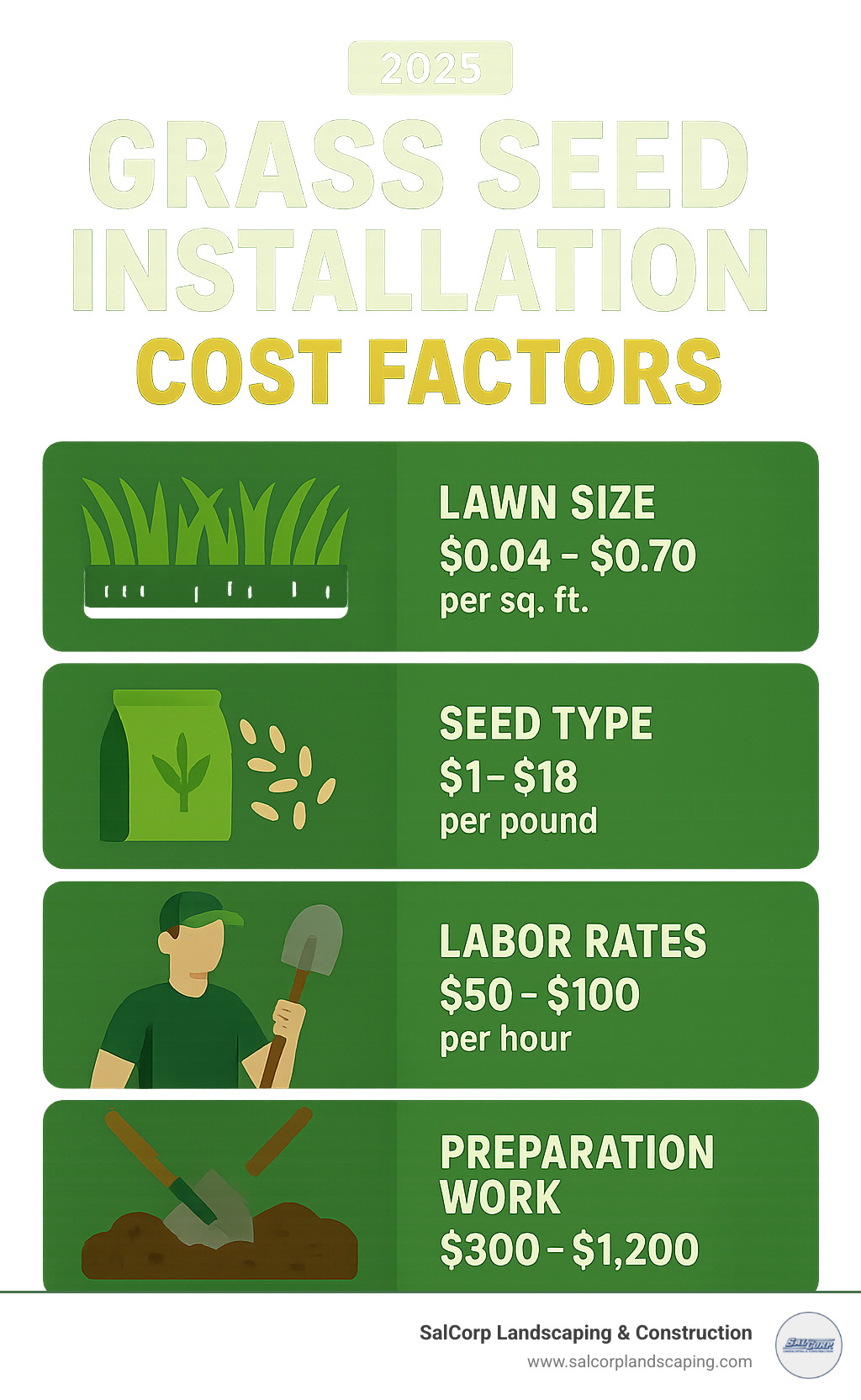
Grass seed installation cost varies widely depending on your project scope, chosen method, and property conditions. Whether you’re managing a commercial property or planning a home lawn renovation, understanding these costs helps you budget effectively and choose the right approach for your needs.
Quick Cost Overview:
- Per Square Foot: $0.04 – $0.70 (overseeding to new lawn establishment)
- Average Project Range: $592 – $1,768 for most homeowners
- Large Properties: $1,700 – $7,800 per acre
- Seed Cost: $1 – $18 per pound (covers 100-500 sq ft)
The wide price range reflects several key factors: lawn size, seed variety, installation method, soil preparation needs, and regional labor costs. A simple overseeding project might cost as little as $0.04 per square foot, while establishing a new lawn with premium seed and extensive soil prep can reach $0.70 per square foot or more.
Your property’s specific conditions play a huge role in final costs. Steep slopes, poor soil, or difficult access can increase labor time and equipment needs. Similarly, choosing between basic grass seed and premium drought-resistant varieties affects both upfront costs and long-term maintenance expenses.
As Sal Musto, owner of SalCorp Landscaping & Construction, I’ve helped Massachusetts property owners steer grass seed installation cost decisions for over two decades. My hands-on experience with diverse soil conditions and climate challenges across the Greater Boston area gives me insight into what drives these costs and how to maximize your investment.
Find more about grass seed installation cost:
Quick Cost Snapshot: National Averages at a Glance
Let’s cut straight to the numbers you’re looking for. Based on industry data from across the country, grass seed installation cost varies dramatically depending on your project size and scope.
For a typical 1,000 square foot lawn, you’re looking at anywhere from $40 for basic overseeding to $700 for premium new lawn establishment. The average falls around $140 for most homeowners. Scale that up to larger properties, and the numbers grow quickly.
A quarter-acre property (about 10,890 square feet) typically runs $440 to $7,600, with most projects landing around $1,520. Full acre installations range from $1,740 on the low end to $30,400 for high-end projects, averaging around $6,080.
These are average costs based on internet data and not actual costs for SalCorp Landscaping. Your actual project costs will vary significantly based on your specific conditions and requirements.
The extreme high-end pricing reflects real scenarios like premium drought-resistant seed varieties, extensive soil grading on challenging terrain, or specialized hydroseeding on steep slopes.
Grass seed installation cost per square foot
Breaking down the grass seed installation cost per square foot helps you understand what drives these price ranges. Overseeding your existing lawn typically costs $0.04 to $0.18 per square foot—this is your most budget-friendly option for thickening up thin spots.
New lawn establishment jumps to $0.25 to $0.70 per square foot because you’re starting from scratch. The national average sits between $0.09 and $0.19 per square foot, but premium installations can push that $0.70 ceiling when you factor in extensive soil preparation, grading, and top-tier seed varieties.
Grass seed cost per pound & coverage
Understanding seed costs helps you budget for materials, especially on larger properties. Basic grass seed runs $1 to $3 per pound, while premium varieties can cost $6 to $18 per pound. Some specialty mixes for unique conditions can reach $90 per pound, though most homeowners won’t need these extreme options.
Coverage rates vary dramatically based on grass type—anywhere from 100 to 500 square feet per pound. Kentucky bluegrass typically needs 4 pounds per 1,000 square feet for new lawns, while tall fescue requires 10 pounds for the same area. This difference significantly impacts your material costs.
Major Factors Driving Grass Seed Installation Cost
After helping Massachusetts homeowners establish beautiful lawns for over two decades, I’ve learned that grass seed installation cost isn’t just about the seed itself. Several key factors can make or break your budget, and understanding them upfront helps you plan realistically.
The biggest surprise for many homeowners? A $500 seeding project can easily become $1,500 when you factor in proper soil preparation and site challenges.
Lawn size & access challenges
Bigger lawns don’t always cost more per square foot. We often offer better rates for larger projects because we can use more efficient equipment and spread our setup costs over more area.
But size isn’t everything. A small, steep backyard can cost more per square foot than a large, flat front lawn. Slopes requiring specialized equipment or hand-seeding can double your labor costs. Rocky New England soil presents its own challenges, and complex layouts with multiple separate areas increase labor time.
The good news? Large acreage projects often qualify for bulk pricing and specialized equipment that brings costs down significantly.
Seed variety impact on price
The grass seed you choose makes a huge difference in both upfront costs and long-term success. Budget-friendly options like tall fescue and perennial ryegrass work well for many Massachusetts properties.
Premium varieties like Kentucky bluegrass create that lush, golf-course look but come with higher material costs. Specialty blends designed for specific conditions like heavy shade or high traffic areas cost more upfront but often perform better in challenging spots.
Drought-resistant varieties represent the biggest investment in seed costs, but they can save you hundreds in watering and maintenance over time.
Labor & regional pricing
Professional seeding labor rates vary dramatically across our service area. New England’s unique conditions affect pricing in several ways. Our rocky soil and variable weather patterns require experienced crews who understand local challenges.
Urban areas typically cost more due to higher overhead, while rural properties might have lower base rates but higher travel costs. Project complexity matters more than location in many cases.
Site preparation add-ons
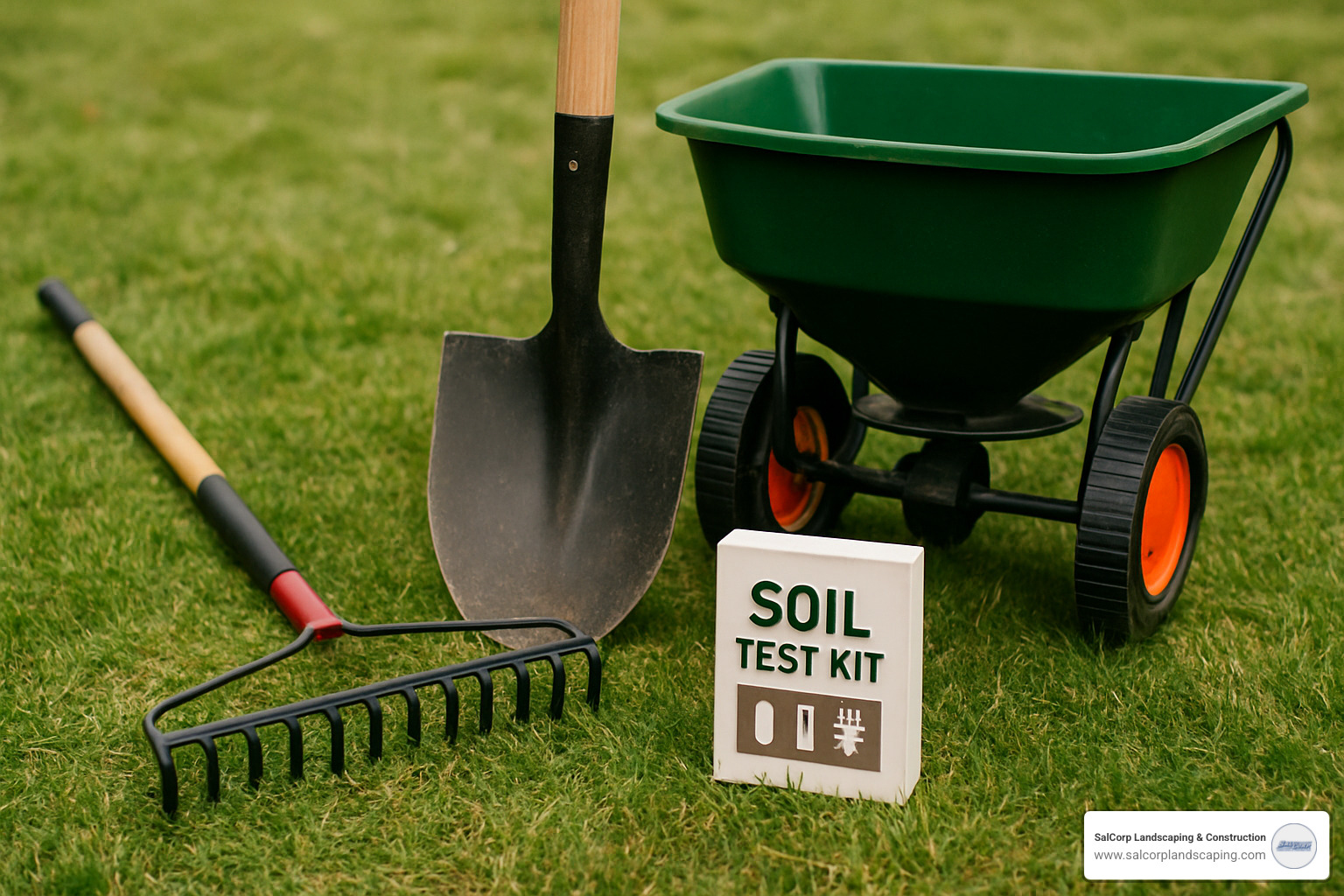
This is where many homeowners experience sticker shock, but proper preparation determines whether your new grass thrives or struggles. Soil testing reveals pH issues and nutrient deficiencies that can doom even the best seed to failure.
Aeration relieves soil compaction and creates better seed-to-soil contact. Dethatching removes dead grass that can prevent new seedlings from reaching soil. Grading addresses drainage issues and creates a smooth surface.
These services can significantly increase your project cost, but they’re often the difference between a successful lawn and a patchy disappointment.
More info about Best Time Grass Seed Planting
Seeding Methods & Price Ranges
The seeding method you choose makes a huge difference in both your grass seed installation cost and final results. After installing thousands of lawns across Massachusetts, I’ve seen how the right method can mean the difference between a patchy lawn and a thick, healthy yard.
Hydroseeding: fast blanket approach
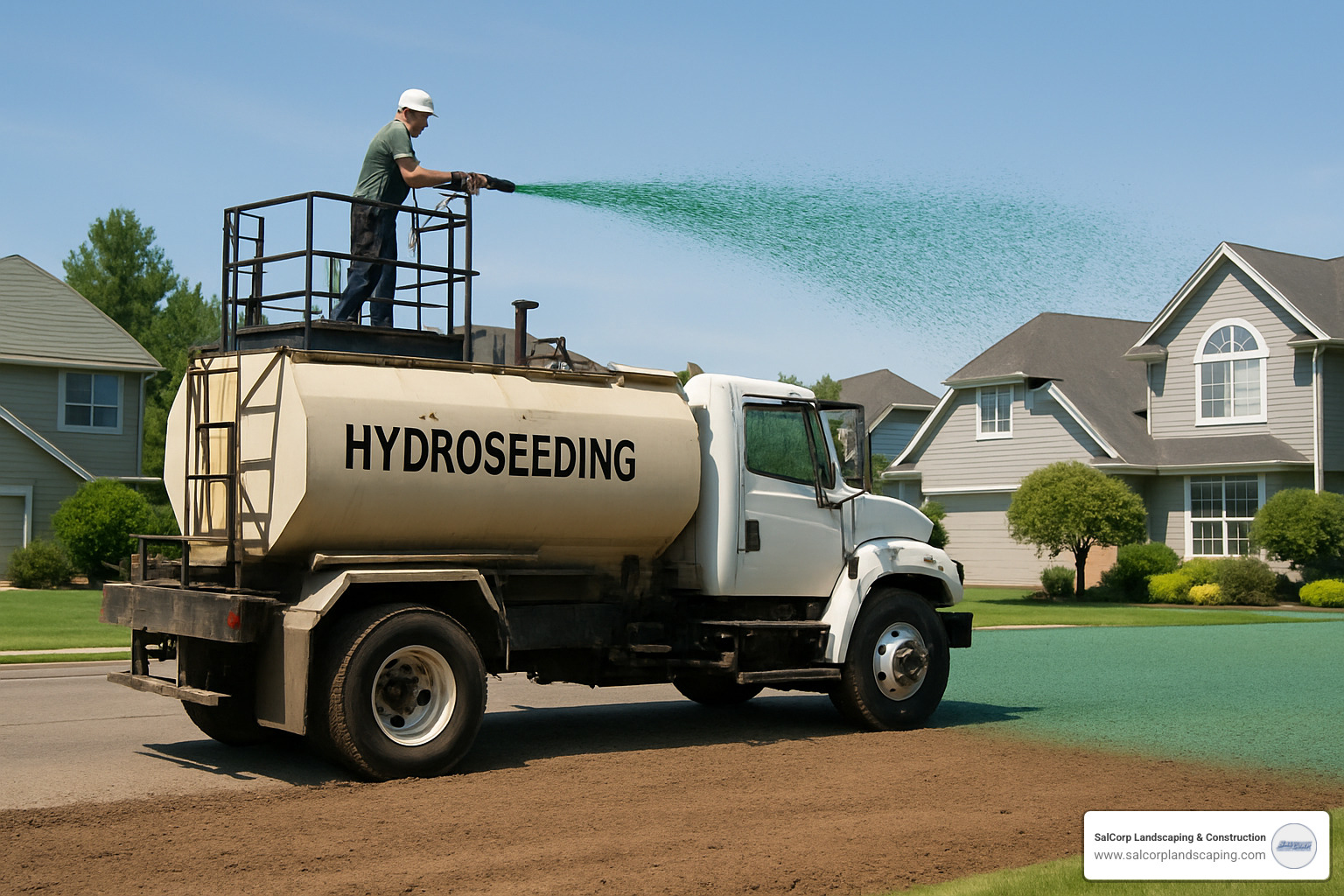
Hydroseeding is like giving your lawn a nutritious smoothie. We spray a slurry mixture of seed, fertilizer, mulch, and water directly onto your prepared soil. The mulch component keeps everything moist and protects seeds from hungry birds and harsh weather.
Average costs range from $0.08 to $0.20 per square foot, though complex projects with difficult terrain or premium seed mixes can reach $0.60 per square foot. These are industry averages based on internet data, not actual SalCorp pricing.
Hydroseeding works especially well for erosion control on slopes and large areas where you need consistent coverage.
More info about Grass Hydroseeding
Slice seeding: mechanical precision
Slice seeding is the precision tool of grass installation. Our specialized equipment cuts shallow grooves in your soil and deposits seeds directly into these slits, creating excellent seed-to-soil contact.
Industry data shows costs typically range from $0.12 to $0.30 per square foot, with challenging conditions pushing prices up to $0.90 per square foot. These are average costs based on internet research, not SalCorp’s actual pricing.
The higher cost reflects the specialized equipment requirements, but slice seeding often provides better results than simple broadcasting, especially when you’re working with existing turf.
Overseeding: budget refresh
Overseeding is the most budget-friendly way to refresh your lawn. We simply spread seed over your existing grass to thicken thin areas and improve overall density.
Average costs range from $0.04 to $0.18 per square foot, with premium treatments reaching $0.54 per square foot. These figures represent industry averages from internet sources, not actual SalCorp pricing.
While overseeding offers the best value for maintaining existing lawns, it won’t work miracles on severely damaged or completely bare areas.
Grass Seed vs. Sod: Which Offers Better Value?
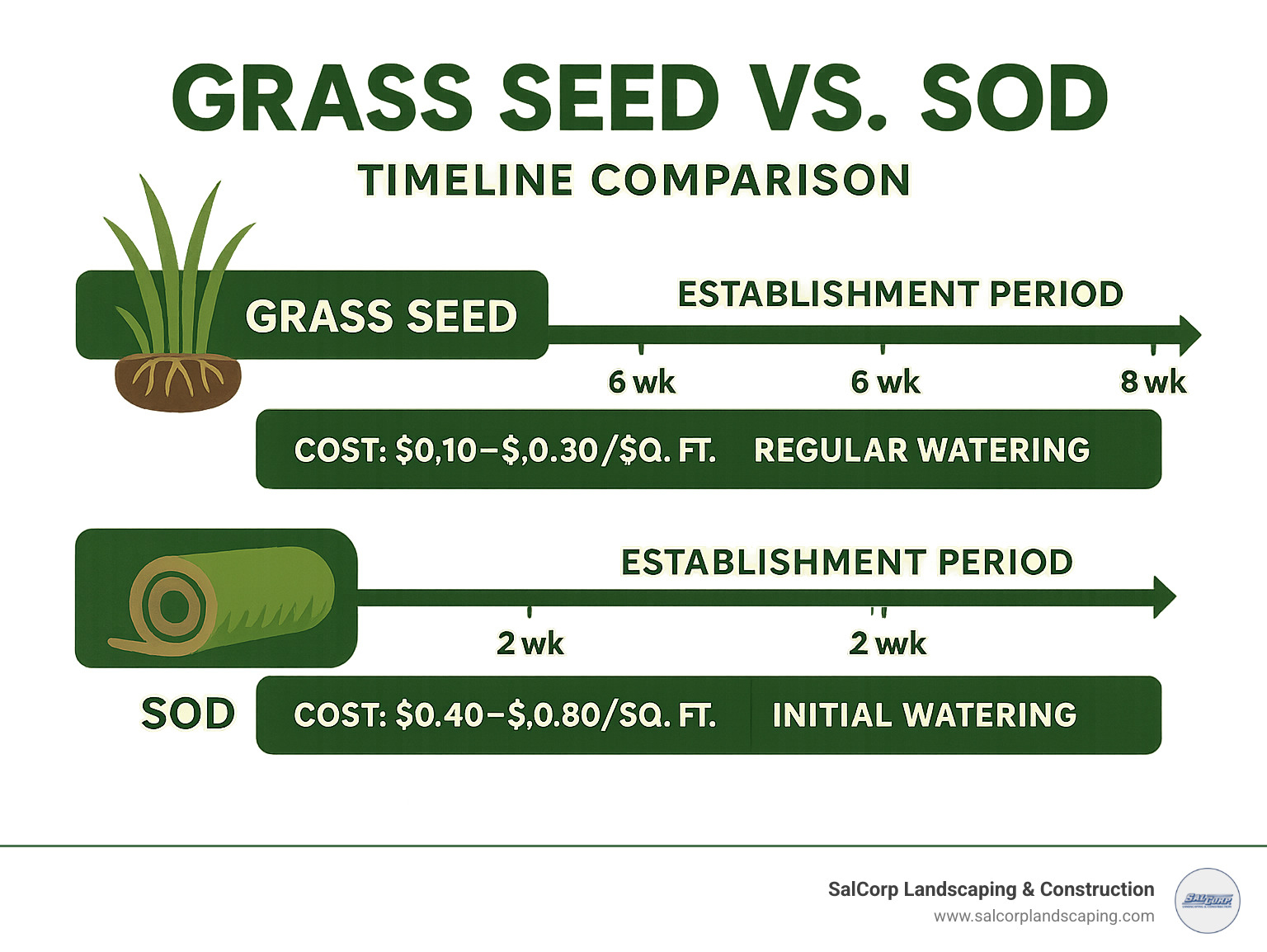
This is probably the most common question we get from homeowners in Massachusetts. The choice between grass seed and sod comes down to more than just upfront costs—it’s about your timeline, budget, and long-term goals for your property.
Up-front installation costs
The price difference between seeding and sodding is dramatic. Grass seed installation cost ranges from $0.04 to $0.70 per square foot depending on your project scope and preparation needs. Meanwhile, sod installation typically runs $0.75 to $3.50 per square foot for professional installation, with premium varieties reaching up to $7.00 per square foot.
Note: These are average costs based on internet data and not actual costs for SalCorp Landscaping.
For a typical 5,000 square foot lawn, you might spend $200 to $3,500 on seeding versus $3,750 to $17,500 for sod. That’s a significant difference that affects most homeowners’ decisions.
Establishment timeline & hidden expenses
The timeline difference between seed and sod creates hidden costs that many homeowners overlook. With grass seed installation, you’re looking at 7-14 days for germination, 4-6 weeks before first mowing, and 2-3 months for full establishment.
Sod provides immediate visual impact but still needs 2-3 weeks for root establishment and 4-6 weeks before normal use. The difference is that your lawn looks great from day one.
During the establishment period, seeded lawns require more frequent watering for longer periods, multiple fertilizer applications, and often additional weed control. These ongoing costs can add up, especially during Massachusetts’ unpredictable spring weather.
Long-term maintenance & resale value
Seeded lawns develop deeper, more extensive root systems because they grow in your actual soil from day one. This makes them more drought-tolerant and resilient long-term. When you need repairs, overseeding costs are minimal.
Sod provides immediate curb appeal and property value improvement, which matters if you’re selling soon or need instant results for an event.
Scientific research on walking on new grass shows that seeded lawns typically need 6-8 weeks before regular foot traffic, while sod can handle light traffic after 2-3 weeks.
For most Massachusetts homeowners, seeding offers better long-term value unless you need immediate results.
More info about Lawn Sodding Companies Near Me
DIY vs. Professional Seeding: Hidden Costs & Savings Tips
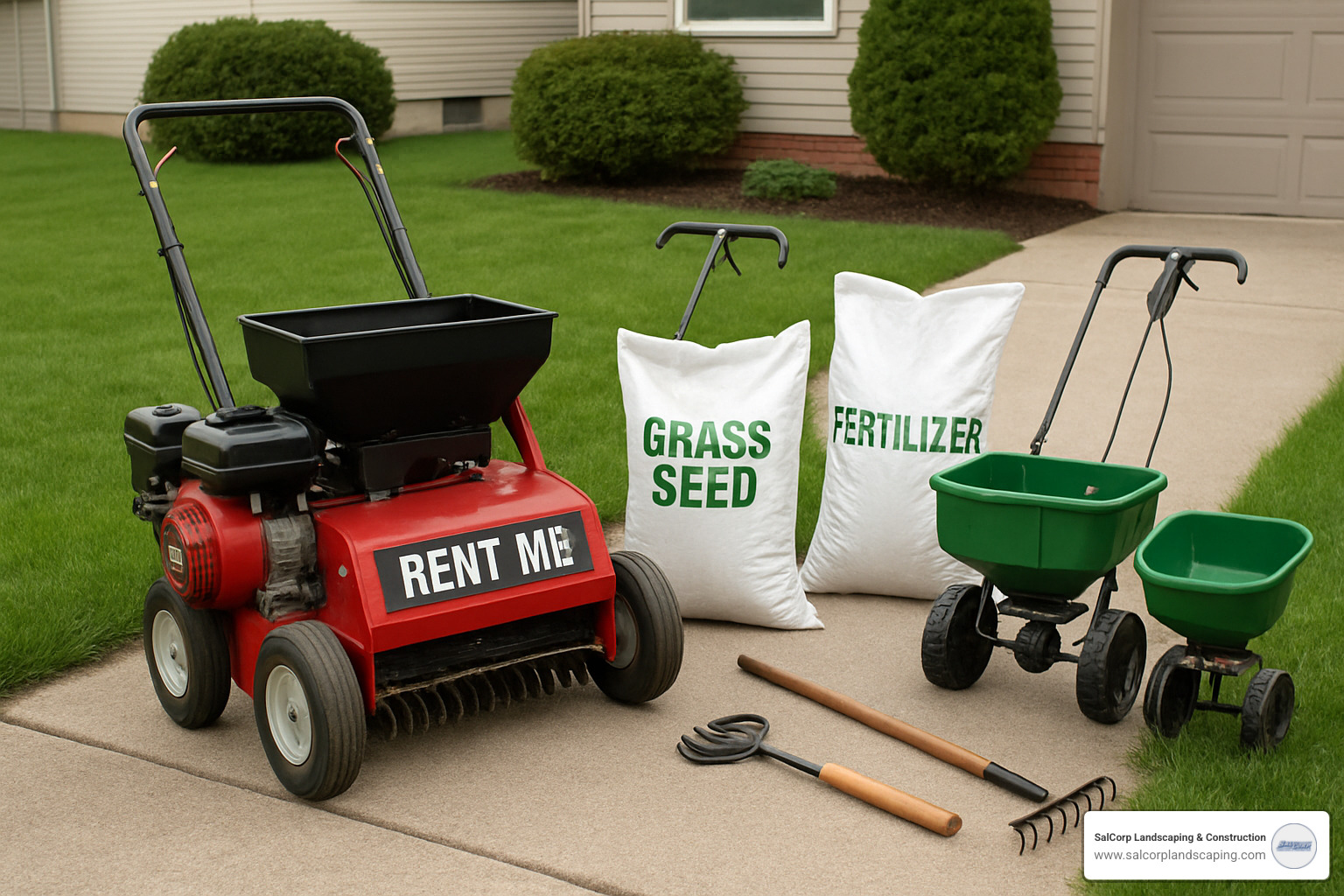
The decision between DIY and professional seeding isn’t just about saving on labor costs. After helping Massachusetts homeowners weigh this choice for over two decades, I’ve seen many well-intentioned DIY projects end up costing more than hiring a professional from the start.
True cost of DIY
Most homeowners underestimate what they’ll actually spend on a DIY seeding project. Beyond the obvious seed costs, you’ll need equipment that adds up quickly.
A basic broadcast spreader runs $20 to $80, while a more precise drop spreader costs $100 to $250. If you want professional-quality results, you’ll need to rent a slice seeder for $75 to $150 per day. Don’t forget the aerator rental at $20 to $40 per hour.
Material costs beyond seed include starter fertilizer ($20 to $50 per application), soil amendments ($30 to $100 per cubic yard), and mulch or straw ($25 to $75 per bale).
Note: These are average costs based on internet data and not actual costs for SalCorp Landscaping.
The real hidden costs come from the learning curve. Poor timing can mean waiting another season, essentially doubling your costs. Uneven coverage or wrong seed varieties often require professional repair, eliminating any savings.
When a pro is worth it
Some situations make professional seeding almost mandatory. Complex terrain with slopes steeper than 15 degrees requires specialized equipment and expertise that’s dangerous for most homeowners to attempt.
Large properties over 5,000 square feet benefit significantly from professional equipment that covers ground efficiently and evenly. The guarantee factor alone often justifies professional installation.
Properties with drainage issues, multiple elevation changes, or areas requiring specialized equipment access benefit from professional experience.
Money-saving strategies
Smart timing can significantly reduce your grass seed installation cost whether you go DIY or professional. Buying seed in winter for spring projects often saves 20% or more compared to peak season pricing.
Seasonal scheduling matters more than most people realize. Avoiding peak spring and fall demand periods can reduce professional costs. You can reduce professional costs by doing your own site preparation.
Proper soil testing upfront prevents costly corrections later. Annual overseeding prevents major lawn renovations down the road.
More info about Lawn Installation Services
Frequently Asked Questions about Grass Seed Installation Cost
How much grass seed do I need for my lawn?
Calculating the right amount of seed prevents waste and ensures good coverage. The amount depends on your grass type and whether you’re starting fresh or just filling in thin spots.
For new lawn establishment, you’ll need more seed to create dense coverage from scratch. Kentucky bluegrass requires about 4-6 pounds per 1,000 square feet, while tall fescue needs 8-10 pounds for the same area. Perennial ryegrass falls in between at 6-8 pounds, and fine fescue is lighter at 4-5 pounds per 1,000 square feet.
Overseeding existing lawns requires about half these amounts since you’re just thickening what’s already there. So that Kentucky bluegrass drops to 2-3 pounds per 1,000 square feet, and tall fescue needs 4-5 pounds.
Here’s the simple math: measure your lawn area in square feet, divide by 1,000, then multiply by your grass type’s seeding rate. Always buy 10-20% extra for uneven spots and touch-ups—trust me, you’ll need it.
How soon can I mow or walk on a newly seeded area?
Patience pays off with new grass. Walking on seedlings too early can damage or kill them, affecting your grass seed installation cost investment.
Light foot traffic should wait until 4-6 weeks after you see green sprouting. Regular family use needs 8-10 weeks from seeding day. Heavy activity like kids playing or pets running should wait until after the second mowing.
For mowing, wait until grass reaches 3-4 inches tall—usually 4-6 weeks after seeding. Set your mower to its highest setting (3+ inches) for that first cut. New grass is tender, and cutting too short stresses the developing root system.
You’ll know it’s ready when grass blades resist gentle tugging, you have even coverage across seeded areas, and no bare soil shows through. The roots should be developed enough that you can gently lift grass without it coming up easily.
What’s the best season to lower my grass seed installation cost?
Smart timing can save you serious money on seeding projects. Late fall often offers the best deals since demand drops after the September-October rush. Early spring before the April-May peak can also mean lower prices.
Mid-summer seeding costs less due to reduced demand, but you’ll spend more on water to keep seedlings alive during hot weather. The savings on labor might not offset the irrigation costs.
Avoid September-October and April-May if possible—these are peak seasons when everyone wants seeding done. Prices can jump significantly during these busy periods.
Weather considerations matter too. Cool-season grasses love 60-75°F air temperatures and 50-65°F soil temperatures. Natural rainfall during establishment saves money on irrigation and improves success rates.
Planning strategies help reduce costs: book early during off-peak times, stay flexible so contractors can work around weather, and prepare your soil in advance of optimal seeding windows. After 20+ years in Massachusetts, I’ve seen how proper timing can save property owners hundreds of dollars while improving results.
Conclusion
Making smart decisions about grass seed installation cost comes down to understanding what you’re really paying for—and what you’re getting in return. After helping Massachusetts property owners with their lawns for over two decades, I’ve learned that the cheapest option isn’t always the best value, and the most expensive approach isn’t always necessary.
The pricing ranges we’ve discussed throughout this article represent industry averages based on national data, not SalCorp quotes. Your actual costs will depend on your property’s unique conditions, the timing of your project, and the specific results you’re hoping to achieve.
What matters most is matching your approach to your goals and budget. Are you looking for immediate curb appeal for a home sale? Professional sod installation might be worth the premium cost. Want to gradually improve your existing lawn over time? Annual overseeding could be your most cost-effective strategy. Dealing with challenging terrain or poor soil? Investing in proper preparation and professional installation often saves money in the long run.
At SalCorp Landscaping & Construction, we’ve seen too many property owners make decisions based solely on upfront costs, only to face disappointment when their grass doesn’t establish properly. Successful seeding projects consider soil conditions, seed variety, timing, and long-term maintenance needs—not just the initial price tag.
The beauty of grass seed installation is its flexibility. You can start with basic overseeding to improve your lawn’s appearance, then invest in more comprehensive approaches as your budget allows. Professional consultation can help you prioritize which areas need immediate attention and which can wait for future seasons.
Whether you choose the DIY route or hire professionals, proper establishment takes time. Grass seed isn’t magic—it needs consistent care, appropriate weather conditions, and realistic expectations. But with the right approach, you’ll have a lawn that provides years of enjoyment and adds real value to your property.
Ready to explore your options? Our owner-operated approach means we’re personally invested in finding solutions that work within your budget and timeline. We bring our own equipment and decades of local experience to every project, from simple overseeding to complete lawn renovations.
More info about Lawn Installation Walpole MA