Grass Seed Spray: Top 10 Proven Tips for Success

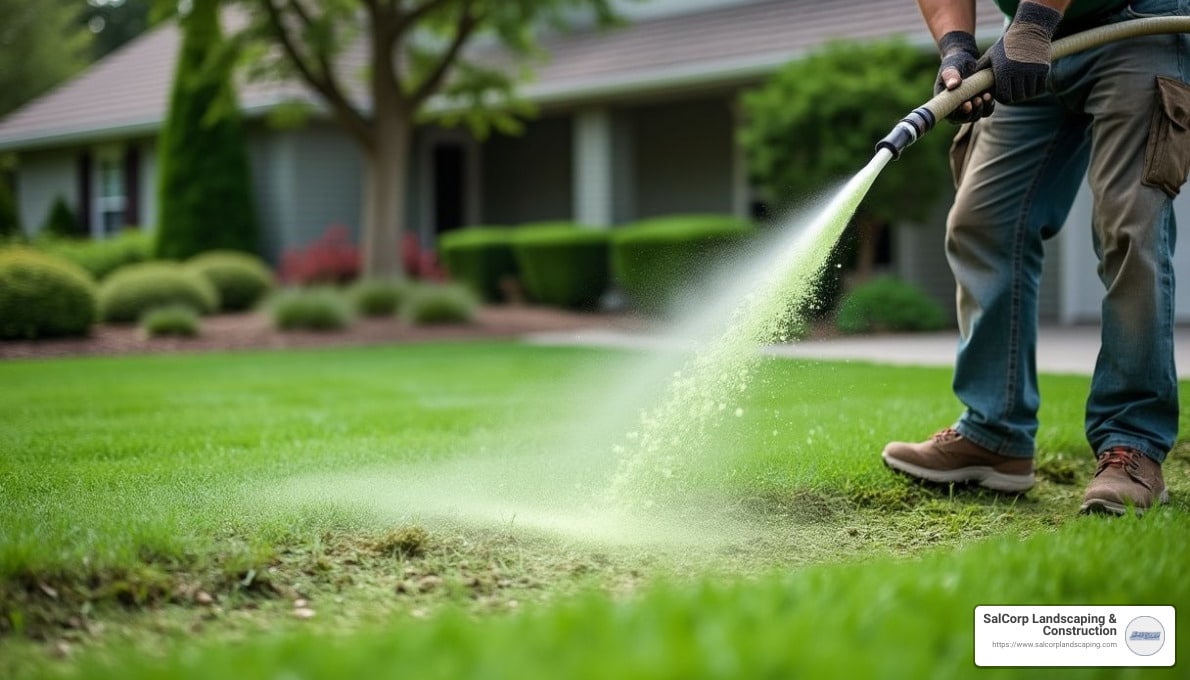
Grass seed spray is a method that offers a simple and effective way to refresh your lawn. If you’ve been looking for a convenient solution to achieve a lush, green landscape quickly and efficiently, this approach might be your best bet. This technique combines grass seed, mulch, and water to form a slurry that is sprayed evenly over the ground, promoting rapid germination and even coverage.
- Overview: Grass seed spray, also known as hydroseeding, simplifies lawn maintenance by mixing seeds with water and mulch for direct application.
- Benefits: Quick germination, improved soil retention, and cost-effectiveness are just a few of the advantages.
- Quick results: Witness vibrant green growth in just 7 to 10 days.
I’m Sal Musto, and with over two decades of experience in landscaping, I’ve seen how grass seed spray can transform outdoor spaces efficiently. As the owner of SalCorp Landscaping & Construction, I believe in using this innovative method to ensure optimal results for lawns across Massachusetts.
Simple guide to grass seed spray:
– how much does hydroseeding a lawn cost
– how to care for hydroseeded lawn
– grass hydroseeding
What is Grass Seed Spray?
Grass seed spray is a modern technique for planting grass that combines grass seed, water, and mulch into a slurry. This mixture is then sprayed evenly over the ground using specialized equipment. This method is often referred to as hydroseeding. It’s a popular choice for homeowners and landscapers looking to establish a lush lawn quickly and efficiently.
Components of Grass Seed Spray
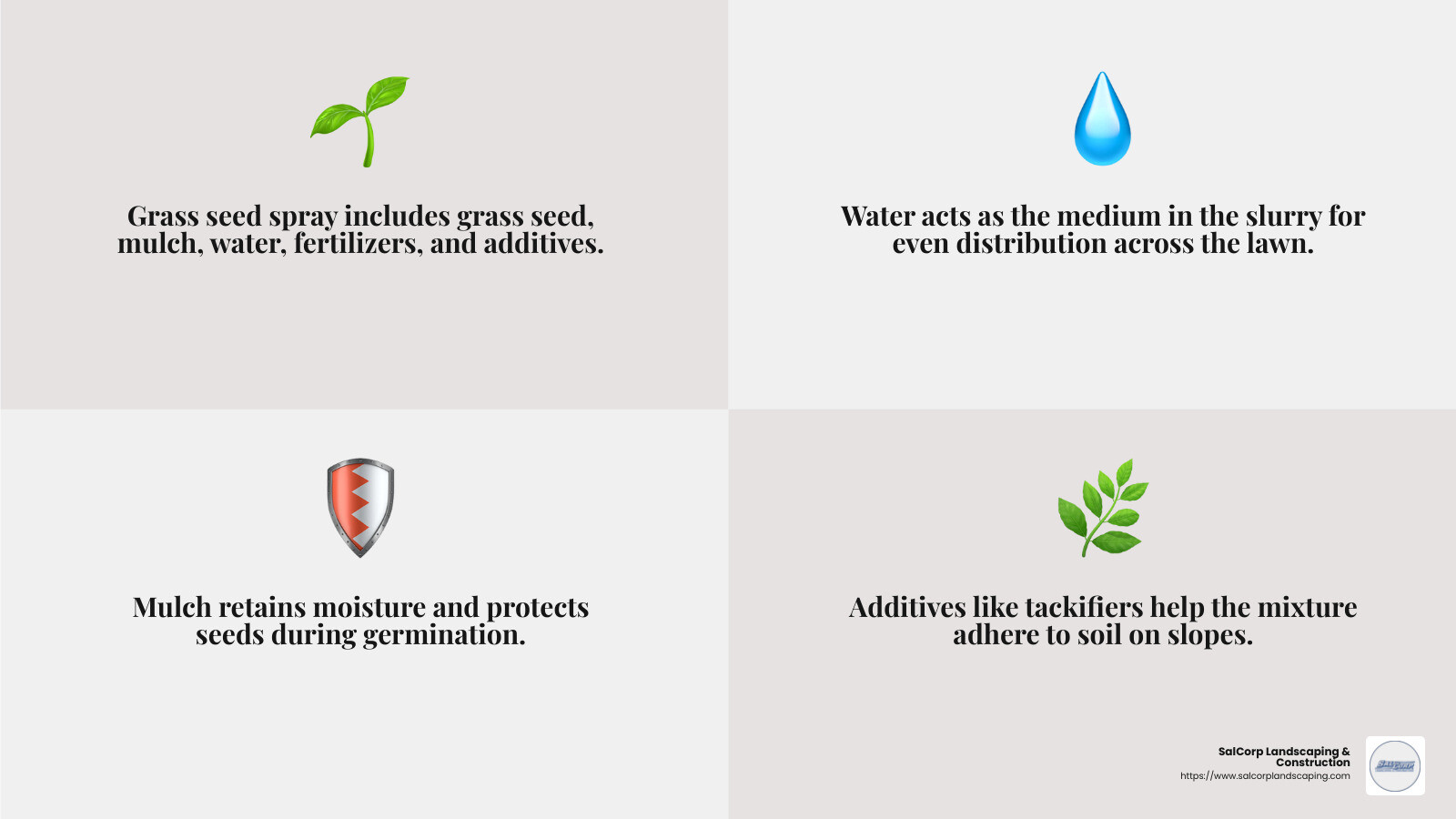
- Grass Seed: The choice of grass seed is crucial. It should be suited to your local climate and soil conditions. Common options include tall fescue, perennial ryegrass, and Kentucky bluegrass, each offering different benefits like drought resistance or shade tolerance.
- Mulch: The mulch in the slurry helps retain moisture and provides a protective layer for the seeds. This is essential for maintaining the right conditions for germination and growth.
- Water: Water is the medium that carries the seed and mulch, ensuring even distribution across the lawn. It also activates the growth process once the spray is applied.
- Fertilizers and Additives: Fertilizers are often included to provide the nutrients necessary for seed germination and growth. Other additives, like tackifiers, can be used to help the mixture stick to the soil, especially on slopes or uneven terrain.
Application Method
The application of grass seed spray is straightforward but requires the right equipment and preparation:
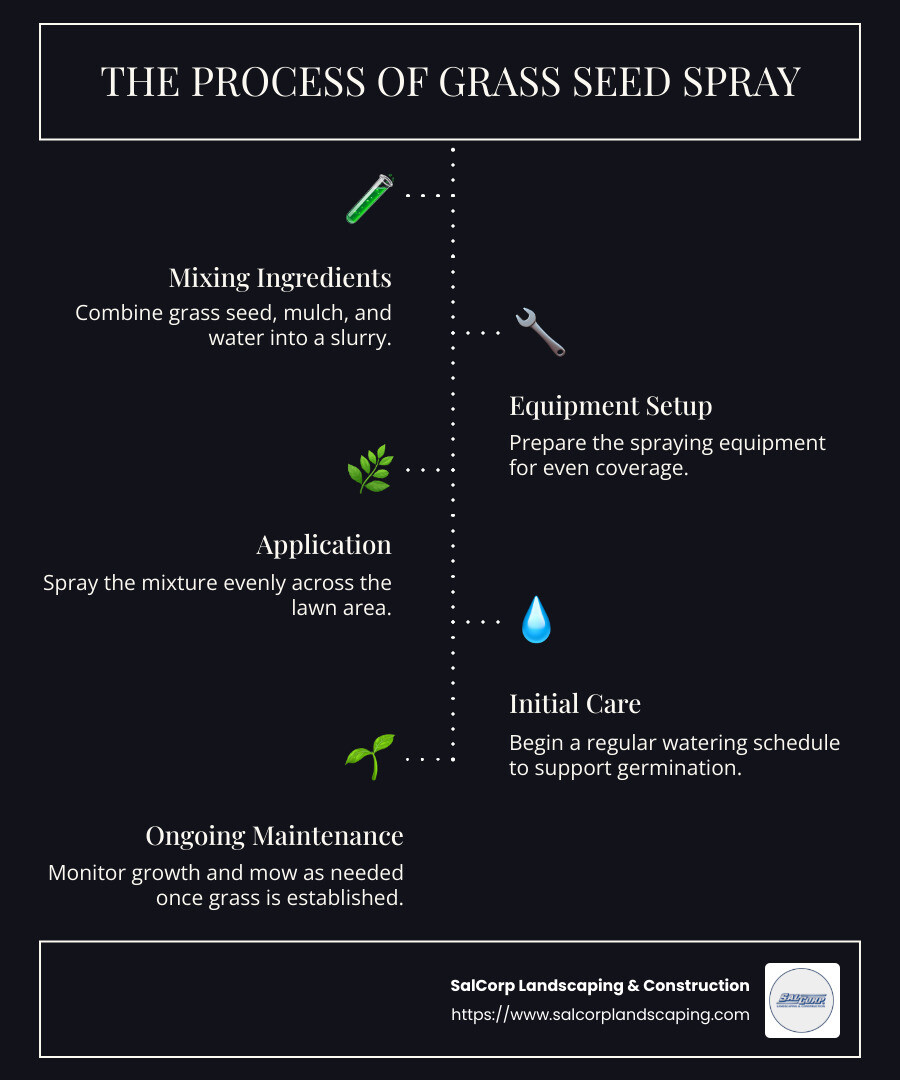
- Equipment Setup: Attach the hydroseeding equipment to a garden hose or use a specialized hydroseeder machine. Ensure the equipment is clean and functioning properly to avoid clogs and ensure even distribution.
- Mixing the Slurry: Combine the grass seed, mulch, water, and any additional components like fertilizers in the hydroseeder’s tank. Mix thoroughly to create a uniform slurry.
- Spraying the Lawn: Begin spraying from one end of the lawn, moving systematically to cover the entire area. The goal is to apply a consistent layer of the slurry without missing spots or over-saturating any area.
- Coverage Tips: For best results, apply the slurry evenly and follow the contours of your lawn. Pay special attention to areas prone to erosion, as these will benefit most from the mulch’s protective qualities.
Grass seed spray offers a practical solution for anyone looking to establish a healthy lawn with minimal hassle. By understanding its components and application method, you can take full advantage of this innovative technique to achieve a vibrant, green landscape.
Benefits of Using Grass Seed Spray
Grass seed spray is a game-changer for lawn care. It offers several advantages that make it a go-to choice for both homeowners and landscapers. Let’s explore the key benefits:
Cost-Effective
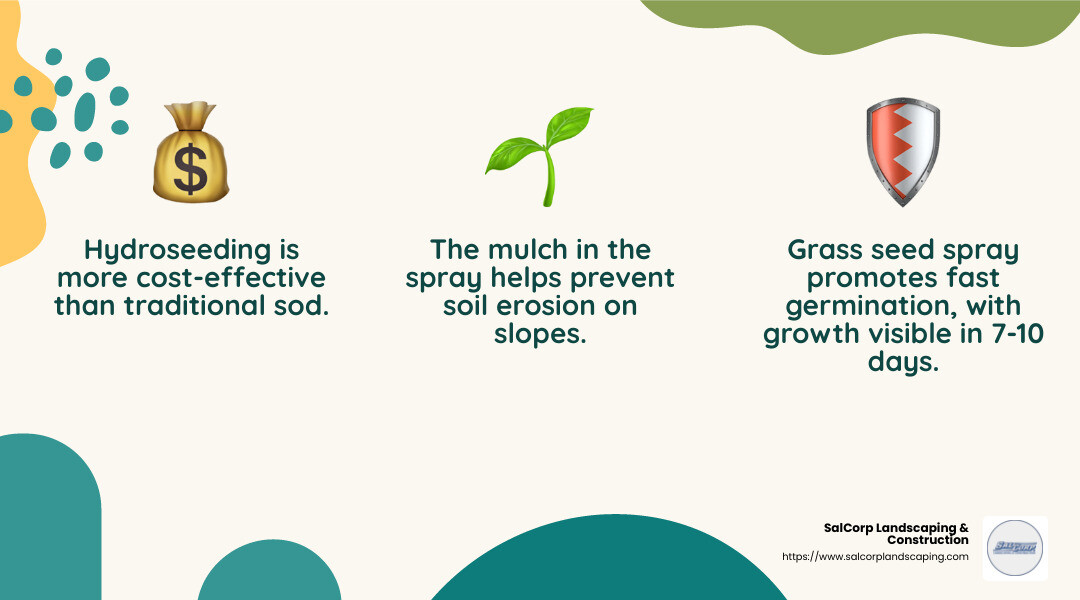
One of the standout benefits of using grass seed spray is its cost-effectiveness. Unlike traditional sod, which can be expensive, hydroseeding provides an affordable way to cover large areas. This method cuts costs on labor and materials, making it a smart choice for budget-conscious homeowners. Furthermore, if you decide to DIY, you can save even more by renting the necessary equipment and purchasing materials in bulk.
Erosion Control
Grass seed spray is excellent for erosion control, especially on sloped or uneven terrain. The mulch component of the slurry acts as a protective layer, stabilizing the soil and preventing erosion. This makes it particularly useful in areas prone to soil displacement from wind or water. The tackifier, a glue-like substance often added to the mix, helps the slurry adhere to the soil, providing an additional layer of security against erosion.
Fast Germination
Speed is another significant advantage. Grass seed spray promotes fast germination, with visible results often appearing in as little as 7 to 10 days. This rapid growth is due to the optimal growing environment created by the slurry, which retains moisture and provides essential nutrients directly to the seeds. This means you can enjoy a lush, green lawn much quicker compared to traditional seeding methods, which can take weeks to show results.
By choosing grass seed spray, you not only save money and time but also contribute to a healthier environment. This method supports sustainable landscaping by reducing soil erosion and promoting quick, even growth. Whether you’re tackling a small patchy area or a large lawn, grass seed spray offers a reliable and effective solution.
How to Apply Grass Seed Spray
Changing your lawn with grass seed spray is straightforward if you follow these steps. From preparing your lawn to post-application care, each stage is crucial for a lush, green landscape. Let’s get started.
Preparing Your Lawn
Soil Test
Before you begin, conduct a soil test. This will help you understand the pH and nutrient levels of your soil. Knowing what your soil needs will guide you in choosing the right seed mix and any necessary soil amendments.
Clearing Area
Clear the area of any debris, weeds, or old grass. This creates a clean slate for the grass seed spray to adhere to. Removing obstacles ensures better contact between the slurry and the soil, promoting effective growth.
Soil Grading
Grading your soil is essential for proper drainage and seedbed preparation. Ensure the soil slopes away from buildings to prevent water from pooling. A smooth, even surface helps the slurry spread uniformly.
Creating the Mix
Seed Selection
Choose a seed blend suited to your climate and lawn needs. For example, if you’re in a cooler climate, opt for cool-season grasses like Kentucky bluegrass. Your choice will impact the success of your lawn’s growth.
Mulch and Fertilizers
Add mulch to the mix to retain moisture and protect the seeds. Fertilizers provide the essential nutrients needed for germination and growth. The combination of these elements creates an ideal growing environment.
Tackifier
Incorporate a tackifier to help the slurry stick to the soil. This glue-like substance is especially beneficial on slopes or areas prone to erosion, keeping the seeds in place until they germinate.
Spraying Technique
Equipment Setup
Set up your hydroseeding equipment according to the manufacturer’s instructions. Ensure all components are clean and functioning properly for an even application.
Spraying Method
Begin spraying at one end of the lawn, moving in a systematic pattern to avoid missing spots. Aim for a consistent layer of slurry across the entire area. Avoid walking on freshly sprayed sections to prevent disruption.
Coverage Tips
For best results, apply the slurry in overlapping passes. This ensures complete coverage and reduces the likelihood of bare patches. If you’re working on a slope, consider a thicker slurry consistency to prevent runoff.
Post-Application Care
Watering Schedule
Watering is critical during the first few weeks. Aim to keep the soil consistently moist but not waterlogged. Typically, watering two to three times a day is ideal, depending on weather conditions.
Germination Time
Expect germination within 5 to 21 days, depending on the seed type and environmental factors. Fast-germinating seeds like perennial ryegrass may sprout within a week, while others may take longer.
Mowing Guidelines
Once the grass reaches 3 to 4 inches in height, it’s time to mow. Make sure the grass is dry and use sharp blades to avoid damaging the new growth. Follow the one-third rule: never cut more than one-third of the grass blade at a time.
By following these steps, you’ll set the stage for a vibrant and healthy lawn. Next, let’s explore when to apply grass seed spray for the best results.
When to Apply Grass Seed Spray
Timing is everything when it comes to grass seed spray. Applying it at the right time ensures optimal growth and a lush lawn. Here’s what you need to know about the best conditions and timing for your lawn.
Seasonal Advice
Spring and Fall are the best seasons for applying grass seed spray. In these seasons, the soil is warm, and there is usually plenty of moisture in the air. This creates perfect conditions for the seeds to germinate and grow. Avoid the peak of summer, as the intense heat can dry out the seeds and soil, making it harder for grass to establish.
Best Conditions
For best results, apply grass seed spray on a calm, overcast day. Wind can blow the spray away, and direct sunlight can dry it out too quickly. Ensure the ground is moist but not waterlogged before you start. This helps the slurry stick to the soil and provides the seeds with the moisture they need to begin growing.
Cool-Season vs. Warm-Season Grass
Cool-Season Grasses like Kentucky bluegrass and perennial ryegrass thrive when planted in early spring or fall. These grasses prefer cooler temperatures and can withstand the chill of early autumn nights.
Warm-Season Grasses such as Bermudagrass and centipedegrass do best when planted in late spring or early summer. They need warmer soil temperatures to germinate and flourish.
Choosing the right grass type for your climate ensures that your lawn remains vibrant and healthy throughout the year. Adjust your planting schedule based on the specific grass type to maximize growth and resilience.
Now that you know when to apply grass seed spray, let’s dive into the differences between hydroseeding and traditional seeding methods to find the best approach for your lawn.
Hydroseeding vs. Traditional Seeding Methods
When it comes to establishing a lush, green lawn, choosing between hydroseeding and traditional seeding methods can be a tough decision. Both have their own pros and cons, and the best choice often depends on your specific needs and circumstances. Let’s break down each method to see which might be the best fit for your lawn.
Hydroseeding
Pros:
- Fast Germination: Hydroseeding accelerates seed germination, with results often visible in just 7-10 days. This is due to the moisture-retaining mulch in the slurry that keeps seeds hydrated and protected.
- Erosion Control: The mulch in the hydroseeding mix helps prevent soil erosion, making it ideal for sloped areas or regions prone to heavy rain.
- Uniform Coverage: The slurry mixture ensures even distribution of seeds, resulting in a more uniform lawn without patchy areas.
- Cost-Effective for Large Areas: While more expensive than traditional seeding, hydroseeding is generally cheaper than sod, especially for large spaces.
Cons:
- Requires Equipment: DIY hydroseeding requires specialized equipment, which can be costly to rent if you’re only working on a small area.
- Intensive Watering: After application, the lawn needs consistent watering for the first few weeks to ensure successful germination.
- Not Instant: Unlike sod, hydroseeding does not provide an instant lawn. It takes a few weeks for the grass to establish.
Ideal Scenarios:
Hydroseeding is perfect for large areas, especially those with uneven terrain or erosion issues. It’s also a great choice if you want faster results than traditional seeding but at a lower cost than sod.
Traditional Seeding
Pros:
- Lower Initial Cost: Traditional seeding is generally less expensive than hydroseeding, making it a budget-friendly option for smaller lawns.
- Simple Process: It doesn’t require heavy equipment, just basic tools like a seed spreader.
Cons:
- Slower Germination: Seeds take longer to germinate compared to hydroseeding, often taking several weeks to show significant growth.
- Patchy Results: Achieving even coverage can be challenging, leading to patchy growth if not done carefully.
- Erosion Issues: Without the protective mulch layer, seeds are more susceptible to being washed away by rain or blown by the wind.
Comparison:
| Feature | Hydroseeding | Traditional Seeding |
|---|---|---|
| Cost | Moderate to High | Low |
| Germination | Fast | Slow |
| Coverage | Uniform | Potentially Patchy |
| Erosion Control | Excellent | Poor |
| Equipment | Specialized Equipment Required | Basic Tools |
In summary, hydroseeding offers fast results and excellent erosion control, making it ideal for large or challenging landscapes. Traditional seeding, on the other hand, is more cost-effective for smaller areas and simpler to execute, though it may require more time and effort to achieve a uniform lawn.
Next, we’ll address some frequently asked questions about grass seed spray to help you make an informed decision.
Frequently Asked Questions about Grass Seed Spray
Does Grass Seed Spray Work?
Absolutely, grass seed spray is a proven method for achieving a lush lawn. Unlike traditional seeding, hydroseeding—another name for grass seed spray—allows for quicker germination. Homeowners often see results in as little as 7 to 10 days. The slurry mix, which includes seeds, mulch, and fertilizers, ensures even coverage and provides essential nutrients for growth. This method is particularly effective on slopes where erosion might wash away traditional seeds.
Can I Hydroseed My Own Lawn?
Yes, you can hydroseed your own lawn, but it requires some preparation and equipment. If you choose to DIY, you’ll need a hydroseeder machine, which can be rented. It’s crucial to prepare the lawn by testing the soil, clearing debris, and grading the area. Mixing the right combination of seeds, mulch, and fertilizers is also key. While it’s possible to do it yourself, hiring a professional like SalCorp Landscaping & Construction can ensure optimal results, especially if you’re new to the process.
Is Hydroseeding Better Than Seeding?
Hydroseeding and traditional seeding each have their own benefits, but hydroseeding often comes out on top for several reasons:
- Speed: Hydroseeding offers faster germination.
- Uniformity: The slurry mix provides even coverage, reducing patchiness.
- Erosion Control: The mulch in the mix helps prevent soil erosion, which is a significant advantage over traditional seeding.
However, traditional seeding is more cost-effective for smaller areas and doesn’t require specialized equipment. The choice between the two depends on your specific lawn needs and budget.
Next, we’ll explore the best times to apply grass seed spray for optimal results.
Conclusion
Incorporating sustainable landscaping practices into your lawn care routine is not just about aesthetics; it’s about nurturing the environment. At SalCorp Landscaping & Construction, we are committed to providing eco-friendly solutions that improve your outdoor spaces while preserving natural resources. Our expertise in hydroseeding ensures a lush, green lawn that is both beautiful and sustainable.
Grass seed spray is a versatile and efficient method for achieving a vibrant lawn. It offers quick germination, excellent erosion control, and cost-effectiveness, especially for larger areas. With proper care and maintenance, your hydroseeded lawn will not only look great but will also contribute to a healthier ecosystem.
Future Maintenance Tips
To keep your lawn thriving, follow these simple tips:
- Watering: Ensure consistent moisture by watering lightly but frequently, especially in the first few weeks after seeding.
- Mowing: Wait until the grass reaches 3-4 inches before mowing, and never cut more than one-third of the blade height.
- Fertilizing: While the initial slurry includes fertilizer, continue with a regular fertilization schedule to maintain nutrient-rich soil.
By choosing hydroseeding, you’re investing in a sustainable future for your lawn. Whether you decide to DIY or hire professionals like us, the benefits of this method are clear. For more information on how SalCorp Landscaping & Construction can help you achieve the lawn of your dreams, visit our Hydroseeding Lawns page. Together, let’s create a landscape that is as environmentally friendly as it is beautiful.