How Much Does Hydroseeding a Lawn Cost? Top Guide 2025
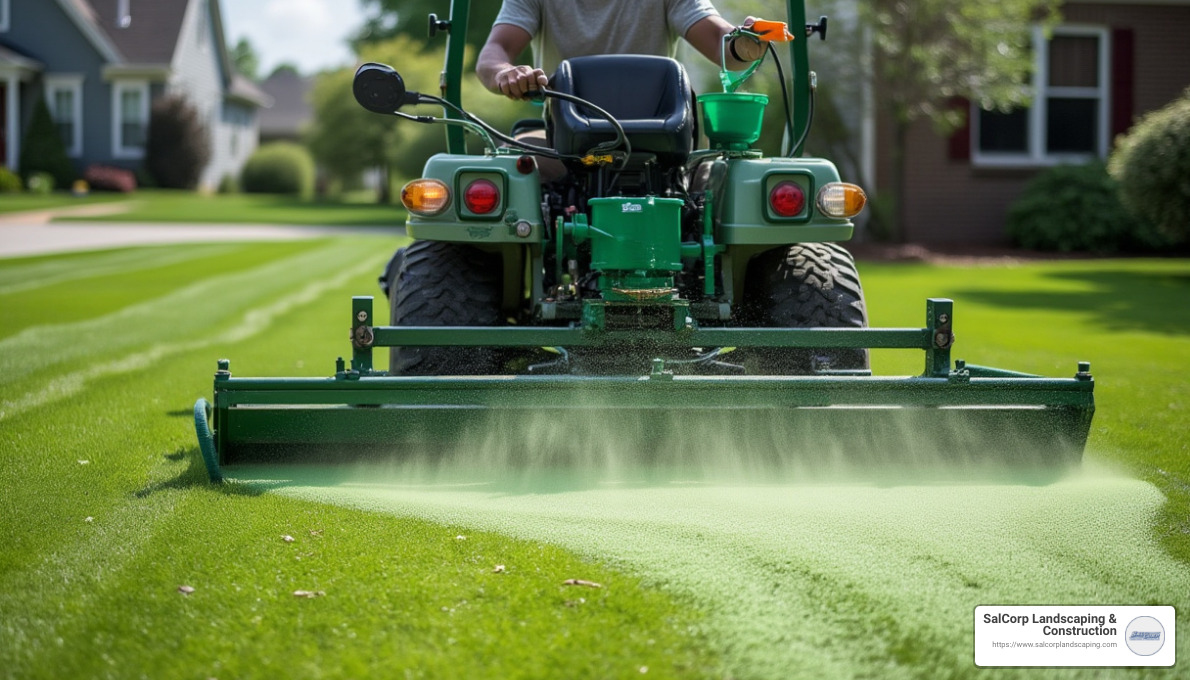
When pondering how much does hydroseeding a lawn cost, you’re likely looking for a swift solution to refresh or rehab your property’s green spaces without breaking the bank. Hydroseeding is a compelling choice, blending seed, mulch, and fertilizer into a slurry that promotes quick, even lawn establishment. Here’s what you need to know to get started:
- Versatility and Efficiency: Suitable for residential and commercial spaces, hydroseeding delivers rapid growth and lush, uniform coverage.
- Cost-Effective: Often more economical than traditional sod, especially for large areas.
- Quick Results: Green shoots can appear in as little as 7-10 days with proper care.
- Erosion Control: The mulch component helps protect soil and retain moisture, crucial for new grass.
I’m Sal Musto, founder of SalCorp Landscaping & Construction. With two decades of experience, I specialize in landscaping and snow removal services across Massachusetts. If you’re curious about how much does hydroseeding a lawn cost, I offer comprehensive insights based on my extensive work throughout the region. Our team ensures efficient project execution and quality results.
Related content about how much does hydroseeding a lawn cost:
– grass hydroseeding
– how to care for hydroseeded lawn
– hydro grass seed
What is Hydroseeding?
Hydroseeding is a modern method of planting grass that combines seeds, water, mulch, and fertilizer into a slurry. This mixture is then sprayed over prepared soil to promote rapid and uniform grass growth.
The Process
The process begins with soil preparation. This involves removing any existing vegetation and grading the area to ensure a smooth surface. Once the soil is ready, the hydroseeding slurry is mixed. This slurry includes grass seeds, a bonding agent (mulch), water, and sometimes additional additives like tackifiers or fertilizers. The slurry is then applied using specialized hydroseeder equipment, which evenly distributes it across the lawn area.
Slurry Components
- Grass Seeds: You can choose from a variety of grass types based on your climate and soil conditions. This customization ensures optimal growth for your specific environment.
- Mulch: Acts as a protective layer, retaining moisture and sheltering seeds from wind, rain, and pests. It also helps prevent soil erosion.
- Fertilizer: Provides essential nutrients to kickstart growth and establish strong roots.
- Water: Essential for mixing the slurry and ensuring seeds have the necessary moisture to germinate quickly.
- Additives (Optional): Tackifiers can be used to help the slurry adhere better to slopes or uneven terrain.

Hydroseeding is not only efficient but also versatile. It is suitable for various terrains and can be customized to meet the specific needs of your lawn. This approach is increasingly popular among both residential and commercial property owners due to its effectiveness and cost-efficiency.
In the next section, we’ll explore the costs associated with hydroseeding and the factors that influence these costs.
How Much Does Hydroseeding a Lawn Cost?
Hydroseeding is a popular choice for homeowners looking to establish a lush lawn quickly and affordably. But how much does hydroseeding a lawn cost? Let’s explore the details.
National Averages and Price Range
On average, hydroseeding costs range from $650 to $2,200 for a typical lawn size. However, prices can vary significantly based on several factors. Generally, expect to pay $0.06 to $0.20 per square foot, which can be more cost-effective than traditional seeding or sodding methods.
Factors Influencing Hydroseeding Costs
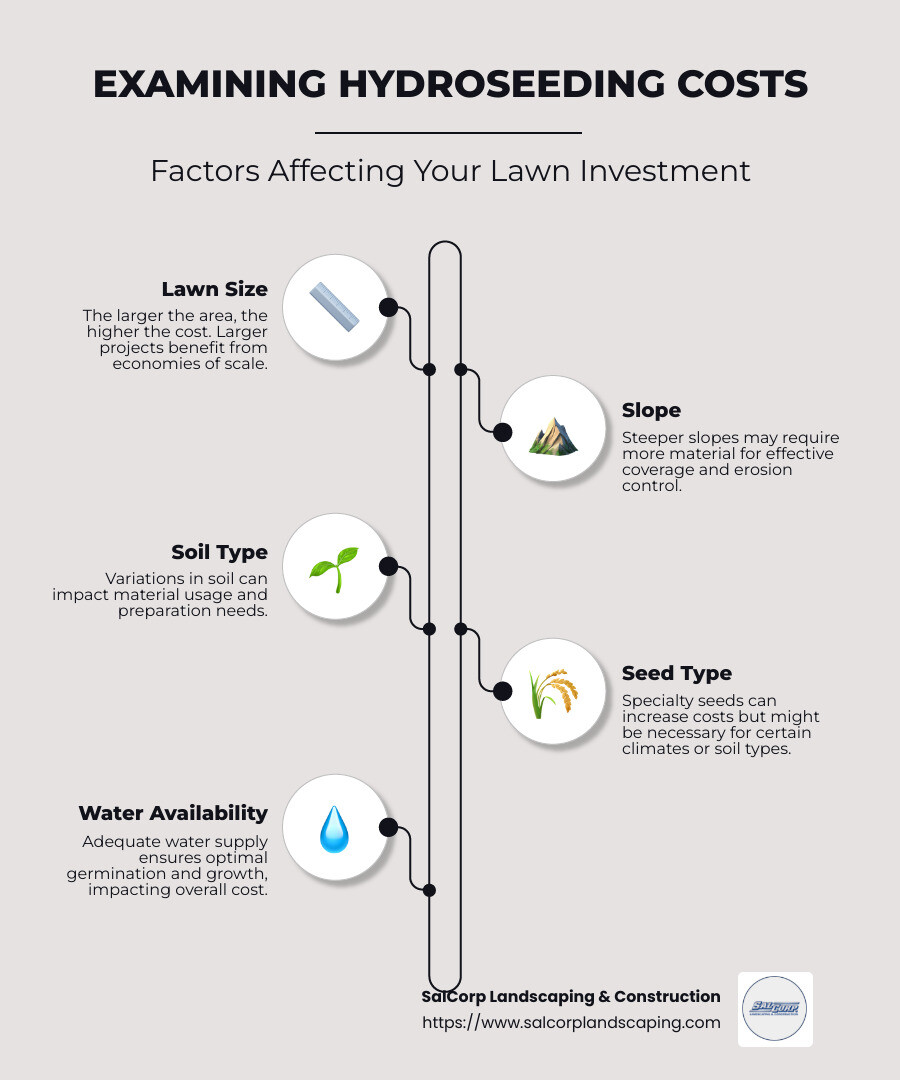
1. Lawn Size: The bigger the area, the more materials and time required, which increases costs. For example, hydroseeding a 1-acre lawn can cost significantly more than a smaller yard.
2. Slope and Terrain: Steep or uneven terrain may require additional tackifiers to help the slurry adhere, increasing costs.
3. Soil Type: Poor soil may need amendments like fertilizers or compost, adding to the overall expense.
4. Seed Type: Different grass types vary in cost. Opting for a premium seed blend will increase the price.
5. Water Availability: Hydroseeding requires water for both the slurry and ongoing maintenance. Areas with water restrictions or scarcity might face higher costs.
Comparing Hydroseeding Costs by Region
Urban vs Rural: Urban areas often have higher labor rates due to the cost of living. Conversely, rural regions might offer lower prices but could incur additional travel charges.
Water Scarcity: In areas prone to drought, the cost of water can significantly impact the total hydroseeding expense.
Local Labor Rates: Labor costs can vary widely by region. For example, cities like Boston or San Francisco might have higher rates compared to smaller towns.
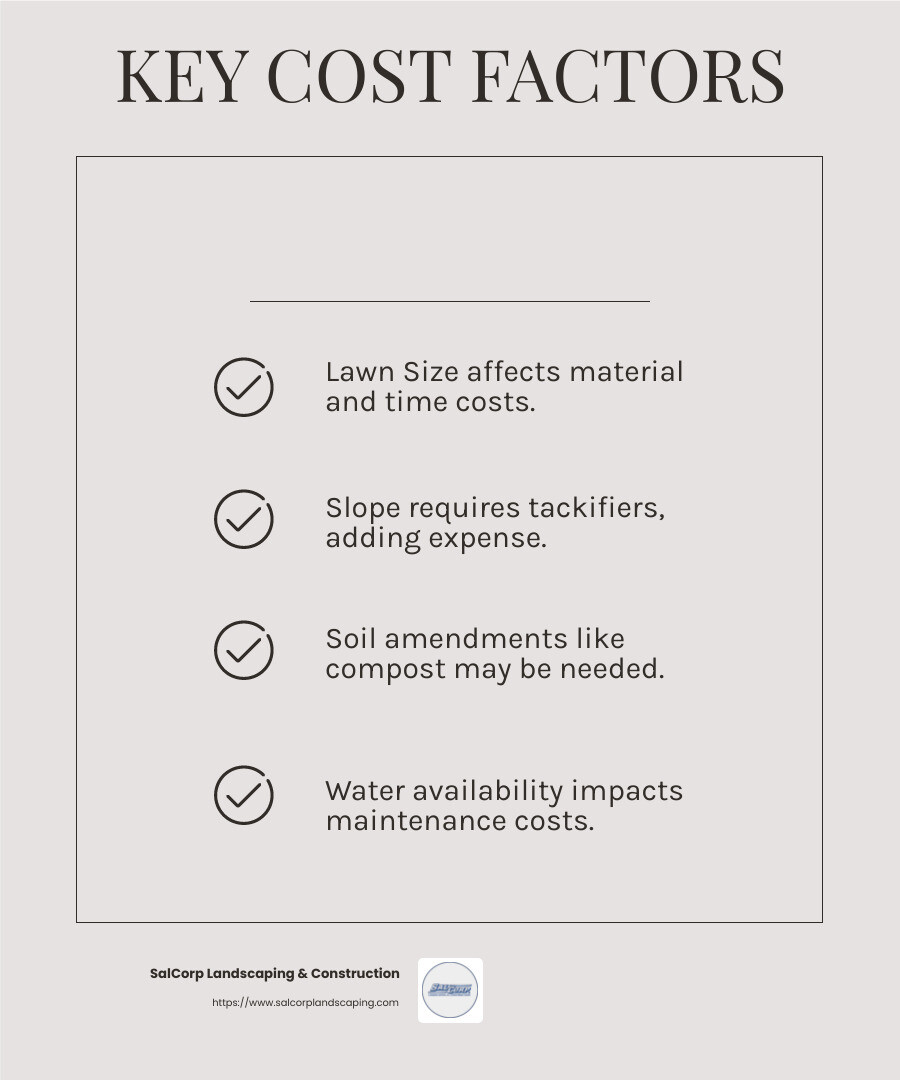
Understanding these factors can help you better estimate the cost of hydroseeding your lawn. That while initial costs might seem high, the long-term benefits of a healthy, well-established lawn can outweigh the investment.
In the next section, we’ll explore the benefits of hydroseeding over traditional methods and why it might be the best choice for your lawn.
Benefits of Hydroseeding Over Traditional Methods
When it comes to establishing a lush, green lawn, hydroseeding offers several advantages over traditional methods like sodding and broadcast seeding. Let’s explore these benefits in detail.
Hydroseeding vs Sod vs Traditional Seeding
Speed of Growth
Hydroseeding provides quick germination and growth. You can expect to see results in as little as 7-10 days, thanks to the moisture-retaining mulch and nutrient-rich slurry. This is faster than traditional seeding, which can take several weeks to show visible growth. While sod offers instant green coverage, it requires time to root properly into the soil.
Cost Efficiency
Hydroseeding is generally more cost-effective than sodding. Sod can be up to four times more expensive than hydroseeding. If you’re looking to save money while achieving a beautiful lawn, hydroseeding is a great middle-ground option. It’s more affordable than sod and faster than traditional seeding.
Even Seed Distribution
One of the standout features of hydroseeding is its ability to distribute seeds evenly. The slurry mixture ensures that seeds are spread uniformly across the lawn, reducing patchiness and promoting consistent growth. Traditional seeding methods often struggle with even distribution, leading to uneven lawns.
Cost Comparison
When comparing costs, hydroseeding typically falls between traditional seeding and sodding. While the initial cost of hydroseeding might be higher than traditional seeding, the benefits of faster establishment and uniform coverage can justify the investment. Sod, though offering immediate results, comes with a significantly higher price tag.
Time to Establishment
Hydroseeding strikes a balance between the instant results of sod and the slower growth of traditional seeding. With proper care, a hydroseeded lawn can be fully established in four to six weeks. This is quicker than traditional seeding, which may take several months to mature fully.
Labor Intensity
Hydroseeding is less labor-intensive than laying sod. The process involves spraying the slurry mixture over prepared soil rather than manually laying down each sod piece. This makes it a more efficient option for large areas, especially if you’re considering a DIY approach.
In summary, hydroseeding offers a compelling combination of speed, cost efficiency, and even seed distribution. It’s a practical choice for homeowners seeking a quick and affordable lawn solution. In the next section, we’ll dive into additional costs associated with hydroseeding and what you need to consider for long-term maintenance.
Additional Costs Associated with Hydroseeding
When you choose hydroseeding for your lawn, consider the additional costs that might arise beyond the initial application. These costs contribute to the long-term health and appearance of your lawn.
Preparation
Preparation is key to a successful hydroseeding project. Before applying the hydroseed, the soil needs to be properly prepared. This may involve removing existing grass, weeds, or debris, and ensuring the ground is level. The cost of preparation can vary widely depending on the condition of your lawn.
Soil Testing
Testing the soil is a crucial step to ensure the right conditions for your grass to thrive. By understanding the pH and nutrient levels of your soil, you can make necessary amendments. This might involve adding lime to balance acidity or incorporating organic matter to improve soil structure. Soil testing kits are available, or you can hire professionals to provide more detailed analysis.
Fertilizing
Fertilizing is essential for maintaining a healthy lawn. After hydroseeding, you will need to apply fertilizer regularly to support the growth of your new grass. The frequency and type of fertilizer will depend on your grass type and soil condition. Plan for seasonal fertilizing to keep your lawn lush and green.
Mowing
Once your hydroseeded lawn starts to grow, mowing becomes an important maintenance task. Regular mowing helps promote healthy growth and keeps your lawn looking tidy. Depending on the size of your lawn and your equipment, you may choose to mow it yourself or hire a mowing service.
Aeration
Aeration can significantly improve the health of your lawn by allowing air, water, and nutrients to penetrate the soil more effectively. This process involves perforating the soil with small holes to reduce soil compaction. Regular aeration, especially in compacted or clay-heavy soils, can improve root growth and improve grass health.
Long-Term Maintenance Costs
Maintaining a hydroseeded lawn involves consistent care. Here are some long-term maintenance considerations:
- Fertilization Frequency: Plan for fertilization several times a year based on your grass type and growing conditions.
- Mowing Services: If you prefer not to mow yourself, budget for professional mowing services.
- Leaf Removal: In the fall, leaves can accumulate and suffocate your grass. Regular leaf removal is necessary to maintain lawn health.
By accounting for these additional costs and tasks, you can ensure that your hydroseeded lawn remains vibrant and healthy for years to come. Next, we’ll address some frequently asked questions about hydroseeding to help you make informed decisions.
Frequently Asked Questions about Hydroseeding
Is Hydroseeding Worth the Investment?
Hydroseeding is a great way to get a lush, green lawn without breaking the bank. Compared to sod, it’s much cheaper and still gives you that beautiful, even coverage. Plus, it’s quicker than traditional seeding. Hydroseeding is cost-effective, especially for large areas. It also helps control erosion, which is a big win for sloped lawns or areas prone to washout. If you want a healthy lawn that grows fast and looks great, hydroseeding is definitely worth considering.
How Often Should I Water My New Hydroseeded Lawn?
Watering is crucial to ensure your hydroseeded lawn thrives. Right after hydroseeding, keep the soil consistently moist. Water lightly up to three times a day for the first few weeks. This helps the seeds germinate and take root. As the grass starts to grow, you can reduce watering gradually. After a month, you can switch to watering deeply a couple of times a week. The climate and your specific grass type can affect watering needs, so adjust accordingly.
Can Hydroseeding Be Done on Any Type of Terrain?
Hydroseeding is versatile and can be applied to various terrains. Whether your lawn is flat, sloped, or uneven, hydroseeding can work. The slurry mixture used in hydroseeding allows for even seed distribution, even on challenging landscapes. However, if your lawn has very steep slopes or heavy tree coverage, you might face some challenges. In these cases, consider consulting with a professional to determine the best approach. Hydroseeding’s adaptability makes it a top choice for many different landscapes.
Conclusion
Hydroseeding is a smart choice for anyone looking to establish a lush, green lawn quickly and affordably. This method offers a range of benefits over traditional seeding and sod. It provides even seed distribution, faster growth, and effective erosion control. For large areas, it’s a cost-effective solution that doesn’t compromise on quality.
At SalCorp Landscaping & Construction, we pride ourselves on delivering top-notch hydroseeding services. With over 20 years of experience in the landscaping industry, our team is equipped to handle any terrain challenges your property might present. We use only the highest quality seeds, mulch, and fertilizers to ensure your lawn is both beautiful and resilient.
Our commitment to customer satisfaction means we’ll work with you every step of the way to ensure you’re delighted with your new lawn. Whether your lawn is flat, sloped, or uniquely contoured, our customized hydroseeding solutions are custom to meet your specific needs.
If you’re ready to transform your landscape, consider partnering with us for your hydroseeding needs. For more information, visit our Hydroseeding Lawns service page. Let SalCorp Landscaping & Construction help you achieve the lawn of your dreams, one seed at a time.