

How Often to Water Hydroseeded Lawn: 5 Best Tips 2025

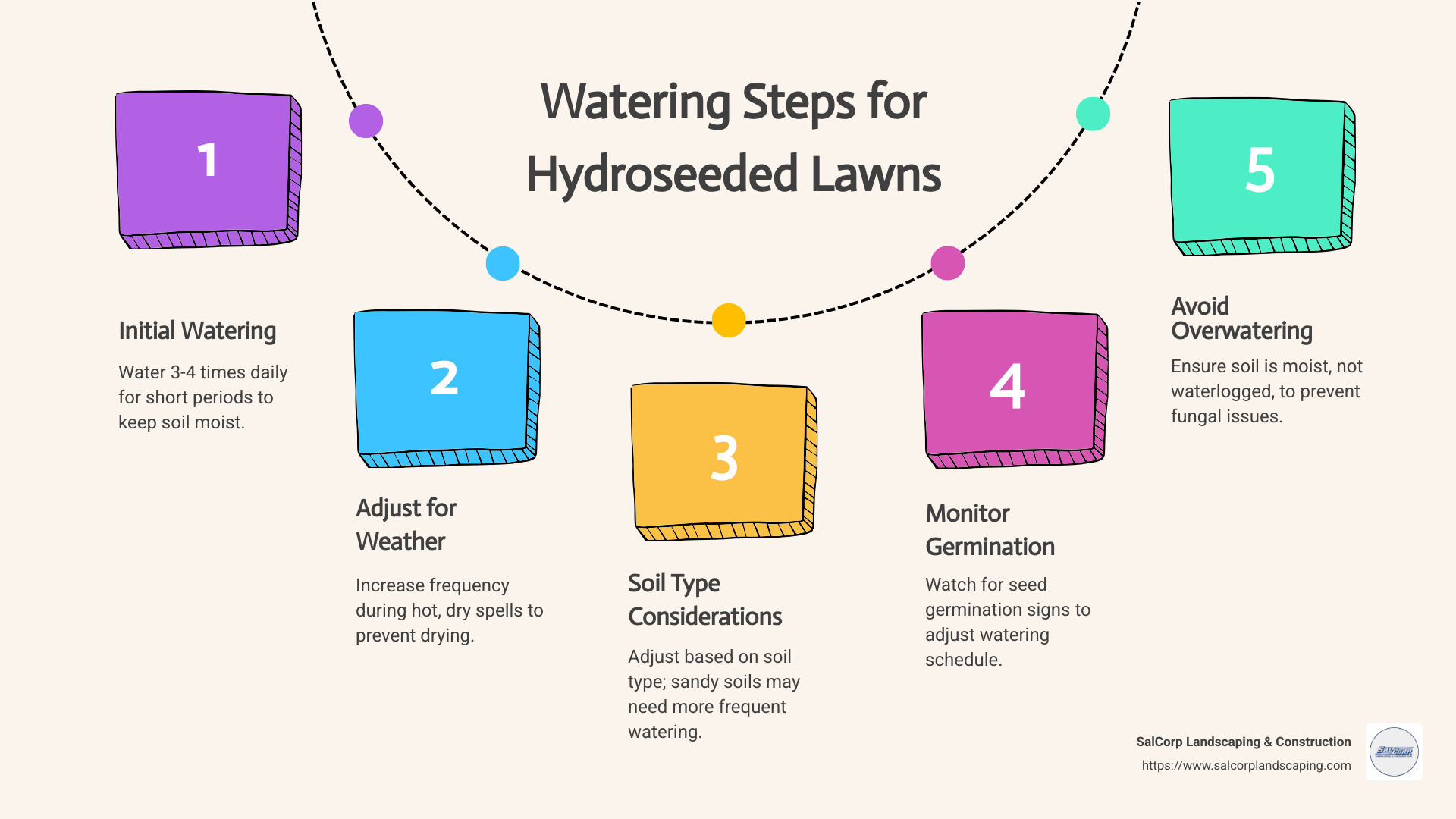
How often to water hydroseeded lawn is crucial knowledge for anyone looking to maintain a lush, green landscape. Typically, a hydroseeded lawn should be watered 3-4 times daily for short periods, especially during the critical germination phase. This frequent watering schedule should keep the soil consistently moist but not waterlogged, promoting optimal seed growth and preventing the new grass from drying out.
Hydroseeding, a popular and efficient method for grass planting, involves spraying a nutrient-rich slurry of seed, mulch, and water onto prepared soil. This innovative approach accelerates the germination process and ensures uniform seed distribution, resulting in an even and vibrant lawn. The key to achieving this lush landscape lies in understanding the importance of proper watering. Without consistent and adequate moisture, seeds may struggle to germinate, leading to patchy and uneven growth.
I’m Sal Musto, owner of SalCorp Landscaping & Construction, with over two decades in enhancing outdoor spaces, including expertise in how often to water hydroseeded lawn. This experience ensures we provide the highest standards of lawn care across Massachusetts communities.
Important how often to water hydroseeded lawn terms:
– how to care for hydroseeded lawn
– grass hydroseeding
– how much does hydroseeding a lawn cost
How Often to Water Hydroseeded Lawn
Initial Watering Frequency
During the critical germination period, your hydroseeded lawn needs special care. This phase typically lasts between 7-14 days, depending on factors like the time of year and the type of irrigation system used. The goal is to keep the soil consistently moist to encourage seed germination without creating waterlogged conditions.
Watering Schedule:
– Frequency: 3-5 times per day
– Duration: 5-15 minutes per session
This schedule helps maintain the delicate balance of moisture necessary for seeds to sprout. The key is to keep the soil damp but not drenched, avoiding both dry patches and puddling.
Adjusting Watering Frequency
As your lawn progresses through different growth stages, you’ll need to adjust the watering schedule to accommodate changing conditions.
Seasonal Changes:
– Spring and Fall: These seasons generally have moderate temperatures and natural rainfall, allowing you to reduce the watering frequency gradually after the initial germination period.
– Summer: Higher temperatures and increased evaporation rates mean you might need to maintain a more frequent watering schedule to keep the soil moist.
Growth Stages:
Once the grass begins to grow, start training the roots to seek water deeper in the soil. This means gradually reducing the frequency of watering but increasing the duration. This encourages deeper root growth, which is crucial for drought resistance and overall lawn health.
Weather Impact:
Always consider current weather conditions. On particularly hot or windy days, you may need to water more frequently to combat increased evaporation. Conversely, after a heavy rain, you can skip watering to prevent over-saturation.
By understanding these factors and adjusting your watering strategy accordingly, you can ensure your hydroseeded lawn thrives throughout its growth stages.
Best Practices for Watering Hydroseeded Lawns
When it comes to watering your hydroseeded lawn, it’s crucial to follow best practices to ensure even moisture distribution and prevent common pitfalls like overwatering or puddling. Let’s explore the techniques and signs to look for to keep your lawn healthy and thriving.
Techniques to Ensure Even Moisture
Mulch Moisture and Overwatering Avoidance
Hydroseeding involves a slurry mix that includes mulch, which helps retain moisture. It’s important to keep this mulch layer consistently moist but not soggy. Overwatering can lead to “cooking” the grass or inviting fungal diseases, especially in hot and humid conditions. A good rule of thumb is to water when the mulch feels slightly dry to the touch, but not parched.
Puddling Prevention
Puddling occurs when water pools on the surface, which can wash away seeds and compact the soil. To prevent this, use shorter, more frequent watering cycles. This helps the soil absorb water gradually, reducing runoff and ensuring even moisture distribution across your lawn.
Irrigation Systems vs. Manual Watering
An irrigation system can be a valuable tool for maintaining consistent moisture levels. These systems can be set to water at specific times, ensuring your lawn receives the right amount of water without manual effort. If you’re watering manually, use a hose with a spray nozzle to control the water flow and avoid saturating any one area.
Cycle Duration
Aim for short watering cycles, typically 5-15 minutes per session, multiple times a day. This approach helps maintain the ideal moisture levels without overwhelming the soil. Adjust the cycle duration based on the weather and soil type, as sandy soils may require longer watering to retain moisture.
Signs of Adequate Watering
Color Indicators
A well-watered hydroseeded lawn will have a vibrant green color. If you notice yellowing, it could indicate a lack of water or nutrient deficiency. Conversely, a dark green or bluish hue might suggest overwatering.
Soil Moisture Level
Check the soil moisture by inserting a finger or a moisture meter into the ground. The soil should feel damp but not soggy. If it feels dry, increase the watering frequency; if it’s too wet, cut back.
Seed Germination Signs
Successful germination is a key indicator that your watering schedule is on track. Within 7-10 days, you should start to see small grass shoots emerging from the soil. If germination seems delayed, review your watering practices and adjust as needed.
By following these best practices and paying attention to these signs, you can ensure your hydroseeded lawn receives the care it needs to grow lush and healthy. Up next, we’ll dig into common mistakes to avoid while watering your hydroseeded lawn.
Common Mistakes in Watering Hydroseeded Lawns
Watering a hydroseeded lawn might seem straightforward, but there are common pitfalls that can hinder the growth and health of your grass. Let’s explore these mistakes and their potential consequences.
Overwatering Risks
One of the most frequent errors is overwatering. While it’s important to keep the mulch moist to promote germination, too much water can be detrimental. Overwatering can lead to “cooking” the grass, especially during hot weather, and it also creates an inviting environment for fungal diseases. Fungal diseases can quickly damage your lawn, turning it into a patchy and unhealthy mess.
Incorrect Timing
Timing is everything when it comes to watering. Watering during the hottest parts of the day can cause the water to evaporate before it penetrates the soil, while watering at night might leave the lawn too wet, increasing the risk of fungal growth. Aim for early morning watering when temperatures are cooler and evaporation rates are lower.
Neglecting Weather Patterns
Ignoring weather conditions can lead to unnecessary watering or, conversely, insufficient moisture. Heavy rain in the forecast should prompt you to skip a watering session to prevent seed washout and soil erosion. On the other hand, during dry spells, you might need to increase the frequency of watering to maintain adequate moisture levels.
Seed Washout
Excessive water flow can wash away the seeds, especially if the soil hasn’t been properly graded. This not only wastes seeds but also results in uneven growth and bare patches. To avoid this, ensure your soil is graded correctly to facilitate proper drainage, and use gentle watering techniques to minimize seed displacement.
Fungal Diseases
Watering during high humidity or when temperatures exceed 85 degrees can encourage fungal diseases. These diseases thrive in moist environments, so it’s crucial to adjust your watering schedule during such conditions to protect your lawn.
Inhibited Growth
Improper watering techniques can stunt the growth of your grass. Whether it’s from overwatering, incorrect timing, or neglecting weather patterns, these mistakes can lead to weak and sparse grass. Inhibited growth not only affects the appearance of your lawn but also its resilience to environmental stresses.
By understanding and avoiding these common mistakes, you can ensure your hydroseeded lawn thrives. Up next, we’ll look at how to care for your lawn after watering to maintain its lush appearance.
Caring for Your Lawn Post-Watering
Once you’ve mastered the watering schedule, it’s time to focus on maintaining your lawn’s health through regular care. Let’s explore some essential practices to ensure your hydroseeded lawn remains vibrant and lush.
Transition to Regular Lawn Care
Mowing Guidelines
Mowing is crucial for a healthy lawn. Start mowing once your grass reaches about 3 inches in height. Always mow when the lawn is dry to avoid damaging the grass. Set your mower to a high setting to cut only the top third of the grass blades. This helps keep the grass cooler and prevents weed growth.
Fertilizing Schedules
Fertilizing provides the nutrients your grass needs to grow strong. After the first mowing, follow a fertilizing schedule custom to your grass type. Typically, fertilize every 6-8 weeks during the growing season. Using a balanced fertilizer with a 1:2 ratio of nitrogen to phosphorus in the fall can prepare your lawn for winter dormancy.
Traffic Management
Minimize foot traffic on your new lawn, especially in the first few months. This gives the grass time to establish strong roots. If you have pets, create designated paths to prevent them from trampling the grass.
Root Training
Deep root systems make your lawn resilient against drought and disease. To promote deep roots, gradually reduce the frequency of watering while increasing the duration. This encourages roots to grow deeper in search of moisture.

Fertilizer Types
Choose fertilizers that suit your lawn’s needs. For hydroseeded lawns, a slow-release fertilizer can provide steady nutrients over time. Be cautious with high-nitrogen fertilizers, as they can cause rapid growth that stresses the grass.
Mowing Frequency
Regular mowing is essential but can vary depending on growth rates. In the beginning, you may need to mow twice a week. As the lawn matures, adjust to once a week. Frequent mowing helps maintain a uniform appearance and encourages root development.
By following these guidelines, you’ll set the stage for a healthy, thriving lawn. Next, we’ll explore the long-term benefits of consistent lawn care and how SalCorp Landscaping & Construction can help maintain your outdoor space.
Conclusion
Achieving long-term lawn health requires consistent care and attention. By following best practices for watering and maintenance, your hydroseeded lawn can thrive for years to come. A well-cared-for lawn not only improves your property’s beauty but also contributes to a healthier environment by reducing soil erosion and promoting biodiversity.
Long-term Lawn Health
The journey to a lush, green lawn doesn’t end once your hydroseeded grass is established. It’s an ongoing process that involves regular mowing, proper fertilization, and strategic watering. Over time, these efforts pay off by creating a robust root system and a resilient lawn that can withstand seasonal changes and occasional neglect.
The key to a healthy lawn is balance. Avoid over-fertilizing or overwatering, as these can lead to problems like root rot and nutrient runoff. Instead, stick to a consistent care routine that adapts to your lawn’s needs throughout the year.
SalCorp Landscaping & Construction
At SalCorp Landscaping & Construction, we understand that maintaining a beautiful lawn can be challenging. With over 20 years of experience, we specialize in comprehensive outdoor solutions custom to your specific needs. Whether you need assistance with hydroseeding, regular lawn maintenance, or landscape design, our expert team is here to help.
Located in Walpole, Massachusetts, we proudly serve various communities, including Canton, Dedham, Foxborough, and more. Our owner-operated business ensures personalized service and attention to detail, using our own machinery to deliver exceptional results.
If you’re ready to transform your landscape and achieve a healthy, vibrant lawn, contact SalCorp Landscaping & Construction today. Let us be your trusted partner in creating the outdoor space of your dreams.
