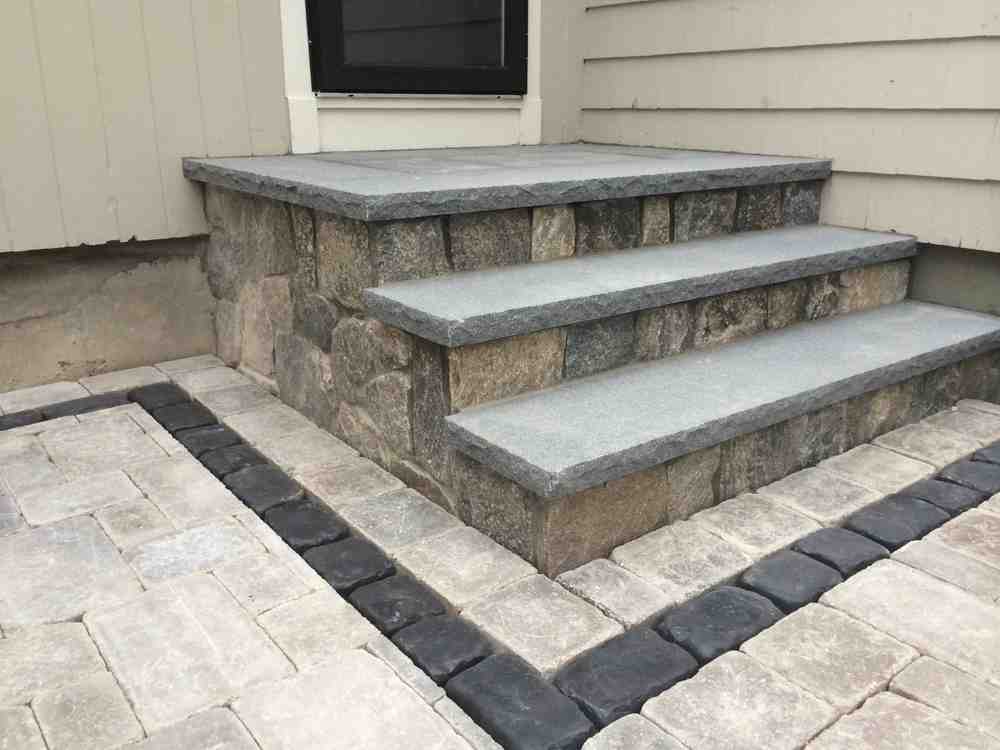
How to Build Brick Stairs: 5 Easy Steps 2025

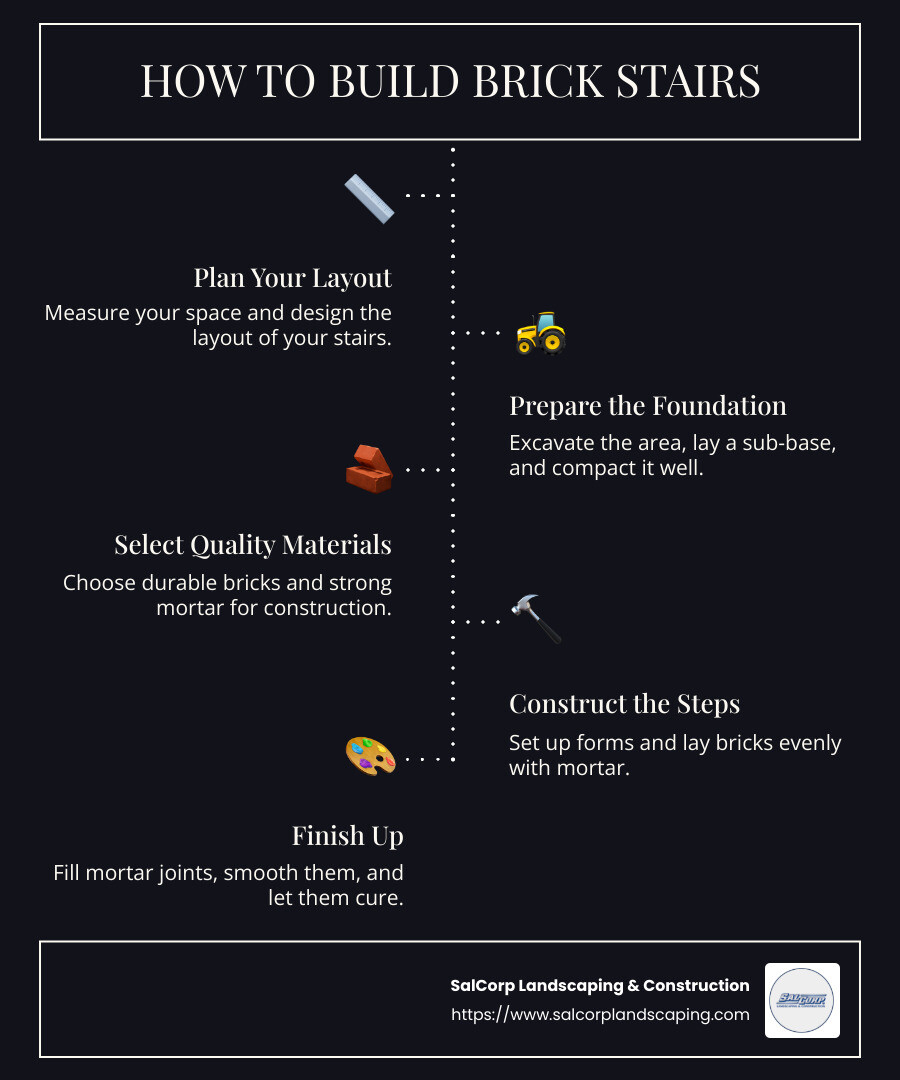
How to build brick stairs not only improves the beauty of your property but is also a useful skill for any homeowner or commercial property manager. Building brick steps might seem daunting at first, but it can be broken down into a few manageable steps:
- Plan Your Layout: Measure your space carefully and design the layout of your stairs.
- Prepare the Foundation: Excavate the area, lay down a sub-base, and ensure it’s well-compacted.
- Select Quality Materials: Choose durable bricks and strong mortar.
- Construct the Steps: Set up forms, and lay bricks with properly applied mortar for level steps.
- Finish Up: Fill mortar joints, smooth them out, and allow the mortar to cure.
In just five straightforward steps, you can transform your outdoor landscape with new brick stairs.
I’m Sal Musto, and with over two decades of experience in landscaping and construction, I’ve mastered how to build brick stairs efficiently and beautifully. Whether your goal is improved access or improved curb appeal, quality craftsmanship is key. Let’s dig into how to choose the right location for your new brick masterpiece next!
Quick how to build brick stairs definitions:
– brick step designs
– how to lay a brick step
– step by step landscaping ideas
Choosing the Right Location
Choosing the right location is a crucial first step when learning how to build brick stairs. The location you select will greatly impact the durability and safety of your stairs. Here’s what you need to know:
Suitable Area
Begin by identifying a suitable area for your stairs. Ideally, you want a spot that improves the natural flow of your landscape. Consider how the stairs will connect different levels of your property, be it a garden, patio, or entrance.
Tip: Think about how you use your outdoor space daily. A well-placed staircase can make accessing your garden or patio much easier and more enjoyable.
Firm Ground
The ground beneath your stairs must be firm. This stability is essential for supporting the weight of the stairs and ensuring they last through the years. Avoid areas with loose soil or where water tends to collect, as these conditions can lead to settling and uneven steps.
Case Study: A homeowner in North Carolina transformed their backyard by adding brick stairs leading up to a new porch. They chose a location with firm ground, which helped prevent future issues with settling.
Avoid Utilities
Before you start digging, check for underground utilities. Digging in the wrong spot could damage water, electric, or gas lines, leading to expensive repairs and potential safety hazards.
Action Step: Contact your local utility companies to mark any underground lines. This simple step can prevent a lot of trouble down the line.
By carefully selecting the right location for your brick stairs, you ensure a solid foundation for the project. This preparation not only supports the structural integrity of your stairs but also improves the overall aesthetic of your outdoor space.
Next, we’ll dive into preparing the foundation to set the stage for building your brick stairs.
Preparing the Foundation
Building a strong foundation is the backbone of any successful brick stair project. Without a solid base, your stairs can shift, settle, or even crack over time. Here’s how to lay the groundwork properly:
Concrete Foundation
Start by excavating the area where your stairs will be built. Dig to a depth of at least 10 cm (about 4 inches) to accommodate the sub-base and ensure stability.
Once the area is excavated, it’s time to pour a concrete foundation. This layer acts as a sturdy platform for your stairs, preventing future settling and shifting.
Tip: Use a 50mm (about 2 inches) layer of concrete for added stability. This will create an even and robust surface for your bricks.
Steel Rebar
For improved strength, integrate steel rebar into your concrete foundation. Rebar provides crucial reinforcement, especially important for stairs that will endure heavy foot traffic and weather changes.
Place the rebar in a grid pattern before pouring the concrete. This helps distribute weight evenly and adds durability.
Note: If you’re unfamiliar with working with rebar, consider hiring a professional to ensure proper placement and safety.
Wooden Framework
Before pouring the concrete, build a wooden framework, known as shuttering, to hold the concrete in place as it sets. This framework shapes the concrete, ensuring it aligns with your stair design.
Use scrap sheet wood to construct the shuttering. Make sure it’s sturdy and well-secured to prevent any movement during the pouring process.
Action Step: After pouring the concrete, smooth the surface and allow it to cure fully before removing the shuttering. This ensures a clean and precise foundation for your brick stairs.

By following these steps, you lay a strong and stable foundation for your brick stairs. This preparation is crucial for the longevity and safety of your project. Taking the time to do it right from the start will save you headaches down the road.
Next, we’ll explore how to build brick stairs, moving on to the brick-laying process.
How to Build Brick Stairs
Creating brick stairs is like assembling a puzzle, each piece fitting perfectly into place. Here’s how to build brick stairs step-by-step.
Laying the Bricks
Wet Bricks and Mortar Application
Start by soaking your bricks in water. This helps them bond better with the mortar, preventing cracks later. Once your bricks are ready, apply a thick layer of mortar on the foundation using a trowel. Keep the mortar about 3/8-inch thick for a strong hold.
Leveling Bricks and Using a Rubber Mallet
Place the first brick onto the mortar bed and tap it gently with a rubber mallet to ensure it’s firmly seated. Use a level to make sure the brick is even. This step is crucial for even stairs.
Maintaining Consistent Mortar Joints
Use 1/2- or 3/8-inch plywood spacers between bricks to keep your mortar joints uniform. Consistency in spacing is key for both aesthetics and structural integrity.
Utilizing a Brick Jointer
Once the bricks are set, use a brick jointer to smooth the mortar joints. This tool helps compress the mortar and gives a clean finish, ensuring rainwater flows off easily.
Finishing Touches
Excess Mortar Removal and Curing Process
After laying all the bricks, let the mortar set a bit. Remove any excess with a trowel or stiff brush for a neat appearance. Allow the mortar to cure for five to seven days. During this time, mist the stairs lightly with water to prevent the mortar from drying too quickly and cracking.
Final Smoothing
Once the mortar begins to firm up, smooth the joints again with the jointer. This ensures your stairs are not only functional but also look polished and professional.
By following these steps, you’ll create durable and attractive brick stairs that improve your outdoor space. Now that your stairs are complete, let’s address some common questions about building brick stairs.
Frequently Asked Questions about Building Brick Stairs
Do brick steps need a foundation?
Yes, brick steps definitely need a solid foundation. A concrete foundation is essential for stability and longevity. It provides a solid surface that prevents the bricks from shifting or settling unevenly. Without this, your stairs might crack or become unsafe over time. This is critical, especially in areas with fluctuating temperatures that can cause ground movement.
Can you lay brick steps on dirt?
Laying brick steps directly on dirt is a poor practice. The soil can be uneven and unstable, leading to potential shifting and sinking. This instability can cause cracks in your brickwork and create safety hazards. Instead, excavate the area and lay a proper sub-base, followed by a concrete layer, to ensure durability and safety.
What mortar to use for brick steps?
For brick steps, Type N mortar is recommended. It is flexible enough to handle slight movements and shifts, which is important in outdoor settings. This type of mortar is strong and versatile, providing a good balance between strength and flexibility. It helps ensure your steps remain intact, even with temperature changes and daily use.
Understanding these basics will help you ensure your brick stairs are built to last. Next, we’ll explore how SalCorp Landscaping & Construction can assist in changing your outdoor space with professional expertise.
Conclusion
Building brick stairs is more than just a construction project—it’s about enhancing your outdoor space and adding value to your property. At SalCorp Landscaping & Construction, we specialize in creating stunning, durable brick stairs that stand the test of time. With over 20 years of experience in Massachusetts, we pride ourselves on offering comprehensive outdoor solutions custom to your unique needs.
Our owner-operated business model ensures personalized service and attention to detail. We use our own machinery to deliver efficient and precise results. Whether you’re in Canton, Dedham, or any of our other service areas, our team is ready to help you achieve your landscaping dreams.
From the initial planning phase to the final touches, we ensure every step is executed with precision. Our experts handle everything from choosing the right location to laying the foundation and finishing the brickwork. We understand the importance of using quality materials and proper techniques to guarantee the longevity and safety of your stairs.
If you’re considering upgrading your outdoor space, let us guide you through the process. Our expertise in brick stairs and landscape design can transform your property into a functional and beautiful environment.
Ready to improve your home with expertly crafted brick stairs? Contact us today to schedule a consultation and see how SalCorp Landscaping & Construction can make your vision a reality. Let’s create something beautiful together!