

How to Care for Lawn After Hydroseeding: Top 5 Vital Tips

How to care for lawn after hydroseeding is essential to achieving a lush, vibrant lawn that will leave a lasting impression on visitors and residents alike. To keep your newly hydroseeded lawn flourishing, follow these critical practices:
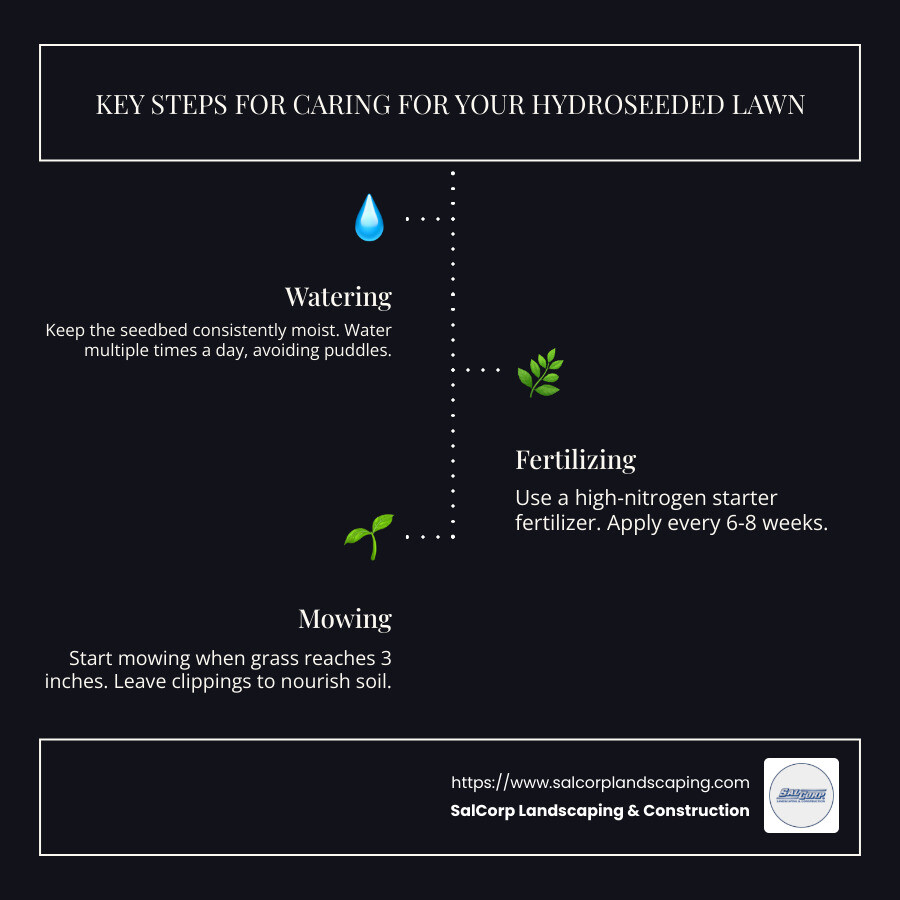
- Watering: Keep the seedbed consistently moist, especially during the first two months. Water multiple times a day but avoid creating puddles that can suffocate new growth.
- Fertilizing: Start with a high-nitrogen starter fertilizer and continue with regular applications every 6-8 weeks.
- Weeding and Mowing: Allow the grass to establish before using weed killers. Begin mowing once the grass reaches 3 inches, ensuring clippings remain to nourish the soil.
Investing time and effort in these steps ensures your hydroseeded lawn becomes a strong, healthy addition to the landscape.
As Sal Musto, with over two decades of experience in enhancing outdoor spaces, I’ve seen how proper care of newly hydroseeded lawns can dramatically improve their success and appearance. Together, let’s dig into effective strategies to maximize your lawn’s potential.
Easy how to care for lawn after hydroseeding glossary:
– grass hydroseeding
– how much does hydroseeding a lawn cost
– how often to water hydroseeded lawn
Essential Early Care for Hydroseeded Lawns
Caring for your hydroseeded lawn from the start is key to achieving that lush, green look you desire. Let’s explore the three main areas of early lawn care: watering, mowing, and fertilizing.
Watering Your Hydroseeded Lawn
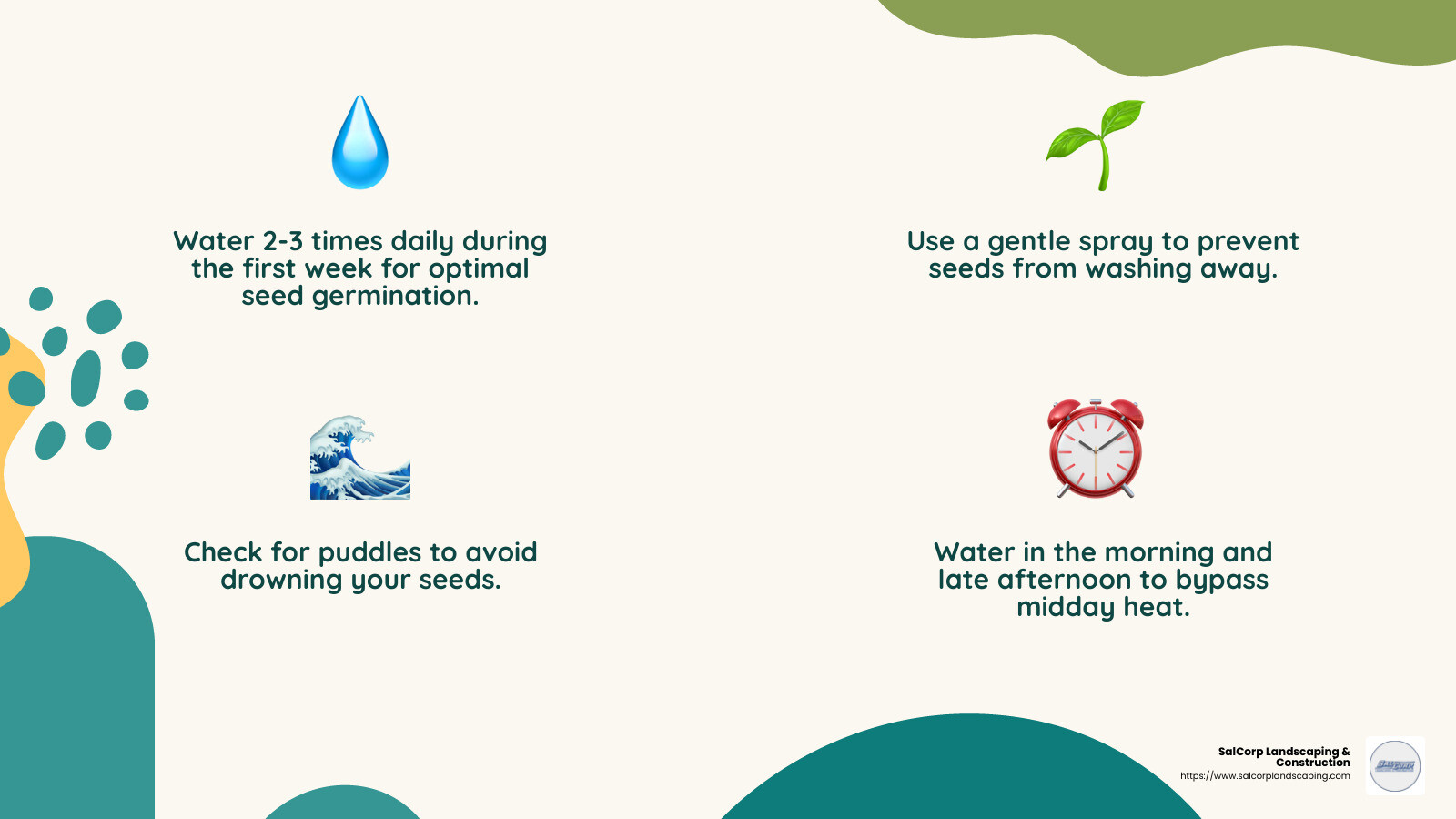
Watering is your lawn’s lifeline, especially in the early days. For the first 2-3 weeks, keep the seedbed consistently moist. This means watering in the early morning and late afternoon to avoid the heat of the day.
Frequency and Timing:
- First Week: Water 2-3 times a day.
- Second Week and Beyond: Gradually reduce to once daily as the grass starts to sprout.
Techniques:
- Use a gentle spray to avoid washing away seeds.
- Check for puddles. If you see them, stop watering to prevent drowning the seeds.
Mowing Your New Lawn
Once your grass reaches about 3 inches, it’s time for its first mow. Mowing is not just about cutting grass; it helps in thickening the lawn and managing weeds.
Timing and Height Settings:
- First Mow: When grass is 3 inches tall.
- Blade Height: Start high and gradually lower as the lawn matures.
Frequency and Clipping Management:
- Mow regularly but never cut more than ¼ inch off the top.
- Leave clippings on the lawn. They decompose and enrich the soil.
Fertilizing for Optimal Growth
Fertilizing provides the nutrients your lawn needs to grow strong and vibrant. Start with a high-nitrogen starter fertilizer included in the hydroseeding process.
Application Schedule:
- Initial Fertilizer: Lasts 4-5 weeks.
- Follow-Up: Apply a nitrogen-rich fertilizer every 6-8 weeks thereafter.
By following these steps, your hydroseeded lawn will have the best start possible. Proper watering, mowing, and fertilizing set the foundation for a thriving lawn. Next, we’ll explore how to protect your new lawn from common threats.
How to Protect Your Hydroseeded Lawn
Protecting your newly hydroseeded lawn is crucial for its success. Traffic management, pet control, and barrier installations are important steps to ensure your lawn grows healthy and strong.
Traffic Management
Your lawn is delicate after hydroseeding, so limiting foot traffic is essential.
Tips for Managing Traffic:
- Use Signs: Place signs around the lawn to remind family and visitors to avoid walking on it.
- Create Pathways: Use temporary pathways or stepping stones to guide foot traffic away from sensitive areas.
By minimizing traffic, you help prevent soil compaction, which can hinder grass growth.
Pet Control
Pets can unintentionally damage your lawn by running or digging. Here’s how to keep them off your new grass:
Strategies for Pet Control:
- Designate Play Areas: Create specific zones in your yard where pets can play without affecting the lawn.
- Use Temporary Fencing: Install temporary fencing around the lawn to keep pets out until the grass is established.
These measures will help prevent damage from paws and claws.
Barrier Installations
Installing barriers can provide physical protection for your lawn.
Effective Barrier Options:
- Temporary Fences: Use lightweight, easily removable fencing to keep out pets and people.
- Garden Edging: Install edging to define boundaries and protect the lawn’s edges.
Barriers not only protect your grass but also help in guiding traffic and controlling pets.
By focusing on traffic management, pet control, and barrier installations, you can shield your hydroseeded lawn from potential harm. This ensures that your lawn has the best chance to thrive and grow into the lush, green space you envision. Next, we’ll tackle common issues and how to address them effectively.
Troubleshooting Common Issues in Hydroseeded Lawns
Even with the best care, newly hydroseeded lawns can face some challenges. Let’s explore how you can tackle weeds, prevent diseases, and manage uneven growth to keep your lawn lush and healthy.
Dealing with Weeds
Weeds can be a pesky problem for any lawn, especially a new one. Here’s how to handle them:
Identification:
Knowing your enemy is half the battle. Common weeds like dandelions and crabgrass can pop up in hydroseeded lawns. Learn to identify these so you can target them effectively.
Mowing Strategies:
Mowing is your first line of defense against weeds. Keep your grass at a higher setting to shade out weed seeds. This makes it harder for them to germinate and grow.
Safe Removal:
Avoid using herbicides until your grass has been mowed at least three or four times. Once it’s ready, choose a weed control product that supports grass growth while targeting weeds.
Preventing Diseases and Pests
A healthy lawn is less likely to suffer from diseases and pests. Here’s how to keep them at bay:
Fungus Issues:
Fungus thrives in overly wet conditions. Avoid watering during high heat and humidity, as this can invite fungi. Instead, water early in the morning to allow grass to dry during the day.
Insect Infestations:
Watch for signs of insects, like brown patches or chewed grass blades. If you notice these, consult with a lawn care expert to find a safe and effective treatment.
Proper Watering:
Consistent, deep watering helps build strong roots that resist pests and diseases. Aim for 1″ to 2″ of water per week, adjusting based on rainfall.
Managing Uneven Growth
Sometimes, grass grows unevenly after hydroseeding. Here’s how to ensure a uniform lawn:
Sunlight Assessment:
Check if some areas are shaded more than others. Grass needs sunlight to grow evenly, so trim back any overhanging branches or other obstructions.
Additional Seeding:
For bare or thin spots, consider overseeding. This involves spreading more seed to encourage growth in patchy areas.
Soil Amendments:
If certain areas are struggling, the soil might need help. Test the soil to check pH and nutrient levels, and amend it with compost or appropriate fertilizers to create a more hospitable environment for grass growth.
By addressing these common issues, you can help your hydroseeded lawn overcome obstacles and flourish. Next, we’ll explore some advanced care techniques to further improve your lawn’s health and appearance.
Advanced Care Techniques for Hydroseeded Lawns
Even after addressing common issues, there are additional steps you can take to ensure your hydroseeded lawn thrives. Let’s explore some advanced care techniques, including aeration, overseeding, and seasonal adjustments.
Aeration Benefits
Aeration is a crucial step in maintaining a healthy lawn. It involves perforating the soil with small holes to allow air, water, and nutrients to penetrate down to the roots. This process helps the grass grow deeper roots and improves its resilience.
When to Aerate:
The best time to aerate your lawn is during the growing season, typically in spring or fall, when the grass can recover quickly.
Methods:
You can aerate manually using a garden fork or opt for a mechanical aerator, which is more efficient, especially for larger areas.
Expected Benefits:
Aeration reduces soil compaction, improves root development, and improves water uptake. This leads to a thicker, healthier lawn that is less prone to pests and diseases.
The Role of Overseeding
Overseeding involves planting grass seed directly onto existing turf without tearing up the soil. It’s an excellent way to fill in bare spots and improve lawn density.
Timing:
Overseeding is best done in late summer to early fall when the soil is still warm, and there’s plenty of moisture.
Seed Selection:
Choose a grass seed variety that matches your existing lawn and is suitable for your climate. This ensures a uniform appearance and optimal growth.
Application Techniques:
Before overseeding, mow your lawn short and remove any debris. Spread the seed evenly using a broadcast spreader, and water lightly to help the seeds settle.
Adjusting Care by Season
To keep your lawn looking its best year-round, adjust your care routine according to the season.
Spring Care:
In spring, focus on recovery from winter. Aerate if needed, apply a balanced fertilizer, and start a regular watering schedule as temperatures rise.
Summer Maintenance:
During hot summer months, water deeply but less frequently to encourage deep root growth. Mow at a higher setting to shade the soil and retain moisture.
Fall Preparation:
Fall is the perfect time for aeration and overseeding. Apply a high-potassium fertilizer to prepare your lawn for winter, and continue watering until the ground freezes.
By incorporating these advanced care techniques, you can improve the health and beauty of your hydroseeded lawn. Next, we’ll discuss how to protect your lawn from potential threats and ensure its long-term success.
How to Care for Lawn After Hydroseeding: Expert Tips from SalCorp Landscaping & Construction
Caring for a hydroseeded lawn can be straightforward with the right guidance. At SalCorp Landscaping & Construction, we provide expert advice custom to local conditions, ensuring your lawn flourishes for years to come.
Local Expertise
Our team understands the unique challenges and opportunities presented by the climate and soil in the Massachusetts area. Whether you’re in Canton or Foxborough, our local expertise means we can offer precise advice for your specific environment. For instance, we know that the cooler temperatures in Westwood might mean a different watering schedule compared to the warmer climates in Sharon. This localized knowledge allows us to create care plans that maximize your lawn’s potential.
Custom Solutions
Every lawn is different, and that’s why we offer custom solutions custom to your needs. We begin by assessing your soil’s condition and the specific grass seed blend used in your hydroseeding process. This allows us to provide personalized recommendations, such as the best starter fertilizers rich in nitrogen, which are crucial for the early stages of grass growth.
Additionally, our team can help you set up an effective watering schedule. As a general rule, newly hydroseeded lawns need watering 2 to 5 times daily, depending on the weather. We also advise on mowing techniques that stimulate growth, like setting your mower to cut only the top third of the grass blades.
Long-Term Maintenance
Maintaining a lush lawn doesn’t stop after the initial growth phase. Long-term care is essential for sustaining its health and beauty. We recommend regular aeration to prevent soil compaction and improve nutrient absorption. This process is best performed in the growing seasons of spring and fall, allowing your lawn to breathe and thrive.
Overseeding is another key practice. It helps fill in any bare spots and improves the overall density of your lawn. By choosing the right seed blend and timing your overseeding efforts correctly, you ensure a uniform and robust lawn.
Finally, adapting your care routine to the seasons is crucial. In spring, focus on recovery and growth. During summer, adjust your watering and mowing practices to combat heat stress. Come fall, prepare your lawn for winter with appropriate fertilization and continued watering until the first frost.
By following these expert tips from SalCorp Landscaping & Construction, you can ensure your hydroseeded lawn remains healthy and vibrant. Our team is here to support you with custom advice and professional services, helping you achieve a lawn that improves your property’s beauty and value.
Next, we’ll explore how to protect your lawn from potential threats and ensure its long-term success.
Conclusion
Caring for your newly hydroseeded lawn is a journey that begins with proper initial care and extends into continuous maintenance. By following the right steps, you can enjoy a lush, green lawn that improves your outdoor space.
Summary
From watering to mowing and fertilizing, each stage of care plays a crucial role in the health of your lawn. Remember to adjust your care techniques based on the weather and your lawn’s specific needs. Whether it’s setting the right mowing height or applying the right fertilizer, these small adjustments can make a big difference.
Continuous Care
Your lawn’s care doesn’t end once it starts to grow. Regular maintenance, including aeration and overseeding, helps maintain its health and vibrancy. Adjust your care practices with the changing seasons to ensure your lawn can withstand different weather conditions. This proactive approach will save you time and effort in the long run while keeping your lawn looking its best.
Contact SalCorp for Professional Assistance
If you’re looking for expert guidance or need professional help, SalCorp Landscaping & Construction is here for you. With over 20 years of experience in Massachusetts, we offer customized solutions custom to your lawn’s unique needs. Our local expertise ensures that your lawn receives the best care possible, no matter where you are in the region.
For more information on our hydroseeding services, visit our Hydroseeding Lawns page. Whether you need advice or a full-service solution, we’re ready to help you achieve the lawn of your dreams.
By following these guidelines and leveraging our expertise, you can ensure your hydroseeded lawn remains a source of pride and enjoyment for years to come.
