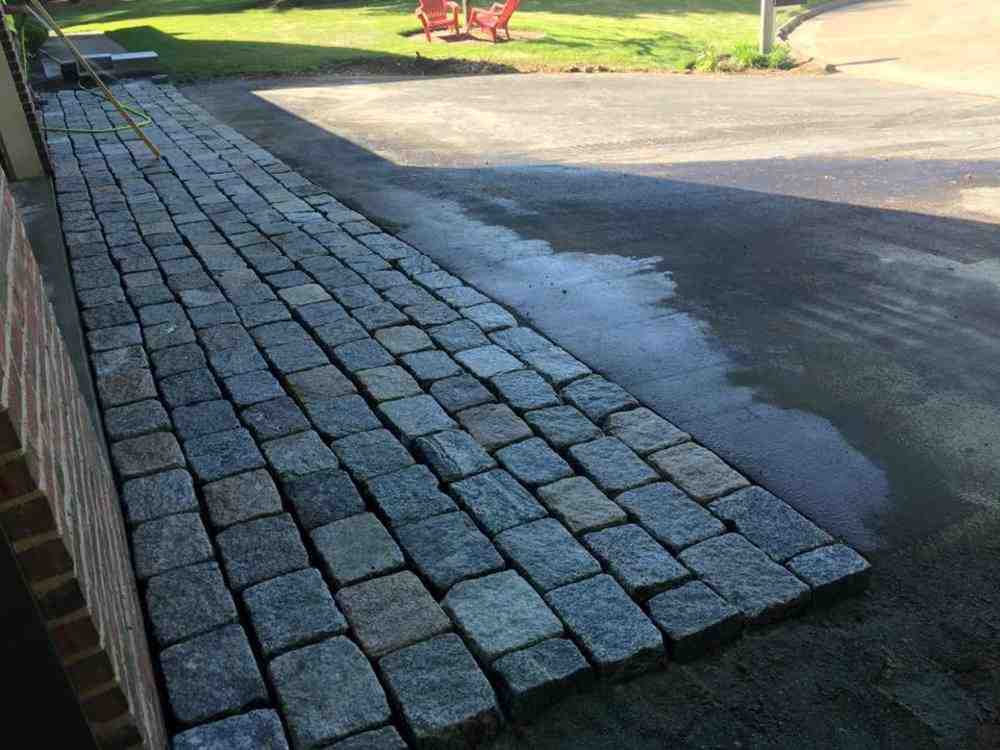
How to Install Brick Steps: Flawless 2025
Why Brick Steps Transform Your Property’s Appeal and Value
How to install brick steps requires careful planning, a proper foundation, and skilled masonry. The essential process includes:
- Plan and prepare: Calculate dimensions, get permits, and gather materials.
- Excavate and build foundation: Dig below the frost line and create a concrete footing with rebar.
- Mix mortar correctly: Use Type M or N mortar with the right consistency.
- Lay bricks systematically: Start with risers, then treads, keeping 3/8″ joints.
- Finish professionally: Tool joints, cure for 5-7 days, then clean and seal.
Brick steps offer timeless elegance that improves with age, unlike concrete that cracks or wood that rots. Properly installed brick steps can last for decades with little maintenance and are a smart investment, often adding more value to your property than their installation cost.
The key to success is in the details. Choosing the right bricks and ensuring the foundation is below the frost line are critical. Poor installation leads to cracking, settling, and expensive repairs.
Many homeowners underestimate the project’s complexity. It’s more than stacking bricks; it’s building a structure that must withstand heavy loads, freeze-thaw cycles, and foot traffic for decades. The foundation alone involves excavation, drainage, and concrete work that must meet local codes.
As Sal Musto, owner of SalCorp Landscaping & Construction with over 20 years of experience in Massachusetts, I’ve seen many DIY projects fail because the fundamentals were wrong. Knowing how to install brick steps correctly from the start saves time, money, and frustration.
Must-know how to install brick steps terms:
Pre-Construction Essentials: Planning and Preparation
Proper planning is the groundwork for success. How to install brick steps begins long before laying the first brick. Like a blueprint for a house, a good plan prevents costly mistakes and turns an overwhelming project into manageable steps. This phase involves mapping out dimensions, calculating materials, and ensuring you have everything for a professional installation.
Essential Tools and Materials You’ll Need:
- Severe Weather grade clay bricks
- Type M or Type N mortar mix
- Portland cement, sand, and lime
- Rebar for foundation reinforcement
- Gravel for sub-base (MOT Type 1)
- Mason’s trowel, level, rubber mallet
- String line and stakes
- Safety gear (gloves, eye protection, dust masks)
- Wheelbarrow and mixing tools
Getting inspired before you start? Check out these brick steps ideas to see what’s possible with proper planning and execution.
Choosing Your Bricks and Mortar
Using the wrong materials is a common and costly DIY mistake. With 20 years of experience in Massachusetts construction, I’ve seen the consequences.
Clay bricks are ideal for outdoor steps, but you must use Severe Weather (SW) grade bricks. These are engineered to withstand New England’s freeze-thaw cycles. Regular bricks crack and crumble in a few seasons, while SW-grade bricks last for decades.
Pavers are another option, often requiring different installation techniques, but suitable for certain designs.
Mortar provides strength and flexibility. Type M mortar has 2,500 psi compressive strength, perfect for load-bearing steps. Type N mortar is a popular choice for outdoor work, offering a balance of strength and flexibility that accommodates temperature changes to prevent cracking. Match your mortar choice to your project’s conditions and local codes.
Calculating Dimensions, Materials, and Costs
Accurate measurements prevent running out of materials or building awkward steps.
Step dimensions should follow safety standards: a rise (height) of 6 to 7.5 inches and a run (depth) of 10 to 12 inches ensures comfortable use for everyone.
To calculate brick quantity, measure the total rise and run and lay out a sample step, including the 3/8-inch mortar joints.
Estimate mortar and concrete based on the mortar bed thickness (usually 1/2 inch) and foundation size. Always order 10-15% extra material to avoid emergency supply runs.
Material costs vary based on brick quality, suppliers, and project complexity. Based on national averages, materials alone typically range from $4 to $12 per square foot, though premium materials can be higher. Labor costs for professional installation can range from $200 for simple repairs to $6,000+ for complex projects with extensive foundation work.
Please note: Cost estimates ($4-$12/sq. ft. for materials, $200-$6,000+ for projects) are based on national averages and do not represent a quote from SalCorp Landscaping & Construction.
Permits and Local Building Codes
Skipping permits can lead to legal issues. Checking with your municipality before digging is essential.
Most Massachusetts towns require permits for structural changes, including steps, which are load-bearing and must meet safety regulations for dimensions and stability.
Frost line depth is critical in our climate. Massachusetts codes require foundations to be below the frost line (usually 4 feet deep) to prevent shifting and cracking from freeze-thaw cycles. This is mandatory for long-lasting steps.
For detailed information about when permits are required, check out this helpful resource: When are permits required for home improvements?
Getting permits protects your investment and ensures safety, preventing costly redos.
Laying a Solid Groundwork: The Foundation
The foundation is the bedrock of your brick steps. Like the roots of a tree, a deep, strong foundation is essential for stability and longevity. It bears the weight, resists ground movement, and ensures your steps last for years. Skimping on the foundation leads to cracks, settling, and costly repairs. At SalCorp, we always build it right the first time.
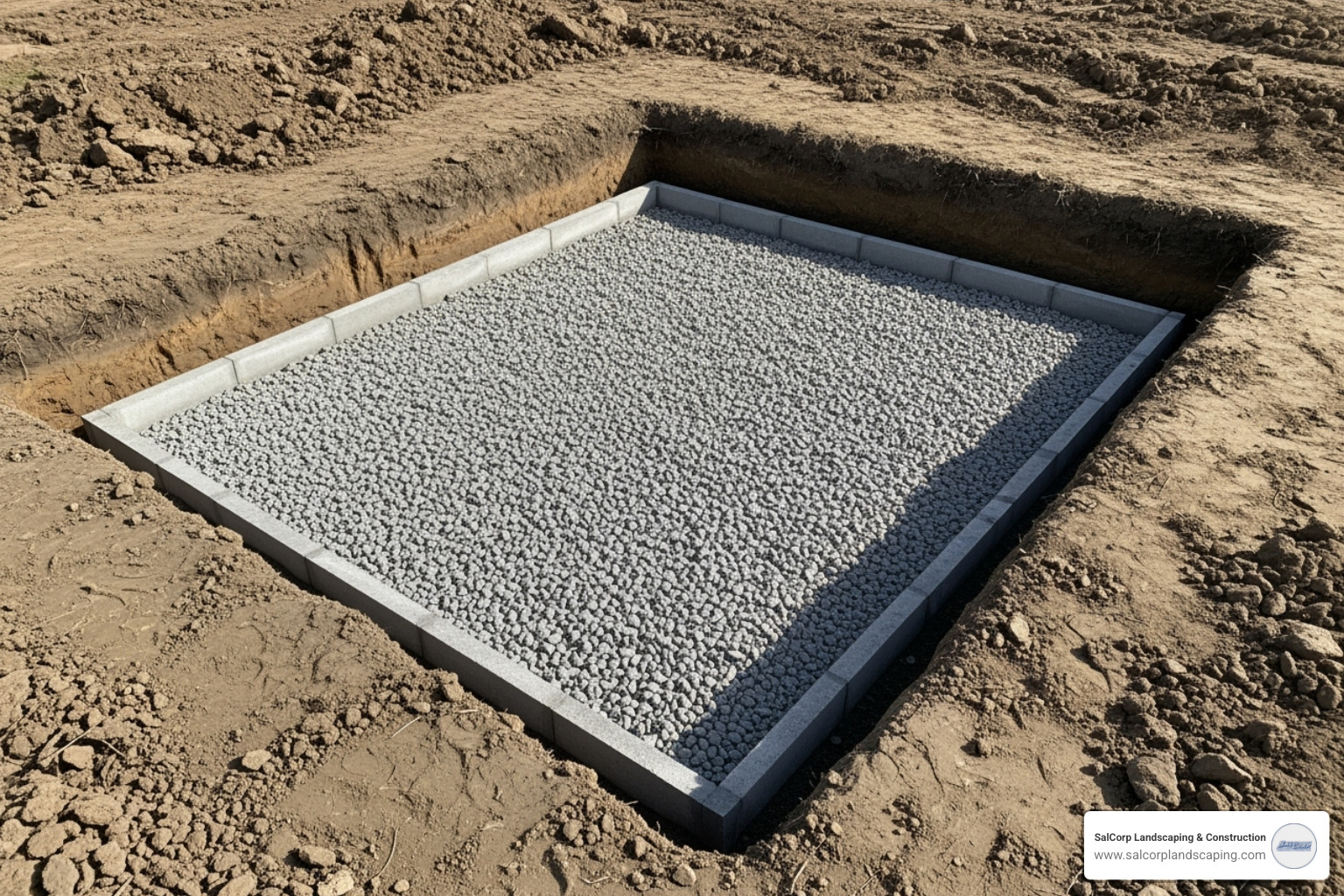
Site Excavation and Sub-Base
Strong brick steps start with careful site preparation. We mark the layout with stakes and string to ensure perfect alignment with your home and landscape.
Next, we excavate below the frost line. In Massachusetts, this is crucial to prevent shifting and heaving during freeze-thaw cycles, ensuring the steps’ longevity.
Safety is paramount, so we contact utility companies to mark underground lines before digging. After excavation, we lay a robust sub-base, like MOT Type 1, a high-quality crushed aggregate for stability. We apply an even 4- to 6-inch gravel layer.
The key to a stable sub-base is compaction. We use a heavy-duty tamper to compact the gravel, removing air pockets to create a dense surface. This prevents settling and cracks, a crucial part of how to install brick steps correctly.
Building Forms and Pouring a Concrete Footing
With the sub-base prepared, we build the forms for the concrete footing. We use a sturdy wooden framework (2x4s and 3/4-inch plywood) to create a mold. The forms must be perfectly level and square as they define the foundation’s shape.
We mix concrete on-site for small jobs or use ready-mix for larger projects to ensure consistency. Critically, we reinforce footings with a grid of steel rebar. This boosts tensile strength and crack resistance, which is vital for high-traffic areas and freeze-thaw cycles.
After pouring the concrete, we use a screed to level the surface for a smooth base. The concrete must cure for several days to reach maximum strength before we build on it. A solid foundation is paramount for stable, long-lasting steps. Learn more about how we handle Brick and Concrete Steps.
How to Install Brick Steps: A Step-by-Step Guide
Now for the artistry, where planning and foundation work pay off. Laying bricks for stairs requires precision, patience, and attention to detail. This process transforms a foundation into beautiful, functional steps. We’ll cover everything from mixing mortar to ensuring each brick is perfectly level and spaced.
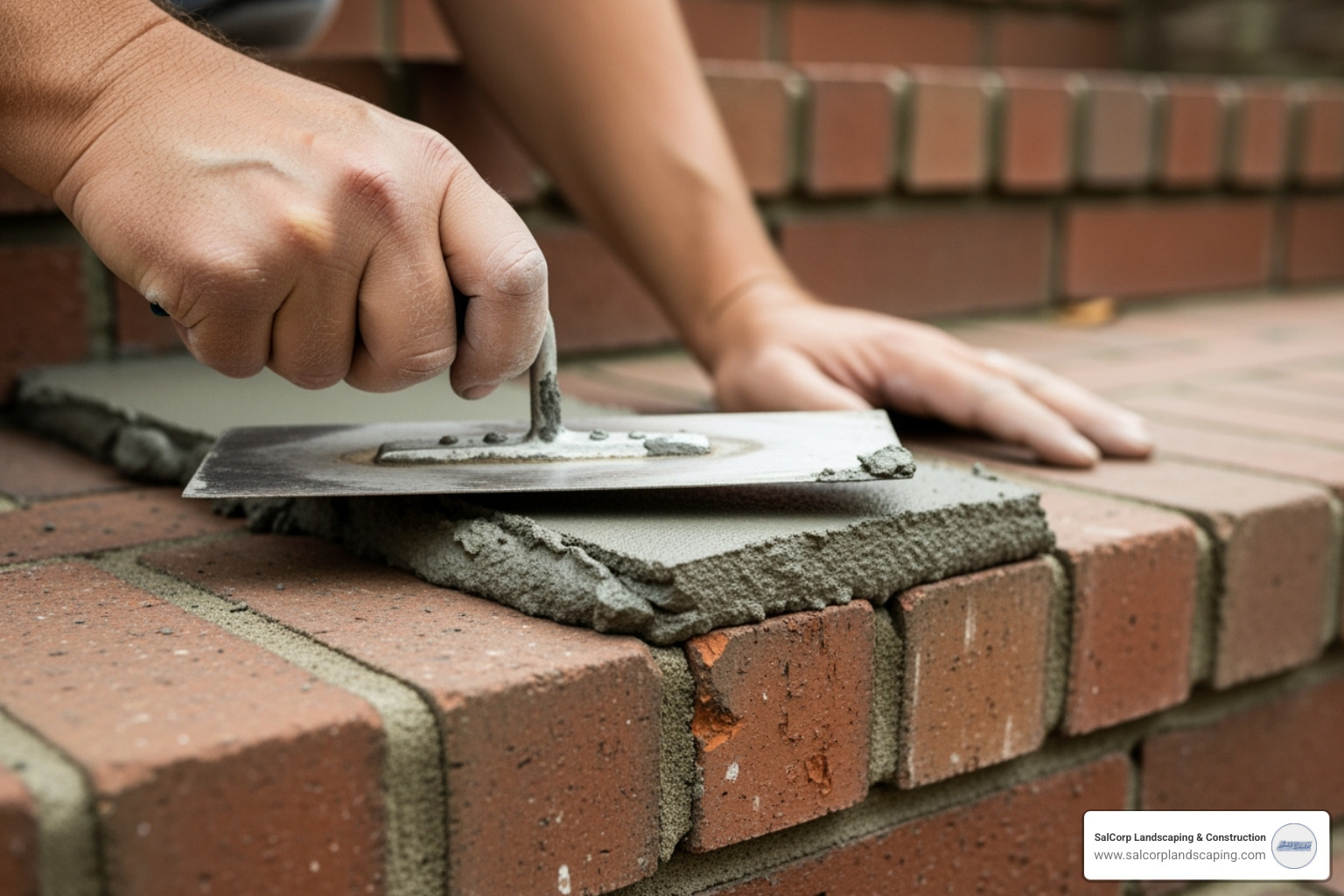
How to Mix and Apply Mortar Correctly
The secret to strong brickwork is mortar consistency. Our recipe is 1 part Portland cement, 1/4 part lime, and 3 parts sand. Cement is the glue, sand adds bulk, and lime improves workability.
Mix the dry ingredients, then slowly add water to achieve a “peanut butter” consistency—thick but spreadable. The right consistency is key when you install brick steps.
To apply, spread a uniform 1/2-inch mortar bed on the foundation with a trowel. “Butter” the ends of each brick with mortar before setting it to ensure a full, strong bond.
How to Install Brick Steps: Laying Risers and Treads
A crucial preliminary step is wetting the bricks. Soak them with a hose about two hours beforehand. This prevents them from drawing water from the mortar, which would weaken the bond.
Lay the first course of bricks on the foundation, working from one end to the other. Use a taut string line for alignment. Butter each brick’s end, tap it into place with a rubber mallet, and leave a 1/2-inch vertical joint.
First, build the risers (the vertical parts), laying bricks flat or in a “soldier course.” Once a riser is done, apply a mortar bed for the treads (the horizontal parts). For durability and a classic look, we often use a rowlock pattern, laying bricks on their side. A slight nosing overhang of 1-2 inches adds style and space. For more details, see our guide on Building Brick Steps.
Achieving a Professional Finish: Spacing and Leveling
Consistency is vital for a professional look. Aim for uniform 3/8-inch thick mortar joints. Use plywood spacers to maintain consistent spacing, especially on treads.
Gently tap each brick into its final position with a rubber mallet, ensuring it’s level with its neighbors and set in the mortar. Constantly check for levelness side-to-side and front-to-back with a spirit level.
A slight front-to-back slope for drainage (about 1/4 inch per foot) is non-negotiable for outdoor steps. This prevents water pooling, damage, and ice hazards. For curves or unique shapes, we cut bricks with a specialized saw for a perfect, seamless fit.
Finishing Touches and Long-Term Maintenance
With the last brick in place, the final touches are what make your steps shine and ensure they last. This finishing stage completes the look and protects your investment, while ongoing care will keep them looking great for decades.
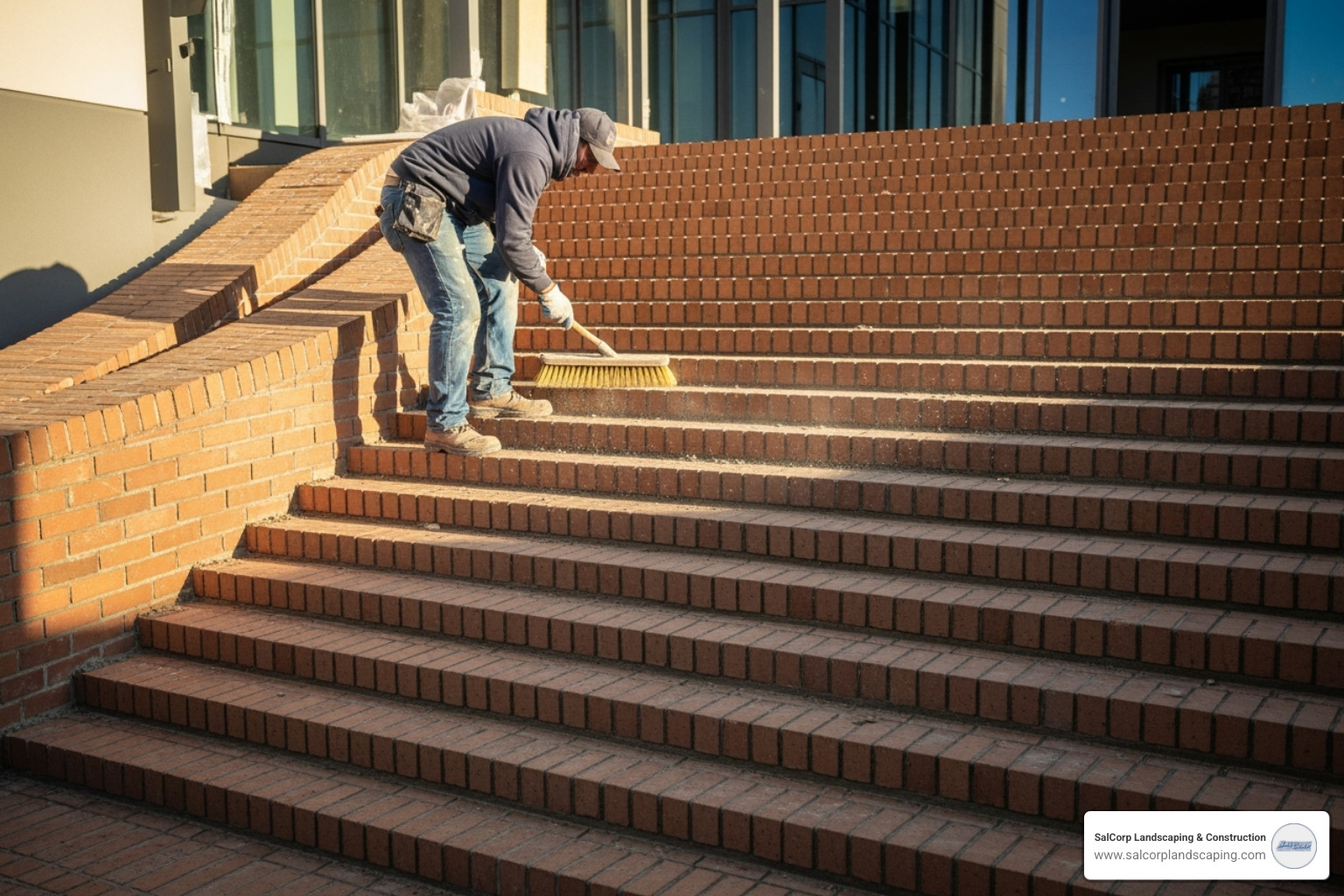
Jointing, Curing, and Cleaning
Once the mortar firms up, it’s time for jointing. Using a concave jointer, we smooth and press the joints. This not only creates a neat look but also seals the joints against water penetration. We typically tool horizontal joints first, then vertical ones.
We remove excess mortar from brick faces with a trowel while it’s still wet. After a few hours, we scrub the bricks with a wet burlap or stiff brush. Cleaning now is much easier than waiting for the mortar to harden.
The curing process is vital for mortar strength. Keep the mortar moist for five to seven days by lightly misting the steps with water, especially on hot days. This slow drying process allows the mortar to reach full strength, preventing cracks and ensuring a strong bond.
Protecting Your Investment: Sealing and Maintenance
Once cured and clean, we recommend applying a high-quality, breathable brick sealant. This acts as a protective shield, soaking into the brick and mortar to create an invisible barrier against moisture, stains, and freeze-thaw cycles. Reapply the sealant every few years to maintain protection.
Protecting your investment is easy with regular attention. Periodically inspect your steps for small cracks in the mortar, loose bricks, or efflorescence (a white, powdery residue from salts). Also, look for spalling (flaking brick), which often indicates water damage. Catching these issues early prevents more expensive repairs.
Damaged mortar joints can be repaired through tuckpointing, a skilled process of removing old mortar and replacing it with new. Tuckpointing restores both the appearance and structural integrity of your steps. For any masonry needs, from repairs to maintenance, our expert team at SalCorp Landscaping & Construction can help with our comprehensive Masonry Services.
Frequently Asked Questions about Installing Brick Steps
Homeowners often have questions when considering brick steps. Here are answers to some of the most common ones.
Can brick steps be installed over existing concrete?
Yes, this is often possible and is called a brick overlay or veneer. It’s a great way to update the look without a full demolition.
The critical requirement is that the existing concrete must be structurally sound. If the base is cracked, settled, or crumbling, it cannot support new brickwork, and any underlying issues will transfer to the new steps.
If the concrete base is solid, the process involves cleaning the surface, applying a bonding agent, and then laying the bricks with a thinner mortar bed. This method can beautifully transform an entryway.
What are the advantages of brick steps over wood or concrete?
Brick steps offer a superior blend of benefits compared to wood or concrete.
- Durability and Longevity: Properly built brick steps can last for decades. Unlike wood, they don’t rot, warp, or suffer insect damage. They are also less prone to cracking than plain concrete.
- Aesthetics and Curb Appeal: Brick has a timeless, high-end look that improves any home’s style. With various patterns and colors, it can significantly boost curb appeal and property value.
- Low Maintenance and Weather Resistance: Once sealed, brick steps require minimal upkeep—just occasional sweeping and cleaning. Using “Severe Weather” grade bricks ensures they can withstand Massachusetts’ harsh weather, including rain, snow, and freeze-thaw cycles.
What is the best type of brick to use for outdoor steps?
For outdoor steps, especially in a climate like Massachusetts, the best choice is a “Severe Weather” (SW) grade clay brick. This designation is critical as it indicates the brick is manufactured to resist damage from moisture and freeze-thaw cycles.
SW-grade bricks have a low water absorption rate, making them highly resistant to efflorescence (white stains) and spalling (flaking). While other options exist, SW-grade clay brick is specifically designed for the environmental stresses of outdoor steps, ensuring they remain strong and beautiful for years.
Conclusion: Your New Steps to Improved Curb Appeal
Admiring a set of beautifully crafted brick steps is deeply satisfying. After careful planning and construction, you’ve created a feature that will welcome visitors for generations.
Learning how to install brick steps is a significant accomplishment. Mastering details like reading frost lines, mixing mortar correctly, and creating crisp joints results in a product that is both beautiful and structurally sound.
The timeless beauty of brick improves with age. Unlike wood that splinters or concrete that cracks, a brick installation develops a rich patina, adding character and charm to your home.
Your property value has also increased. Quality masonry adds measurable value. Buyers are drawn to classic brick features, and well-executed hardscaping often provides a high return on investment.
Perhaps the greatest reward is the project satisfaction from completing a complex build. You’ve gained valuable skills for future projects, from using a level to understanding foundation principles.
For homeowners in Massachusetts who prefer to leave this intricate work to the professionals, SalCorp Landscaping & Construction provides expert masonry stair services built to last. With over 20 years of experience in New England’s challenging climate, we understand what it takes to create brick steps that will stand strong through decades of harsh winters and humid summers. Whether you’ve built them yourself or hired professionals, your new brick steps represent a permanent improvement that combines function with timeless style, creating an entrance that truly reflects the quality and character of your home.