How to landscape a front yard slope with stairs: 4 Flawless Steps
Turning a Challenging Slope into a Stunning Feature
How to landscape a front yard slope with stairs begins with seeing your slope not as a problem, but as an opportunity. Here’s the quick answer:
Essential Steps for Landscaping a Sloped Front Yard:
- Assess your slope grade and soil conditions
- Choose durable materials (stone, concrete, or brick)
- Design stairs with proper risers and treads
- Install drainage and erosion control
- Plant deep-rooted vegetation for stability
- Add lighting for safety and appeal
A sloped front yard presents unique challenges like soil erosion, drainage problems, and safe access, which can be overwhelming. As one Reddit user shared, “I got tired of walking on slippery mud every time it rains”—a common frustration.
However, slopes offer incredible potential for dramatic, multi-level landscapes. With proper planning, your challenging slope can become terraced gardens and neat staircases that increase property value.
I’m Sal Musto. With over two decades of landscaping challenging Massachusetts terrain, I’ve learned that slopes require specialized knowledge of drainage, materials, and construction. My experience with how to landscape a front yard slope with stairs shows that the right approach turns these obstacles into stunning features that improve both safety and curb appeal.
How to Landscape a Front Yard Slope with Stairs: A Step-by-Step Guide
Changing a sloped front yard becomes manageable when broken down into steps. How to landscape a front yard slope with stairs is straightforward with a systematic approach covering planning, materials, design, and finishing touches. Each step builds on the last, creating a cohesive landscape that solves slope challenges and becomes a stunning focal point.
Step 1: Assess Your Slope and Plan for Success
Before breaking ground, a thorough assessment is crucial to ensure your stairs are beautiful and built to last.
First, understand your slope’s grade. A gentle slope requires simpler solutions than a steep one. Measuring the grade determines the number and spacing of steps for comfortable use.
Your soil type is also critical. Sandy soil can erode, while clay may cause pooling. This knowledge informs the foundation design and drainage plan.
Drainage planning is integral from day one. Water is a slope’s biggest enemy. We plan where water will flow, often incorporating French drains to redirect runoff safely away from your stairs and foundation. For complex projects, our landscape design services can guide these crucial early decisions.
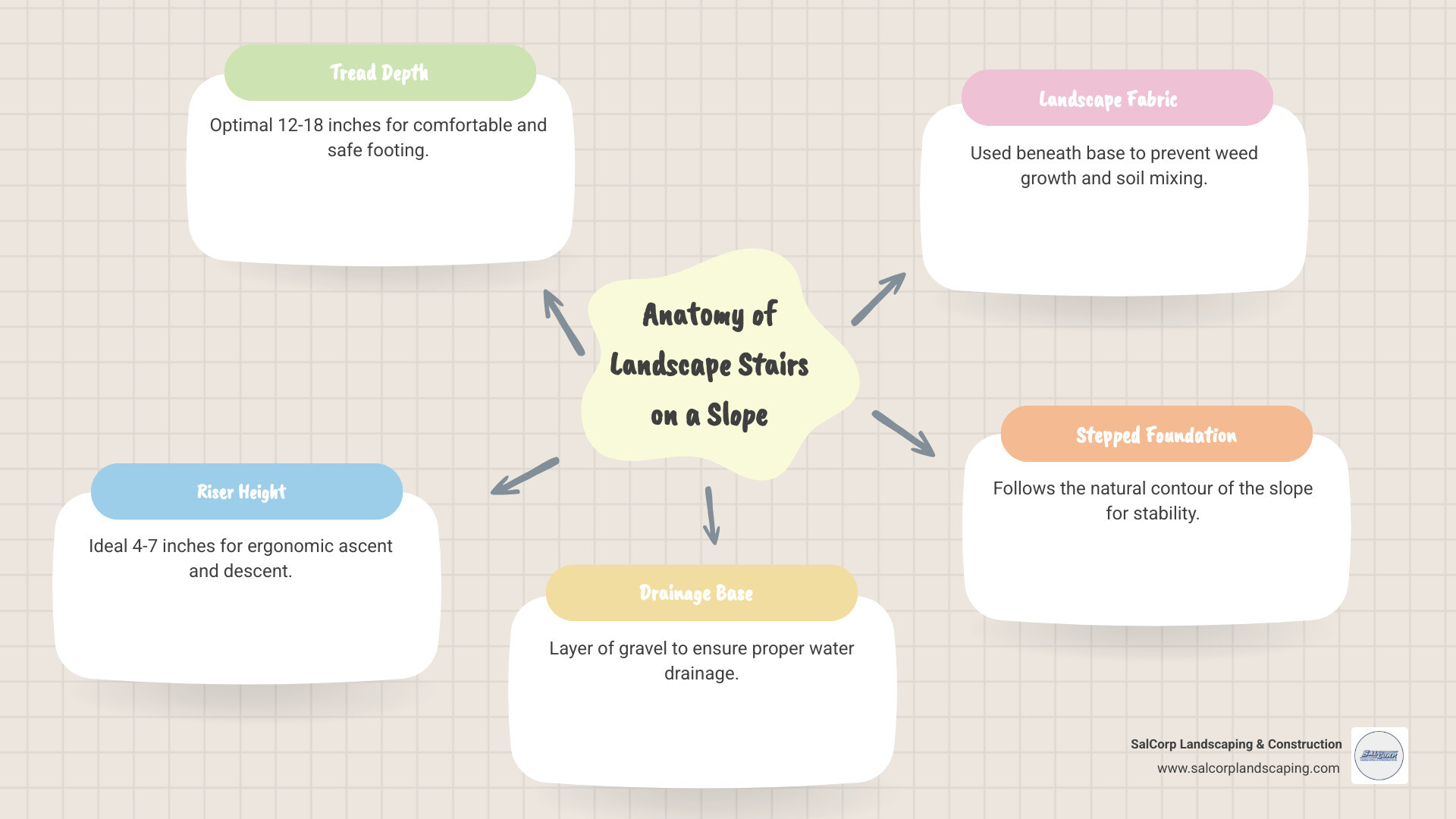
Safety considerations guide the entire process. We identify natural access points and design stairs that feel intuitive. Proper tread depth and riser height are essential for comfort and safety.
Finally, a design sketch brings these technical details together, visualizing how your new stairs will complement your home’s architecture and your personal style.
Step 2: Select Durable and Stylish Materials
Choosing materials is where engineering meets artistry. You need something that can handle Massachusetts weather and daily foot traffic while looking great for years.
| Material Type | Durability | Aesthetics | Cost | Maintenance |
|---|---|---|---|---|
| Natural Stone | Excellent – withstands freeze-thaw cycles | Timeless, organic beauty with unique character | Higher | Low – occasional cleaning |
| Concrete Pavers | Very Good – consistent quality and strength | Clean, modern look with many design options | Moderate | Low – joint sand touch-ups |
| Brick | Good – can last 150+ years when properly installed | Classic, warm appearance that ages beautifully | Moderate | Moderate – potential freeze damage |
Natural stone is my top recommendation for New England. Bluestone and granite are exceptionally durable, and their beauty improves with age. Bluestone offers a great balance of elegance and slip-resistance. For more details, see our guide to hardscape materials.
Concrete pavers offer versatility and consistency. Modern pavers can mimic natural stone with predictable performance, ideal for clean, geometric designs.
Brick provides traditional charm, perfect for certain home styles. It develops a lovely patina but requires proper installation to prevent freeze-thaw damage. Our brick and concrete stairs page offers more insights.
The best material depends on your home’s architecture, maintenance preferences, and how the stairs will be used.
Step 3: Design Your Stairs and Terraces
Good stair design transforms your slope, creating opportunities for beauty and functionality.
Straight stairs offer clean, direct access and complement modern architecture. With the right materials, they can be stunning.
Curved stairs follow the slope’s natural contours for a graceful, organic feel. We create curves by carefully angling stones, maintaining structural integrity.
Winding pathways with landings turn the journey into an experience. Landings provide resting spots and are perfect for container gardens or small seating areas.
Terracing dramatically multiplies usable space. By building level areas with retaining walls, we turn steep slopes into functional garden beds or patios.
Integrating planters into the stair design softens hard edges and adds year-round interest.
The goal is creating destinations, not just pathways—a bench in a terraced garden or a focal point that draws the eye. This makes your stairs feel intentional and inviting. By thinking vertically, your slope becomes a three-dimensional canvas with new possibilities at each level.
Step 4: Choose Plants and Lighting for a Flawless Finish
Plants and lighting bring your hardscape design to life, changing functional stairs into a beautiful feature, day and night.
Plants with deep root systems are essential for erosion control. Creeping Juniper is a fast-spreading ground cover, while Daylilies add color and anchor the soil.
Ground covers like Hostas work well in shadier spots, suppressing weeds and preventing soil movement. Choose plants that thrive in your specific sun, soil, and moisture conditions. Our planting services can provide expert guidance.
Low-maintenance plants keep your landscape looking great. Many slope-appropriate plants thrive in well-drained conditions, requiring less care once established.
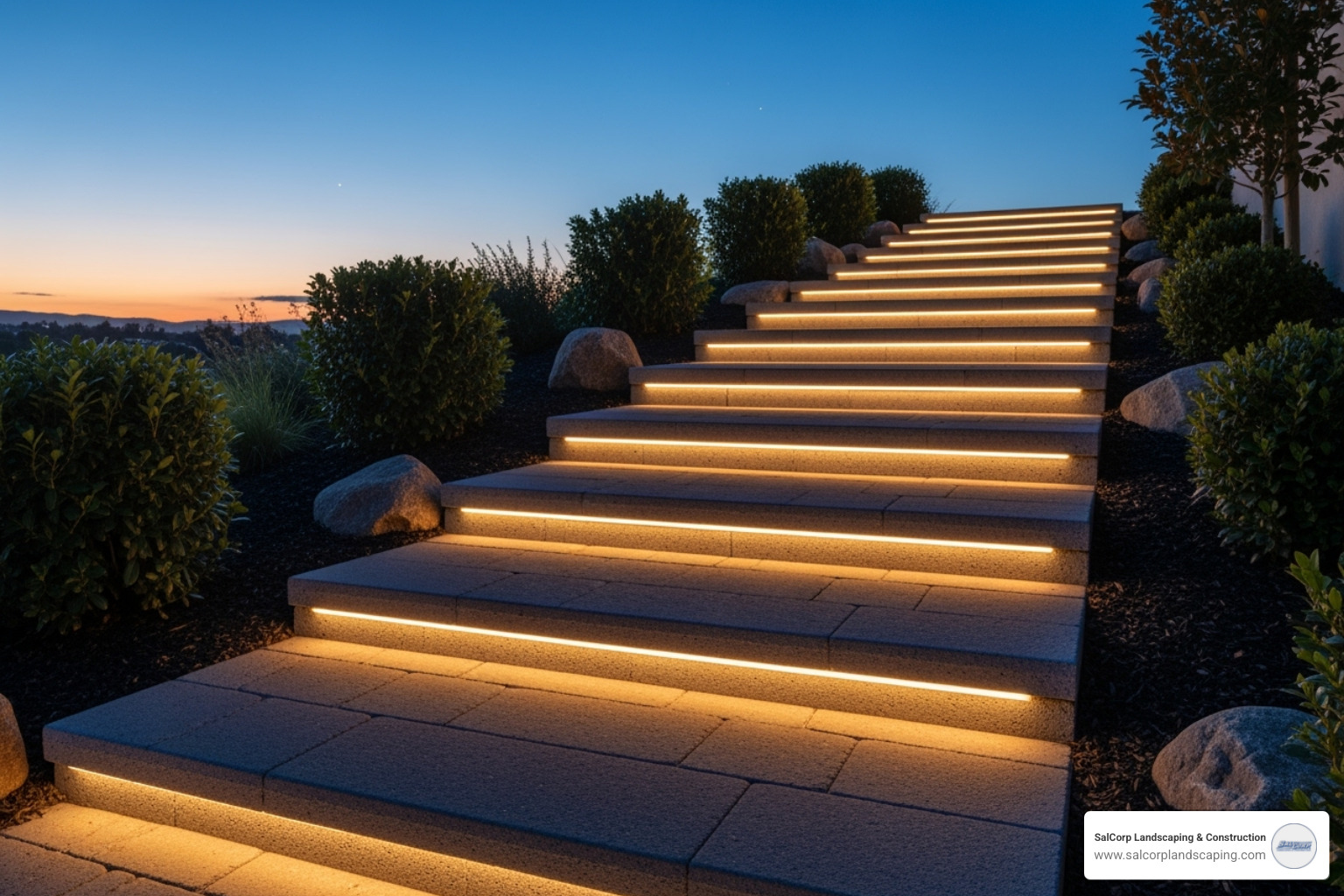
LED step lights provide essential safety and subtle elegance. Integrated into risers or side walls, they define each step without harsh glare.
Path lighting extends the welcome beyond the stairs, guiding visitors safely while highlighting landscape features.
Creating ambiance with warm LED fixtures can highlight plantings and stone surfaces, making your property feel more welcoming. This combination of erosion control, seasonal color, and strategic lighting ensures your investment in how to landscape a front yard slope with stairs pays off for years to come.
Bringing Your Vision to Life: Construction and Cost
Now that we’ve covered design and materials for how to landscape a front yard slope with stairs, let’s tackle the practical side: construction and budget.
DIY vs. Hiring a Professional: What’s Right for You?
This is a critical decision. While DIY success stories on social media are tempting, landscaping a sloped yard has hidden complexities that can lead to costly mistakes.
The DIY Reality Check:
A DIY approach requires more than basic garden tools; you’ll need tampers, levels, and possibly cutting tools for stone. The physical demands are significant, involving heavy lifting and precise leveling over many days or weeks. The biggest risk is improper construction. As one online commenter wisely noted on a DIY project, a proper gravel base is essential, as soil moves with moisture. Getting this wrong can lead to shifting, heaving, and structural instability.
Why Professional Installation Often Makes Sense:
After 20 years in this business, I’ve seen the results of poorly executed slope projects. Professional installation offers key advantages:
- Expertise: We understand soil mechanics, drainage, and structural integrity for challenging Massachusetts terrain.
- Proper Equipment: We use professional-grade machinery for precision and efficiency, which directly impacts the quality and longevity of the project.
- Permits and Regulations: Major grading or retaining walls often require local building permits, which can be complex. Professionals are familiar with local codes, which are often based on standards from organizations like the International Code Council (ICC).
- Insurance: As an insured company, we protect our team and your property from accidents.
- Creative Solutions: We can design and build solutions like winding bluestone steps or terraced gardens that maximize beauty and function. Explore our hardscape construction services for more details.
How to Landscape a Front Yard Slope with Stairs: Budgeting and Final Touches
Understanding the investment involved in how to landscape a front yard slope with stairs is crucial for effective planning.

Understanding the Investment:
First, an important disclaimer: The following cost ranges are based on broad internet data and are not actual quotes from SalCorp Landscaping & Construction. Contact us directly for a precise quote for your specific Massachusetts project.
- DIY projects: Can range from $450 for a very simple project to $7,500 or more, depending on materials and scope.
- Professional installation: Typically ranges from $1,000 to $15,000 or more. This wide range reflects that every project is unique.
What Drives the Cost:
- Slope severity: Steeper slopes require more extensive excavation and engineering.
- Material choice: Natural stone costs more than concrete pavers or timber.
- Project complexity: Intricate designs with landings, planters, and terracing add to the cost.
- Drainage solutions: Advanced systems like French drains add to the budget but are vital for stability.
- Site accessibility: Difficult access for machinery and materials can increase labor costs.
The Final Result:
Once construction is complete, we focus on the finishing touches, ensuring every element meets our standards for safety, durability, and craftsmanship. The goal is a landscape that solves your slope challenges and becomes a stunning feature that boosts your property’s curb appeal.
At SalCorp Landscaping & Construction, we’ve spent over two decades turning challenging Massachusetts landscapes into beautiful, functional outdoor spaces. As an owner-operated business, we bring the personal attention and professional expertise needed to handle projects of any scale.
Ready to transform that challenging slope? Get a professional quote for your landscape stairs project and let’s start bringing your vision to life.