

What Is Hardscape Construction? 7 Powerful Benefits in 2025
Understanding the Hard Elements of Your Landscape
What is hardscape construction? It refers to the non-living elements of a landscape design, including patios, walkways, retaining walls, driveways, and outdoor structures like pergolas or fire pits. These permanent, built features create the structural foundation of your outdoor space and typically use materials such as stone, concrete, brick, wood, and metal.
Hardscape construction includes:
| Hardscape Element | Description | Common Materials |
|---|---|---|
| Patios | Outdoor living/entertaining spaces | Concrete, pavers, natural stone, brick |
| Walkways | Paths connecting different areas | Flagstone, gravel, pavers, concrete |
| Retaining Walls | Structural elements that hold back soil | Block, stone, concrete, timber |
| Water Features | Decorative or functional water elements | Stone, concrete, fiberglass |
| Outdoor Kitchens | Cooking and entertaining spaces | Stone, brick, concrete, stainless steel |
| Fire Features | Fire pits, fireplaces, and fire tables | Stone, brick, metal, concrete |
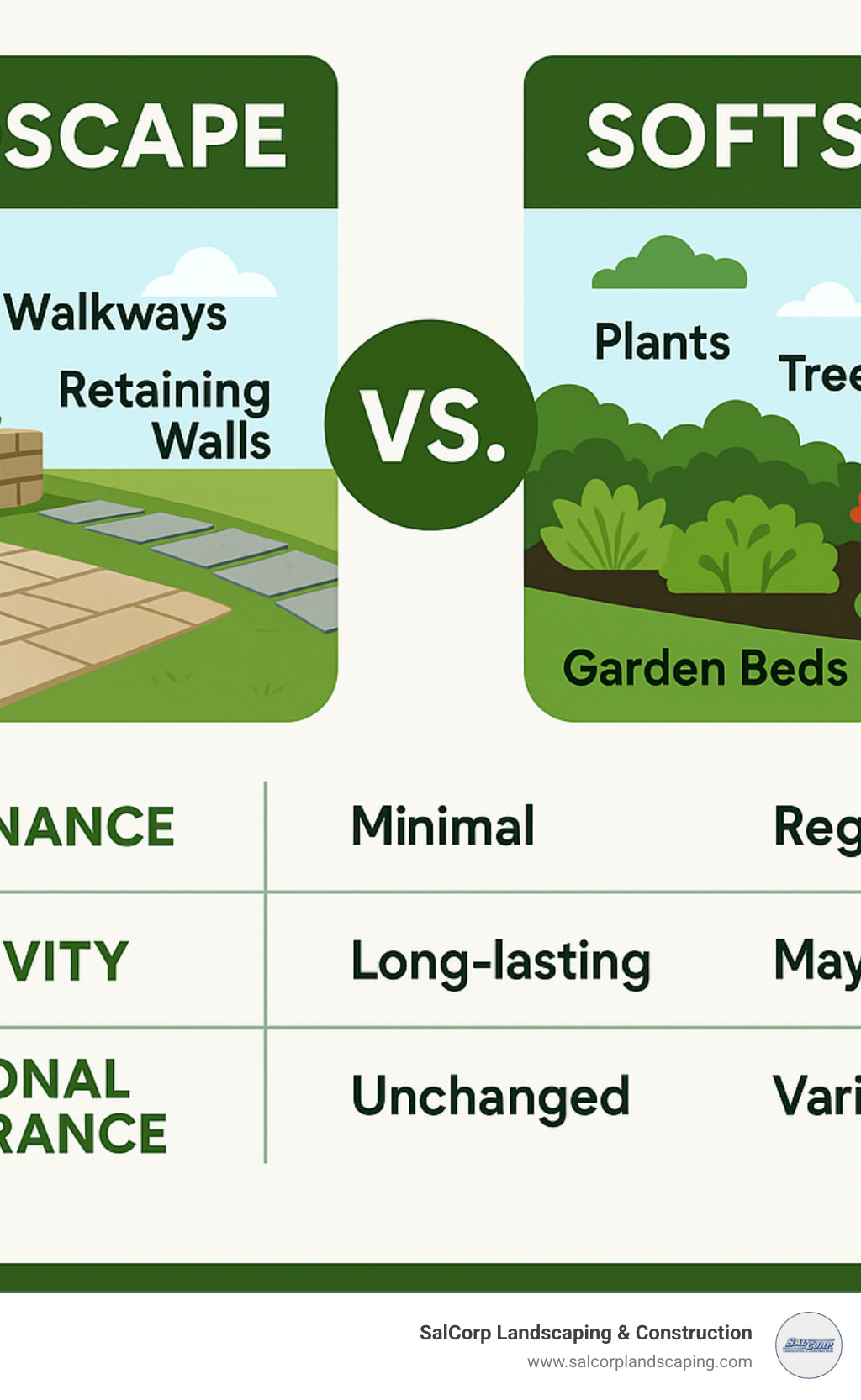
Unlike softscape (plants, trees, and other living elements), hardscape features provide permanent structure, require minimal maintenance, and can dramatically improve both the functionality and value of your property. Properly designed hardscaping creates usable outdoor spaces, controls erosion, improves drainage, and improves your home’s curb appeal.
The best landscape designs achieve a balance between hardscape and softscape elements. While hardscape provides the structure and function, softscape adds beauty, color, and life to your outdoor spaces.
I’m Sal Musto, owner of SalCorp Landscaping & Construction with over two decades of experience in changing outdoor spaces through expert hardscape construction services throughout Massachusetts. My hands-on approach ensures every project meets the highest standards of quality and functionality, whether we’re creating stunning patios, functional retaining walls, or complete outdoor living areas.
Similar topics to what is hardscape construction:
– hardscape ideas
– hardscape maintenance service
– landscape and hardscape design
What Is Hardscape Construction?
Hardscape construction transforms your outdoor living space by adding permanent, non-living elements that create structure, solve problems, and improve your property’s beauty and value. Think of it as building the “bones” of your landscape—the solid foundation that everything else rests upon.
When I talk with homeowners about their yards, many initially focus on flowers and shrubs. But in reality, those beautiful plants need a strong framework to truly shine. That’s where hardscaping comes in, forming roughly half of any well-designed landscape.
The term “hardscape” comes from the durable materials we use—stone, concrete, brick, wood, and metal—to build features that withstand time and weather. From neat patios where you’ll host summer barbecues to retaining walls that tame sloping yards, these elements create spaces where life happens outdoors.

At SalCorp, we approach hardscape construction as both an art and science. The artistic side involves creating beautiful designs that complement your home’s architecture and your personal style. The scientific side ensures everything is properly graded, structurally sound, and manages water correctly—because even the most beautiful patio becomes a problem if it floods during rain!
What is hardscape construction in landscaping?
For professional landscapers like us, hardscape construction provides the essential framework that supports everything else in your yard. It’s why we typically tackle hardscaping first in any comprehensive landscape project—these elements fundamentally shape how your entire property functions.
Good hardscaping solves problems while creating beauty. Retaining walls prevent erosion on sloped properties while adding visual interest. Properly designed patios and walkways create distinct “outdoor rooms” and guide movement through your landscape. Strategic grading and permeable surfaces direct water away from your home’s foundation, preventing costly damage.
Unlike plants that change with the seasons, hardscape elements maintain their presence year-round, ensuring your landscape never loses its structure even during winter months. This permanence is why careful planning is essential—these features will define your outdoor space for decades to come.
What is hardscape construction for homeowners?
For you as a homeowner, hardscape construction means changing underused or problematic areas into your favorite parts of your property. That muddy side yard can become a charming garden path. The sloped backyard that’s impossible to mow can transform into a multi-level entertaining space with retaining walls and a patio.
Beyond solving problems, hardscaping significantly improves your daily life. Imagine stepping outside onto your new patio for morning coffee, hosting family gatherings around a fire pit, or simply enjoying the clean lines of a well-designed landscape from your kitchen window.
These improvements don’t just create enjoyment—they build value. Studies show that 82% of home buyers specifically look for outdoor patio spaces when house hunting. Unlike interior renovations that quickly show wear or become dated, properly constructed hardscape features maintain their appeal and function for decades with minimal upkeep.
For Massachusetts homeowners, hardscaping also offers practical benefits for our climate. Properly designed hardscape features can withstand freeze-thaw cycles, manage snowmelt, and create usable outdoor spaces even during our shorter warm seasons. When you invest in quality hardscape construction, you’re making a long-term improvement that improves both your property’s appearance and its functionality through all four seasons.
Looking for inspiration? Check out our guide to hardscape ideas or learn about the official definition of hardscape to deepen your understanding of these landscape elements.
Hardscape vs Softscape: Differences & Design Balance
When you step into a beautiful yard, you’re experiencing the magic that happens when hardscape and softscape elements dance together in perfect harmony. Understanding how these two landscape components differ—and how they complement each other—is key to creating an outdoor space that’s both stunning and functional.
Think of hardscape as the “bones” of your landscape—the non-living, structural elements that give your yard its framework and stability. This includes your patios where summer barbecues happen, the stone walkways that guide visitors through your garden, and those sturdy retaining walls that tame sloping terrain. Hardscape elements stand firm through every season, providing structure when winter strips away the greenery.
Softscape, on the other hand, brings your landscape to life—quite literally! These are all your living elements: the shade trees that rustle in summer breezes, colorful flower beds that attract butterflies, lush lawns where children play, and the vegetable gardens that bring fresh produce to your table. Softscape elements change with the seasons, grow over time, and add that essential natural beauty to your outdoor spaces.
The relationship between these elements is beautifully complementary. While your stone patio (hardscape) provides the perfect spot for outdoor dining, the flowering shrubs (softscape) surrounding it add privacy, fragrance, and seasonal color. Your concrete retaining wall (hardscape) might solve a drainage problem, while the cascading plants (softscape) softening its edges transform it from merely functional to visually stunning.
| Characteristic | Hardscape | Softscape |
|---|---|---|
| Composition | Non-living materials (stone, concrete, etc.) | Living plants and organic materials |
| Permanence | Long-lasting, relatively permanent | Changes with seasons, growth cycles |
| Maintenance | Low maintenance, occasional cleaning | Regular care, watering, pruning, replanting |
| Function | Provides structure, defines spaces | Adds beauty, color, texture, fragrance |
| Installation | Usually installed first | Added after hardscape is complete |
| Environmental impact | Can affect drainage, heat absorption | Provides cooling, oxygen, habitat |
Finding the right balance between hardscape and softscape depends on your unique property and lifestyle. A young family might want more lawn space for play, while empty-nesters might prefer expanded patio areas for entertaining with less lawn to maintain. In our Massachusetts climate, what is hardscape construction planning becomes especially important since our distinct seasons mean your yard’s appearance changes dramatically throughout the year.
Integrating both for a cohesive yard
The magic happens when hardscape and softscape elements work together seamlessly. At SalCorp, we’ve spent over two decades perfecting this balance, creating yards where stone and soil, concrete and cosmos exist in perfect harmony.
One of our favorite techniques is using hardscape to frame and showcase your plantings. A curved stone border creates a perfect edge for a perennial garden, drawing the eye and preventing mulch from spilling onto walkways. Similarly, we love softening the hard edges of patios and retaining walls with cascading plants that create natural transitions between built and grown elements.
Materials and colors matter tremendously in creating cohesion. We carefully select stone, pavers, and other hardscape materials that complement both your home’s architecture and the color palette of your plantings. A bluestone patio might echo the cool tones in your hydrangeas, while warm-toned brick might harmonize with your autumn-hued maple tree.
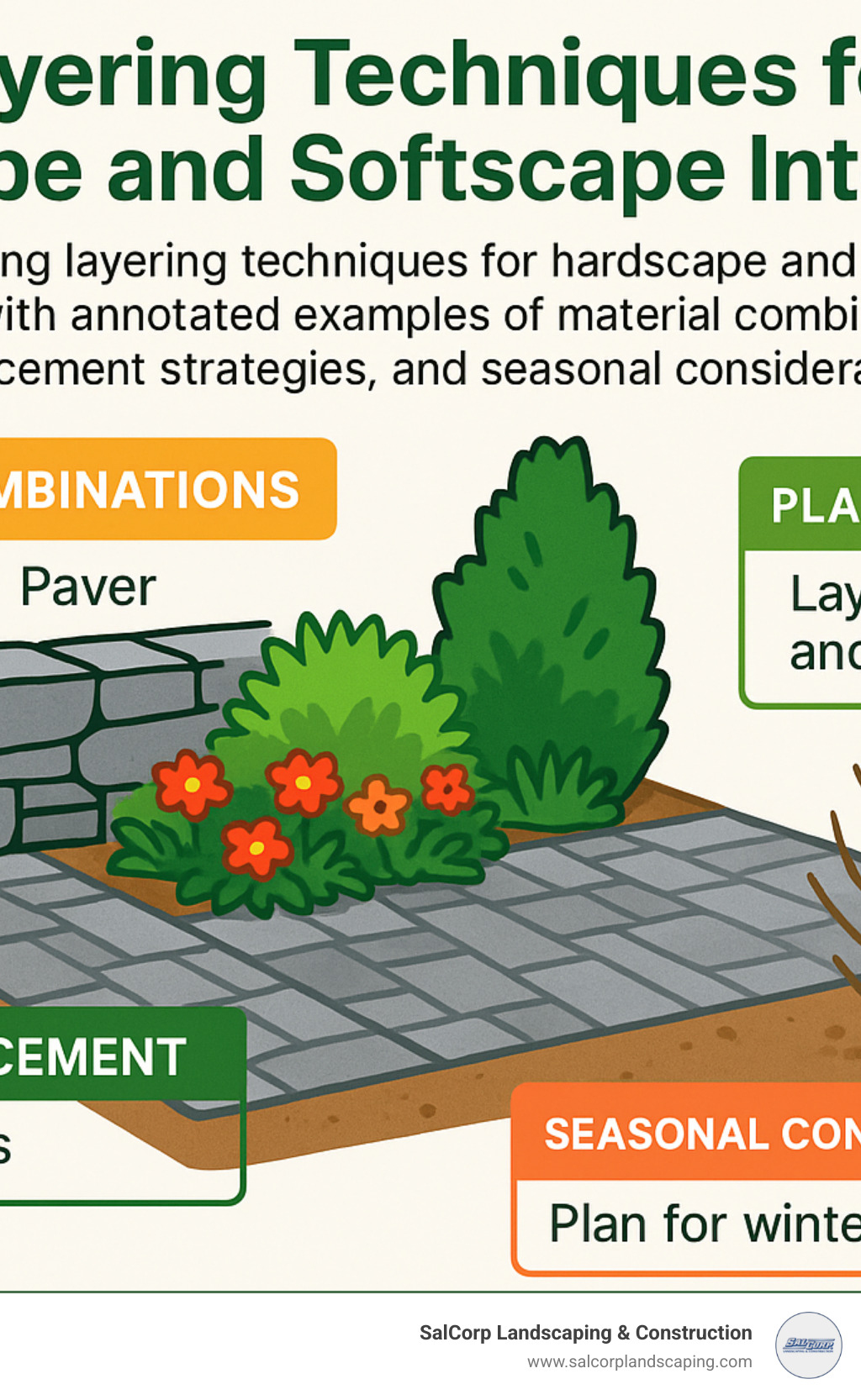
Thoughtful design also means creating focal points that draw the eye and organize the landscape. A striking fire pit surrounded by comfortable seating becomes a natural gathering spot, while a specimen Japanese maple might serve as a living sculpture that changes with each season.
Here in New England, we’re blessed (and sometimes challenged!) by our four distinct seasons. Your hardscape construction provides the reliable structure that remains when winter strips away the greenery. Those stone walls, brick walkways, and timber pergolas maintain visual interest even when blanketed with snow, ensuring your landscape never loses its charm.
For those interested in learning more about how softscape elements complement hardscape features, check out our detailed guide on Soft Landscape Construction. It’s the perfect companion to understanding the complete landscape picture.
Planning & Building Hardscape Projects: Process, Permits, Costs
Turning your outdoor dreams into reality involves more than just placing a few stones or building a patio. At SalCorp Landscaping & Construction, we’ve spent the last 20 years perfecting our hardscape construction process to ensure each project not only looks beautiful but stands the test of time and New England weather.
When we start planning your hardscape project, we begin with a thorough site analysis. This means walking your property, noting the slopes, soil conditions, existing features, and natural drainage patterns. We’ll chat about where the sun hits throughout the day, which views you want to highlight, and which you’d rather screen. This foundation of knowledge prevents costly surprises later.
During our initial consultation, we’ll dig into what you’re hoping to achieve. Maybe you’re dreaming of summer evenings around a fire pit, or perhaps you need a solution for that sloping backyard that’s been unusable for years. We’ll discuss your style preferences, budget considerations, and timeline expectations while sketching some initial ideas.
From there, we develop concept designs that marry your vision with practical solutions for your specific property. Material selection follows—we’ll help you steer the countless options from classic New England fieldstone to modern concrete pavers, always considering how these choices affect both aesthetics and function.
Proper drainage planning is non-negotiable in Massachusetts, where spring thaws and summer storms can wreak havoc on poorly planned landscapes. We carefully design water management solutions that protect both your new hardscape features and your home’s foundation.
Before breaking ground, we research all applicable zoning regulations and permit requirements for your town. As an owner-operated company, you’ll work directly with us throughout this process—no confusing handoffs between sales teams and installers.
Step-by-step hardscape construction roadmap
Once we’ve laid the groundwork on paper, our construction process follows a time-tested roadmap that ensures quality results:
We begin by finalizing detailed 3D renderings that help you visualize the finished project from every angle. With your approval, we secure all necessary permits from local authorities—a step that many DIYers find particularly daunting.
Safety comes first, so we always have underground utilities marked before excavation begins. This is followed by careful site preparation, removing any existing features or vegetation as needed.
The excavation phase is where our owner-operated approach really shines. We control our own machinery and timeline, digging to the precise depth needed for a solid foundation. Proper grade preparation follows, establishing the gentle slopes required for effective drainage.
Next comes the critical base installation—layers of gravel or crushed stone that are methodically compacted to prevent future settling. We install edge restraints where needed to contain materials and maintain clean lines over time.
The material installation phase is where your project truly begins to take shape. Whether we’re placing pavers, building walls, or constructing custom features, we follow industry best practices while adding our own touches refined over two decades of experience.
Finishing touches make all the difference—joint sand that locks pavers in place, sealants that improve and protect natural stone, lighting that extends your outdoor enjoyment into the evening hours. After a thorough site cleanup, we conduct a final inspection to ensure everything meets our exacting standards.
Regulations, licensing & safety codes
Navigating the regulatory landscape of hardscape construction can be confusing, but it’s an essential part of a successful project. In Massachusetts, where SalCorp operates, we handle these requirements so you don’t have to worry.
Local zoning laws dictate how close to property lines you can build, how much of your lot can be covered with impermeable surfaces, and height restrictions for structures like pergolas or privacy walls. Building permits are required for many hardscape elements, especially those with footings or foundations.
Properties near wetlands or in conservation areas face additional restrictions designed to protect these sensitive environments. If you live in a historic district, your project may need to meet specific aesthetic guidelines to preserve neighborhood character. And many homeowners are surprised to learn their HOA has rules about landscape modifications that supersede their personal preferences.
Massachusetts presents unique structural challenges due to our freeze-thaw cycles. Footings for walls and structures must extend below the frost line—typically 48-52 inches deep—to prevent winter heaving that can destroy your investment in a single season.
As a professional landscaping company, we maintain all necessary licenses and insurance, protecting both you and our team while ensuring work meets or exceeds all safety codes.
Average project pricing & ROI*
Hardscape projects represent significant investments in your property, but they deliver substantial returns in terms of enjoyment, functionality, and home value. While costs vary widely based on materials, size, complexity, and site conditions, here are some general ranges to help with planning:
A basic patio might start around $3,000, while elaborate outdoor living spaces with multiple levels and premium materials can reach $25,000 or more. Walkways typically range from $1,500 for simple paths to $12,000 for extensive networks of premium materials with lighting.
Retaining walls, which often serve both practical and aesthetic purposes, generally cost between $4,000 and $30,000 depending on height, length, and structural requirements. Fire pits, one of our most requested features, range from $1,000 for simple designs to $8,000 for custom built-in versions with seating.
Outdoor kitchens represent the high end of hardscape investments, starting around $10,000 for basic setups and reaching $60,000 or more for comprehensive outdoor cooking and entertaining spaces. Water features, from simple fountains to elaborate ponds and waterfalls, typically fall between $2,500 and $20,000.
*These are average costs based on internet data and not actual costs for SalCorp Landscaping.
The return on investment for well-designed hardscape features is impressive. Research shows fire pits offer up to 80% ROI, while outdoor kitchens average around 55% return. Perhaps most telling is that 82% of home buyers specifically look for patios when purchasing homes, making them one of the most sought-after outdoor features.
At SalCorp, we focus on maximizing your investment by recommending quality materials and proper installation techniques that withstand harsh New England conditions year after year. We believe the best value comes not just from the initial price, but from creating spaces that require minimal maintenance while providing decades of enjoyment.
Benefits, ROI & Environmental Impact
When you invest in professional hardscape construction, you’re gaining so much more than just a pretty yard. These permanent outdoor features solve real problems, improve your daily life, boost your property’s market value, and can even help the environment when thoughtfully designed.
I’ve seen how the right hardscaping transforms how families use their homes. My clients are often surprised by how much more time they spend outdoors after we’ve completed their projects. There’s something magical about creating spaces that draw people outside.
The benefits of quality hardscaping are both immediate and long-lasting. Unlike gardens that need constant attention, hardscape features require minimal upkeep while providing years of enjoyment. A well-built patio or retaining wall can last for decades, making it a truly worthwhile investment. These features also extend your outdoor living season, allowing you to enjoy your yard in early spring and late fall when the weather might otherwise keep you indoors.
From a financial perspective, hardscape construction significantly boosts your property’s appeal and market value. Beyond the impressive 80% ROI for fire pits and 55% for outdoor kitchens mentioned earlier, distinctive outdoor living spaces often become a home’s selling point, especially in competitive Massachusetts real estate markets where outdoor entertaining space is highly valued.
Properly engineered hardscaping also addresses practical issues like water management. By controlling runoff and preventing flooding, well-designed hardscape features protect both your property and the wider environment. They can reduce erosion on sloped lots and create level, accessible surfaces that make your entire property more usable and safer to steer.
Functional advantages of hardscape features
Every hardscape element we install serves specific purposes that improve how you experience your outdoor space. Patios and decks effectively extend your living room or kitchen outdoors, creating clean, stable surfaces for furniture and activities regardless of recent weather. No more sinking chairs or muddy shoes – just comfortable, usable space for family meals or quiet morning coffee.
Retaining walls are problem-solvers for challenging properties. They transform unusable slopes into terraced gardens or play areas while preventing soil erosion. I’ve helped many homeowners reclaim significant portions of their yards through strategic wall placement, effectively expanding their usable property.
The humble walkway does more heavy lifting than most people realize. Beyond guiding visitors to your door, well-designed paths protect your lawn, prevent muddy footprints indoors, and improve safety, especially for older family members or young children. They also visually connect different areas of your landscape, creating a cohesive design that flows naturally.
Fire features have become one of our most requested elements, and for good reason. They create natural gathering spots that combine warmth and ambiance, extending outdoor enjoyment well into the cooler months. There’s something primal about gathering around a fire that brings people together in conversation.
For the serious outdoor entertainer, outdoor kitchens eliminate the constant back-and-forth to the house when hosting. Keeping hosts engaged with their guests while providing all necessary cooking amenities, these hardscape features transform how you entertain outdoors.
Water features serve both aesthetic and practical purposes, masking neighborhood noise with soothing sounds while creating visual focal points. Many clients find their fountains or ponds become favorite spots for relaxation and reflection.
Eco-smart hardscaping
At SalCorp, we’re committed to environmentally responsible approaches to hardscape construction that minimize negative impacts and often provide ecological benefits. We’ve acceptd techniques that work with nature rather than against it.
Permeable pavers represent one of the biggest advancements in eco-friendly hardscaping. Unlike solid concrete that sheds water into storm drains, these specially designed pavers allow rainwater to infiltrate into the ground. This reduces flooding, filters pollutants, and replenishes groundwater – particularly important in Massachusetts where protecting our water resources is crucial.
We often incorporate rain gardens alongside hardscape features, creating beautiful planted areas that capture and filter runoff. These gardens not only manage water effectively but also provide habitat for beneficial insects and birds.
Whenever possible, we source local and recycled materials for our projects. This reduces transportation emissions and keeps materials out of landfills while often providing unique character and connection to the local landscape.
Strategic shade creation through pergolas and complementary tree placement can significantly reduce your home’s cooling costs during hot summers. Similarly, using light-colored materials for patios and walkways reflects rather than absorbs heat, making outdoor spaces more comfortable and reducing the “heat island” effect common in developed areas.
By thoughtfully integrating these approaches with native plants that require less water and maintenance, we create outdoor spaces that are beautiful, functional, and environmentally responsible. This balanced approach ensures your landscape works harmoniously with natural systems while meeting your family’s needs for generations to come.
More info about Hardscapes Installation
Maintenance, Trends, FAQs, and Next Steps
The beauty of hardscape construction lies not just in its immediate change of your property, but in its lasting value with relatively minimal upkeep. Unlike your lawn that demands weekly mowing or gardens requiring constant attention, your hardscape features stand strong with just occasional TLC.
What is hardscape construction maintenance like?
One of the questions I hear most often from homeowners is, “How much work will this be to maintain?” The good news is that hardscape construction creates elements that are built to last, though a bit of regular care ensures they’ll look their best for decades to come.
Think of hardscape maintenance as seasonal check-ins rather than weekly chores. A quick sweep of your patio or walkway prevents leaves and debris from causing stains or encouraging weeds. After winter’s freeze-thaw cycles here in Massachusetts, take a stroll around your property to check for any pavers that might have shifted or wall stones that need adjustment.
Every spring, I recommend a thorough power washing to remove winter’s grime and restore your hardscape’s original beauty. But be careful—too much pressure can damage some materials, so it’s worth knowing the right technique for your specific features.
For paver patios and walkways, you’ll occasionally need to replenish the joint sand that keeps everything locked together. And every few years, applying a fresh coat of sealant protects against staining and weathering while enhancing the natural colors of your stone or concrete.
Winter brings its own considerations. Choose de-icing products carefully, as some can damage certain materials. Calcium magnesium acetate is gentler on most hardscapes than traditional rock salt.
The best maintenance approach is preventative—addressing small issues before they become major problems. That loose paver might seem minor today, but left unaddressed, it could create a tripping hazard or allow water to undermine your patio’s foundation.
Want to learn more about keeping your hardscape looking its best? Check out our detailed guide to hardscaping ideas that includes maintenance tips for different materials.
Current hardscape design trends
The world of hardscape construction continues to evolve, with exciting new trends emerging each year. At SalCorp, we stay current with these innovations while focusing on designs that will stand the test of time both structurally and aesthetically.
Outdoor rooms have moved well beyond the basic patio concept. Today’s homeowners are creating fully realized exterior living spaces with defined “walls” (using retaining walls or plantings), “floors” (with distinctive paver patterns), and even “ceilings” (via pergolas or shade sails). These spaces often include comfortable furniture, outdoor rugs, and accessories that rival indoor comfort.
The dramatic combination of fire and water features continues to grow in popularity. Imagine a fire bowl rising from the center of a bubbling fountain, or a fire table positioned alongside a tranquil water wall. These pairings create captivating focal points while extending your outdoor enjoyment into cooler evenings.
Smart technology has firmly established itself in outdoor spaces. App-controlled LED lighting systems allow you to change colors and brightness with a tap on your phone. Some systems can even be programmed to create dynamic lighting scenes for different occasions or to sync with music for entertaining.
Environmental consciousness is driving interest in sustainable hardscaping. Permeable pavers that allow rainwater to filter through rather than run off, locally sourced stone that reduces transportation carbon footprints, and recycled materials that give new life to existing resources are all gaining momentum.
Minimalist design approaches featuring clean lines, large-format pavers, and restrained color palettes create sophisticated, uncluttered spaces that complement modern architecture. These designs often incorporate mixed materials—perhaps combining sleek concrete with warm wood accents or textural stone—to create visual interest without busyness.

For Massachusetts homeowners, features that extend our outdoor living season are particularly valuable. Year-round usability elements like built-in heating, wind barriers, and covered areas allow you to enjoy your outdoor space well beyond summer months. A thoughtfully designed fire pit area can become your family’s favorite gathering spot from early spring through late fall.
Frequently Asked Questions
When considering a hardscape project, homeowners naturally have questions. Here are answers to some of the most common ones I hear:
Is hardscape construction a DIY project or should I hire professionals?
While ambitious DIYers might tackle simple projects like a small stepping stone path or basic fire pit, most hardscape installations benefit tremendously from professional expertise. The difference lies largely in what happens below the surface—proper base preparation, compaction, drainage planning, and structural considerations require specialized knowledge and equipment.
I’ve seen too many DIY patios that looked great the first year but developed dips, heaves, or drainage issues by year three. At SalCorp, our 20+ years of experience and professional equipment ensure your hardscape is built on a solid foundation that will stand the test of time.
How long do hardscape features typically last?
With proper installation and maintenance, hardscape elements can be remarkably long-lived. Natural stone features can last a century or more, while quality concrete pavers typically provide 25-50 years of service. Wood elements have shorter lifespans, generally 10-15 years, unless they’re constructed from durable hardwoods or modern composite materials.
The key to longevity is professional installation with proper base preparation and drainage, followed by basic maintenance. Many of the first patios and walls I built two decades ago still look beautiful today.
How do I choose the right hardscape materials for my property?
Material selection should consider several factors working together: your home’s architectural style, our New England climate conditions, how you plan to use the space, your maintenance preferences, budget considerations, and environmental factors.
At SalCorp, we help clients steer these choices by presenting options that balance aesthetics, functionality, durability, and cost for their specific situation. We might suggest bluestone for a traditional colonial home, while recommending sleek concrete pavers for a contemporary property.
What’s the best season for hardscape installation in Massachusetts?
While we can work year-round in many cases, spring through fall provides ideal conditions for installation. Summer offers consistent working conditions, but spring and fall often have more moderate temperatures that are comfortable for both workers and newly installed plants. Winter installations are possible for some projects but may face challenges with frozen ground and snow.
How does hardscaping affect property drainage?
Hardscape can either improve or worsen drainage depending on design and installation. Impermeable surfaces like solid concrete can increase runoff, while permeable pavers allow water to infiltrate. Proper grading, drainage channels, and strategic placement of catch basins are essential considerations in hardscape design.
At SalCorp, we prioritize water management in every project to prevent flooding, erosion, and water damage to structures. Sometimes the most valuable part of a hardscape installation is the drainage solutions you don’t see but that protect your property for years to come.
Conclusion & Call to Action
Hardscape construction transforms ordinary yards into extraordinary outdoor living spaces. It’s the backbone of landscape design—creating structure, solving problems, and adding lasting value to your property. From inviting patios where family memories are made to sturdy retaining walls that tame challenging slopes, these permanent elements define your outdoor experience for years to come.
At SalCorp Landscaping & Construction, we’ve spent over two decades perfecting our hardscape craft throughout Massachusetts. When you work with us, you’re working directly with the owner—not a sales representative who hands you off to a crew you’ve never met. This owner-operated approach means you’ll have consistent communication and someone personally invested in your project’s success from start to finish.
There’s something special about having the same person who designs your project also operating the machinery that brings it to life. By owning our equipment and employing skilled artisans who take pride in their craftsmanship, we maintain complete control over quality, timelines, and the finished product. No waiting on subcontractors or dealing with coordination headaches—just efficient, professional work that meets our exacting standards.
Maybe you’re dreaming of summer evenings around a fire pit with friends, or perhaps you need a practical solution for a muddy, sloped yard that’s currently unusable. Whatever your motivation, thoughtfully designed hardscape construction delivers benefits that extend far beyond aesthetics. Your initial investment pays dividends through increased property value, significantly reduced maintenance time, and countless moments of outdoor enjoyment.
We believe your outdoor space should be as personal and functional as your indoor rooms. That’s why we take the time to understand how you want to live outdoors, the challenges your property presents, and the style that speaks to you. From there, we create hardscape solutions that perfectly balance beauty, durability, and practicality.
Ready to find what’s possible for your property? Let’s start with a conversation. Our experienced team will guide you through the entire process—from initial dreaming to final touches—ensuring your new outdoor space exceeds expectations and stands the test of time.
Contact SalCorp Landscaping & Construction today to schedule your consultation. Let us help you create an outdoor space where life’s best moments happen through professional hardscape construction that transforms your property and improves your lifestyle.
More info about Hardscaping services
