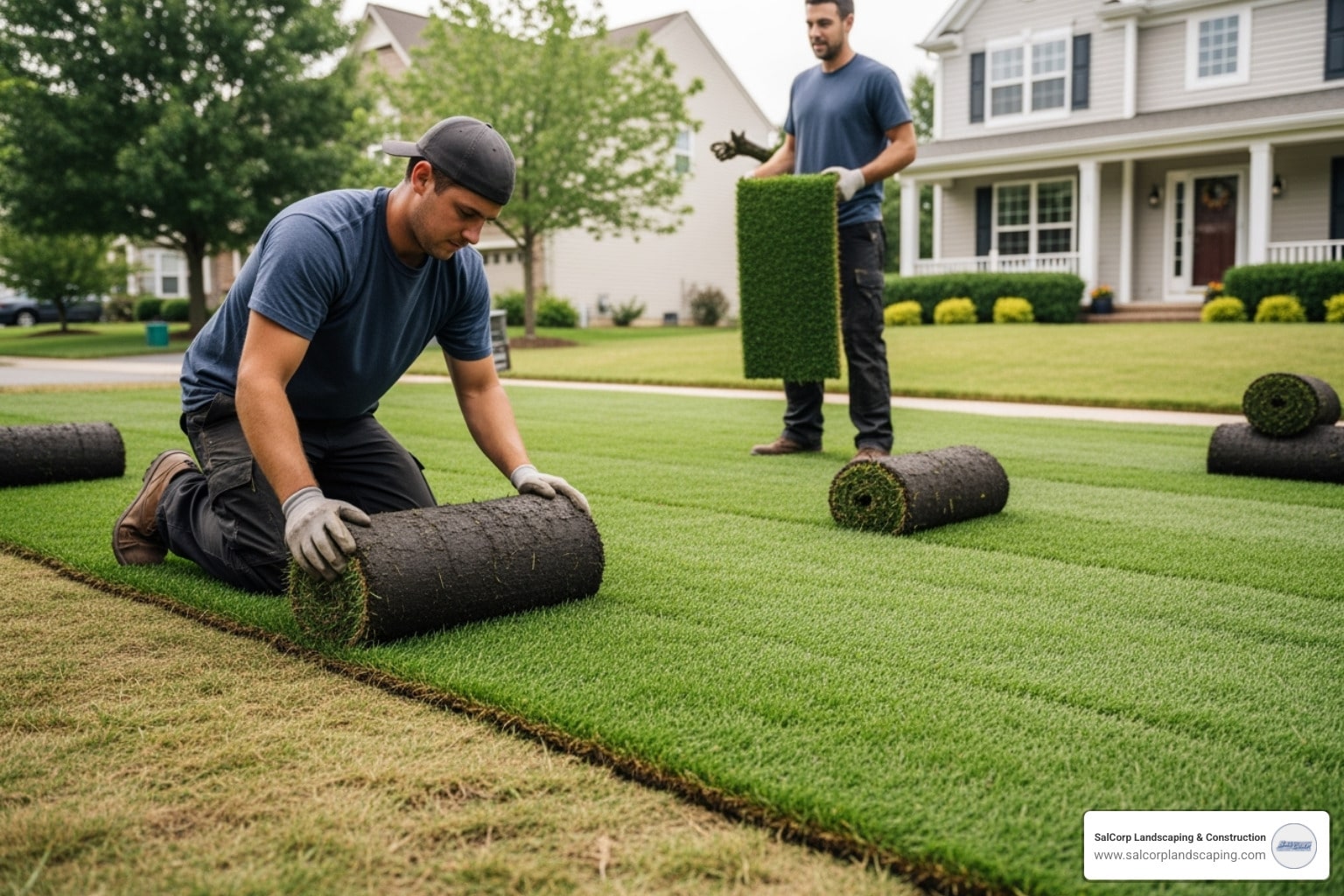
Transform Your Outdoor Space: The Smart Alternative to Natural Grass
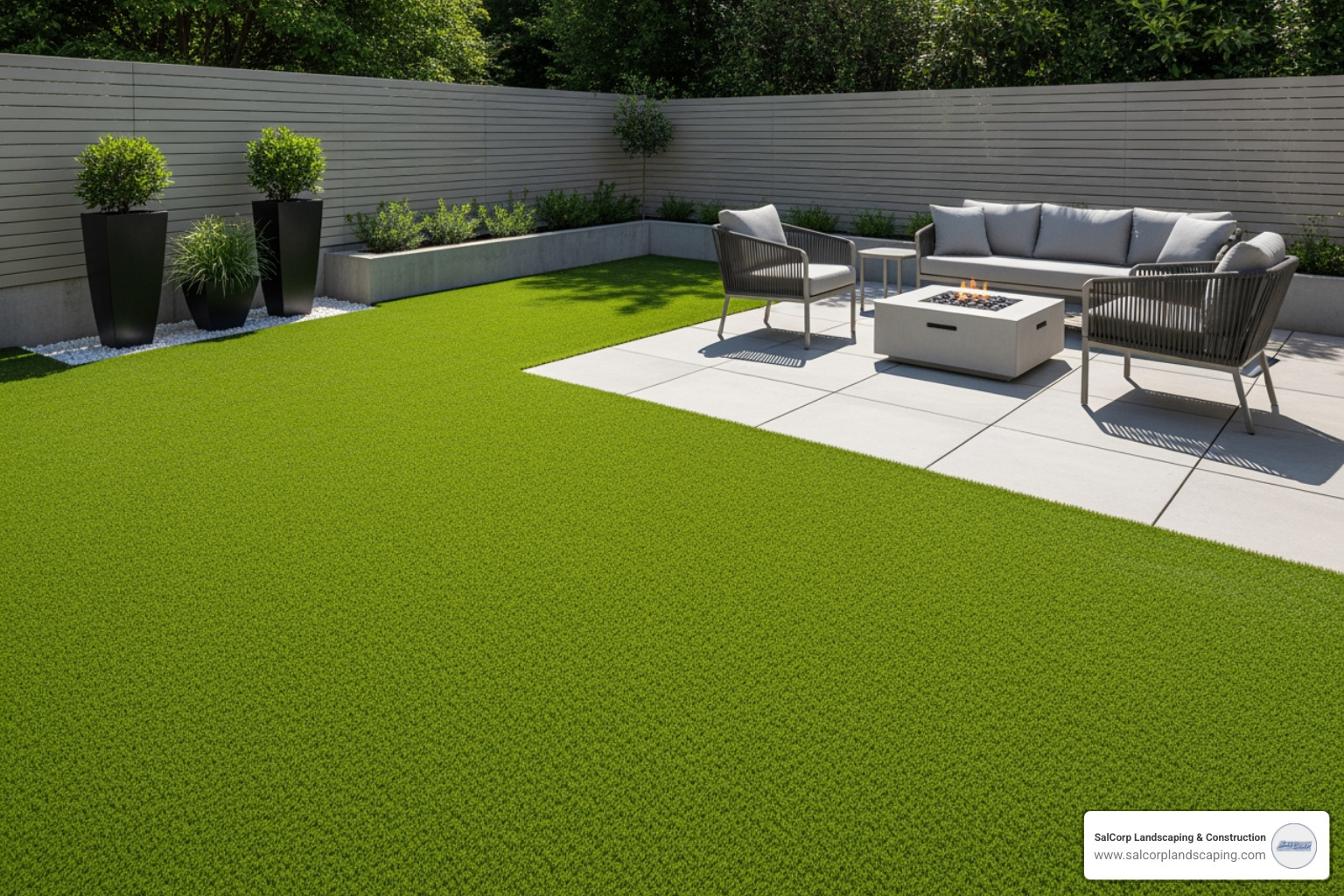
Installing astro turf in backyard spaces is a popular choice for Massachusetts property owners who want less maintenance and more year-round curb appeal. Here’s a quick overview:
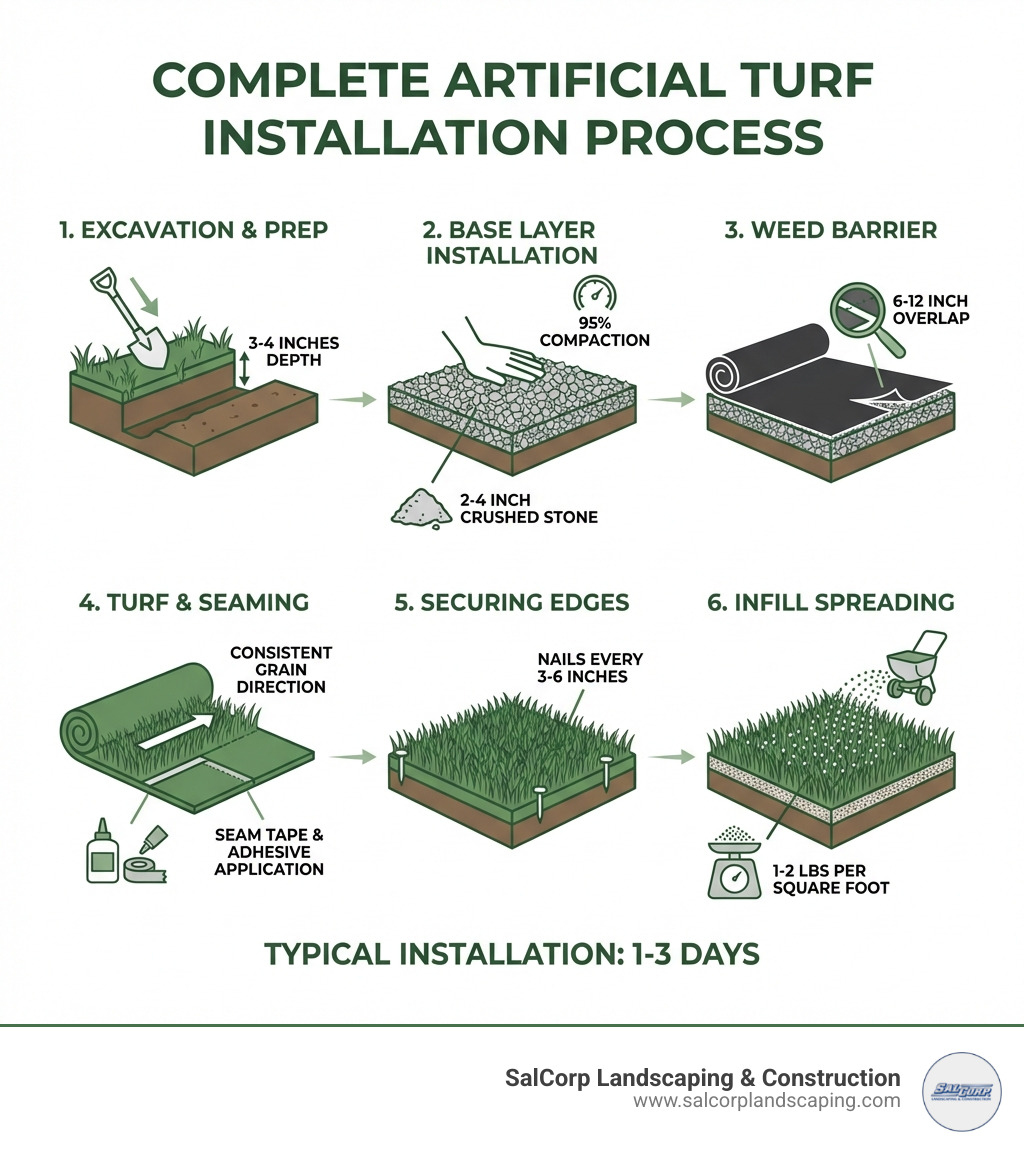
Quick Installation Overview:
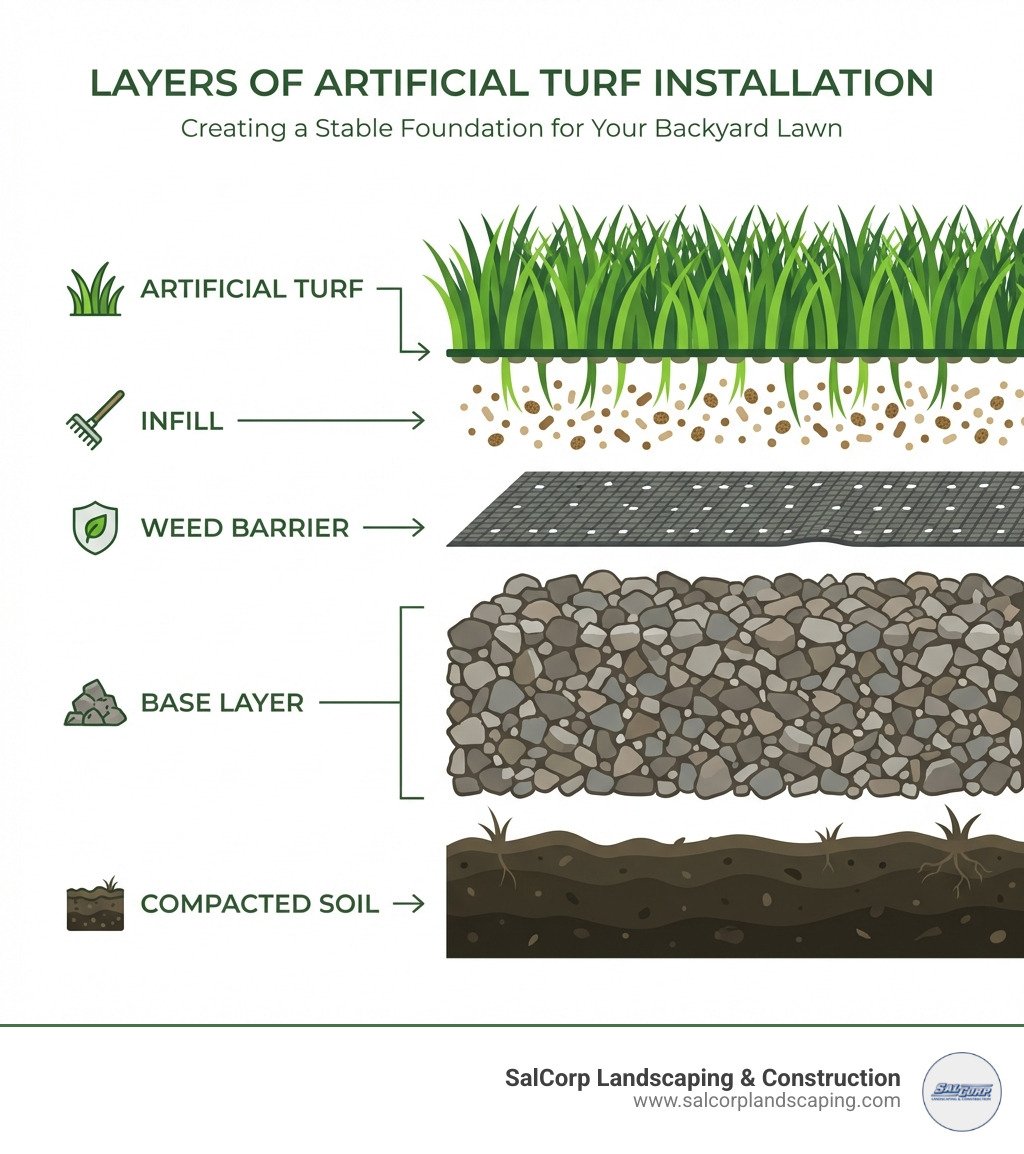
- Remove existing grass and excavate 3-4 inches of soil.
- Install a 2-4 inch base layer of crushed stone.
- Compact the base to 95% density for stability.
- Lay weed barrier fabric with overlapping seams.
- Roll out artificial turf, ensuring consistent grain direction.
- Seam pieces together using tape and adhesive.
- Secure edges with galvanized nails every 3-6 inches.
- Spread infill material (1-2 lbs per square foot).
- Brush blades upright with a stiff broom.
The entire process typically takes 1-3 days, depending on the size of your yard.
Why consider artificial turf? It eliminates mowing, saves water, stays green all winter, and needs no fertilizers or pesticides. It’s a game-changer for busy homeowners and property managers.
The process is all about proper ground preparation. A stable, well-drained base is key to a lawn that will last 10-15 years or more without settling or pooling water.
As Sal Musto, owner of SalCorp Landscaping & Construction with over 20 years of experience, I’ve overseen countless projects installing astro turf in backyard areas. Understanding the process ensures you get a lawn that looks great and performs flawlessly for years.
Installing astro turf in backyard further reading:
Why Choose Artificial Turf? A Quick Look at the Benefits
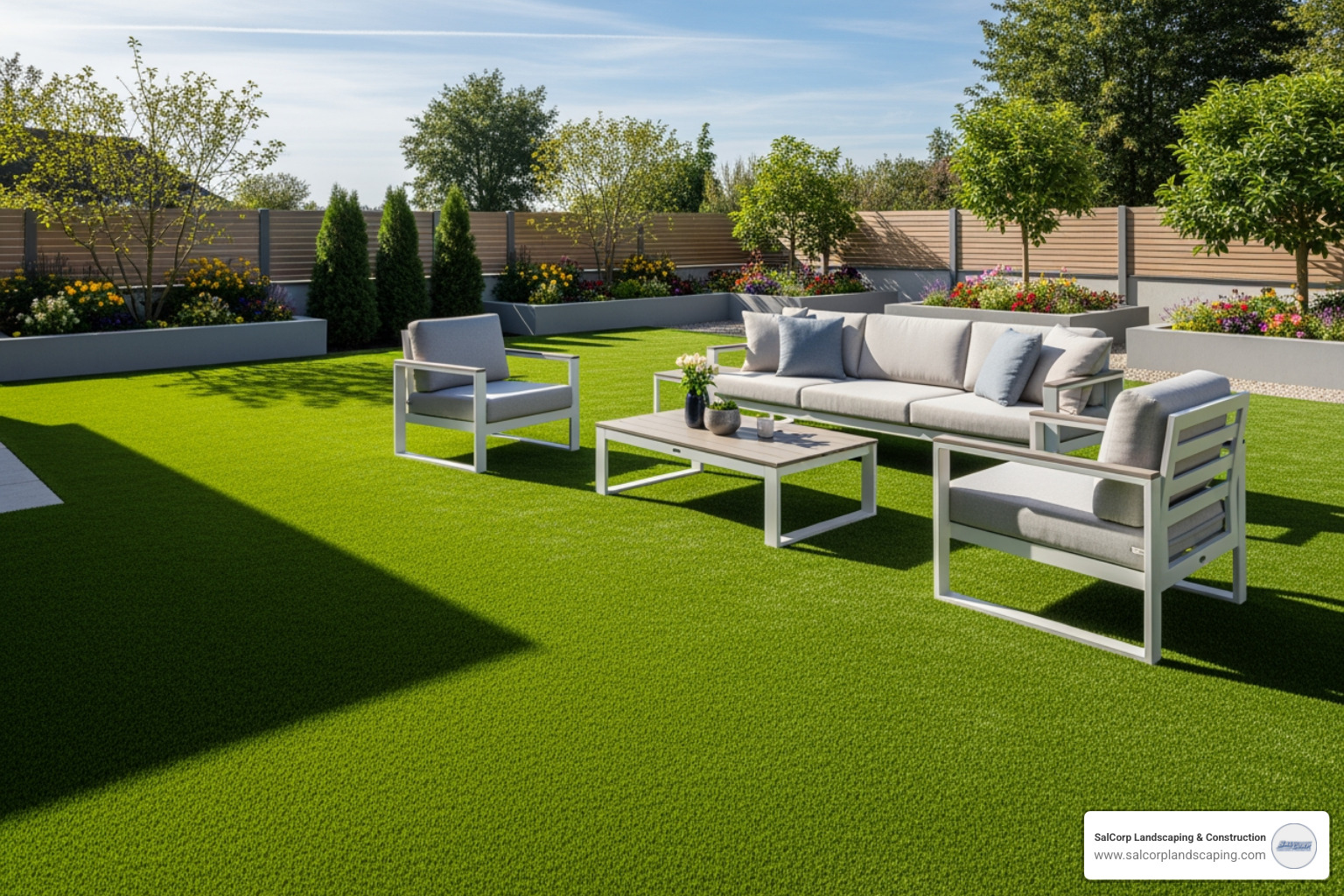
Here at SalCorp Landscaping & Construction, we’ve seen how installing astro turf in backyard spaces can revolutionize outdoor living. It’s about creating a functional, beautiful, and low-maintenance environment that improves your lifestyle.
What are the benefits of installing artificial turf over natural grass?
The decision to install artificial turf comes with a host of advantages that make it an increasingly popular choice for homeowners across Massachusetts:
- Aesthetic Appeal: Enjoy a lush, green lawn all year. Artificial turf looks pristine through every season, resisting heavy foot traffic and enhancing your home’s curb appeal.
- Drought Resistance & Water Conservation: Save thousands of gallons of water annually. Artificial turf requires no watering, making it an eco-friendly choice, especially in areas with water restrictions.
- Low Maintenance: Forget about mowing, fertilizing, and weeding. Artificial turf frees up your weekends, drastically cutting down on lawn care chores so you can enjoy your yard in Walpole, Newton, or Cape Cod.
- No Pesticides or Fertilizers: Create a safer space for family and pets. Artificial turf eliminates the need for chemical pesticides and fertilizers, protecting the local ecosystem.
- Pet and Child Friendly: It’s a clean, mud-free play surface for kids and pets. No more muddy paws tracked indoors. Special infills and proper installation ensure excellent drainage and odor control.
- Long-Term Cost-Effectiveness: The initial investment pays off over time. You’ll save money on water, mowers, fuel, and lawn care services. Over its 10-15+ year lifespan, artificial turf is a cost-effective solution. Please note: while internet data suggests installation costs can range from $5 to $18.75 per square foot (with premium projects costing more), these are not quotes from SalCorp Landscaping & Construction but are based on publicly available data such as national cost guides on artificial turf.
The benefits are clear: a beautiful, durable, and sustainable lawn that allows you to spend less time working on your yard and more time enjoying it.
A DIY Guide to Installing Astro Turf in Your Backyard
Installing astro turf in backyard spaces can be a rewarding DIY project, but it requires careful planning. This guide walks you through the process, because as we say at SalCorp, a solid foundation is the key to lasting beauty.
Essential Tools and Materials for Installing Astro Turf in Your Backyard
Having all your tools and materials ready will make the installation process much smoother.
- Tools:
- Shovel and Wheelbarrow
- Plate compactor or hand tamper (rent a plate compactor for larger areas)
- Utility knife with spare blades
- Measuring tape
- Landscape rake
- Stiff push broom or power broom
- Drop spreader
- Carpet kicker (optional)
- Gloves and safety glasses
- Marking paint or string
- Materials:
- Artificial turf (order 10-20% extra for cuts)
- Class II road base or decomposed granite
- Weed barrier fabric
- Infill (silica sand, crumb rubber, or specialized options)
- Seam tape and seaming adhesive
- 5-6 inch galvanized nails or landscape staples
- Edging material (optional)
Step 1: Ground Preparation for a Flawless Finish
This is the most critical step for installing astro turf in backyard areas. A well-prepared base ensures proper drainage and longevity.
- Clear and Excavate: Mark your area, call 811 to locate utilities, and remove all grass, weeds, and large rocks. A sod cutter is helpful for large areas. Excavate the soil to a depth of 3-4 inches.
- Address Drainage: Cap off any sprinklers in the area. For remaining plants, ensure a modified irrigation system is in place. Create a slight grade (minimum 2% slope) away from structures to ensure water runs off. For complex irrigation needs, SalCorp Landscaping & Construction offers irrigation services.
- Install and Compact Base: Spread a 2-4 inch layer of Class II road base. Lightly wet the aggregate, then use a plate compactor to achieve 95% compaction. The surface should be firm, smooth, and about 1/2 inch below any surrounding hardscaping.
- Lay Weed Barrier: Place a high-quality weed barrier over the compacted base, overlapping seams by 6-12 inches and securing it with staples. Note: We recommend skipping the weed barrier for pet areas to prevent odor buildup.
Step 2: Laying, Cutting, and Seaming Your Turf
Now it’s time to see your new lawn take shape. This step requires precision for a seamless finish.
- Acclimate and Position Turf: Unroll your turf in the sun for at least 2 hours to let it relax. When laying it out, ensure the blade grain on all pieces faces the same direction, preferably toward your main viewing area (like your house or hardscape patios).
- Rough Trimming: Lay the turf over the area, letting it overlap the edges. Make rough cuts from the back with a utility knife, leaving extra for final trimming.
- Seaming Turf Pieces: Careful seaming is key to an invisible joint.
- First, trim the factory “salvage” edges (first 3 stitches) from the turf pieces being joined.
- Butt the trimmed edges together, leaving a gap no wider than 1/8 inch.
- Roll out seam tape under the joint. Apply a quality seaming adhesive, like Alliance Gator Block Bond XP, in an “S” pattern.
- Carefully press the turf edges onto the adhesive, keeping the blades out of the glue. Use weight to hold it down while it cures (at least 45 minutes).
- Final Trimming: Once seams are secure, make your final precision cuts along the perimeter to fit snugly against any borders or landscaping features.
Post-Installation Care and Special Considerations
With your new lawn installed, a few final steps and long-term care tips will keep it looking perfect and maximize your investment.
How do you maintain artificial turf after installation?
Maintaining artificial turf is simple, but routine care preserves its beauty and longevity.
- Securing the Perimeter: Stretch the turf tightly to remove wrinkles and secure the perimeter with 5-6 inch galvanized nails or landscape staples every 3-6 inches along all edges.
- Infill Application: Infill weighs down the turf and helps blades stand upright.
- First, use a power broom or stiff push broom to brush the turf blades upright.
- Using a drop spreader, apply infill evenly (typically 1-2 lbs per sq. ft., but check your turf’s specific requirements).
- Brush the infill down into the base of the fibers until about 1/2″ to 3/4″ of the blade tips are exposed.
- Initial Rinse and Routine Cleaning: Give the new lawn a light rinse to settle dust. For ongoing care, use a leaf blower or broom to remove debris. Clean spills with mild detergent and water. Remove solid pet waste promptly and rinse the area.
- Brushing: Periodically brush high-traffic areas against the grain with a stiff broom to fluff up the fibers. We recommend an annual check of your infill levels, adding more as needed.
Special Considerations for Installing Astro Turf in Your Backyard for Pets and Kids
When installing astro turf in backyard spaces for families, a few extra considerations ensure safety and cleanliness.
- Pet-Friendly Infill and Odor Control: For pets, odor control is key. We highly recommend using a specialized Zeolite infill, which absorbs and neutralizes ammonia from urine. As mentioned, it’s best to avoid a weed barrier under pet turf, as it can trap smells. A regular rinsing routine is also essential.
- Child Safety and Heat: For play areas, consider adding a foam padding underlayment for extra cushioning and fall protection. The Massachusetts Department of Public Health (DPH) has noted that some older turf components can contain chemicals like lead. We prioritize using turf and infill products certified as low-lead or lead-free for a safer play environment. The DPH also notes that turf can get hotter than natural grass. On sunny days, a quick spray of water can cool the surface before playtime.
- Designing for Family Fun: At SalCorp Landscaping & Construction, we can help design a complete outdoor space for your family, integrating turf with play structures, shaded areas, or custom hardscaping. Learn more about our lawn installation services and how we can bring your vision to life.