Landscape Edging for Mulch: Smart, Flawless 2025
Why Proper Mulch Containment Transforms Your Property
Landscape edging for mulch keeps your garden beds looking sharp and saves you hours of cleanup. When mulch spreads onto walkways and lawns, it creates maintenance headaches and makes even well-maintained properties look messy.
Quick Answer: Best Landscape Edging Options for Mulch
- Plastic edging: Most budget-friendly, easy no-dig installation
- Metal edging: Durable, creates clean lines, withstands harsh weather
- Rubber edging: Flexible, made from recycled materials, prevents weeds
- Concrete/Stone: Permanent solution, doubles as decorative border
- Wood edging: Natural look, pressure-treated options resist rot
The market for landscape edging is growing, with customers prioritizing ease of installation and durability when choosing materials.
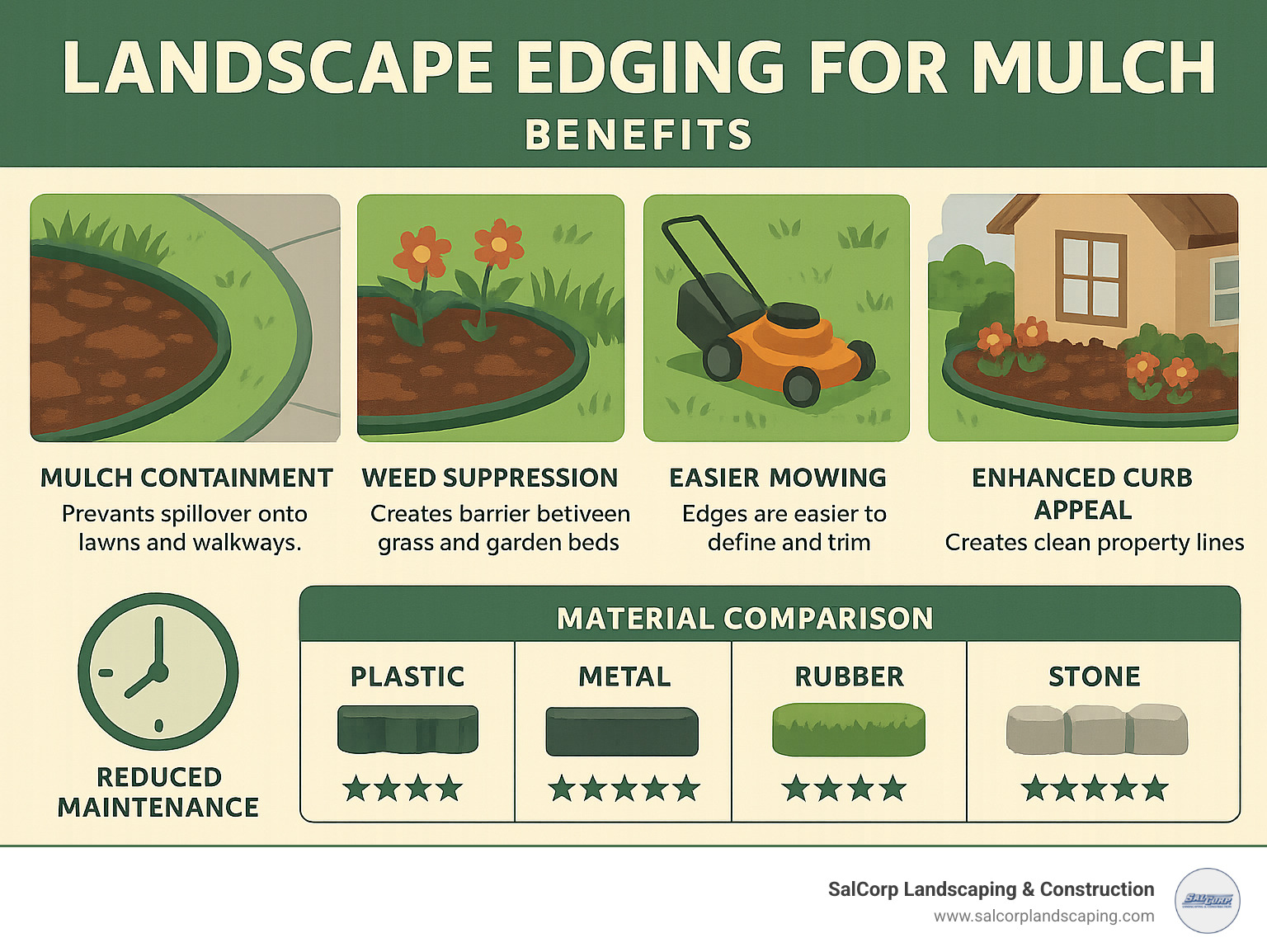
Without proper edging, mulch migrates during storms, gets scattered by mowers, and allows weeds to creep in from the lawn. Smart edging solves three problems at once: it contains your mulch, reduces weekly maintenance, and creates the clean property lines that boost curb appeal.
As Sal Musto with over two decades of experience changing outdoor spaces through SalCorp Landscaping & Construction, I’ve seen how the right landscape edging for mulch can completely change a property’s appearance. My hands-on approach has shown me which solutions last through Massachusetts winters and which fail after the first frost.
Must-know landscape edging for mulch terms:
A Homeowner’s Guide to Landscape Edging for Mulch
Nothing’s more frustrating than watching your perfectly applied mulch creep onto sidewalks after the first heavy rain. The good news? Landscape edging for mulch solves this headache while giving your property a polished, professional look.
This section covers the essentials for selecting and installing the right edging system to keep your mulch beds looking sharp.
Comparing Your Edging Options: Materials and Costs
Choosing the right landscape edging for mulch means weighing the pros and cons of each material. Here’s a breakdown of what works best for different situations and budgets.
Plastic edging is a budget-friendly, versatile choice. Modern, recycled versions are eco-friendly and handle curves with ease. The main downside is that it can become brittle in harsh winters and cheaper versions can look less premium.
Metal edging creates crisp, professional lines. Steel and aluminum are exceptionally durable, with steel being tougher and aluminum lighter. It costs more upfront and installation requires more effort, but it delivers long-term value.
Wood edging offers natural warmth for traditional gardens. Pressure-treated options are worth the cost, as they resist rot and insects. The trade-off is maintenance, as even treated wood will eventually need replacement.
Rubber edging is flexible like plastic but durable like metal. Made from recycled tires, it’s an eco-friendly weed barrier that handles temperature swings without cracking. The main drawback is a higher upfront cost compared to plastic.
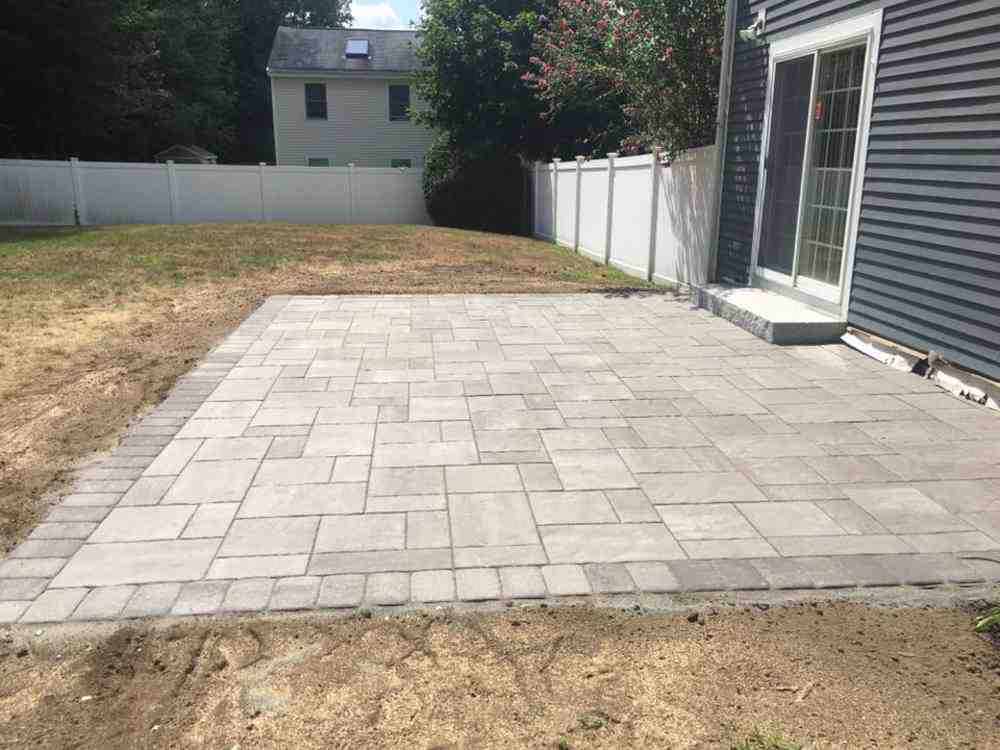
Concrete and stone edging is the premium choice for permanence. Pavers, blocks, and natural stone offer maximum durability and visual impact, lasting for decades. These materials require the most labor and highest investment.
| Material | Pros | Cons | Best For |
|---|---|---|---|
| Plastic | Affordable, flexible, easy installation, recycled options | Can become brittle, less natural appearance | Curves, budget projects, DIY installations |
| Metal | Extremely durable, crisp lines, weather resistant | Higher cost, requires trenching, potential rust (steel) | Permanent borders, modern designs |
| Wood | Natural look, readily available, pressure-treated options | Prone to decay, maintenance required, pest attraction | Rustic gardens, traditional landscapes |
| Rubber | Flexible, durable, recycled materials, weed prevention | Higher cost than plastic, less rigid lines | Eco-friendly projects, curved beds |
| Concrete/Stone | Most durable, permanent solution, high visual impact | Highest cost, labor-intensive, inflexible design | Premium installations, property value improvement |
According to internet sources, average costs can range from $1 to over $20 per linear foot depending on the material. Basic plastic might cost around $1-3 per foot, while premium stone or steel options can reach $15-25 per linear foot. These are general estimates and not actual SalCorp Landscaping pricing.
For deeper insights into materials that create lasting outdoor spaces, explore our guide to hardscape materials.
How to Choose the Right Edging for Your Mulch Beds
Selecting the perfect landscape edging for mulch means balancing aesthetics with practicality. The “best” edging is the one that fits your home’s style and your lifestyle.
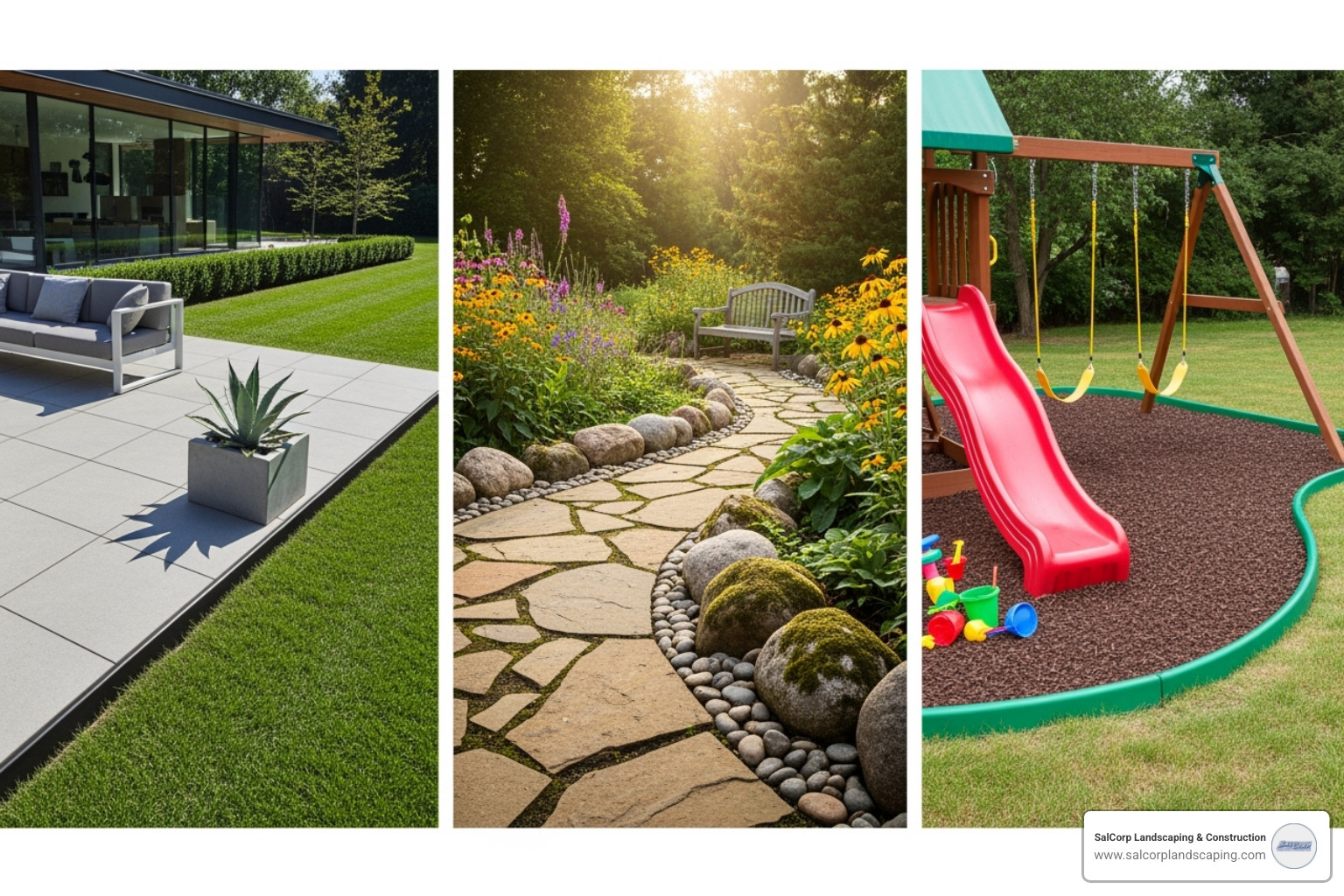
Aesthetic appeal is a great starting point. Modern homes suit the sleek, clean lines of metal edging. Traditional or cottage-style properties feel more natural with wood or stone borders that age gracefully. For a subtle look where plants are the focus, plastic or rubber edging fades into the background.
Budget considerations should include long-term value. Budget-friendly plastic may need replacing sooner than durable metal or concrete, which can last for decades with minimal maintenance.
Your design requirements will dictate the material. Flowing, curved beds require flexible materials like plastic or rubber. For sharp, geometric designs, use rigid materials like concrete, metal, or lumber.
For specific applications like tree rings, flexible materials work well. For sidewalk and driveway borders, you need durable materials like concrete, brick, or heavy-duty metal to withstand traffic and snow removal.
Finally, consider climate factors. Our Massachusetts freeze-thaw cycles can shift improperly installed rigid edging. Flexible materials like plastic and rubber adapt better to ground movement.
Our landscape design services can help you steer these choices to create a cohesive outdoor space.
A Basic Guide to Installing Landscape Edging for Mulch
Installing landscape edging for mulch is manageable with the right preparation, though rigid materials may benefit from professional expertise.
Plan your layout first. Use a garden hose to outline your border, then mark the final line with spray paint. Measure the total linear footage and add 10% for cuts and connections.
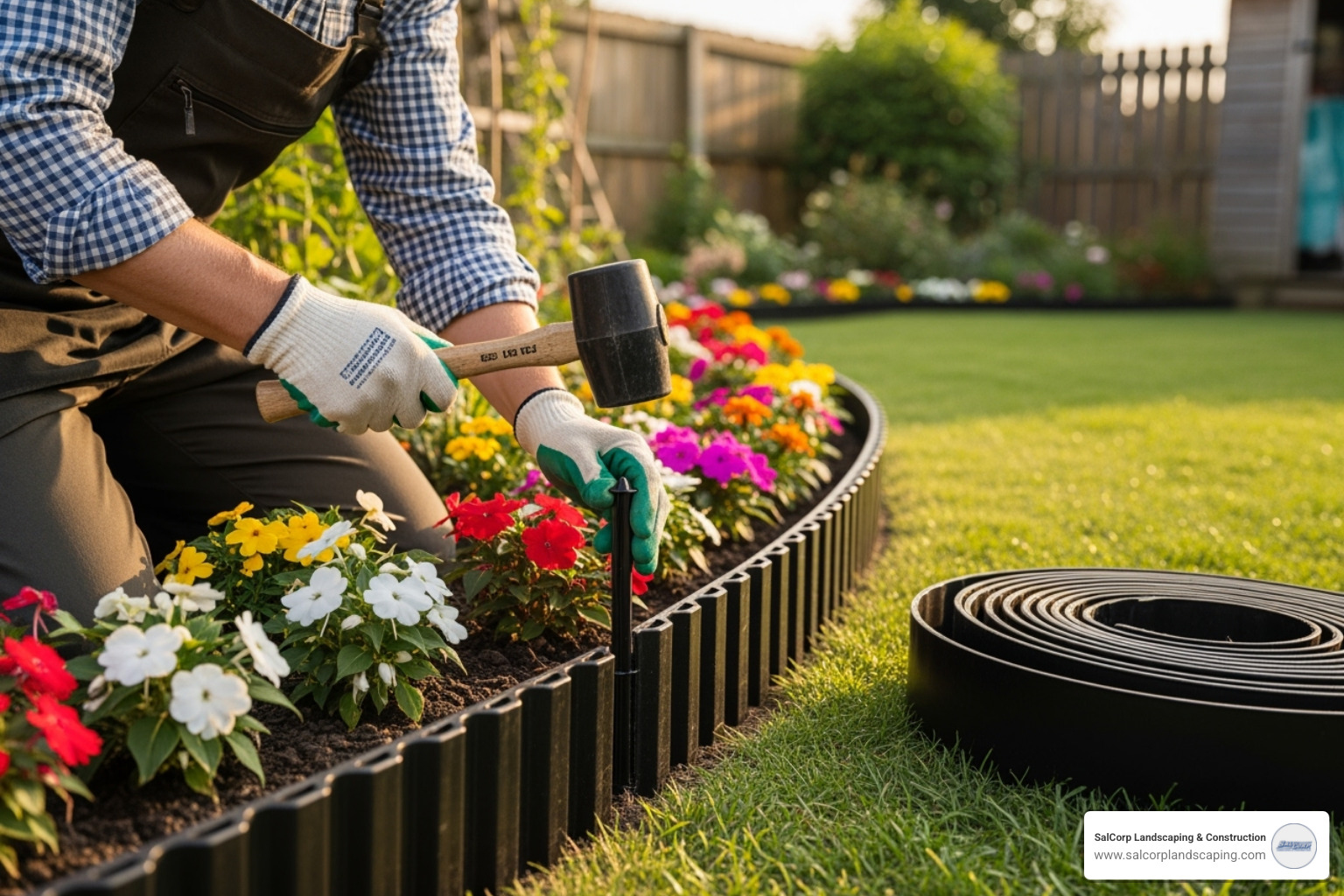
No-dig edging is the simplest method for flexible materials. These systems use anchoring spikes driven through the edging directly into the ground with a rubber mallet.
Trenching methods are best for rigid materials like metal or wood. Dig a shallow trench 2-4 inches deep. Before you start digging, it’s critical to locate underground utility lines. You can do this by contacting your local Call 811 service. Set the edging in the trench, secure it, and backfill the soil firmly.
Connecting sections properly prevents gaps. Most products include connector pieces for seamless joints. For smooth curves with rigid materials, make small relief cuts in the backing to help it bend.
Proper height is key. The edging should extend at least 1-2 inches above the soil to contain a standard 2-3 inch layer of mulch. If you want to run a mower wheel along the edge, set it nearly flush with the ground.
Professional installation ensures proper base preparation and long-term stability. Our experience with walkway installation translates directly to creating durable, beautiful edging.
Beyond the Basics: Maintenance and Professional Solutions
Even the best edging requires some care. This section explores how to maintain your landscape edging for mulch and when to call in experts for a flawless, long-lasting finish.
Solving Common Edging Problems
Maintaining your landscape edging ensures it continues to perform. Here are common issues and how to solve them:
- Frost Heave: The freeze-thaw cycle can lift rigid edging.
- Solution: The best defense is a proper installation with a compacted gravel base. For existing issues, reset the affected section on a new base. Flexible materials are less prone to this problem.
- Mower Damage: Edging that sits too high can be damaged by lawnmowers.
- Solution: Install a “mowable edge” by setting the top of the edging at or just above grass level. This protects the edging and reduces the need for weed-whacking.
- Weed Creep and Grass Invasion: Persistent weeds and grass can still sneak into mulch beds.
- Solution: A hand-cut edge just inside your installed edging creates an “air gap” that stops grass roots. Regular weeding and maintaining a 2-4 inch mulch depth are also crucial.
- Mulch Migration: This can still occur if edging is too short or mulch is piled too high.
- Solution: Ensure your edging is tall enough (at least 1.5 to 2 inches above the soil) to contain your desired mulch depth.
- Fading Color and Material Breakdown: Sunlight and weather can cause materials to degrade.
- Solution: Choose UV-resistant edging materials. For mulch, consider natural-colored varieties, which often maintain their appearance longer than dyed mulches.
- Loose Connections/Shifting Edging: Sections can separate or shift over time.
- Solution: Reinforce connections on flexible edging with small pieces of lumber. For rigid systems, ensure anchoring spikes are deep and the backfill is well-compacted.
For more substantial solutions to ground stability, explore our expertise in retaining walls.
Enhancing Your Landscape with Professional Hardscaping
While many landscape edging for mulch projects are DIY-friendly, professional expertise makes a significant difference for long-term durability and a flawless finish.
With over 20 years of experience, SalCorp Landscaping & Construction is an owner-operated business specializing in landscape design, hardscaping, and commercial snow management. Based in Walpole, MA, we offer a holistic approach to outdoor living, serving communities across Massachusetts with our own machinery and a hands-on approach to every project.
Professional installation ensures:
- Superior Durability: We prepare the ground properly and use commercial-grade materials to prevent common issues like frost heave and shifting.
- Flawless Aesthetics: Our team can integrate your edging seamlessly into your overall landscape design, enhancing curb appeal with perfect lines and curves.
- Comprehensive Solutions: We can integrate edging with new walkways, patios, and garden beds, creating a cohesive and stunning outdoor environment.
- Time and Effort Savings: By entrusting your project to us, you save valuable time and physical strain, allowing you to simply enjoy the beautiful results.
The trend towards sustainable edging solutions like recycled plastic and rubber is strong. But whether you DIY or go professional, the goal is a beautiful, low-maintenance outdoor space.
For a flawless finish that lasts, consider professional mulch delivery and installation. We’re here to help you achieve a landscape that truly shines.