

Outdoor Patio Design: 10 Stunning Ideas for 2025 Success
Why Smart Outdoor Patio Design Transforms Your Property Value and Lifestyle
A well-planned outdoor patio design adds an estimated 8–10 % to home resale value and, more importantly, delivers an “extra room” you can enjoy from April through late fall in Massachusetts. Instead of limiting upgrades to the inside of your house, a patio lets you carry comfort, style, and connection with nature right out the back door.
Massachusetts’ four-season climate does impose rules. Freeze–thaw cycles demand crack-resistant surfaces; summer humidity asks for shade and air flow; and shoulder seasons reward anyone who includes a fire feature. When you match materials and layout to these realities, the pay-off is a space that sees steady use instead of becoming a lawn ornament.
Essential elements for effective outdoor patio design:
• Material Selection – concrete, local flagstone, brick pavers, or gravel
• Functional Zoning – clear spots for dining, lounging, cooking, play
• Weather Protection – pergola, awning, or sizeable umbrella
• Lighting Strategy – path lights + overhead ambience
• Privacy Solutions – hedges or screens that don’t feel claustrophobic
• Drainage Planning – graded bases and permeable joints
• Seasonal Adaptability – heaters, fire pits, moveable furniture
• Landscape Integration – tie hardscape to existing beds and lawn
Whether you own a Jamaica Plain triple-decker with a narrow backyard or a sprawling Wellesley property, thoughtful design balances openness with a sense of retreat. Decide first how you’ll live outdoors—quiet coffee, kids’ play, weekend parties—then let every choice flow from those priorities.
As Sal Musto of SalCorp Landscaping & Construction puts it: “The best patios feel natural in every season. You shouldn’t have to think twice about stepping outside just because the calendar changed.”
Outdoor Patio Design: Material & Budget Basics
When clients ask, “What surface is best?” my answer is, “The one that survives New England winters, fits your taste, and respects your budget.” Below is a streamlined guide to help you choose.
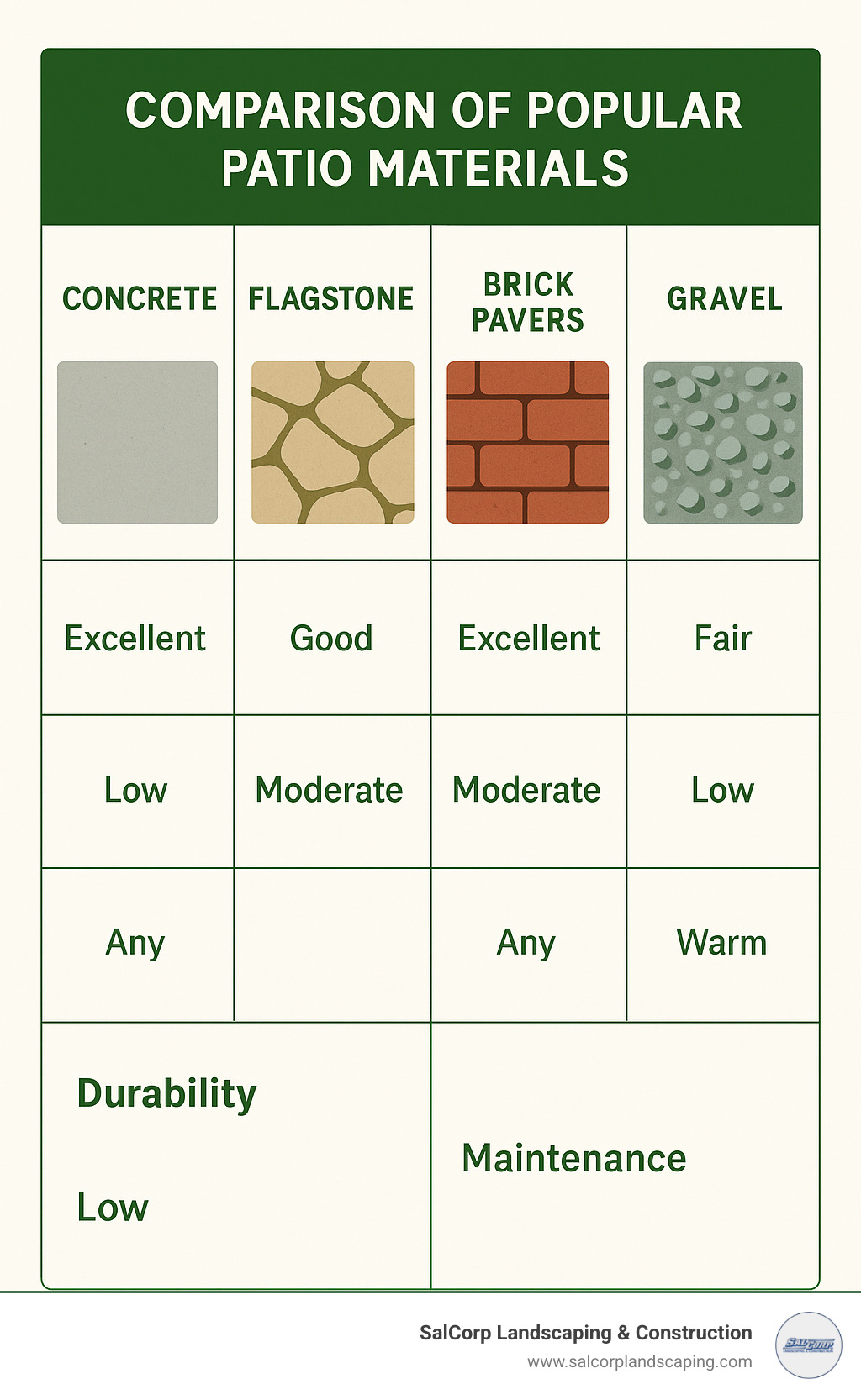
Quick Pros & Cons
• Concrete – budget friendly, takes color or stamping, minor risk of cracking, seal every few years.
• Brick pavers – classic New England look, excellent drainage, joints need re-sand and weed control.
• Flagstone / local bluestone – gorgeous, naturally slip-resistant, higher labor, seal to prevent staining.
• Gravel – super permeable and DIY-able, lowest cost, can shift under chairs and isn’t stiletto-friendly.
Average Cost Ranges (internet data, not SalCorp pricing)
• Gravel: $4–$10 / sq ft
• Basic concrete: $6–$15 / sq ft
• Stamped or stained concrete: $12–$30 / sq ft
• Brick or modular pavers: $15–$45 / sq ft
• Premium natural stone: $25–$75 / sq ft (custom work can top $150)
Budget-Smart Tips
- Source locally – Massachusetts granite or fieldstone costs less to ship and is made for our climate.
- Phase the build – pour the patio now, add a pergola or kitchen next season.
- Mix materials – concrete center bordered by stone cuts costs while looking upscale.
- DIY prep, pro finish – excavate and lay fabric yourself, let SalCorp set the final surface.
For deeper cost planning, visit our guide on Building a Patio.
Smart Layouts & Space-Saving Hacks
Great patios borrow principles from interior design: clear circulation, defined zones, and furniture that fits the “room.”
- Map Your Traffic Flow – Keep a direct, 4-ft-wide path between the house door and grill; nobody wants to weave through chairs with hot burgers.
- Create Zones by Surface Change – Smooth flagstone under dining; textured pavers near a fire pit so sparks don’t scar furniture.
- Use Vertical Real Estate – Wall-mounted planters, trellises, and even mirrors add interest without stealing floor space.
Small-Space Strategies
• Bistro set + corner bench doubles seating.
• Tall planters create green “walls.”
• Light colors and reflective surfaces visually expand footage.
Large-Patio Zoning
• Outdoor rugs anchor conversation spots.
• L-shaped built-in seating builds intimacy on big slabs.
• Contrasting pathway pavers guide guests from kitchen to fire feature without signage.
Explore more ideas in our Patio Ideas gallery.
Comfort Upgrades: Shade, Privacy & Lighting Essentials
Massachusetts patios need comfort layers to stay usable from mid-day sun to crisp October nights.
Shade Solutions
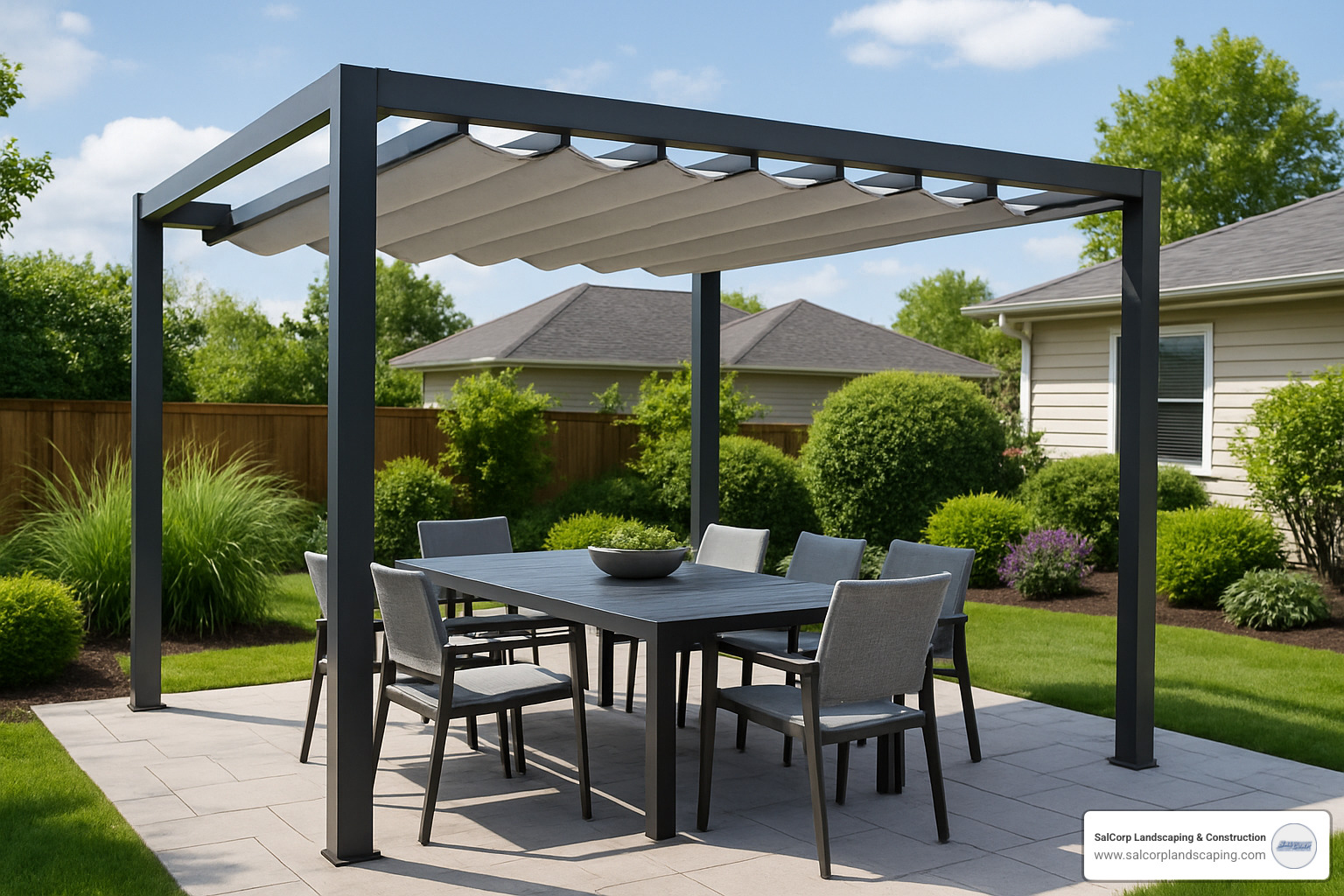
• Aluminum or cedar pergola – permanent structure, supports lights & vines.
• Retractable awning – instant shade against the house.
• Cantilever umbrella – flexible, no center pole.
Layered Lighting
• String lights = ambience.
• Path lights = safety on steps and grade changes.
• Task lights = see what you’re grilling.
• Fire features = light + heat for extending the season.
Privacy Without Walls
• Evergreen hedge or staggered shrubs for year-round screening.
• Lattice panels with climbing clematis.
• Water feature to mask neighborhood noise.
• Tall, moveable planters you can rearrange before a party.
More inspiration lives in our Deck and Patio Ideas.
Trends & Eco-Friendly Ideas to Inspire Your Project
Homeowners today want patios that tread lightly on the planet and work 12 months a year.
Sustainable Choices
• Local stone – supports MA quarries and slashes transport emissions.
• Permeable pavers – meet storm-water regs by letting rain filter through joints.
• Composite decking & recycled pavers – long life, zero splinters, made from reclaimed plastics.
• Rain-capture barrels – irrigate planters for free.
See more sustainable inspiration at Latest patio design trends.
Smart-Tech & Style Pops
• App-controlled LED lighting scenes.
• Weather-proof Bluetooth speakers.
• Bold porcelain “rugs” that act like art but shrug off snow.
• Modular sectionals that rearrange for movie night or a family reunion.
Pick only the features that genuinely fit your lifestyle; that’s the real trend.
Frequently Asked Questions about Outdoor Patio Design
What’s the easiest patio surface for DIYers on a budget?
Gravel over landscape fabric. It handles drainage, costs the least, and forgives small leveling errors. For something sturdier, DIY sand-set concrete pavers are next-best.
How do I maintain concrete, paver and stone patios in Massachusetts?
• Concrete – gentle wash + seal every 2–3 years; avoid rock salt.
• Pavers – top up joint sand annually, replace cracked units, quick power-wash in spring.
• Natural stone – seal schedule depends on hardness (granite 3–5 yrs, limestone yearly); skip acidic cleaners.
What safety rules apply to fire pits and outdoor kitchens?
Keep open flames at least 10 ft from structures, follow local burn bylaws, and have a hose or extinguisher nearby. Gas lines and outdoor electrical outlets should be installed by licensed pros and protected with GFCI. Good lighting on steps and around cooking zones prevents nighttime mishaps.
Conclusion
Your journey toward a stunning outdoor patio design represents more than just a home improvement project—it’s an investment in countless future memories with family and friends. Picture summer barbecues that stretch into evening conversations around a crackling fire pit, or quiet morning coffee moments in your own private outdoor sanctuary.
The change goes beyond aesthetics. A thoughtfully designed patio becomes Massachusetts’ answer to year-round outdoor living, working beautifully through spring’s fresh awakening, summer’s entertaining season, and autumn’s cozy fire-lit evenings. When designed with our climate in mind, your outdoor space will handle whatever New England weather brings while maintaining its beauty and functionality.
Smart material choices and proper planning ensure your investment pays dividends for decades. Whether you’ve chosen the timeless appeal of flagstone, the versatility of concrete, or the classic charm of brick pavers, the right foundation sets the stage for years of low-maintenance enjoyment. Add thoughtful lighting, comfortable shade structures, and strategic privacy elements, and you’ve created something truly special.
At SalCorp Landscaping & Construction, we’ve spent over two decades perfecting the art of outdoor patio design across Massachusetts communities. Sal Musto’s hands-on approach means your project gets the personal attention that only an owner-operated business can provide. We handle everything from initial site preparation through the final sweep-up, using our own crews and equipment to ensure quality control at every step.
The difference shows in the details—proper drainage that prevents winter damage, materials sourced for New England durability, and installation techniques refined through twenty years of Massachusetts weather. We don’t just build patios; we create outdoor rooms that become the heart of your home’s entertaining and relaxation.
Ready to start your change? Our comprehensive Hardscaping services cover every aspect of patio creation, from design consultation through final installation. Let’s discuss how we can bring your vision to life with the craftsmanship and reliability that has made us a trusted name across Massachusetts.
Your dream outdoor space is closer than you think—let’s make it happen together.
