Patio Stone Stairs: 3 Easy DIY Steps
Why Patio Stone Stairs Transform Your Massachusetts Backyard
Patio stone stairs offer the perfect solution for connecting different levels of your outdoor space while creating stunning visual appeal. Whether you’re dealing with a sloped yard or want to define separate outdoor “rooms,” stone stairs provide both function and beauty that lasts for decades.
Quick Guide to Building Patio Stone Stairs:
- Plan – Measure your space and check local building codes
- Choose Materials – Select granite, flagstone, or bluestone based on your budget and style
- Prepare Foundation – Excavate and create a compacted gravel base
- Build Up – Install risers and treads, ensuring proper drainage
- Finish – Fill joints and seal if needed
Stone steps are often thought of as a practical feature, but they are so much more. As research shows, stone steps in straight or curved configurations can take an ordinary landscape design to new levels. They can be placed anywhere in your yard to lift and define separate outdoor “rooms” such as an outdoor kitchen, intimate seating space, or a fire pit area.
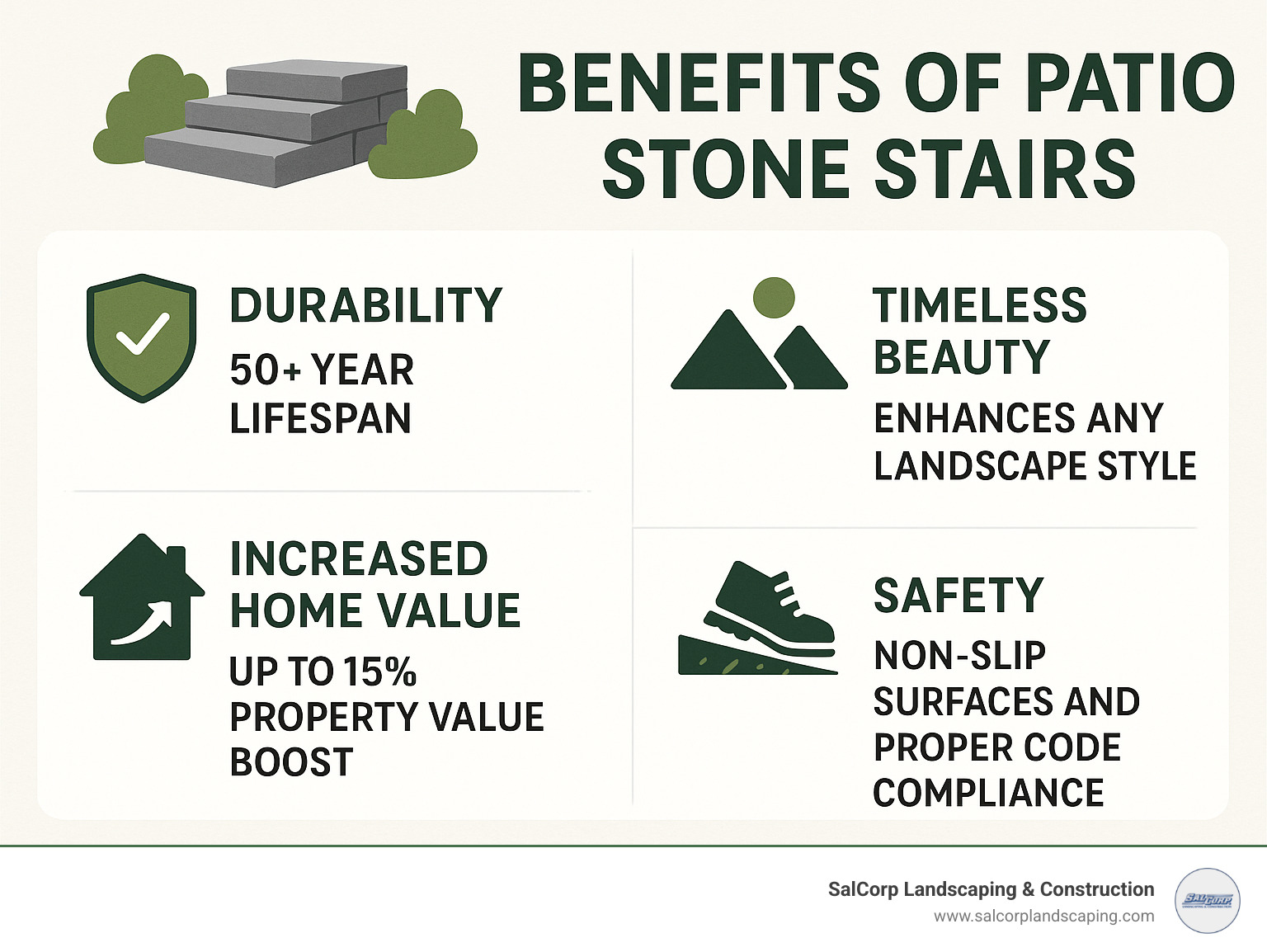
Benefits of stone stairs include:
- Durability – Natural stone materials last much longer than synthetic alternatives
- Safety – Anti-skid surfaces make steep slopes easier to steer
- Beauty – Timeless look that complements any home architecture
- Versatility – Works for entryways, patios, decks, and garden transitions
I’m Sal Musto, owner of SalCorp Landscaping & Construction, and over the past two decades I’ve designed and installed countless patio stone stairs throughout Massachusetts communities. My hands-on approach ensures every stone staircase project meets the highest standards for both safety and aesthetic appeal.
Easy patio stone stairs glossary:
Planning and Designing Your Patio Stone Stairs
A successful patio stone stairs project requires thoughtful planning that balances beauty and practicality. It’s about understanding why natural stone outperforms other materials, selecting the right type for your needs, and designing stairs that are both stunning and safe.
Why Choose Natural Stone?
With two decades of experience installing outdoor stairs in Massachusetts, I know natural stone delivers results other materials can’t match. Here’s why it should be your first choice.
Best durability sets natural stone apart. Forged by geological processes over thousands of years, these materials have incredibly dense and resilient surfaces. While wooden stairs rot and warp, and concrete steps crack over time, natural stone maintains its integrity for decades.
Stone’s weather resistance is crucial in Massachusetts. Our freeze-thaw cycles are brutal, but properly installed stone stairs handle these temperature swings perfectly. I’ve seen 50-year-old stone steps still looking fantastic, while concrete steps from the same era have long been replaced.
Timeless aesthetics make stone stairs a joy to live with. Each piece of natural stone is unique, with subtle variations in color, texture, and pattern that synthetic materials can’t replicate. Whether your home is a classic colonial or a modern design, stone steps create a perfect connection between your architecture and landscape.
The versatility of natural stone is amazing. We can create formal, straight staircases or flowing, curved steps that meander through a garden. Stone works beautifully to connect your home to a new patio, lead to an outdoor kitchen, or create zones around a fire pit.
Most importantly, stone stairs increase your property value. Their durability and timeless appeal boost curb appeal in ways potential buyers recognize and appreciate.
For more details about the various stone materials we work with, check out our hardscape material services page.
Selecting the Perfect Stone for Your Patio Stone Stairs
Choosing the right stone for your patio stone stairs is easier when you understand your options. Each stone type brings its own personality and practical benefits to your project.
Granite is the champion of durability. Its extreme hardness resists scratches, stains, and weathering. Its density also makes it incredibly resistant to New England’s freeze-thaw cycles.
Flagstone creates a wonderful rustic, natural look. Its irregular, flat shapes provide natural slip resistance, and its earthy colors blend with garden settings. Installing flagstone requires patience due to its irregular shapes, but the results are worth it.
Bluestone is a go-to choice for Northeast homes. This durable sandstone offers rich blue-gray colors that handle our climate perfectly. The natural cleft surface provides superior slip resistance, making it ideal for stairs.
Stone pavers offer incredible design flexibility. These concrete products mimic natural stone and have consistent dimensions, making installation more predictable. Pavers offer hundreds of patterns and perform exceptionally well in our climate.
When selecting your stone, consider these key factors: Aesthetics (formal elegance or rustic charm?), Durability (for heavy use or harsh weather), and Slip resistance (non-negotiable for safety on wet steps).
Climate is a huge factor in Massachusetts. Granite and bluestone excel in freeze-thaw conditions, while softer stones may need more maintenance. Your budget also matters, but quality stone is a long-term investment that reduces future maintenance costs.
| Stone Type | Cost (Relative) | Durability | Maintenance | Look |
|---|---|---|---|---|
| Granite | Higher | Excellent | Low | Formal, Neat |
| Flagstone | Medium-High | Very Good | Medium | Rustic, Natural |
| Stone Pavers | Medium | Very Good | Low-Medium | Versatile, Wide Range |
Designing for Safety and Style
Beautiful patio stone stairs require balancing artistic vision with safety. From my experience, the most stunning stairs are also the safest.
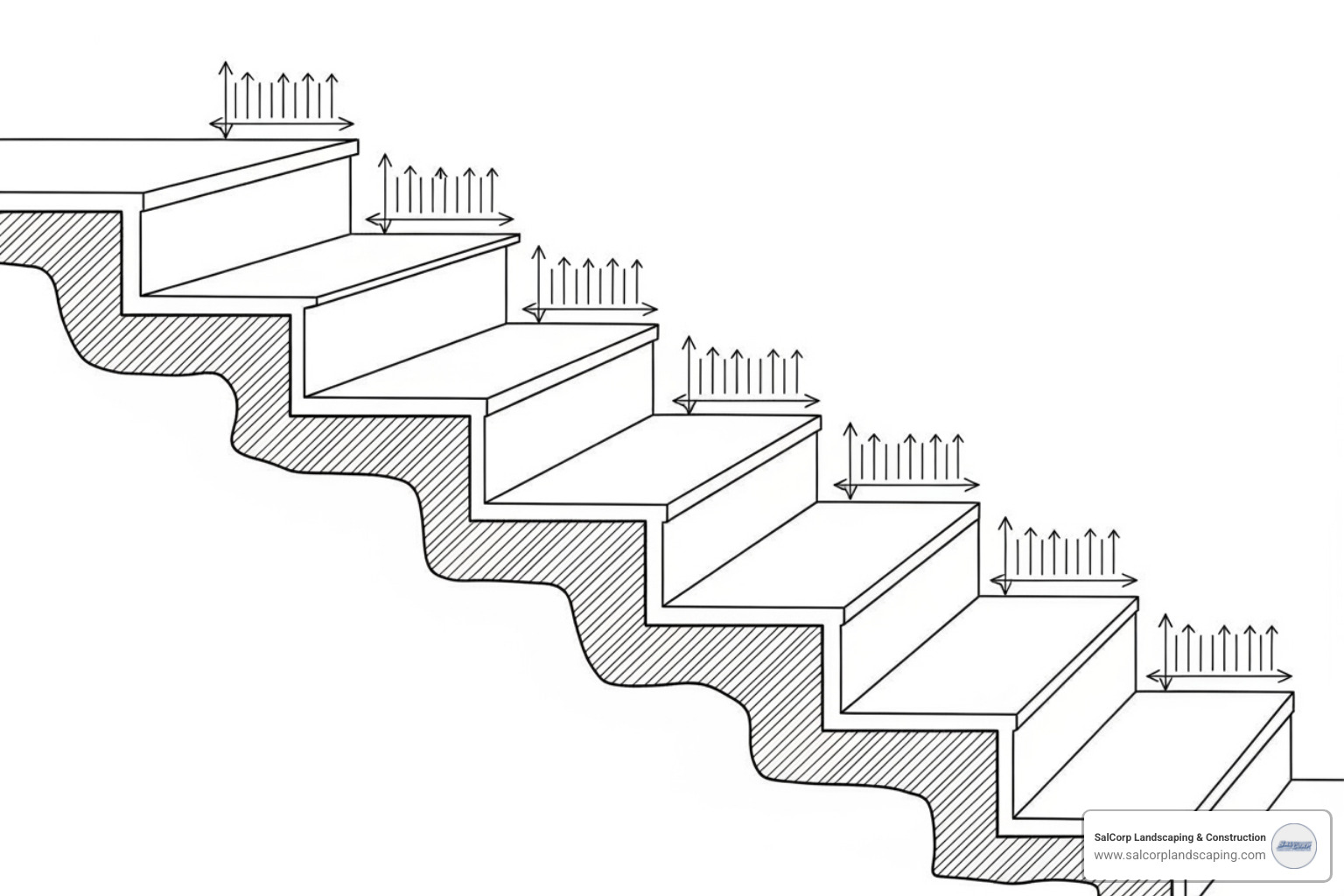
Proper dimensions are the foundation of safe stair design. The most critical aspect is maintaining consistent tread depth and riser height. Even a half-inch variation is a serious tripping hazard.
Riser height should be between 6 and 7.5 inches for comfortable outdoor stairs. Tread depth needs enough space for full foot placement—I recommend a minimum of 12 inches, though 14-16 inches feels even more comfortable.
Understanding local building codes is essential for safety. These codes specify maximum riser heights and minimum tread depths to ensure safe navigation.
Style choices impact both appearance and functionality. Straight stairs offer clean, formal lines for direct connections between levels. They are efficient to build and can look grand or understated.
Curved stairs create softer, organic transitions that feel natural in garden settings. They’re perfect for winding through planted areas or connecting irregular spaces, changing a slope into a stunning feature.
Foundation and drainage are critical. Proper drainage prevents water from pooling, which creates slippery surfaces and winter ice hazards. A slight slope away from your house or upper patio ensures water moves away naturally.
A rock-solid foundation prevents settling and uneven steps. Planning for proper excavation and base preparation starts during the design phase.
For inspiration and ideas, check out these 31 patio steps ideas that showcase different styles and approaches to stone stair design.
Building Your Stairs: A Step-by-Step Guide
Building patio stone stairs looks intimidating, but it breaks down into manageable steps. After guiding homeowners through this for over two decades, I know the satisfaction of admiring your finished stairs is worth the effort.
While this guide covers the essentials, don’t hesitate to call professionals for challenging sites or complex drainage. Knowing when to bring in experienced hands is often the smartest DIY decision.
Step 1: Excavation and Base Preparation
Foundation work is what separates the pros from amateurs. I’ve seen too many beautiful stone stairs fail from poor foundations. Your patio stone stairs are only as good as what’s underneath them.
Site layout and marking is critical. Measure twice, dig once. Use stakes and string to outline the entire footprint of your stairs so you know exactly where to dig.
Calculating your slope is next. Measure the total vertical rise from the upper level to the bottom. Divide that by your chosen riser height (6 to 7.5 inches is best) to find the number of steps needed.
Now for the digging. Laying patio stone stairs directly on an existing patio is a common mistake that leads to trouble. Your stairs need an independent foundation to remain stable.
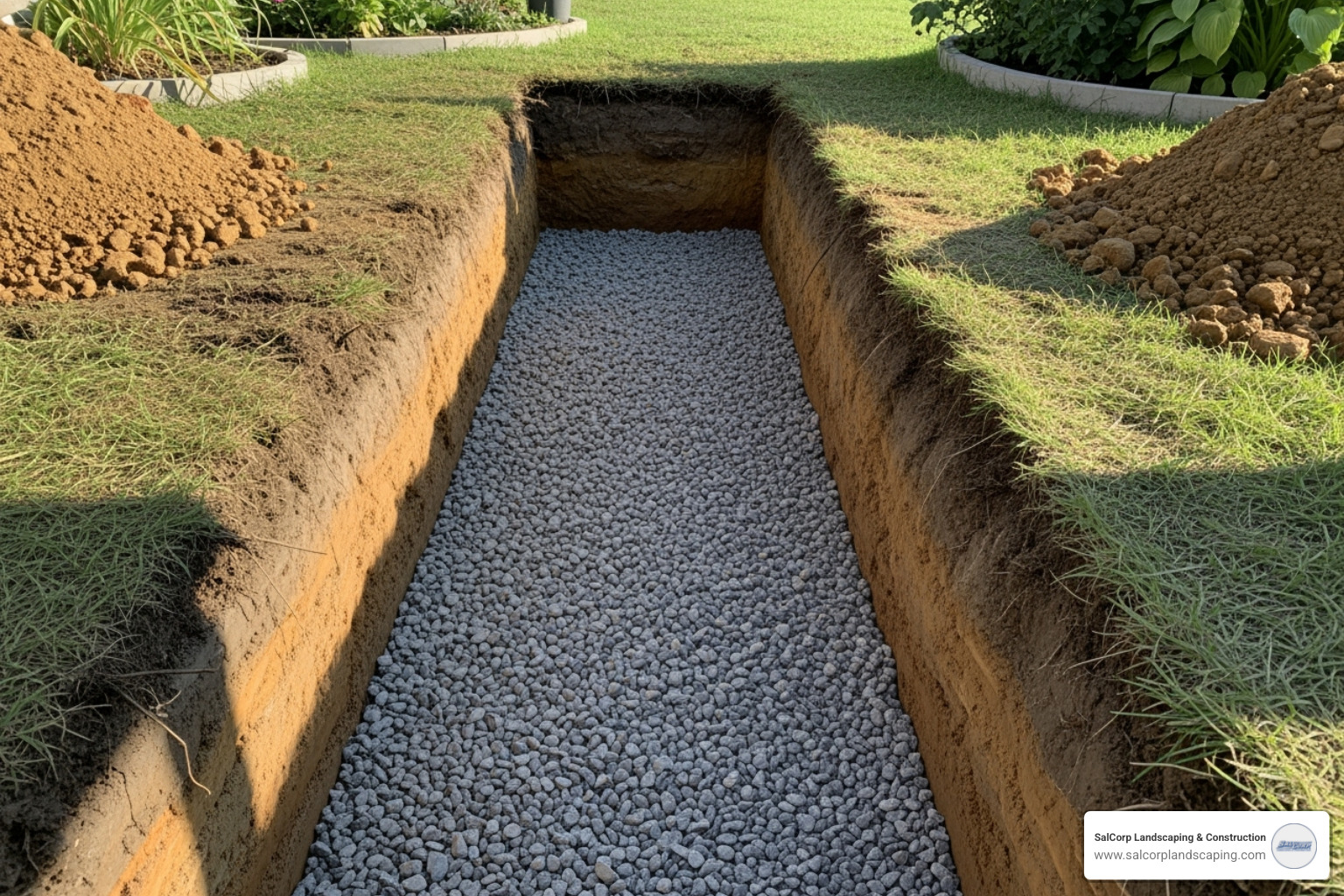
In Massachusetts, you must dig below the frost line (4 to 6 feet deep). It’s a lot of work, but frost heave can ruin level stairs in a single winter.
Water is your biggest enemy. For gradual slopes, “beat the grade” by setting stairs slightly above ground level so water flows around them. On steeper slopes, “encase” the stairs into the grade with sidewalls for stability and erosion control.
For detailed excavation techniques and equipment options, check out our excavation services page.
Your compacted gravel base must be rock solid. Layer and compact 6 to 12 inches of crushed stone. This creates a stable, well-draining foundation that prevents settling. Top it with 1 to 2 inches of leveling sand, sloped for drainage.
Step 2: Laying the First Course and Building Up
This is where your patio stone stairs start looking like actual stairs. Getting that first course right sets the tone for everything that follows.
Setting your first riser requires precision. Place it on the leveled bedding layer, ensuring it’s plumb and level. Secure it with construction adhesive or mortar. Heavy manufactured units require muscle but their preset dimensions simplify alignment.
Laying the first tread is next. An overhang of 1 to 1.5 inches is important for a comfortable step and helps water drip off. Ensure each tread slopes slightly forward for drainage.
Building upward becomes a rhythm. Each new riser sits on the tread below, and each new tread caps the riser. The key is consistency—even a half-inch variation in riser height is a tripping hazard.
Apply adhesive or mortar consistently. Backfill behind each riser with compacted gravel as you go. This provides lateral support to prevent shifting.
For more inspiration and technical details about masonry stair construction, visit our masonry stairs page.
Step 3: Finishing Touches and Long-Term Maintenance for your patio stone stairs
These final steps separate a good installation from a professional one that lasts for decades.
Joint filling depends on your stone type. For pavers, polymeric sand locks everything in place and prevents weeds. For larger stones, mortar joints provide rock-solid connections that withstand New England weather.
Clean your new stairs right after installation to remove construction dust, mortar, or dirt. A gentle pressure wash or scrubbing works well.
Sealing is wise for porous stones like sandstone. A quality sealer repels water, oil, and stains, simplifying future maintenance. Choose a sealer designed for your specific stone and for outdoor use.
Your maintenance routine is simple. Regular sweeping prevents stains and weeds. Spot clean spills quickly with water and a pH-neutral stone cleaner to avoid damage.
Weed prevention is easier with polymeric sand, but pull any occasional sprouts or use a hardscape-safe weed killer.
Check joints each season. If polymeric sand erodes or mortar cracks, fix it promptly to prevent water damage and maintain structural integrity.
In a Massachusetts winter, manage ice carefully. Use rock salt sparingly as it can damage some stones. Sand or cat litter provides traction without chemical concerns.
Building your own patio stone stairs is rewarding work. With proper planning and careful execution, you’re creating something that will improve your home’s beauty and value for decades. Of course, if your project involves complex grading, drainage, or you simply want the peace of mind that comes with professional installation, that’s what we’re here for.
Ready to transform your landscape? Contact us for a consultation!