

Setting up a lawn sprinkler system: 5-Phase Pro Guide
Why a Reliable Sprinkler System Transforms Your Massachusetts Lawn
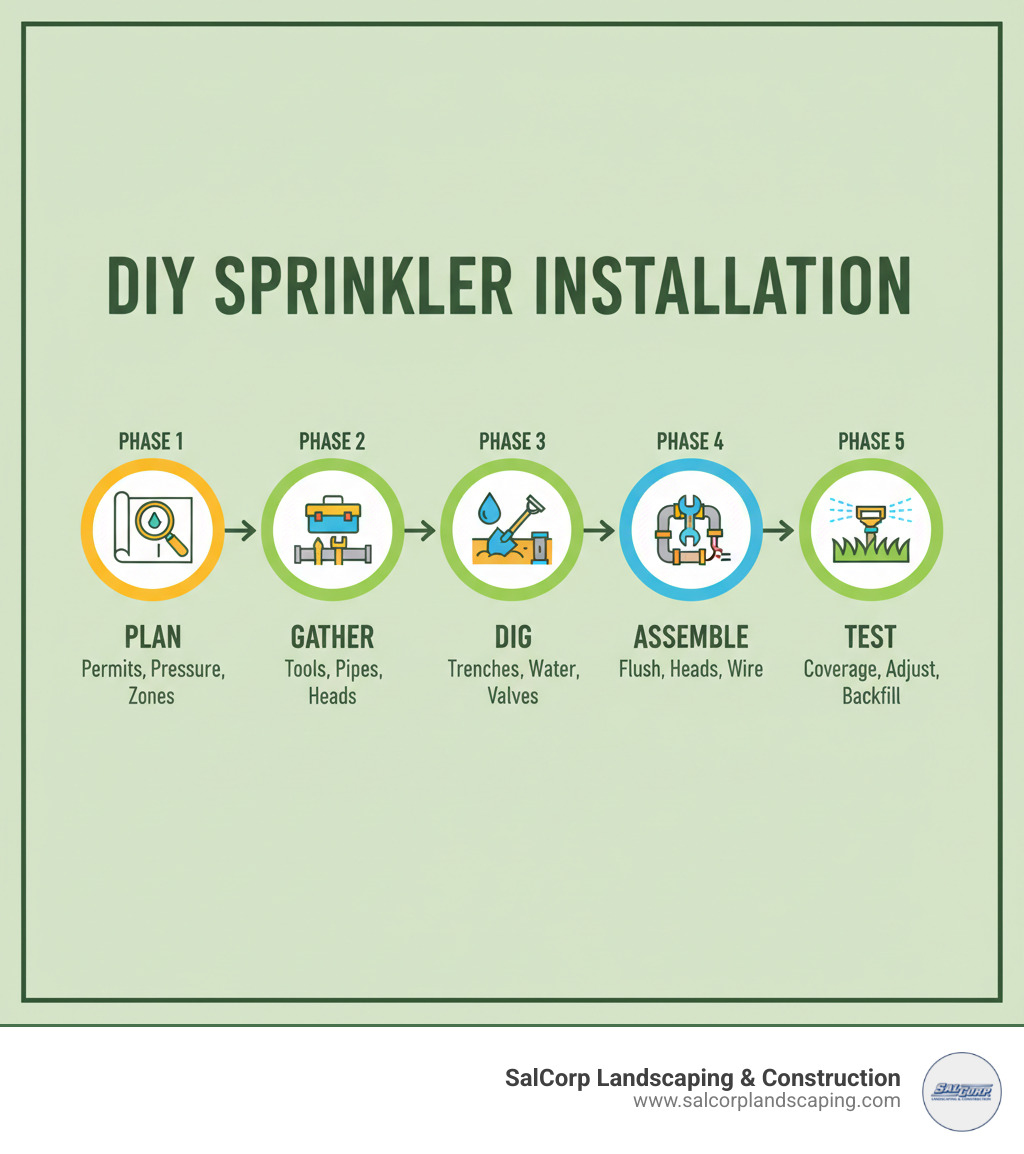
An underground sprinkler system is a smart investment for Massachusetts homeowners, offering more than just convenience. It conserves water, maintains lawn health during dry spells, prevents soil erosion, and can even increase property value. While setting up a lawn sprinkler system can seem daunting, breaking it down into five phases makes it achievable.
The 5 Main Phases:
- Plan: Check permits, measure water pressure, sketch your property, and create zones.
- Gather: Collect tools (trencher, pipe cutter) and materials (pipes, heads, valves, controller).
- Dig: Mark the layout and dig trenches 6-12 inches deep.
- Assemble: Connect to the water supply, install the valve manifold, and lay pipes.
- Test: Install heads, wire the controller, test zones, and backfill trenches.
Key DIY Requirements:
- Water pressure: 40-60 PSI
- Trench depth: 6-12 inches
- Time investment: 16-20+ hours
- Average DIY cost: $1,000-$3,500+ for materials
I’m Sal Musto, owner of SalCorp Landscaping & Construction, and I’ve been installing sprinkler systems in the Walpole area for over 20 years. Whether you’re going the DIY route or considering a pro, this guide will walk you through the critical steps.
A Step-by-Step Guide to Setting Up a Lawn Sprinkler System
Perfectly setting up a lawn sprinkler system comes down to careful planning and execution. Let’s break the project into manageable steps.
Phase 1: Planning and Designing Your System
Good planning is the foundation of a reliable sprinkler system. Take your time here to avoid future frustrations.
Check Permits and Call 811
First, check with your local building department for any required permits. Most Massachusetts towns require them. Crucially, call 811 a few days before you dig. This free service marks underground utility lines, preventing dangerous and costly accidents.
Sketch Your Property and Plan Layout
Next, sketch your property to scale on graph paper (1 inch = 10 feet is a good reference). Include the house, driveway, patios, trees, and other features, and mark your water source location. A detailed map is your roadmap for a smooth installation. You can download our free design worksheet here to help.
Measure Water Pressure and Flow Rate
Your system’s design depends on your home’s water pressure (PSI) and flow rate (GPM). To measure PSI, attach a pressure gauge to an outdoor faucet; you’ll need 40-60 PSI. To find your GPM, time how long it takes to fill a 5-gallon bucket from the same faucet. The formula is: (5 / seconds) * 60 = GPM. This data determines how many heads can run in a single zone.
Divide Your Yard into Watering Zones
Divide your yard into zones based on watering needs. Group areas with similar sun exposure (full sun vs. shade) and plant types (lawn, shrubs, flower beds) together. For gardens or specific trees, consider using low-volume drip irrigation. Don’t overload zones; it’s better to add an extra zone than to have weak pressure.
Choose Sprinkler Head Types
Choose the right sprinkler heads for each zone. Rotors are for large, open areas (25-45 feet), while spray heads are for smaller or irregular spaces (5-15 feet). Crucially, never mix rotors and spray heads in the same zone, as they have different watering rates and will cause uneven coverage.
Phase 2: Gathering Tools and Materials
With your plan complete, gather your tools and materials. You’ll need a tape measure, landscape flags, a shovel or power trencher, a PVC pipe cutter, PVC primer and cement, and Teflon tape. Your materials list will include pipes, fittings, sprinkler heads, zone valves, a valve box, a backflow preventer, a controller, and 18-gauge direct burial wire. For convenience, sprinkler system kits can simplify purchasing.
PVC vs. Poly Pipe: What’s the Difference?
Your choice between PVC and poly pipe impacts durability and flexibility. PVC pipe is rigid, durable, and cost-effective, making it ideal for main lines. Poly pipe is flexible, easier to steer around obstacles, and more resistant to freezing—a plus in Massachusetts. A common strategy is to use rigid PVC for main lines and flexible poly for lateral lines.
Phase 3: The Installation Process
Now, your plan becomes reality.
Mark, Dig, and Connect
- Mark Layout: Use landscape flags for head locations and spray paint for pipe routes.
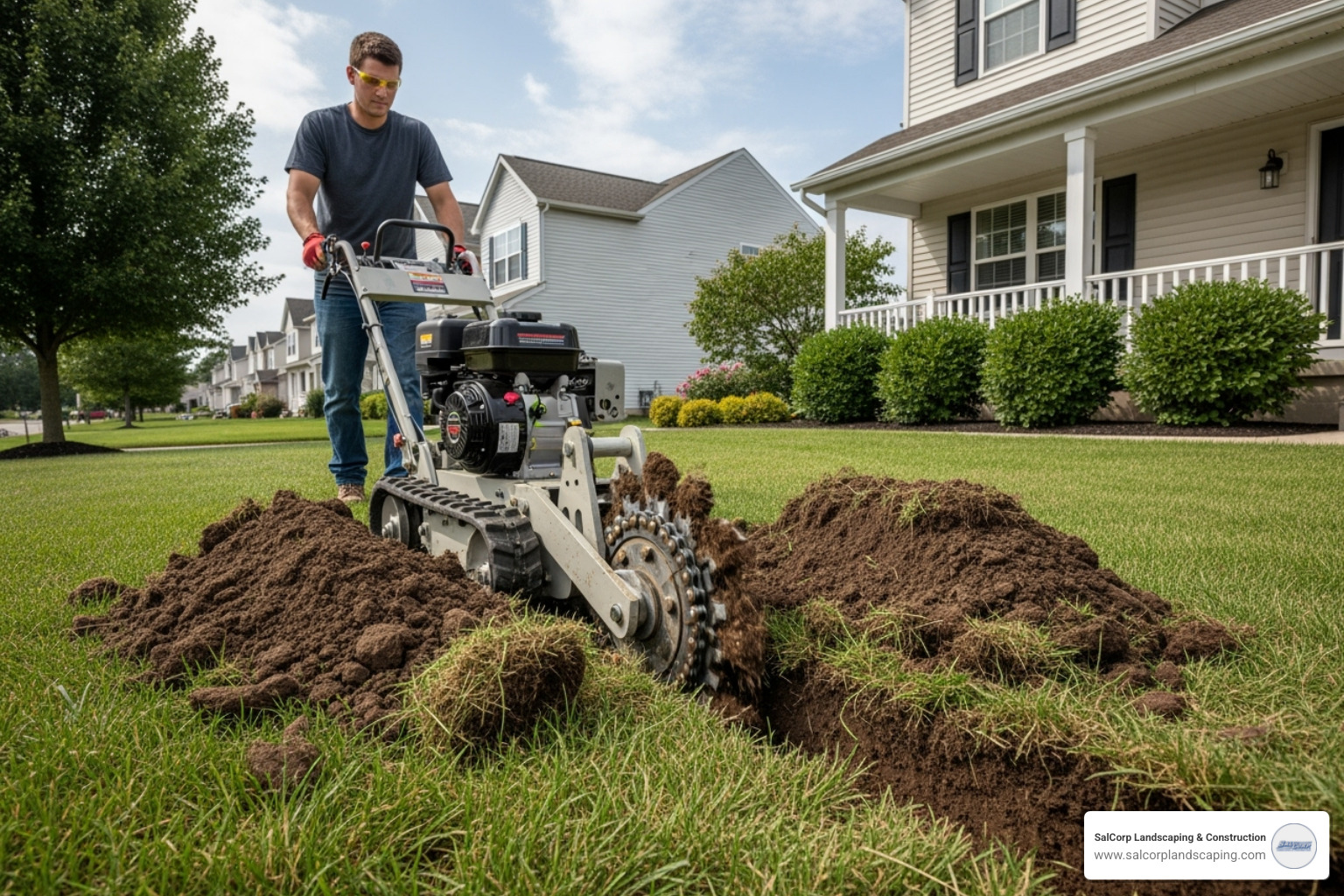
- Dig Trenches: Dig trenches 8-12 inches deep to protect pipes from frost and aeration. Renting a power trencher is highly recommended for larger yards.
- Connect to Water: The system must tap into your home’s main water line. If you’re not experienced with plumbing, hire a professional for this step to ensure it’s done safely and to code.
Assemble the Core Components
- Install Backflow Preventer: This is a non-negotiable safety device required by code that stops irrigation water from contaminating your drinking water.
- Assemble Valve Manifold: Group your zone valves in a valve box for easy access. Place the box on a gravel bed for drainage and connect it to the main line.
- Lay Pipes and Wire: Lay pipe in the trenches, using primer and cement for PVC or clamped fittings for poly pipe. Run the sprinkler wire in the same trench.
Phase 4: Final Connections and System Testing
This is the final stretch before you can bury your work.
Flush, Install, and Wire
- Flush the System: Before installing heads, flush the pipes with water to clear out any debris.
- Install Sprinkler Heads: Attach heads using flexible swing joints for easy positioning. Set them flush with the soil to avoid lawnmower damage.
- Wire the Controller: Run a common wire to all valves and a separate control wire from each valve to the controller. Use waterproof connectors in the valve box.
Program, Test, and Backfill
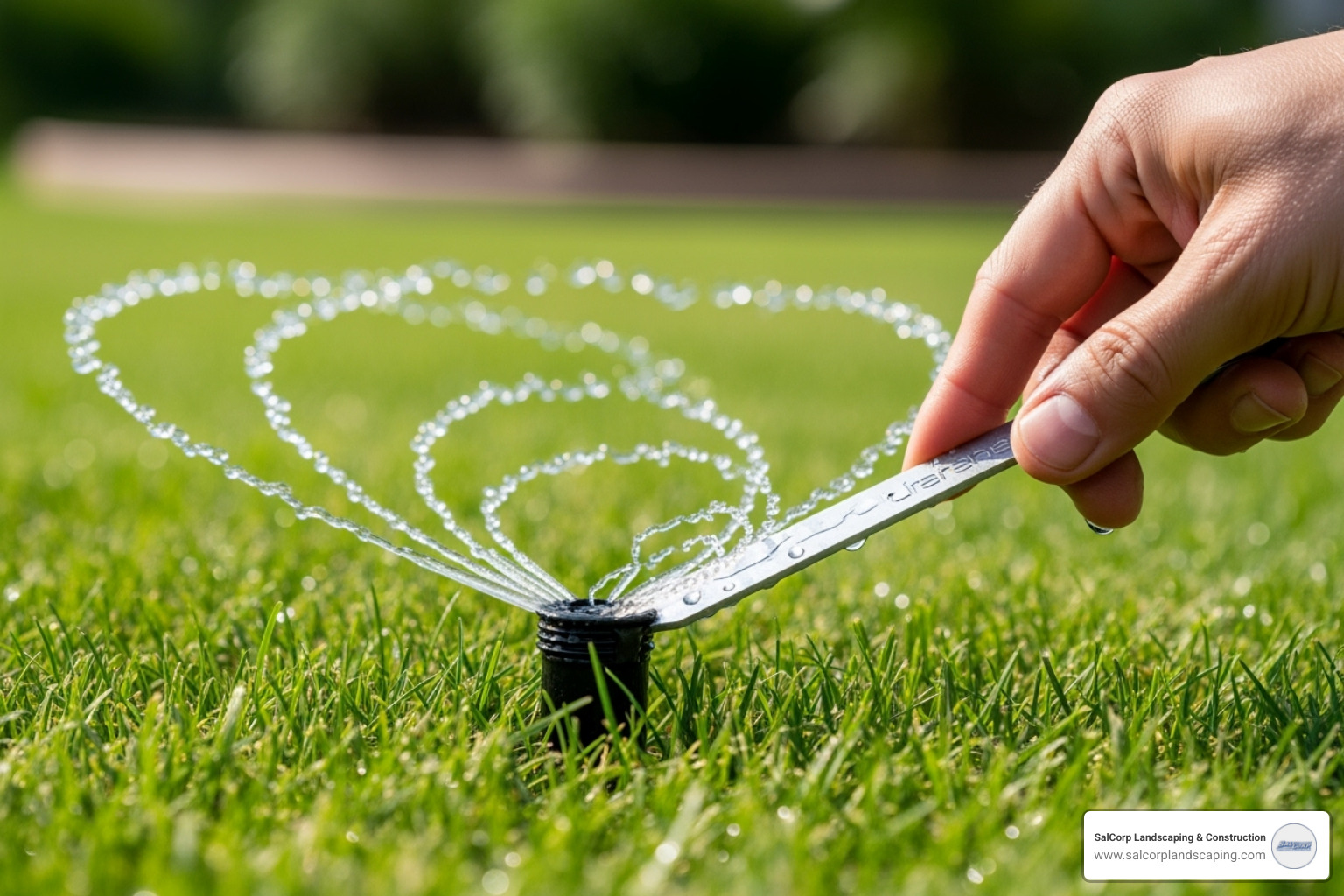
- Program and Test: Program your controller and test each zone. Look for leaks and ensure even, head-to-head coverage, adjusting heads as needed. Make sure water isn’t spraying on pavement or buildings.
- Backfill Trenches: Once you’ve confirmed everything works perfectly, carefully backfill the trenches. Compact the soil gently to prevent settling.
With that, your installation is complete. Stand back and admire a project that will pay dividends in time saved and a beautiful lawn for years to come.
After the Install: Maintenance, Costs, and Professional Help
Congratulations on setting up a lawn sprinkler system! To keep it running efficiently, regular maintenance is key. Here’s what you need to know about upkeep, costs, and when to call a professional.
Essential Maintenance for Your New System
A little annual attention will prevent major headaches and keep your lawn healthy.
- Winterization (Essential in Massachusetts): Before the first freeze, shut off the water to the system and blow out all remaining water from the pipes using an air compressor. This prevents pipes from cracking in winter. This is the most critical maintenance task in our climate.
- Spring Start-Up: In spring, turn the water supply back on slowly to avoid damaging pipes. Run each zone to check for leaks or broken heads that may have occurred over winter and reprogram your controller for the season.
- Cleaning Heads and Filters: If a head has an uneven spray, it’s likely clogged. Simply unscrew the nozzle, remove the filter screen, and rinse both to clear debris.
- Checking for Leaks: Periodically look for soggy spots in the lawn or an unexplained rise in your water bill, as these are signs of a leak.
- Seasonal Adjustments: Adjust your watering schedule as the seasons change. Water deeply but infrequently, either early in the morning or late in the evening, to promote deep root growth and conserve water. For more on system care, see more info about our irrigation services.
Project Costs and When to Call a Pro
Understanding the potential investment in time and money can help you decide between a DIY project and hiring a professional.
DIY Cost Estimate
For materials alone, a DIY installation can range from $1,000 to $3,500+, depending on yard size and complexity.
Please note: These are average costs based on general internet data and are not actual costs for SalCorp Landscaping & Construction services.
Professional Installation Cost
Hiring a professional typically costs between $3,000 and $9,000+. The final price depends on property size, number of zones, and system complexity.
Please note: These are average costs based on general internet data and are not actual costs for SalCorp Landscaping & Construction services.
Time Commitment
A DIY installation is a significant time investment. Expect to spend at least 16-20 hours of work, often spread over several weekends.
Common DIY Mistakes to Avoid
- Mixing Head Types: Never use rotor and spray heads in the same zone.
- Overloading Zones: Too many heads on one zone leads to low pressure and poor coverage.
- Incorrect Trench Depth: Shallow trenches leave pipes vulnerable to frost and aeration damage.
- Skipping the Flush: Failing to flush pipes before installing heads guarantees clogs.
When to Hire a Professional
While DIY is rewarding, hiring a professional is often the best choice if you have a large or complex property, lack the time or specific plumbing/electrical skills, or simply want the peace of mind that comes with a warranty and a job done to code.
At SalCorp Landscaping & Construction, we’ve been installing irrigation systems across Massachusetts for over 20 years, serving communities like Walpole, Canton, Dedham, and Franklin. We bring owner-operated expertise and professional equipment to ensure your system is designed and installed for our local climate.
Ready for a perfect lawn without the hassle? Contact us for a professional installation to discuss your project!
