

Side yard steps: Elevate Your Home 2025
Why Side Yard Steps Are Essential for Your Property
Side yard steps transform neglected spaces into functional pathways that connect different areas of your property safely and beautifully. Whether you’re dealing with sloped terrain, need better access to your backyard, or want to improve your home’s curb appeal, the right step design can solve multiple challenges at once.
Quick Side Yard Step Solutions:
- Natural stone steps – Durable and neat, ideal for permanent installations
- Wooden platform steps – Cost-effective for moderate slopes, easy DIY option
- Concrete steps – Versatile and long-lasting, can mimic other materials
- Flagstone treads – Natural look that complements existing hardscaping
- Combination designs – Mix materials for unique aesthetic and functional benefits
Side yards often present unique challenges – they’re typically narrow, may have drainage issues, and need to complement your home’s architecture while providing safe passage. The research shows that proper step design requires careful attention to dimensions, with risers between 5-8 inches and treads at least 11 inches deep for optimal safety and comfort.
Many homeowners overlook their side yards, but these spaces offer tremendous potential. With the right approach, you can create an attractive transition that improves both functionality and property value.
As Sal Musto, owner of SalCorp Landscaping & Construction, I’ve helped hundreds of Massachusetts property owners design and install side yard steps that perfectly balance safety, durability, and aesthetic appeal. With over two decades of hands-on experience in hardscaping and landscape design, I understand how proper step construction can transform challenging terrain into beautiful, functional outdoor spaces.
Key Considerations for Designing Your Side Yard Steps
Getting your side yard steps right means thinking through the big picture from day one. You’ll want steps that not only look great but also stand up to New England weather and daily use for years to come. The three pillars of any successful step project are choosing materials that match your style and budget, following proper safety standards, and having a realistic understanding of costs.
Choosing the Right Materials for Durability and Style
The material you choose for your side yard steps impacts maintenance, appearance, and longevity. Each option offers unique practical and aesthetic benefits.
Natural stone is the gold standard for its durability and classic New England look. Materials like flagstone, granite, and bluestone offer timeless appeal and excellent weather resistance. While the upfront cost for materials and skilled installation is higher, stone steps are a permanent, low-maintenance investment that adds significant property value.
Wood steps offer warmth and character. Pressure-treated lumber provides a classic, rustic charm, while composite decking is a modern, lower-maintenance alternative. Wood is cost-effective, especially for DIY projects, as it doesn’t require heavy machinery. The trade-off is regular maintenance, including sealing or staining to prevent rot. Note: Avoid old railroad ties, as they are often treated with chemicals unsuitable for residential use.
Concrete steps are highly versatile and long-lasting. Modern concrete can be stamped, colored, or textured to mimic other materials like stone or brick. Whether poured for custom designs or installed as precast blocks, it handles New England’s freeze-thaw cycles well with minimal maintenance. With modern finishing techniques, concrete can be both durable and aesthetically pleasing.
Here’s how these materials stack up for your side yard steps:
| Feature | Natural Stone | Wood | Concrete |
|---|---|---|---|
| Average Cost | Higher (ranges from moderate to premium depending on stone type) | Lower to Moderate (most budget-friendly option) | Moderate (basic to premium based on finish) |
| Durability | Excellent (decades to centuries) | Good (10-20 years with care) | Excellent (30+ years) |
| Maintenance | Low (occasional cleaning) | High (regular sealing, rot checks) | Low (minimal upkeep) |
| Style Options | High (natural, neat, rustic) | Moderate (traditional to modern) | High (can mimic other materials) |
These cost comparisons reflect general market trends and internet averages for outdoor step projects, not specific pricing from SalCorp Landscaping & Construction. Actual costs vary significantly based on your specific project needs, site conditions, and material choices.
For deeper insights into selecting the right materials for your outdoor project, check out our comprehensive guide on hardscape materials.
Essential Design & Safety Standards for Side Yard Steps
Safety isn’t just about following rules – it’s about creating steps that feel natural and comfortable for everyone who uses them. After two decades of building steps across Massachusetts, I’ve learned that the best designs balance code requirements with real-world usability.
Rise and run calculations form the foundation of comfortable steps. The “rise” is how tall each step is, while the “run” is how deep the tread goes. Keep your risers between 5 to 8 inches and make your treads at least 11 inches deep. More importantly, keep these dimensions consistent – nothing causes trips and falls like irregular step heights.
Step width matters more than many people realize. While narrow paths work fine for garden walks, your main side yard steps should accommodate normal traffic patterns. A width of 48 inches works well for most residential applications, allowing two people to pass comfortably or for carrying larger items.
Handrails become required when you have four or more risers, and honestly, they’re a good idea even for shorter runs. Massachusetts building codes take safety seriously, and a sturdy handrail provides crucial support during icy conditions or when carrying items.
Speaking of codes, local building requirements vary by town, even within our service area. Towns like Walpole, Canton, and Needham each have their own specific requirements for outdoor construction. We stay current with all local regulations to ensure your project passes inspection the first time. For complex projects near water features, regulations can be particularly detailed, as outlined in Massachusetts waterfront regulations.
Proper drainage can make or break your step project – literally. Steps need a slight forward slope (about 1/8 inch per foot) to shed water effectively. Standing water leads to ice in winter and material breakdown over time. For areas with persistent moisture or natural springs, we often recommend additional drainage solutions during the excavation phase. Our article on excavation in landscaping and hardscaping explains why proper ground preparation is so critical.
Non-slip surfaces aren’t optional in New England. Brushed concrete, textured stone, or even strategic gravel infill can provide the traction needed during wet or icy conditions. Smooth surfaces might look sleek, but they become skating rinks when weather turns.
Budgeting for Your Project
Understanding what drives costs in side yard steps projects helps you make informed decisions and avoid surprises. While every project is unique, certain factors consistently influence pricing across the industry.
The cost ranges mentioned below reflect general internet averages and industry data for outdoor step installation. These figures are not quotes from SalCorp Landscaping & Construction, as our pricing depends on your specific project requirements, site conditions, and material choices.
Most side yard step projects fall somewhere between $1,000 and $12,000, with the wide range reflecting the huge variety in materials, complexity, and site conditions. Simple wooden steps on gentle slopes anchor the lower end, while elaborate stone installations with complex grading and drainage systems reach the higher numbers.
Material choice drives a significant portion of your total investment. Basic pressure-treated lumber keeps costs down, while premium granite or custom bluestone can multiply expenses. Concrete offers a middle ground, especially when you factor in its longevity and low maintenance needs.
Project complexity affects both material and labor costs. Straight, simple steps are straightforward to build. Add curves, multiple levels, integrated planters, or retaining wall features, and you’re looking at significantly more design and construction time.
Site conditions can surprise homeowners with their impact on costs. Steep slopes require more excavation and potentially retaining structures. Poor drainage means additional groundwork. Limited access for equipment means more hand work and time.
The DIY versus professional decision involves more than just comparing material costs to full installation prices. While DIY projects might save on labor, they also carry risks around structural integrity, code compliance, and long-term durability. Professional installation includes proper permits, engineered solutions for challenging sites, and warranty protection.
For homeowners considering professional installation, our masonry and concrete contractors page provides more information about our comprehensive approach to hardscaping projects.
The key to successful budgeting is understanding that side yard steps are a long-term investment in your property’s functionality, safety, and value. Quality materials and proper installation pay dividends for decades to come.
Creative Ideas and Finishing Touches
Your side yard steps can be so much more than just a way to get from one level to another. Think of them as an opportunity to showcase your home’s personality while solving practical challenges. The best step designs feel like they’ve always belonged there, seamlessly blending function with beauty.
Integrating Your Side Yard Steps with Landscape and Architecture
The magic happens when your side yard steps become part of your home’s story rather than an afterthought. We’ve seen how the right design choices can transform a simple pathway into a stunning focal point that guests remember.
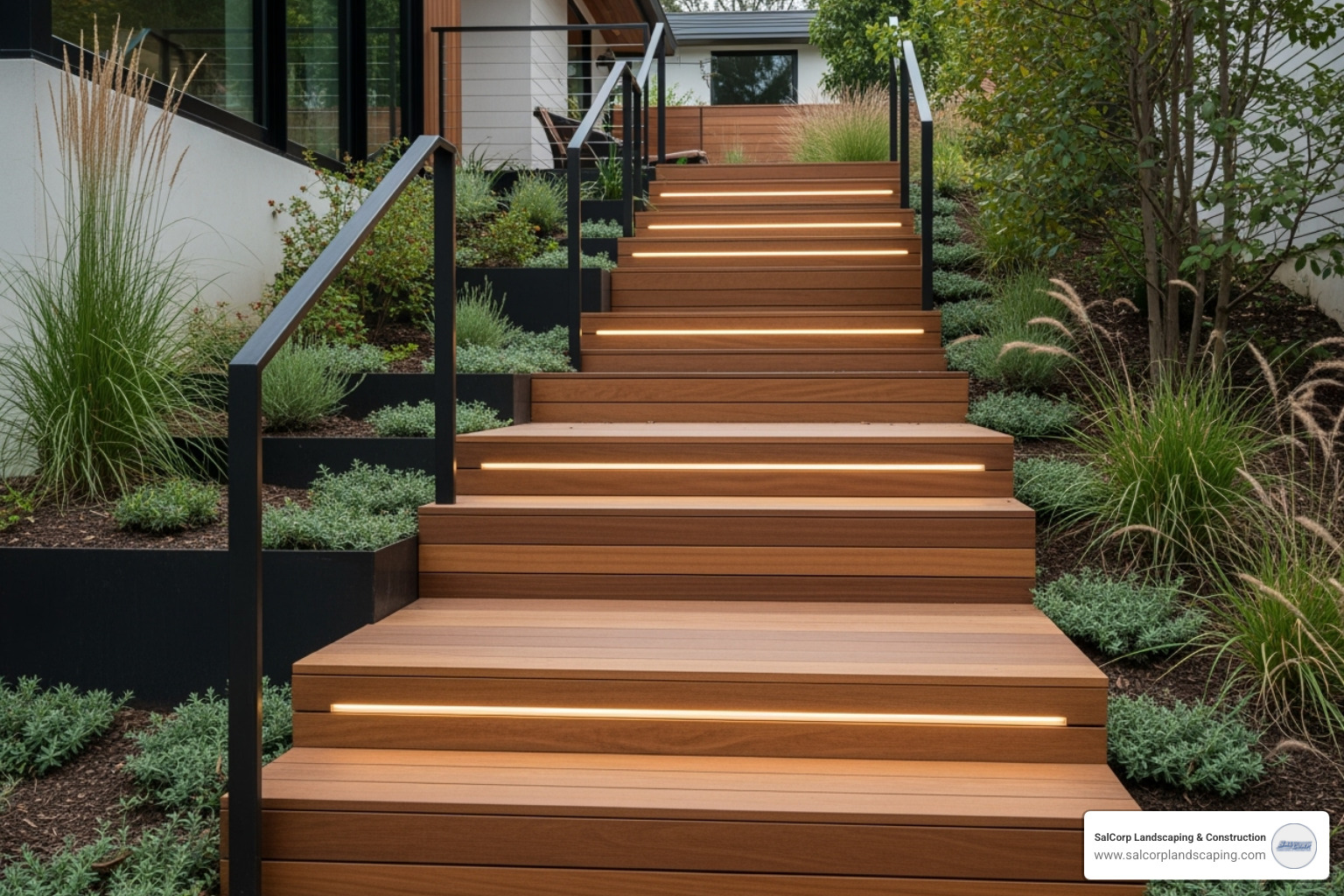
Your home’s architectural style should guide your material choices. If you have a sleek, contemporary home, consider modern steel and wood steps that echo those clean lines. The contrast between warm wood treads and cool steel supports creates visual interest while maintaining that minimalist aesthetic.
For traditional or colonial-style homes, classic materials like natural stone or brick steps feel right at home. Ranch-style houses often look fantastic with rustic timber steps that accept a more casual, natural vibe.
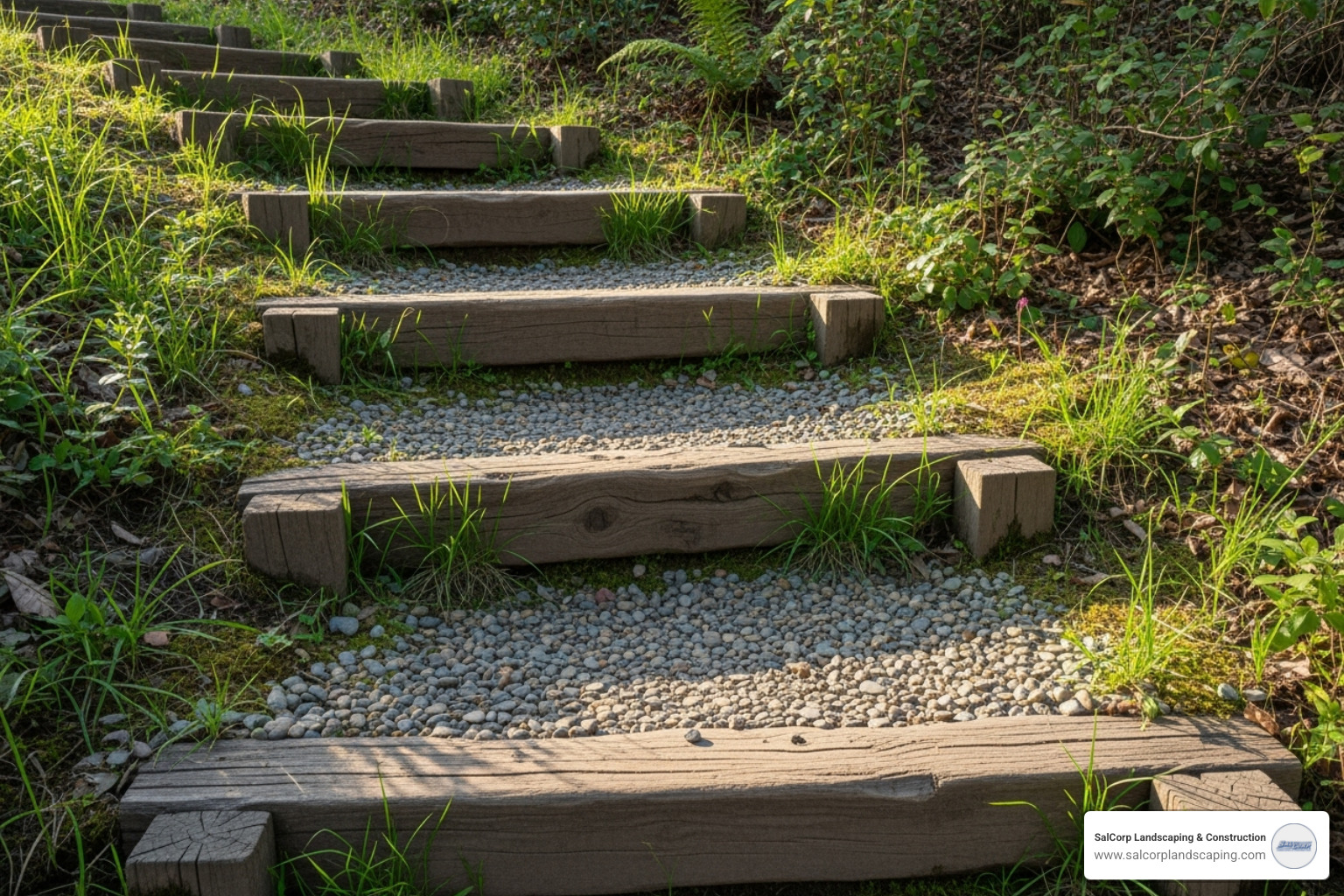
Here’s where landscaping works its magic. Planting in crevices between stone steps adds instant character and softens those hard edges. We love using ground cover plants like thyme and sedum because they’re practically bulletproof and create beautiful spillover effects.
Thyme releases a wonderful fragrance when stepped on (though we don’t recommend making a habit of it), while sedum varieties offer interesting textures and colors that change with the seasons. Creeping phlox provides stunning spring blooms, and hens-and-chicks add architectural interest with their geometric rosettes.
Tiered gardens alongside your steps create natural resting spots for the eye and maximize your planting opportunities. Each level becomes its own mini-garden, perfect for showcasing different plants or creating seasonal displays.
One clever approach we often use is integrating steps into retaining walls. This dual-purpose design tackles slope challenges while providing safe passage. The steps become part of the wall structure itself, creating a cohesive look that feels intentional rather than added on. For more inspiration on creating cohesive outdoor designs, check out our hardscape design services.
Illuminating Your Path: Lighting for Safety and Ambiance
Nothing transforms side yard steps quite like thoughtful lighting. It’s the difference between a purely functional pathway and an inviting entrance that welcomes you home each evening.

Path lights positioned along the sides of your steps create gentle pools of light that guide your way without overwhelming the space. Recessed step lights built into the risers provide subtle downward illumination that highlights each tread – perfect for safety without the glare.
If your design includes posts for handrails, post cap lights offer ambient lighting that spreads evenly across the area. They’re particularly effective for wider step installations where you want broader coverage.
Solar-powered options have come a long way in recent years. While they might not provide the consistent brightness of wired systems, they’re perfect for areas where running electrical lines would be challenging. Plus, there’s something satisfying about using the sun’s energy to light your path.
For reliable, customizable lighting, low-voltage systems remain our go-to recommendation. They offer consistent performance and can be easily integrated with timers or smart home systems.
Beyond the obvious safety benefits, lighting creates atmosphere that extends your outdoor living space into the evening hours. It highlights the textures in your stone work, creates dramatic shadows, and can even spotlight landscape features like that beautiful Japanese maple you planted near the steps.
The goal is creating a welcoming path that feels safe and inviting, whether you’re coming home from work on a dark winter evening or hosting friends for a backyard gathering that extends past sunset.
Conclusion: Elevating Your Home’s Functionality and Appeal
Investing in thoughtfully designed side yard steps transforms an overlooked corner of your property into a valuable asset. These steps create a beautiful and functional connection between your outdoor spaces, increasing your property’s value by making every square foot accessible. No more scrambling up slopes or avoiding parts of your yard.
Safety becomes second nature when your steps are properly built with the right dimensions and materials. Your family and guests can steer your property with confidence, whether it’s a sunny afternoon or a snowy Massachusetts evening. There’s real peace of mind in knowing everyone can move safely through your outdoor spaces.
The curb appeal factor is hard to ignore. Side yard steps that complement your home’s architecture and integrate beautifully with your landscaping create a “wow” factor that makes neighbors take notice. What was once challenging terrain becomes a showcase of thoughtful design.
At SalCorp Landscaping & Construction, we’ve been helping Massachusetts homeowners open up their property’s potential for over two decades. As an owner-operated business, I personally oversee every project, ensuring the same attention to detail and quality craftsmanship that has built our reputation throughout communities from Walpole to Boston and beyond.
Our comprehensive approach means we handle everything from initial design concepts to final installation, using our own fleet of machinery to ensure efficiency and quality control. We understand Massachusetts terrain, weather patterns, and local building requirements inside and out.
Every challenging slope is an opportunity waiting to be found. Whether you’re dealing with a gentle grade that needs a few well-placed stone steps or a steep incline requiring a more elaborate solution, we’re passionate about creating outdoor spaces that work as hard as they look good.
Ready to transform your side yard from a problem area into a property asset? We’d love to help you design and build steps that perfectly balance safety, durability, and style for your unique space.
Contact us to design and build your ideal landscape stairs
