

Why Block Drainage Solutions Are Critical for Property Longevity
Block drainage solutions are specialized systems designed to manage water flow around retaining walls, preventing structural failure. If you’re facing water pooling or wall bulging, understanding drainage is essential.
Quick Solutions Overview:
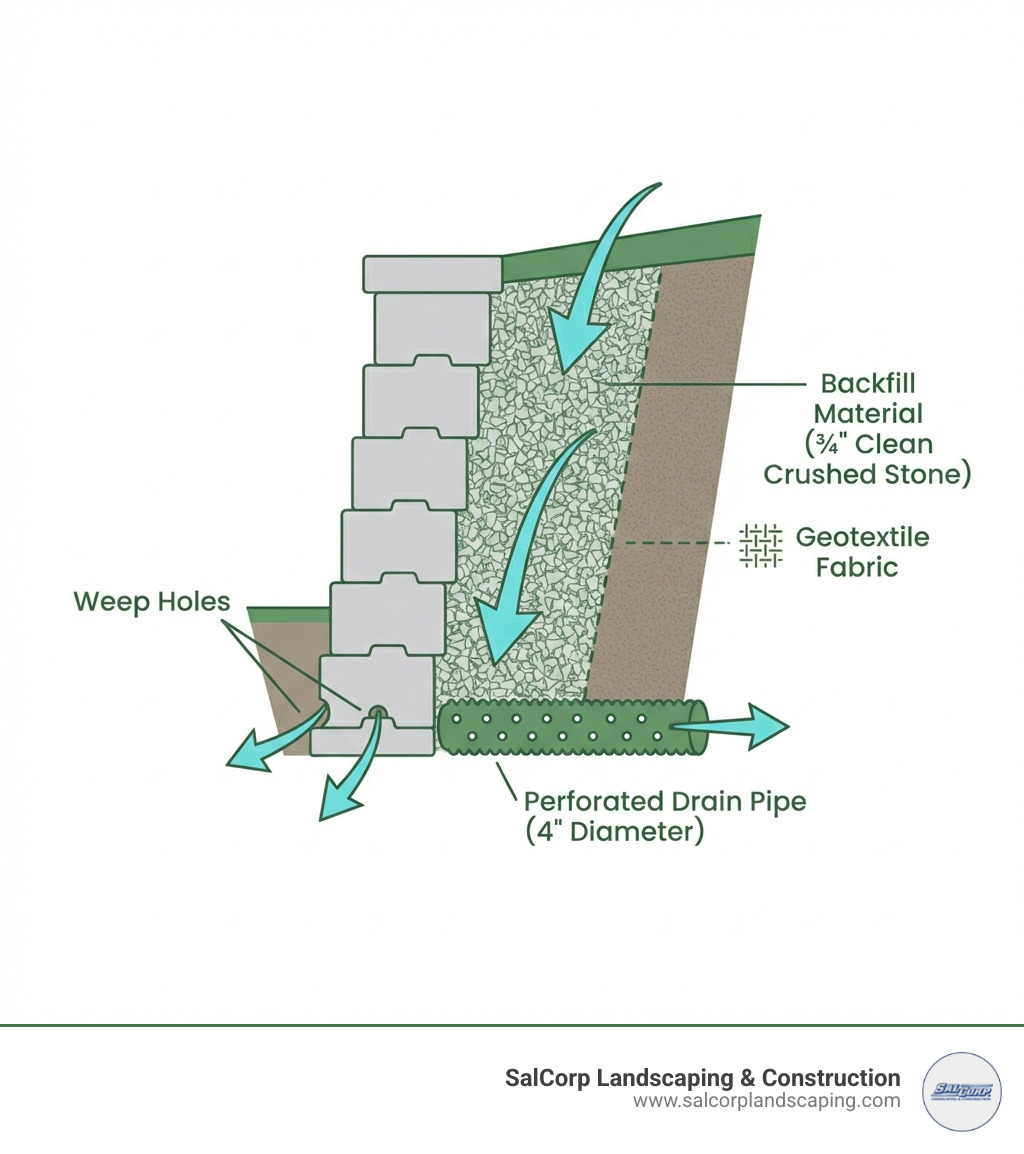
- Backfill: Use ¾” clean crushed stone to allow water passage.
- Pipes: Install 4-inch perforated pipes at a 1% minimum slope.
- Weep Holes: Add openings every 6-10 feet for walls over 4 feet.
- Fabric: Place geotextile between soil and aggregate to prevent clogging.
- Heel Drains: Essential for grid-reinforced walls.
Soil absorbs water, creating hydrostatic pressure that pushes against walls, causing them to lean or fail. In Massachusetts, the freeze-thaw cycle adds risk; trapped water expands, cracking blocks and shifting foundations. Proper drainage relieves this pressure, prevents erosion, and preserves your investment.
I’m Sal Musto, owner of SalCorp Landscaping & Construction. For over 20 years, I’ve ensured every retaining wall we build in Walpole and surrounding areas incorporates the drainage systems needed to withstand our climate.
Engineering Long-Lasting Block Drainage Solutions
In Walpole, MA, a durable retaining wall relies on robust engineering below the surface. Water is the most destructive force acting on these structures, making an effective drainage plan essential.
Managing Hydrostatic Pressure and Soil Factors
Hydrostatic pressure occurs when saturated soil pushes against a wall, causing bulging or cracking. Block drainage solutions provide pathways for water to escape, preventing this buildup. Without drainage, erosion can wash away soil, creating voids that lead to instability. In our climate, trapped moisture also causes freeze-thaw damage, leading to surface flaking and internal weakening.
Soil type significantly influences design:
- Clay: Low permeability; requires aggressive drainage and geogrid.
- Sand: High permeability; needs geotextile to prevent washout.
- Silt: Prone to compaction and freeze-thaw sensitivity.
- Organic: Unstable and unsuitable for structural support.
We use field tests to assess soil content and adjust our drainage strategies for both sloped and level landscapes. Learn more on our Outdoor Drainage Solutions page.
Essential Components: From Backfill to Heel Drains
An effective system relies on several key components:
- Backfill: ¾” crushed stone allows water to flow freely to the drainage pipe.
- Geotextile Fabric: Filters soil particles to prevent system clogging.
- Perforated Pipes: 4-inch pipes at the base, sloped at 1% minimum. Smooth-walled pipes are preferred in cold regions to prevent ice buildup.
- Weep Holes: Openings in the wall face for immediate water exit, typically every 6-10 feet for walls over 4 feet.
- Heel Drains: Specialized pipes for geogrid-reinforced walls that route water away from the reinforced mass. These must not be tied into the toe drain system.
For technical best practices, see Best Practices for Segmental Retaining Walls.
Seasonal Impacts and Reinforcement Systems
Freeze-thaw cycles and spring thaws rapidly increase pressure. We ensure pipe outlets extend beyond the wall base to prevent ice blockages. Beyond drainage, we integrate reinforcement:
- Geogrid: High-strength mesh that stabilizes the soil mass.
- MSE Walls: For walls over 6 feet, we require formal engineering design.
Properly reinforced walls are significantly more resistant to seasonal shifts. See our Retaining Walls page for more.
How to Install and Maintain Your Drainage System
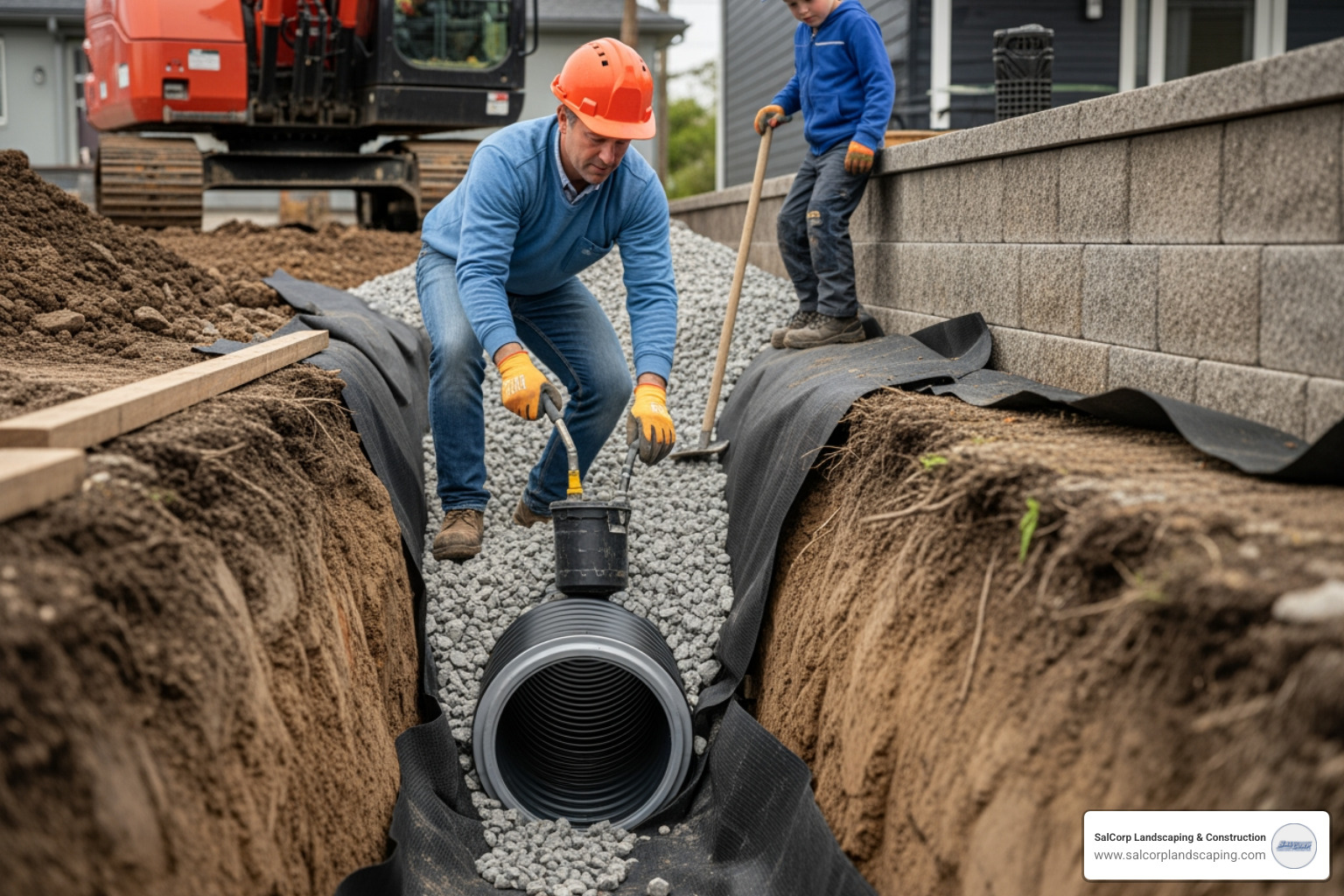
Installation involves excavating a trench, laying geotextile-wrapped perforated pipe at a 1% gradient, and backfilling with be crushed stone. Heel drains require venting every 100 feet. Modern blocks often feature internal voids to assist this process.
Step-by-Step Installation (Typical Retaining Wall)
Below is a practical overview of how block drainage solutions are commonly installed behind segmental retaining walls. Exact details vary by wall height, soil type, and whether reinforcement (geogrid) is required.
- Excavate and prepare the base: Excavate to the required depth and width for the wall base and drainage zone. Compact the subgrade so the pipe and aggregate wont settle unevenly.
- Place and protect the drain line: Install a 4-inch perforated pipe at the base of the wall (the toe area) with a minimum 1% slope to daylight or a legal discharge point. In cold climates, smooth-walled pipe is often preferred to reduce snag points where silt and ice can accumulate.
- Wrap and separate soils: Use geotextile fabric to separate native soil from the stone. This filtering step is what keeps the stone bed and pipe from clogging over time.
- Backfill with drainage aggregate: Place clean becrushed stone behind the wall. The goal is to create a continuous, free-draining zone that moves water quickly down to the pipe.
- Add outlets and overflow strategy: Make sure the pipe has reliable outlets that remain open year-round. Outlets should extend beyond the wall face/base so water does not freeze and block the exit during Massachusetts winters.
- Finish grading to keep water away: Final grading should direct surface water away from the wall so the system is handling groundwater and incidental infiltration, not acting like a primary stormwater channel.
If youre unsure where your water can legally discharge (to daylight, a dry well, or an approved drainage connection), a contractor familiar with local conditions and permitting can help prevent costly rework.
Managing External Water and Site Integration
Block drainage solutions must account for external water sources:
- Grading: Landscaping should slope away from the wall.
- Swales: Vegetated channels intercept runoff. Note: local Conservation Commission permits may be required near protected areas.
- Catch Basins: Grates that direct surface water into underground pipes.
- Downspouts: Tied directly into drainage pipes to prevent discharge near the wall.
- Hardscape Transitions: Surface drains prevent pooling where patios meet walls.
Explore our Landscape Drainage Contractor Near Me page for integration details.
Maintenance Checklist (Keep the System Working)
Even a well-built retaining wall drainage system needs occasional attention, especially after major storms and during freeze-thaw season.
- Check outlets: Confirm the drain line outlet is open and flowing after heavy rain and spring melt.
- Clear weep holes (if present): Remove debris, mulch, or ice buildup that can restrict flow.
- Manage surface runoff: Keep downspouts connected and extensions intact so roof water doesnt dump behind the wall.
- Watch for early warning signs: New bulging, cracking, stained joints, or soil erosion at the top of the wall often indicates water is not escaping as designed.
If you notice repeated clogging, constant dampness, or silt at the outlet, it can signal fabric failure, improper backfill, or an undersized discharge plan.
DIY vs. Professional Assessment and Common Mistakes
Assess your needs by observing water flow after rain and checking for wall cracks.
- DIY: Suitable for small walls (under 4 feet) in well-draining soil. See our Home Made French Drain: Complete Guide.
- Professional: Recommended for tall walls, poor soil, or complex sites to ensure compliance with Massachusetts codes.
Common Mistakes:
- Using native soil as backfill.
- Omitting filter fabric.
- Improper pipe slope or placement.
- Ignoring roof downspouts.
- Blocked weep holes.
- Discharging the drain to a spot that freezes, erodes, or simply sends water back toward the wall.
Internet data suggests average costs for comprehensive drainage solutions range from $600 to $7,500+, depending on complexity, access, and discharge requirements. These are market averages and not specific pricing from SalCorp Landscaping & Construction. Professional installation is an investment in safety. We also provide Patio Drainage solutions.
Conclusion: Ensuring Performance with SalCorp Landscaping & Construction
Proper drainage is the key to a retaining wall’s lifespan. By relieving hydrostatic pressure and mitigating freeze-thaw damage, block drainage solutions protect your property.
SalCorp Landscaping & Construction is an owner-operated business with 20+ years of experience serving Massachusetts, from Walpole to Brockton and beyond. We use our own machinery to engineer lasting solutions for our local climate.
Maintenance is simple: check weep holes for blockages and ensure downspouts are clear. If you have drainage concerns, contact SalCorp Landscaping & Construction today for expert Outdoor Water Drainage Solutions.
