Mulching and edging services: 5 Stunning Benefits
Why Mulching and Edging are Essential for a Stunning Landscape
Professional mulching and edging services are key to a stunning, healthy landscape. Here’s a quick overview of what these services involve and how they benefit your yard:
- What they are: Mulching is applying a protective layer of material to garden beds, while edging creates a crisp border around these areas.
- What’s included: Services typically include preparing beds by removing debris and weeds, cutting new edges, spreading fresh mulch, and a final cleanup.
- Key benefits: They improve landscape health by controlling weeds, retaining soil moisture, and regulating soil temperature, while dramatically improving curb appeal.
A beautiful yard requires care, and two of the most impactful steps are mulching and edging. These practices go beyond aesthetics, playing a vital role in the health of your plants and soil. By creating clear boundaries and nurturing your garden beds, you protect your investment and ensure your outdoor spaces look their best.
As Sal Musto, owner of SalCorp Landscaping & Construction, I’ve spent over two decades changing outdoor spaces. My hands-on approach ensures top-tier mulching and edging services, creating beautiful, healthy landscapes. Understanding these services is the first step toward open uping your property’s full potential.
Basic mulching and edging services vocab:
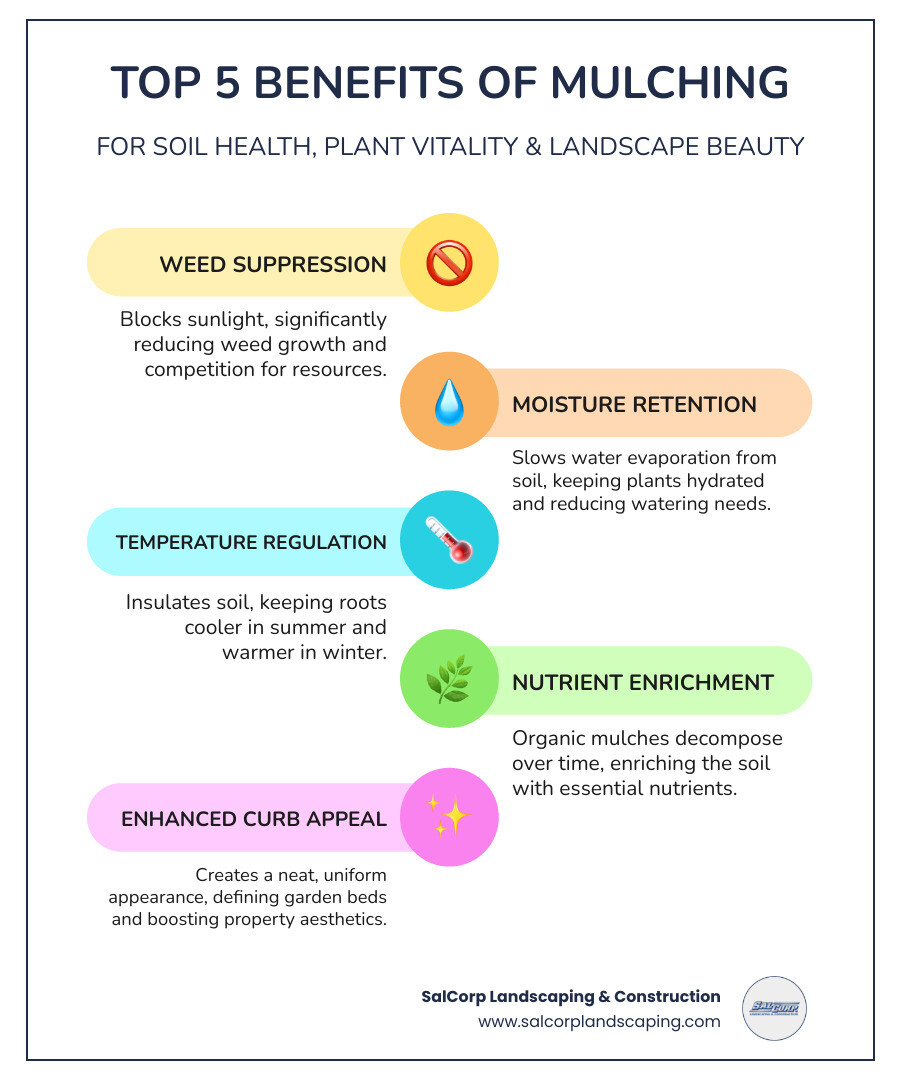
Mulching and edging work in tandem to provide benefits that go far beyond just looking good.
First, let’s discuss soil health. As organic mulches decompose, they enrich the soil with vital nutrients. This process improves soil structure, creating a better environment for roots to thrive.
Next, weed suppression. Mulch acts as a physical barrier, blocking sunlight from reaching weed seeds and preventing them from sprouting. This means less weeding for you and more resources for your plants.
Then there’s moisture retention and water conservation. Mulch significantly reduces water evaporation from the soil surface. This keeps more moisture available for your plants’ roots, which is a game-changer during dry spells in our Massachusetts climate and can help reduce your watering bill.
Mulch also excels at temperature regulation. In summer, it keeps soil cooler, protecting roots from heat. In winter, it insulates the soil, safeguarding plants from freezing temperatures. This consistency helps prevent plant stress, leading to healthier growth.
Of course, we can’t ignore the instant visual appeal. Improved aesthetics are an immediate benefit of professional mulching and edging services. A fresh layer of mulch adds a uniform, polished look to garden beds. Combined with crisp edging, your landscape transforms from unruly to refined. This improved curb appeal can even lead to an increased property value, making your home more attractive to potential buyers.
For more inspiration, check out our page on Creative Ideas for Garden Borders and Edging.
What to Expect from Professional Mulching and Edging Services
When you hire professionals for mulching and edging services, you’re investing in expertise, specialized equipment, and an eye for detail that transforms your landscape. At SalCorp, we bring over two decades of hands-on, owner-operated experience to every project. We assess your property, consider your needs, and create a customized plan that works for your landscape and budget.
Every property is unique, and we treat it that way. We’ll help you select the perfect mulch type and color to complement your home’s style, whether it’s classic dark hardwood or natural pine bark. The same goes for edging—we’ll guide you to materials and styles that improve your property’s character.
Our professional equipment makes a significant difference. We use our own machinery for efficient mulch delivery and installation, plus specialized edging tools to create crisp, clean lines. It’s not just about having the right tools; it’s about knowing how to use them to achieve professional results.
What’s Included in a Standard Mulching and Edging Service?
A comprehensive mulching and edging service gives your landscape a complete makeover. We start with thorough bed preparation, which is where the magic happens. This involves clearing away all debris—leaves, twigs, and old plant material.
Next is the essential step of weed pulling. We remove existing weeds by hand, getting them out by the roots to ensure they don’t grow back through the new mulch.
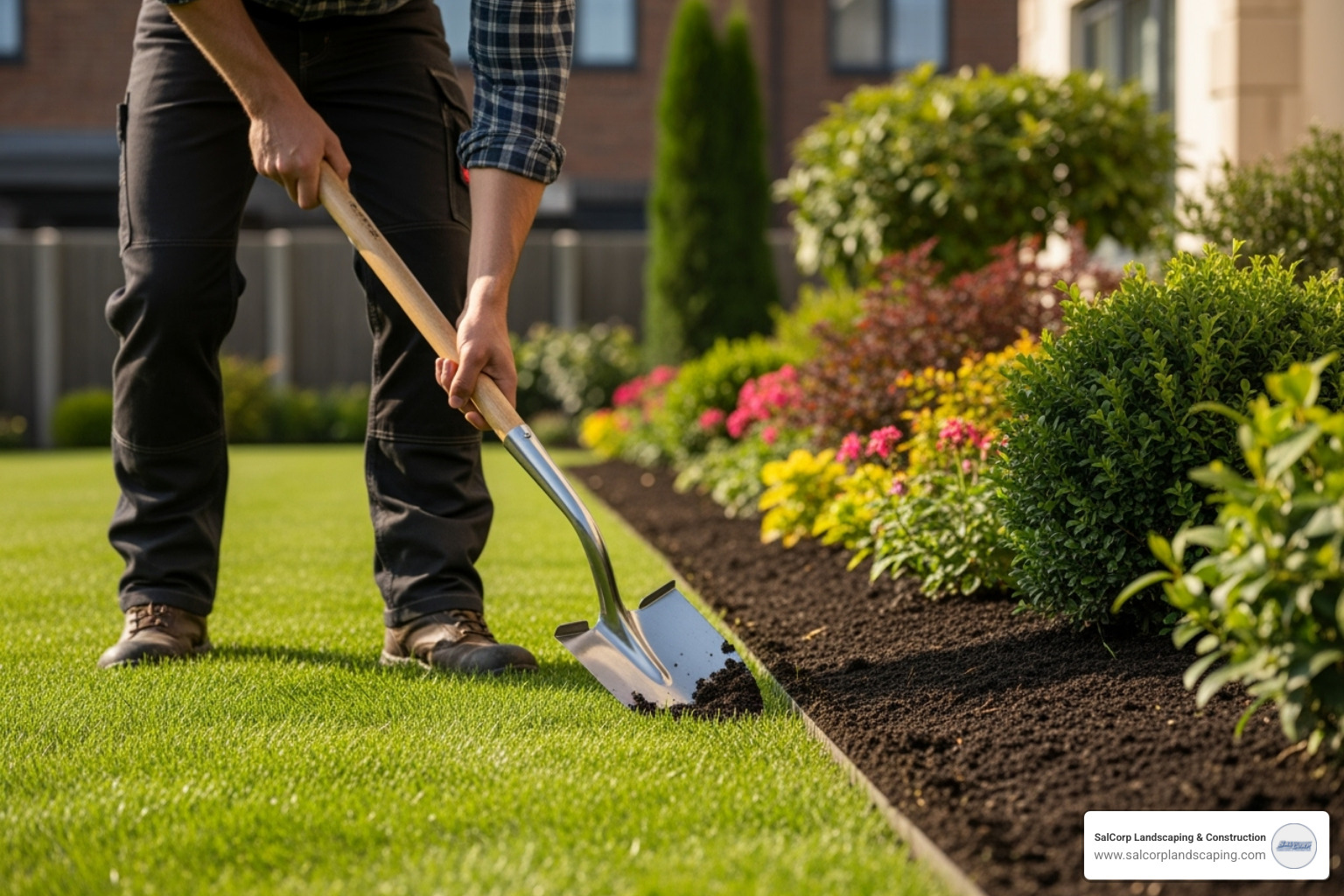
The edging process combines artistry and precision. We use machine edging for efficiency on long runs and spade edging for detailed work, creating a sharp, defined border that separates your beds from your lawn.
We handle all mulch delivery logistics, coordinating timing so fresh mulch arrives exactly when needed, eliminating hassle for you.
During mulch installation, we spread the material to the proper depth, avoiding harmful “mulch volcanoes” around trees and ensuring every plant gets the protection it needs without being smothered.
Finally, we perform a complete cleanup of the area, sweeping walkways and removing stray mulch to leave your property looking better than when we arrived.
Choosing Your Mulch: Organic vs. Inorganic
Selecting the right mulch is a key decision. The choice usually comes down to organic versus inorganic options, both of which have their place in landscaping.
Organic mulches are the workhorses. Hardwood mulch is a popular choice, available in natural brown, dark brown, black, and red. It breaks down slowly, feeding your soil while suppressing weeds. Pine bark offers a different texture and is great for acid-loving plants like azaleas. Cedar mulch has a wonderful aroma and helps repel some insects.
Compost used as mulch is like giving your plants a nutritious meal while protecting them, making it ideal for vegetable gardens or areas needing a fertility boost.
Inorganic mulches offer a different approach. Stone and gravel create permanent, low-maintenance solutions that work well in modern landscapes. They don’t break down, so they won’t need annual replacement, but they also don’t improve your soil. Rubber mulch, made from recycled tires, is extremely durable and popular for play areas due to its safety and longevity.
| Factor | Organic Mulch (Hardwood, Pine Bark, Cedar, Compost) | Inorganic Mulch (Stone, Rubber) |
|---|---|---|
| Soil Improvement | Yes, adds nutrients and improves soil structure as it decomposes | No, does not decompose or add nutrients |
| Longevity | Decomposes over time, typically needing replenishment annually | Very long-lasting, minimal replacement needed |
| Weed Control | Excellent, suppresses weeds by blocking light | Excellent, especially with weed barrier underneath |
| Appearance | Natural, earthy look; various colors available | Modern, clean look; consistent appearance |
For detailed guidance, check out our comprehensive guide on How to Choose the Right Mulch for Your Landscape.
Defining Your Space: Garden Bed Edging Options
Great edging is like a picture frame for your landscape, defining the space and making everything look intentional. Without it, mulch can migrate onto your lawn, and even beautiful plants can look messy.
- Natural trench edging is the classic, cost-effective approach where we cut a clean line between beds and lawn. It looks natural but needs periodic refreshing.
- Metal edging (steel or aluminum) creates a permanent, nearly invisible barrier that’s excellent for maintaining clean lines.
- Plastic edging is an affordable and flexible option, perfect for curved beds or for homeowners who like to change their landscape design.
- Stone or paver borders make a bold, decorative statement, becoming a feature of your landscape design.
- Wood edging brings natural warmth, ideal for rustic or traditional landscapes, though it will need eventual replacement.
For a permanent, custom solution, consider our Poured Concrete Lawn Edging service.
The Professional Process and Best Practices
Professional mulching and edging services require a detailed, step-by-step process. At SalCorp Landscaping & Construction, our two decades of experience have taught us that following industry best practices is key to a landscape that stays healthy and beautiful. Each step builds on the last, creating a foundation for long-term success for every project, from residential gardens to commercial properties.
The Importance of Proper Bed Preparation
Proper bed preparation is everything. It’s what separates professional results from DIY projects. You wouldn’t paint over a dirty wall, and the same principle applies here.
Before spreading fresh mulch, we focus on the foundation. Weeding comes first. Mulch is great at preventing new weeds, but it won’t kill established ones. We pull them out by the roots to give your plants the best start.
Next is removing old mulch when necessary. Too much mulch can suffocate plant roots. If the existing layer is too thick or matted, we’ll remove some to ensure plants can breathe and thrive.
Clearing leaves and debris is a small but crucial step. Fallen leaves and twigs can create moisture pockets that invite pests and diseases. We clear everything out to create a clean slate.
If we notice compacted soil, we may also work on improving soil by gently cultivating it or adding amendments. This intensive preparation is often part of our seasonal maintenance, which you can learn more about on our Spring and Fall Cleanup Services page.
Applying Mulch Like a Pro: Depth and Technique
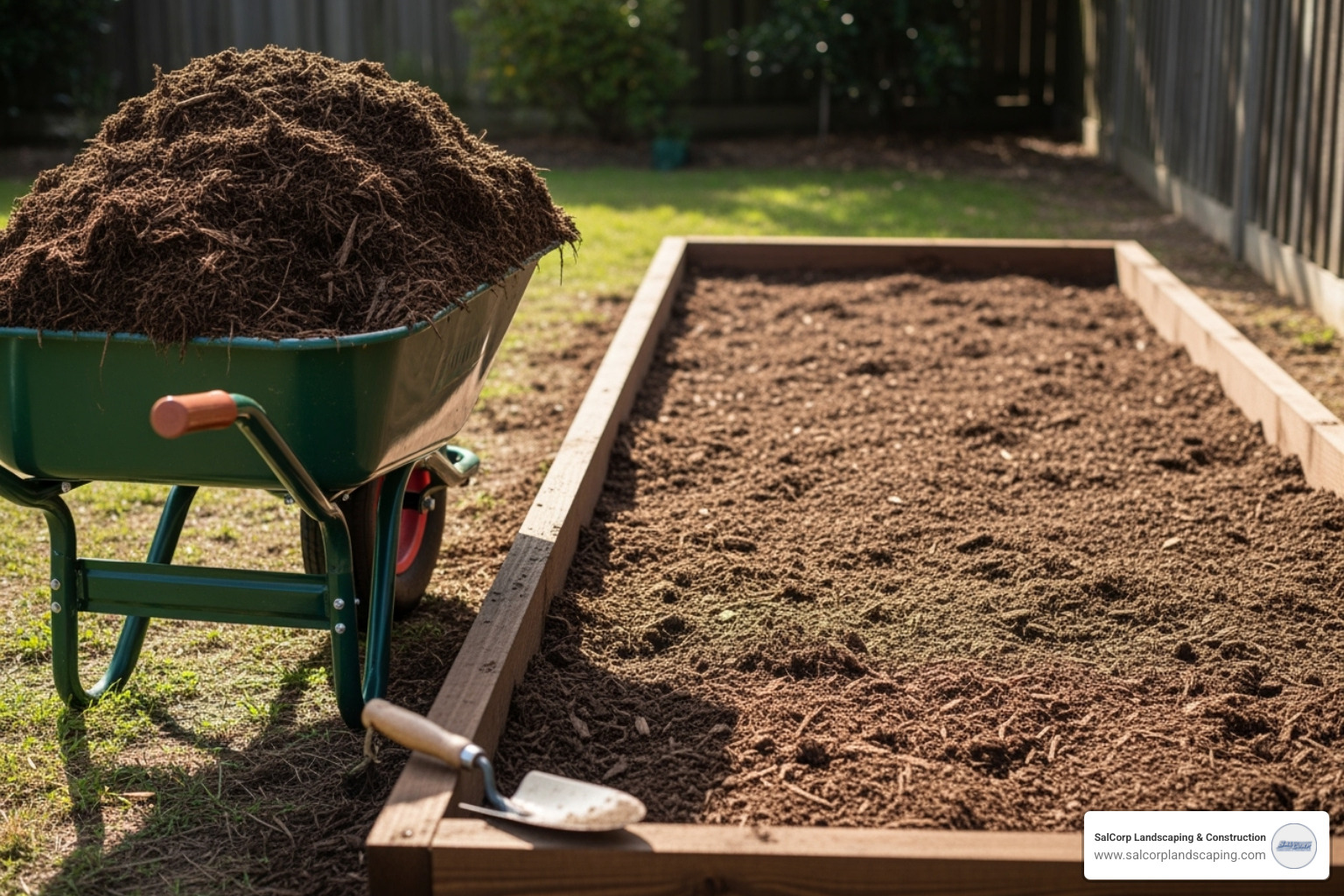
Applying mulch correctly is crucial for maximizing its benefits. We typically aim for a mulch thickness of 2 to 4 inches across your beds. This depth provides excellent weed suppression, moisture retention, and temperature regulation. Shadier spots may need 2 to 3 inches, while sunnier areas might benefit from up to 4 inches.
A common mistake is creating “mulch volcanoes”—piling mulch high against tree trunks and plant stems. This traps moisture against the bark, which can lead to rot, pests, and even kill your plants.
Instead, we create a small gap of 1 to 2 inches between the mulch and plant stems or tree trunks. This technique protects plant stems from moisture damage and ensures proper air circulation around the base of your plants.
The experts at Iowa State University offer excellent guidance on this topic, which aligns with our years of hands-on experience. You can read more in their Guidance on mulch depth from Iowa State University.
How Often Should You Refresh Your Mulch and Edges?
How often you need to refresh mulch and edges depends on several factors, but most landscapes benefit from annual replenishment.
Organic mulches are constantly decomposing and feeding your soil. The decomposition rate varies by mulch type and weather conditions. Finely shredded hardwood breaks down faster than chunky bark nuggets, for example.
The mulch type impact on timing is significant. Organic mulches should be refreshed annually, typically in spring. Inorganic mulches like stone last much longer but may need occasional touch-ups.
Seasonal timing also matters. Spring mulching is ideal for suppressing weeds, while fall mulching helps insulate plant roots for winter. Many clients opt for a spring refresh with a light fall touch-up.
Maintaining crisp edges is an ongoing process. Natural trench edges need re-cutting at least once a year. Metal or plastic edging requires less frequent attention, but we check for damage during our regular visits. Regular maintenance keeps your landscape looking professionally maintained year-round.
Understanding the Cost of Professional Services
When considering professional mulching and edging services, it’s natural to wonder about the cost. This is an investment in your property’s health, curb appeal, and value. Since every landscape is unique, we provide personalized quotes after assessing your property. The needs of a small front bed differ greatly from those of an extensive backyard.
Please note: The following figures are based on national averages and internet research, and do not represent actual pricing from SalCorp Landscaping & Construction. Costs can vary significantly based on your location here in Massachusetts, the materials you choose, and the complexity of your specific project. We always provide a custom quote custom to your unique needs after a thorough assessment of your property.
Factors That Influence the Cost of Mulching and Edging Services
Several key factors influence the cost of mulching and edging services.
- Square footage of garden beds: More area requires more mulch and time, increasing the cost.
- Linear feet of edging: The total length of borders that need edging affects the price. Intricate, curved designs require more work than simple rectangular beds.
- Mulch type: Budget-friendly shredded bark costs less than premium hardwood, colored mulches, or decorative stone.
- Edging material: A natural trench edge is the most economical, while permanent metal, stone, or concrete edging involves more materials and labor.
- Labor intensity: Properties with intricate shapes, steep slopes, or tight spaces that require hand work take more time and care.
- Accessibility: Difficult access, such as a steep driveway or narrow gate, can affect the time and effort required.
- Amount of prep work: Well-maintained beds are quicker to service. Beds with heavy weed growth or compacted old mulch require more preparation time, which is reflected in the price.
Average Cost Ranges
Based on industry and national averages, here are some general ranges to help you budget. These are not quotes.
Mulch installation costs typically run from $50 to $250+ per cubic yard installed. This includes the material, delivery, and installation. The wide range reflects differences in material costs, quantity, and installation complexity.
Edging installation costs can range from $2 to $30+ per linear foot, depending on the material and installation complexity. Simple trench edging is on the lower end, while permanent materials like metal or stone require a larger investment.
The best way to determine the cost for your landscape is to get a detailed, personalized estimate from us.
Frequently Asked Questions about Mulching and Edging
We get many questions about mulching and edging services. Here are answers to some of the most common ones:
When is the best time of year to have mulching and edging done?
The best times for mulching and edging services are spring and fall, as these seasons offer the most benefits.
Spring mulching (late March to early June in Massachusetts) prepares your landscape for summer. It helps suppress weeds, retain moisture as temperatures rise, and gives your yard a clean look that lasts all season.
Fall mulching (late September through November) is also beneficial. It acts as an insulating layer for plant roots, protecting them from winter cold and frost heave while adding nutrients to the soil as it decomposes.
Edging is best done in tandem with mulching for the most dramatic and lasting impression.
Can new mulch be applied over old mulch?
This is a common question, and the answer is usually “yes,” with a few considerations.
If your existing mulch layer is thin (less than an inch) and has started to decompose, adding new mulch on top is beneficial, as the old layer adds organic matter to the soil.
However, it’s crucial to avoid piling mulch too high. If the combined depth exceeds 4 inches, it’s best to remove some of the older material first. Too much mulch can suffocate plant roots by blocking oxygen and water. We will assess your existing mulch during our consultation to recommend the best approach.
Can I customize my mulching and edging services?
Absolutely! At SalCorp Landscaping & Construction, we believe your landscape should be unique. Customization is a core part of our mulching and edging services.
We work closely with clients to understand their vision. Whether you want a specific mulch color or a particular style of edging, we are here to make it happen. We offer a wide variety of mulch types and edging materials, from metal borders to stone designs or a natural trench edge. Our goal is to use our expertise and machinery to bring your unique landscape design to life within your budget.
This personalized approach also applies to larger properties. You can learn more about options for commercial spaces on our Commercial Edging for Landscaping page.
Conclusion: Transform Your Landscape with Expert Care
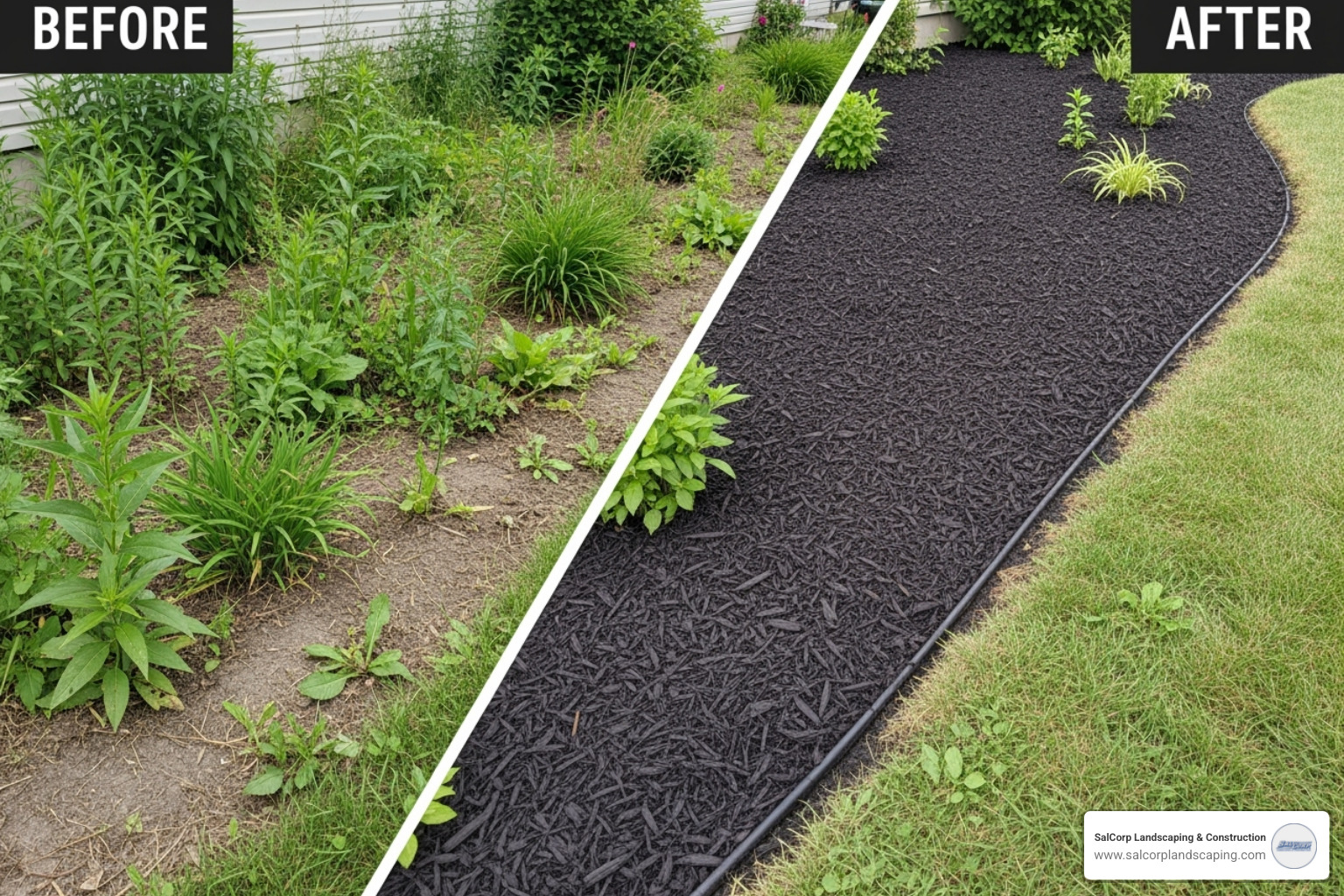
Professional mulching and edging services can transform a tired, overgrown yard into a vibrant, healthy landscape. This initial “wow” moment is just the beginning. The real benefits unfold over time: your plants thrive in better soil, water bills may decrease due to moisture retention, and weeding becomes less of a chore. The result is a beautiful property that brings a sense of pride.
The long-term benefits are significant. Healthier soil leads to stronger, more resilient plants. Better moisture retention helps your landscape weather dry spells. Defined garden beds simplify maintenance and boost your property value—a sound investment whether you plan to stay or sell.
At SalCorp Landscaping & Construction, we understand that your outdoor space is where life happens. That’s why our owner-operated approach means I’m personally invested in every project. When you work with us, you get two decades of experience, professional expertise, and a commitment to creating comprehensive outdoor solutions that last.
We bring our own machinery, attention to detail, and passion for changing outdoor spaces to every project. From the initial consultation to the final cleanup, we are there to ensure your landscape gets the care it deserves.
Ready to see what a difference professional care can make? To give your property the professional finish it deserves and open up its full potential, explore our Mulch Delivery and Installation services. Your dream landscape is just a phone call away.