Weekly Garden Maintenance Schedule: 4 Essentials
Why a Weekly Garden Maintenance Schedule Transforms Your Property
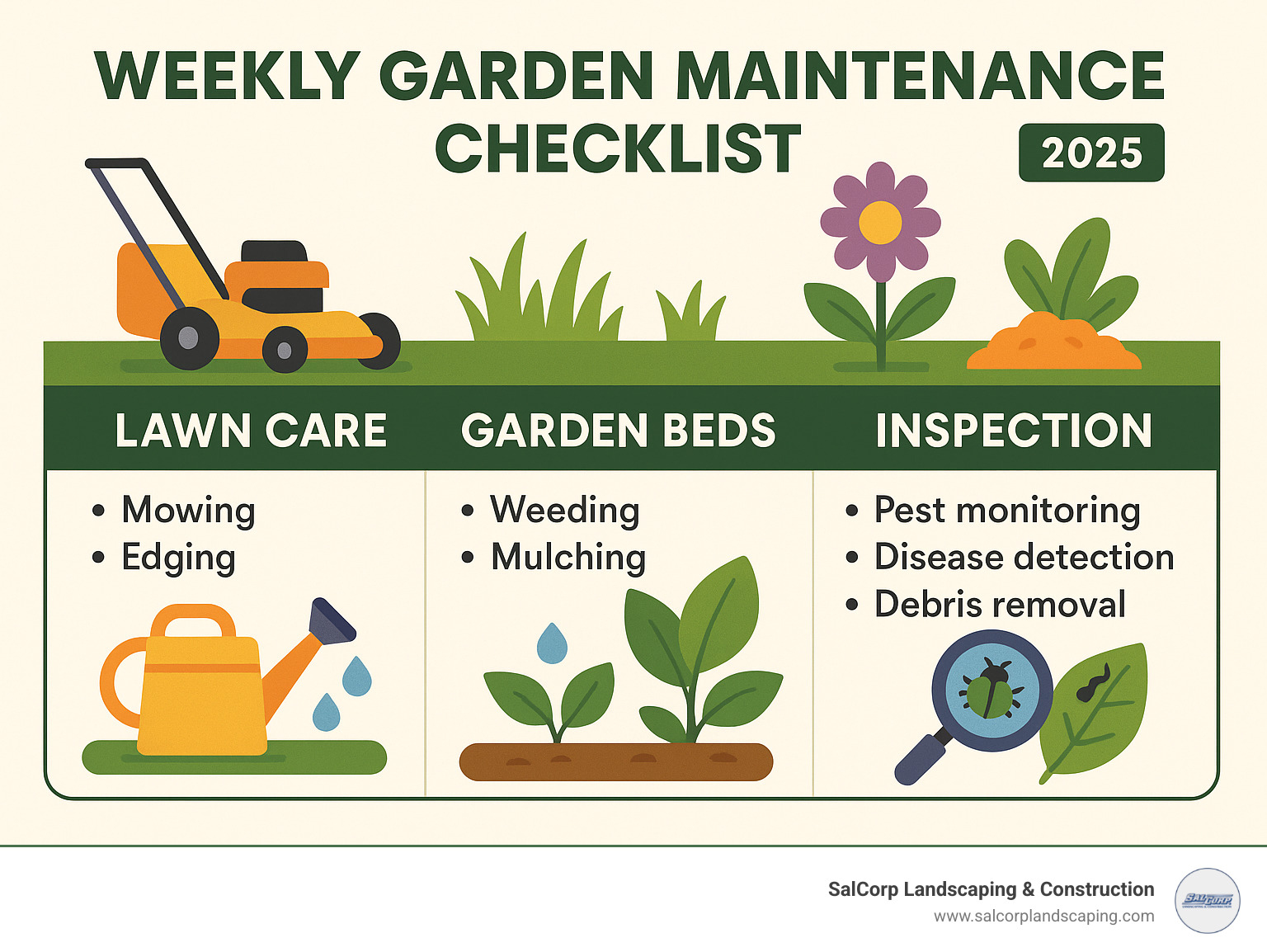
A weekly garden maintenance schedule breaks down essential tasks into manageable chunks, keeping your outdoor space healthy and beautiful. Here’s a quick reference for your weekly tasks:
Essential Weekly Tasks:
- Mow lawn to proper height (2.5-3 inches)
- Weed garden beds before they go to seed
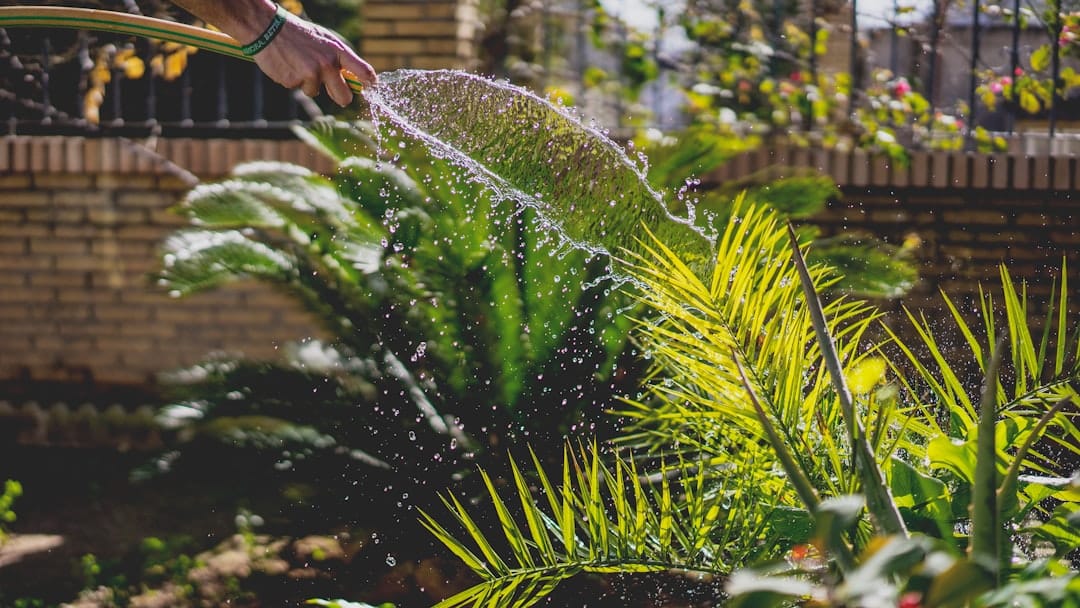
- Water deeply in the early morning or evening
- Inspect plants for pests, diseases, and damage
- Tidy up debris, deadhead flowers, and clear pathways
Research shows homeowners following a weekly schedule report a 30% increase in curb appeal and can reduce costly repairs by up to 20%. Instead of spending weekends catching up on neglected yard work, you’ll invest just 1-2 hours per week.
The key is consistency over intensity. As one gardening expert puts it: “Taking care of routine tasks is key to keeping your garden healthy and attractive.” Regular effort prevents small problems from becoming expensive headaches. A proactive approach always beats reactive scrambling. When you stay ahead of issues, you spend less time fighting problems and more time enjoying your outdoor space.
I’m Sal Musto, and with over two decades of experience in Massachusetts, I’ve seen how a solid weekly schedule transforms properties. My team at SalCorp has helped countless homeowners develop sustainable routines to keep their landscapes beautiful.
The Core Four: Your Essential Weekly Garden Maintenance Schedule
This section breaks down the fundamental tasks that form the backbone of any effective weekly plan. Consistent attention to these areas prevents small issues from becoming big headaches. This includes vital tasks like mowing, weeding, watering, and inspecting your plants, along with general tidying, debris removal, and keeping paths clear.
Lawn Care and Mowing
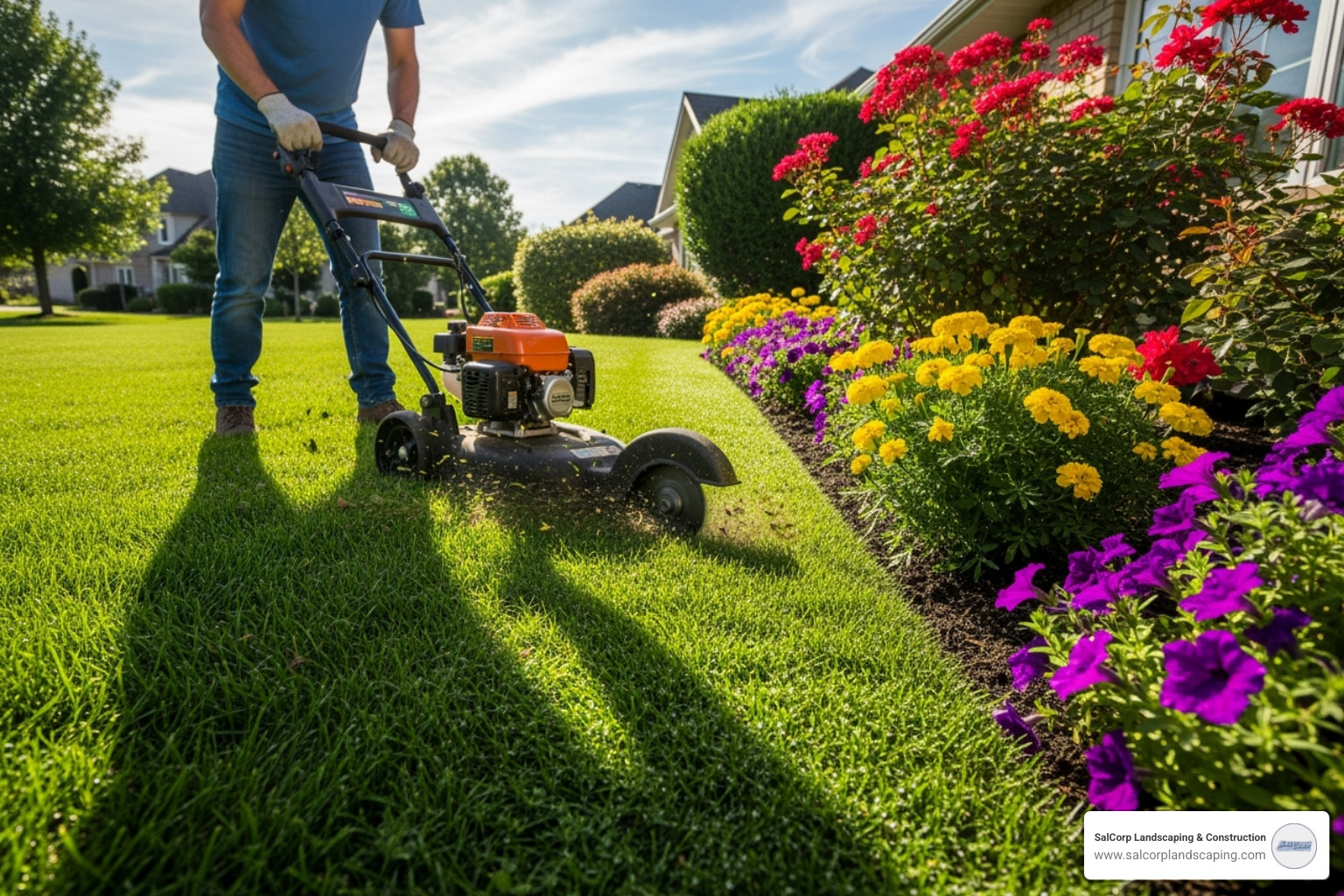
A neat, green lawn shows care and attention. Regular mowing is crucial for its health. For most Massachusetts grass types, maintain a height of 2.5 to 3 inches. Taller grass shades the soil, retains moisture, and discourages weeds. During summer heat, raise the blade an extra inch to reduce stress. Always use a sharp mower blade to ensure a clean cut, preventing brown, ragged ends. Vary your mowing pattern each week to prevent soil compaction and encourage upright growth. Don’t bag grass clippings; leaving them on the lawn (grasscycling) is a natural way to return nutrients to the soil. For more detailed tips, check out our lawn care services.
Weeding and Garden Bed Upkeep
Weeds compete with your plants for water, nutrients, and sunlight. Regular weeding as part of your weekly garden maintenance schedule keeps you ahead of the problem. The best time to pull weeds is when they are small and the soil is damp, making it easier to remove the entire root. Hand-pulling is effective for small weeds, while a weeding tool helps with larger ones. Mulch is another secret weapon. A 3 to 4-inch layer of organic mulch blocks sunlight, preventing new weeds from growing, while also retaining soil moisture. Keep mulch a few inches away from plant stems to prevent rot. We offer comprehensive mulching services to help. Finally, keep crisp edges around your garden beds for a polished look.
Watering Wisely
Water is vital, but smart watering is key. Most established gardens need about 1 inch of water per week, from rain or your hose. The goal is to water deeply but infrequently to encourage deep, strong root growth. To check if plants are thirsty, use the finger test: if the top inch or two of soil is dry, it’s time to water.
The best time to water is in the early morning, before 9 AM, allowing it to soak in before the sun causes evaporation. Evening watering can leave foliage wet overnight, encouraging fungal diseases. For larger yards, an automated irrigation system can save time and water. Learn more about irrigation systems on our site. A simple rain gauge also helps you track natural rainfall and adjust your watering accordingly.
Inspecting for Pests and Diseases
Think of yourself as a garden detective. Regular inspection is a crucial part of your weekly garden maintenance schedule because catching problems early is the best prevention. During your weekly walk-through, check leaves (including the undersides), stems, and flowers for discoloration, holes, or sticky residue. Common Massachusetts pests include aphids and spider mites. A strong spray of water can dislodge aphids, while insecticidal soap may be needed for larger infestations.
For common diseases like powdery mildew or rust, remove affected leaves immediately to stop the spread. Always clean your pruning tools after cutting diseased plants. Also, look for signs of animal damage. Trimming dead or dying leaves improves appearance and removes hiding spots for pests. For more guidance, see our tips for identifying common plant diseases.
Beyond the Basics: Daily, Weekly, and Monthly Tasks
Understanding the right frequency for each task is key to an efficient routine. Some jobs need a quick daily check-in, while others are fine on a monthly or seasonal basis.
| Task Category | Daily | Weekly | Monthly |
|---|---|---|---|
| Observation & Harvest | Spot-check for pests/diseases, check moisture, harvest ripe produce | General garden inspection | Review plant health, plan crop rotation |
| Lawn & Beds | Spot-pull new weeds, tidy debris | Mow, edge, weed garden beds, deadhead flowers | Fertilize lawn/plants, top up mulch, deep clean hardscapes |
| Plant Care | Check container plants, guide vining plants | Prune suckers, deadhead flowers, trellis plants | Apply preventative treatments, deep water mature trees |
| Tools & Organization | Tidy small tools | Organize gardening station, clean tools | Inventory supplies, sharpen tools, plan next season |
Quick Daily Check-ins
These quick, daily walk-throughs take only a few minutes but can save hours of work later. Make it a part of your morning routine to stay connected with your garden.
- Observing Plants: A quick daily walk helps you spot small changes like wilting, leaf spots, or pests. Early detection is crucial.
- Harvesting Ripe Vegetables/Herbs: Regular picking of ripe produce encourages many plants to keep producing.
- Spotting New Weeds: Pull new weed sprouts daily before they establish deep roots or go to seed.
- Checking for Thirsty Container Plants: Potted plants and hanging baskets dry out quickly and may need daily watering, especially in hot weather.
The Weekly Reset
This is where the core work of your weekly garden maintenance schedule happens. These tasks are the backbone of a healthy garden.
- Lawn Mowing: A weekly trim during the growing season keeps your lawn at a healthy height.
- Edging: Crisp edges around your lawn and garden beds provide a neat, finished look.
- Deadheading Flowers: Snipping off spent blooms encourages many plants to produce more flowers.
- Pruning Suckers: Trim vigorous shoots (suckers) from the base of plants like fruit trees and roses to direct energy to the main plant.
- Tidying Tools: Clean and organize your tools after use to make future tasks easier.
Consistent care offers many benefits, which is why we champion The Benefits of Regular Landscape Maintenance – it pays off in the long run.
Monthly and Bimonthly Projects
These larger projects build on your weekly efforts and are vital for long-term garden health.
- Fertilizing Lawns and Plants: Many lawns and plants benefit from a nutrient boost every month or two during their growing season. A soil test can determine your garden’s specific needs.
- Applying Preventative Treatments: Depending on local conditions, you might apply monthly preventative treatments like neem oil for pests or dormant oil sprays on fruit trees in late winter.
- Topping Up Mulch: Check mulch depth monthly and add more as needed to maintain a helpful 3-4 inch layer, which suppresses weeds and retains moisture.
- Deep Cleaning Hardscapes: A monthly or bimonthly cleaning of patios and walkways keeps these areas safe and looking great.
For a more comprehensive look at these tasks, you can explore More on monthly garden chores.
Adapting Your Schedule: Seasonal Changes and Tools
A great garden schedule isn’t rigid; it adapts to the seasons. What works in July won’t work in October, especially in our New England climate. Your weekly garden maintenance schedule should be a living document that flexes with nature’s rhythm. Your garden’s needs change dramatically from spring to winter, requiring different care to thrive.

Your Four-Season Weekly Garden Maintenance Schedule
Our Massachusetts climate presents distinct challenges and opportunities. Smart gardeners work with these seasonal shifts.
Spring (March-May): This is your busiest season. Your weekly garden maintenance schedule will include cleaning up winter debris, pruning dormant trees and shrubs (avoiding maples/birches until they leaf out), and preparing garden beds with compost. As it warms, apply crabgrass preventer to your lawn—timing this with forsythia blooms is a classic gardener’s trick. Weekly mowing begins, and it’s a good time to divide overcrowded perennials.
Summer (June-August): This is the peak growing season, focused on consistent care. Continue regular mowing, but raise the blade height to help the lawn handle heat. Deep watering becomes critical during dry spells. You’ll be harvesting vegetables, deadheading flowers to encourage more blooms, and staying on top of weeds. Monitor for pests and diseases, as early detection is key.
Fall (September-November): Your schedule shifts to preparing for next spring. This is the prime time for overseeding and fertilizing lawns, planting spring-flowering bulbs, and getting new trees and shrubs in the ground. Leaf management becomes a major weekly task—rake them for compost or use a mulching mower to return nutrients to the lawn. Clean out vegetable beds to prevent pests from overwintering.
Winter (December-February): This quieter season is perfect for tool maintenance—cleaning, sharpening, and storing equipment. It’s also ideal for planning next year’s garden and ordering seeds. Protect sensitive plants from frost and water new evergreens during dry, above-freezing periods.
For help with seasonal transitions, see our Details on seasonal cleanup services.
Essential Tools for Efficient Upkeep
The right tools make your weekly garden maintenance schedule more efficient and enjoyable. You don’t need a garage full of gadgets, just these basics:
- Quality gloves
- Sharp pruners
- A sturdy hand trowel
- A specialized weeder tool
- A wheelbarrow
- A well-maintained lawn mower
- A good leaf rake
- A reliable garden hose or watering can
Using Technology to Stay on Track
Modern technology can help you manage your weekly garden maintenance schedule.
- Gardening apps can help with plant identification and offer personalized task reminders.
- Calendar reminders on your phone can create recurring notifications for weekly, monthly, and seasonal tasks.
- Smart irrigation timers automatically adjust watering based on local weather, saving water and ensuring plants get what they need.
- Digital garden journals help you track plantings, treatments, and observations to improve your success over time.
Frequently Asked Questions about Garden Maintenance Schedules
We often hear similar questions from homeowners looking to streamline their garden care. Here are answers to some of the most common ones.
How many hours a week does garden maintenance take?
The time commitment for garden maintenance varies, but a good weekly garden maintenance schedule is designed to minimize it. A survey found that 65% of homeowners spend about 1 to 2 hours per week on yard maintenance. This manageable commitment prevents tasks from piling up into overwhelming chores. Following a schedule can save homeowners an average of an hour per week compared to reacting to problems as they arise.
How do I create a garden schedule for my specific climate?
Creating a personalized weekly garden maintenance schedule for your climate is essential. First, understand your USDA Hardiness Zone (most of Massachusetts is 5a to 7a) to choose appropriate plants and time your tasks. Next, monitor local weather patterns—a rainy week means less watering, while a heatwave requires more. Your local state extension service is an invaluable resource, offering science-backed advice for your region.
You can find general Gardening fact sheets from your state’s extension service online. Finally, observe your own yard’s microclimates. A south-facing bed will dry out faster than a north-facing one. Combining general guidelines with your own observations will help you craft the perfect schedule.
Can a weekly schedule really save me money?
Yes, a consistent weekly garden maintenance schedule is like preventative care for your home’s exterior. It prevents minor issues from becoming expensive problems. Catching pests or diseases early, or pulling weeds before they take over, saves you from replacing plants or paying for costly treatments. Our experience shows that regular maintenance can reduce the need for major repairs by up to 20%. For example, managing tree and shrub growth can prevent root damage to pathways or foundations. Healthy, well-maintained plants are more resilient and live longer, reducing replacement costs. The long-term savings are significant. To learn more about the financial benefits, read our article Are Lawn Care Services Worth It?.
Keep Your Yard Thriving with a Consistent Plan
With two decades of experience helping Massachusetts homeowners, I can confirm that a weekly garden maintenance schedule is the secret to a stunning landscape. Consistent effort brings amazing results. Instead of spending your entire Saturday on yard work, you invest just an hour or two each week in proactive care. Your garden will reward you with lush growth and vibrant blooms.
When yard work becomes a manageable routine, it can even be enjoyable. Your weekly garden maintenance schedule adapts with the seasons, allowing you to work with nature’s rhythm, not against it.
We know that life gets busy. If you’re traveling, dealing with other commitments, or simply feel overwhelmed, we’re here to help. At SalCorp Landscaping & Construction, we’ve spent over 20 years perfecting landscape care in Massachusetts. We understand the unique challenges of New England weather.
Our comprehensive landscape maintenance services can supplement your efforts or take the full load off your shoulders. Your outdoor space should bring you joy, not stress. Whether you need help with heavy lifting or guidance creating your perfect weekly garden maintenance schedule, we’re here to help your yard thrive.