Garden Stone Wall Builders: Rock Your 2025 Landscape
Why Garden Stone Wall Builders Are Essential for Your Outdoor Vision
Garden stone wall builders create lasting outdoor features that combine beauty with function. Whether you need a retaining wall, a decorative boundary, or a terraced garden, professional stone masons bring the expertise to make your vision a reality.
Quick Answer for Finding Garden Stone Wall Builders:
- Look for certified professionals with Dry Stone Walling Association credentials
- Check experience with local stone types and New England conditions
- Verify licensing and insurance for structural work over 4 feet
- Request references and photos of completed stone wall projects
- Get detailed quotes that include foundation, drainage, and materials
- Ask about warranty on both materials and workmanship
Stone walls have deep roots in New England’s landscape, often called the “bones of a garden” for the lines, form, and texture they create. Over 250,000 miles of these walls exist across New England, with most built between 1810 and 1840.
Today’s garden stone wall builders carry on this tradition of “Yankee ingenuity.” They know each wall is unique, defined by local materials and skilled craftsmanship. A properly built stone wall is more than a barrier; it’s a permanent landscape feature that can last for generations.
Modern stone walls create terraces, prevent erosion, define boundaries, and add natural texture. The key is finding builders who understand both the structural and artistic elements that make these walls special.
With over two decades of experience in landscaping and hardscaping, I’ve seen how expertly crafted stone walls transform outdoor spaces. My team at SalCorp specializes in traditional fieldstone walls and modern retaining systems, ensuring every project meets the highest standards of garden stone wall builders while respecting New England’s stone-building heritage.

Glossary for garden stone wall builders:
The Enduring Allure: Why Build a Garden Stone Wall?
New England’s stone walls are magical. Over 250,000 miles of them wind across our region—enough to circle the Earth ten times. Most were built during an incredible 30-year period between 1810 and 1840, showcasing true Yankee ingenuity.
Early settlers faced a peculiar problem: as they cleared forests, frost and erosion pushed stones to the surface each spring. Locals called them “New England potatoes.” Instead of seeing them as obstacles, clever farmers transformed them into beautiful, functional boundaries.
Today’s garden stone wall builders continue this tradition with modern engineering and design. A well-crafted stone wall is a practical investment that solves landscaping challenges while adding natural beauty to your outdoor space.
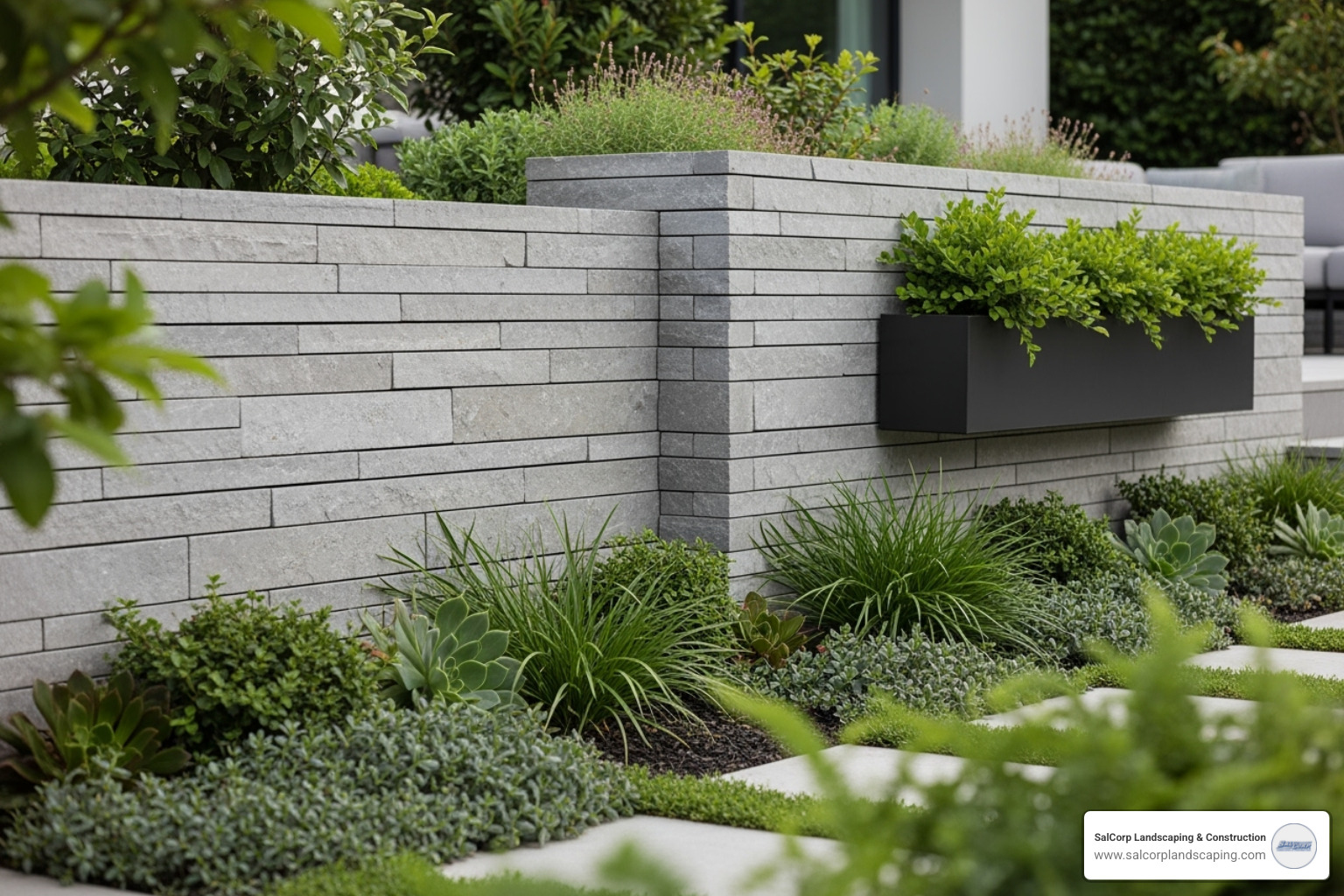
Stone walls excel at erosion control and slope management, holding back soil and creating usable flat areas. Professional Retaining Walls turn steep slopes into terraced gardens or level outdoor living spaces.
Beyond function, stone walls bring natural texture and vertical interest to landscapes. Each stone’s unique character creates one-of-a-kind features. A well-designed Garden Retaining Wall becomes a focal point, increasing property value and defining outdoor spaces with timeless appeal.
Functional Advantages of a Professionally Built Wall
Professional garden stone wall builders combine traditional craft with modern engineering, solving multiple landscaping challenges at once.
Soil retention is a key function. A proper retaining wall turns unusable slopes into level, plantable areas. Imagine a steep hillside converted into terraced garden beds connected by neat Masonry Stairs, creating functional and beautiful outdoor space.
Drainage management is what separates amateur walls from professional ones. Experts know water is stone’s biggest enemy and install drainage systems to prevent hydrostatic pressure—the force that causes walls to fail. This includes gravel backfill, perforated pipes, and weep holes to move water safely away.
Stone walls also define property boundaries and create outdoor rooms. They can mark property lines, separate garden areas, or structure features like patios. Professional Patio Design and Installation often uses stone walls as natural, seamless edges.
The Best Aesthetics of Natural Stone
Natural stone walls have aesthetic benefits manufactured materials can’t match. Each stone’s color, texture, and weathering tells a unique story.
Harmony with nature is inherent to stone. Unlike artificial materials, stone walls seem to grow from the landscape. The variations in each stone create visual interest and an organic feel that complements the surrounding environment.
Stone walls create stunning focal points. A curved retainer, a rustic boundary wall, or a feature like a Custom Fire Pits Norwood MA adds sophisticated charm.
Most importantly, stone walls convey permanence. Unlike other materials, properly built stone walls last for generations. They are wise long-term investments that gain value and character with age. Understanding What is Hardscape Construction means appreciating the lasting value of stone.
The variety of colors and textures in natural stone allows for endless design possibilities. From rustic fieldstone to sleek quarried stone, each type brings its own character, ensuring your wall matches your home’s style.
Exploring the Types of Garden Stone Walls
Choosing the right stone wall is crucial; it must match your style and its function. Garden stone wall builders work with four main types of construction, each with its own purpose. Our expertise in Hardscape Installation helps you find the perfect match.
| Wall Type | Description | Skill Level Required | Appearance | Best Use |
|---|---|---|---|---|
| Dry-Stacked | Stones interlock without mortar, relying on gravity and friction. | High (for stability) | Rustic, natural, permeable, timeless | Decorative walls, low retaining walls, garden beds, historical restoration |
| Mortared | Stones bonded together with mortar (cement, lime, sand mix). | High | Formal, solid, uniform, strong | Taller retaining walls, foundations, formal garden features, load-bearing |
| Gabion | Wire mesh cages filled with various stones. | Moderate | Industrial, modern, textured, permeable | Large-scale retaining walls, erosion control, noise barriers, contemporary |
| Veneer | Thin stone pieces applied over a structural substrate (concrete block, etc.). | Moderate-High | Varied (depends on stone), clean, decorative | Facades, decorative garden walls, cladding existing structures |
Dry-Stacked Stone Walls

Dry-stacked stone walls are ancient marvels built without mortar, using a technique our New England ancestors perfected. The secret is mortarless construction relying on gravity, friction, and interlocking stones. Each stone is carefully placed, creating a structure that flexes with ground movement, making it incredibly durable.
Dry-stacked walls are special for their traditional craft appeal and excellent drainage. Water flows through the gaps, preventing destructive buildup. Organizations like The Stone Trust work to preserve these techniques. The historical appeal is undeniable in New England, but their rustic charm belies the serious skill required to build a stable wall.
Mortared Stone Walls
For a more robust wall, mortared construction is the answer. It uses a binding agent (cement, lime, and sand) to create a solid, unified structure. The solid construction offers a more formal appearance than dry-stacked walls, with clean lines perfect for refined landscape designs.
Mortared walls can handle more weight and pressure, which is why our Masonry Contractors Yarmouth MA often recommend them for taller retaining walls. The trade-off is the need for skilled masonry, as the mortar mix, application, and curing must be perfect for maximum strength. Done properly, they integrate beautifully with features like Brick and Concrete Stairs.
Gabion Walls
Gabion walls offer a modern aesthetic. These structures consist of wire mesh baskets filled with stone. The wire mesh baskets can be filled with various stones for different looks. A key feature is their excellent drainage, as water flows freely through the stone fill, making them effective for erosion control.
Gabions can be cost-effective for large projects, especially with local stone fill. Our Retaining Wall Design team often uses them for contemporary, functional solutions. Smaller gabion projects can be DIY-friendly, but for serious retaining work, professional installation is crucial for safety and performance.
Freestanding vs. Retaining Walls
Understanding if you need a freestanding or retaining wall is crucial, as the purpose drives the entire design and construction process.
Freestanding walls are decorative boundaries meant to look good from all angles. Our Landscape Walls Natick MA projects often use them to create garden rooms or stylishly mark property lines.
Retaining walls are workhorses engineered to hold back soil. They require proper foundations, drainage, and a slight backward lean (“batter”) for stability. The engineering requirements are demanding, and walls over four feet often need permits and structural plans. This is where professional garden stone wall builders are essential, as they understand the complex requirements.
Key Factors in Planning Your Stone Wall Project
Building a lasting garden stone wall requires thoughtful planning. Every detail matters, from the project’s scope to selecting materials that complement your landscape. The planning phase is where garden stone wall builders prove their value. Rushing a project leads to costly mistakes, while a thorough site assessment reveals hidden challenges like utilities, drainage, or poor soil that could affect stability.
Material selection is more than aesthetics; it affects the wall’s structural integrity. Even choosing the right Paver Near Me for adjacent walkways is crucial to the overall design. Practicalities include realistic budgeting, timelines, and local permits. Many are surprised that walls over 4 feet often require permits and engineering plans to ensure safety.
Budgeting: Understanding the Costs
Understanding stone wall costs helps you make informed decisions. While every project is unique, knowing the cost factors helps you plan wisely.
Important note: Average costs for stone walls, based on internet research, typically range from $25 to over $100 per square foot. These figures are not quotes from SalCorp Landscaping & Construction – actual costs depend on many factors specific to your project.
Material costs are a large part of the budget. Locally sourced fieldstone is often more budget-friendly than quarried stone like granite or bluestone. Labor costs can be high because building stone walls is time-intensive. As one mason noted, “Labor is the expensive bit.” Skilled garden stone wall builders are efficient, which can save you money in the long run.
Don’t forget hidden expenses like site prep, foundation work, and drainage. These are critical. Proper excavation, a stable gravel base, and drainage add to upfront costs but prevent expensive future repairs. For more details, check out our guide on How Much Does a Retaining Wall Cost.
Essential Foundations and Drainage
The foundation and drainage are the invisible but essential parts of your wall—think of them as its life insurance.
A solid foundation is critical. We excavate a trench and fill it with compacted gravel to prevent settling, shifting, and frost heave. Retaining walls may require deeper foundations or concrete footings for extra stability. Pro tip: use substantial base stones buried at least halfway into the foundation to create a stable platform.
Drainage isn’t optional; it’s critical for retaining walls. Water buildup creates hydrostatic pressure that can destroy a wall. Our drainage system includes geotextile fabric, weep holes, and perforated drainage pipes to redirect water. We use crushed stone backfill behind the wall to allow water to flow freely to the drainage system.
A mentor mason always said, “Do not skimp on drainage!” This advice is what separates professional Hardscapes Contractors from amateurs.
Hiring Professional Garden Stone Wall Builders vs. A DIY Project
The idea of building your own stone wall can be appealing, but it’s important to be realistic about the undertaking. A friend’s seemingly manageable DIY dry stone wall project (12 meters long, 1 meter high) took two people 6 full days of backbreaking work, giving them a new appreciation for professional garden stone wall builders.
While untrained individuals can build a functional stone wall, the learning curve is steep and expensive. For small decorative walls, a DIY approach can work if you’re prepared for the physical challenge. But for retaining walls or taller structures, professional expertise is essential. The difference between a lasting wall and a failing one is knowledge that takes years to develop.
Key Skills of Expert Garden Stone Wall Builders
What separates an amateur from a master craftsman? It’s the technical knowledge, artistic vision, and experience you can’t get from a video.
- Stone selection and shaping: An experienced builder understands how each stone’s characteristics contribute to the wall’s stability and visual appeal. It’s both engineering and art.
- Understanding structural principles: Professionals know the importance of “through stones” for integrity, proper “battering” (a slight backward lean), load distribution, and how to counter the forces of gravity and soil pressure.
- Efficient work process: Professionals have techniques for handling materials and working efficiently to prevent injury and wasted effort, accomplishing in hours what might take an amateur days.
- The artistic eye for placement: This turns a pile of rocks into something beautiful, creating flow, texture, and harmony with the landscape.
- Experience with local conditions: In Massachusetts, we understand the local climate, stone, and soil. Many professionals also hold certifications from groups like the Dry Stone Walling Association, showing their commitment to high standards.
Common Misconceptions Addressed by Professional Garden Stone Wall Builders
Let’s clear up some dangerous myths that lead to costly mistakes:
- Myth: Any wall can hold back soil. A decorative border and a load-bearing retaining wall are different. Retaining walls must withstand enormous pressure, and cutting corners on their engineering can lead to catastrophic failure.
- Myth: Taller is always better. Taller walls create more pressure and require complex engineering. Walls over 4 feet often require permits. A series of shorter, terraced walls can be more stable and visually appealing.
- Myth: Drainage is optional. This is the most dangerous myth. Water buildup creates hydrostatic pressure that will cause even the best-built wall to fail. As a veteran builder says, “Do not skimp on drainage!”
- Myth: Stone walls don’t need foundations. Any significant wall needs a proper base, which means excavating to stable soil and creating a compacted gravel foundation with base stones properly set.
For DIYers, the essential tools for stonework include gloves, safety glasses, hammers, chisels, levels, string lines, a measuring tape, wheelbarrow, shovels, a tamper, and a sledgehammer. This is a significant investment before buying any stone.
The bottom line? While there’s nothing wrong with tackling small decorative projects yourself, when it comes to structural walls or anything you want to last for generations, professional garden stone wall builders bring irreplaceable expertise to the table.
Conclusion: Lift Your Landscape with an Expertly Crafted Stone Wall
A garden stone wall is one of the most rewarding investments for your outdoor space, offering a rare combination of durability, beauty, and functionality. This guide explored how stone walls solve problems like erosion and slope management while creating usable, beautiful spaces. We’ve seen how different construction types—dry-stacked, mortared, or gabion—offer unique advantages and aesthetics.
The functionality of a well-built wall goes beyond retaining soil. It creates opportunities: turning slopes into terraced gardens, providing privacy with sturdy boundaries, and offering a perfect backdrop for plantings. The beauty of natural stone is also undeniable. When arranged by skilled garden stone wall builders, the stones create a living piece of art that improves with age.
The durability is a key benefit. A properly constructed stone wall is a long-term investment that can last for generations. Many New England walls from the 1800s still stand today, a testament to quality materials and craftsmanship.
This is where the value of professional craftsmanship shines. Stone wall construction combines art, engineering, and skill that takes years to master. Professionals understand the critical importance of foundations, drainage, and structural principles that ensure your wall lasts. They read the landscape, understand water movement, and select each stone for maximum stability and visual impact, while also managing practical aspects like permits and timelines.
For homeowners in Massachusetts seeking experienced retaining wall and hardscape experts, SalCorp Landscaping & Construction offers comprehensive services. With over two decades of owner-operated experience, we understand the technical and artistic needs to create transformative stone walls.
Whether you want a rustic boundary, a formal garden, or a modern retaining system, the right stone wall can make your landscape extraordinary. It becomes the backbone of your outdoor design.
Ready to explore how an expertly crafted stone wall can transform your property? Our team of skilled Retaining Wall Contractor professionals is here to help you create something truly special that will improve your outdoor space for years to come.