

How to install handrail on brick steps: Secure 2025
Why a Secure Handrail on Brick Steps is Essential
Installing a handrail on brick steps is a crucial safety upgrade for any home. It provides stability, prevents falls, and adds a touch of elegance to your entryway. However, brick presents unique challenges compared to wood or concrete. The material can be brittle, and improper drilling can lead to cracking or “blowout,” compromising the integrity of your steps. The mortar joints are also not strong enough to securely anchor a handrail.
This guide will walk you through the essential steps for a secure and professional-looking installation. We’ll cover everything from choosing the right tools and anchors to understanding safety codes. According to the National Safety Council, falls are one of the leading causes of unintentional injuries in homes, making proper handrail installation essential for safety. With over 20 years of experience in hardscaping and masonry in Massachusetts, we at SalCorp Landscaping & Construction know that a successful project starts with proper preparation and the right techniques.
How to Install a Handrail on Brick Steps: A Step-by-Step Guide
Step 1: Plan, Measure, and Gather Materials
- Inspect the Brick: Before you begin, check your steps for any loose bricks, crumbling mortar, or large cracks. A handrail is only as strong as its foundation. Any damage should be repaired first.
- Check Codes: Safety is paramount. Handrails should typically be 34-38 inches high from the stair nosing. They must be strong enough to support at least 200 pounds of force. For detailed guidelines, you can refer to the ADA Standards for Accessible Design, and always check with your local building department for specific requirements.
- Measure and Mark: Clean the brick surface. Use a tape measure and level to carefully mark where your handrail posts or brackets will be installed. Ensure your marks are level and evenly spaced.
- Gather Your Tools: You will need a hammer drill, masonry drill bits, masonry anchors (sleeve or wedge anchors are common), a level, a tape measure, and safety gear like glasses and gloves.
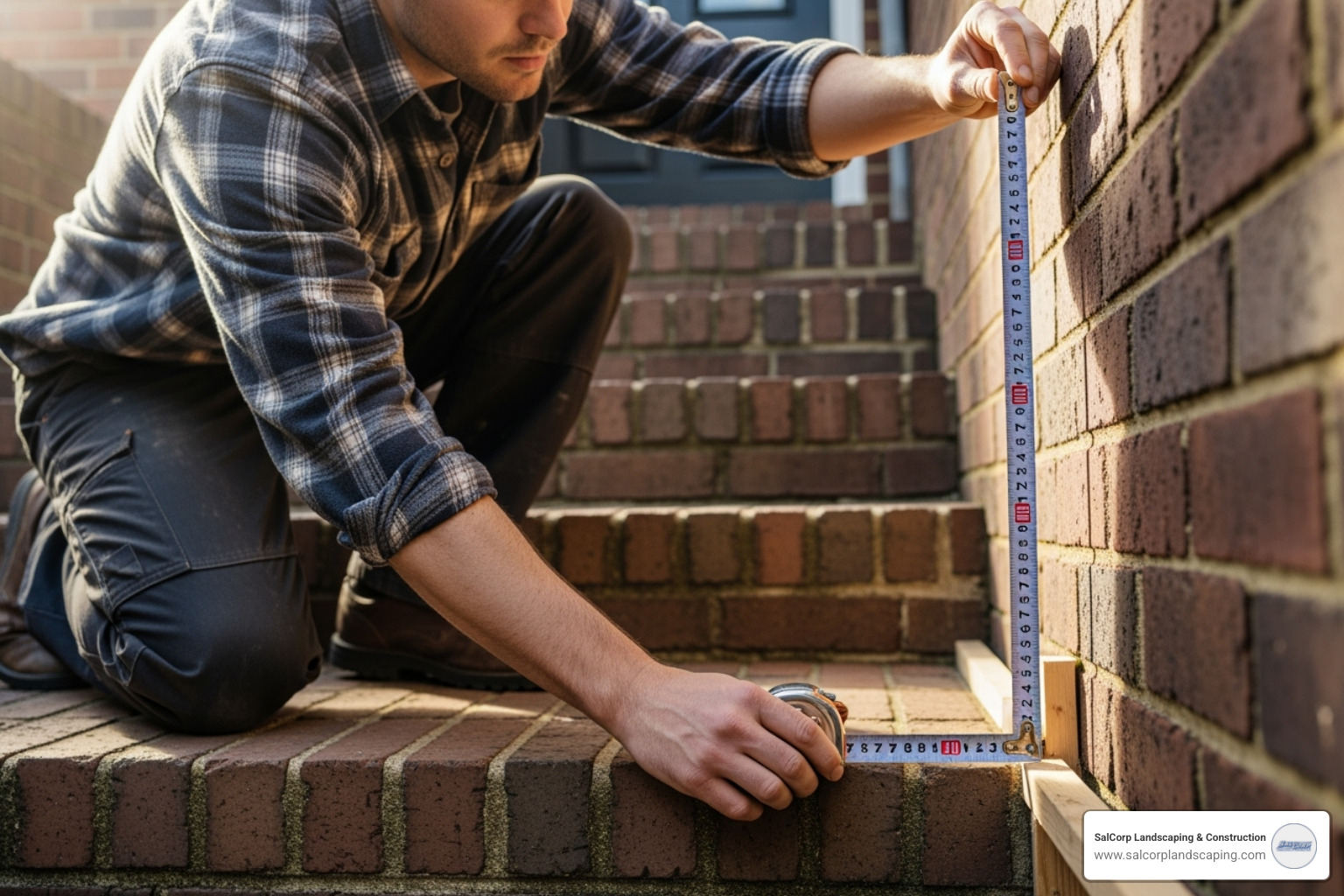
Step 2: Drill and Anchor
- Drill with Precision: The most critical step is drilling. Always drill into the center of a solid brick, not the mortar joints. Mortar is too weak to provide a secure hold.
- Start drilling at a low speed to create a pilot hole, preventing the bit from slipping.
- Increase speed and engage the hammer function, applying steady pressure. Let the drill do the work.
- Drill the hole about 1/2 inch deeper than the length of your anchor.
- Crucially, clean the hole thoroughly with a vacuum or compressed air to remove all dust and debris.
- Install the Anchors: Insert your chosen masonry anchors into the clean holes. For expansion anchors, tighten the nut to secure them. For epoxy anchors, inject the adhesive before inserting the threaded rod.
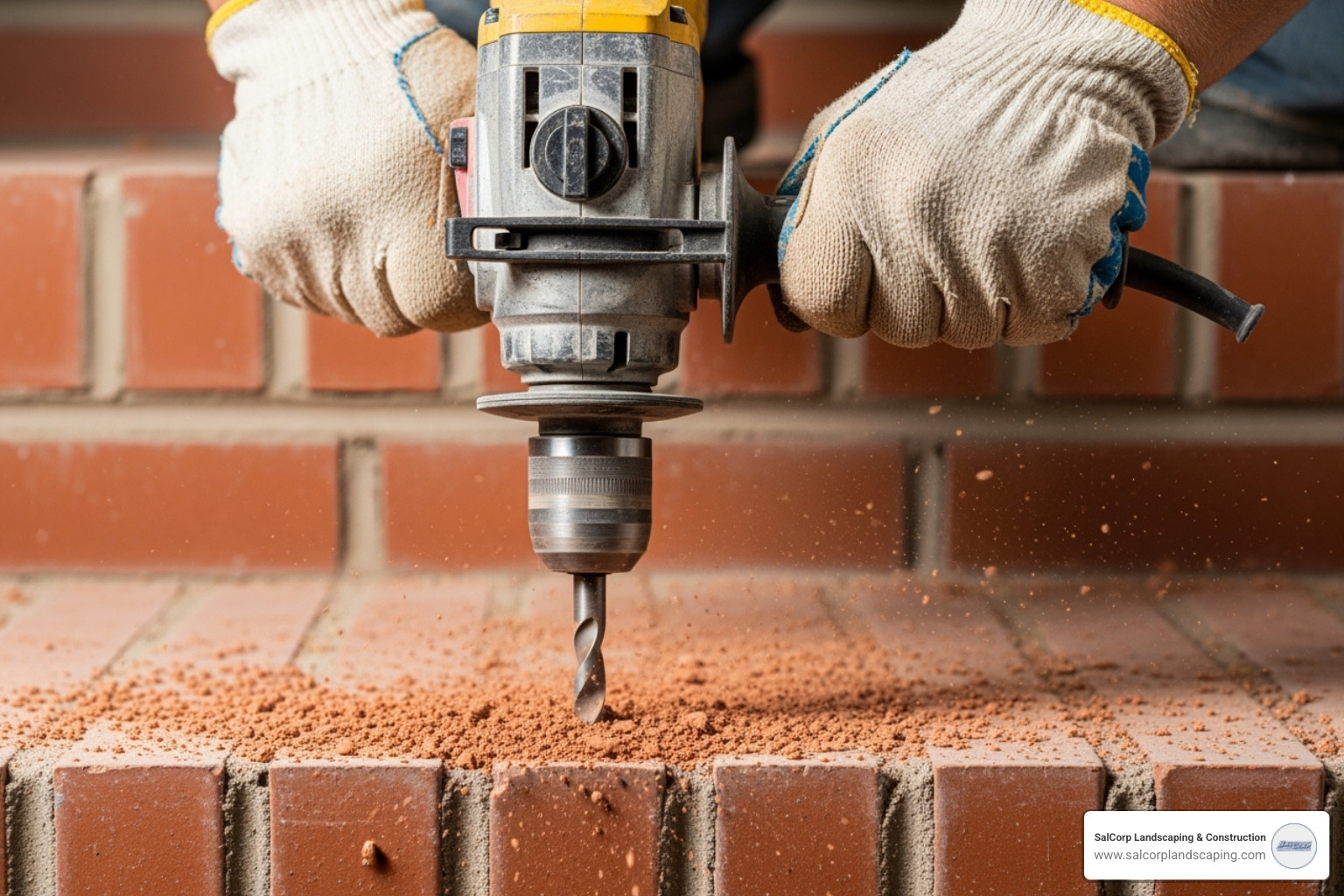
Step 3: Mount the Handrail and Finish
- Attach Posts: Secure the handrail posts or brackets to the anchors. Use a level to ensure they are perfectly vertical (plumb) before fully tightening the bolts.
- Install the Railing: Attach the handrail to the posts according to the manufacturer’s instructions.
- Finishing Touches: Cover the anchor bolts with decorative escutcheons or flange covers for a clean look. You can also apply a bead of clear silicone caulk around the base of the posts to seal out water.
- Test for Stability: Give the entire railing a firm shake. It should feel completely solid and not wobble. If it does, re-check and tighten all connections.
When to Call the Professionals
While this guide covers the basics of how to install a handrail on brick steps, some situations are best left to the experts. If your bricks are old or damaged, if you have a complex staircase, or if you’re simply not comfortable with the process, calling a professional is the safest choice. An improperly installed railing is a serious safety hazard.
At SalCorp Landscaping & Construction, we have over two decades of experience installing durable and beautiful railings on all types of masonry, including brick, throughout Massachusetts. We serve communities from Walpole to Franklin, Dedham to Canton, and beyond. Our team has the right tools and expertise to ensure your handrail is installed correctly, safely, and in compliance with all local codes.
Ready to improve the safety and beauty of your home? Contact SalCorp Landscaping & Construction today for a professional consultation and a free estimate. Let us show you how a professionally installed handrail can make all the difference.
Visit our website to learn more about our hardscaping services.
The Complete Guide on How to Install Handrail on Brick Steps
Installing a handrail on brick steps requires precision, the right tools, and careful anchoring. Brick is less forgiving than wood or concrete, so a clean plan and proper technique make all the difference.
Step 1: Planning, Measuring, and Material Selection
Brick Inspection and Surface Preparation
Confirm the brickwork is solid. Reset loose bricks and repair failing joints before installing the rail. Brush or vacuum dust and debris for accurate marking and secure anchors.
ADA Guidelines and Local Codes
Target a handrail height of 34-38 inches above the stair nosing, ensure a comfortable grasp (1.25-2 inch diameter), and maintain at least 1.5 inches of wall clearance. Always verify local code requirements in your Massachusetts town.
Measuring and Marking
Determine the desired handrail height, transfer marks consistently along the run, and plan post locations for plumb installation and even spacing. Adjustable brackets can help with minor stair angle variations.
More info about masonry stairs
Essential Tools and Materials
- Hammer drill with carbide masonry bits sized to your anchors
- Masonry anchors (sleeve, wedge/expansion, or epoxy with threaded rod)
- Level, measuring tape, pencil/marker
- Shop vacuum or compressed air for hole cleaning
- Safety glasses, gloves, and hearing protection
- Exterior-rated handrail system (aluminum or powder-coated steel)
Step 2: The Core Process of How to Install Handrail on Brick Steps
Marking and Drilling with Precision
Always drill into solid brick, never mortar. Follow these best practices:
- Use the correct-diameter carbide masonry bit for your anchor.
- Start slow to create a dimple, then engage hammer mode to prevent bit walk.
- Apply steady pressure; let the tool work to avoid cracking or blowout.
- Drill 1/4 to 1/2 inch deeper than anchor length for dust clearance.
- Clean holes thoroughly with a vacuum or compressed air before anchoring.
Anchoring for Maximum Stability
Choose an anchor that matches your brick condition and load needs. Below is a concise comparison:
| Anchor Type | Pros | Cons | Best Use Case |
|---|---|---|---|
| Sleeve anchors | Good hold in solid brick; simple installation; widely available | Can loosen if hole is dusty; moderate edge distance needed | Standard through-bolt fastening of post bases in sound brick |
| Wedge/expansion anchors | Very strong mechanical hold; quick to set | Requires precise hole size and depth; not ideal for soft or brittle brick | Maximum strength in hard, solid brick where high loads are expected |
| Epoxy anchors (with threaded rod) | Excellent in irregular or older brick; great for close-to-edge installs; vibration resistant | Requires proper hole cleaning and cure time; needs dispensing tools | Older or hollow-prone brick, historic work, or where minimal expansion pressure is desired |
After setting anchors, fasten posts or brackets, verify plumb and level, attach the rail per manufacturer instructions, add escutcheons, and seal bases with clear silicone if desired. Finish by performing a firm load test and re-tighten hardware as needed.
The Complete Guide on How to Install Handrail on Brick Steps
Learning how to install handrail on brick steps requires the right tools, proper anchoring techniques, and careful attention to safety codes. Here’s the essential process:
- Plan and measure – Check brick condition, measure 34-38 inches from stair nosing
- Gather tools – Hammer drill, masonry bits, expansion anchors, level, safety gear
- Mark and drill – Mark anchor points, drill into brick (not mortar) with hammer drill
- Install anchors – Clean holes, insert expansion anchors, secure posts
- Mount handrail – Level posts, attach handrail, test for 200-pound load capacity
Falling down stairs is one of the most common ways people get injured at home. A properly installed handrail on your brick steps isn’t just about meeting building codes – it’s about protecting your family, guests, and anyone who visits your property.
Brick steps present unique challenges that concrete or wood don’t. The material can crack or “blow out” during drilling if you use the wrong technique. The mortar joints might be weak. And unlike other surfaces, you can’t just drive a screw and expect it to hold.
But when done right, a handrail on brick steps combines safety with timeless beauty. Brick naturally complements both traditional wrought iron and modern steel railings, adding curb appeal while providing the stability people need.
The key is understanding that brick requires specific tools, anchors, and techniques. You’ll need a hammer drill, masonry-specific anchors, and the knowledge of where not to drill. Most importantly, the handrail must withstand up to 200 pounds of pull to meet ADA compliance standards.
I’m Sal Musto, owner of SalCorp Landscaping & Construction, and I’ve been installing hardscape features including railings on brick steps for over two decades throughout Massachusetts. My hands-on experience with how to install handrail on brick steps has taught me that proper preparation and the right approach make all the difference between a wobbly disaster and a rock-solid installation.
How to install handrail on brick steps terms to learn:
The Complete Guide on How to Install Handrail on Brick Steps
Installing on brick is all about clean layout, careful drilling, and choosing the right anchors. Keep it simple and follow these essentials:
- Plan and inspect: Repair loose bricks and failing mortar, then clean surfaces.
- Measure and mark: Aim for 34-38 inches above stair nosings and keep marks consistent.
- Drill into brick (not mortar): Use a hammer drill, correct bit size, and clean holes thoroughly.
- Anchor securely: Choose sleeve, wedge/expansion, or epoxy anchors to match your brick and load needs.
- Mount and test: Set posts plumb, attach the rail, cover bases, seal if needed, and load-test.
More info about masonry stairs
These steps deliver a sturdy, code-conscious result that looks great and performs for years.
