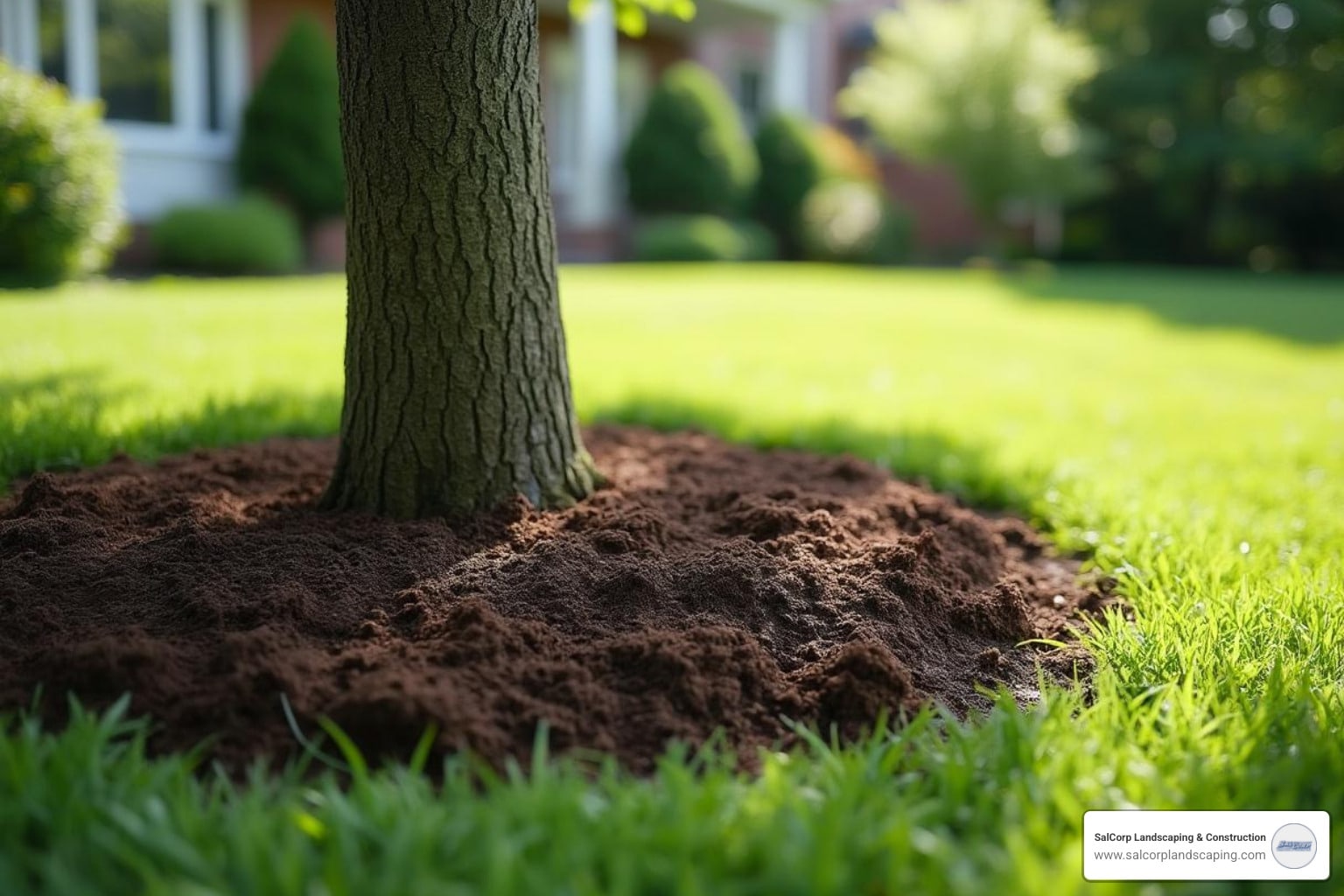
Edging and mulching around trees: 3 Easy Steps
Why Tree Rings Are More Than Just Pretty Circles
Edging and mulching around trees creates defined borders that keep mulch in place while providing essential benefits for tree health. Here’s what you need to know:
Quick Answer for Tree Edging and Mulching:
- Ring Size: At least 6 feet diameter, extending to the tree’s drip line when possible
- Mulch Depth: 2-4 inches deep, kept 2-3 inches away from the trunk
- Edge Depth: 2-6 inches deep trench to contain mulch and block grass
- Best Materials: Organic mulch (wood chips, shredded bark) with spade-cut or metal edging
- Key Rule: Create a “donut” shape, never a “volcano” against the trunk
Most homeowners think edging and mulching is just for looks. While crisp lines boost curb appeal, the real magic happens underground. Proper mulching mimics a forest floor, creating a protective layer that retains moisture, suppresses weeds, and feeds the soil. The edging acts as a bodyguard, keeping your mulch from migrating into the lawn and creating a mess.
I’m Sal Musto of SalCorp Landscaping & Construction. With over two decades of hands-on experience, I know that getting these basics right is the difference between a thriving landscape and costly tree replacement.
Why Bother? The Dual Benefits of Edging and Mulching
Edging and mulching around trees is one of the smartest investments for your property’s health and beauty. Crisp, defined mulch rings catch the eye, but the real magic happens underground, where a properly mulched tree gets a five-star spa treatment for its roots. With twenty years of landscaping experience in Massachusetts, I’ve seen this simple practice transform struggling trees and tired-looking yards. For more insights, check out our Tree Landscaping services.
For Your Tree’s Health
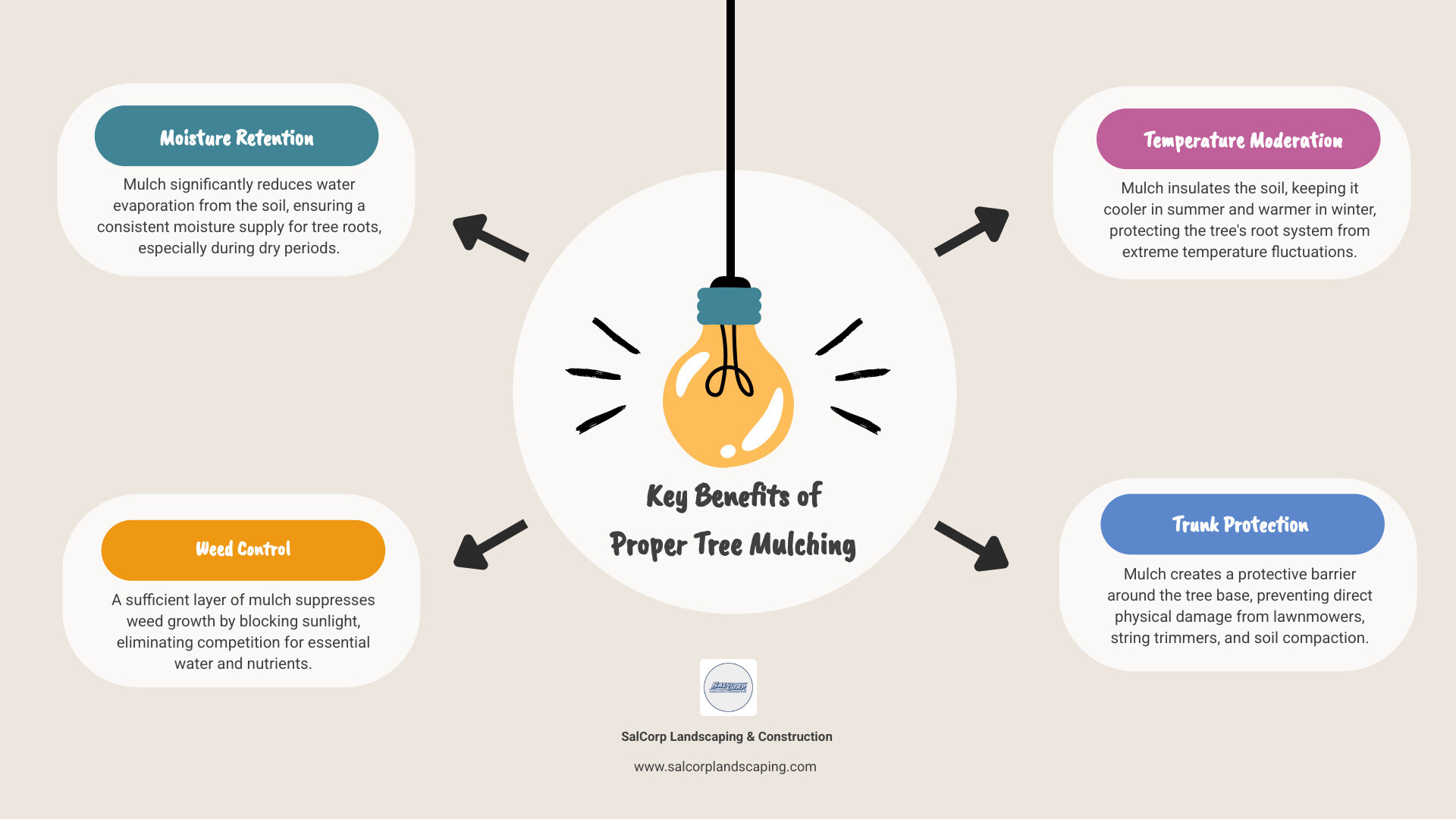
Recreating a forest floor with mulch provides numerous benefits for your trees.
Moisture retention is a game-changer. Mulch acts like a sponge, holding water near the roots. This keeps trees hydrated during dry spells, preventing stress.
Weed suppression is crucial. Grass is a tree’s biggest competitor for water and nutrients. A mulch ring eliminates this competition, giving your tree space to thrive.
Soil temperature regulation acts like a thermostat for roots. Mulch keeps soil cooler in summer and warmer in winter, preventing stressful temperature swings.
As organic mulch breaks down, it slowly feeds the soil with nutrients, improving its structure and fertility over time.
Root protection from mechanical damage is a major benefit. Proper edging creates a buffer zone, protecting tree roots and trunks from damaging nicks from mowers and string trimmers.
For Your Yard’s Aesthetics
The visual impact of edging and mulching is significant.
Clean lines and crisp edges separate amateur landscaping from professional results. Defined boundaries between your lawn and landscape beds make everything look more intentional and organized.
Mulch containment makes a huge difference. Proper edging contains mulch, preventing it from migrating into the lawn and creating a messy, scattered look.
Combining neat edges with fresh mulch provides a professional finish. This simple project is one of the most cost-effective ways to boost your property’s appearance. If you’re ready to take your outdoor space to the next level, explore our Professional Landscape Design services.
Tools and Materials for Edging and Mulching Around Trees
Getting ready for your edging and mulching around trees project? You don’t need a shed full of fancy equipment. Having the right basic tools makes this job manageable and ensures professional-looking results.
Essential Tools for the Job
Most of these tools are likely already in your garage.
- A spade shovel with a sharp, flat blade is perfect for digging a clean trench and removing grass or weeds.
- A manual edger is designed for creating razor-sharp lines and cutting through tough grass roots. This edger is a reliable option.
- A wheelbarrow saves your back when moving mulch, a garden rake helps spread it evenly, and work gloves protect your hands.
- Use a measuring tape for sizing, a garden hose to outline your circle, and marking spray paint for more permanent guidelines.
Choosing Your Edging Material
Each edging option has its own look and maintenance needs.
- The natural spade-cut edge is a V-shaped trench that looks natural and professional. It’s free but requires annual re-edging to stay sharp.
- Metal edging (steel or aluminum) is thin, strong, and durable. It bends easily for curves and creates a clean, modern look that lasts for years.
- Stone pavers or brick borders add a classic feel. They are durable but require more effort to install, needing a stable base.
- Plastic edging is budget-friendly, but invest in higher-quality options to avoid cracking or buckling over time.
- For a rustic look, natural wood logs like cedar or redwood resist rot but will eventually need replacement. For a more permanent solution, see our Cedar Lawn Edging Installation services.
- Poured concrete edging is a permanent, custom, low-maintenance option. It’s more involved to install but lasts for decades. Learn more on our Poured Concrete Lawn Edging page.
Selecting the Right Mulch
I always recommend organic mulch because it works with nature.
- Wood chips and shredded bark are excellent choices. They decompose slowly, feeding the soil. Avoid colored mulches, as the dyes can be harmful.
- Compost is a nutrient-rich superfood for trees that improves soil structure and is friendly to pollinators like ground-dwelling bees.
- Pine needles work well for acid-loving trees and interlock naturally, making them great for slopes.
- Shredded leaves are a free, fast-decomposing option that quickly feeds your soil.
- Inorganic mulches like gravel or rubber are not recommended as they don’t feed the soil and can trap heat, stressing tree roots.
For more guidance, check out The best mulches for your garden. When you’re ready, our Mulch Delivery service brings quality mulch to your driveway in the Walpole area.
The Step-by-Step Guide to Flawless Tree Rings
Creating a perfect tree ring is easier than you think. Once you understand the process, edging and mulching around trees becomes second nature. Let’s walk through the steps.
Step 1: Define Your Ring’s Size and Shape
This step is a blueprint for your tree’s health. The size you choose now will impact it for years.
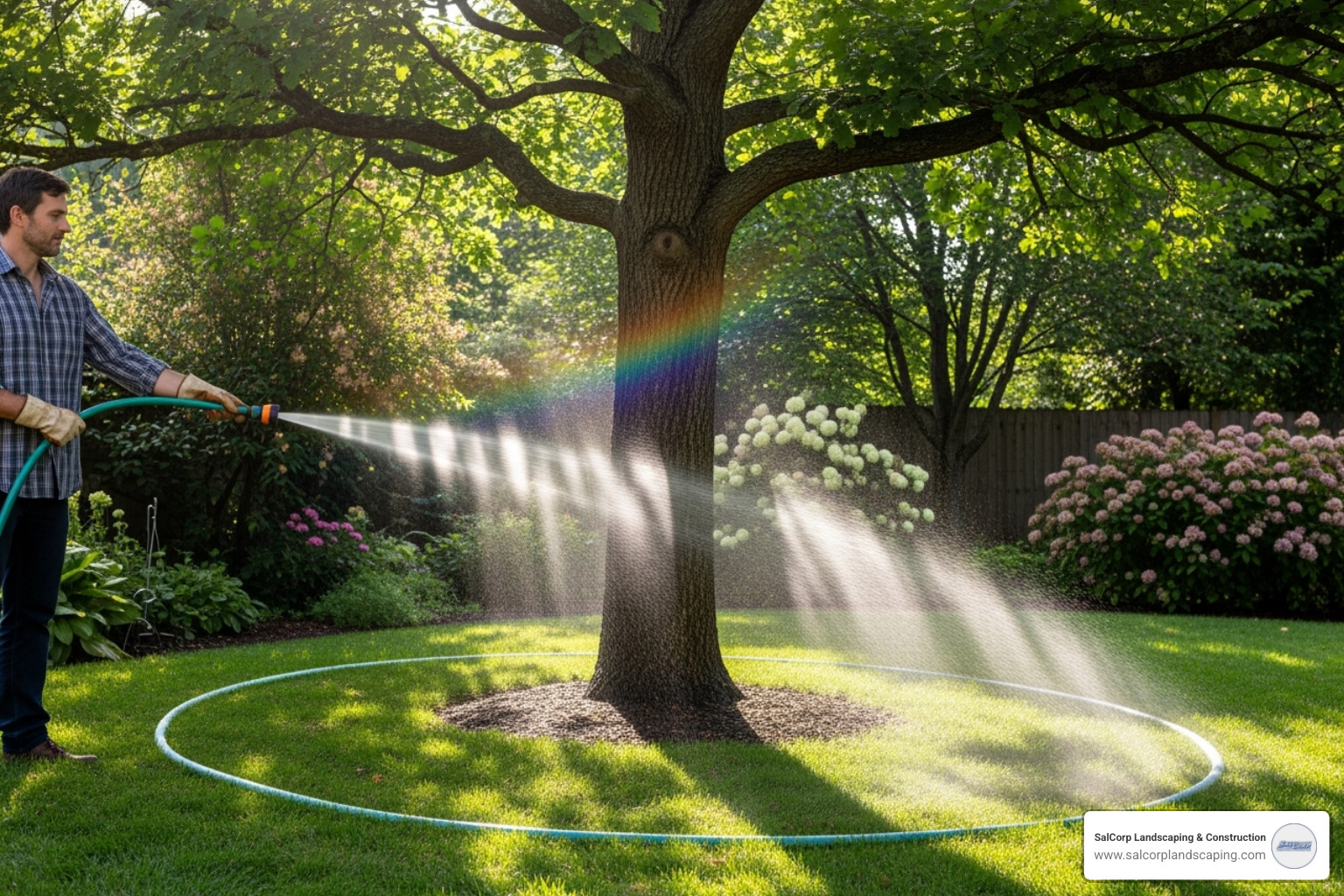
Start with the six-foot rule of thumb. Your mulch ring should be at least 6 feet in diameter. The gold standard is to extend your ring to the tree’s drip line—the area under the outermost branches. A tree’s root system is often wider than its canopy, so plan to expand the ring as the tree grows.
Creating your perfect circle is simple. Use a garden hose to lay out the shape. For a precise circle, tie a string to the trunk and mark your line with spray paint as you walk around. A slightly organic shape can also look natural.
Step 2: How to Properly Edge Around a Tree
Now, create the crisp edge that separates amateur from professional results.
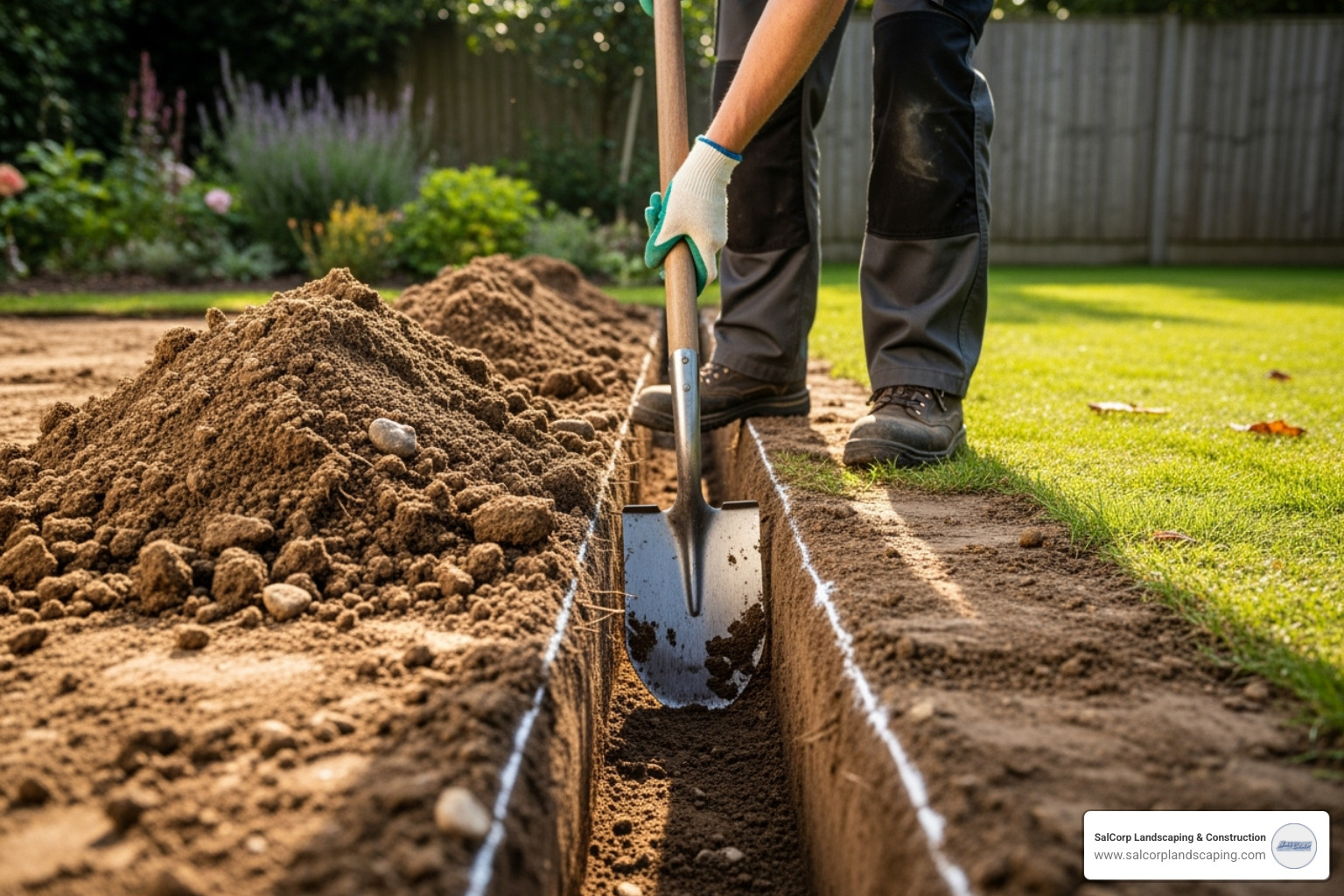
Start by removing all grass and weeds inside your circle. Use a spade or edger to dig 2 to 4 inches deep to get the roots, but be gentle near the tree.
For physical edging, dig a 2 to 6-inch deep trench along your line. The depth depends on the material; stone or brick may need a sand base for stability.
For a natural spade-cut edge, use a spade to cut a V-shaped trench along your line, removing the sod. This creates a clean barrier but requires annual re-edging.
Clean up thoroughly by removing all loose soil and debris before mulching.
Step 3: The Perfect Mulch Application for Edging and Mulching Around Trees
Improper mulching can harm trees, so follow these golden rules.
Lightly dampen the soil first if it’s dry to help the mulch settle.
Apply organic mulch 2 to 4 inches deep across the bed. This depth provides all the benefits without suffocating the roots.
The most important rule: create a “donut,” not a “volcano.” Keep mulch 2-3 inches away from the trunk to expose the root flare (where the trunk meets the ground). This prevents rot, fungi, and pests.
Focus on spreading out, not piling up. Extend mulch as far as possible within the ring, ideally to the drip line. Wide coverage is better than deep piles.
Finish with a thorough watering to settle everything. For more tips, see the guide on Proper mulching techniques from Penn State.
The “Don’t” List: Common Mistakes to Avoid
It’s easy to make mistakes when edging and mulching around trees. After two decades in landscaping, I’ve seen well-meaning homeowners harm their trees with common blunders. The good news is that once you know what to avoid, you’re ahead of the game.
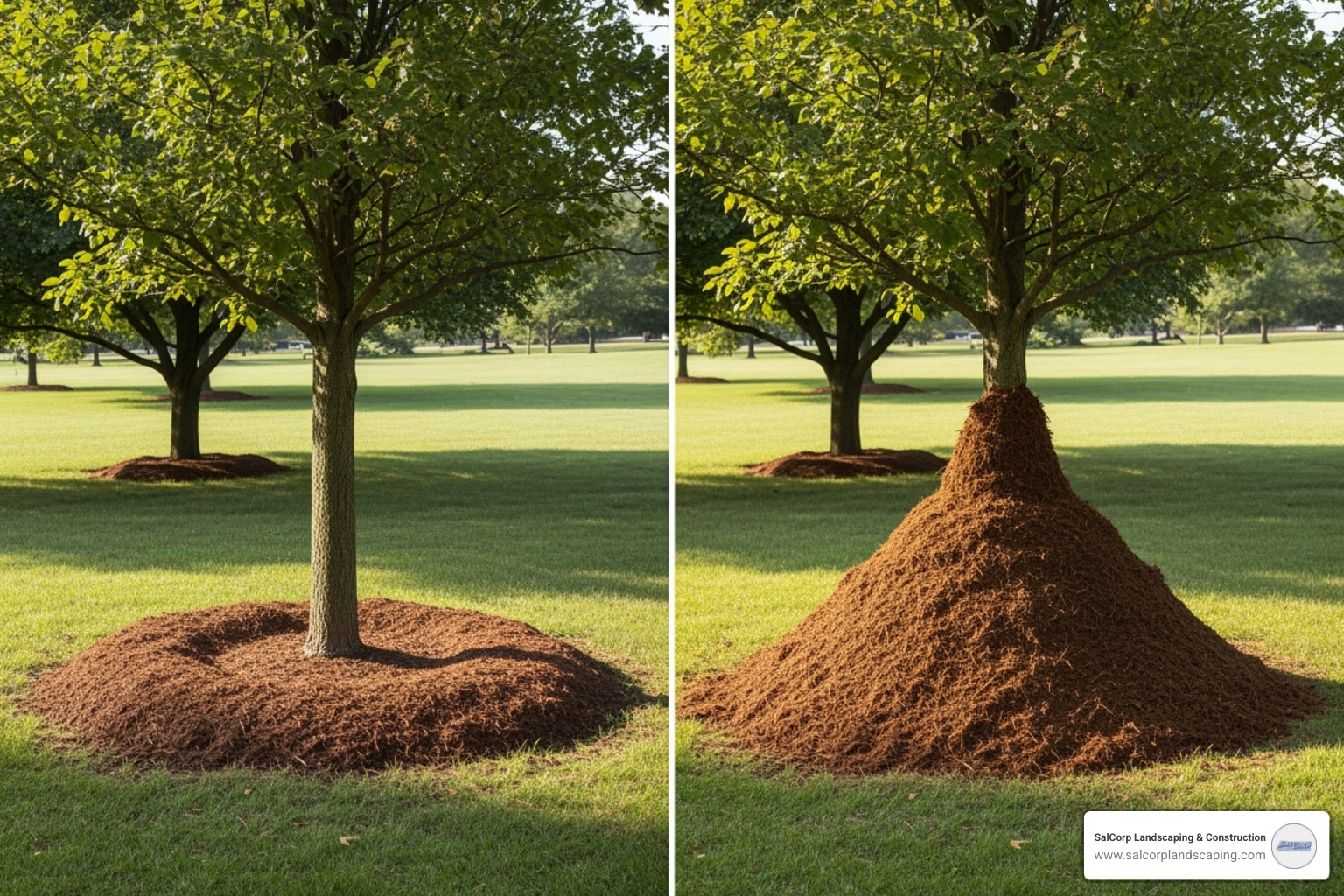
The Dreaded “Mulch Volcano”
The mulch volcano—piling mulch high against a tree trunk—is a common mistake that slowly kills the tree.
Piling mulch against the trunk traps moisture, leading to bark rot and creating an entry point for diseases and pests. Fungal growth thrives in the dampness, and pests like voles can tunnel through the deep mulch to gnaw on the bark.
Burying the root flare can cause girdling roots, which grow in a circle around the trunk and slowly strangle the tree. An overly thick mulch layer also causes oxygen starvation, leading to root decline.
Damage from mulch volcanoes is reversible if caught early, but after a few years, it can become irreversible and kill the tree. For more details, read about Why mulch volcanoes are a harmful practice.
Other Blunders in Edging and Mulching Around Trees
- Damaging tree roots while digging is common. Be careful with the shovel, as surface roots are delicate. If you hit large roots, consider widening the ring or using a gentler method.
- Using landscape fabric under mulch is not recommended. It blocks nutrient transfer from organic mulch to the soil and isn’t effective for long-term weed control.
- Too much of a good thing applies to mulch. Layers thicker than 4 inches can block water and air from the soil and trap heat, stressing the tree.
- Building raised beds around existing trees is often a death sentence. Adding soil around the trunk suffocates it by changing the ground level.
- Planting companions too close to the trunk creates competition for water and nutrients. Keep a clear 2-3 foot radius around the trunk. Learn more in our guide on More info about Plantings.
- Forgetting maintenance is a final pitfall. Re-cut edges annually and refresh mulch each spring to keep it from matting and ensure your hard work pays off.
Frequently Asked Questions about Edging and Mulching
With two decades of experience helping Massachusetts homeowners, I’ve heard many questions about edging and mulching around trees. Here are the most common ones:
How big should a mulch ring around a tree be?
The rule of thumb is at least 6 feet in diameter for small to medium trees, but bigger is almost always better. Ideally, extend the ring to the tree’s “drip line”—the area under the outermost leaves. This is where roots are actively feeding. Expand the ring as the tree’s canopy grows. For massive trees where the drip line is too large, a generous 10 to 15-foot diameter ring is a good goal. This creates a protected zone free from grass competition and mower damage.
Can I just put mulch on top of grass?
Absolutely not. This shortcut will cause problems later. Mulch is a weed suppressant, not a killer. Mulching over grass allows it to grow through, creating a mess and defeating the purpose. Grass is a tree’s number one enemy, competing for water and nutrients. Removing the sod eliminates this competition, allowing the tree’s roots to access resources without a fight.
What is the best time of year to apply mulch?
Mid-spring is the sweet spot, typically after the last frost when the soil has warmed up. Timing is crucial. Applying mulch too early traps cold in the soil, stressing the tree. Waiting too long misses the window for optimal weed suppression and moisture retention. Fall applications also work for a light refresher layer to insulate roots for winter. Just avoid applying to frozen ground. Check your mulch depth regularly. Refresh it when it’s less than 2 inches deep. Most organic mulches need an annual top-up.
Conclusion: A Tidy Yard and a Happy Tree
Now that you’ve walked through the steps of edging and mulching around trees, you can transform your landscape’s health and beauty. This is a true investment in your property’s value and your trees’ survival.
Proper mulching mimics a forest floor, providing moisture, temperature control, and nutrients. Crisp edging contains the mulch and gives your yard a professional finish.
Remember the golden rule: create a donut, not a volcano. Keep mulch off the trunk, maintain a 2-4 inch depth, and extend the ring toward the drip line. Your trees will be healthier and more resilient.
The satisfaction of this DIY project is undeniable. Seeing those clean lines and fresh mulch is deeply rewarding.
Of course, we understand that not everyone has the time or energy to tackle these projects. That’s why we started SalCorp Landscaping & Construction over two decades ago – to help busy homeowners in Walpole and surrounding Massachusetts communities achieve beautiful, healthy landscapes without the stress.
Our owner-operated approach means you’re working directly with experienced professionals who care about your property as much as you do. We bring our own machinery and decades of expertise to ensure every edge is crisp and every mulch application supports optimal tree health.
Whether you need ongoing support with seasonal maintenance or want professional installation from the start, we’re here to help. Check out our comprehensive Lawn Care & Maintenance Services for year-round landscape support. For expert help with your mulching needs, explore our Mulch Delivery and Installation services – we’ll handle everything from selecting the right organic mulch to perfect application technique.
Your trees deserve the best care, and your yard deserves to look its absolute best. With the right approach to edging and mulching around trees, you’ll have both.