

Cape Cod landscape design: 7 Powerful Trends for 2025 Success
Why Cape Cod Landscape Design Creates Perfect Coastal Living Spaces
Cape Cod landscape design combines coastal charm with practical functionality to create outdoor spaces that thrive in challenging seaside conditions. The key elements include:
- Native plant selection: Beach plum, bayberry, and switchgrass for salt tolerance
- Natural materials: Fieldstone walls, shell pathways, and weathered cedar elements
- Functional hardscaping: Permeable patios, fire pits, and outdoor kitchens
- Water-wise irrigation: Smart controllers and drought-tolerant grass varieties
- Conservation compliance: Working with local regulations and wetland requirements
Cape Cod’s unique coastal environment demands landscape designs that handle salt spray, sandy soils, and harsh winter storms while maintaining the region’s signature New England charm. Native plants like beach plum and bayberry naturally thrive in these conditions, requiring less maintenance than exotic alternatives.
Modern Cape Cod landscapes blend traditional elements with contemporary outdoor living features. Professional designers emphasize sustainability through native plantings, efficient irrigation systems, and permeable hardscaping materials.
I’m Sal Musto, owner of SalCorp Landscaping & Construction, with over two decades of experience creating outdoor spaces throughout Massachusetts. My hands-on approach to Cape Cod landscape design ensures every project meets both the unique coastal challenges and homeowner vision for beautiful, functional outdoor living.
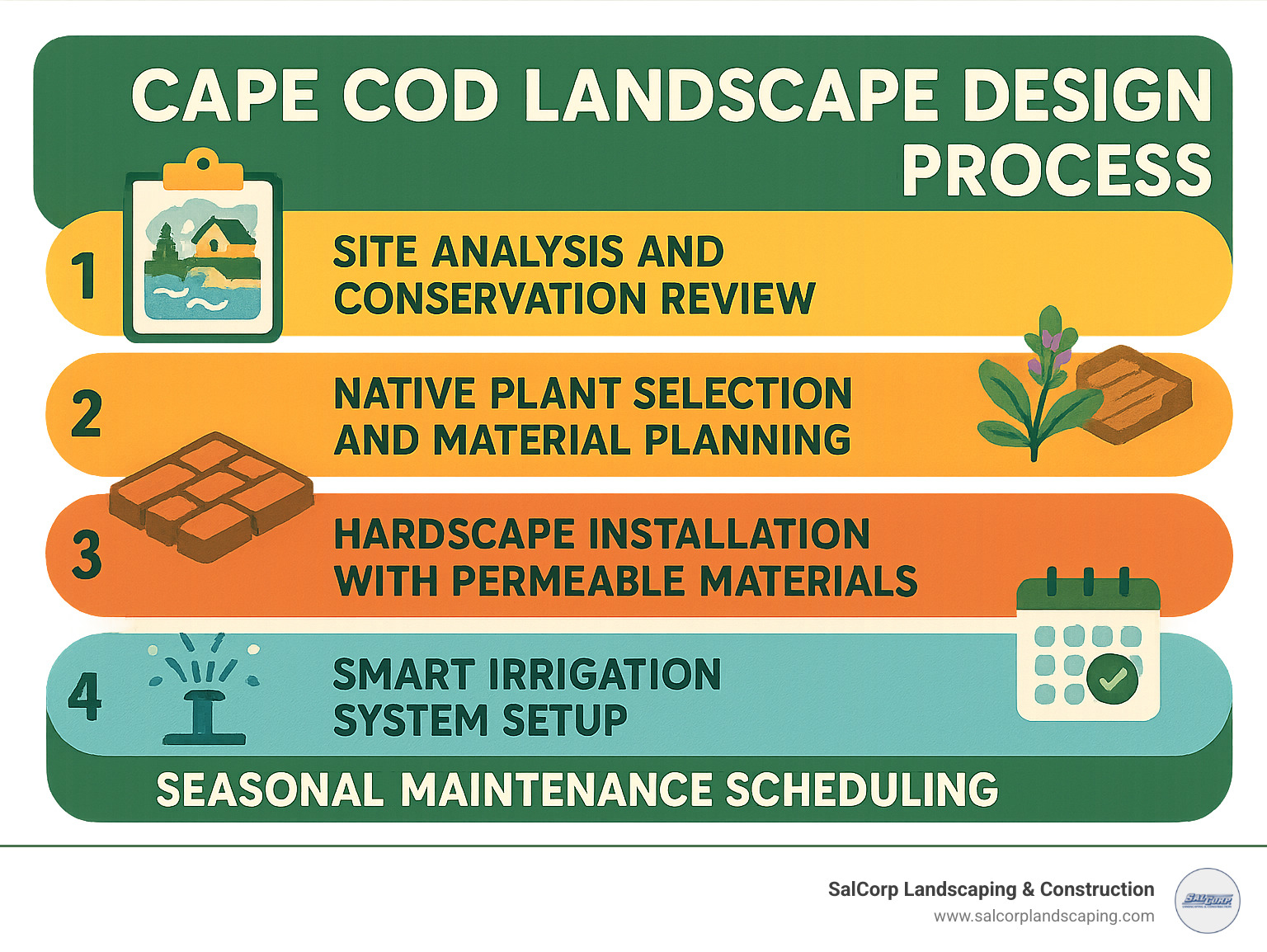
Cape Cod landscape design definitions:
– Cape Cod Hardscaping
– Cape Cod deck design
– Cape Cod irrigation systems
What Defines Cape Cod Landscape Design?
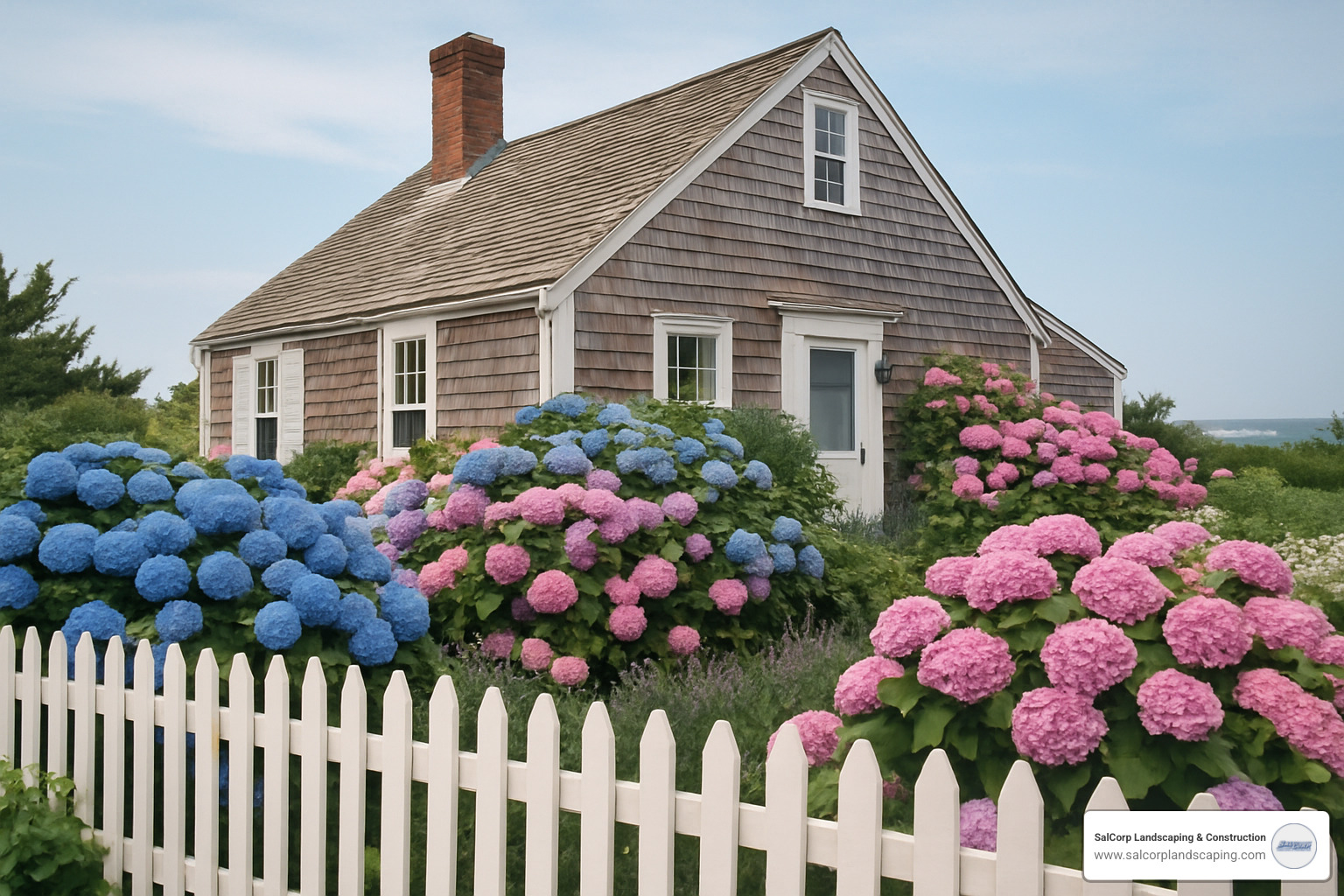
Cape Cod landscape design tells the story of a place shaped by centuries of ocean winds, salt spray, and the practical wisdom of coastal living. The magic starts with those iconic cedar shingles that weather to a soft silver-gray, creating the perfect backdrop for gardens that grow naturally from sandy soil.
What makes Cape Cod gardens special is how they work with nature instead of against it. Hydrangeas bloom in brilliant blues and pinks, thriving in humid maritime air. Dune grass and switchgrass add movement and texture while requiring minimal care once established.
The symmetry that defines Cape Cod design creates balance that feels natural and welcoming. A well-placed stone wall might be balanced by native shrubs, creating visual harmony that draws from the home’s maritime history.
Scientific research on coastal salt tolerance shows that native coastal plants require up to 50% less water than exotic alternatives.
Cape Cod Landscape Design Principles
Successful Cape Cod landscape design comes down to four essential principles:
Scale and proportion matter more than you might think. Cape Cod homes have a modest, human scale that makes them feel approachable. The landscaping should improve this feeling, not overwhelm it.
Balance creates visual harmony that makes a landscape feel “right.” It’s about distributing visual weight thoughtfully – that beautiful oak tree might be balanced by a stone patio and fire pit on the opposite side.
Harmony ties everything together so your landscape feels cohesive. The weathered gray of your home’s shingles might inspire fieldstone wall colors, while white trim could be echoed in garden gate details.
Timeless simplicity is perhaps most important. Cape Cod design has endured for centuries because it focuses on what works rather than what’s trendy.
Climate & Site Influences
Living on Cape Cod means designing with USDA Zone 7a conditions. The sandy soils drain beautifully but don’t hold nutrients, which actually works well for coastal plants that prefer lean, well-draining conditions.
Salt-spray tolerance becomes crucial within miles of the ocean. Beach plum, bayberry, and seaside goldenrod create beautiful, low-maintenance landscapes that look perfectly at home.
Nor’easter winds teach us to design with resilience in mind. We choose plants with flexible stems and deep roots, positioning windbreaks strategically. The same winds that can be destructive also keep summer temperatures comfortable.
Drought cycles occur despite being surrounded by water. Many towns have watering restrictions during peak season, making drought-tolerant plant choices both environmentally responsible and practically necessary.
These environmental challenges create some of the most beautiful landscapes. When you accept Cape Cod’s unique conditions instead of fighting them, you end up with gardens that are gorgeous and perfectly suited to their place.
Choosing Plants and Materials for Coastal Success
The secret to successful Cape Cod landscape design lies in choosing plants and materials that thrive by the ocean. Beach plum stands out as a coastal champion, providing beautiful white spring flowers, purple fruits for jam, and natural windbreaks for more delicate plants.
Bayberry is another workhorse with silvery-gray berries that persist through winter. Switchgrass offers graceful movement and gorgeous golden fall color with virtually no care. Seaside goldenrod blooms bright yellow in late summer when other plants struggle.
For materials, fieldstone walls develop character over time, weathering to blend with the coastal environment. Clam-shell driveways provide excellent drainage while reflecting the maritime setting. Composite decking resists salt corrosion while maintaining a natural appearance.
| Plant Type | Native Example | Exotic Alternative | Salt Tolerance | Maintenance Needs |
|---|---|---|---|---|
| Shrub | Beach Plum | Forsythia | Excellent | Low |
| Grass | Switchgrass | Fountain Grass | Excellent | Very Low |
| Groundcover | Bearberry | Pachysandra | Good | Low |
| Tree | Red Oak | Norway Maple | Good | Low |
Incorporating Native Plants for Sustainability
Native plants aren’t just environmentally correct – they’re practically smart. Once established, they typically need about 75% less watering than exotic alternatives. They’ve evolved natural pest resistance and support local wildlife in ways exotic ornamentals can’t match.
Our Landscape Design Plans emphasize native species because they create landscapes that feel genuinely connected to their place. I often combine natives with proven non-natives like rugosa roses, which have naturalized along Cape Cod beaches.
Plant & Material Trends for 2025
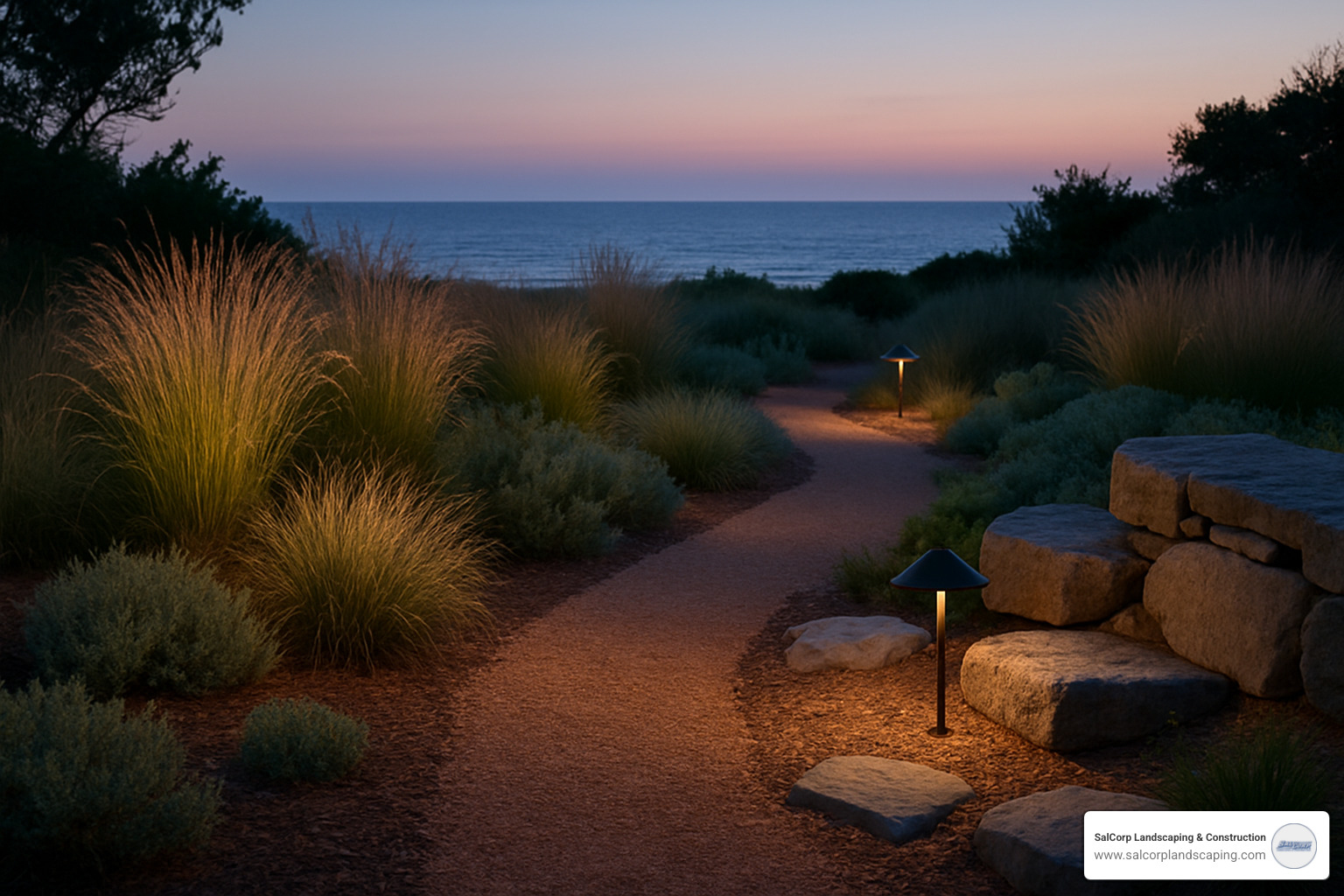
The trends in Cape Cod landscape design reflect environmental reality and changing priorities. Drought-tolerant lawns are replacing traditional grass. Organic soil amendments have moved from niche to standard practice. Permeable pavers handle heavy rains while maintaining attractive surfaces. Dark-sky lighting addresses light pollution while creating intimate spaces. Rain gardens capture stormwater runoff while creating stunning displays with native plants.
Hardscaping and Outdoor Living Spaces

What makes Cape Cod landscape design special is how hardscaping creates outdoor rooms that feel like natural home extensions. Fieldstone walls define spaces, provide seating, and create microclimates where plants thrive. The irregular shapes and weathered colors feel like they’ve always belonged.
For patios and walkways, bluestone and granite handle salt air beautifully. Bluestone’s blue-gray color changes with coastal light, while granite provides slip resistance during foggy mornings. Outdoor kitchens have become essential for Cape Cod living, designed with stainless steel and weather-resistant materials positioned to avoid wind issues.
Fire pits extend outdoor seasons into crisp fall evenings. We use local stone or weather-resistant metals, finding spots with views but natural wind protection.
See our Hardscaping Ideas for creative approaches.
Cape Cod Landscape Design in Hardscape Form
Authentic Cape Cod hardscaping tells the story of this place. Shell paths connect properties to maritime heritage with their satisfying crunch underfoot. Reclaimed ship timber adds incredible character to garden structures, carrying decades of salt spray history.
Weathered cedar develops that signature silver-gray patina defining Cape Cod style. We mix crushed clam shells with stabilizing agents for pathways that drain beautifully and glow in moonlight.
Our Top Trends in Hardscaping Design explores adapting traditional elements for contemporary living.
Creating Functional Outdoor Rooms
Great outdoor spaces work like interior rooms with specific purposes. Multiple seating zones accommodate different activities – intimate conversation areas around fire pits for morning coffee, larger dining areas for family gatherings.
Pergolas and arbors provide sun relief while supporting climbing plants like native grape vines. Landscape lighting transforms spaces after dark with warm-toned LED fixtures. Behind-the-scenes utility planning coordinates electrical, water, and gas services during design phases.
Code compliance gets complicated with wetland setbacks, flood zones, and stormwater requirements, but we handle all regulations upfront.
Lawn Care, Irrigation & Maintenance Best Practices
Creating beautiful Cape Cod landscape design requires the right maintenance approach for challenging coastal conditions. Drought-tolerant fine fescue blends have become our go-to for lawns because they thrive in coastal conditions while needing less water and fertilizer than traditional grass.
Hydroseeding delivers impressive results with green sprouting in 6-8 days. Organic fertilizers protect Cape Cod’s water resources while improving soil structure. Fall aeration helps lawns recover from summer stress in our compacted sandy soils.
Our Landscape Design services include maintenance planning because proper ongoing care is essential. Recent research from the National Concrete Masonry Association helps us design drainage systems for Cape Cod’s intense storms.
Water-Wise Irrigation on Cape Cod
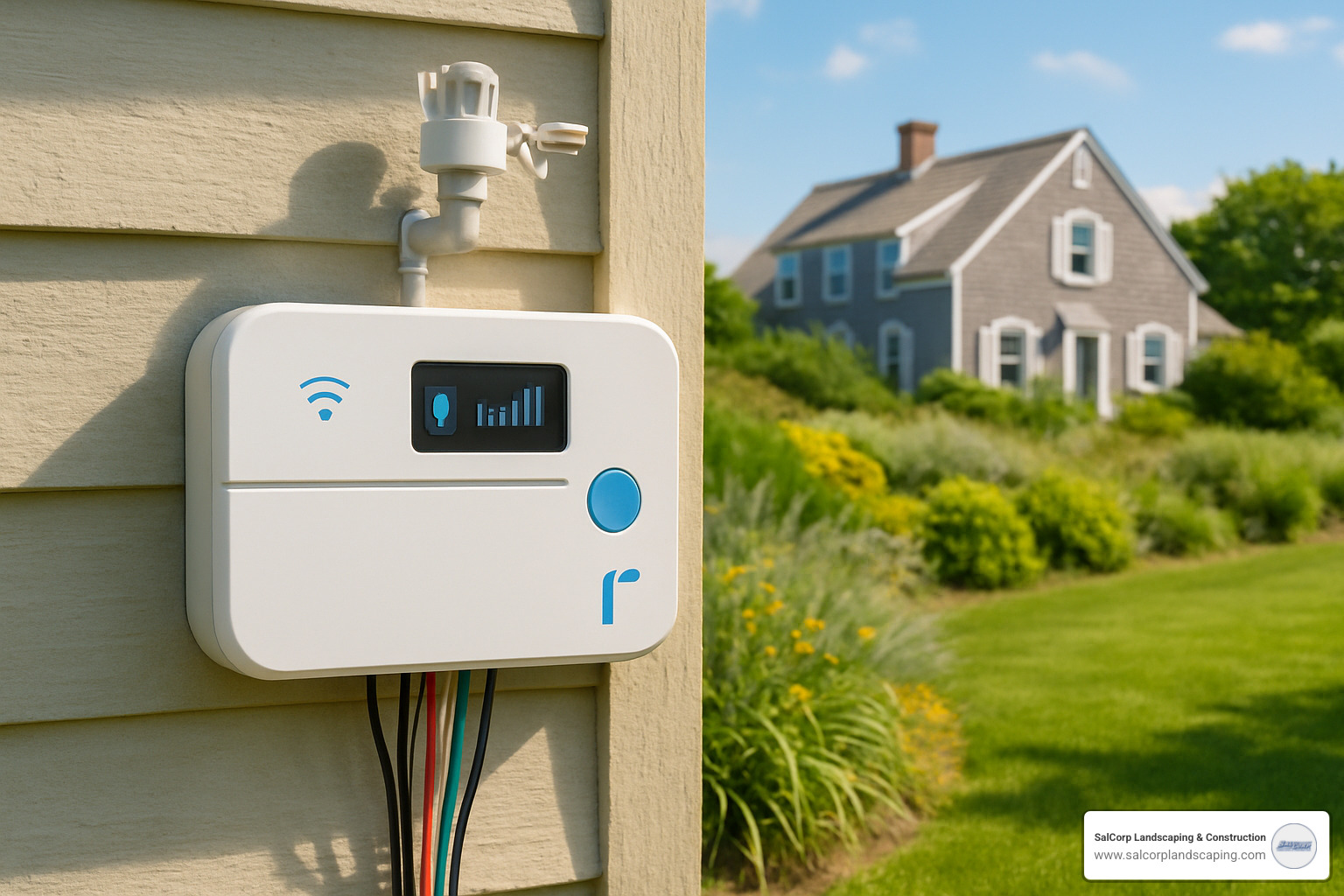
Smart irrigation controllers reduce water usage by up to 30% while keeping plants healthier. These systems adjust schedules based on weather conditions, soil moisture, and plant needs. Rain sensors prevent operation during storms, while soil moisture sensors ensure plants get exactly what they need.
Most Cape Cod communities implement municipal watering restrictions during dry periods. System audits catch broken heads or misaligned nozzles that waste hundreds of gallons. Drip irrigation delivers water directly to root zones with minimal evaporation.
Seasonal Maintenance Calendar
Spring cleanup in March-April removes winter debris and assesses storm damage. This is prime planting time with spring rains helping establish roots. Summer mowing heights of 3+ inches help grass survive heat and drought. Fall overseeding and winter preparation happen in October-November, including anti-desiccant sprays for exposed evergreens.
Navigating Permits, Budgets & Professional Help
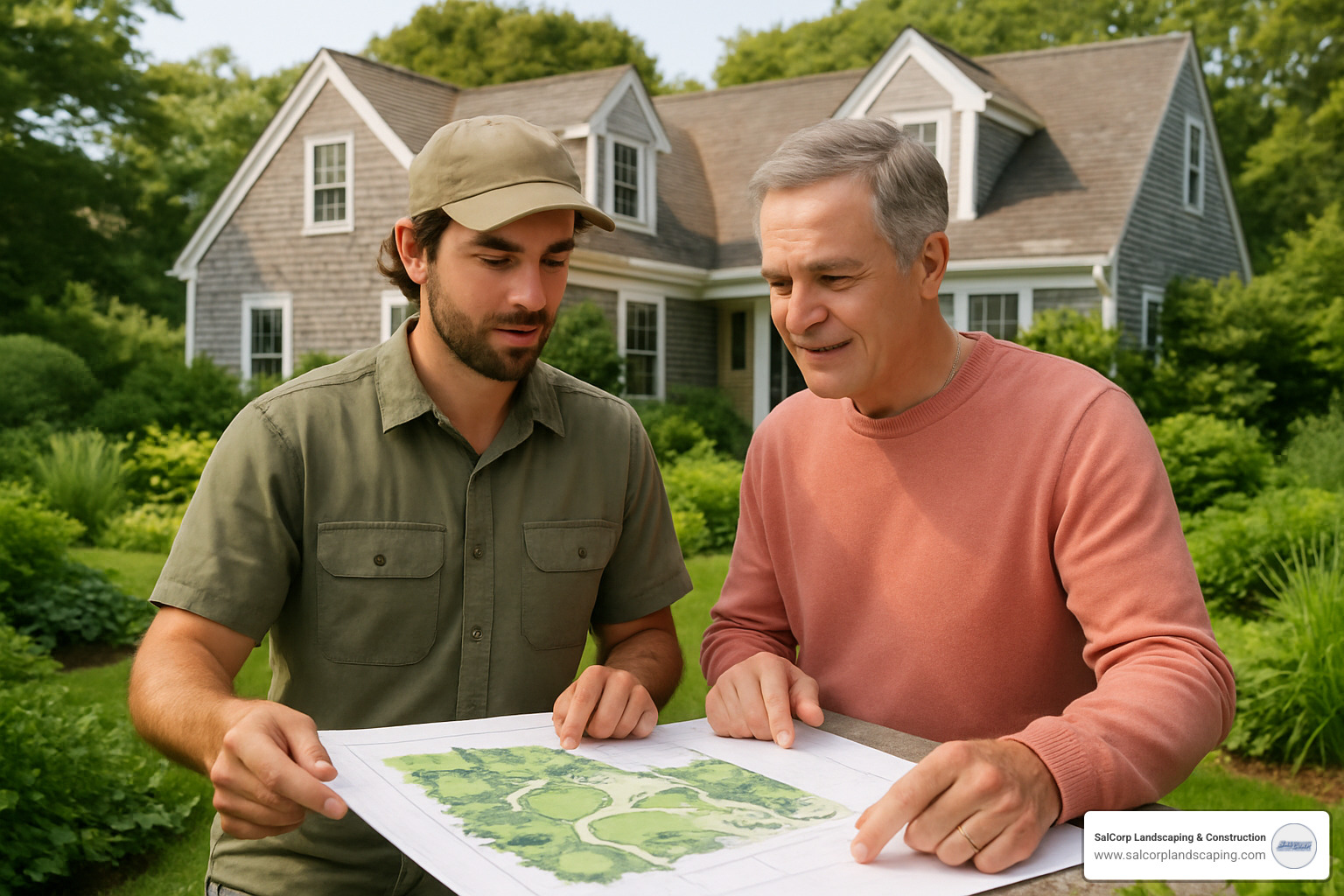
Planning Cape Cod landscape design projects involves conservation commissions, wetland regulations, and budget decisions. Conservation commissions play major roles in projects within 100 feet of wetlands or coastal areas. These regulations protect the delicate environment that makes Cape Cod special.
Wetland setbacks determine hardscape placement but often become design opportunities, creating natural transitions between formal landscapes and wild coastal areas. Mitigation planting requirements actually improve results with approved native species lists.
Project budgets vary widely. Based on internet research, landscape projects typically range from $5,000 for basic plantings to $150,000+ for comprehensive changes (these are average costs based on internet data and not actual costs for SalCorp Landscaping). Phased installations make large projects manageable financially and logistically.
Our Landscape Hardscape Design Near Me service helps homeowners understand realistic options for their property and budget.
Working With Professional Designers
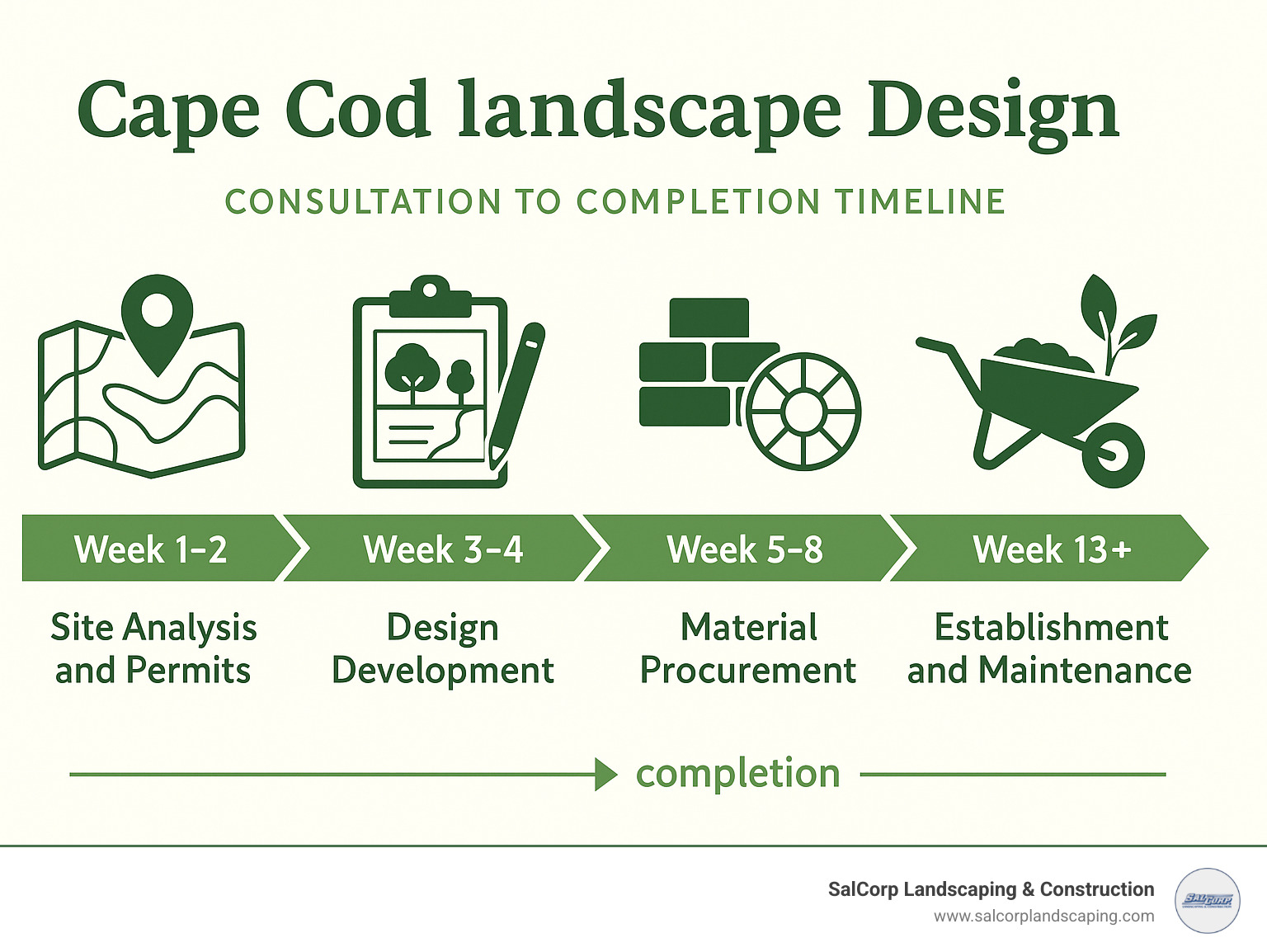
Site analysis forms the foundation, evaluating soil, drainage, sun exposure, wind patterns, and regulations. Concept sketches help visualize possibilities without premature commitment. Detailed plans translate concepts into installation roadmaps with exact specifications. Bid packages allow accurate contractor estimates, while contractor coordination ensures installations match design intent.
Cape Cod Landscape Design FAQs about Regulations
Massachusetts Wetlands Protection Act governs most coastal properties, regulating work within 100 feet of wetlands and ocean areas. Native species requirements appear in most permits with approved plant lists. Tree removal permits protect Cape Cod’s forest canopy through local bylaws.
Working with experienced professionals who understand requirements turns potential obstacles into design opportunities for authentic, sustainable landscapes.
Frequently Asked Questions about Cape Cod Landscaping
When homeowners start planning their Cape Cod landscape design projects, they often have similar questions about plants, costs, and regulations. After two decades of working on coastal properties, I’ve heard these questions countless times – and I’m always happy to share what we’ve learned.
What are the best low-maintenance plants for Cape Cod yards?
The secret to low-maintenance Cape Cod gardens lies in working with nature instead of against it. Native plants are your best friends here because they’ve spent thousands of years figuring out how to thrive in our challenging coastal conditions.
Beach plum tops my recommendation list every time. This native shrub gives you gorgeous white spring flowers, edible purple fruits for jams, and requires virtually no care once it’s settled in. Bayberry is another winner – its silvery berries look beautiful all winter, and the plant laughs at salt spray that would kill most other shrubs.
For grasses that move beautifully in ocean breezes, switchgrass can’t be beat. It turns golden in fall and needs cutting back just once a year. I also love seaside goldenrod for late summer color when everything else is looking tired from the heat.
Rugosa roses aren’t technically native, but they’ve made themselves at home along our beaches for over a century. They bloom repeatedly all summer, produce vitamin C-rich hips, and handle salt better than most roses handle regular garden conditions.
The beauty of these plants is that they actually prefer our sandy soils and don’t need the constant watering and fertilizing that exotic plants demand. Once they’re established – usually by their second year – they’re practically self-sufficient.
How much does a typical landscape project cost on Cape Cod?
This is probably the question I get asked most often, and I always start by saying it’s like asking “How much does a house cost?” The answer depends entirely on what you’re trying to accomplish.
Basic garden improvements – adding some native plantings, creating a simple patio, or installing basic irrigation – typically fall into the more affordable range. Comprehensive property changes with extensive hardscaping, outdoor kitchens, and sophisticated irrigation systems represent significant investments.
Based on internet research, you might see ranges from around $5,000 for smaller projects up to $150,000 or more for extensive property makeovers (these are average costs based on internet data and not actual costs for SalCorp Landscaping). But here’s what really drives those numbers:
Permitting and regulations can add substantial costs, especially if your property is near wetlands or requires conservation commission approvals. Site conditions matter enormously – a flat, accessible lot costs much less to work with than a steep, rocky site that requires special equipment.
Material choices make a huge difference too. Local fieldstone costs more than concrete blocks, but it looks infinitely better and lasts longer in our coastal environment. Professional design and installation adds value by ensuring everything works properly and meets regulations.
Many smart homeowners choose phased approaches, completing their dream landscape over several years. This spreads the investment while letting each phase establish successfully before moving to the next area.
Do I need a permit for hardscaping near wetlands?
The short answer is: probably yes, and it’s better to find out before you start digging. Cape Cod’s beautiful coastal environment comes with protective regulations that can catch homeowners off guard.
Massachusetts Wetlands Protection Act casts a wide net – any work within 100 feet of wetlands, streams, ponds, or coastal areas typically requires permits. That “100 feet” often surprises people because it can include areas that don’t look particularly wet or environmentally sensitive.
What counts as “work” is broader than most people expect. Installing a patio, planting trees, or even changing drainage patterns can trigger permit requirements. I’ve seen homeowners get surprised by enforcement actions for projects they thought were too small to matter.
Conservation commissions in each town review these permits, and they take their environmental protection role seriously. They want to ensure your project won’t cause erosion, harm wildlife habitat, or affect water quality.
The good news is that most reasonable projects can get approved if they’re properly planned and presented. Conservation commissions aren’t trying to prevent all improvements – they just want to make sure they’re done responsibly.
My advice is always to check early in your planning process. A quick call to your town’s conservation agent can save you from expensive mistakes and delays. Professional designers familiar with local regulations can help steer the permitting process efficiently, often saving time and money in the long run.
Conclusion
Creating the perfect Cape Cod landscape design is about crafting outdoor spaces that truly capture coastal living magic. The coastal environment presents challenges, but these same conditions create incredible opportunities for those who understand them.
When you work with salt spray, sandy soils, and ocean winds rather than fighting them, you get landscapes that feel authentically Cape Cod while requiring surprisingly little maintenance. Native plants thrive with minimal fussing, smart irrigation systems conserve water, and thoughtful hardscaping creates outdoor living spaces that handle whatever nature brings.
Regulatory requirements often lead to better designs. When required to use native plants and protect wetlands, you end up with landscapes more connected to their place and supportive of local wildlife.
At SalCorp Landscaping & Construction, we’ve guided hundreds of homeowners through this process. Being owner-operated means I’m personally involved in every project, ensuring Cape Cod landscape details don’t get overlooked.
Cape Cod landscape design succeeds when it improves the coastal lifestyle that brought you here. Whether creating sheltered patios for morning coffee while watching sunrise, or designing native gardens that attract butterflies and require minimal watering, the goal is outdoor spaces that make your property feel like the Cape Cod retreat you’ve always dreamed of.
Ready to start your Cape Cod landscape change? Our Landscape Design team understands both technical challenges and the dreams that drive these projects. Let’s work together to create outdoor spaces that celebrate everything special about living on Cape Cod.
