

Why Landscape Retaining Wall Ideas Matter for Massachusetts Properties
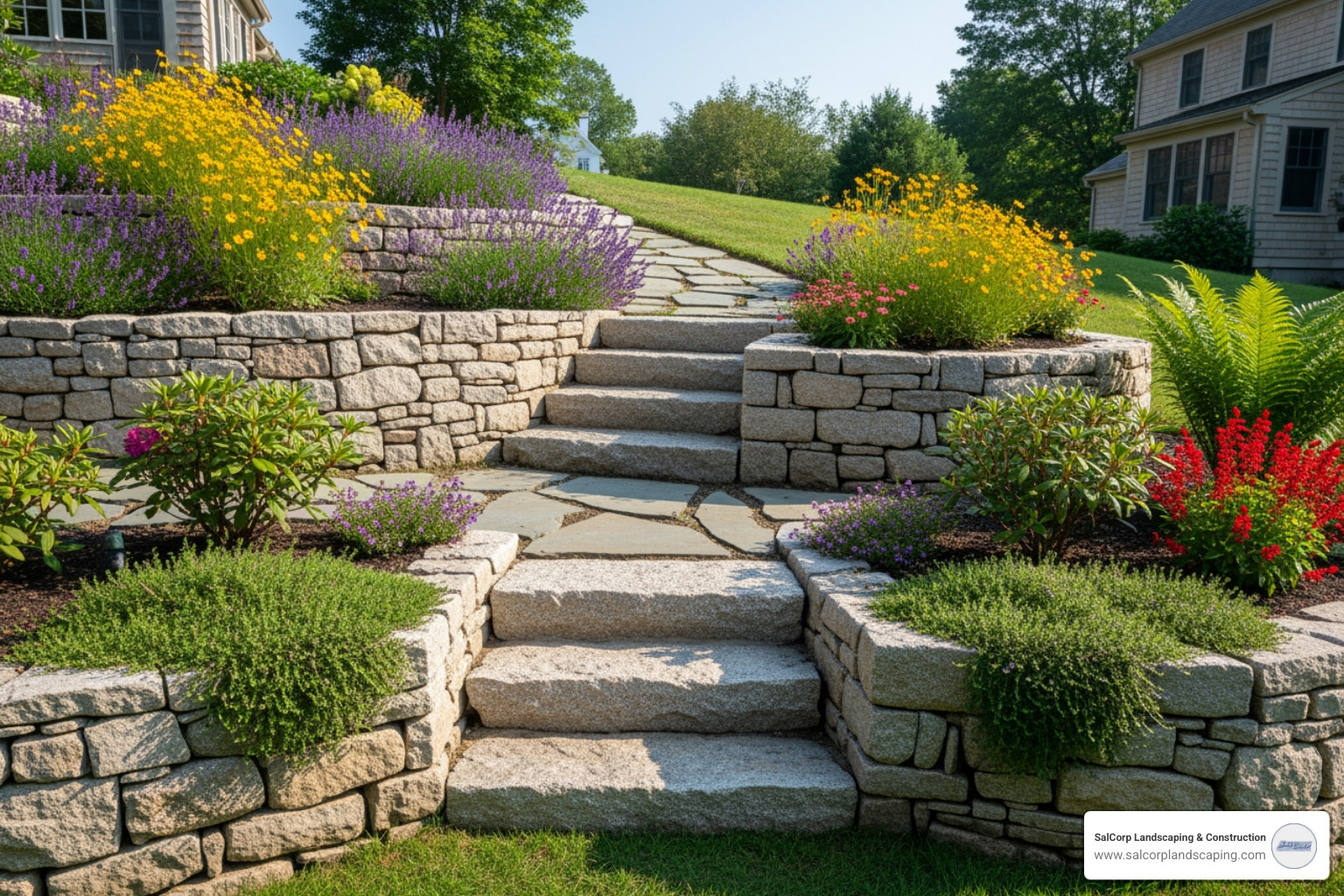
Landscape retaining wall ideas can transform your property’s function and curb appeal. A well-designed retaining wall solves practical problems like sloped yards and soil erosion while creating more usable outdoor space and adding significant aesthetic value.
Quick Answer: Top Landscape Retaining Wall Ideas
- Natural Stone Walls – Timeless beauty with fieldstone or boulders
- Concrete Block Systems – Versatile, modern, and easy to install
- Timber Walls – Cost-effective for shorter walls and rustic appeal
- Terraced Designs – Create multiple levels on steep slopes
- Integrated Features – Built-in seating, planters, or lighting
- Gabion Walls – Modern industrial look with excellent drainage
- Water Features – Waterfalls or fountains for visual interest
Beyond holding back soil, retaining walls prevent erosion, manage drainage, and create level areas for patios or gardens, dramatically increasing property value. The challenge lies in choosing the right design and materials for your site, especially in Massachusetts, where freeze-thaw cycles and heavy rainfall impact a wall’s longevity.
As Sal Musto, with over two decades of experience in Massachusetts landscaping, I’ve designed and installed hundreds of retaining walls. My team helps clients find the perfect landscape retaining wall ideas that balance function, aesthetics, and budget.
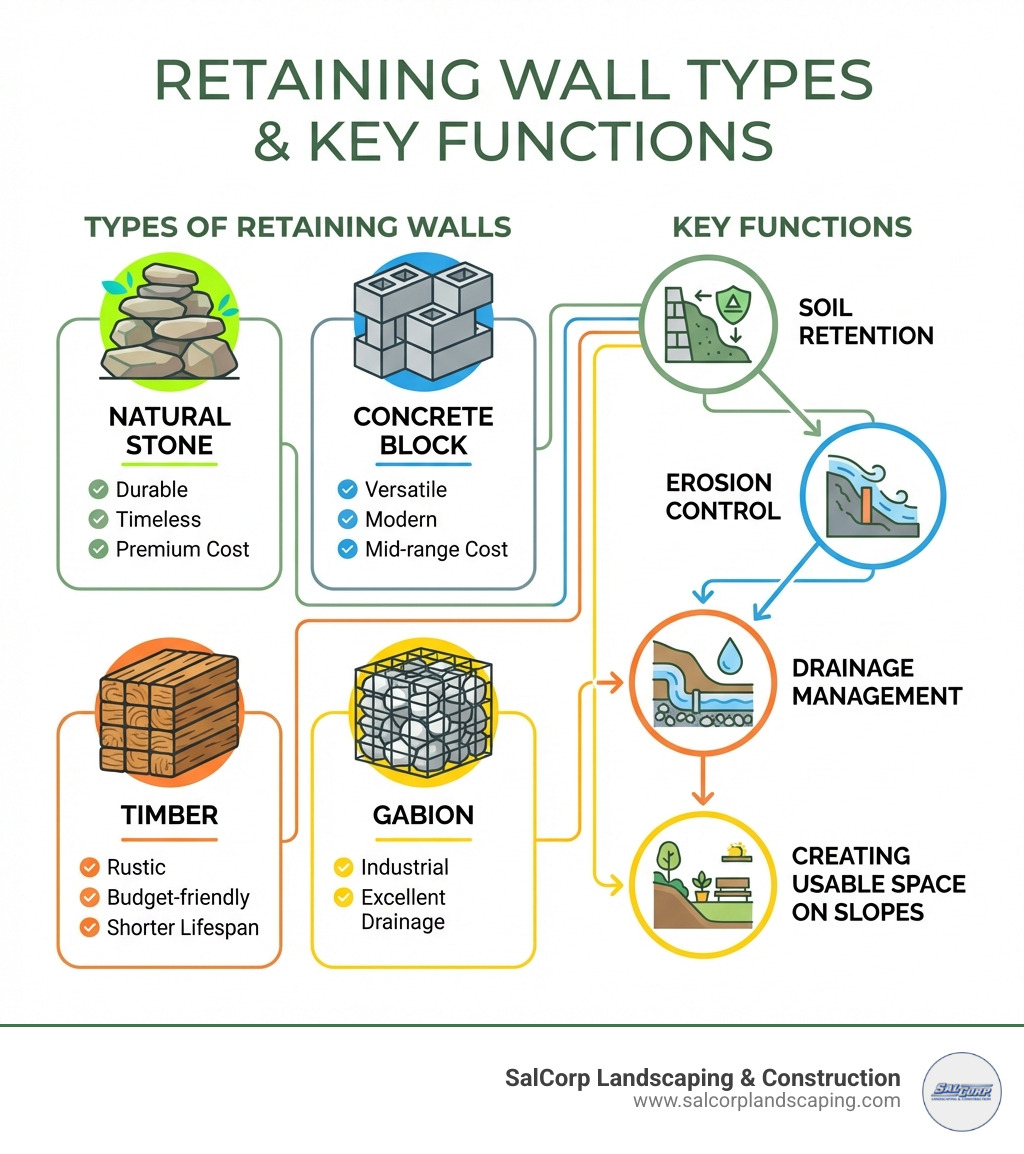
Easy Landscape retaining wall ideas glossary:
What Are Retaining Walls and Why Do You Need One?
A retaining wall is a structure designed to hold back soil, but its purpose goes far beyond that simple definition. As Joe Raboine of Belgard Residential Hardscapes says, “At the basic level, a retaining wall is a structure that holds or retains soil behind it.” They are the heroes of landscapes with challenging topography, common across Massachusetts.
The primary functions of retaining walls include:
- Structural Support & Usable Space: They hold back earth on sloped properties, changing inclines into level surfaces for patios, gardens, or play areas. As Mauricio Lobeira of Ten Plus Three notes, “Many retaining walls end up as garden or terrace backdrops.”
- Soil Erosion Control: By stabilizing slopes, retaining walls prevent valuable topsoil from washing away due to rain and wind.
- Drainage Management: A properly designed wall includes drainage to prevent water buildup and pressure, channeling runoff away from critical areas.
- Aesthetic Appeal: Retaining walls are powerful design elements that add curb appeal, define spaces, and provide architectural interest.
It’s also crucial to know the difference between wall types:
- Retaining Walls: Built for structural support on sloped ground, they are engineered to hold back soil and withstand immense pressure.
- Freestanding Walls: Used on flat ground, these are decorative or dividing walls that don’t bear a soil load.
In short, if you have a slope or drainage issues, a retaining wall is a valuable addition to control and shape your landscape.
Inspiring Landscape Retaining Wall Ideas by Material & Function
The beauty of landscape retaining wall ideas lies in their versatility. The choice of material and design can dramatically alter the look and feel of your outdoor space. Let’s explore some popular options.
Natural Charm: Stone and Timber Walls
For a timeless, organic aesthetic, natural materials are a top choice.
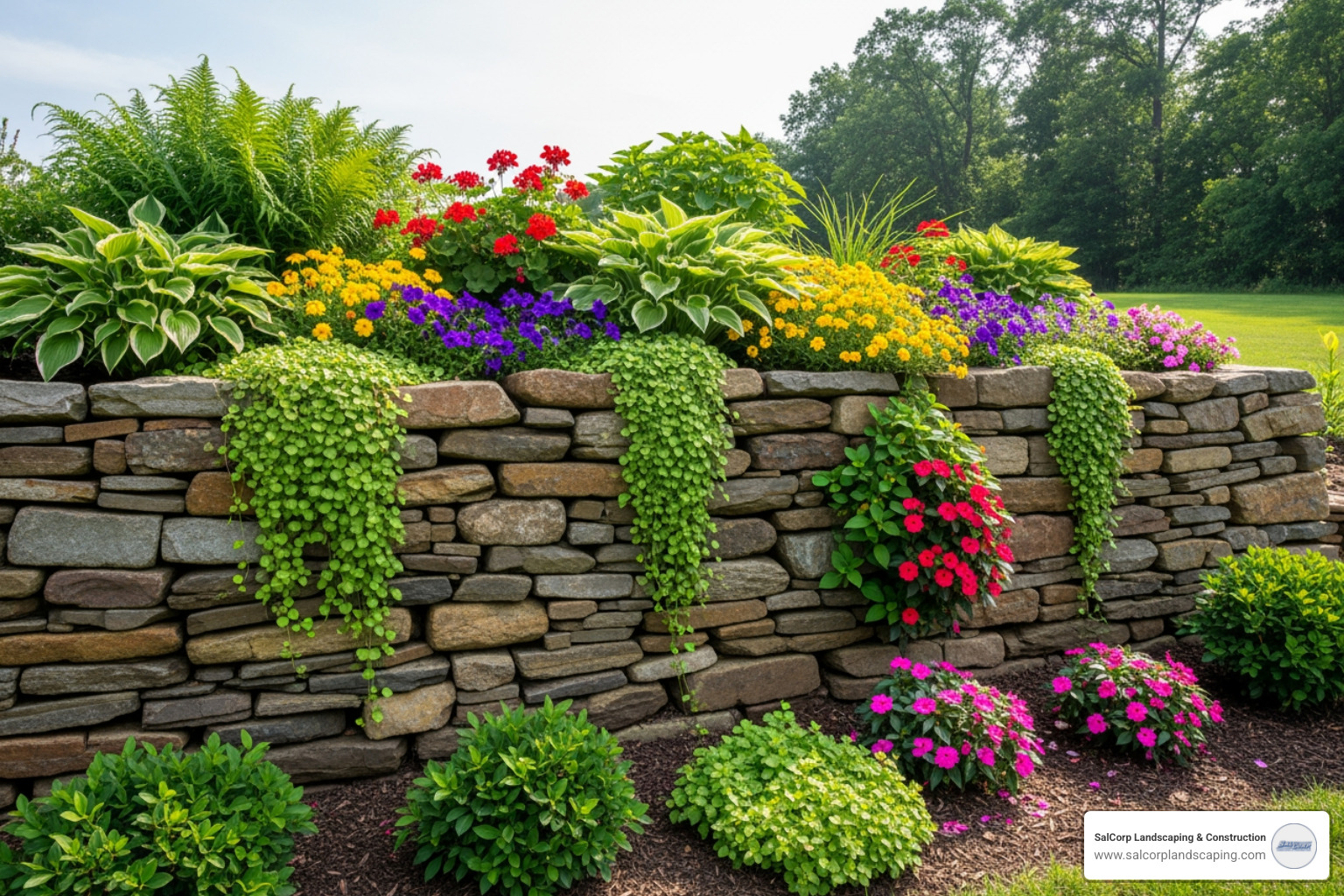
- Natural Stone: Offering incredible durability (50-100 years) and a classic look, stone walls are a premium option. Materials like fieldstone, granite, or boulders each provide unique textures and colors for either a rustic or contemporary feel. As Eden Garden Design suggests, letting “greenery and flowers ‘spill over’ a rock retaining wall” softens the look and adds visual interest. For more on this classic choice, explore our guide on How to Build a Stone Retaining Wall. If you’re looking for professional help, you can find Stone Retaining Wall Contractors Near Me.
- Timber Walls: Wood is an inexpensive choice for a warm, natural look. As Joe Raboine of Belgard notes, “Wood is an inexpensive and common choice for a retaining wall.” While great for garden beds and small terraces, its lifespan is shorter (20-40 years) and requires pressure-treated lumber rated for ground contact to ensure longevity.
Modern & Versatile: Concrete and Modular Block Walls
If you’re seeking a clean, contemporary look or a highly engineered solution, concrete-based options provide immense versatility and structural integrity.
- Modular Concrete Block Systems: These engineered systems are a game-changer, offering structural beauty and functionality for any property. The interlocking blocks are durable, strong, and come in a vast range of shapes, colors, and textures that can emulate natural stone or provide a sleek, modern finish. This versatility makes them a popular choice for everything from simple garden walls to complex terraced landscapes. As noted by Techo-Bloc, some collections offer a “smooth look… bringing modern elegance to your custom spaces.” Learn more about your options with Concrete Retaining Wall Blocks. For expert installation, our team of Block Wall Builders can bring your vision to life.
- Poured Concrete: For a sleek, modern design, poured concrete walls offer a seamless, monolithic appearance. They are incredibly strong and can be finished as smooth, textured, or stamped to mimic other materials.
- Stucco: A stucco finish can be applied over a concrete or block wall for a uniform, often Mediterranean look. As Arthur Furman of Side Angle Side notes, a “skim coat” of stucco can create a clean, consistent surface.
Modular block systems, in particular, offer a solution for nearly any wall project, providing both aesthetic appeal and robust structural support. Dive deeper into our comprehensive retaining wall services.
Creative & Functional Landscape Retaining Wall Ideas
Beyond their primary function, retaining walls can be integrated with other landscape features to create truly unique and highly functional outdoor spaces.
- Integrated Seating: Incorporating built-in benches is a brilliant way to maximize space. Patricia Benner of Benner Landscape Design suggests a fire pit with a retaining wall can be a “sunken, outside sitting room for year-year entertaining.”
- Built-in Planters: Retaining walls can double as planters, softening the structure with vibrant color. PJCArchitecture notes how planters can “soften the grade change and add vibrant color to the landscape.” Explore more ideas for your Garden Retaining Wall.
- Water Features: Integrate waterfalls or fountains for a peaceful ambiance. The sound and motion of water transform a simple wall into a serene focal point.
- Integrated Lighting: Add LED strips or recessed lights to highlight textures, improve safety, and extend the use of your outdoor space into the evening.
- Gabion Walls: These wire cages filled with stone offer excellent drainage and an industrial-chic look. Arthur Furman of Side Angle Side calls them “the most affordable way to retain soil.”
- Corten Steel Walls: For a contemporary look, Corten steel develops a stable rust-like patina that contrasts beautifully with greenery. Amy Hovis explains it can create an “infinity-edge lawn” effect.
These creative integrations transform retaining walls from purely functional elements into integral parts of your outdoor living experience. And if you’re thinking about adding a cozy fire pit, check out More info about fire pits!
Taming the Terrain: Walls for Sloped Properties
Sloped properties, common in many Massachusetts towns like Walpole, Medfield, or Newton, present unique opportunities that retaining walls can open up.
- Terracing: Building a series of tiered walls is the most effective way to manage a steep slope. This creates multiple level platforms (“terraces”) for gardens or patios, preventing erosion and increasing usable space. As PJCArchitecture notes, “A retaining wall can turn an otherwise steep slope into lush usable space.”
- Integrated Steps: Integrating steps into the wall design provides seamless and safe transitions between the different levels you create.
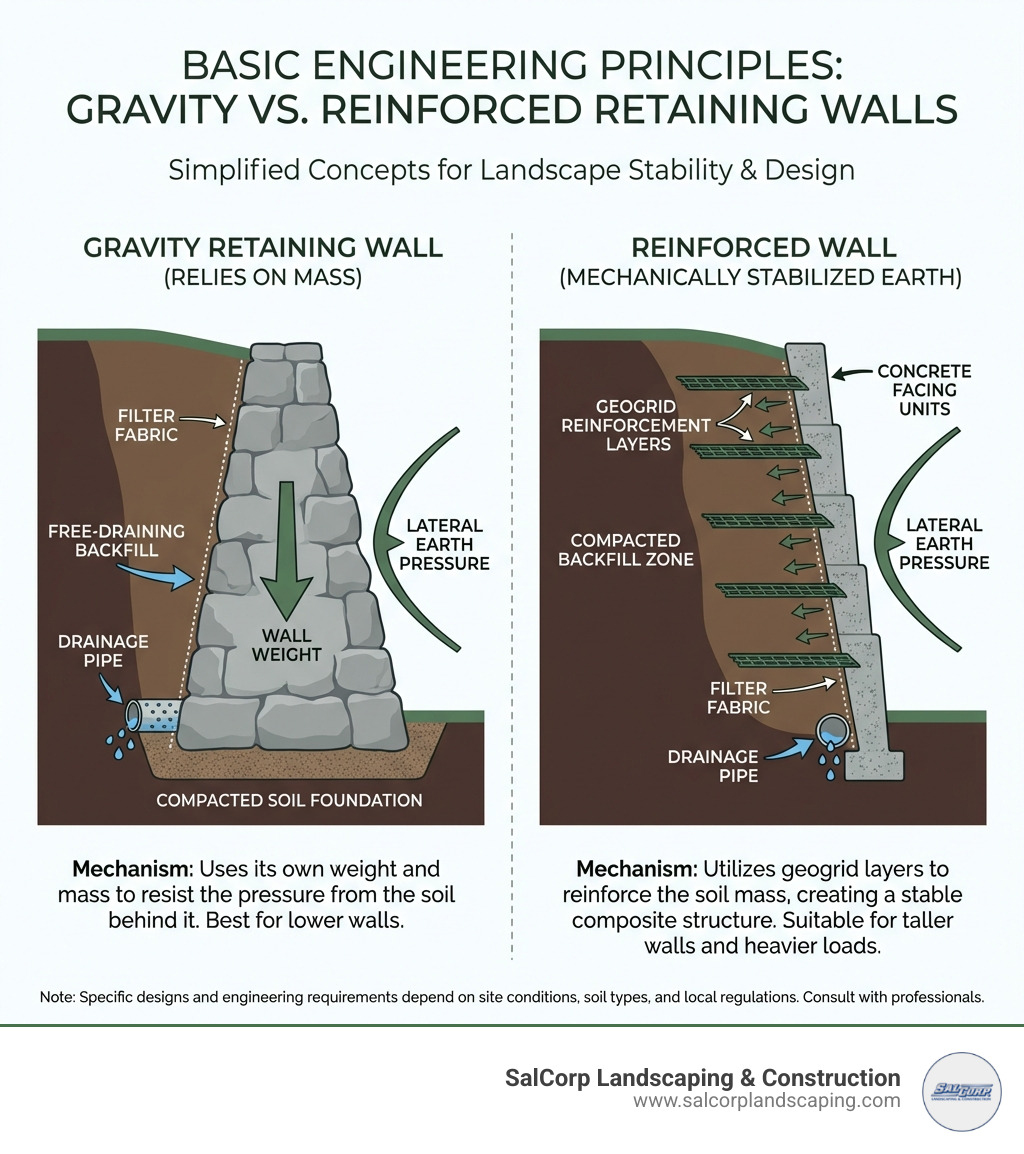
- Drainage Solutions: Proper drainage is paramount to prevent water pressure from causing wall failure. A professional installation includes a system of gravel backfill, perforated pipes, and weep holes to channel water safely away from the wall’s structure.
- Geogrid Reinforcement: For walls over four feet high, geogrid reinforcement is essential. This synthetic mesh is layered within the backfill to create a reinforced soil mass, providing critical stability. As Allan Block explains, this process combines “the soil and block together to form a reinforced soil mass.”
Taming a sloped property requires careful planning and expert execution. Our team specializes in designing and building durable, effective retaining walls for challenging terrains. Learn more about How to Build a Retaining Wall on a Slope or consult resources like Building a landscape retaining wall for detailed insights.
Understanding the Investment: Retaining Wall Costs
Understanding the investment is crucial when considering landscape retaining wall ideas. Costs vary based on materials, wall size, site accessibility, and labor.
Important Disclaimer: The costs mentioned below are average estimates based on internet data and general industry trends. These are not actual costs for SalCorp Landscaping & Construction services, as every project is unique and requires a personalized quote.
According to data from Angi, retaining walls can cost between $3,202 and $9,203, with many homeowners paying around $6,065. However, complex projects with premium materials can exceed $25,000.
Key factors influencing the final price include:
- Materials: The material chosen is the largest variable.
- Labor: Professional installation costs are influenced by wall height, site access, and design complexity. Sloped properties can increase labor costs by 50% or more.
- Site Preparation: Costs for land clearing, grading, or tree removal may be necessary.
- Wall Height & Engineering: Walls over four feet often require an engineer’s design ($350–$750) and building permits, adding to the expense.
Here’s a comparison of average installed costs for common retaining wall materials:
| Material Type | Average Installed Cost (per square foot) | Typical Lifespan |
|---|---|---|
| Timber | $15 – $30 | 20-40 years |
| Concrete Blocks | $30 – $50 | 50-100 years |
| Natural Stone | $20 – $100 | 50-100 years |
These figures provide a general idea, but a professional consultation is necessary for an accurate estimate for your property.
Choosing and Building Your Perfect Wall
Building the right retaining wall is a significant investment. Here are key considerations to ensure your project’s success.
Key Considerations Before You Build
- Permits and Codes: In Massachusetts, permits are often required for walls over four feet high, which may also need stamped engineering plans. Local regulations, especially near wetlands or septic systems, must be followed. We are familiar with these codes to ensure your project is compliant.
- Wall Height and Soil Type: Wall height dictates the design. Taller walls (over 4 feet) require professional engineering, robust footings, and advanced drainage. Soil type is also critical; clay soils in Massachusetts exert more pressure than sandy soils and require specific design considerations.
- Professional Engineering: For tall walls, tiered systems, or those supporting heavy loads (like a driveway), a licensed engineer is non-negotiable to ensure the wall can withstand soil pressure and Massachusetts’ freeze-thaw cycles.
- DIY vs. Professional Installation: While a small wall under three feet might be a DIY project, taller or more complex walls should be built by professionals. Improper construction can lead to failure and costly repairs. For reliable construction, consider a trusted Builder Retaining Wall service.
- Long-Term Maintenance: Concrete and stone walls can last over 50 years with minimal upkeep, while wood walls (20-40 year lifespan) may need periodic treatment. Regular inspection of any wall is key to catching issues early.
At SalCorp Landscaping & Construction, we bring over 20 years of owner-operated experience to every project. Our team is familiar with the specific conditions across our Massachusetts service areas, from Walpole to Boston. We use our own machinery to provide comprehensive solutions, ensuring your retaining wall is beautiful, structurally sound, and built to last.
Ready to open up your landscape’s potential? Contact us for a consultation today, and let’s discuss the perfect landscape retaining wall ideas for your home.
