Commercial Irrigation Cost: Ultimate 2025 Guide
Understanding Your Investment in Commercial Irrigation
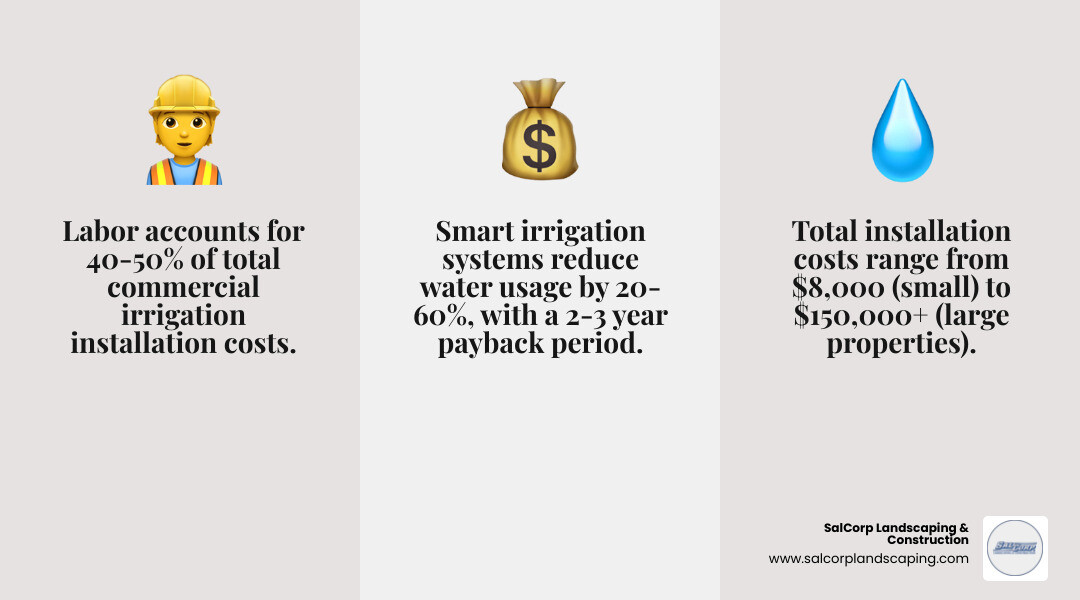
Commercial irrigation cost is a significant investment for property managers. For Massachusetts commercial properties, total installation costs can range from $8,000 for small properties to over $150,000 for large ones. A well-designed system is more than sprinklers; it’s a network of pipes, valves, and controllers that protects your landscape, reduces water waste by 30-50%, and maintains curb appeal.
Please note: The cost figures in this article are industry averages for informational purposes. We provide custom quotes after a thorough site assessment.
Commercial systems are built tougher than residential ones, using larger pipes and commercial-grade components to withstand heavy use. This is why they often cost 2-3 times more. However, a professionally installed system can last 20-25 years. The National Association of Realtors’ 2023 Remodeling Impact Report notes that property owners often recover about 83% of their investment through increased property value and water savings.
I’m Sal Musto, owner of SalCorp Landscaping & Construction. For over two decades, I’ve helped Massachusetts property managers make smart irrigation decisions. My hands-on approach ensures you get honest guidance on what your property truly needs.
Main Factors Influencing Your Initial Investment
Several key factors determine the commercial irrigation cost for your Massachusetts property:
- Property Size: Larger properties require more materials and labor, with average costs ranging from $0.20 to $1.00 per square foot.
- Number of Zones: A “zone” is a separately controlled area. Each zone adds $650 to $2,000 to the cost, allowing for customized watering based on plant type and sun exposure.
- Landscape Complexity: Intricate flower beds, slopes, and irregular shapes require more precise design and specialized components, increasing costs compared to a flat, open area.
- Soil Composition: Soil type affects installation depth and hardware. Sandy soils may need deeper installation, while clay soils might require extra prep to prevent water pooling.
- Water Source: Connecting to a municipal supply versus an on-site well involves different pressure, flow, and filtration considerations. According to the EPA’s research on outdoor water use, efficient design is critical for managing the high water consumption of commercial properties.
For a deeper dive into our design process, see our guide on designing underground sprinkler system.
System Types and Their Price Tags
Choosing the right system balances budget, landscape needs, and water conservation goals.
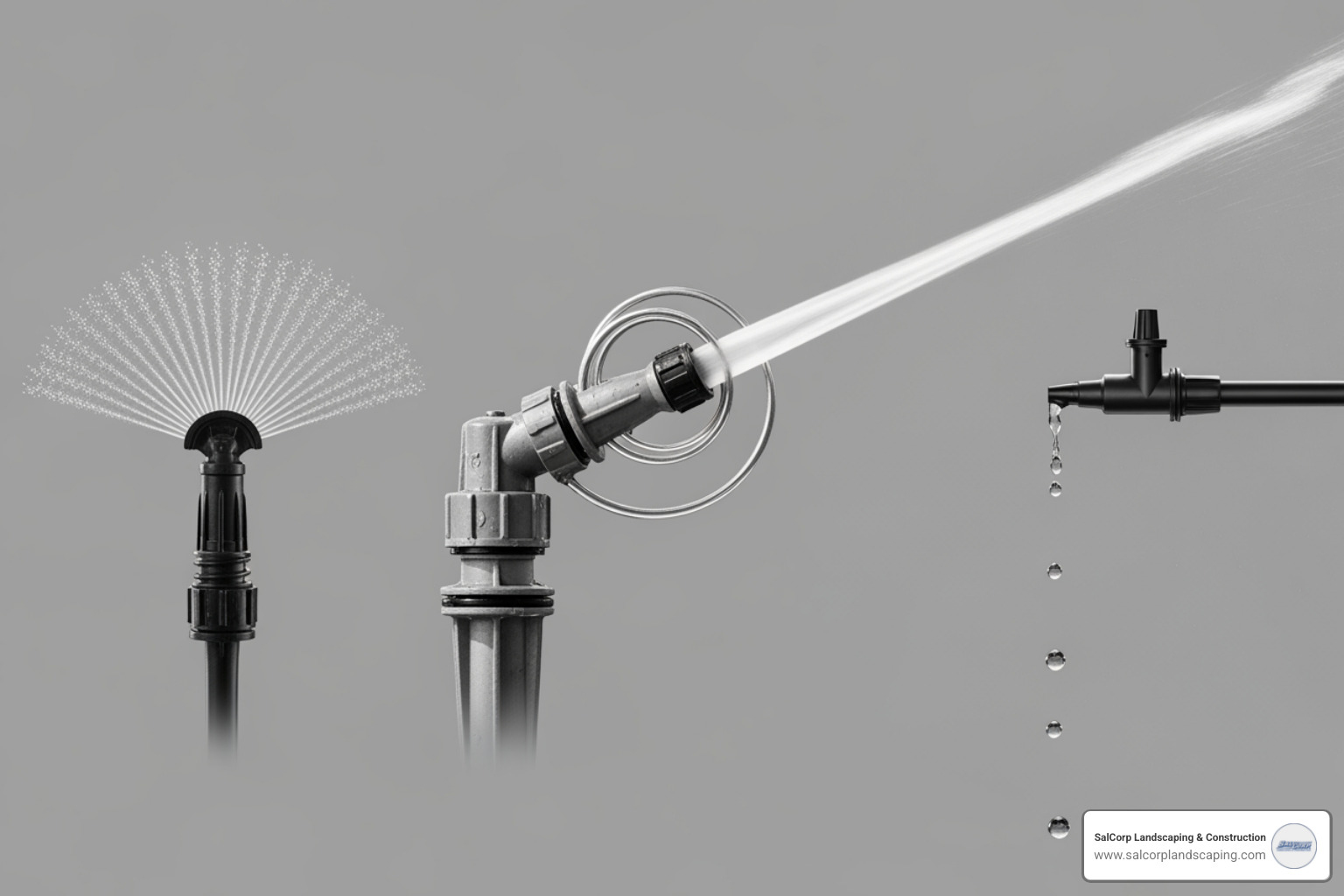
- Traditional Spray and Rotor Systems: Ideal for large turf areas like lawns and sports fields. Spray heads cover smaller, fixed areas, while rotor heads cover larger spaces. They are a cost-effective foundation, but wind can reduce their efficiency.
- Drip Irrigation Systems: These systems deliver water directly to plant roots, achieving up to 95% water efficiency. While initial costs can be higher, they significantly reduce long-term water bills. Best for flower beds, shrubs, and gardens.
- Subsurface Drip Systems (SDI): A specialized system where drip lines are buried. SDI costs more than standard drip irrigation but virtually eliminates evaporation and is ideal for high-visibility turf where aesthetics are key.
- Hybrid Systems: The most common solution for commercial properties. We combine system types—rotors for lawns, drip lines for beds—to create a custom, highly efficient solution that optimizes water use across your entire landscape.
Understanding Installation and Labor Costs
Labor and installation typically account for 40-50% of the total project cost. This includes skilled designers, technicians, and equipment operators. In the Northeast, hourly rates for commercial installation generally range from $100 to $250.
Key installation costs include:
- Trenching: Digging channels for pipes costs $4 to $12 per linear foot, depending on soil conditions and site accessibility.
- Permits and Regulations: Municipal permits and zoning approvals can add $50 to $500+ to your project.
- Backflow Prevention Device: This mandatory device protects the public water supply and costs $300 to $1,500+ to install, with annual testing required.
Proper installation is crucial for long-term reliability. Learn more in our guide to installing an automatic sprinkler system.
Decoding the Commercial Irrigation Cost: Key Factors & Price Ranges
Let’s get into the specifics of what a commercial irrigation investment looks like. While every property is unique, some benchmarks can help guide your financial planning.
Before we dive in, please note: the figures shared here represent average costs based on internet data and market research, not actual pricing from SalCorp Landscaping & Construction. We provide custom quotes only after a thorough site assessment.
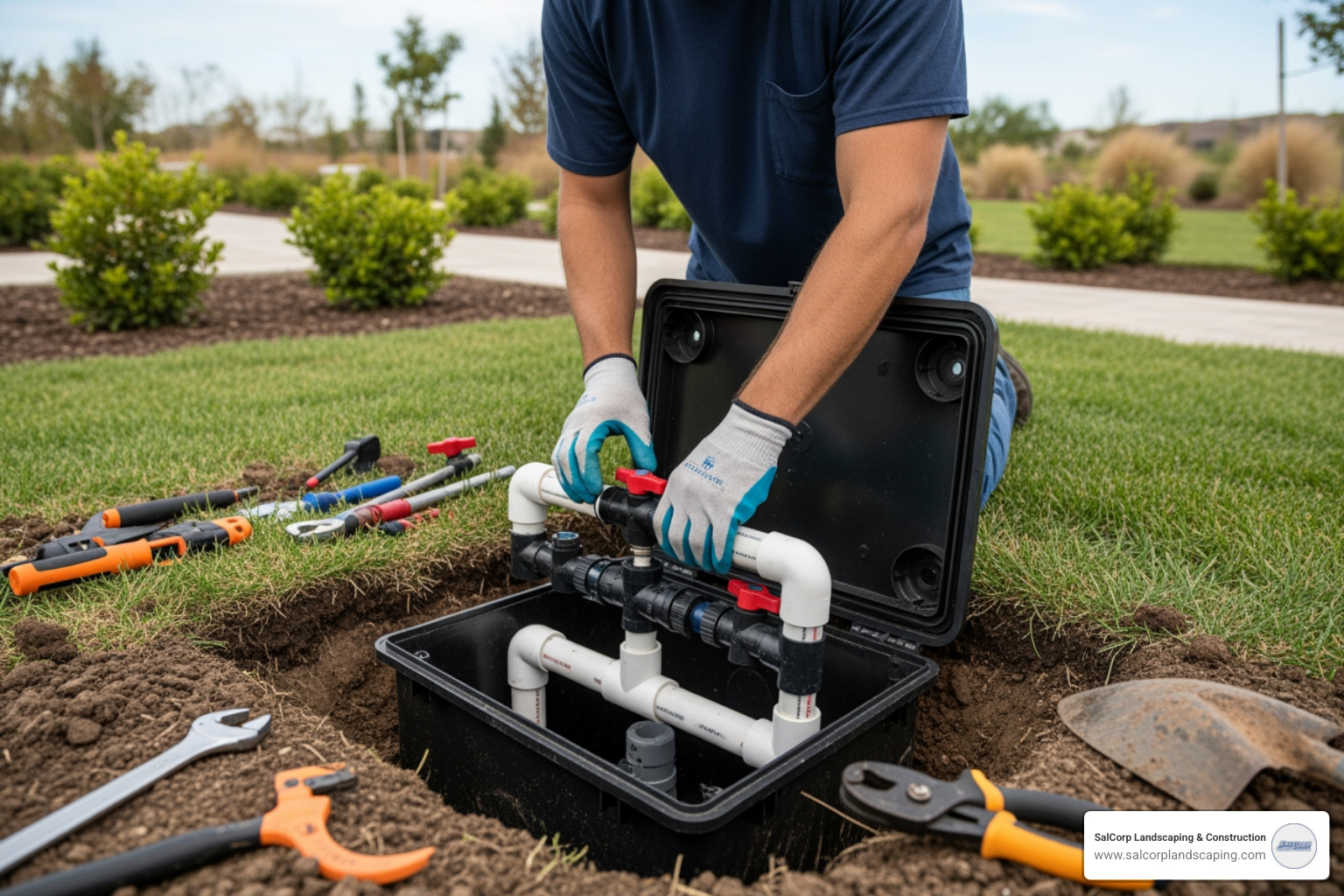
The commercial irrigation cost for your Massachusetts property is shaped by its size and complexity. Commercial systems are engineered for durability and the demands of professional landscapes.
- Small commercial properties (< 1 acre), like retail offices or small apartment complexes, typically see installation costs from $8,000 to $25,000+.
- Mid-size properties (1-5 acres), such as corporate campuses or shopping centers, range from $15,000 to $60,000+.
- Large commercial properties (> 5 acres), like industrial parks or major residential developments, represent the most substantial investment, starting around $45,000 and reaching $150,000 or more.
Here’s a sample breakdown of where your money goes:
- Controllers: $300 (basic) to $3,000+ (smart)
- Pump: $1,000 to $5,000
- Backflow Prevention Device: $300 to $1,500+
- Valves: $150 to $500 each
- Trenching: $4 to $12 per linear foot
- Sprinkler Heads: $10 to $40 each
- Zones: $650 to $2,000 per zone
Each component plays a role in creating a system that will reliably water your landscape for two decades or more.
The Price of Precision: A Guide to Smart Technology & Advanced Features
Smart irrigation technology increases your upfront commercial irrigation cost, but the water savings and reduced maintenance often provide a quick return on investment.
Smart controllers ($300 to $3,000+) are the core of an intelligent system. They use local weather data to adjust watering schedules, saving water and preventing unnecessary irrigation.
Other valuable features include:
- Soil Moisture Sensors ($800 to $2,500 per zone): These tell the controller to water only when the ground is actually dry, eliminating guesswork.
- Automated Flow Monitoring ($1,200 to $4,000): This feature detects leaks or broken valves, automatically shuts off the affected zone, and sends an alert, preventing water waste and landscape damage.
- Mobile App Connectivity ($500 to $1,500): Allows you to monitor and manage your system from anywhere, providing invaluable flexibility.
- AI-Powered Scheduling ($3,000 to $9,000): The most advanced systems use predictive analytics to optimize watering patterns for maximum efficiency.
Adding smart technology typically costs $2,500 to $8,000+ beyond the base system. However, with water savings of 20-60%, most of our Massachusetts clients find that these features pay for themselves within 2-3 years.
If you’re managing property in Newton or nearby, learn more about our approach at irrigation systems in Newton MA.
Ongoing Expenses vs. Long-Term Savings
Installation is just the beginning. Understanding ongoing expenses helps you budget accurately and appreciate how proper maintenance saves money in the long run.
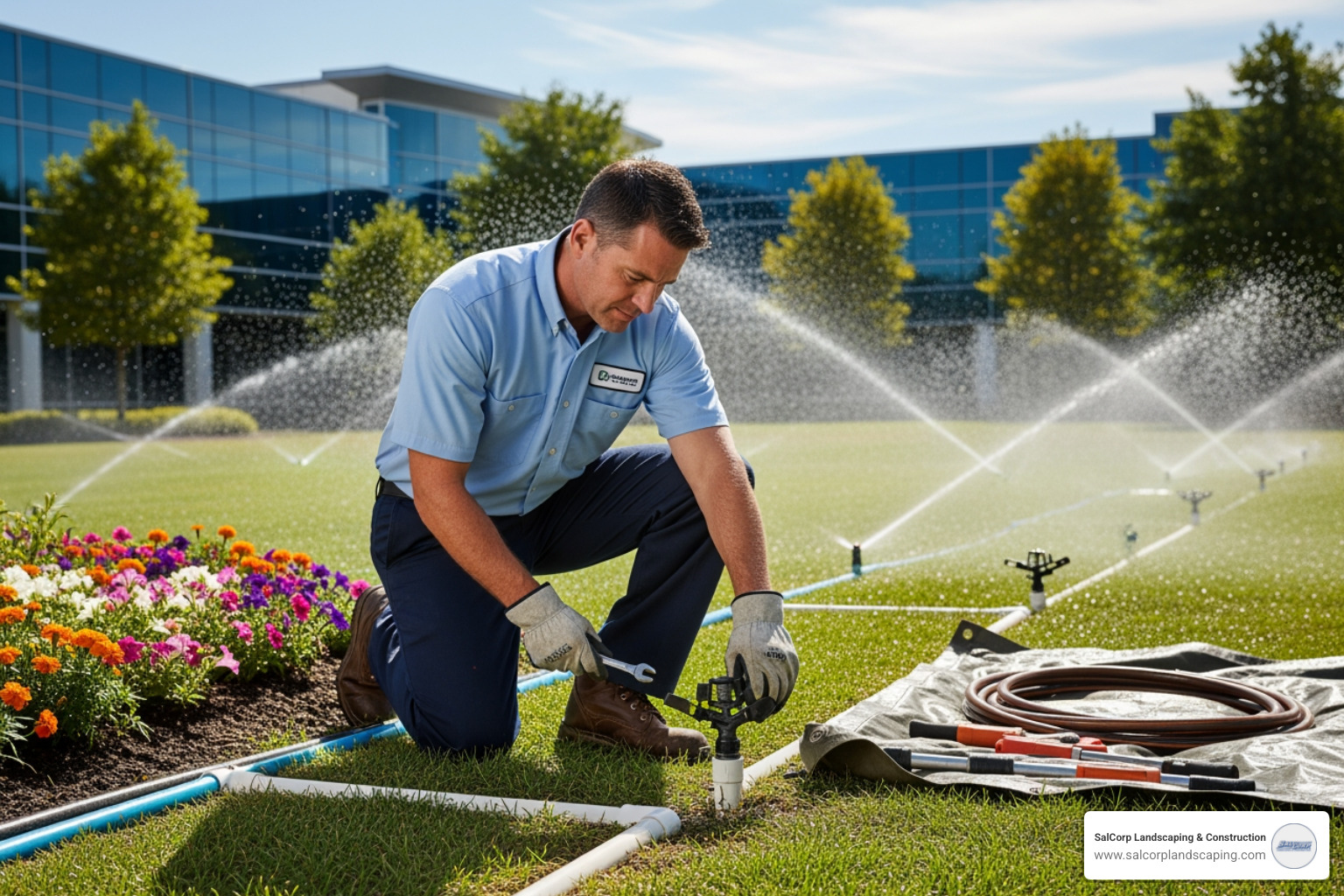
Annual maintenance costs for commercial properties typically run $0.10 to $0.35 per square foot, or $2,500 to $8,000 annually. This covers essential services like winterization to prevent freeze damage and a spring start-up to check for issues and reprogram controllers. Routine inspections and repairs are also part of this cost.
Your primary operating costs are water and electricity. A system with a pump can cost $150 to $500 monthly in electricity during the irrigation season. However, the return on investment is compelling:
- Water Savings: A smart system can reduce water usage by 30-50%, saving thousands annually.
- Labor Savings: Automation can cut time spent managing irrigation by up to 70%.
- Property Value: Professionally irrigated properties often command 7-15% higher values. The National Association of Realtors reports an 83% cost recovery on average.
- Landscape Health: Consistent watering reduces plant stress and the need for costly replacements.
Viewing your irrigation system as an investment that pays dividends is key. For a guide on keeping your system at its best, see our irrigation system maintenance schedule.
Maximizing Value: ROI, Maintenance, and Cost-Saving Strategies
At SalCorp Landscaping & Construction, we know commercial irrigation cost is a significant budget item. We are committed to helping you get maximum value from your investment. Here are proven strategies to manage costs without compromising quality.
Smart Ways to Reduce Your Commercial Irrigation Cost
-
Phased Installation: You don’t have to install everything at once. We can prioritize critical zones, like high-visibility entrance areas, to spread the investment across multiple budget cycles while delivering immediate improvements.
-
Off-Season Scheduling: Contractors often have more flexibility in late fall or early winter. Scheduling your installation during this time can lead to 5-10% savings on your project and less disruption to your property.
-
Strategic Zone Planning: Designing the system to group plants with similar watering needs reduces the number of specialized components and simplifies programming. This lowers long-term operating and maintenance costs.
-
Component Quality & Warranties: The cheapest option upfront is rarely the best investment. Commercial-grade components are built to last, meaning fewer repairs and a lower total cost of ownership over the system’s 20-25 year lifespan.
-
Water Conservation Rebates: Many Massachusetts municipalities offer rebates for installing water-efficient irrigation systems. We are familiar with these programs and can help you steer the application process.
At SalCorp Landscaping & Construction, our owner-operated approach means I’m personally involved in nearly every project. There’s no sales team upselling you on features you don’t need. We provide honest guidance, innovative solutions, and transparent pricing. That’s the difference two decades of experience and a commitment to integrity makes.
A smart investment in commercial irrigation improves your property’s curb appeal, efficiency, and long-term value. If you’re considering broader improvements, our insights on commercial landscaping cost can help place irrigation within your overall strategy.