

Commercial landscaping maintenance cost: Top 5 Secrets
Why Understanding Your Commercial Landscape Investment Matters
Commercial landscaping maintenance cost is a critical, yet often misunderstood, budget item for property managers in Massachusetts. Whether you manage an office park in Walpole or a retail center in Newton, understanding these expenses is key to effective planning. It’s not just about mowing grass; it’s about protecting property value, creating positive first impressions, and managing services that adapt to New England’s demanding seasons.
Quick Answer: What Does Commercial Landscaping Maintenance Cost?
Based on aggregated internet data, here are some typical ranges:
- Annual Cost: $2,000 for small sites to $50,000+ for large campuses.
- Monthly Per Acre: $800 – $1,600 for full-service plans, but can exceed $4,800 for complex properties.
- Hourly Labor: $40 – $80 per worker, with specialized services over $100.
Note: These are national averages from various sources and do not represent actual SalCorp pricing.
The true cost is also reflected in tenant satisfaction, fewer emergency repairs, and the professional image your property projects daily.
As Sal Musto, owner of SalCorp Landscaping & Construction, I’ve spent over 20 years helping Massachusetts property managers balance quality with budget. Understanding these costs empowers you to make informed choices that protect your investment.
Decoding Your Commercial Landscape Maintenance Cost: Key Factors & Services
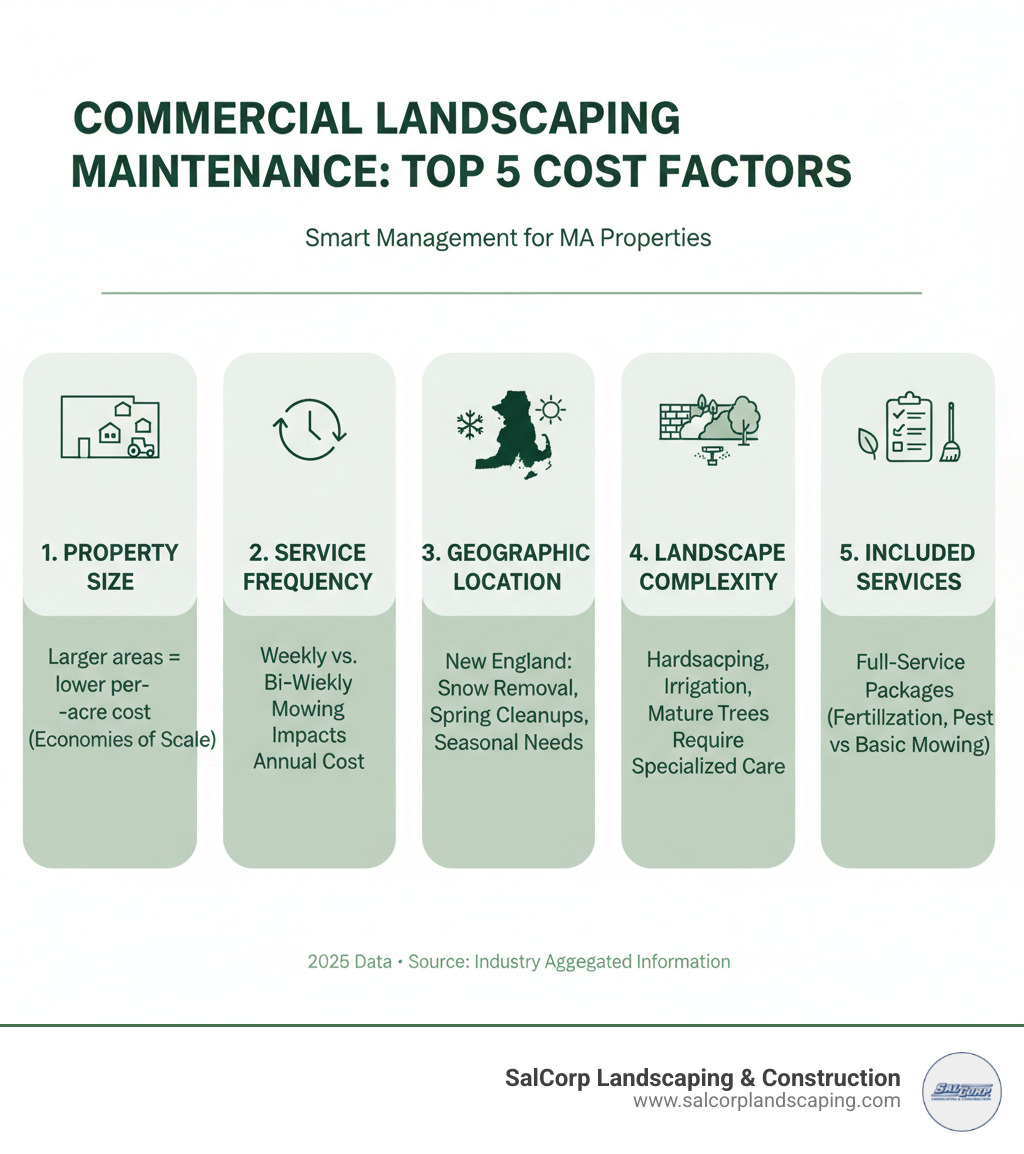
Understanding your commercial landscaping maintenance cost means knowing what drives the numbers. It’s a combination of your property’s unique features and the services required to maintain it.
What Factors Influence Landscaping Expenses?
- Property Size: Larger properties cost more overall, but the per-acre cost often decreases due to operational efficiencies. A 10-acre campus may have a lower per-acre mowing rate ($25-$60) than a small storefront ($50-$150).
- Landscape Complexity: A simple lawn is less expensive to maintain than a property with intricate garden beds, mature trees, water features, and extensive hardscaping. More variety requires more specialized care.
- Terrain and Accessibility: Steep slopes, tight corners, and enclosed courtyards are more time-intensive and may require smaller equipment or manual labor, increasing costs. A challenging site can take three times the labor hours of a flat one.
- The New England Climate: Our four distinct seasons demand specific services, from spring cleanups and fall leaf removal to critical winter snow management. These are essential, not optional.
- Labor and Materials: Labor can account for over 60% of your total cost, reflecting the skill needed for professional maintenance. According to the Bureau of Labor Statistics data, skilled labor has a defined market rate. Material costs for items like seed and mulch also fluctuate with market conditions.
- Equipment: Professional-grade mowers, trucks, and tools are a significant investment for any reputable company, and these costs are built into pricing to ensure efficient, high-quality work.
- Plant Selection: Choosing native plants adapted to Massachusetts can reduce long-term maintenance costs by 15-30% by requiring less water, fertilizer, and pest control than non-native species.
A Breakdown of Common Commercial Maintenance Services
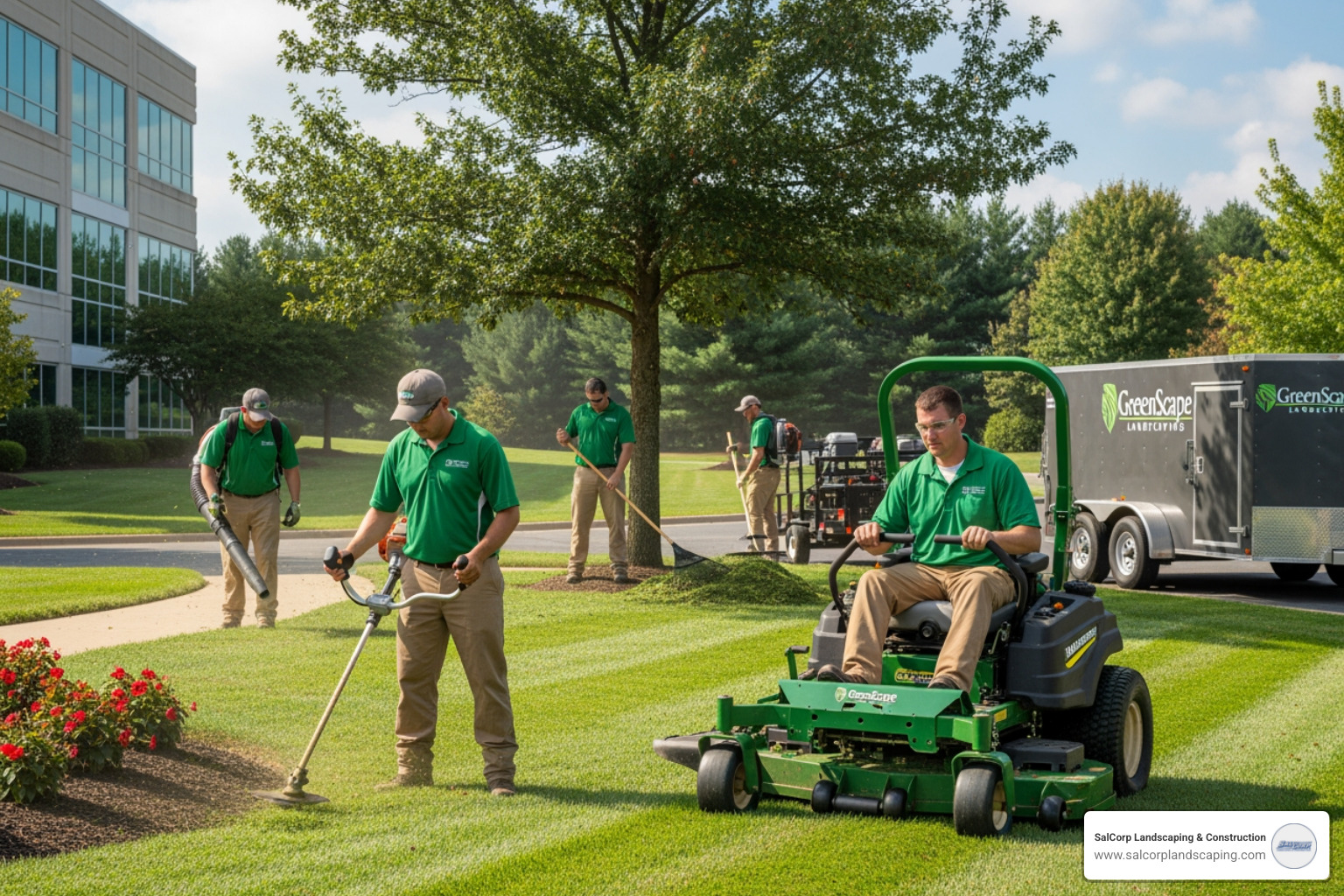
Your maintenance plan is a package of services designed to keep your property pristine.
- Lawn Mowing, Edging, and Blowing: The foundation of landscape care, typically involving 25-30 visits per season. Based on internet data, basic mowing can range from $25 to $150 per acre.
- Fertilization and Weed Control: A healthy lawn requires 4-6 targeted applications per year to provide nutrients and prevent weeds. Annual programs can run $220-$660 per acre, based on industry data.
- Tree and Shrub Care: Professional pruning protects your investment in mature plants, promoting health and preventing storm damage. Per-tree pruning can cost $200-$900, depending on size and accessibility, according to internet averages from sources like the Bureau of Labor Statistics.
- Mulching: Fresh mulch improves soil health, retains moisture, and suppresses weeds. For more on options, see our guide to mulching.
- Irrigation System Maintenance: Essential for water conservation and plant health, this includes spring startups, fall winterization, and repairs. Proper maintenance of irrigation systems prevents costly failures.
- Seasonal Cleanups: Spring and fall cleanups are vital in New England to remove debris, prevent turf disease, and prepare beds. These services typically cost $150-$350 per cleanup, based on internet data.
- Snow and Ice Management: A non-negotiable service for safety and accessibility in Massachusetts. Our snow management services keep your property operational and safe during winter.
- Additional Services: Depending on your needs, services like lawn aeration ($100-$350 per service) or dethatching ($400-$1,000 per acre) can address specific soil and turf health issues.
Understanding the Average Cost of Commercial Landscaping Maintenance

While every property is unique, these national averages from aggregated internet data provide a useful budgeting baseline. These figures do not represent SalCorp’s pricing.
Annual costs can range from $2,000 for a basic property to over $50,000 for a large, complex campus. The difference often comes down to the service package. A basic package (mowing, edging) might cost $2,000-$10,000 annually. A full-service package (adding fertilization, weed control, pruning, cleanups, etc.) typically runs from $9,000 to $50,000+ annually. High-end properties with extensive needs can exceed $75,000.
On a monthly basis, full-service plans often fall between $800-$1,600 per acre, but can reach $4,800+ for intricate landscapes. Economies of scale often apply—larger properties may have a lower per-acre cost, making professional maintenance a financially sound decision.
Strategic Budgeting: Maximizing Value and Choosing Your Partner
Managing your commercial landscaping maintenance cost is about strategic investment, not just finding the lowest price. With smart planning and the right partner, you can maximize your budget’s impact.
Smart Cost-Saving Measures for Your Property
Reduce costs without sacrificing quality with these effective strategies:
- Prioritize Preventative Maintenance: Routine care, like tree pruning, is far cheaper than emergency services. A $200-$900 pruning can prevent a $1,000-$5,000 emergency removal.
- Choose Native Plants: Plants adapted to New England require less water, fertilizer, and pest control, potentially cutting maintenance costs by 15-30%.
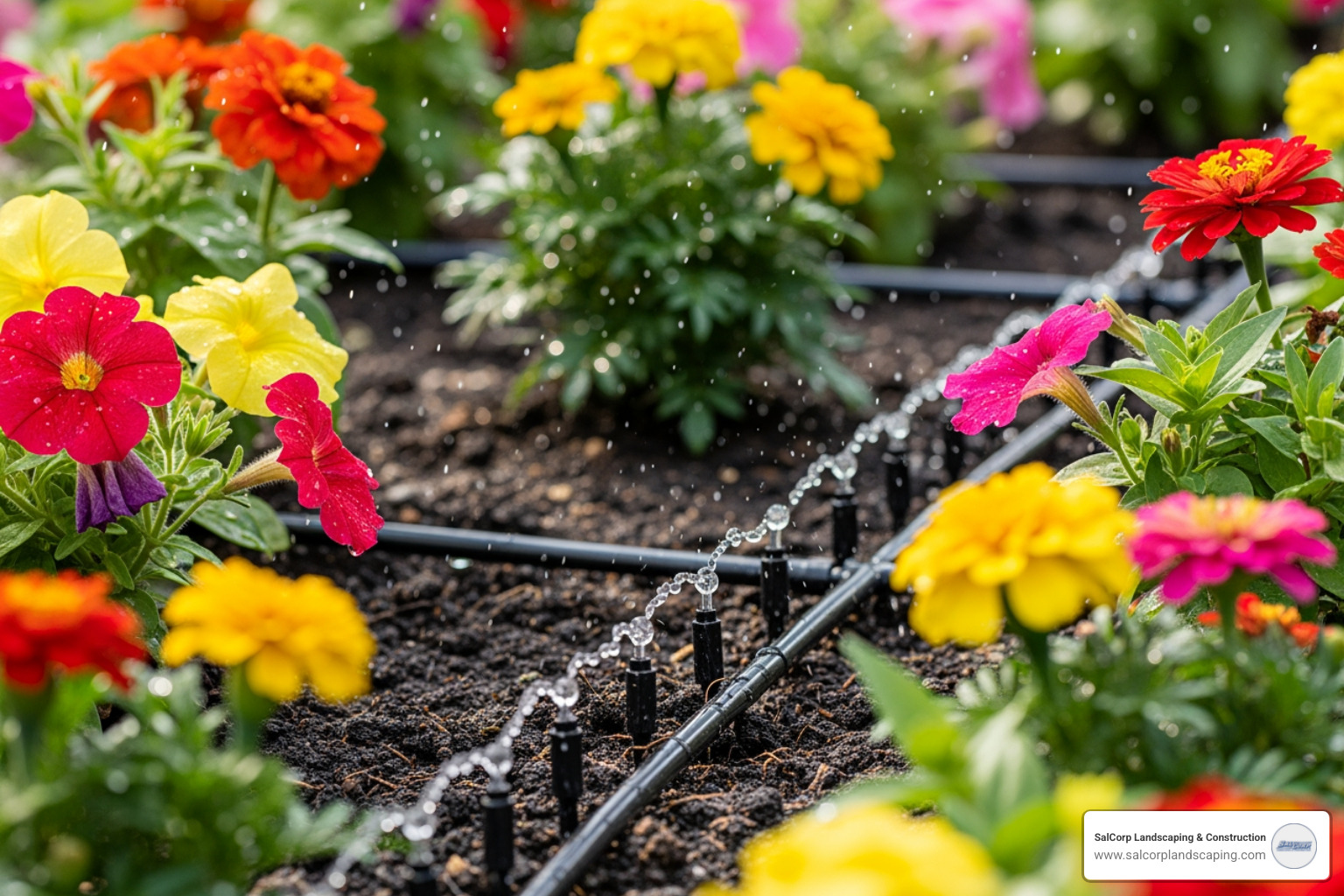
- Install Water-Efficient Irrigation: Smart controllers and drip systems can reduce water usage by 30-50%, lowering utility bills. Learn more about our irrigation system services.
- Switch to LED Lighting: Upgrading to LED or solar landscape lighting can cut energy consumption by up to 80%.
- Bundle Services & Sign Multi-Year Contracts: Combining services into one package and committing to a multi-year term often leads to better pricing and budget stability.
- Plan for the Off-Season: Scheduling major work like cleanups or signing snow removal contracts early can secure better rates.
- Convert High-Maintenance Turf: Consider replacing grass in remote or difficult areas with low-maintenance groundcovers or hardscaping to reduce mowing costs.
How to Choose the Right Commercial Landscaping Package
Finding the right fit is about balancing services, quality, and value. Follow these steps:
- Assess Your Needs: Walk your property and identify its unique challenges, from turf density to specialized features. What level of aesthetic does your brand require?
- Define Your Budget: Use the average cost ranges as a starting point to establish a realistic budget.
- Verify Experience and Reputation: Choose a company with a proven track record in commercial landscaping in Massachusetts. With over 20 years of experience, we understand the local demands.
- Check for Licenses and Insurance: Ensure any provider has comprehensive liability and workers’ compensation insurance. SalCorp is fully licensed and insured for your protection.
- Review Portfolios and References: Look at past work on similar properties to gauge quality. You can see our work in our project gallery.
- Request Detailed, Itemized Proposals: A clear proposal outlining every service, frequency, and material allows for a true apples-to-apples comparison.
- Compare on Value, Not Just Price: The lowest bid is rarely the best value. A suspiciously low price may indicate shortcuts, inadequate insurance, or a reduced scope of work. Focus on reliability, communication, and quality for the best long-term results.
Key Components of a Commercial Landscape Maintenance Contract
A strong contract is your roadmap for a successful partnership. Ensure it clearly defines:
- Scope of Work: An explicit list of every service to be performed (mowing, pruning, fertilization, etc.).
- Service Frequency Schedule: How often each task will be completed (e.g., weekly, quarterly, annually).
- Included vs. Excluded Services: A clear distinction between routine maintenance and extra-charge services like major repairs or new installations.
- Material Specifications: The type and quality of materials to be used, such as mulch grade or fertilizer blends.
- Payment Terms: The payment schedule, methods, and any late payment policies.
- Proof of Insurance: Documentation of the provider’s liability, property damage, and workers’ compensation coverage.
- Communication Protocols: Clear guidelines on contact persons, methods, and expected response times.
- Cancellation Policy: The terms for terminating the agreement, including notice periods.
At SalCorp Landscaping & Construction, we believe in transparent contracts that build partnerships. Understanding your agreement helps you manage your commercial landscaping maintenance cost effectively.
Ready to take the guesswork out of your commercial landscape maintenance? Get a comprehensive commercial landscaping consultation with us today, and let’s create a plan that makes your property shine.
