

Commercial Landscaping & Property Maintenance in Massachusetts
Year-round grounds management from a single provider — mowing, seasonal maintenance, landscape enhancements, and snow management under one contract, one crew, and one point of accountability.
Request a Property Assessment
Consistent, Reliable, Documented
Commercial properties can't afford missed visits. Your tenants, customers, and visitors form impressions the moment they pull into the lot. Our maintenance programs run on fixed schedules with documented visit logs, so you always know what was done, when, and by whom.
We staff each commercial account with a dedicated crew lead who knows the property, the expectations, and the service contract — not a rotating roster of whoever is available that week.
What Our Commercial Programs Cover
Every commercial contract is tailored to the property. Here's the full range of services available — most clients build a program that combines several into a single year-round agreement.
Turf Mowing & Edging
Weekly or bi-weekly mowing on a fixed schedule, with line trimming and blowing of all hardscape surfaces after every visit. Clean, consistent, documented.
Shrub & Hedge Maintenance
Seasonal pruning, shaping, and deadwood removal. We maintain plants at the size and form the design intended — not just hack them back when they get too big.
Seasonal Bed Maintenance
Spring bed prep, mulch application, weeding cycles, and fall cutbacks. Seasonal color rotations for properties that want high-visibility planting displays.
Irrigation Management
Spring startup, weekly zone checks during the growing season, head repairs, controller adjustments, and fall winterization. We manage the system so you don't have to.
Snow & Ice Management
Plowing, shoveling, deicing, and zero-tolerance programs for properties that demand bare pavement. 24/7 response with documented service logs for liability protection.
Spring & Fall Cleanups
Complete seasonal transitions — debris removal, bed edging, mulch application, leaf cleanup, and final mowing. The property enters each season looking sharp.
Landscape Enhancements
New plantings, bed expansions, sod installation, hardscape additions, and design refreshes that keep the property's landscape current and well-presented.
Tree & Large Shrub Care
Structural pruning, storm damage cleanup, and hazard assessment. We coordinate with certified arborists for large tree removals when needed.
Fertilization & Weed Control
Custom turf programs with pre-emergent, post-emergent, and seasonal fertilization applications. Timed to Massachusetts growing conditions.
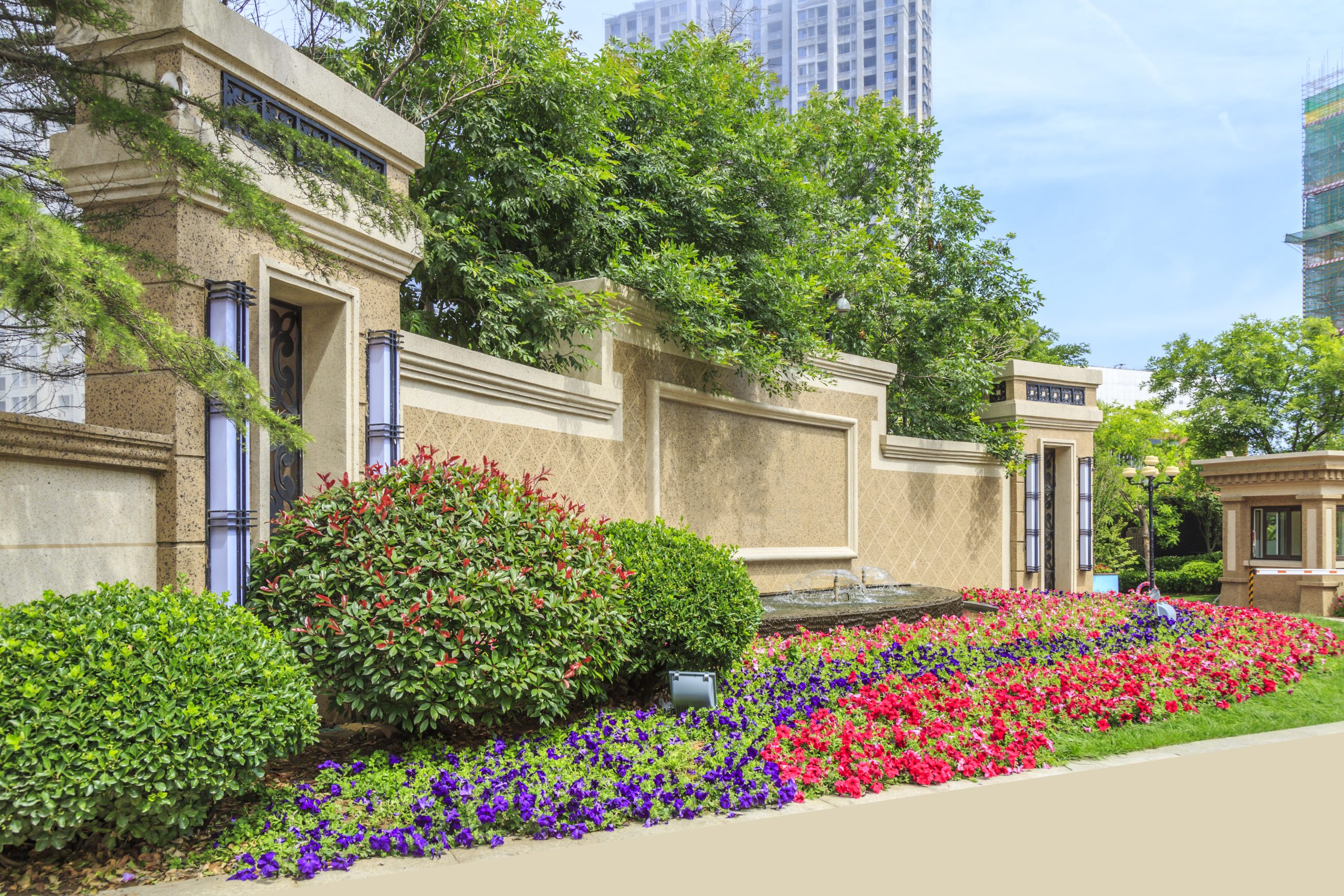
Your Property's Landscape Is Your Signage
The quality of your grounds tells visitors, tenants, and customers what kind of operation you run — before they ever walk through the door. Well-maintained seasonal color at the entrance, clean bed lines, and a consistently mowed lawn communicate professionalism and attention to detail.
Deferred maintenance communicates the opposite. And in a competitive leasing market, landscape quality is often the deciding factor between properties that attract premium tenants and those that don't.

One Provider, Twelve Months
The smartest move a property manager can make is putting landscaping and snow management under one contract. When the same crew handles both, the plow operator knows where the irrigation heads are buried. The guy spreading salt knows which beds have salt-sensitive plantings. Nobody's pointing fingers across contractors when spring reveals damage.
Our year-round contracts cover mowing season through snow season and back again — one provider, one invoice, one phone number for everything that happens on the grounds.
Commercial Property Types
We manage grounds for a range of commercial and institutional property types across Massachusetts. Each has different needs — and we structure programs accordingly.

Owner-Operated, Not Corporate-Managed
Unlike national landscape management companies that rotate regional crews and manage from a remote office, SalCorp is owner-operated. Sal Musto is directly involved in every commercial account — from the initial site walk through ongoing quality checks. When something needs attention, you're calling the owner, not a call center.
That direct accountability is why our commercial clients stay. The average tenure of our commercial accounts is measured in years, not seasons.
How Commercial Contracts Work
We structure commercial agreements as fixed-fee annual contracts, paid monthly. This gives property managers a predictable budget line item — no surprise invoices after a heavy snow month or an expensive spring cleanup. The monthly payment covers the full scope of services specified in the contract, with seasonal work (mowing, snow, cleanups) built into the annual total.
Every contract includes:
- Defined scope — specific tasks and frequencies per visit, adjusted by season
- Insurance documentation — general liability and workers' compensation certificates on file
- Service logs — documented visit records with crew, time, and tasks completed
- Communication protocol — dedicated point of contact, response time commitments, issue reporting process
- Quality standards — measurable benchmarks so "the property looks good" isn't a subjective debate
The zero-tolerance snow question.
Zero-tolerance contracts — where the property must be bare pavement at all times during a snow event — require dedicated equipment, pre-positioned materials, and crews on standby before the storm starts. These programs carry a premium because of the resource commitment, but for properties where slip-and-fall liability is a serious concern (medical facilities, retail, senior housing), they're often the right call. We offer zero-tolerance, standard trigger-based, and hybrid snow programs.
Why Year-Round Contracts Outperform Seasonal Ones
Properties that hire a landscaper for summer and a separate snow contractor for winter consistently spend more and get worse results than properties under a single year-round agreement. The reasons are structural:
- Damage prevention — the crew that maintains the property all year knows what's where. Plow blades don't clip irrigation heads. Salt doesn't land on sensitive plantings. Snow gets pushed to designated areas that won't flood when it melts.
- Transition management — spring cleanup happens immediately after snow season ends because it's the same crew, not a different contractor who has to be scheduled. Fall cleanup transitions seamlessly into snow readiness.
- Single accountability — when spring reveals damage, there's one company responsible. No finger-pointing between the landscaper and the snow contractor about who caused what.
- Cost efficiency — bundled contracts are almost always less expensive than two separate agreements because overhead, mobilization, and account management costs are shared.
The Planning Timeline
Commercial landscaping operates on a longer planning horizon than residential work:
- September-October: Ideal time to secure a year-round contract for the following calendar year (landscape + snow)
- December-February: Planning window for spring-start landscape-only contracts
- March: Last call — by March, most reputable commercial providers are fully committed for the season
The earlier you engage, the more likely you are to work with your first-choice provider rather than whoever still has capacity.
Massachusetts Service Area
SalCorp services commercial properties throughout Norfolk County, Plymouth County, and Greater Boston — including Walpole, Norwood, Westwood, Dedham, Canton, Braintree, Quincy, Weymouth, Hingham, Needham, Wellesley, Newton, Brookline, and the broader South Shore corridor.
Ready to discuss your property? Contact SalCorp for a site assessment and proposal. We'll walk the property, review your current service level, and show you what a properly managed grounds program looks like.
Built for Commercial-Grade Reliability
20+
Years serving
Massachusetts
In-house
Owner-supervised,
no subcontractors
Insured
GL + workers' comp
certificates on file
Documented
Visit logs & service
reports every visit
Commercial Landscaping FAQs
What does commercial landscaping include?
Commercial landscaping covers every aspect of outdoor property management for non-residential sites. Routine services include turf mowing and edging, hedge and shrub trimming, weed control, mulch and bed maintenance, leaf and debris removal, and irrigation management. Beyond maintenance, commercial landscaping also includes seasonal enhancements (spring and fall color rotations, holiday plantings), landscape design and installation for new or renovated properties, hardscape maintenance, tree care, and snow and ice management. The scope is typically defined in a service contract that specifies tasks, frequency, and seasonal adjustments.
How much does commercial landscaping cost per month?
Commercial landscaping costs vary significantly based on property size, service scope, visit frequency, and site complexity. Most commercial contracts are structured as fixed monthly payments spread across 12 months, even though the work is seasonal — this gives property managers a predictable budget line item. The monthly number depends on whether the contract covers mowing only, full grounds maintenance, or a comprehensive program including snow management. We provide detailed proposals after a site walk so the pricing reflects your specific property and service level, not a generic per-acre estimate that may not apply.
What is the difference between commercial and residential landscaping?
Commercial landscaping operates at a larger scale with different priorities. Residential work focuses on the homeowner's aesthetic preferences and personal use. Commercial work prioritizes property image, tenant and visitor safety, regulatory compliance, liability management, and long-term cost efficiency. Commercial properties also require more structured service — documented visit logs, insurance certificates, compliance with ADA accessibility around walkways and entries, and coordination with property managers rather than direct homeowners. The equipment, crew size, and scheduling infrastructure needed to reliably service commercial properties are substantially different from residential operations.
Should I hire one company for landscaping and snow removal?
Yes — and this is one of the highest-impact decisions a property manager can make. A single provider that handles both landscaping and snow management knows the property year-round: where the drainage runs, where ice forms, where plows can safely push snow without damaging curbing or irrigation heads, and where salt-sensitive plantings need protection. Separate contractors create coordination gaps — snow plows that damage landscape features because they don't know what's underneath, salt damage to plantings the landscaper installed last spring, and two different companies pointing at each other when something goes wrong. A year-round contract also typically costs less than two separate agreements.
What should a commercial landscape maintenance contract include?
A well-structured contract should specify: exact scope of services (what's included and what's not), visit frequency by season, response time standards, insurance requirements and coverage amounts (general liability and workers' compensation minimums), payment terms and schedule, seasonal adjustment provisions, communication protocols (who to contact, how issues are reported), termination clauses and notice periods, and any performance standards or quality benchmarks. Contracts that leave scope vague — 'maintain the property in good condition' — create disputes. The best contracts list specific tasks per visit so both parties know exactly what's being delivered.
Do you service HOA and condo properties?
Yes — HOA and condominium associations are a significant part of our commercial portfolio. These properties have unique requirements: common-area maintenance that must satisfy a board of directors rather than a single decision-maker, aesthetic standards written into governing documents, shared irrigation and drainage systems that require coordinated management, and often a need for documented service logs for board meetings. We work directly with property managers and HOA boards, provide regular reporting, attend board meetings when requested, and adjust services based on seasonal needs and budget constraints.
How far in advance should I plan a commercial landscaping contract?
Most commercial contracts are signed 60-90 days before the service start date. For a spring start, that means December through February is the planning window. Properties that also need snow management should plan even earlier — ideally by September for the upcoming winter season, since equipment and crew commitments fill up fast in the snow market. Year-round contracts that combine landscaping and snow management are typically negotiated in the late summer or early fall for the following calendar year. Waiting until March to secure spring landscaping or October to secure snow removal often means working with whoever still has capacity rather than your first-choice provider.
What areas does SalCorp service for commercial landscaping?
We service commercial properties throughout Norfolk County, Plymouth County, and Greater Boston. Our commercial coverage includes Walpole, Norwood, Westwood, Dedham, Canton, Braintree, Quincy, Weymouth, Hingham, Needham, Wellesley, Newton, Brookline, and the broader South Shore corridor. For larger commercial accounts, we'll consider properties outside our standard service area. Reach out with your property details and we'll let you know if we're a fit.
Ready to Discuss Your Property?
Schedule a site assessment with SalCorp. We'll evaluate your grounds, review your current program, and deliver a detailed year-round proposal.
Request Your Proposal