

Commercial Snow & Ice Management in Massachusetts
Parking lots cleared, walkways treated, liability documented. Plowing, deicing, and zero-tolerance programs for commercial properties, HOAs, and facility managers across Norfolk and Plymouth County.
Request a Snow Proposal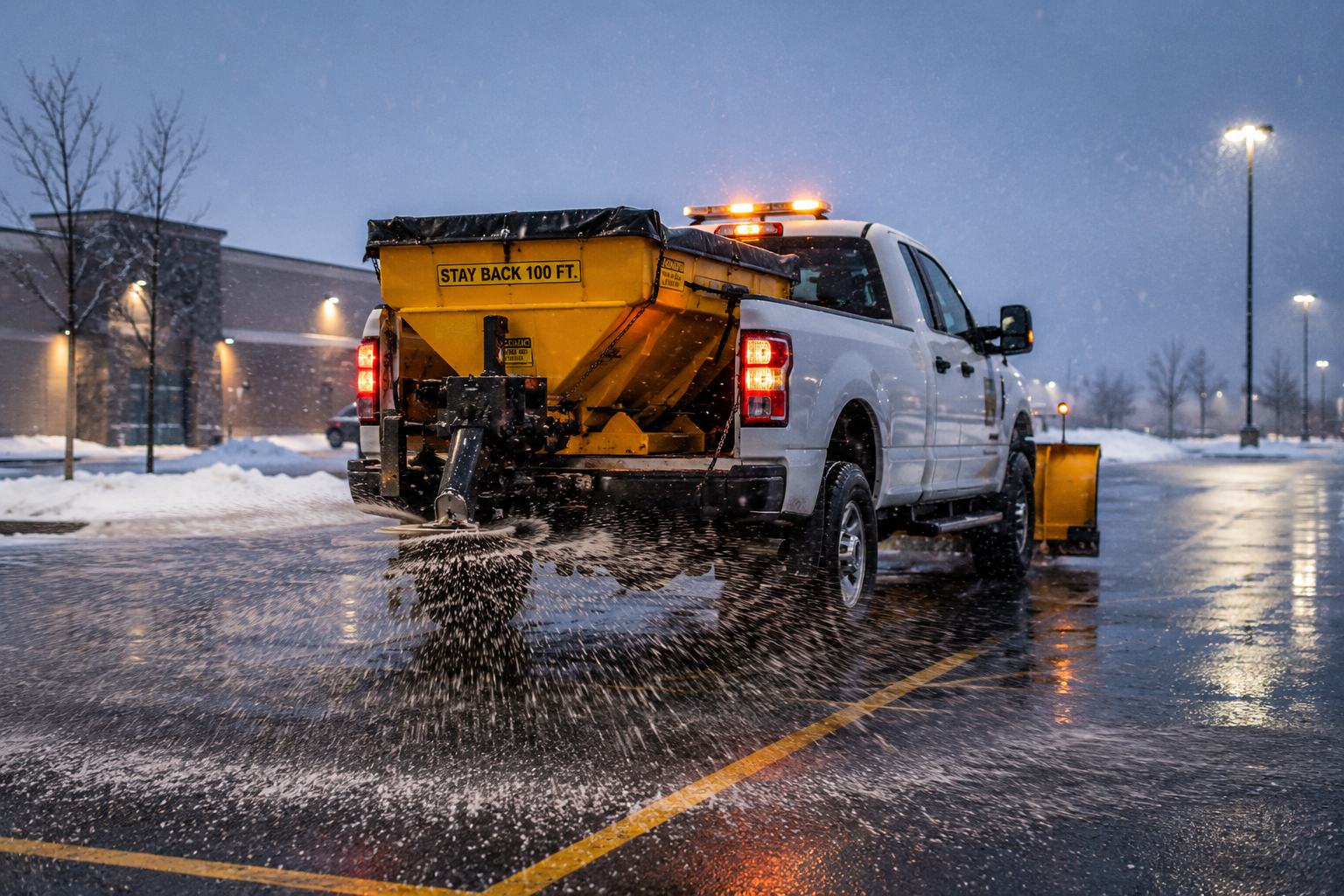
When It Snows, We're Already There
We monitor forecasts 72 hours out and pre-stage equipment 24 hours before a predicted event. When the trigger depth is reached, crews are dispatched — not called. Standard commercial accounts see first-pass plowing within 2 hours. Zero-tolerance properties are serviced continuously from first flake to bare pavement.
Every visit is documented with time stamps, crew IDs, and service performed — giving property managers the liability protection paper trail that slip-and-fall attorneys look for.
Commercial Snow & Ice Services
Every commercial property has different needs. We build programs around your trigger depths, response requirements, and budget — not a one-size-fits-all package.
Parking Lot Plowing
Truck-mounted plows clear main lots and drives. Skid steers handle tight areas, loading docks, and island work. Snow stacked in designated areas per your site map.
Sidewalk & Entry Clearing
Dedicated sidewalk machines and hand crews clear walkways, building entries, handicap ramps, and fire lanes. ADA-compliant clearance on every visit.
Deicing & Anti-Icing
Rock salt, calcium chloride, and treated salt for post-storm deicing. Liquid brine pre-treatment before storms for anti-icing. Material specified per contract.
Zero-Tolerance Programs
Continuous service from first accumulation to bare pavement. No trigger depth — crews deploy when snow begins. Required by medical facilities, retail, and senior housing.
Seasonal Flat-Rate Contracts
Fixed monthly payments regardless of snowfall volume. Budget predictability for property managers — you know the cost before the first flake falls.
Emergency & On-Call Service
Ice storms, freezing rain, mid-day refreezing. When conditions change fast, we redeploy crews for emergency treatment to maintain safe conditions.
Same Crew, Landscape to Snowscape
The plow operator who clears your lot in January is the same crew lead who mows it in July. That means the plow doesn't clip irrigation heads, doesn't push snow onto sensitive plantings, and doesn't damage curbing the landscaper installed last spring.
One provider, one contract, one phone call — and nobody pointing fingers across contractors when spring reveals damage. Our commercial landscaping program pairs seamlessly with snow management for true year-round property care.

Right-Sized Equipment for Every Property
Not every lot needs an F-350 with an 8-foot blade. Our fleet includes truck-mounted plows for open lots, compact loaders with pusher boxes for tight areas and structured parking, sidewalk machines for pedestrian zones, and a full range of spreaders from tailgate units to V-box systems.
Equipment is maintained year-round — not pulled out of storage in November and hoped to start. Pre-season inspections, fluid changes, and blade replacements happen in October so every piece is ready for the first event.
Contract Structures We Offer
We build every commercial snow contract around three variables: your property's needs, your risk tolerance, and your budget. Here are the models we work with:
- Seasonal flat rate — fixed annual fee paid monthly. You know the cost before winter starts. SalCorp absorbs the risk of heavy snowfall years. Most popular with property managers who need budget certainty.
- Per-push / per-event — fixed rate each time the trigger depth is reached and service is dispatched. Lower cost in light winters, higher in heavy ones. Financial risk stays with the property owner.
- Time and materials — billed hourly for labor and equipment plus deicing materials per ton. Best for properties with variable or unpredictable service needs.
- Hybrid — seasonal flat rate for plowing with per-application billing for deicing. Balances predictability on the biggest cost item while keeping deicing flexible.
The documentation that protects you.
Every SalCorp snow service visit is logged with date, time on-site, time departed, crew members, equipment used, areas serviced, materials applied, and weather conditions. These logs are available to property managers within 24 hours and are your first line of defense in any slip-and-fall liability claim. Documentation doesn't prevent lawsuits — but it proves you acted responsibly, which is what wins them.
Property Types We Service
- Office parks and corporate campuses — multi-building sites with shared parking and connected walkways
- Retail centers and strip malls — high-traffic lots that need to be open for business by store opening
- HOA and condominium complexes — common areas, visitor parking, mailbox access, and unit walkways
- Medical facilities — zero-tolerance requirements, ADA compliance, emergency vehicle access
- Industrial and warehouse properties — loading docks, truck lanes, and large staging areas
- Religious institutions and schools — event-driven needs with variable scheduling
- Municipal buildings — public-facing properties with strict accessibility requirements
Massachusetts Service Area
SalCorp provides commercial snow and ice management throughout Norfolk County, Plymouth County, and Greater Boston — including Walpole, Norwood, Westwood, Dedham, Canton, Braintree, Quincy, Weymouth, Hingham, Needham, Wellesley, Newton, Brookline, Milton, Stoughton, and surrounding communities.
Ready to secure your snow contract? Contact SalCorp for a site assessment and proposal. September–October is the planning window — by November, capacity is committed.
Built for Commercial-Grade Snow Response
20+
Winters serving
Massachusetts
Fleet
Plows, loaders,
spreaders, sidewalk units
Insured
GL + workers' comp
certificates on file
Documented
Service logs
every visit
Commercial Snow FAQs
What should a commercial snow removal contract include?
A properly structured contract should include a detailed site map, trigger depth, response time requirements, deicing specifications, insurance minimums, pricing structure, termination clause, and documentation standards. The best contracts specify exactly what happens at each accumulation threshold.
What is a zero-tolerance snow contract?
Zero-tolerance requires bare pavement at all times during and after a snow event, regardless of accumulation. Crews deploy as soon as snow begins. It carries a premium because it requires dedicated equipment and standby crews. Used by medical facilities, retail, senior living, and high-liability properties.
What is the difference between per-push and seasonal contracts?
Per-push charges a fixed rate each time the trigger depth is reached — you pay less in light winters, more in heavy ones. Seasonal flat-rate charges a fixed annual fee regardless of snowfall — you pay the same whether Boston gets 20 inches or 60. Most property managers prefer seasonal for budget predictability.
When should I sign a snow contract?
September through October for contracts starting November 1. By November, reputable contractors have committed their equipment and crews. Year-round clients who combine landscaping and snow typically negotiate in late summer. The earlier you commit, the better your priority during storms.
Does deicing come included in the contract?
That depends on the structure. Some contracts include deicing automatically. Others bill per application or per ton. A third model includes a set number of treatments with extras billed separately. We specify deicing terms clearly in every proposal so there are no billing surprises.
What equipment do you use?
Truck-mounted plows for parking lots, skid steer loaders with pusher boxes for tight areas, sidewalk machines for pedestrian zones, salt and sand spreaders, and liquid brine systems for pre-treatment. Equipment is maintained year-round and staged before forecasted storms.
How quickly do you respond?
Standard commercial accounts see first-pass plowing within 2 hours of trigger depth. Zero-tolerance properties are serviced continuously from first accumulation. We monitor forecasts 72 hours out and pre-stage equipment 24 hours before predicted events.
How much does commercial snow removal cost?
Pricing depends on property size, contract structure, and service level. Most commercial property managers prefer seasonal flat-rate contracts for budget predictability. We provide detailed proposals after a site walk with your specific service requirements.
Secure Your Snow Contract Before the Season
September–October is the planning window. By November, equipment and crew capacity are committed. Contact SalCorp now for a site assessment and proposal.
Request Your Proposal