

Spring & Fall Cleanup Services in Massachusetts
Two seasonal transitions that determine whether your landscape improves year over year or slowly declines. We handle both — debris removal, bed prep, mulching, aeration, leaf cleanup, and everything in between.
Schedule Your CleanupWhat Our Cleanup Services Cover
Spring and fall cleanups aren't just cosmetic. Each one protects your lawn, beds, hardscape, and irrigation from the damage that Massachusetts winters inflict — and prepares the property for the season ahead.
Debris & Leaf Removal
Rake, blow, and remove all leaves, sticks, pine needles, and winter debris from lawns, beds, walkways, and hardscape. Multiple passes through fall as leaves continue to drop.
Bed Edging & Mulching
Recut crisp edges between lawns and planting beds. Apply 2-3 inches of fresh organic mulch after beds are cleaned and prepped. Keeps beds clean and suppresses weeds all season.
Perennial Cutbacks
Remove dead stems from herbaceous perennials and ornamental grasses. Cut back spent growth before new shoots emerge in spring. Clean out annual plantings in fall.
Aeration & Overseeding
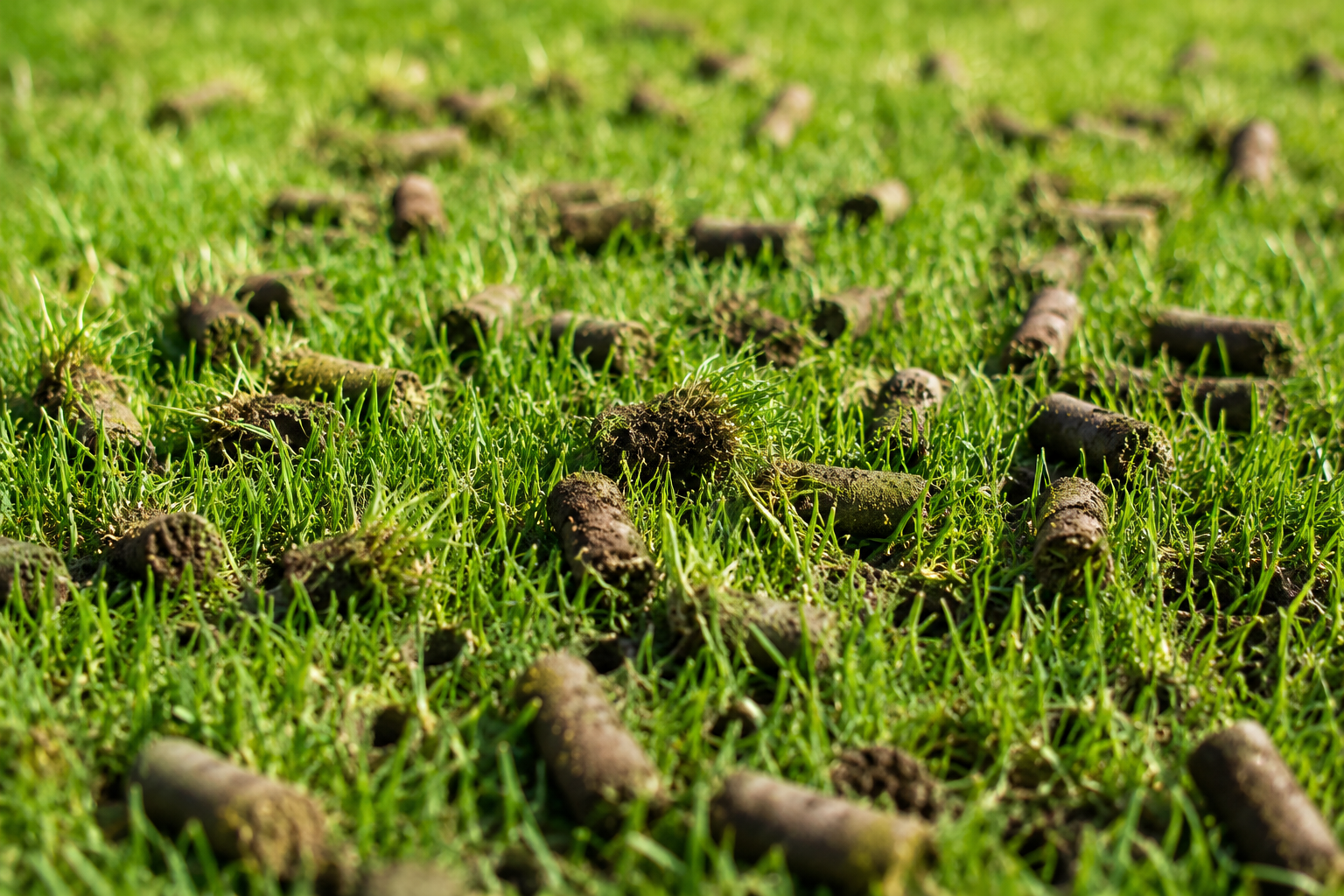
Core aeration in early September relieves compaction. Overseeding immediately after introduces fresh grass seed into the openings — the single highest-ROI lawn care task of the year.
Fertilization Programs
Pre-emergent weed control in spring when soil hits 55°F. Light spring fertilization to break dormancy. Fall winterizer application — the most important feed of the year for root reserves.
Irrigation Start/Stop
Spring startup: pressurize system, test every zone, replace broken heads, program the controller. Fall winterization: blow out all lines with compressed air before the first hard freeze.
September Aeration Changes Everything
If you only invest in one lawn care task per year, make it September aeration and overseeding. Cool-season grasses in Massachusetts grow roots most aggressively in fall — warm soil, cool air, less weed pressure, and a full winter for roots to establish before next summer's heat.
Core aeration punches thousands of small holes in compacted soil, letting water, air, and fresh seed reach the root zone. Overseeding fills thin spots and introduces newer, more disease-resistant grass varieties. Together they produce a measurably thicker lawn by the following spring.
Clean Start, Clean Season
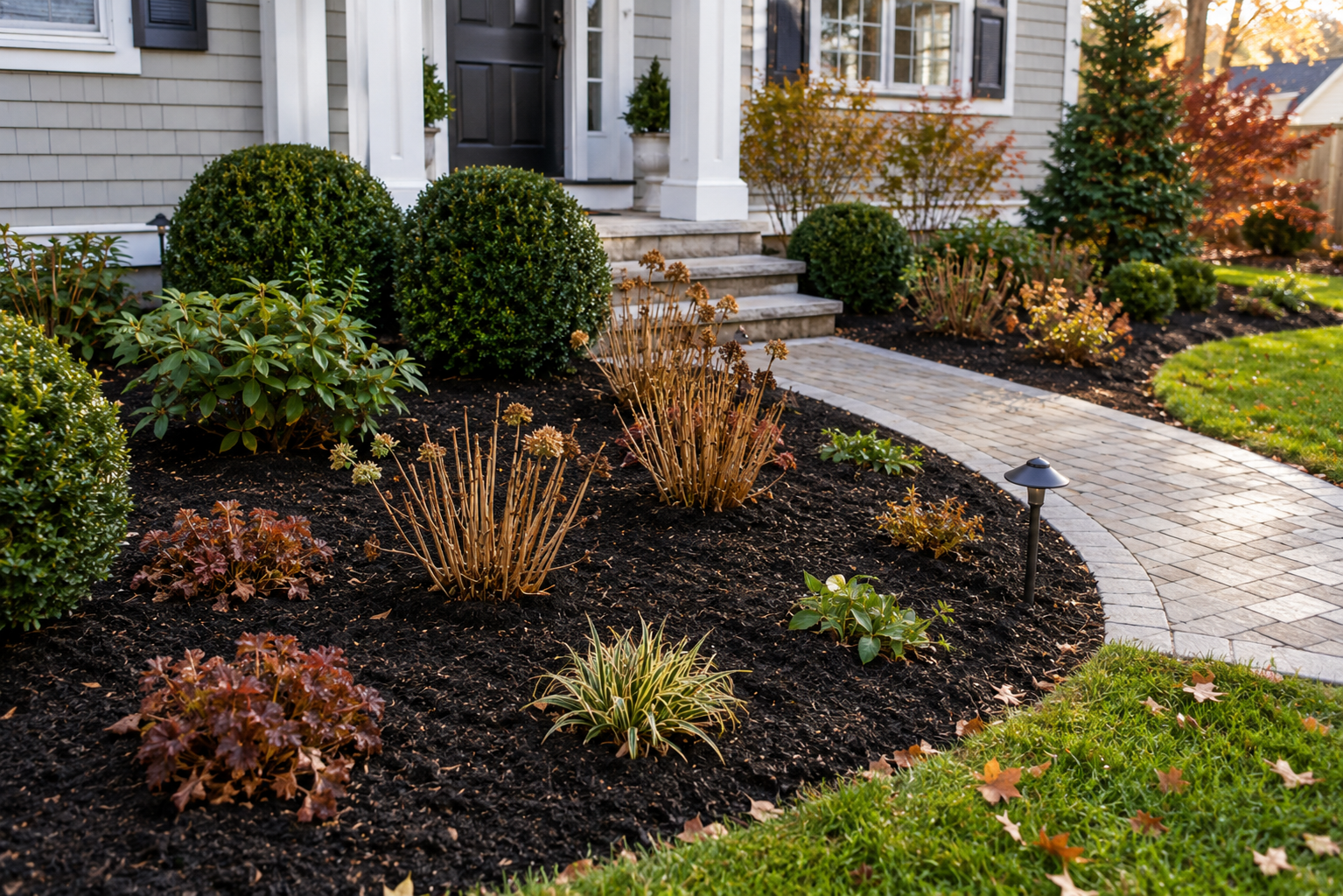
A spring cleanup isn't just about appearance — it's about timing. Pre-emergent weed control has a narrow window (soil temperature hits 55°F, typically mid-April on the South Shore). Miss it and you're fighting crabgrass and broadleaf weeds reactively all summer instead of preventing them.
The cleanup sequence matters: debris out, beds edged, mulch down, pre-emergent applied, irrigation started, first mow completed. Each task has a reason and a window. We execute the full sequence on schedule so nothing falls through the cracks.
The Spring Cleanup Checklist
- Debris removal — clear leaves, sticks, pine needles, and winter waste from all lawn and bed areas
- Rake matted grass — lift flattened turf so grass crowns can breathe and receive sunlight
- Bed edging — recut all borders between lawn, beds, walkways, and hardscape
- Weed pull — hand-pull early weeds before they establish root systems
- Perennial cutbacks — remove dead growth from last season before new shoots emerge
- Mulch application — 2-3 inches fresh organic mulch over clean, edged beds
- Pre-emergent weed control — apply when soil reaches 55°F (mid-April, South Shore)
- Early fertilization — light nitrogen to break dormancy and promote spring green-up
- Spot repair — overseed bare or thin lawn patches, topdress with loam if needed
- Irrigation startup — pressurize, test zones, replace damaged heads, program controller
- Hardscape inspection — check patios, walkways, and walls for frost heave or settling
The Fall Cleanup Checklist
- Core aeration — early September, before overseeding
- Overseeding — immediately after aeration for best seed-to-soil contact
- Fall fertilization — the most important application of the year for root reserves
- Leaf removal — multiple passes October through November as leaves drop
- Final mow — gradually lower cutting height to 2.5-3 inches to reduce snow mold
- Perennial cutbacks — remove spent foliage (leave ornamental grasses for winter interest)
- Bulb planting — tulips, daffodils, crocuses before ground freezes
- Irrigation winterization — compressed-air blow-out before the first hard freeze
- Drainage inspection — confirm French drains and catch basins are clear before freeze
- Gutter cleaning — clear gutters and downspouts near landscape areas
- Hardscape prep — power wash patios, re-sweep polymeric sand, seal pavers if due
The cost of skipping fall cleanup.
Leaves left on the lawn through winter smother and kill turf, creating bare patches weeds colonize in spring. Skipped irrigation winterization means frozen, cracked pipes — turning a standard fall service into a multi-thousand-dollar spring repair. Skipped aeration means the lawn enters next year thinner and weaker. Every fall task you skip creates a larger, more expensive spring problem.
Massachusetts Communities We Serve
SalCorp provides spring and fall cleanup services throughout Norfolk County, Plymouth County, and Greater Boston — including Walpole, Westwood, Norwood, Needham, Wellesley, Dover, Sherborn, Medfield, Sharon, Foxborough, Hingham, Norwell, Cohasset, Scituate, Weymouth, Braintree, Milton, Canton, Dedham, and surrounding communities.
Ready to schedule? Contact SalCorp for a free estimate. Fall cleanup scheduling is first-come, first-served — book early for September aeration and October leaf removal.
Twenty Years of Seasonal Care in Massachusetts
20+
Years serving
Massachusetts
In-house
Owner-supervised,
no subcontractors
Licensed
Fully insured &
guaranteed
Walpole
Norfolk County
since 2004
Cleanup FAQs
What does a spring cleanup include?
A professional spring cleanup includes removing leaves, sticks, and winter debris from the entire lawn and bed areas, raking out matted grass, edging all bed borders, pulling early weeds, cutting back dead perennial growth, applying fresh mulch, pre-emergent weed control once soil reaches 55°F, light fertilization, spot-repairing bare lawn patches, inspecting hardscape for frost heave, and starting up the irrigation system.
What does a fall cleanup include?
A fall cleanup covers leaf removal (usually multiple passes), cutting back spent perennials, removing annual plantings, final bed weeding, fall fertilization, core aeration and overseeding in September, edging beds, a final mow at a lower height, irrigation winterization, cleaning gutters near landscape areas, and inspecting drainage systems before winter.
When should I schedule spring cleanup in Massachusetts?
Late March to mid-April, depending on when the ground thaws. Schedule by early March for an April start — by mid-March most landscapers are booked into May. Waiting until May means missing the window for pre-emergent weed control and early fertilization.
When should fall cleanup start in Massachusetts?
Fall cleanup is phased: aeration and overseeding in early September, fall fertilization in late September/October, leaf removal from mid-October through late November, and irrigation winterization in late October to early November before the first hard freeze.
Can I skip fall cleanup and just do spring?
You can, but the lawn will suffer. Leaves left through winter smother and kill turf. Skipped fall fertilization means weak spring growth. Skipped aeration means a thinner lawn. Skipped winterization means frozen pipes. Most properties that skip fall need significantly more work and cost in spring to recover.
Do you do leaf removal separately?
Yes. We offer standalone leaf removal on a per-visit or multi-pass basis through fall, and comprehensive cleanup programs that cover everything. Most residential clients on our maintenance programs get cleanups included in their seasonal service agreement.
What happens if I wait too long for spring cleanup?
You miss two critical windows. Pre-emergent weed control must go down before soil hits 55°F — once weeds germinate, it's useless. And matted leaves left too long kill the grass underneath, creating bare patches that require reseeding. Most Massachusetts properties need cleanup completed by mid-April.
How much does a spring or fall cleanup cost?
Costs vary by property size, debris volume, and services included. We provide detailed estimates after seeing the property. The investment is modest compared to the damage skipped cleanups cause — dead turf, weed infestations, and irrigation repairs that cost multiples of the cleanup itself.
Ready to Schedule Your Cleanup?
Fall cleanup fills fast — September aeration and October leaf removal book first. Contact SalCorp now to lock in your spot.
Schedule Your Cleanup