

Eco Friendly Lawn Care Near Me: Top 5 Best Services 2025
Why Eco-Friendly Lawn Care Matters for Massachusetts Properties
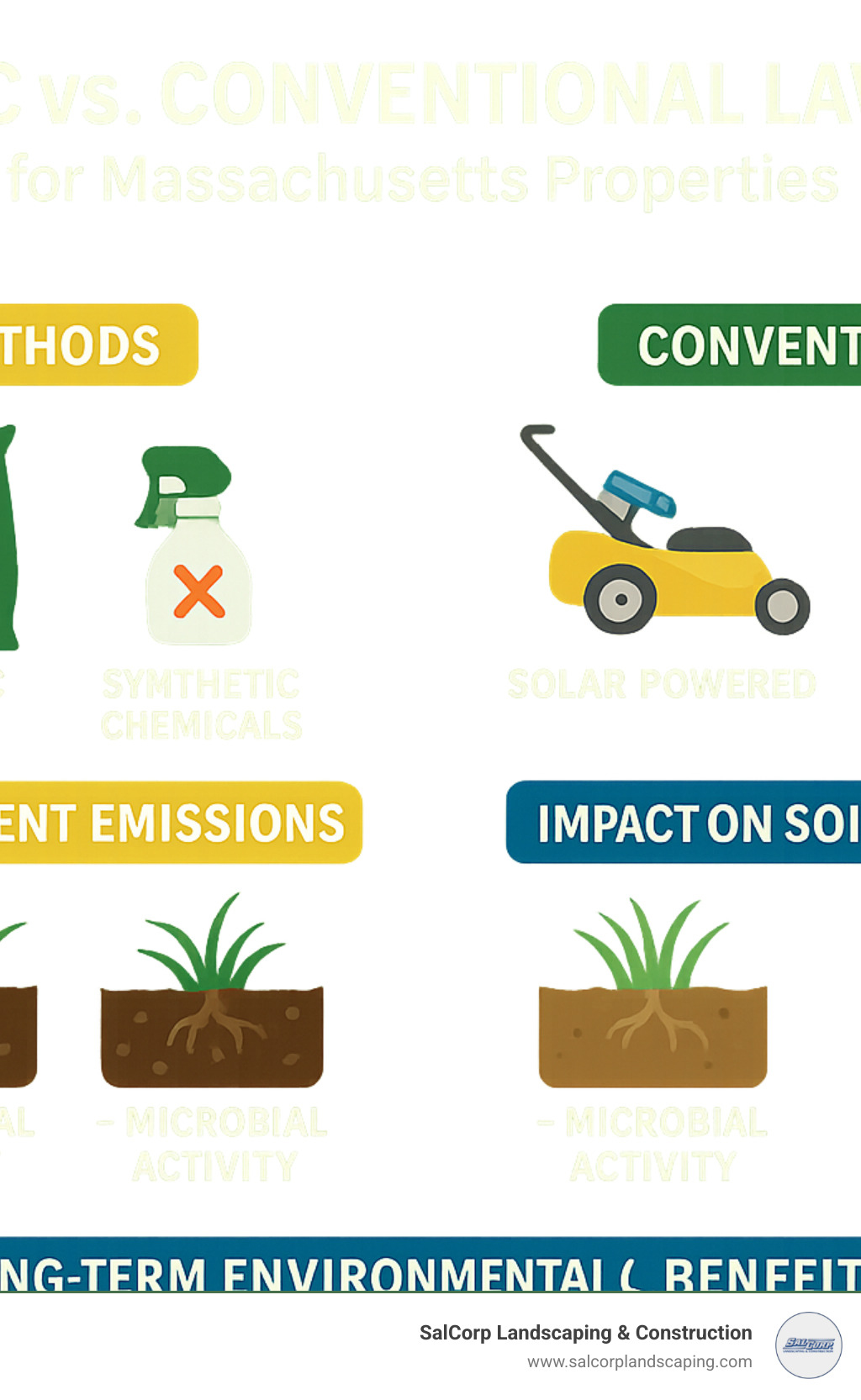
Eco friendly lawn care near me is changing how Massachusetts property owners maintain their outdoor spaces. This sustainable approach uses organic fertilizers, eliminates toxic chemicals, and often employs solar-powered equipment to create healthier lawns while protecting families, pets, and the environment.
Quick Guide to Finding Eco-Friendly Lawn Care:
• Organic treatments – OMRI-certified fertilizers and weed controls
• Electric equipment – Battery or solar-powered mowers and trimmers
• Soil-first approach – pH testing, composting, and microbial health
• IPM methods – Integrated pest management with minimal chemicals
• Native alternatives – Pollinator-friendly plants and turf varieties
The benefits go beyond a beautiful lawn. Research shows organic lawns can sequester 4 times more carbon than chemically treated grass and reduce a typical household’s carbon footprint by 25% annually. Gas-powered lawn equipment contributes 5-10% of the nation’s air pollution, but eco-friendly providers are changing that with clean technology.
Companies like Clean Air Lawn Care report 80-90% customer renewal rates and have prevented over 23,000 pounds of pollution annually using solar-powered equipment. Meanwhile, 71% of American homeowners have avoided outdoor events due to concerns about chemical treatments and pest issues in their yards.
I’m Sal Musto, and over my two decades in landscaping, I’ve seen how eco friendly lawn care near me creates healthier outdoor spaces for Massachusetts families and businesses. At SalCorp Landscaping & Construction, we’ve helped countless property owners transition to sustainable practices that protect both their investment and the environment.
Handy eco friendly lawn care near me terms:
– curbing company near me
– landscape firms near me
– turf landscapers near me
Eco Friendly Lawn Care Near Me: What It Really Means
When you search for eco friendly lawn care near me, you’re looking for something much deeper than just avoiding chemicals on your grass. True sustainable lawn care is like creating a living ecosystem right in your backyard – one that works with nature instead of against it.
Think of it this way: conventional lawn care is like giving your yard a daily vitamin pill, while eco-friendly care is like teaching it to eat healthy and exercise on its own. The difference is profound and long-lasting.
Organic standards form the foundation of legitimate eco-friendly programs. Look for companies using OMRI-certified products (that’s the Organic Materials Review Institute seal), which guarantees materials meet strict organic guidelines. These aren’t just “natural” products – they’re scientifically tested and proven safe for organic use.
But here’s where it gets interesting: integrated pest management (IPM) changes the entire game. Instead of spraying first and asking questions later, IPM monitors your lawn like a doctor checking vital signs. We only treat problems when they actually cross damage thresholds. For example, grub control only happens when we find 8-15 grubs per square foot – not just because it’s “grub season.”
The equipment revolution is equally exciting. Companies serious about eco friendly lawn care near me now use electric and solar-powered equipment. Some even have solar panels mounted right on their service trucks, charging batteries while they work. This eliminates the shocking fact that gas-powered lawn equipment contributes 5-10% of our nation’s air pollution.
Your soil microbiome becomes the star of the show in organic programs. Imagine billions of tiny helpers living in your soil, breaking down nutrients and protecting grass roots. Chemical treatments can wipe out these beneficial microorganisms, while organic approaches feed and nurture them through compost and microbial inoculants.
Pollinator habitat creation addresses a growing crisis. Scientific research on pollinator decline shows alarming trends, but your lawn can be part of the solution. This might mean accepting some clover (which bees love) or wild violets that serve as food for butterfly larvae.
Turf alternatives are gaining popularity too. Native grasses, ground covers, and even “no-mow” fescue varieties can reduce maintenance while supporting local wildlife.
The Science Behind a Living Soil
Here’s something fascinating: healthy soil is more alive than most people realize. A single teaspoon contains more microorganisms than there are people on Earth. When we focus on soil health first, everything else falls into place naturally.
Compost acts like a probiotic for your lawn. When we work quality compost into the top 4-6 inches of soil, we’re introducing millions of beneficial microorganisms that continue working long after we’ve left. They break down organic matter, make nutrients available to grass roots, and improve water retention.
The magic happens within a specific pH range of 6.0 to 6.8. Think of pH as your soil’s comfort zone – when it’s just right, nutrients become readily available and beneficial microorganisms thrive. This is why soil testing always comes first in any serious organic program.
Carbon sequestration occurs naturally in healthy soils. Organic lawns can store four times more carbon than chemically treated grass because the soil ecosystem remains intact and active. Mycorrhizae – beneficial fungi that form partnerships with grass roots – create vast underground networks that store carbon while helping plants access water and nutrients more efficiently.
We’ve watched remarkable changes when clients commit to building soil health. Lawns that once needed constant attention become self-sustaining ecosystems that naturally resist weeds, diseases, and drought stress.
Weed & Pest Control in Eco Friendly Lawn Care Near Me
Effective organic weed and pest control requires a completely different mindset. Instead of trying to eliminate every unwanted visitor, we create conditions where desirable plants thrive while managing problems before they spiral out of control.
Cultural practices form our first defense line. Maintaining proper mowing height (3-4 inches for most grass types), ensuring adequate soil fertility, and promoting thick turf growth naturally crowds out weeds. When grass is healthy and dense, there’s simply less real estate available for unwanted plants.
Hand-pulling remains surprisingly effective, especially after rain when soil is soft. For larger areas, OMRI-listed herbicides containing ingredients like citric acid or clove oil provide targeted spot treatment options.
Corn gluten meal deserves special mention because it’s widely misunderstood. This pre-emergent herbicide prevents seeds from germinating but won’t touch existing weeds. Timing is everything – it must be applied before weed seeds germinate, typically in early spring before soil temperatures hit 50°F. Miss that window, and you’re out of luck until next year.
Biorational grub control products target specific pests while preserving beneficial insects. We only treat when monitoring shows actual damage thresholds are exceeded – not just because the calendar says it’s time.
IPM thresholds guide every decision. For grubs, that means treating only when counts reach 8-15 per square foot. For weeds, we consider factors like lawn density, weed species, and client tolerance levels before recommending action.
Massachusetts follows principles similar to Maryland’s Fertilizer Law with blackout dates from November 15 to March 1, when fertilizer applications are prohibited to protect water quality. These regulations actually support organic practices by encouraging fall applications when nutrients benefit root development most.
Why Choose Organic? Health, Planet & Wallet
The shift to eco friendly lawn care near me often begins when families realize they want safer outdoor spaces for their children and pets. But once you understand the full picture, the benefits reach far beyond health concerns into environmental protection and long-term financial wisdom.
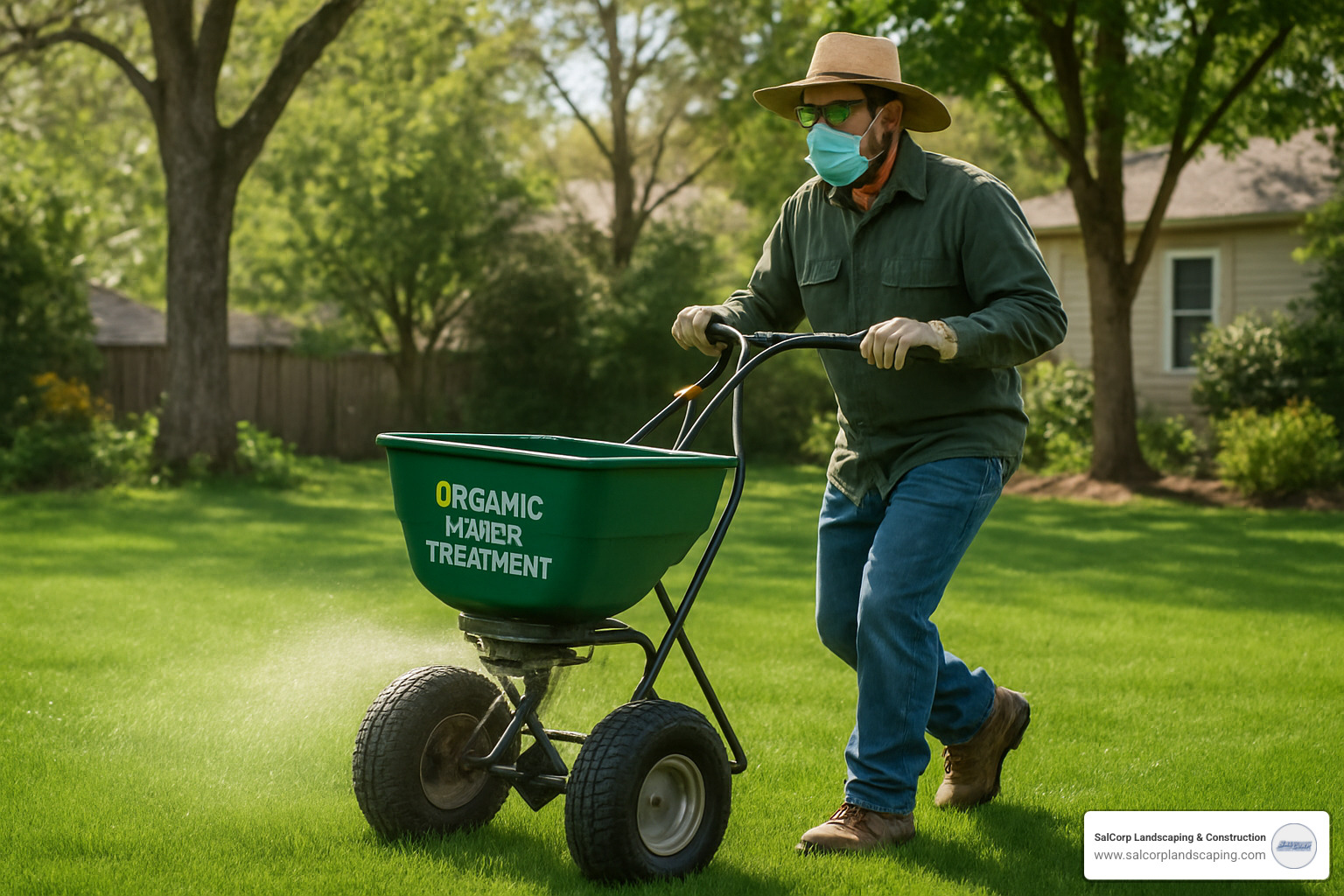
Toxin-free play areas become reality with organic treatments. Unlike synthetic pesticides that can linger on grass surfaces for weeks, organic products allow immediate safe access. Your kids can run barefoot through the sprinkler without worry, and weekend barbecues don’t require checking treatment schedules first.
Pet safety takes on new meaning when you consider how dogs and cats experience your lawn. They absorb chemicals through their paw pads and ingest residues during grooming. Organic programs use ingredients like alfalfa meal, kelp, and beneficial bacteria that pose zero health risks to furry family members.
The environmental payoffs multiply when entire neighborhoods accept organic practices. Water quality improves dramatically as slow-release organic fertilizers match plant uptake rates, virtually eliminating the runoff that contaminates groundwater and creates algae blooms in local ponds and streams.
Air pollution statistics tell a startling story about conventional lawn care. Gas-powered equipment produces as much pollution in one hour as driving a car 100 miles. Solar-powered and electric equipment eliminates these emissions entirely while operating so quietly that neighbors actually appreciate early morning maintenance visits.
Carbon capture happens naturally in healthy organic soils, with organic lawns storing four times more carbon than chemically treated grass. This soil-building approach creates the deep green color and thick growth that significantly boosts property values while appealing to environmentally conscious buyers.
| Equipment Type | Emissions (lbs CO2/hour) | Noise Level (decibels) | Operating Cost |
|---|---|---|---|
| Gas Mower | 11-15 | 85-95 | $3-5/hour |
| Electric/Solar | 0 | 65-75 | $0.50-1/hour |
Customer renewal rates reflect the satisfaction that comes with organic care. Companies using sustainable methods report 80-90% annual renewal rates, significantly higher than conventional services. This loyalty stems from visible results combined with peace of mind about environmental stewardship.
For more insights on protecting your property investment through sustainable practices, explore The Benefits of Regular Landscape Maintenance.
Real-World Environmental Payoffs
When we talk about environmental benefits, the numbers become truly impressive once you see how eco friendly lawn care near me impacts entire communities. These aren’t theoretical benefits – they’re measurable changes happening right here in Massachusetts neighborhoods.
Carbon sequestration represents the biggest environmental win. Organic lawns store carbon in stable soil forms that remain locked away for years. A typical household can reduce its carbon footprint by 25% annually simply by switching to organic lawn care. The secret lies in nurturing soil microbiomes that thrive without chemical disruption.
Pollution prevention adds up fast across service areas. Companies using solar-powered equipment report preventing over 23,000 pounds of pollution annually per service region. When you multiply this across all eco-friendly providers, the impact becomes substantial enough to measurably improve our regional air quality.
Native bee populations get crucial support from organic lawn practices. Allowing clover and wild violets to coexist with grass provides early-season nectar when few other flowers are available. Those “weeds” many people fight actually serve as larval food for fritillary butterflies, supporting complete life cycles rather than just adult feeding.
Water quality protection extends well beyond individual properties. Organic fertilizers release nutrients slowly, matching what plants actually need and when they need it. This virtually eliminates runoff that causes algae blooms and other water quality problems in our streams and ponds.
Biodiversity increases measurably on organically maintained properties. Soil organism counts, beneficial insect populations, and bird diversity all show dramatic improvements within 2-3 years of transitioning from chemical to organic management.
Are the Costs Higher?
The financial picture for organic lawn care is more nuanced than simple price comparisons suggest. While sustainable services may require higher upfront investment, the long-term value equation often favors organic approaches when you factor in all the benefits.
Based on internet data averages across the industry (not SalCorp pricing), basic organic programs typically range from $45-120 monthly for average-sized properties. Premium organic services with comprehensive soil building run $150-350 monthly, while high-end programs with native plantings and advanced ecological features can exceed $500 monthly.
These ranges reflect the intensive nature of organic soil building and the premium equipment required for sustainable maintenance. However, several factors often offset higher service costs over time.
Reduced renovation needs save significant money long-term. Organic programs build soil health that naturally resists disease, drought, and wear damage. Properties that once required expensive overseeding or complete lawn renovation every few years often maintain themselves with minimal intervention.
Water usage typically decreases 20-40% as soil health improves. Organic matter holds water more effectively, reducing irrigation needs substantially. For properties with automatic systems, this translates to meaningful utility savings throughout growing seasons.
Property value increases often exceed the additional cost of organic maintenance. The deep green color and thick growth that develops from soil-building practices creates exceptional curb appeal. Plus, environmental stewardship appeals to growing numbers of environmentally conscious buyers in today’s market.
Health cost avoidance represents real value that’s difficult to quantify. The peace of mind knowing children and pets can safely play on treated surfaces has worth that many Massachusetts families consider invaluable.
Service Menu & Methods You’ll Find Locally
When you start looking for eco friendly lawn care near me, you’ll find that sustainable lawn services have evolved far beyond simply avoiding chemicals. Today’s organic providers offer comprehensive programs that treat your lawn as a living ecosystem, addressing everything from soil biology to equipment emissions.
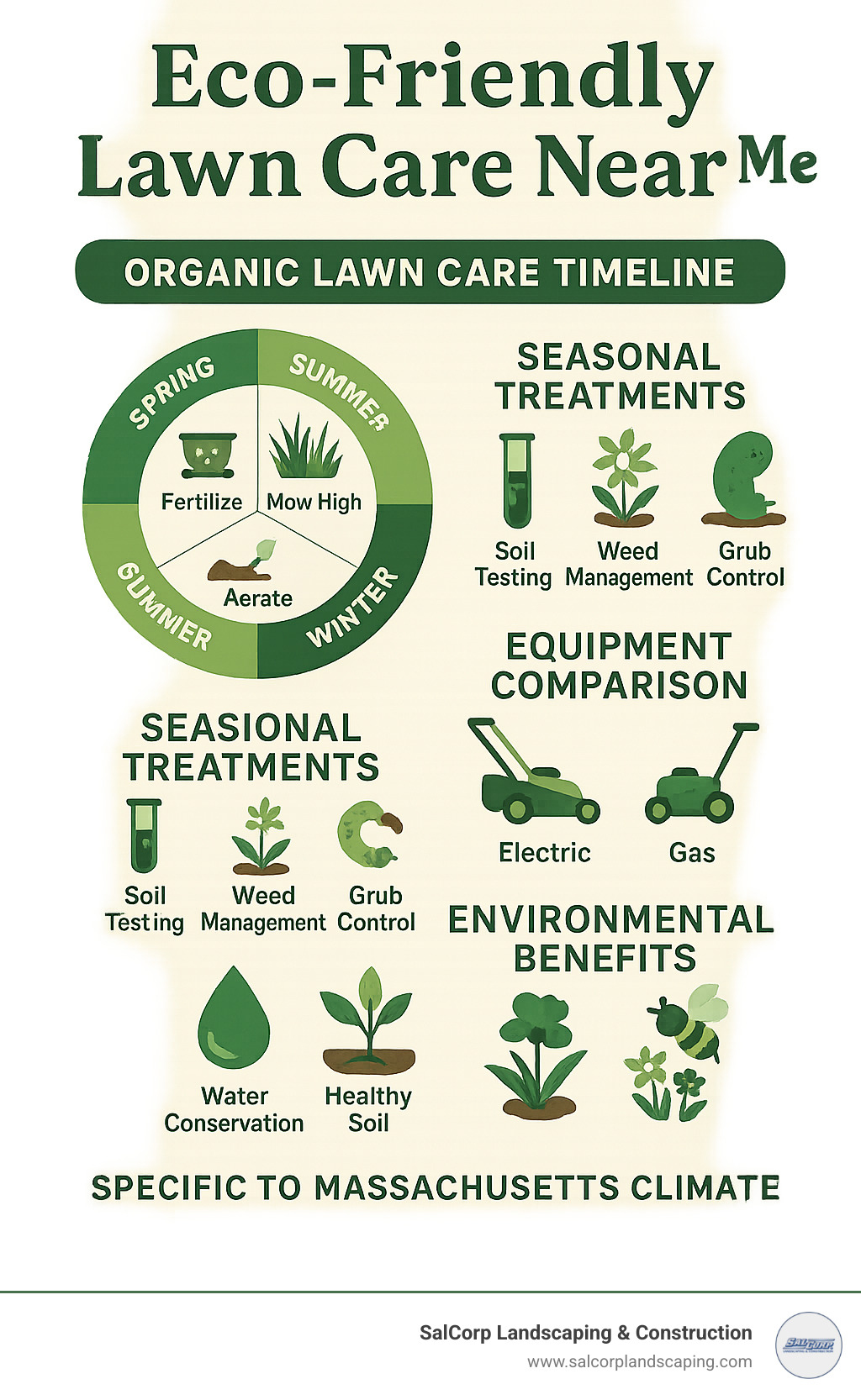
The journey typically begins with soil testing – something that sets quality organic providers apart from generic services. Professional soil analysis reveals your lawn’s unique pH levels, nutrient content, and organic matter percentage. This isn’t just scientific data gathering; it’s the foundation for creating a customized treatment plan that actually works for your specific property conditions.
Organic fertilizer programs form the heart of sustainable lawn care. Instead of synthetic quick-release chemicals, these programs use natural ingredients that feed both your grass and the soil organisms beneath it. The slow-release nutrition creates steady, sustainable growth that builds long-term lawn health rather than forcing rapid green-up that fades quickly.
Core aeration and overseeding services become even more important in organic programs because they address soil compaction naturally. Fall timing works best here in Massachusetts, giving new grass time to establish strong roots before winter while helping existing turf develop the deep root systems that make organic lawns so resilient.
What really excites me about modern eco-friendly services is the electric and solar-powered equipment. Some companies now mount solar panels directly on their service trucks, creating truly zero-emission maintenance operations. The equipment runs quieter, eliminates fumes, and often provides better cutting performance than gas-powered alternatives.
Mosquito and tick control programs use botanical oils and plant extracts that effectively reduce pest populations without harming beneficial insects. This approach takes slightly longer to show results than synthetic treatments, but it creates lasting benefits for your outdoor enjoyment while protecting pollinators.
Native garden installations represent the cutting edge of sustainable landscaping. These plantings create habitat for wildlife while actually reducing your maintenance requirements over time. Native plants naturally resist local pests and diseases while requiring less water and fertilizer than traditional turf areas.
For a complete overview of what lawn care services typically include, check out What Do Lawn Care Services Do?.
Fertilizers & Amendments
Understanding what goes into organic fertilizers helps you evaluate different eco friendly lawn care near me programs. The best organic providers use diverse ingredient blends that provide complete nutrition while building the soil biology that makes lawns naturally healthy and resilient.
Alfalfa meal provides balanced nutrition along with natural growth hormones that stimulate root development. This ingredient breaks down slowly throughout the growing season, providing steady nutrition while adding organic matter that improves soil structure. It’s like a multivitamin for your lawn that keeps working for months.
Kelp meal and seaweed extracts supply over 60 trace minerals that conventional fertilizers often miss entirely. These marine-based ingredients contain natural growth regulators that help grass tolerate stress and resist disease. The mineral content literally feeds the soil microorganisms that make organic lawns so healthy.
Feather meal offers high nitrogen content in slow-release form that won’t burn your grass even during hot summer weather. This recycled byproduct provides excellent nutrition while turning what would otherwise be waste into valuable lawn food.
Compost tea applications introduce billions of beneficial microorganisms directly to your soil and grass. These living treatments improve nutrient cycling and disease resistance in ways that synthetic fertilizers simply cannot match. It’s like probiotics for your lawn.
Slow-release nitrogen sources like composted manure provide steady nutrition without the feast-or-famine cycles that synthetic fertilizers create. This consistent nutrition promotes even growth and deeper green color without excessive top growth that requires constant mowing.
Zero-phosphorus blends comply with environmental regulations while preventing water quality problems. Most established lawns already have adequate phosphorus levels, so focusing on nitrogen and potassium provides better results while protecting local waterways.
Sustainable Equipment & Water Use
The equipment choices that eco friendly lawn care near me providers make significantly impact both environmental protection and service quality. Progressive companies invest in clean technology that often provides superior performance while eliminating emissions entirely.
Battery-powered mowers now rival gas equipment for power and runtime while operating almost silently. Professional-grade electric mowers can run for 2-3 hours on a single charge, which covers most residential properties easily. The instant torque of electric motors actually provides better cutting performance in thick or damp grass conditions.
Smart irrigation systems optimize water use through weather monitoring and soil moisture sensors. These systems can reduce water consumption by 30-50% compared to traditional timer-based irrigation while maintaining better turf health. They literally think for themselves, adjusting watering schedules based on real-time conditions.
Rain sensors automatically shut off irrigation when natural precipitation occurs, preventing the overwatering that wastes resources and promotes disease problems. These simple devices pay for themselves quickly through reduced water bills while protecting your lawn from moisture-related issues.
Drought-tolerant turf varieties like tall fescue require less irrigation while maintaining attractive appearance through dry periods. These grasses develop deeper root systems that access moisture unavailable to shallow-rooted varieties, creating naturally resilient lawns that thrive with minimal inputs.
How to Choose the Best Provider Near You
Selecting the right eco friendly lawn care near me provider requires careful evaluation of credentials, practices, and service philosophy. Not all companies claiming to be “organic” or “eco-friendly” follow the same standards, so asking the right questions helps identify truly sustainable providers.
Professional certifications indicate serious commitment to organic practices. Look for technicians with organic land care credentials, integrated pest management training, or specialized education in soil biology and sustainable landscape management.
A soil-first philosophy distinguishes quality organic providers from companies that simply substitute organic products for synthetic ones. The best providers emphasize soil testing, organic matter building, and microbial health as the foundation of lawn care programs.
Equipment audits reveal environmental commitment. Ask about the percentage of electric vs. gas-powered equipment, solar charging capabilities, and plans for transitioning to cleaner technology. Companies serious about sustainability invest in clean equipment even when it costs more initially.
Service tier options allow you to choose the level of organic commitment that fits your budget and goals. Some providers offer hybrid programs that reduce chemical use while building toward fully organic management, while others provide 100% organic programs from the start.
Transparent pricing with detailed explanations of what’s included helps you compare value rather than just cost. Quality organic providers explain the soil-building process and timeline for results rather than promising immediate perfection.
References from long-term customers provide insight into results and service quality. Ask specifically about lawn health improvements, weed reduction, and overall satisfaction with the organic transition process.
Pet-safe guarantees demonstrate confidence in product safety. Reputable organic providers stand behind their claim that treatments are safe for children and pets immediately after application.
Local regulation knowledge ensures compliance with fertilizer blackout dates, water restrictions, and pesticide regulations that vary by municipality. Experienced providers understand these requirements and adjust programs accordingly.
For more information about selecting landscape professionals, visit Local Lawn Care Services.
Questions to Ask When Researching Eco Friendly Lawn Care Near Me
The right questions help you evaluate the quality and authenticity of organic lawn care providers. These specific inquiries reveal whether companies truly understand sustainable practices or are simply marketing conventional services with organic labels.
Do you use OMRI-certified products? This question identifies providers who use genuinely organic materials rather than “natural” products that may not meet organic standards. OMRI certification ensures products comply with strict organic guidelines.
What mowing height do you maintain? Proper mowing height (3-4 inches for most grass types) is fundamental to organic lawn health. Providers who recommend cutting grass shorter than 2.5 inches don’t understand the principles of sustainable turf management.
Do you observe fertilizer blackout dates? Knowledge of local regulations (November 15 to March 1 in Massachusetts) indicates professional competence and environmental responsibility. Providers who don’t know these dates lack basic regulatory knowledge.
Is soil testing included in your program? Soil testing should be standard in any quality organic program. Providers who don’t test soil are essentially guessing about nutrient needs and pH requirements.
What’s your pollinator policy? Ask how they handle flowering weeds like clover and dandelions. Organic providers understand the value of these plants for pollinators and work with clients to balance lawn aesthetics with ecological benefits.
How do you handle grub control? The answer reveals whether they understand IPM principles. Quality providers monitor grub populations and treat only when thresholds are exceeded, using biorational products that target specific pests.
What equipment do you use? This question reveals environmental commitment. Progressive providers use electric or solar-powered equipment and can explain their transition timeline away from gas-powered tools.
DIY Tips Between Visits
Homeowners can significantly improve their lawn’s health and reduce the need for professional interventions by following organic principles between service visits. These practices complement professional programs while building your understanding of sustainable lawn care.
Mow at 3-4 inches height and never remove more than one-third of the grass blade length in a single cutting. Taller grass develops deeper roots, shades soil to prevent weed germination, and better tolerates drought and heat stress.
Grasscycle clippings by leaving them on the lawn rather than bagging them. Clippings decompose quickly and provide up to 25% of your lawn’s nitrogen needs while adding organic matter to improve soil structure.
Water deeply but infrequently, providing about 1 inch per week including rainfall. Early morning watering reduces evaporation and disease pressure while ensuring grass has moisture for the day’s photosynthesis.
Overseed in fall when soil temperatures favor germination and establishment. Fall seeding allows new grass to develop strong root systems before winter while avoiding the heat stress and competition from summer weeds.
Accept beneficial “weeds” like clover that provide nitrogen fixation and pollinator habitat. White clover was actually included in lawn seed mixes before herbicides became common, and it continues to provide ecological benefits.
Reduce mowing frequency during drought periods to allow grass to conserve energy for root development rather than replacing cut leaves. Stressed grass benefits more from rest than from forced regrowth.
For guidance on lawn preparation and improvement, check out How to Prepare Lawn for Hydroseeding.
Frequently Asked Questions About Eco-Friendly Lawn Care
When families first consider switching to eco friendly lawn care near me, they naturally have concerns about safety, appearance, and effectiveness. After twenty years in the landscaping business, I’ve heard these questions countless times, and I understand why they matter so much to Massachusetts homeowners.
Is it safe for kids and pets?
Absolutely – and this is often the main reason families make the switch to organic lawn care. Unlike synthetic pesticides that can linger on grass surfaces for days or weeks, organic treatments use ingredients you’d recognize from your kitchen pantry or garden center.
We’re talking about alfalfa meal, kelp, beneficial bacteria, and plant-based oils – materials that pose zero health risks to your family. Your kids can run barefoot across the lawn minutes after treatment, and your dog can roll around to their heart’s content without you worrying about toxic exposure.
The science behind this safety is straightforward. Synthetic chemicals work by poisoning pests and weeds through mechanisms that can also harm humans and animals. Organic products take a completely different approach – they feed the soil and strengthen the grass naturally, without creating any toxic residues.
Pet owners especially love this peace of mind. Dogs and cats absorb chemicals through their paw pads and then ingest them during grooming. With organic treatments, you eliminate these exposure pathways entirely while often creating a more resilient lawn that handles pet traffic better.
Most reputable organic lawn care companies will guarantee this safety and encourage you to use your lawn immediately after treatment. That’s the kind of confidence that comes from using ingredients nature intended.
Will my lawn look as green without chemicals?
Here’s something that surprises many homeowners – organic lawns often look better than chemically treated ones. The catch? You need patience for the full change.
Chemical fertilizers give you that quick green-up that looks impressive for a few weeks, then fades as the synthetic nutrients wash away. It’s like giving your lawn a sugar rush followed by a crash. Organic programs work differently – they build soil health that creates lasting, deep green color that neighbors notice and comment on.
The secret lies in what’s happening underground. Beneficial microorganisms in healthy soil act like tiny nutrient factories, making food available to grass roots more efficiently than any synthetic fertilizer can. This creates steady nutrition that maintains consistent color without those dramatic ups and downs.
Soil organic matter – which increases naturally with organic management – acts like a sponge that holds water and nutrients. Your grass stays greener longer during drought or heat stress because it has this built-in support system.
The transition typically takes 1-2 seasons for full results as the soil biology rebuilds and organic matter accumulates. During this time, you’ll notice gradual improvements in color, thickness, and overall health as your lawn’s ecosystem develops. Many clients tell me their grass looks better than it ever did with chemicals once this process completes.
How soon will I see fewer weeds?
Weed control works differently in organic programs, but the results often last longer than chemical treatments. Instead of just killing existing weeds, we focus on creating conditions where weeds can’t establish in the first place.
The magic happens through what we call cultural practices – proper mowing height, adequate nutrition, and thick grass growth. When your lawn is healthy and dense, there simply isn’t room for weeds to take hold. It’s like having a bouncer at the door of an exclusive club.
Most homeowners see 60-90% weed reduction within the first year, with near weed-free conditions developing over 2-3 years as soil health improves. This timeline reflects our systematic approach of building turf strength rather than just attacking unwanted plants.
Organic pre-emergent treatments like corn gluten meal can prevent weed seeds from germinating, but timing is everything. These work best as part of a comprehensive program that includes soil building and overseeding to fill any gaps where weeds might try to sneak in.
Some families choose to accept certain beneficial “weeds” like clover and violets that support pollinators while keeping the overall lawn looking neat and attractive. This approach reduces the need for any weed control while creating habitat for the bees and butterflies that make your garden come alive.
The key is understanding that organic weed control builds long-term solutions rather than providing quick fixes. Once your soil ecosystem is healthy and your grass is thick, weeds become a minor concern rather than a constant battle.

Conclusion
Eco friendly lawn care near me represents more than just a trend—it’s a fundamental shift toward sustainable property management that benefits families, communities, and the environment. Through our 20 years of experience at SalCorp Landscaping & Construction, we’ve witnessed the remarkable change that occurs when property owners accept organic practices.
The science is clear: organic lawns sequester four times more carbon than chemically treated grass while eliminating the 5-10% contribution that gas-powered equipment makes to air pollution. When you choose eco-friendly lawn care, you’re not just improving your property—you’re participating in a movement that has prevented thousands of pounds of pollution and created healthier communities across Massachusetts.
The health benefits for your family and pets are immediate and lasting. Organic treatments eliminate exposure to synthetic pesticides and herbicides while creating safe play areas where children and animals can enjoy the outdoors without health concerns. The peace of mind that comes from knowing your lawn is maintained with pet-safe, family-friendly methods is invaluable.
From a practical standpoint, organic lawn care builds long-term value through improved soil health, reduced water needs, and increased property values. While initial costs may be higher than conventional services, the investment pays dividends through reduced renovation needs, lower water bills, and improved curb appeal.
As Massachusetts property owners increasingly recognize these benefits, the organic lawn care industry continues growing at 12-15% annually. This growth reflects not just environmental consciousness but practical recognition that sustainable practices create superior results.
At SalCorp Landscaping & Construction, we’re committed to helping Massachusetts property owners transition to sustainable lawn care practices that protect their investment while supporting environmental health. Our owner-operated approach ensures personalized attention to your property’s unique needs, backed by two decades of experience in creating beautiful, sustainable outdoor spaces.
Whether you’re ready to make the full transition to organic lawn care or want to explore hybrid approaches that reduce chemical use while building toward sustainability, we’re here to guide you through the process. Our comprehensive services extend beyond lawn care to include landscape design, hardscaping, and commercial snow management—all delivered with the same commitment to quality and environmental responsibility.
For more information about our comprehensive landscape services, visit More info about our landscape contractor services. We invite you to contact us for a free consultation to discuss how eco-friendly lawn care can transform your Massachusetts property while contributing to a healthier planet for future generations.
The choice for eco friendly lawn care near me is ultimately a choice for the future—your family’s health, your property’s value, and our shared environment. Let us help you make that choice with confidence, backed by expertise, quality equipment, and an unwavering commitment to sustainable practices that benefit everyone.
