

Hardscape vs. Softscape: How the Two Halves of a Landscape Work Together
Stone and plants, structure and life. Here is what each one is, how they differ, why the build order matters, and how to balance both on a Massachusetts property.
Plan Your LandscapeTwo Halves of Every Landscape
Every outdoor space is built from two kinds of elements. Understanding the difference makes planning, budgeting, and maintaining a yard far easier.
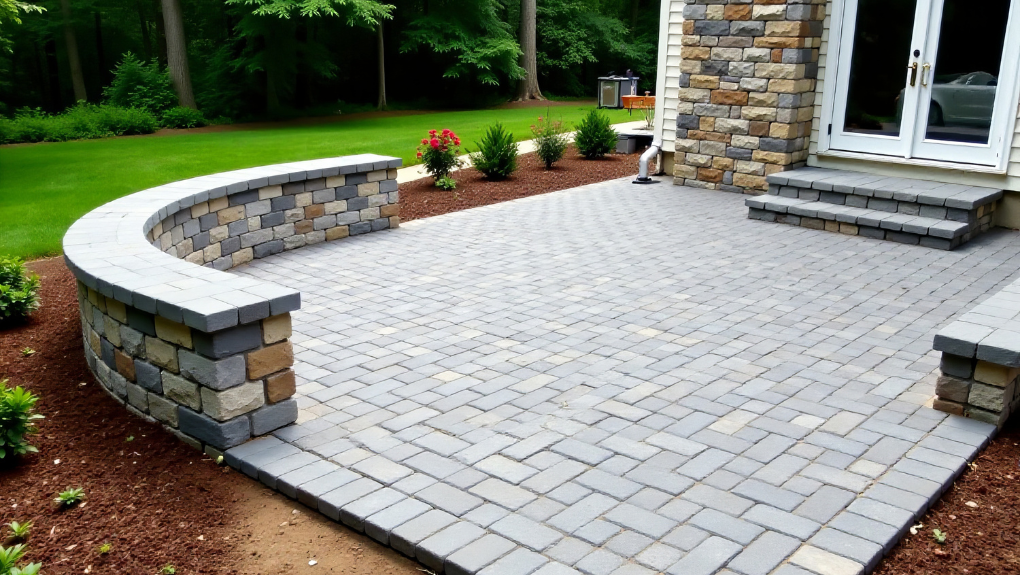
The Built Structure
Non-living features that give a yard its layout, levels, and usable space.
- Patios, walkways, and driveways
- Retaining walls and seating walls
- Steps, edging, and curbing
- Outdoor kitchens and fire features
- Pergolas, fences, and drainage structures
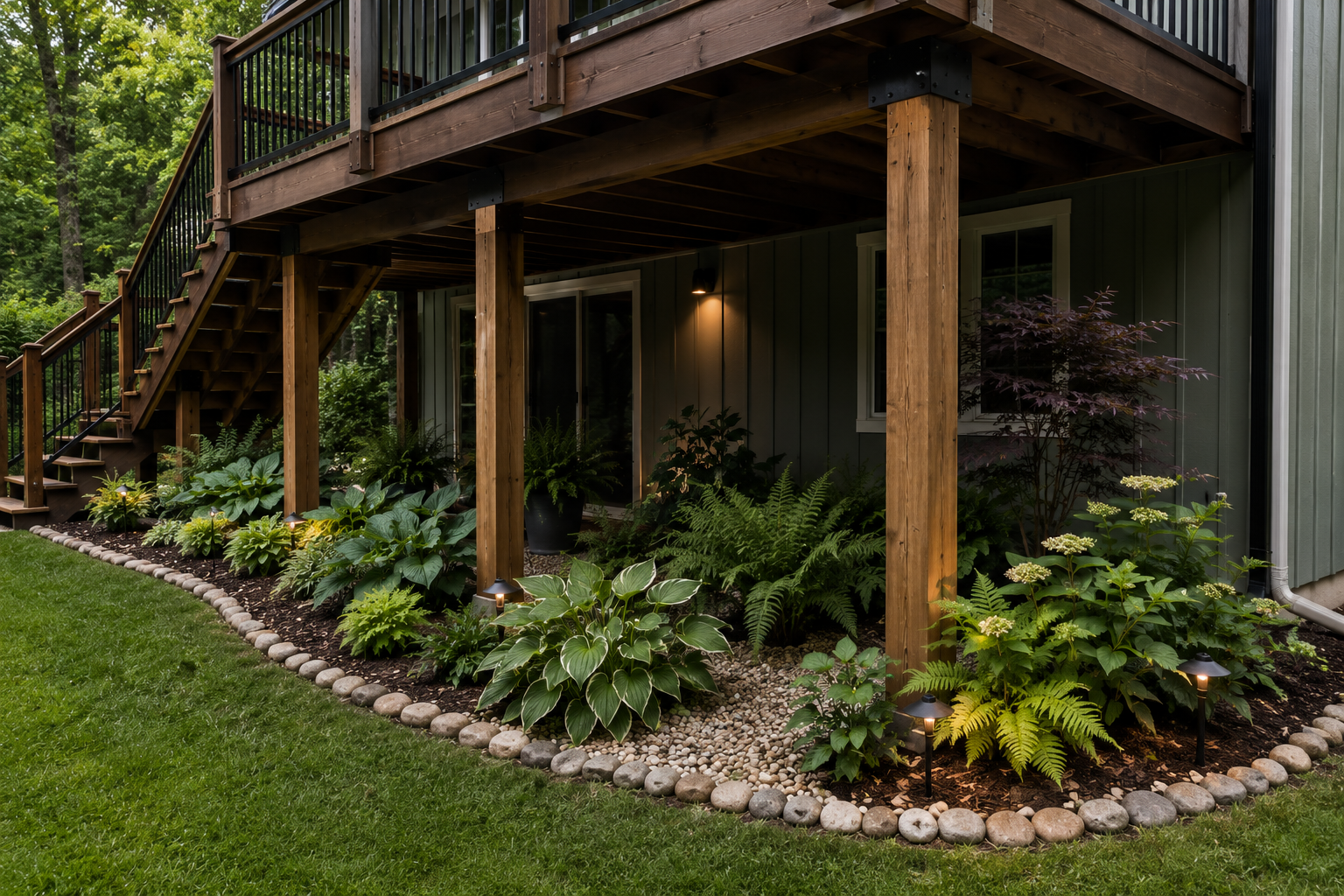
The Living Layer
Living, growing elements that bring color, shade, privacy, and seasonal change.
- Lawn and turf
- Trees, hedges, and shrubs
- Perennials, annuals, and ground covers
- Garden beds and planting borders
- Soil, compost, and mulch
Hardscape vs. Softscape Compared
| Factor | Hardscape | Softscape |
|---|---|---|
| What it is | Non-living, built features | Living, growing elements |
| Materials | Stone, brick, pavers, concrete, block, gravel, wood, metal | Grass, trees, shrubs, perennials, annuals, soil, mulch |
| Main purpose | Structure, access, usable space, drainage, erosion control | Color, shade, privacy, softening hard lines, cooling the yard |
| Change over time | Stays the same year to year | Grows, matures, and changes every season |
| Maintenance | Occasional: sweeping, re-sanding joints, sealing some materials | Ongoing: mowing, watering, pruning, weeding, feeding |
| Lifespan | Decades when built on a proper base | Varies: perennials and trees for years, annuals for a season |
| Build order | Installed first | Installed after hardscape is complete |
| Massachusetts factor | Must survive freeze-thaw and frost heave | Must be hardy for winter cold and summer dry spells |
Why Hardscape Always Goes In First
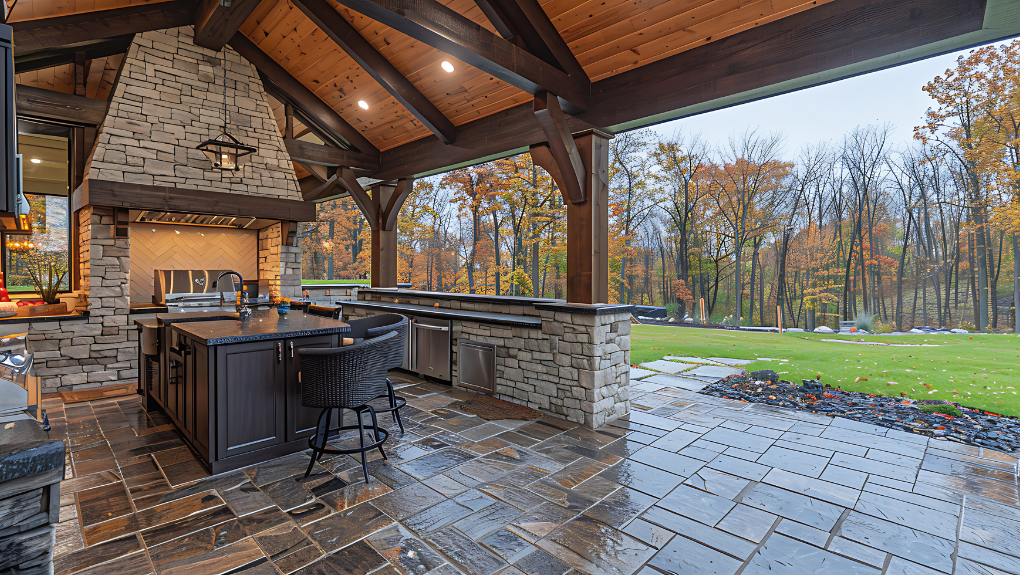
Hardscape construction means excavators, skid steers, plate compactors, and pallets of stone moving across the yard. Anything planted beforehand gets crushed, buried, or compacted beyond recovery.
Hardscape also sets the final grades. Walls create the levels, patios set where water drains, and walkways define where beds can go. Once that framework is built and graded, softscape goes into finished soil exactly where the design intended, with nothing left to disturb it.
How a Full Project Is Sequenced
Landscape construction is the process of turning a design into a finished property. This is the order that protects every phase.
Design & Layout
Hardscape and plantings planned together so grades, drainage, and sight lines work as one.
Excavation & Grading
Soil moved and shaped to set levels and direct water away from the house.
Drainage & Utilities
French drains, irrigation mains, and lighting conduit placed before surfaces go down.
Hardscape Installation
Bases built and patios, walls, walkways, and steps installed.
Soil Preparation
Compacted construction soil loosened and amended so plants can root.
Softscape Installation
Trees, shrubs, perennials, lawn, and mulch installed into finished grades.
Planting Rules Designers Use: 3-5-7 and the Rule of Three
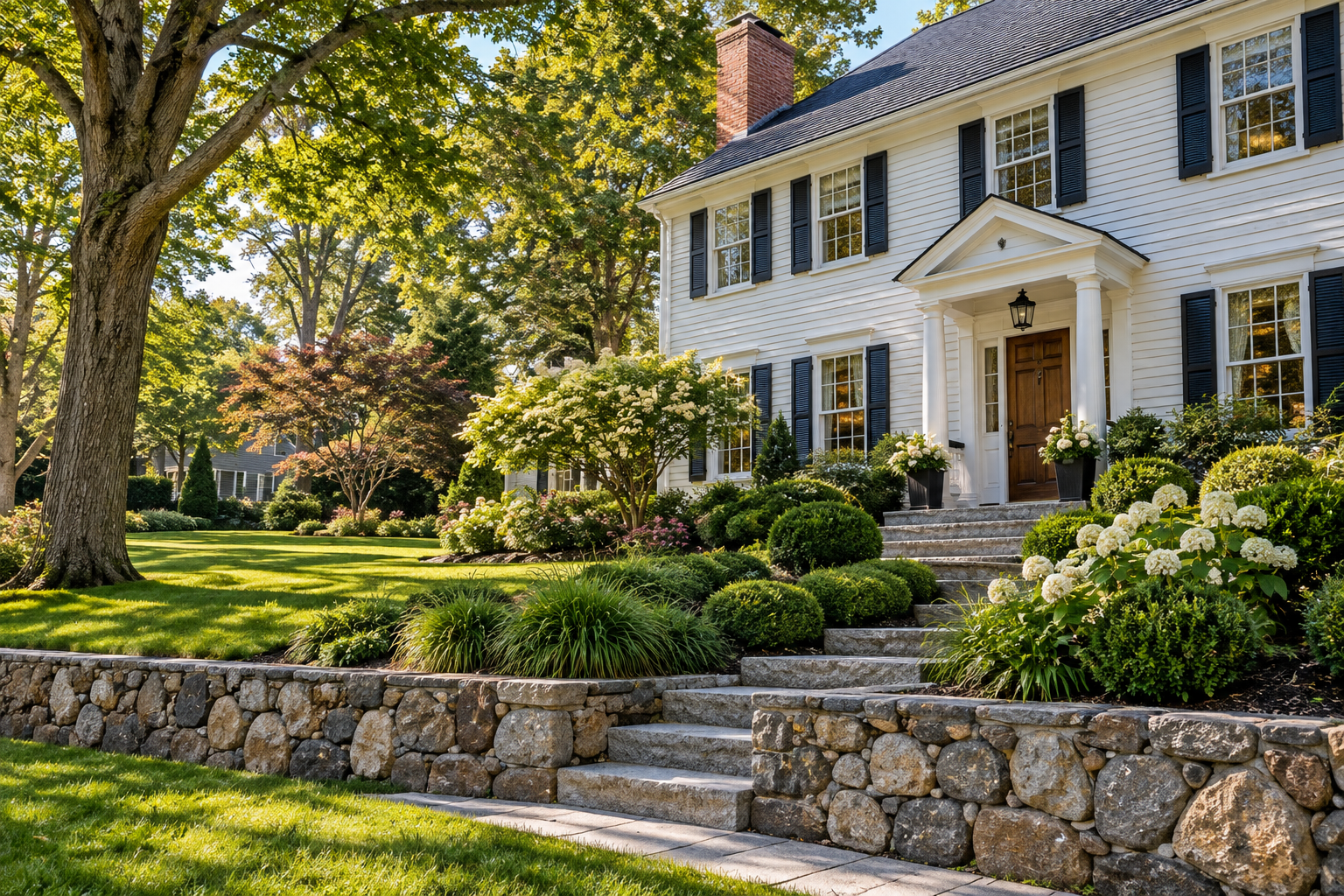
Plants look natural in odd-numbered groups. The 3-5-7 rule groups the same shrub or perennial in threes, fives, or sevens instead of singles or matching pairs, which avoids stiff symmetry and makes beds feel full.
The rule of three also applies to height: low ground cover in front, mid-height shrubs and perennials in the middle, and taller shrubs or small trees in back. Three layers give a bed depth from every angle and soften the hard edges of walls and patios.
Getting the Balance Right
Too much hardscape feels hot and harsh. Too much softscape means endless upkeep and nowhere to sit. Most Massachusetts properties land in a healthy middle:
- Hardscape where people go: patios, walkways, steps, and driveways in the paths and gathering spots that see daily use
- Softscape at the edges: planting beds along foundations, patio borders, and property lines to frame and soften
- Walls doing double duty: retaining walls that create flat lawn or patio space and planting terraces at the same time
- Low-maintenance plant choices: hardy shrubs, native perennials, and ground covers instead of high-care annual beds everywhere
Massachusetts changes the rules for both.
Hardscape has to survive dozens of freeze-thaw cycles every winter, so base depth, compaction, and drainage matter as much as the stone. Softscape has to handle Zone 6 cold, road salt near drives and walks, clay soil, and summer dry spells. Plan for both and the landscape holds up for decades.
Where to Go Next
If you are planning a project, start with our landscape design services to plan both halves together. For the build, see our hardscaping services and lawn care services.
Communities We Serve
SalCorp designs and builds landscapes throughout Norfolk County, Plymouth County, and Greater Boston, including Walpole, Westwood, Norwood, Needham, Wellesley, Dover, Sherborn, Medfield, Sharon, Foxborough, Canton, Dedham, Milton, Braintree, Weymouth, Hingham, Norwell, Cohasset, Newton, Brookline, and surrounding communities.
Hardscape and Softscape Services
Hardscape vs. Softscape FAQs
What is the difference between hardscape and softscape?
Hardscape is the non-living, built part of a landscape: patios, walkways, walls, steps, driveways, and outdoor kitchens made from stone, brick, pavers, concrete, metal, or wood. Softscape is the living part: lawn, trees, shrubs, perennials, annuals, ground covers, soil, and mulch. Hardscape provides structure and function. Softscape provides color, shade, privacy, and life. A well-designed landscape balances both.
What does softscape mean?
Softscape (also called soft landscaping) refers to the living, organic elements of an outdoor space: trees, hedges, shrubs, lawn, perennials, annuals, vines, ground covers, and the soil and mulch they grow in. Softscape changes with the seasons and needs ongoing care like watering, mowing, pruning, and feeding.
Should hardscape or softscape be installed first?
Hardscape goes first. Excavation, grading, heavy equipment, and pallets of stone would crush or bury new plantings, and the final grades set by patios, walls, and walkways determine where beds and lawn go. Softscape is installed once the hardscape is complete, so plants go into finished grades and are not disturbed.
Which needs more maintenance, hardscape or softscape?
Softscape needs more frequent care: mowing, watering, weeding, pruning, mulching, and fertilizing throughout the growing season. Hardscape needs occasional attention: sweeping, cleaning, re-sanding paver joints, sealing some materials, and fixing any settling. Properly built hardscape is low maintenance for decades.
What is the 3-5-7 rule in landscaping?
The 3-5-7 rule is a planting guideline: group shrubs, perennials, or trees of the same kind in odd numbers like 3, 5, or 7 instead of singles or pairs. Odd groupings look more natural, avoid stiff symmetry, and give beds a fuller, more intentional look.
What is the rule of 3 in landscaping?
The rule of 3 applies odd-number grouping and layering: plant in groups of three and build beds in three height tiers (low ground cover in front, mid-height shrubs or perennials in the middle, and taller shrubs or small trees in back). It creates depth and keeps a planting from looking flat.
What is the cheapest way to landscape?
Softscape like seed, mulch, and perennials costs less up front than hardscape, and gravel or crushed stone is the least expensive hardscape surface. The most cost-effective approach long term is a plan that puts durable hardscape where people walk and gather and low-maintenance plantings everywhere else. Every job is quoted after an on-site evaluation, because soil, access, and scope change the work from property to property. Contact us for a quote.
What is landscape construction?
Landscape construction is the building phase of a landscape project: excavation and grading, drainage, hardscape installation (patios, walls, walkways, steps), irrigation, lighting, and then softscape installation (soil preparation, planting, lawn). It turns a landscape design into a finished property.
Ready to Plan Both Halves of Your Landscape?
SalCorp designs and builds hardscape and softscape as one project. Schedule a consultation and we will walk the property with you.
Plan Your Landscape