

Landscape Stairs: Top 5 Stylish Solutions 2025

Landscape stairs transform challenging elevations into opportunities for beauty and functionality. They offer a way to steer slopes with ease, enhancing both the aesthetic appeal and usability of your outdoor spaces. If you’re searching for effective solutions for landscape stairs, here are some key takeaways:
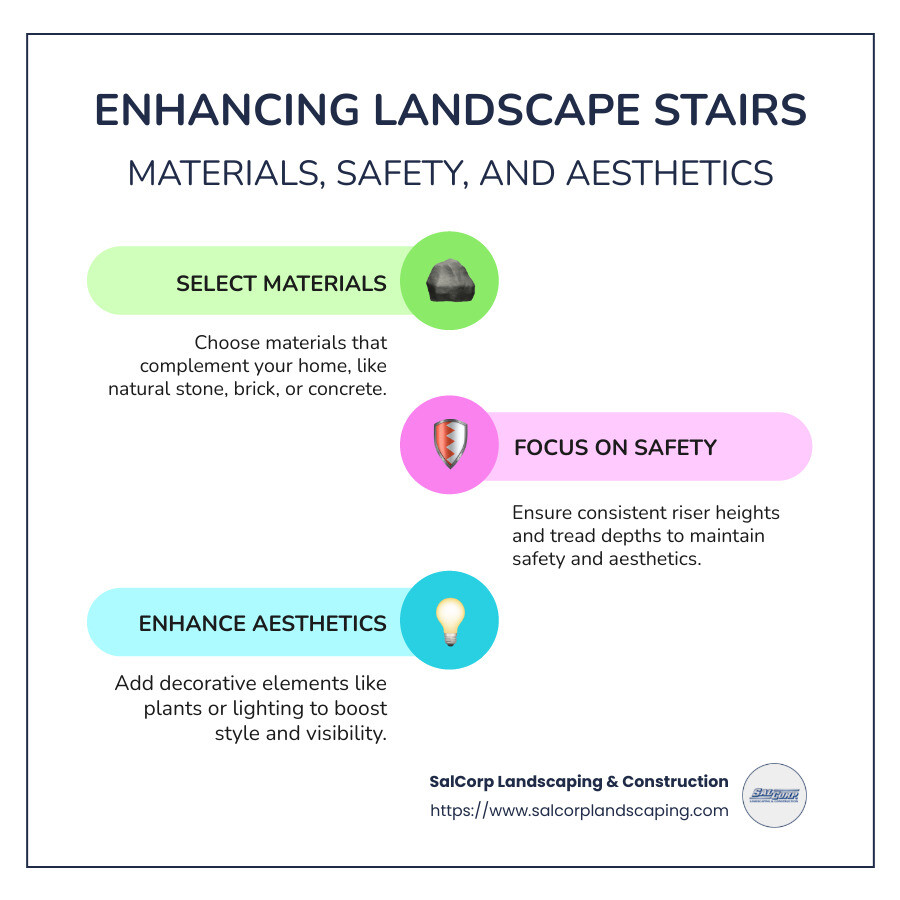
- Choose materials that complement your home, such as natural stone, brick, or concrete.
- Ensure each step has consistent riser heights and tread depths for safety and aesthetics.
- Consider adding decorative elements like plants or lighting to improve style and visibility.
- Plan for appropriate permits, especially in areas like Massachusetts, where regulations may vary.
I’m Sal Musto, and with over two decades in the landscaping industry, I’ve guided countless projects focused on landscape stairs, ensuring both creativity and practicality. Let’s explore how these elements can lift your outdoor experience to new heights.
Terms related to landscape stairs:
– brick stairs design
– step by step landscaping ideas
– how to build brick stairs
The Importance of Landscape Stairs
Landscape stairs play a crucial role in changing your outdoor space, especially when dealing with varying elevations. They are not just about aesthetics; they serve essential functions like managing grade changes, preventing erosion, and enhancing safety.
Grade Changes
In landscapes with hills or slopes, stairs become an indispensable feature. They provide a smooth transition from one level to another, making your outdoor space more accessible and user-friendly. Without stairs, navigating steep areas can be challenging, especially for children and the elderly.
Erosion Prevention
One of the main benefits of landscape stairs is their ability to control erosion. By breaking up a slope, stairs can slow down water runoff, which helps prevent soil from washing away. This is especially important in areas prone to heavy rainfall. Retaining walls, often used alongside stairs, further stabilize the landscape and protect against erosion.
Safety
Safety is paramount when designing outdoor stairs. Properly constructed stairs reduce the risk of slips and falls. According to standard guidelines, a 6-inch riser and a 12-inch tread are ideal for most landscape stairs. Wider steps are not only more welcoming but also safer, allowing for side-by-side walking and reducing the risk of tripping.
Adding features like handrails and low-voltage outdoor lighting can improve safety, especially at night. Lighting not only guides the way but also adds a magical ambiance to your garden.

Combining Function with Style
While functionality is crucial, style should not be overlooked. The choice of materials—whether it’s natural stone, brick, or concrete—should complement your home’s architecture. Incorporating plants along the edges of stairs can add color and life to the structure, creating a seamless blend with the surrounding landscape.
Incorporating landscape stairs into your outdoor design is not just about getting from point A to B. It’s about creating a harmonious and inviting environment that improves the beauty and functionality of your outdoor space.
Materials for Outdoor Stairs
When it comes to selecting materials for your landscape stairs, there are several options to consider. Each material has its unique benefits and aesthetic appeal, and the choice often depends on the style of your home, budget, and the specific needs of your landscape.
Stone
Natural stone is a favorite for many homeowners due to its timeless elegance and durability. Types like bluestone, travertine, and limestone add a sophisticated touch to any outdoor space. While natural stone can be more expensive and may have a larger carbon footprint due to quarrying, its beauty and longevity often justify the investment. Stone stairs are perfect for creating a natural look that blends seamlessly with outdoor environments.
Concrete
Concrete is a versatile and cost-effective material for outdoor stairs. It’s available in various colors and finishes, allowing for customization to match any landscape design. Concrete is also easy to install and maintain, making it a practical choice for many homeowners. Its durability ensures that your stairs will withstand the elements for years to come.
Wood
For those seeking a warm and natural feel, wood is an excellent choice. It’s particularly popular for decks and garden stairs. While wood requires more maintenance to prevent decay and weather damage, it offers a cozy and inviting look. Options range from affordable cedar to more durable and costly alternatives like teak. When treated and maintained properly, wood stairs can be a beautiful addition to any landscape.
Composite
Composite materials are gaining popularity as a low-maintenance and eco-friendly alternative to traditional wood. Made from a mix of wood fibers and plastic, composite stairs resist rot and insect damage, making them ideal for outdoor use. They offer the look of wood without the upkeep, and they come in a variety of colors and textures to suit different styles.
Metal
Metal stairs, often made from steel or aluminum, provide a sleek and modern look. They are incredibly durable and require minimal maintenance, making them an excellent choice for contemporary landscapes. Metal stairs can be paired with other materials, like wood or stone, to create a striking visual contrast.
Each material has its advantages, and the best choice depends on your specific needs and preferences. Whether you opt for the timeless appeal of stone, the versatility of concrete, the warmth of wood, the sustainability of composite, or the modern look of metal, your landscape stairs can improve both the functionality and aesthetic of your outdoor space.
Designing Landscape Stairs
Designing landscape stairs is about more than just function. It’s an art form that improves the beauty and usability of your outdoor space. Here’s how to get it right.
Step Design and Style
The design of your stairs should complement your landscape and home style. Whether you choose curved or straight steps, each option offers a unique aesthetic. Curved steps can add a sense of mystery and invitation, guiding visitors naturally through the garden. Straight steps, on the other hand, often lend a more formal and structured feel.
Pro Tip: Natural stone steps are the most common choice for a reason—they blend seamlessly into outdoor environments, offering a timeless look.
Safety First
Safety is paramount when designing stairs. The standard formula for outdoor steps is a 6-inch riser and a 12-inch tread. However, riser heights can vary between 4 to 7 inches, depending on your preference and landscape needs. Consistency is key—ensure all steps in a flight have the same dimensions to prevent trips and falls.
Wider steps are not only more welcoming but also functional, allowing for side-by-side climbing and adding space for decorative elements like container gardens.
Lighting for Ambiance and Safety
Lighting transforms your landscape stairs into a feature that can be enjoyed day and night. Low-voltage outdoor lighting is an excellent choice for illuminating steps, ensuring safety and adding charm. Consider integrating lights into the risers or along the edges of the stairs for a subtle, glowing effect.
Plant Integration
Plants are a wonderful way to soften the hard edges of stairs and integrate them into your landscape. Choose plants that complement your stair material and thrive in your local climate. Edging your stairs with colorful plants can improve their appeal and create a harmonious transition from one level to another.
Tip: Use a mix of ground covers, perennials, and shrubs to add texture and interest.
By thoughtfully considering these elements, your landscape stairs will not only be practical but also a stunning addition to your outdoor space. Next, we’ll explore how to build these stairs with precision and care.
Building Landscape Stairs
Building landscape stairs is where design meets craftsmanship. It’s about changing a vision into a tangible, functional element of your landscape. Let’s break down the essentials of constructing these outdoor features.
Riser Height and Tread Depth
The riser height and tread depth are crucial for both safety and comfort. The standard riser height for outdoor stairs is typically between 4 to 7 inches. The tread depth usually measures around 12 inches. These dimensions ensure that each step is comfortable to climb and safe to descend.
The 27 Rule
A handy guideline in stair construction is the “27 rule.” This rule suggests that the sum of two risers and one tread should be approximately 27 inches. This simple formula helps maintain a balance between the riser height and tread depth, ensuring that the stairs are not too steep or too shallow.
Construction Techniques
Building landscape stairs requires careful planning and execution. Here are a few key techniques:
- Foundation: A solid foundation is crucial. Whether you’re using natural stone, concrete, or wood, ensure the base is stable to prevent shifting over time.
- Consistency: Maintain consistent riser heights and tread depths throughout the staircase to avoid safety hazards.
- Materials: Choose durable materials that can withstand weather changes. Natural stone is a popular choice for its durability and natural appeal.
Pro Tip: Consider using a professional landscaper for complex projects to ensure precision and quality.
Crafting with Care
Building stairs is not just about following rules—it’s about crafting a piece that fits seamlessly into the landscape. Attention to detail, such as aligning the steps with existing landscape features and ensuring proper drainage, can make a significant difference in both functionality and aesthetics.
By focusing on these construction principles, you can ensure your landscape stairs are not only beautiful but also durable and safe. Next, let’s dive into some common questions about landscape stairs to further guide your project.
Frequently Asked Questions about Landscape Stairs
What is the 27 rule for stairs?
The “27 rule” is a simple formula used to ensure the comfort and safety of stairs. It states that the sum of two risers and one tread should equal approximately 27 inches. This guideline helps maintain a balance between riser height and tread depth, preventing stairs from being too steep or too shallow. For example, if each riser is 6 inches, the tread should be around 15 inches to meet this rule.
What is best for outdoor stairs?
Choosing the right material for your landscape stairs depends on several factors, including durability, aesthetics, and budget. Here are some popular options:
- Stone: Natural stone is a top choice for outdoor stairs due to its durability and timeless beauty. It blends well with the landscape and is highly resistant to weather changes.
- Concrete: Known for its strength and versatility, concrete can be molded into various shapes and textures. It’s an excellent option for modern designs and can be colored or stamped to mimic other materials.
- Wood: Offers a warm, natural look and is ideal for rustic or traditional landscapes. However, it requires regular maintenance to prevent rot and weather damage.
- Composite: Made from a mix of wood fibers and plastic, composite materials are low-maintenance and resistant to rot and insects, making them a practical choice for outdoor use.
- Metal: While less common, metal stairs can provide a sleek, modern aesthetic. They are durable but can be slippery in wet conditions, so proper surface treatment is necessary.
What is the cheapest way to build garden steps?
If you’re on a budget, there are cost-effective ways to build garden steps without compromising on style or safety:
- Sleepers: Reclaimed railway sleepers are a popular choice for budget-friendly steps. They are sturdy and give a rustic charm to the garden.
- Gravel and Timber: Another affordable option is to use timber for the risers and fill the treads with gravel. This combination is easy to install and provides good drainage.
- Concrete Blocks: Using concrete blocks is a practical and economical solution. They are easy to stack and can be covered with a thin layer of decorative stone or tiles for a finished look.
By considering these materials and techniques, you can create beautiful and functional landscape stairs that suit your budget and style preferences.
Conclusion
At SalCorp Landscaping & Construction, we believe that landscape stairs are more than just a functional necessity; they’re an opportunity to improve the beauty and usability of your outdoor space. With over 20 years of experience in the industry, we specialize in creating comprehensive solutions custom to your unique landscape needs.
Our team in Massachusetts is committed to changing your outdoor areas into stunning landscapes that reflect your personal style. We pride ourselves on offering a wide range of services, from initial design to final construction, ensuring that every detail is carefully crafted.
We serve several communities across Massachusetts, including Canton, Dedham, Foxborough, and more. Our owner-operated business model allows us to provide personalized service and attention to detail, using our own machinery to execute projects efficiently and effectively.
Whether you need neat stone stairs or budget-friendly garden steps, our expertise in landscape stairs ensures that your project will be both beautiful and durable. We incorporate sustainable practices and innovative designs to create outdoor spaces that are not only visually appealing but also environmentally friendly.
If you’re ready to improve your landscape with expertly designed and constructed stairs, we invite you to contact us today. Let’s work together to bring your outdoor vision to life and create a lasting impression on your property.
Your landscape is a canvas, and with SalCorp Landscaping & Construction, you have the power to create a masterpiece.
