

How much does sod installation cost: Smart 2025 Guide
Understanding Your Investment in a New Lawn
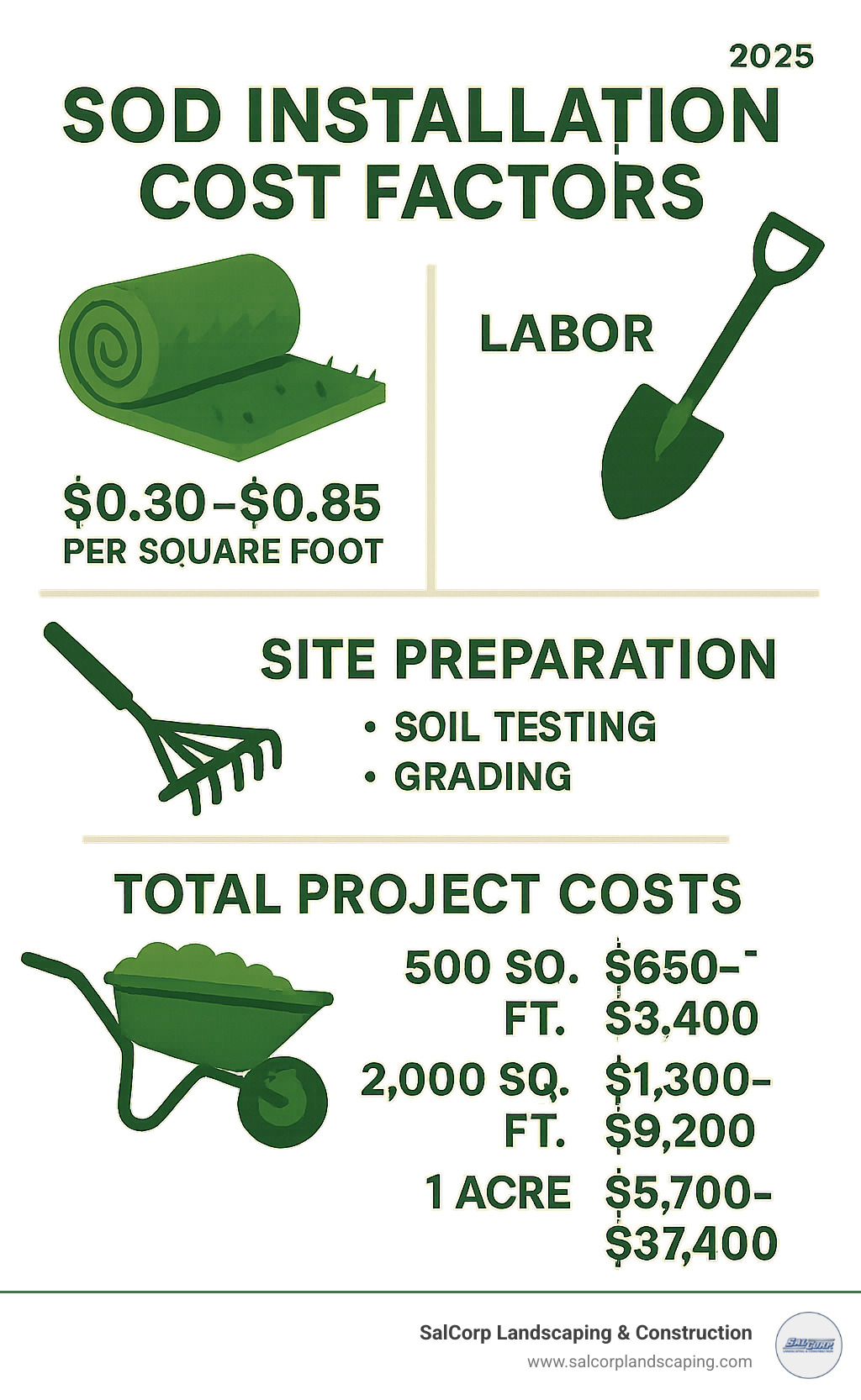
How much does sod installation cost is one of the first questions homeowners ask when considering a new lawn. The answer depends on several key factors, but here’s what you can expect:
Quick Cost Overview:
- Material costs: $0.30 – $0.85 per square foot for the sod itself
- Professional installation: $1.00 – $6.00 per square foot (including materials and labor)
- Typical project range: $1,000 – $3,000 for a standard 1,000-1,500 square foot lawn
- Large projects: Up to $26,000+ for extensive properties with premium features
Note: These are average costs based on internet data and not actual costs for SalCorp Landscaping.
Installing sod gives you an instant lawn that transforms your property’s curb appeal. Unlike seeded lawns that can take one to two years to mature, sod provides a lush, green carpet that’s ready for light use within weeks.
The total cost varies based on your yard size, the type of grass you choose, how much site preparation is needed, and whether you hire a pro. Factors like removing old grass, grading uneven ground, or working around existing landscaping can also add to your project’s cost.
I’m Sal Musto, owner of SalCorp Landscaping & Construction. With over two decades in the industry, I’ve helped hundreds of Massachusetts homeowners understand their sod installation costs. My hands-on approach ensures you get an accurate estimate and quality results that protect your investment.
How much does sod installation cost vocab to learn:
Understanding How Much Sod Installation Cost Breaks Down
When we talk about how much does sod installation cost, the overall expense is a combination of material costs, labor, and any necessary site preparation. While national averages provide a good starting point, prices vary based on location and project demands.
For a clearer picture of what goes into our work, you can find More info about Lawn Installation Services on our website. We believe in transparency to help you make informed decisions for your landscaping investment.
Average Cost Per Square Foot
The cost of sod installation is typically calculated per square foot, making it easy to estimate for your yard size.
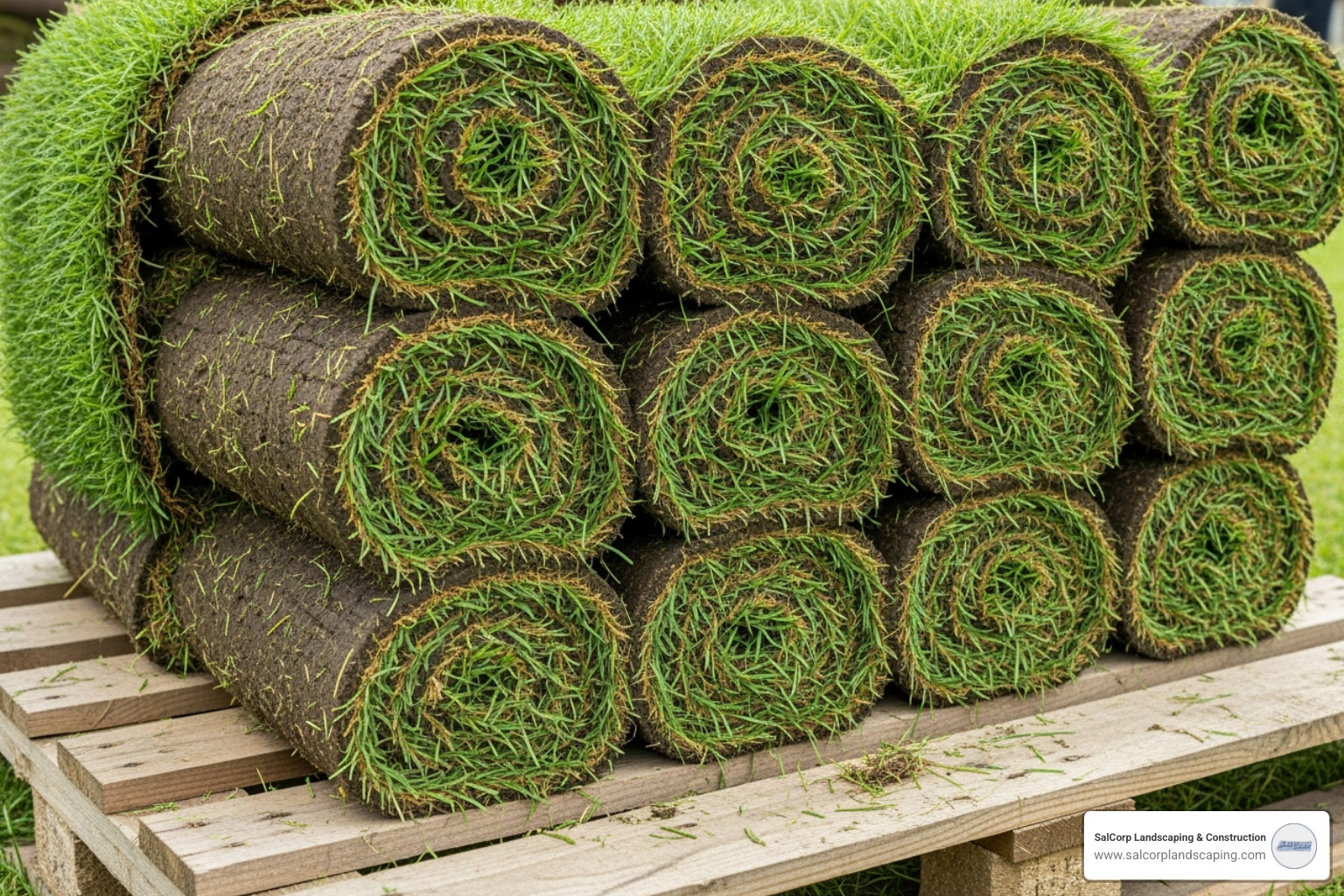
The sod itself generally costs between $0.30 and $0.85 per square foot, depending on the grass type, quality, and source.
When you combine material and professional labor, the total cost for sod installation can range from $0.86 to $1.75 per square foot. However, for a broader perspective, complex projects with extensive site preparation or premium options can go up to $6 per square foot or more. This wide range accounts for the various factors that influence the final bill.
Cost by Sod Type
The type of grass you choose plays a significant role in how much does sod installation cost. In Massachusetts, we consider factors like climate tolerance, maintenance needs, and aesthetic appeal. Cool-season grasses like Fescue and Bluegrass thrive here, while drought-tolerant varieties are also popular for water conservation.
Let’s look at some common sod types and their average material costs per square foot:
| Sod Type | Appearance | Climate Tolerance | Average Material Cost (per sq. ft.) |
|---|---|---|---|
| Fescue | Fine to medium texture, dark green | Cool-season, shade-tolerant | $0.35 – $0.85 |
| Bermuda | Fine to medium texture, dense, light green | Warm-season, drought-tolerant | $0.45 – $0.90 |
| Bluegrass | Fine texture, dark green, lush | Cool-season, full sun | $0.30 – $0.95 |
| St. Augustine | Coarse texture, broad blades, dark green | Warm-season, salt-tolerant | $0.30 – $0.90 |
| Zoysia | Fine to medium texture, dense, light green | Warm-season, shade-tolerant | $0.28 – $0.80 |
Note: These are average costs based on internet data and not actual costs for SalCorp Landscaping.
Choosing the right sod is crucial for the longevity of your lawn. We can guide you through the options to ensure you select a variety that will flourish in your specific environment.
How Much Does Sod Installation Cost for Different Yard Sizes?
The size of your property is one of the biggest determinants of how much does sod installation cost. Here’s a general idea of typical project costs for various lawn sizes, including both materials and labor:
- For 500 square feet: You might expect to pay between $450 and $2,000.
- For 1,000 square feet: Costs can range from $860 to $2,500.
- For 2,000 square feet: Expect to budget between $1,720 and $5,450.
- For 3,000 square feet: The estimated range is $2,580 to $7,000.
- For 1/5 acre (approximately 8,712 square feet): For an average-sized lawn, you could be looking at $7,492 to $26,136.
- For 1 acre (approximately 43,560 square feet): Costs can range from $36,150 to $87,000.
Note: These are average costs based on internet data and not actual costs for SalCorp Landscaping.
Larger projects often benefit from bulk pricing, meaning the per-square-foot price might decrease as installers achieve economies of scale. However, this isn’t always the case if the larger area presents significant challenges in layout or accessibility.
Key Factors That Influence Your Final Sodding Bill
Understanding how much does sod installation cost goes beyond multiplying square footage by a price. The complexity of your site, the scope of work, and even property access play significant roles in the final cost. A yard that looks simple from the street might have challenging slopes or soil that needs extensive amendment before it’s ready for new sod.
If you’re dealing with an existing lawn that’s seen better days, our More info about Re-sodding Lawn services address these variables to give you a comprehensive solution.
Site Preparation Costs
Proper site preparation is the foundation of a healthy lawn. The work done before the first roll of sod is laid is critical for long-term success.
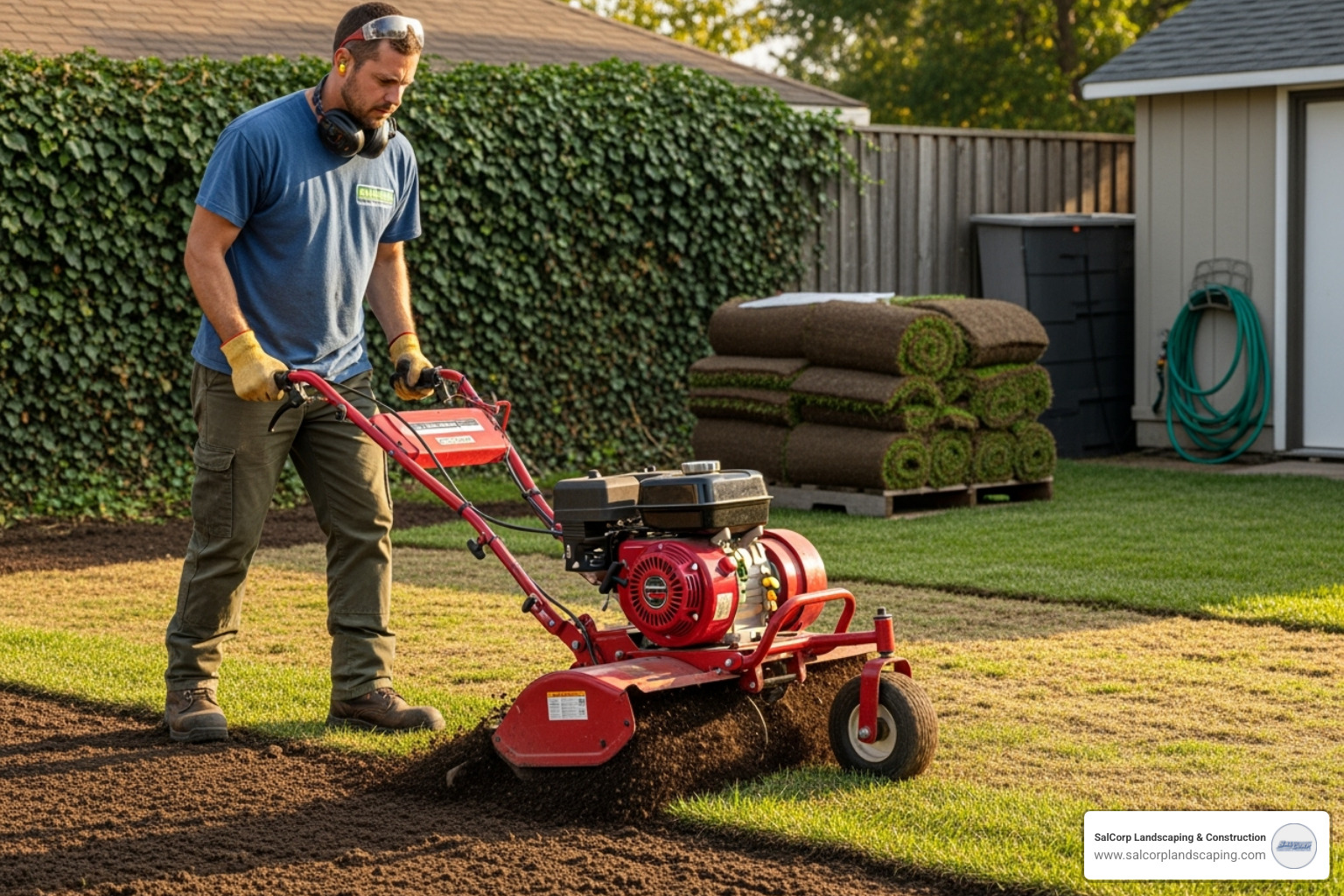
Removing your old lawn is often the first step. This involves removing grass, root systems, and compacted soil, and then hauling away debris. This process typically runs between $0.88 and $1.84 per square foot.
Grading and leveling your yard is essential for proper drainage and an even finish. Professional grading can add $1 to $3 per square foot to your project, but it’s an investment that prevents future problems.
Your soil quality determines whether your new sod will thrive. A basic soil test costs between $20 and $100. Based on the results, we might recommend soil amendments like compost or specialized fertilizers. Quality topsoil runs $12 to $55 per cubic yard, while compost costs $20 to $50 per cubic yard.
For larger projects requiring topsoil delivery, expect fees from $65 to $230 per truckload, depending on distance and quantity.
Note: These are average costs based on internet data and not actual costs for SalCorp Landscaping.
For detailed material pricing, check our Cost of Sod Per Sq Ft page. According to industry resources like The HUD PATH Rehab Guide Volume 9: Site Work, proper site preparation is crucial for project success.
Property Size and Layout
While total square footage affects pricing, the shape and layout of your property are just as important in determining how much does sod installation cost. A perfectly rectangular yard is the most straightforward to install.
Irregularly shaped yards with curves or islands around trees require more cutting, fitting, and time. Every custom cut takes extra labor, and waste from trimming adds to material costs.
Slopes and hills present their own challenges. Installing sod on steep inclines requires special techniques and materials like erosion netting to prevent sliding, increasing project cost by 10% to 20%.
Existing obstacles like trees, garden beds, or hardscaping require precision work. If you’re planning new hardscaping, explore our Cost to Install a Brick Paver Patio services. Working around obstacles typically adds 10% to 20% to the project price.
Access matters more than most homeowners realize. If we must carry sod rolls by hand through narrow gates, that manual labor impacts your final bill. Properties with excellent access often see lower labor costs.
How Much Does Sod Installation Cost: DIY vs. Hiring a Pro
The DIY versus professional installation question is common when discussing how much does sod installation cost. The idea of saving on labor costs is tempting, but it’s important to understand the full scope of the project.
The DIY reality means renting specialized equipment. A sod cutter runs about $90 per day, a rototiller costs $65 to $100 daily, and a sod roller is $10 to $25 per day. You’ll also need hand tools like shovels, rakes, and a wheelbarrow.
The time investment for a DIY project is significant. Properly preparing soil and laying sod is physically demanding. For a 1,000 square foot lawn, plan on several full days of intense labor.
Professional installation offers peace of mind. With an experienced company, you get decades of problem-solving experience. We know how to handle challenging soil, work efficiently, and ensure your sod establishes quickly and uniformly.
Our teams bring specialized equipment and provide quality assurance—if something isn’t right, we make it right. We also handle delivery, site prep, installation, and cleanup. For most properties, professional installation protects your investment and is often more cost-effective when you factor in equipment rental, materials, and the value of your time.
Post-Installation: Protecting Your Investment
Once your new sod is installed, the first few weeks are critical for establishing strong roots and ensuring your lawn stays lush for years to come. It needs consistent care to grow healthy and happy.
For comprehensive information on keeping your new lawn in top shape, visit our More info about Lawn Service Sod Installation page.
Watering Your New Sod
Watering is the most crucial step in caring for new sod. The lawn needs steady moisture to help its roots connect with the soil beneath.
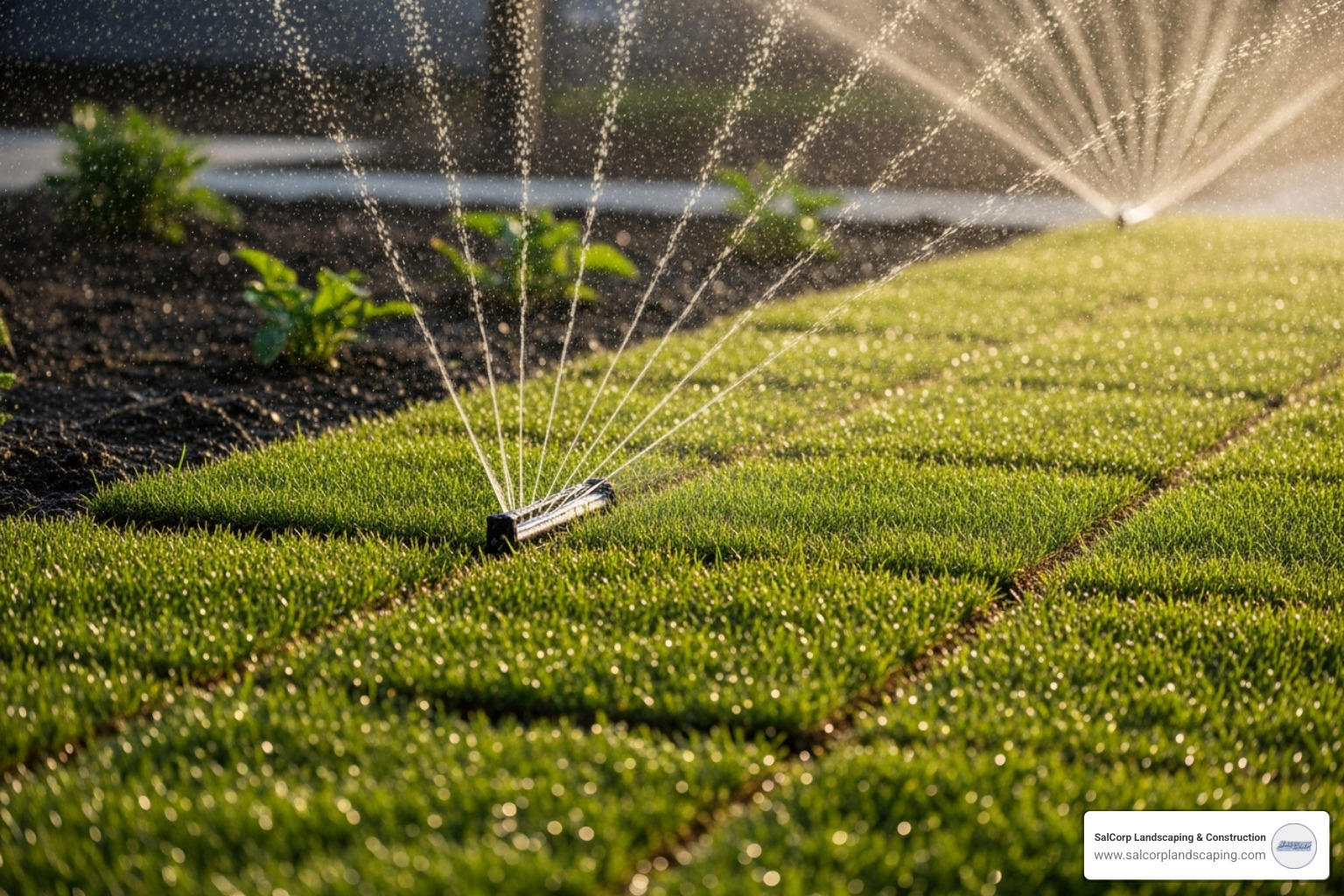
Here’s a simple watering plan we recommend:
During the first week (Days 1-7), water your new lawn daily, or twice daily in warm, sunny weather. The goal is to keep the sod and the top inch of soil consistently moist but not saturated.
In the second week (Days 8-14), you can usually cut back to watering every other day. Continue to monitor the soil to ensure the top few inches stay moist.
For the long-term (after 2 weeks), once the sod has rooted (it will be tough to lift a corner), switch to deeper, less frequent watering. Aim for 1 to 1.5 inches of water per week, applied over 2 to 3 sessions. Deep watering encourages deep root growth, making your lawn more drought-resistant.
Watch for signs of dehydration: curled grass edges, a dull bluish-green color, or footprints that remain visible. If you see these signs, your lawn is thirsty and needs a thorough watering. For more detailed tips, you can check general watering guidelines for new lawns from agricultural experts.
Mowing and Fertilizing
Once your new sod has settled, it’s ready for mowing and fertilizing, but patience is key.
You should NOT mow new sod until its roots have firmly anchored into the soil, which usually takes 14 to 21 days. Test this by gently tugging on a corner; if it resists, it’s ready. For the first mow, use sharp mower blades and set the height high—never remove more than the top third of the grass blade. For most sod types, this means cutting at 2.5 to 3 inches.
We typically apply a starter fertilizer before laying the sod. This phosphorus-rich fertilizer is essential for strong root development.
For ongoing fertilization, start a regular feeding schedule about six weeks after installation, once the sod is fully established. The right fertilizer and frequency depend on your sod type and soil needs. We can advise you on the best products to use. For more tips, explore our More info about Grass Seed Installation resources.
Seasonal Lawn Care Adjustments
Your lawn’s care routine needs to adjust with the seasons to keep it thriving all year long.
Spring is a time of growth. Check for any winter damage, adjust watering as spring rains fluctuate, and prepare for the first few mowings of the season.
Summer heat can stress new sod. Water deeply and early in the morning to reduce evaporation. Try to limit heavy foot traffic during the hottest parts of the day to prevent damage.
In the fall, it’s important to keep your new lawn clear of fallen leaves, which can smother the grass and block sunlight. Rake or blow leaves away regularly. A final fertilizer treatment in early fall helps the lawn store nutrients for winter.
During winter, most sod types go dormant and may turn brownish. This is normal. Minimize walking on the grass when it’s frozen to prevent damage. You can pause fertilizing and heavy watering during this period.
Frequently Asked Questions about Sod Installation
Over my twenty years in the landscaping business, I’ve fielded countless questions from Massachusetts homeowners about sod installation. Here are the most common ones, with honest answers to help you make the best decision.
Is installing sod better than seeding a lawn?
This depends on your priorities. Sod gives you an instant lawn. It provides a lush, green look immediately and offers built-in weed control. Sod is also the superior choice for slopes or areas with erosion concerns.
Seeding is the budget-friendly option, but it requires patience. It can take months to a full year to achieve a dense, mature lawn, and during that time you’ll be battling weeds and reseeding thin spots.
The upfront how much does sod installation cost is higher than seeding, but many clients find the instant results and reduced hassle are worth it. Alternatives like Hydro-Seeds for Grass offer faster establishment than traditional seeding while being more budget-friendly than sod.
How long does it take for new sod to establish roots?
The first two weeks are critical. New sod typically takes 10 to 14 days for its roots to begin anchoring into the soil. During this period, limit foot traffic as much as possible. You can test if the roots are taking hold by gently tugging a corner of the sod. If it resists, the roots are doing their job.
Full establishment takes longer—usually 2 to 6 weeks, depending on the grass type, soil, and season. The cooler weather of spring and fall helps sod establish faster. After about six weeks, your lawn should be stable enough for regular use and maintenance.
What is the best time of year to install sod?
Spring and early fall are the best times for sod installation. The moderate temperatures and reliable rainfall in these seasons are perfect for new sod, as the grass isn’t stressed by extreme heat or cold. This helps roots establish quickly and reduces your watering duties.
Summer installation is possible but challenging. The heat is tough on new sod and requires intense daily watering. Winter installation is not recommended, as the sod will remain dormant until spring, wasting months you could have been enjoying your lawn.
Get a Perfect Lawn with Professional Sod Installation
While how much does sod installation cost varies based on sod type, yard size, and site prep, the value of an instant, lush lawn extends far beyond the price. The difference between a successful installation and a costly mistake often comes down to proper installation techniques.
Every detail matters—from testing soil pH and ensuring proper drainage to laying each piece correctly and providing consistent initial watering. These are the foundations of a healthy lawn that will thrive for decades.
This is where professional service is invaluable. When you work with experienced installers, you’re investing in expertise that prevents common problems like uneven rooting, disease, and browning. Professional teams understand how different grass types perform in Massachusetts’ climate and how to handle any challenges your property presents.
For homeowners throughout Massachusetts, getting a precise quote from an experienced, owner-operated company like SalCorp Landscaping & Construction ensures your project receives personal attention. With over 20 years of hands-on experience and our own specialized machinery, we handle every aspect of your lawn installation—from initial assessment to final cleanup and care guidance.
Your new lawn is a significant investment in your property’s beauty and value. Don’t leave its success to chance. Contact us for professional lawn installation services and let us help you create the perfect green space you’ve always envisioned.
