

Installing Irrigation System for Garden: 7 Powerful Benefits 2025
Transform Your Garden with Smart Watering Solutions
Let’s face it – hauling around a garden hose in the summer heat isn’t anyone’s idea of fun. That’s where installing irrigation system for garden spaces comes in, changing not just your landscape but your relationship with it. Think of it as giving your garden a reliable friend who waters it perfectly every time, even when you’re on vacation!
The beauty of a proper irrigation system lies in its simplicity and efficiency. Before diving in, you’ll want to assess your garden needs carefully, looking at everything from your layout to what types of thirsty (or drought-resistant) plants you’re growing. Next comes the fun part – choosing the right system that matches your garden’s personality, whether that’s precise drip irrigation, traditional sprinklers, or water-conserving soaker hoses.
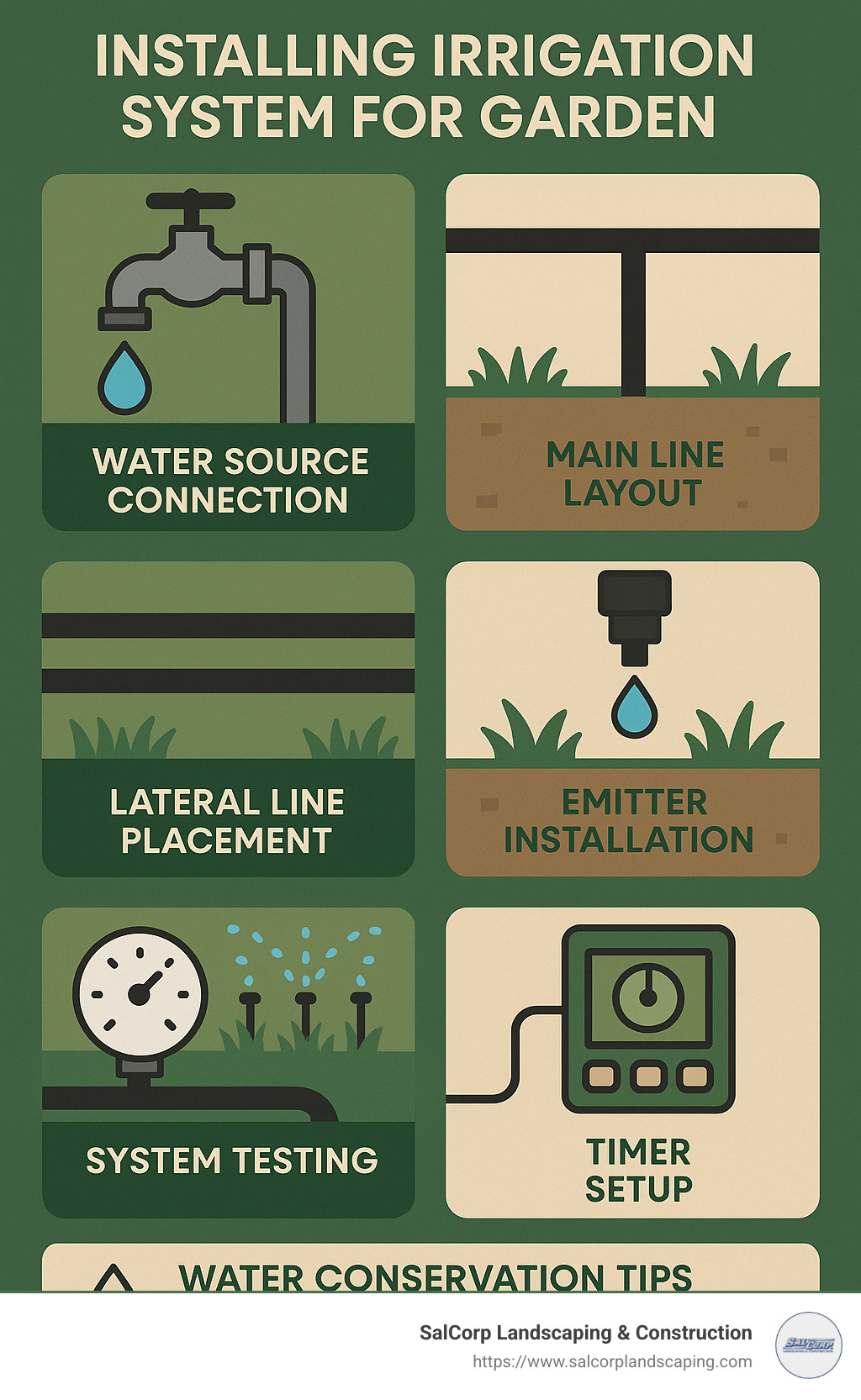
With your plan in place, you’ll gather necessary tools like pipes and connectors, making sure to include essentials like a timer and pressure regulator. Then comes the installation journey: connecting to your water source with proper fittings, carefully laying out main and lateral lines according to your garden design, and installing emitters or sprinkler heads where your plants need them most.
After testing the system and making any needed adjustments, the final magical touch is setting up an automatic timer – your garden’s new best friend that ensures consistent watering without you lifting a finger.
The real magic happens when you no longer worry about over or under-watering. Your garden thrives with consistent moisture delivered exactly where plants need it, while you save both water and time. It’s a win-win that keeps your landscape vibrant throughout even the hottest months.
Hi there! I’m Sal Musto, owner of SalCorp Landscaping & Construction. For over twenty years, my team and I have been installing irrigation systems for gardens across Walpole and neighboring Massachusetts communities. We take pride in crafting custom irrigation solutions that work with nature, not against it – delivering water efficiently while helping your plants flourish.
Looking to learn more about changing your outdoor space? Check out our resources on designing underground sprinkler system, lawn installation services, and lawn service mulch installation. For additional information on water conservation through efficient irrigation, visit the EPA’s WaterSense program.
Understanding Your Garden’s Needs
Before diving into installing irrigation system for garden, understand what your outdoor space truly needs. At SalCorp Landscaping & Construction, we always start with a thorough assessment – it’s the foundation of any successful irrigation project.
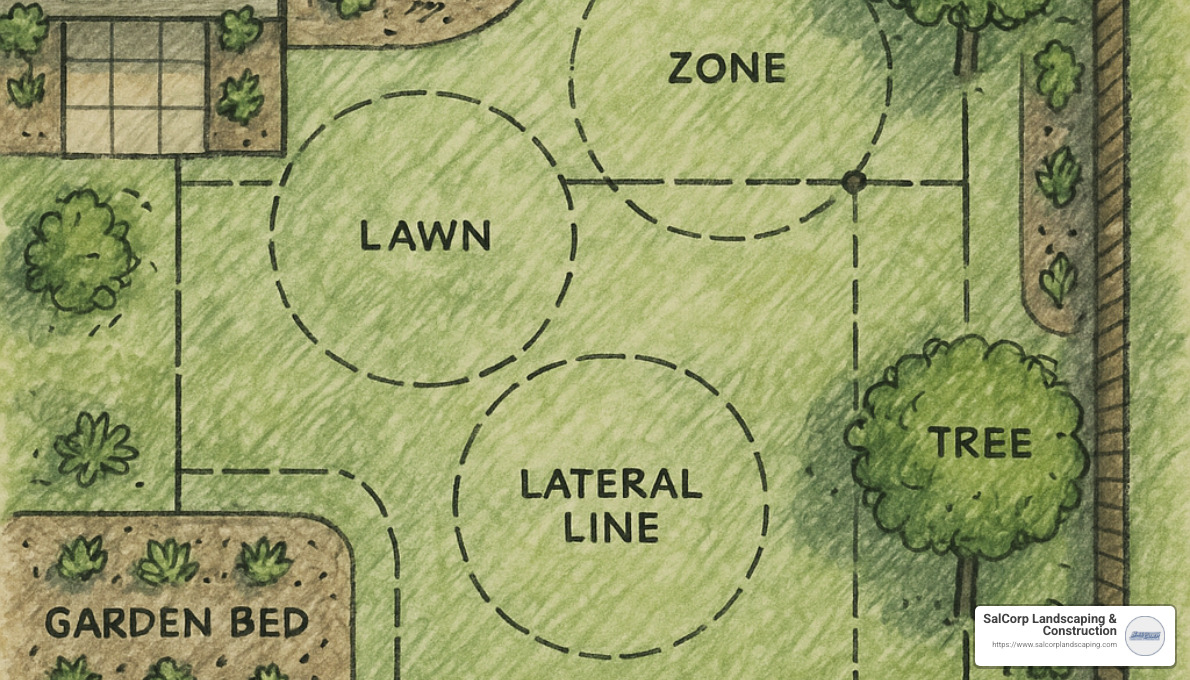
Take some time to walk your property and map out your garden layout. Notice where the sun hits throughout the day, which areas stay shady, and any slopes that might affect water flow. Make note of different plant groupings, as this will directly impact your watering strategy. Your vegetable garden will be thirstier than those drought-resistant perennials you planted last season, and those newly installed shrubs need more frequent watering than the established trees in your backyard.
Your garden’s location in Massachusetts matters too. Living in coastal communities like Hingham creates different moisture patterns than inland towns like Walpole. And don’t forget about your soil type – it’s like your garden’s personality! Sandy soil drains quickly (think of it as the impatient type that can’t hold water for long), while clay soil retains moisture much longer (the slow and steady type).
“I’ve seen so many homeowners rush into irrigation without really understanding their garden’s unique personality,” says Sal Musto. “The secret to a lush garden isn’t just watering – it’s watering smart.”
Your water source is another crucial factor to consider. Most residential systems connect to a standard outdoor spigot, but larger properties might benefit from a dedicated water line. Understanding your water pressure isn’t just helpful – it’s necessary to determine how many zones your irrigation system needs and what components will work best.
Before grabbing those pipes and connectors, take a moment to calculate your plants’ water requirements. Those sun-loving tomatoes need different care than your shade-dwelling hostas. Group plants with similar needs together when planning your system – this simple step will save you headaches (and water bills) down the road.
Installing irrigation system for garden isn’t just about convenience – it’s about creating the perfect environment for your plants to thrive. When you understand what your garden truly needs, you’re not just watering plants; you’re nurturing a living ecosystem that will reward you with beauty and bounty for years to come.
Installing Irrigation System for Garden
Choosing the Right System
When installing irrigation system for garden, finding the perfect match for your landscape is like choosing the right tool for a job. At SalCorp Landscaping & Construction, we’ve helped countless Massachusetts homeowners select systems that bring out the best in their gardens.
Drip irrigation systems are the gentle giants of garden watering. They deliver moisture directly to plant roots with minimal waste, making them perfect for your vegetable patches, flower beds, and container gardens. If you live in water-conscious communities like Concord or Newton, you’ll appreciate how these systems reduce evaporation and runoff while keeping your plants happy.
Sprinkler systems shine when it comes to lawns and larger areas needing consistent coverage. Whether you prefer pop-up sprayers that hide when not in use, rotary heads that create those satisfying water patterns, or impact sprinklers that deliver a good soaking, these systems work beautifully in open landscapes like those in Walpole and Foxborough.
Soaker hoses offer a simpler solution that’s still remarkably effective. These porous hoses “sweat” water along their entire length, creating a gentle mist that seeps directly into the soil. They’re particularly well-suited for smaller gardens in towns like Medfield and Dover, where you want efficient watering without a complex setup.
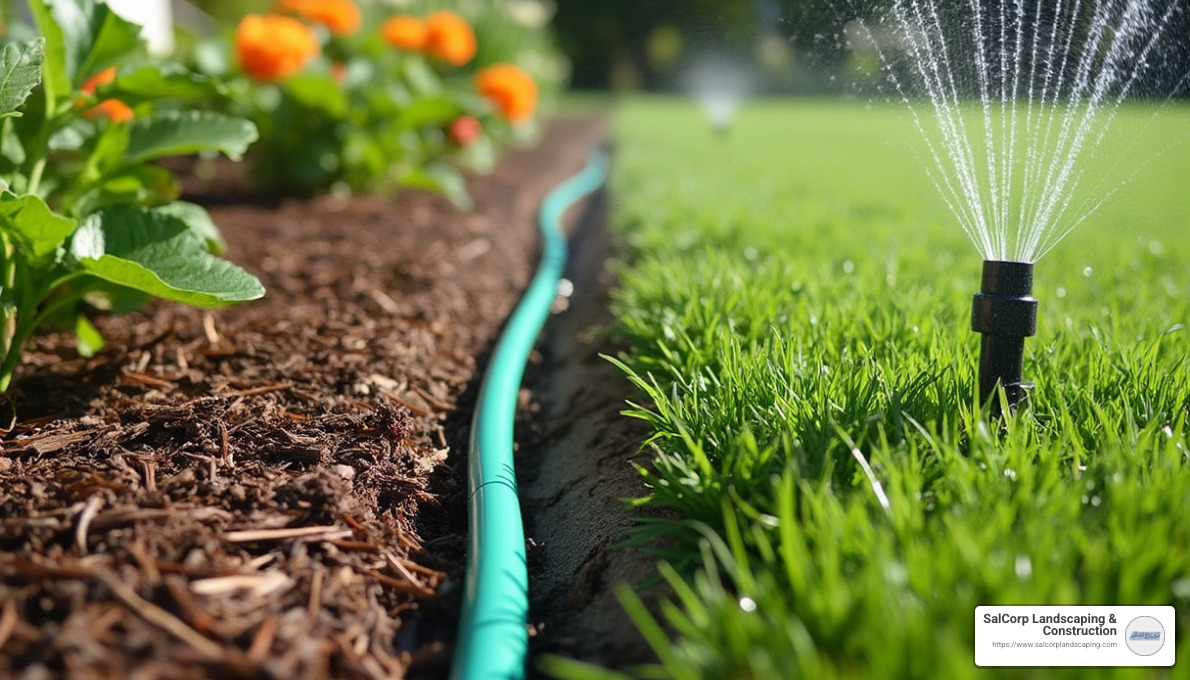
For most Massachusetts homes, we often recommend combination systems that give you the best of both worlds. Your garden beds get the precision of drip irrigation while your lawn enjoys the broad coverage of sprinklers. This custom approach ensures every plant gets exactly what it needs to thrive through our New England seasons.
Essential Tools and Materials
Before you roll up your sleeves and start installing irrigation system for garden, gathering the right materials will save you countless headaches. Think of it as preparing all your ingredients before cooking a meal.
The backbone of any irrigation system is the piping—typically rigid PVC for main lines that carry water from your source and flexible polyethylene tubing for the lateral lines that distribute water throughout your garden. You’ll also need an assortment of connectors: elbows to steer corners, tees to create branches, and end caps to finish line runs.
A pressure regulator is absolutely essential, especially for drip systems. Without one, your garden might experience the equivalent of a fire hose when what it needs is a gentle shower. Paired with this, a backflow preventer ensures irrigation water never flows back into your drinking water—something that’s not just good practice but required by many Massachusetts town codes.
The “brain” of your system is the automatic timer. These programmable controllers connect to your water source and manage when and how long your system runs. Modern timers can even adjust to weather conditions, skipping watering cycles after rain—a smart feature for our unpredictable New England weather.
Don’t forget filters to protect your system from debris, valve boxes to house and protect your connections, and the appropriate emitters or sprinkler heads that actually deliver water to your plants. And of course, you’ll need trenching tools if you’re burying main lines to protect them from our harsh winter freezes.
At SalCorp Landscaping & Construction, we insist on professional-grade materials for all our installations throughout Massachusetts. While quality components might cost a bit more upfront, they pay dividends in reliability and longevity—especially important when facing our region’s dramatic seasonal changes from summer heat to winter freeze.
Step-by-Step Installation Process
Connecting to the Water Source
The first step in installing irrigation system for garden is establishing a proper connection to your water supply. Here’s how we approach this critical phase at SalCorp Landscaping & Construction:
Start by locating your water source – most residential systems connect to an outdoor spigot, though larger properties in towns like Wellesley or Weston often benefit from a dedicated water line. This decision sets the foundation for your entire system.
Next, install a backflow preventer. This isn’t just good practice—it’s required by many Massachusetts municipalities. The device prevents irrigation water from flowing back into your drinking water supply, protecting your family’s health.
A quality T-connector comes next, allowing you to split your water source between the irrigation system and a regular garden hose. This practical addition means you won’t lose the functionality of your spigot when your irrigation system is installed.
“Never skip the plumber’s tape,” says Sal Musto with a smile. “It’s amazing how such a simple thing prevents so many headaches.” We carefully wrap all threaded connections with this tape to ensure watertight seals and prevent frustrating leaks.
For drip irrigation systems, a pressure regulator is essential. Most drip systems require reduced water pressure (typically 25-30 PSI) to function properly. Without this component, your delicate emitters might burst under full residential water pressure.
Finally, install a filter to catch sediment and debris that could clog your system. This is particularly important for well water common in communities like Berkley and Lakeville, where natural minerals can build up in your irrigation lines over time.
Laying Out the System
Once connected to your water source, it’s time to lay out your irrigation system with precision and care:
Begin by installing the main line – the primary water line running from your water source. For most Massachusetts properties, we recommend burying this line 6-12 inches deep. This depth protects it from frost damage during our harsh New England winters and prevents accidental damage from garden tools.
Creating irrigation zones comes next. We divide your garden based on plant water needs and available water pressure. Your vegetable garden likely needs different watering than your perennial beds or lawn areas, so separate zones make sense for both plant health and water conservation.
Position lateral lines branching off from the main line to deliver water to specific areas. For drip systems, we carefully place these smaller lines near plant bases, ensuring water goes exactly where it’s needed – directly to the roots.
Installing emitters or sprinkler heads is where the real customization happens. We position drip emitters near plant roots or install sprinkler heads according to their spray pattern and coverage area. The right placement makes all the difference in water efficiency.
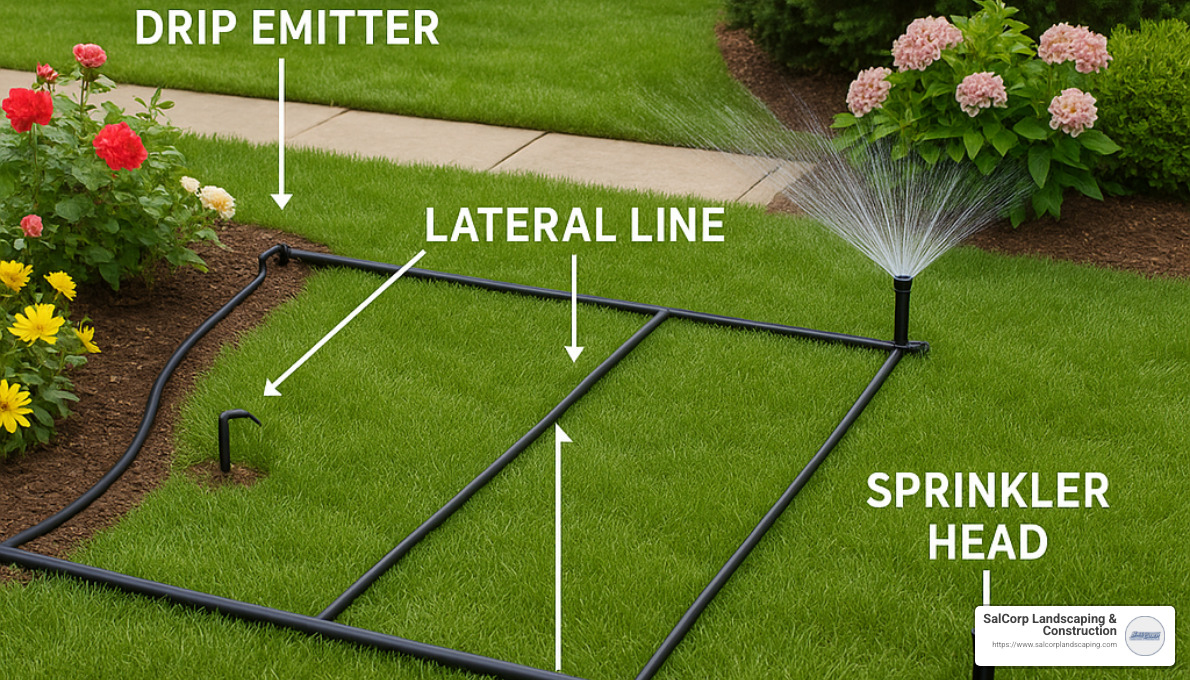
Don’t forget to secure the lines properly. We use landscape staples to hold tubing in place, which is especially important in sloped gardens common in communities like Milton and Quincy. Without proper anchoring, your carefully placed lines can shift and disrupt your watering patterns.
At SalCorp Landscaping & Construction, we carefully plan each system layout to minimize water waste while ensuring complete coverage. Our two decades of experience serving diverse Massachusetts landscapes has taught us to anticipate challenges like tree roots, rocky soil, and seasonal considerations that are unique to New England gardens.
Maintenance and Adjustments
Keeping your irrigation system in top shape doesn’t have to be complicated, but it does require some regular attention. Think of it like caring for a car—a little maintenance goes a long way toward preventing bigger problems down the road.
As we experience all four seasons here in Massachusetts, your installing irrigation system for garden needs change throughout the year. Let me walk you through the seasonal care that will keep your system running smoothly for years to come.
When spring arrives after a long New England winter, it’s time for a thorough system check-up. Start by inspecting all visible components for any damage that might have occurred during those freezing months. Clean out filters that may have collected debris, and flush the entire system to clear out any winter residents (like spiders who love to nest in sprinkler heads!). This is also the perfect time to check for leaks and adjust any sprinkler heads that snow or frost heaving may have knocked out of alignment.
“I always tell my clients that spring maintenance is like an annual physical for your irrigation system,” says Sal Musto. “Catch small issues now, and you’ll avoid emergency calls in July when your vegetables are desperate for water.”
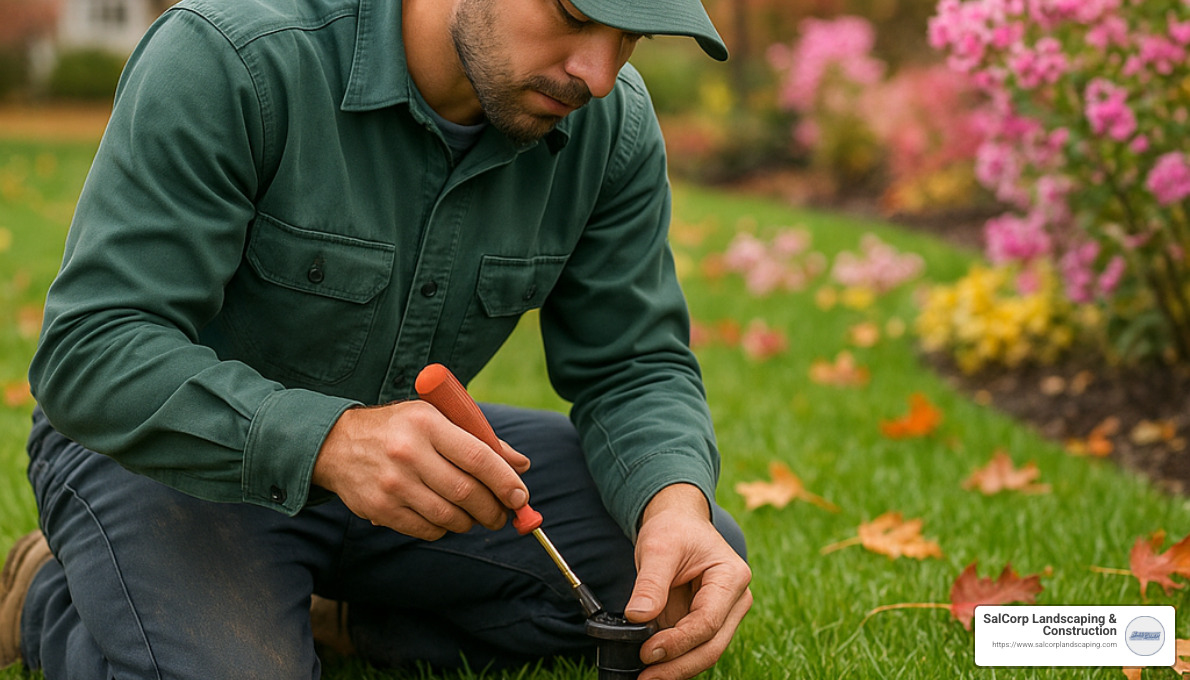
During summer, your system works its hardest, so monthly maintenance checks are essential. Walk your property regularly to spot clogged emitters or sprinkler heads that might be blocked by growing plants. After mowing, take a quick look to ensure no lines were damaged. Summer is also when you’ll want to adjust your watering schedule based on rainfall—there’s no sense watering the day after a downpour! Remember to clean those filters monthly, especially if your water contains minerals or sediment.
Fall brings perhaps the most critical maintenance task for Massachusetts homeowners: winterization. Skip this step, and you might be installing irrigation system for garden all over again next spring! Properly blowing out the system with compressed air removes water that could otherwise freeze and crack pipes. Turn off the water supply, power down the timer (but don’t forget to replace the battery annually), and drain all components thoroughly. Any exposed parts should be insulated against our harsh winter temperatures.
“In New England, proper winterization is critical,” notes Sal Musto of SalCorp Landscaping & Construction. “We’ve seen too many systems damaged by freezing temperatures when not properly prepared for winter.”
Battery checks are easily overlooked but incredibly important. Your timer’s backup battery ensures your watering schedule stays intact even during power outages. At SalCorp, we recommend replacing these batteries annually during your fall shutdown—it’s cheap insurance against programming headaches in spring.
For busy homeowners throughout our service areas—from Boston suburbs to Cape Cod communities—we offer seasonal maintenance packages that take the guesswork out of irrigation care. Our technicians know exactly what to look for and how to prepare your system for each season’s challenges, giving you peace of mind and more time to enjoy your beautifully watered garden.
A well-maintained irrigation system isn’t just more reliable—it’s more efficient too, saving water and money while keeping your landscape lush and healthy through all of New England’s weather extremes. For more detailed information on irrigation system maintenance, the Irrigation Association offers excellent resources for homeowners.
Frequently Asked Questions about Installing Irrigation Systems
Why install an irrigation system?
Installing irrigation system for garden isn’t just a luxury—it’s a smart investment for any homeowner who values their outdoor space. When you automate your watering routine, your plants receive exactly what they need, when they need it. No more forgetting to water during busy weeks or accidentally drowning your delicate perennials!
Modern irrigation systems are remarkably efficient, typically using 30-50% less water than manual watering methods. This conservation aspect is especially important during Massachusetts’ occasional summer dry spells. Your plants will develop stronger, healthier root systems thanks to the consistent moisture levels, leading to more vibrant blooms and productive vegetable gardens.
“I can’t tell you how many times clients call me just to share how their gardens have flourished since we installed their irrigation system,” says Sal Musto. “Beyond the obvious beauty, they’re thrilled about the time they’ve reclaimed—no more spending weekend mornings dragging hoses around the yard.”
There’s also the practical matter of property value. A professionally designed and installed irrigation system for garden can increase your home’s value by 5-10%, making it a worthwhile consideration if you plan to sell in the future.
How deep should irrigation lines be installed?
In Massachusetts, proper installation depth isn’t just a recommendation—it’s essential for system longevity. Our dramatic seasonal shifts from hot summers to freezing winters demand thoughtful planning.
For main water lines, we typically bury pipes 6-12 inches deep. This depth protects them from both frost damage and accidental harm from garden tools or foot traffic. In northern Massachusetts communities that experience particularly harsh winters, we lean toward the deeper end of that range—closer to 12 inches—to provide extra protection against freezing.
Lateral lines generally sit at 6-8 inches deep, offering sufficient protection while remaining accessible for future maintenance. Drip irrigation lines can actually rest right on the soil surface, though we recommend covering them with a layer of mulch for protection and aesthetics.
When installing irrigation system for garden, proper valve box placement is often overlooked. We set valve box lids 1-2 inches above ground level to prevent water from pooling inside—a small detail that can prevent big headaches down the road.
What is the average cost of installing an irrigation system?
The investment for installing irrigation system for garden varies widely based on several factors. Based on internet data (not SalCorp pricing), homeowners might spend anywhere from $500 for a basic DIY drip system for a small garden up to $5,000 or more for a comprehensive professional installation with multiple zones and smart features.
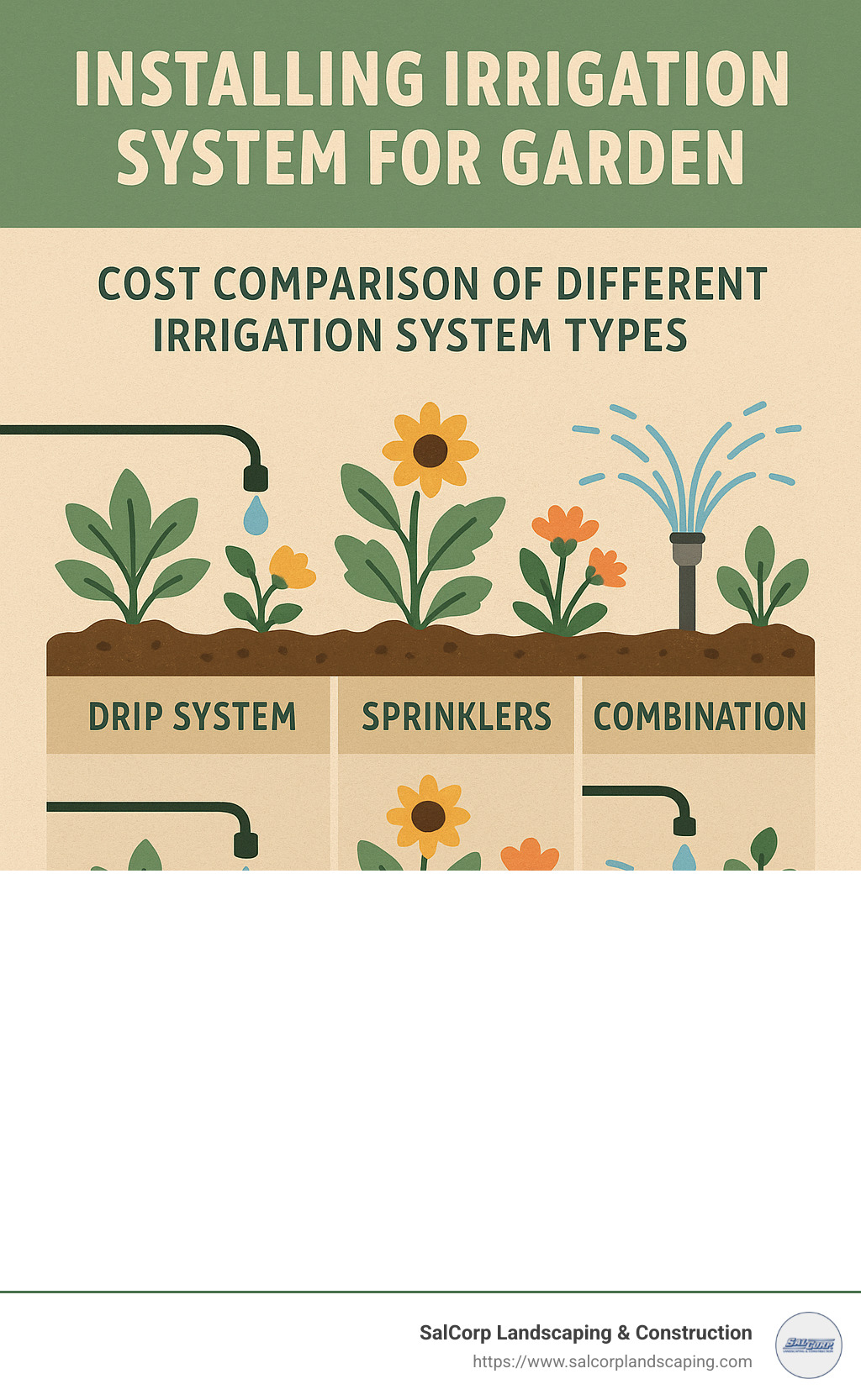
Your specific cost will depend on several key factors. Property size naturally plays a major role—a sprawling estate in Dover will require more materials than a cozy cottage garden in Medfield. System complexity also matters; multiple zones with different types of irrigation (drip for vegetables, sprinklers for lawn) will increase costs but provide more precise watering.
The soil conditions on your property can significantly impact installation time and cost. Rocky New England soil often presents challenges that require additional labor. Similarly, smart features like rain sensors and WiFi controllers add to the initial investment but pay dividends in water savings and convenience.
While DIY installation might seem appealing for budget-conscious homeowners, professional installation ensures your system is properly designed for water efficiency and compliance with local regulations. At SalCorp, we pride ourselves on providing detailed, transparent consultations so you understand exactly what you’re investing in—and why it’s worth it for your specific landscape needs.
Conclusion
Installing irrigation system for garden is an investment that pays dividends in plant health, water conservation, and time savings. With over 20 years of experience serving Massachusetts communities, SalCorp Landscaping & Construction brings expertise and local knowledge to every irrigation project.
Our owner-operated approach means you’ll work directly with experienced professionals who understand the unique challenges of New England gardening. From coastal properties in Scituate to suburban gardens in Walpole, we design irrigation systems custom to your specific landscape needs.
A properly installed irrigation system transforms your outdoor space into a thriving garden oasis that requires less maintenance while looking its best year-round. Whether you’re growing prize-winning vegetables, nurturing delicate perennials, or maintaining a lush lawn, smart irrigation is the foundation of garden success.
Ready to explore irrigation options for your Massachusetts property? SalCorp Landscaping & Construction provides comprehensive outdoor solutions throughout Norfolk County and beyond. Let us help you create an efficient, effective watering system that nurtures your garden while conserving valuable resources.
