

Lawn Sprinkler Pump Setup: Power Up 2025
Why a Lawn Sprinkler Pump Setup is Essential for Your Irrigation System
A proper lawn sprinkler pump setup is the key to a lush, green lawn when your water pressure is too low or you’re using an alternative source like a pond or well.
Quick Guide to Lawn Sprinkler Pump Setup:
- Choose the Right Pump Type – Submersible, jet, or centrifugal based on your water source.
- Size Your Pump Correctly – Match your system’s GPM and PSI needs (typically 40-65 PSI).
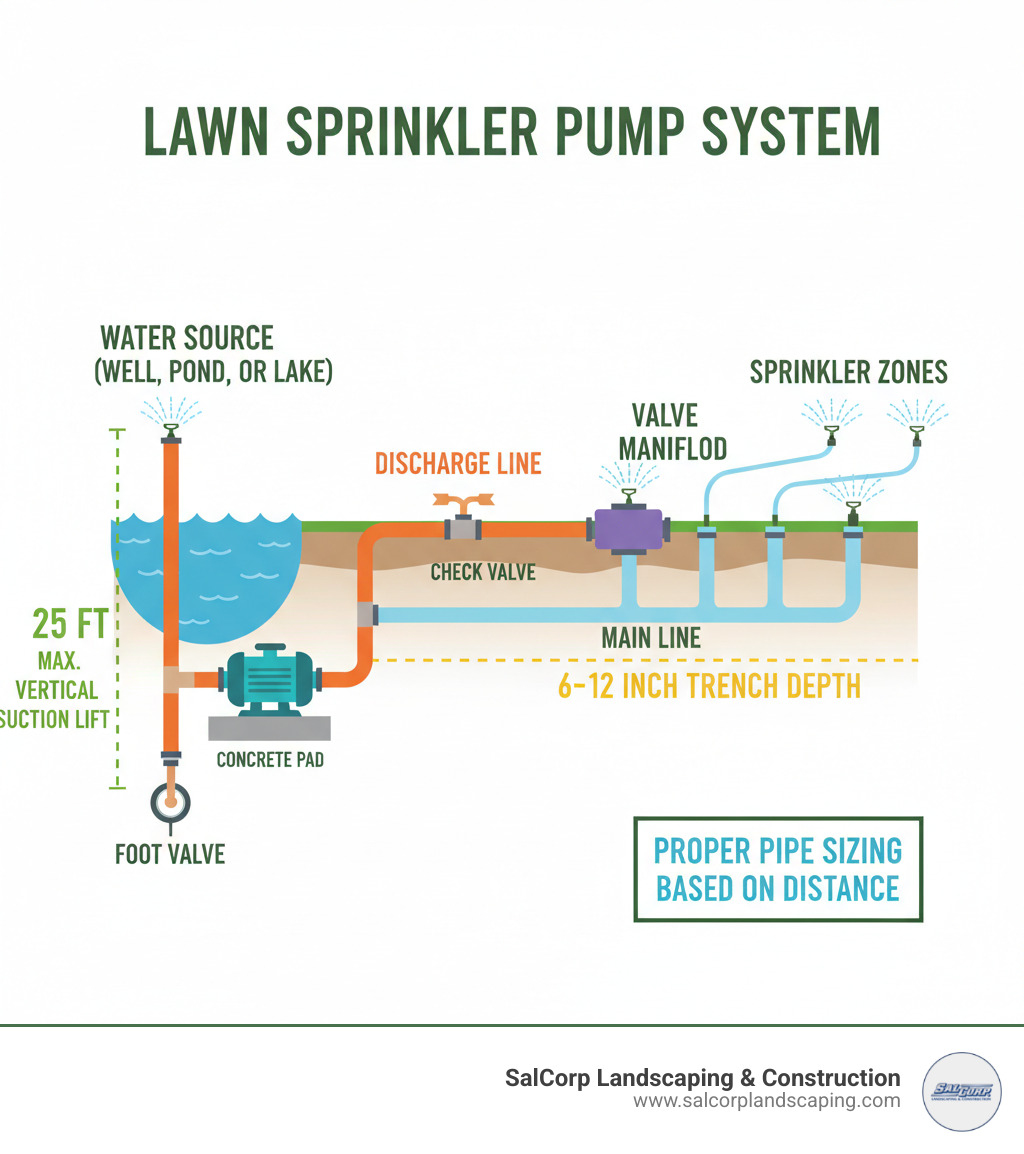
- Install Near Water Source – Keep it within 25 feet vertical and 60 feet horizontal distance.
- Prime the Pump – Fill with water before first use to prevent air-lock.
- Wire Safely – Follow electrical codes for 115V or 230V connections.
- Connect Piping – Use the correct pipe diameter for your system’s layout.
Whether you have low municipal water pressure or want to use a lake, pond, or well, understanding pump installation saves time and money. This guide covers everything from pump selection to electrical connections and maintenance.
Why You Might Need a Sprinkler Pump:
- Your home’s water pressure is below 40 PSI.
- You want to use a well, pond, or lake instead of the municipal supply.
- Your large property requires higher flow rates than your home’s system can provide.
- You want to reduce water costs by using a natural water source.
I’m Sal Musto, owner of SalCorp Landscaping & Construction. For over twenty years, I’ve overseen countless lawn sprinkler pump projects across Massachusetts. My hands-on experience means I understand the technical requirements and practical challenges of installing these systems for both homeowners and property managers.
The Complete Lawn Sprinkler Pump Setup Guide
This section covers the practical steps for your lawn sprinkler pump setup, from choosing equipment to connecting the final pipes. Based on our twenty years of experience installing systems across Massachusetts, this guide will help you get the job done right.
Choosing the Right Pump & Water Source
A successful lawn sprinkler pump setup starts with matching the pump to your water source, whether it’s a deep well, a shallow pond, or a nearby lake.
Legal Considerations
Before starting, check with your local Board of Health and the MassDEP about local water use permits and withdrawal restrictions. Massachusetts has strict regulations. For private wells, an irrigation well must be at least 10 feet from a septic tank and 25 feet from a leaching field. Using surface water from lakes and ponds also requires permits. Handling this paperwork upfront prevents fines and project delays.
Sizing Your Pump
Correctly sizing your pump is crucial. A pump that’s too small results in poor performance, while one that’s too large can damage your system.
- Gallons Per Minute (GPM): Calculate the total GPM of all sprinkler heads in your largest zone. For example, eight heads at 3 GPM each require a 24 GPM pump.
- Pounds per Square Inch (PSI): Most systems need 40 to 65 PSI. Check the requirements for your specific sprinkler heads.
- Total Head Lift: This is the total vertical distance the water must travel. The suction head limit is about 25 feet vertically. If your water source is deeper, you need a submersible pump. For best performance, keep the pump within 60 horizontal feet of the source.
Installation Cost Estimates
The cost for a residential irrigation pump installation varies. Based on average internet data, pump equipment can range from $80 to $500, with timers and other components adding $10 to $325 or more. These are average costs from internet research and not actual pricing for SalCorp Landscaping & Construction. For an accurate quote custom to your property in communities like Canton or Medway, please contact us directly.
| Pump Type | Best Use | Pros | Cons |
|---|---|---|---|
| Submersible | Deep wells (>25 ft), ponds/lakes (submerged) | Efficient, quiet, freeze-resistant | Harder to install/repair, higher cost |
| Jet Pump | Shallow wells (<25 ft), surface water | Inexpensive, easy to maintain | Noisy, less efficient, visible |
| Centrifugal | High-volume surface water (lakes, ponds) | High flow rates, durable | Noisy, requires priming, less efficient at high head |
Submersible pumps are ideal for deep wells and are protected from freezing. Jet pumps are a good choice for shallow water sources and are easy to service. Centrifugal pumps are best for moving large volumes of water from surface sources but are the loudest and require priming.
For more guidance on planning your complete system, check out our guide on Installing an Automatic Sprinkler System.
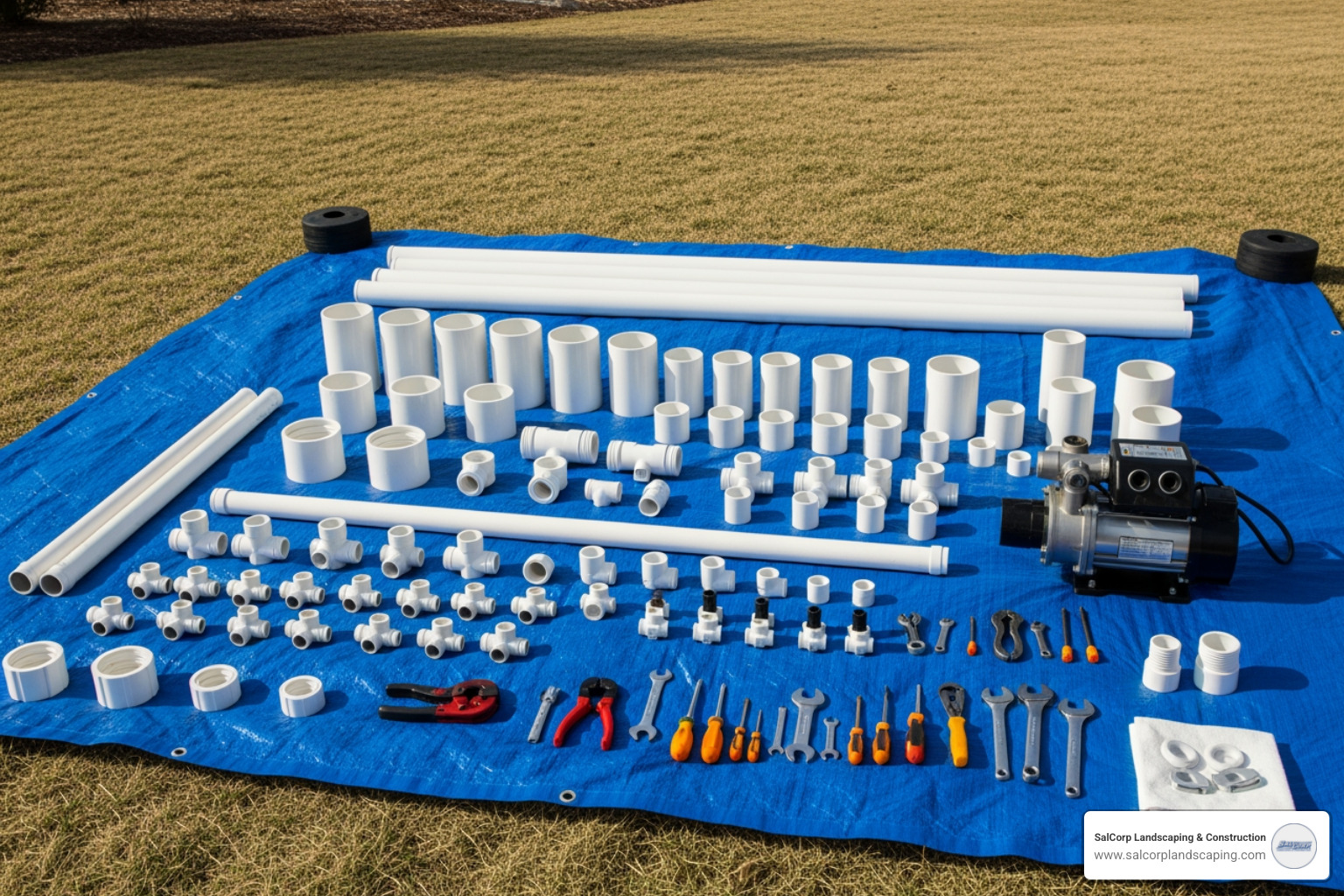
Essential Tools & Materials for Your Lawn Sprinkler Pump Setup
Gather all your tools and materials before you begin to avoid interruptions.
Essential Tools:
- Pipe wrenches (x2)
- PVC cutter or hacksaw
- Wire strippers
- Screwdrivers
- Shovel
- Measuring tape
Required Materials:
- PVC pipes (Schedule 40)
- PVC primer and cement
- Thread seal tape
- Ball valve (for pump isolation)
- Check valve or foot valve (to maintain prime)
- Assorted pipe fittings and adapters
Click here to shop for pump accessories like strainers and check valves.
Step-by-Step Installation: From Placement to Plumbing
1. Select the Pump Location
Place the pump as close to the water source as possible to maximize efficiency. Mount it on a stable, level surface like a concrete pad to reduce vibration. Use a pump house or weatherproof cover for weather protection, which is crucial for longevity, especially in areas with harsh weather or salt air like coastal Massachusetts.
2. Prepare the Site
Before digging, call 811 to have underground utility lines marked. This is a critical safety step. Dig trenches 6 to 12 inches deep—or 8 to 12 inches in Massachusetts to protect pipes from freezing.
3. Assemble the Suction Line
The suction line must be airtight. Install a foot valve at the source end to strain debris and prevent water from draining back, which keeps the pump primed. Position the valve at least 8 inches from the bottom of the source. Use PVC primer and cement for PVC joints and thread seal tape for threaded connections to ensure they are airtight.
4. Assemble the Discharge Line
Use the correct pipe size based on distance: 1-1/2 inch pipe for under 100 feet, 2-inch for 100-300 feet, and larger for longer runs. Install a check valve on the discharge side to prevent backflow. Connect the discharge line to your sprinkler manifold, ensuring all connections are secure before burying the pipes.
For more information on garden irrigation installation, visit our guide on Installing Irrigation System for Garden.
Electrical Wiring and Safety Precautions
Electrical work can be dangerous, especially around water. Hiring a qualified electrician is strongly recommended.
- Safety First: Always disconnect power at the breaker before working. Never handle wiring with wet hands or while standing in water.
- Voltage Requirements: Most pumps are dual-voltage (115V/230V) and often come preset to 230V. Verify your pump’s settings match your power supply.
- Wiring Components: Use a pump relay to connect the pump to your irrigation timer. All buried lines should use underground-rated wire inside PVC electrical conduit.
- Grounding: Grounding the pump is a non-negotiable safety measure to prevent electrical shock. All work must meet NEC and local codes.
- DIY Safety: If you proceed yourself, use waterproof wire nuts and install surge protection. Ensure no excess wire can contact moving parts inside the motor housing.
Priming, Troubleshooting, and Long-Term Care
This final section ensures your pump runs smoothly for years to come.
How to Properly Prime Your Lawn Sprinkler Pump
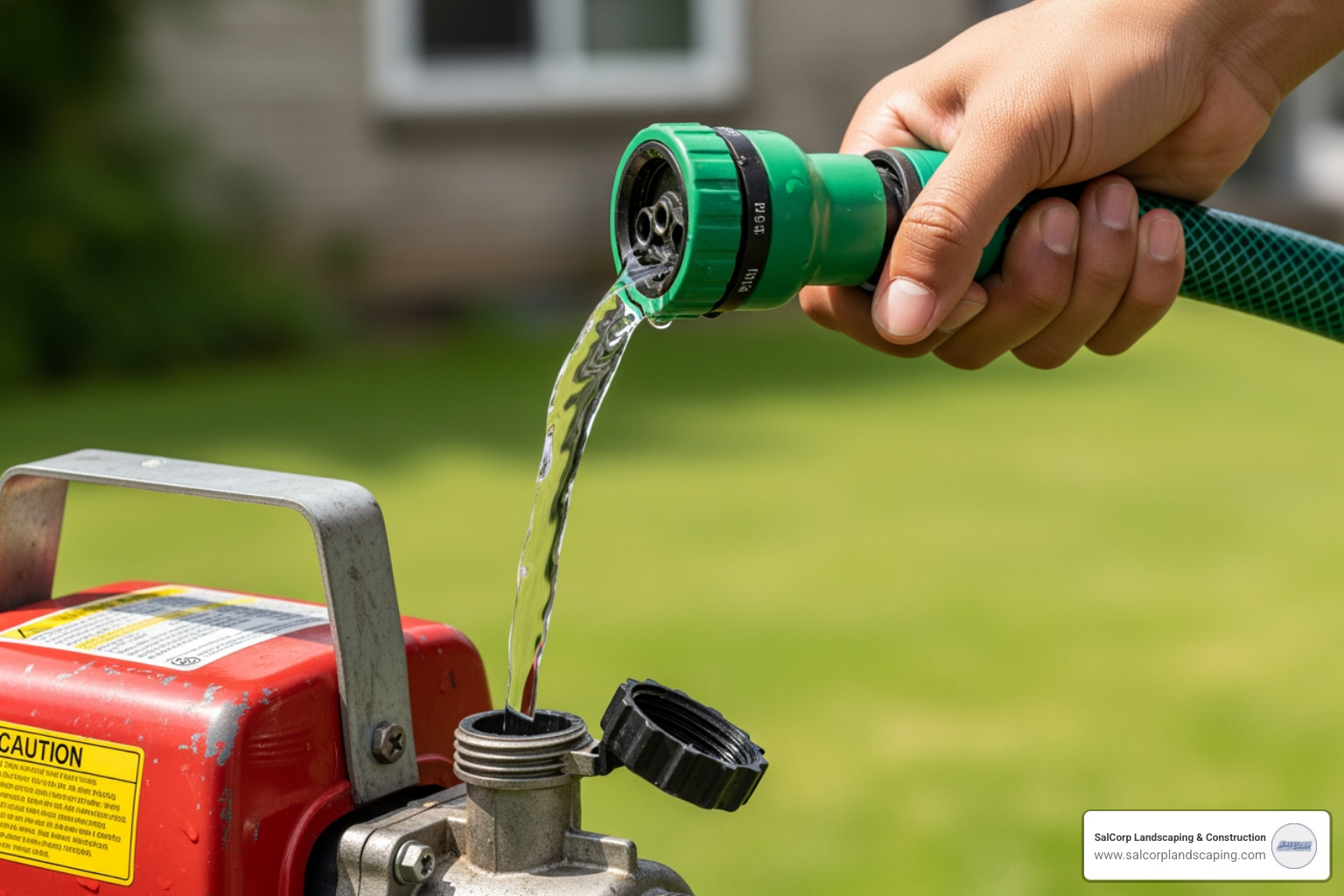
Priming is a critical step for any lawn sprinkler pump setup. A pump with air trapped inside (“air-lock”) cannot draw water and will quickly overheat and sustain damage.
The Priming Process:
- Turn off the power at the breaker.
- Remove the priming plug on top of the pump casing.
- Fill the pump case with water using a funnel or hose until it overflows and all air bubbles are gone.
- Replace the plug securely, using thread sealant for an airtight seal.
- Restore power and turn on the pump. It should start moving water within a minute. If not, turn it off and check for air leaks in the suction line before re-priming.
Even “self-priming” pumps should be manually primed during initial installation or after maintenance to ensure a long service life.
Common Problems and Routine Maintenance
Preventive maintenance goes a long way in keeping your lawn sprinkler pump setup running smoothly.
Troubleshooting Common Issues:
- Low or No Pressure: The pump may have lost its prime. Re-prime it and check for air leaks in the suction line. Also, inspect the foot valve/strainer for clogs.
- Pump Won’t Start: Check the circuit breaker and electrical connections. Ensure the pump is wired for the correct voltage. A humming motor could indicate a bad capacitor.
- Excessive Noise/Vibration: This often points to air in the system (cavitation). Re-priming can solve it. Also, check that the pump is securely mounted and that the impeller is clear of debris.
Routine Maintenance Checklist:
- Regularly inspect the pump for leaks, unusual noises, and pressure changes.
- Clean filters and strainers monthly during peak season to prevent clogs.
- Check pump mounting points and seals for security.
- Winterize your system before the first freeze. In Massachusetts, this is non-negotiable. Turn off the water, drain the pump, and blow out all pipes with an air compressor (30-50 PSI) to prevent burst pipes.
For a complete seasonal care schedule, check out our Lawn Sprinkler System Maintenance Schedule.
When to Call in the Experts:
For complex installations or persistent issues with your lawn sprinkler pump setup in Massachusetts, our owner-operated team at SalCorp Landscaping & Construction provides expert solutions. With over 20 years of hands-on experience, we have the specialized machinery and knowledge to handle any irrigation challenge. Learn more about our comprehensive Lawn Sprinkler System Setup services.
