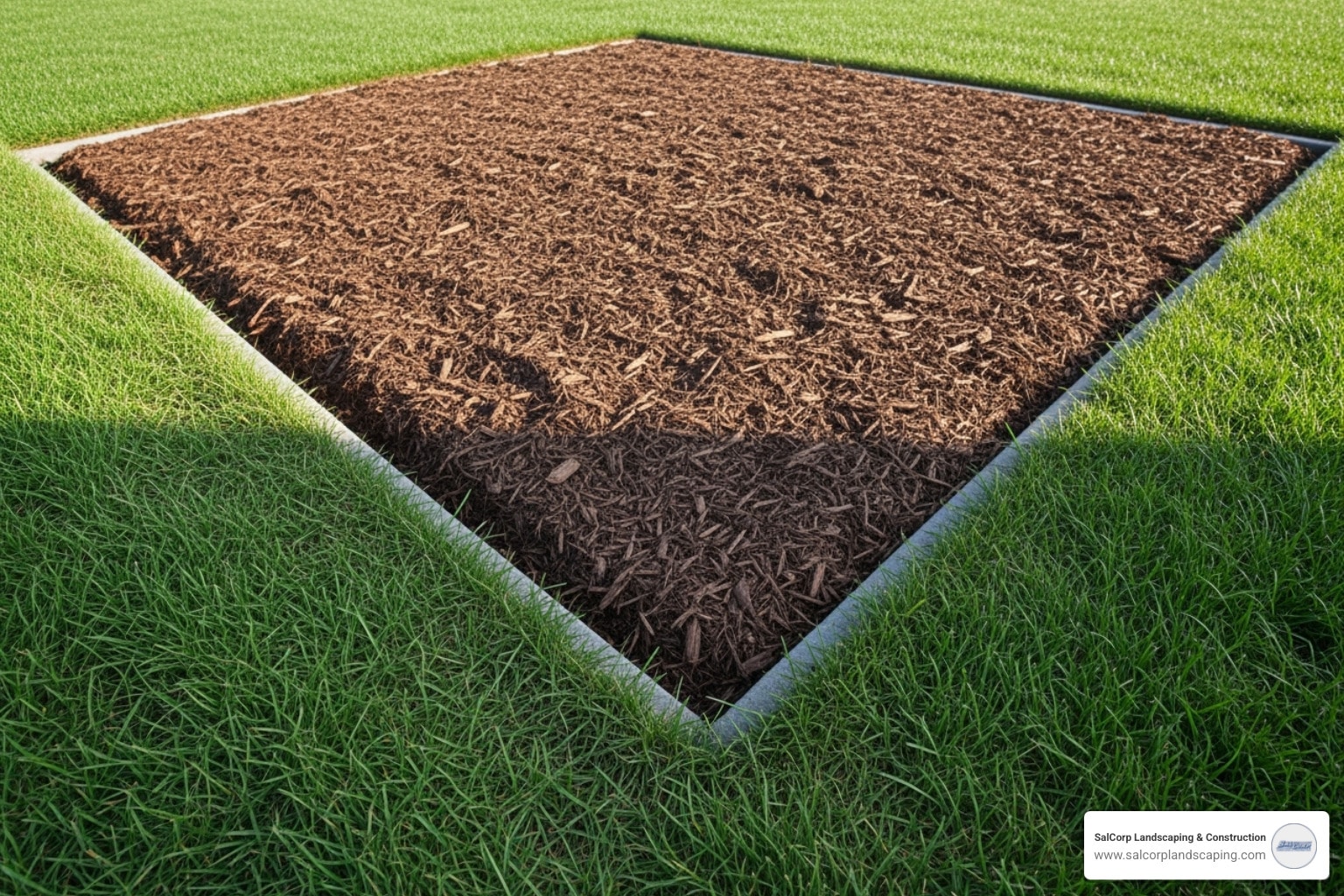
Mulching Without Edging: 1 Perfect Edge
Why Homeowners Are Skipping Traditional Edging
Mulching without edging has become a popular landscaping choice for property owners who want clean, professional-looking garden beds without the cost and maintenance of plastic or metal borders. This natural approach creates defined mulch areas using trenching techniques instead of physical barriers.
Quick Answer for Mulching Without Edging:
- Natural Trench Method: Dig a V-shaped trench 3-6 inches deep at the bed edge
- Best Mulches: Use shredded hardwood or pine needles that knit together
- Maintenance: Re-cut edges monthly with string trimmer, full re-dig 1-2 times yearly
- Tools Needed: Flat spade, half-moon edger, string trimmer
- Cost Savings: Eliminates $2-8 per linear foot for edging materials
The growing frustration with traditional edging is real. As one landscaping forum user put it: “The plastic edging is THE WORST. don’t use that crap.” Many landscapers report being paid to remove deteriorated plastic edging that has lifted from frost heave or cracked over time.
A natural trench edge – sometimes called the “Victorian trench” method – offers a clean alternative. This technique creates a 45-degree angled cut that prevents grass from creeping into mulch beds while maintaining a crisp, professional appearance. The method requires only basic tools and regular maintenance rather than expensive materials that may fail over time.
I’m Sal Musto, owner of SalCorp Landscaping & Construction, and I’ve helped hundreds of Massachusetts property owners create beautiful, low-maintenance landscapes over the past two decades. Through my experience with mulching without edging projects, I’ve seen how this approach can deliver the clean lines clients want while reducing long-term maintenance headaches.
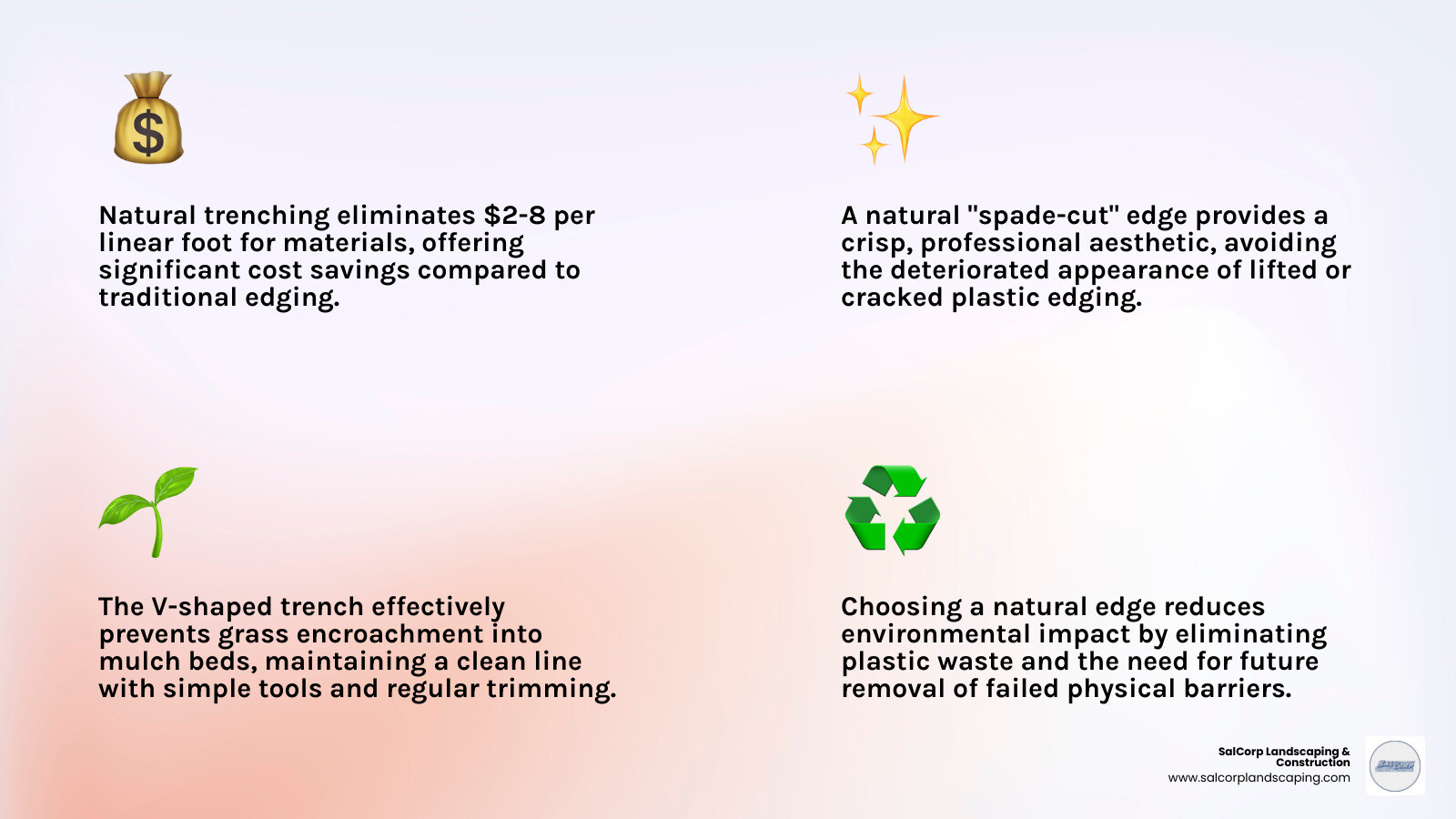
Choosing a natural edge for your landscape beds rather than traditional plastic or metal edging offers a blend of aesthetic, functional, and environmental advantages. While plastic or metal options might seem like a quick fix, they often come with their own set of long-term problems that a natural, “spade-cut” edge avoids.
Consider the following comparison:
| Feature | Natural Trench Edge | Plastic/Metal Edging |
|---|---|---|
| Cost | Low material cost (tools only), labor for maintenance | Medium-high material cost, labor for installation/replacement |
| Appearance | Crisp, seamless, professional, integrates naturally | Can look good initially, often tacky, prone to deterioration |
| Maintenance | Regular re-cutting (monthly/annually) | Less frequent re-cutting, but replacement often needed |
| Longevity | Indefinite with consistent maintenance | Plastic: prone to failure (frost heave, cracking), short-lived; Metal: longer-lived but can still heave |
| Environmental Impact | Sustainable, no material waste | Can contribute to plastic waste, less sustainable |
The Appeal of a “Spade-Cut” Look
There’s a reason why a well-executed spade-cut edge is considered a “thing of beauty” by many landscapers. It creates clean lines that seamlessly integrate your garden beds with your lawn, offering a professional appearance that’s hard to achieve with artificial barriers. The crisp, clean edge, often about three inches deep, provides a visual satisfaction that some describe as giving them “the fizz.”
This method, sometimes referred to as the “Victorian trench,” establishes a subtle yet effective barrier. It’s an art form that transforms a simple border into a striking landscape feature, enhancing the overall aesthetic of your property. If you appreciate the subtle elegance of thoughtful landscape design, you might find this approach particularly appealing. Learn more about how we approach custom landscape design for our clients across Massachusetts.
Problems with Plastic and Metal Edging
While seemingly convenient, traditional plastic and metal edging materials often present more problems than solutions over time. We’ve seen countless instances where clients have paid us to remove what they describe as “dilapidated plastic” edging. This isn’t just about aesthetics; it’s about functionality.
Plastic edging, in particular, is notorious for its issues. It’s often described as “tacky” or “THE WORST” because it tends to pull up due to frost heave in colder climates like ours in Massachusetts. Once it lifts, it becomes an ineffective barrier, allowing grass and weeds to creep into your beds. It also cracks and deteriorates, looking unsightly and requiring replacement.
Metal edging, while more durable than plastic, can still suffer from frost heave and may become a trip hazard if not properly maintained. Both types can be difficult to install correctly, leading to a host of problems down the line. Moreover, string trimmers can damage or stain these materials, further detracting from their appearance. The ongoing replacement of these materials also raises environmental concerns, as they often end up in landfills.
How to Achieve a Clean Look with Mulching Without Edging
Creating a beautiful, defined mulch bed without plastic or metal barriers is simpler than you might think. The key is mastering what we call the trenching method – a time-tested technique that creates a natural V-shaped edge to keep your mulch where it belongs and your grass where it should stay.
Mulching without edging relies on this trenching approach, which has been used by landscapers for generations. It’s the same method that creates those crisp, professional lines you admire in well-maintained commercial properties and upscale neighborhoods.
Essential Tools for Creating a Natural Edge
Having the right tools makes all the difference between a frustrating afternoon and a satisfying project that transforms your landscape. You don’t need anything fancy – just a few basic tools that most homeowners already have or can easily pick up at any garden center.
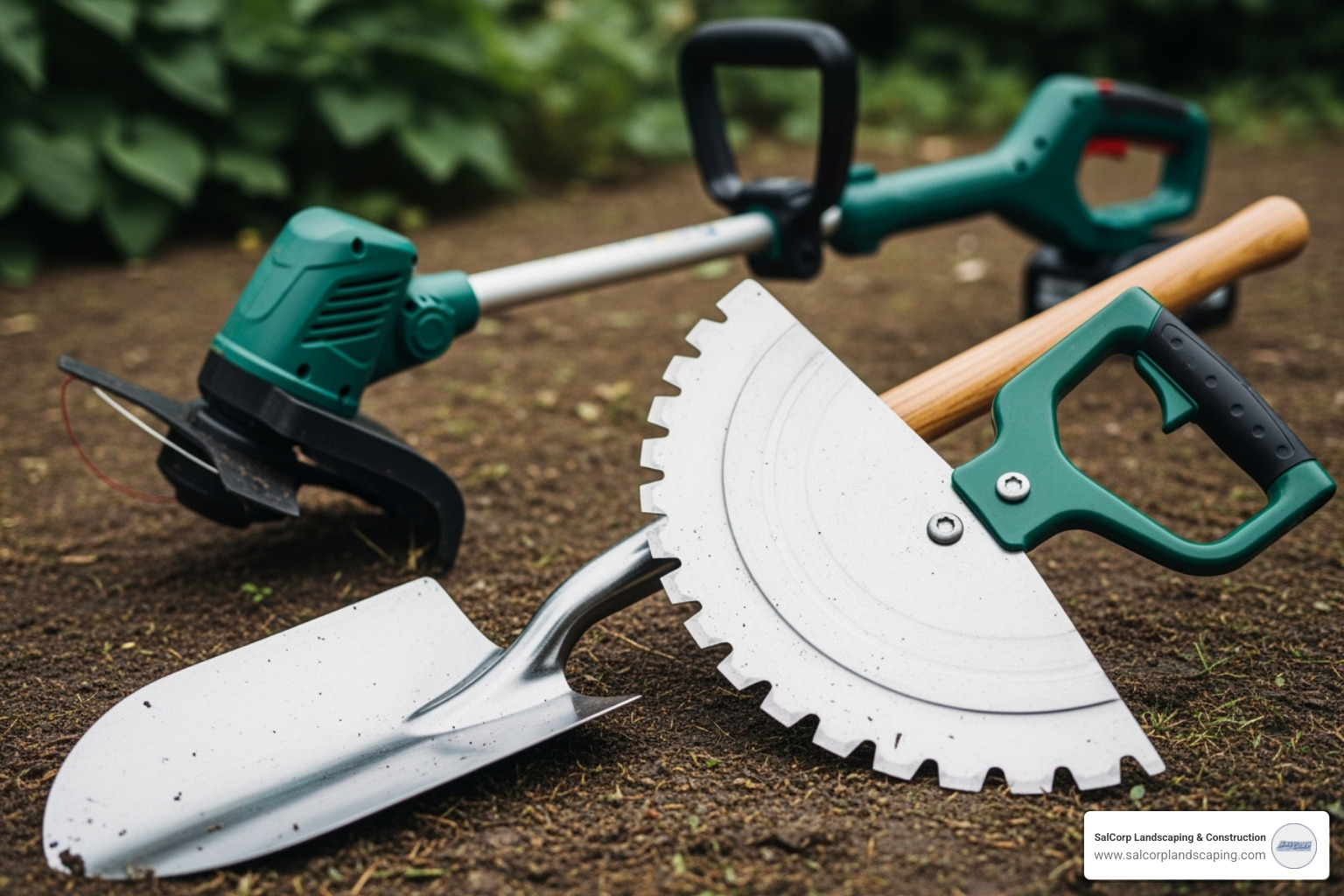
Your flat-edged spade is your most important tool – think of it as your landscaping paintbrush. Look for one that’s sturdy and sharp, as dull tools will give you ragged cuts that look unprofessional. A half-moon edger works beautifully for curved lines and gives you incredible precision for those finishing touches.
You’ll also want a string trimmer for ongoing maintenance. This becomes your best friend for keeping that crisp edge looking fresh between major re-cuts. A wheelbarrow saves your back when moving soil and mulch, while garden gloves protect your hands from blisters and splinters. Don’t forget a rake for smoothing everything out.
Before you start digging, grab some marking tools like string, a garden hose, or even flour from your kitchen. Trust me – taking five minutes to mark your lines will save you from that sinking feeling when you realize your “straight” edge looks like it was cut during an earthquake.
Step-by-Step Guide to Creating a V-Shaped Trench
The V-shaped trench is the heart of successful mulching without edging. This simple technique creates a physical barrier that grass roots can’t easily cross while giving you that clean, professional look that makes neighbors stop and ask who did your landscaping.
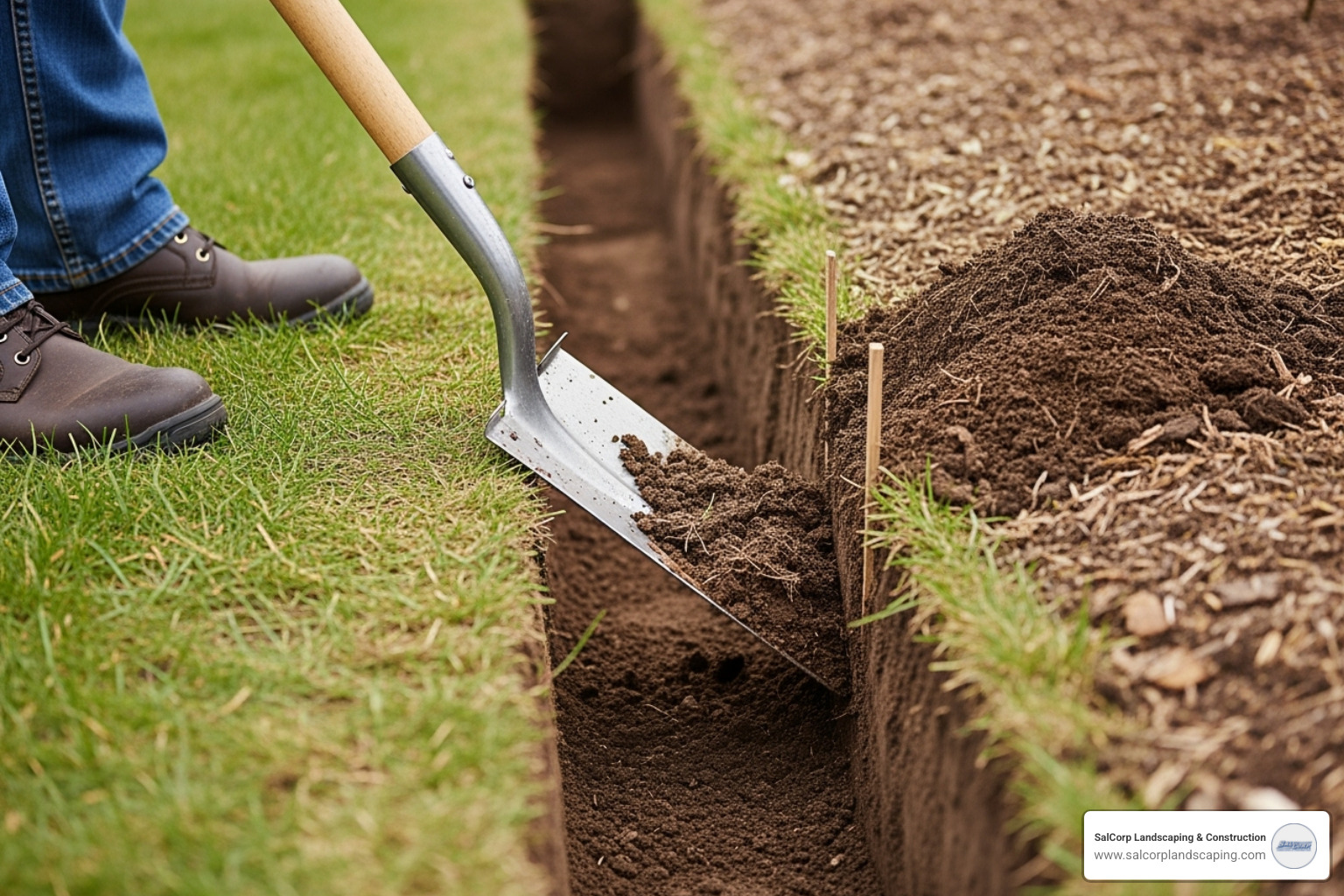
Start by marking your bed outline with your chosen tool. A garden hose works great for curved beds, while string gives you perfectly straight lines. Take your time here – this outline determines everything that follows.
Next comes making the vertical cut. Stand on the lawn side and drive your spade straight down about 4 to 6 inches deep along your marked line. Keep this cut as vertical as possible – it’s the foundation of your clean edge. Some landscapers go deeper for maximum mulch retention, but 4-6 inches works perfectly for most home applications.
Now for creating the angled cut – this is where the magic happens. Move about 3 inches toward the garden bed from your vertical cut. Angle your spade at roughly 45 degrees and drive it down to meet the bottom of your first cut. This creates that crucial V-shape that prevents grass from creeping back into your beds.
Removing the sod is the satisfying part. Lift out those V-shaped chunks of grass and soil. Don’t throw them away – they’re perfect for composting or filling in low spots elsewhere in your yard. You’ve just created valuable soil amendment for free.
The trench depth of 4-6 inches gets you past the grass root zone and creates an effective barrier. Go deeper if you’re dealing with particularly aggressive grass types, but for most situations, this depth provides excellent results without excessive work.
Once your trench is complete, you have a clean foundation ready for mulch. This natural edge will keep your beds looking sharp with just occasional maintenance. For homeowners who prefer professional installation and ongoing care, our spring & fall cleanup services include edge maintenance as part of comprehensive property care.
Best Practices for Mulch Application and Maintenance
Once you’ve carved out that beautiful natural edge, the way you apply and care for your mulch makes all the difference. Think of it as the final brushstrokes on a painting – proper technique here determines whether your mulching without edging project looks professionally done or like a weekend warrior’s first attempt.
A Guide to Mulching Without Edging
The art of spreading mulch might seem straightforward, but there’s definitely a right way to do it. After spending time creating that perfect V-shaped trench, you want to make sure your mulch application does it justice.
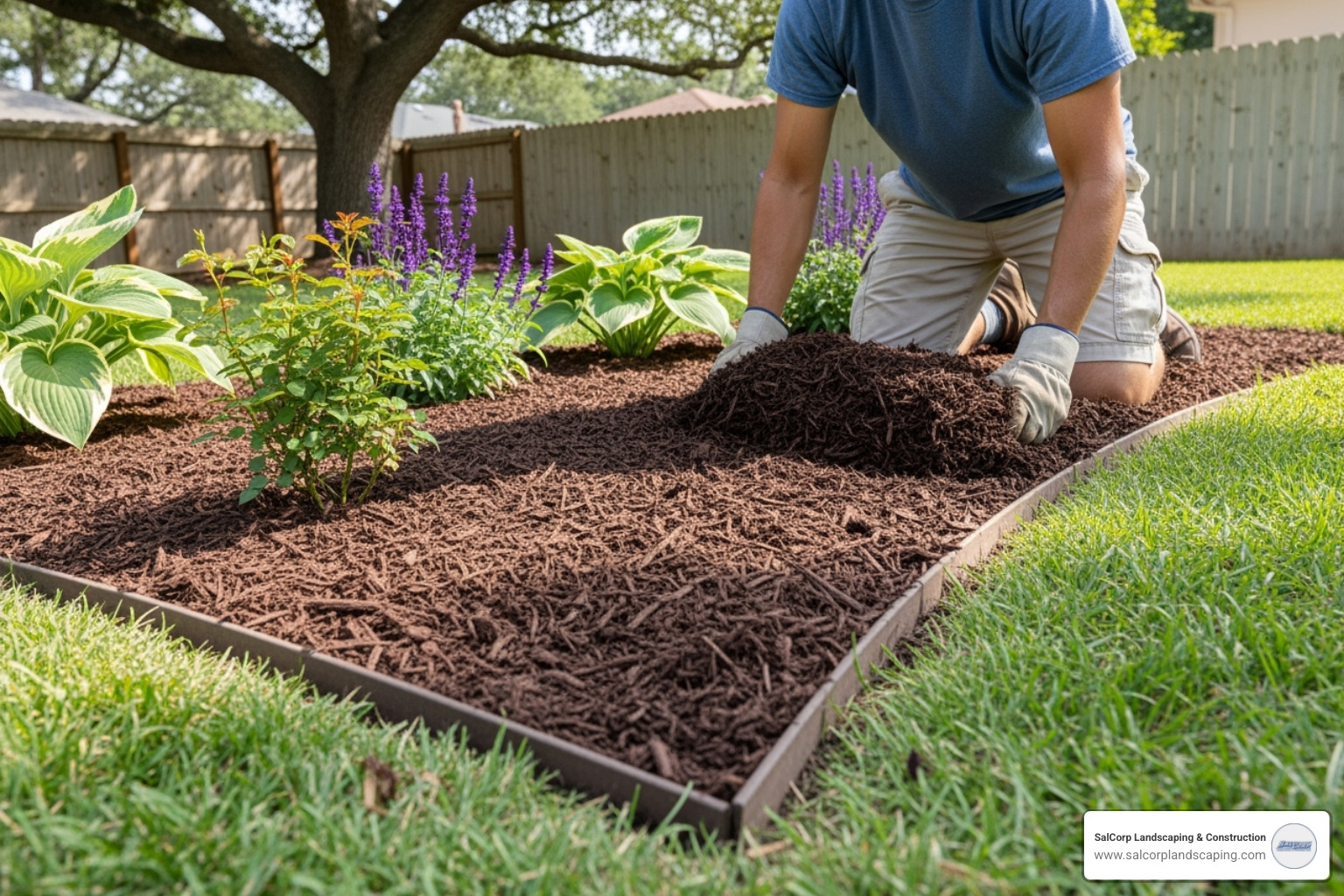
Start with the right depth – and this is where many people go wrong. For most garden beds, you want 2 to 4 inches of mulch. It’s like Goldilocks and the three bears: too little won’t suppress weeds effectively, too much can suffocate your plants. Around perennials, 2 inches usually does the trick, while trees and shrubs appreciate that full 3-4 inches for better moisture retention.
When applying your mulch, work systematically across the bed rather than dumping wheelbarrow loads in random spots. Spread it evenly right up to your freshly cut edge – that V-shaped trench will naturally help contain everything. The beauty of this system is that your trench acts like a natural curb, keeping the mulch exactly where you want it.
Here’s a pro tip from our years of experience: give everything a light watering for the first day or two after application. This helps settle the mulch into place and prevents any colored mulch from bleeding onto your sidewalks during the next rain. Plus, it just looks more settled and professional right away.
The key to keeping mulch off your grass is that defined edge you worked so hard to create. If a few pieces do wander onto the lawn (it happens), just sweep them back where they belong.
Choosing the Right Mulch to Stay in Place
Not all mulches are created equal when you’re relying on a natural edge instead of physical barriers. Some types practically glue themselves together, while others seem determined to migrate to every corner of your property at the first strong breeze.
Shredded hardwood is our go-to recommendation for mulching without edging. As it settles, the pieces interlock and form what landscapers call a “mat” – think of it like nature’s own carpet. This matting effect is fantastic for keeping everything in place, even on gentle slopes where other mulches might slide around.
Pine needles work similarly well, creating that same interlocking effect while adding a classic, woodland look to your beds. They’re lightweight but surprisingly stable once they settle, and they’ll gradually acidify your soil – perfect if you’re growing azaleas, rhododendrons, or blueberries.
The secret is choosing mulches that knit together naturally. Smaller, fibrous pieces always outperform large chunks when it comes to staying put. Those beautiful bark nuggets might catch your eye at the garden center, but they’re like marbles on a slope – pretty until the first heavy rain sends them rolling into your neighbor’s driveway.
For problem slopes where even the best organic mulches struggle, heavier materials like stone or rubber mulch can work, though you’ll miss out on the soil-improving benefits that organic options provide.
When you’re ready to upgrade your mulch game, our mulch delivery & installation service can help you choose the perfect type for your specific conditions.
Maintaining Your Natural Edge
The honest truth about natural edges? They require regular attention to keep looking crisp. But don’t worry – we’re talking about pleasant, meditative work, not back-breaking labor.
Re-cutting your trench becomes a seasonal rhythm once you get the hang of it. A light trim with your string trimmer every few weeks keeps things tidy for daily life. Then, once or twice a year, you’ll want to break out the spade for a full refresh of that V-shaped cut.
The maintenance frequency really depends on your grass type and how particular you are about perfection. Cool-season grasses like fescue are pretty well-behaved and might only need monthly attention. But if you’re dealing with aggressive spreaders like Bermuda grass, you might find yourself out there every couple of weeks with the trimmer.
Using a string trimmer effectively is an art form. Here’s the technique that saves both time and mulch: stand in the bed, tip your trimmer 90 degrees so the string runs parallel to the ground, and sweep outward into the lawn. Keep the throttle low to avoid launching mulch everywhere. This “flat mode” technique gives you clean lines without creating a mess.
The goal is preventing grass encroachment before it becomes a problem. That V-shaped trench is your first line of defense, but regular trimming reinforces the message to your grass about where it belongs.
If maintenance feels overwhelming, our comprehensive lawn care & maintenance team can keep your natural edges looking sharp year-round.
Special Considerations for Tree Health and Weed Control
Here’s where good intentions can go wrong if you’re not careful. The health of your trees and effective weed control require some specific strategies when you’re mulching without edging.
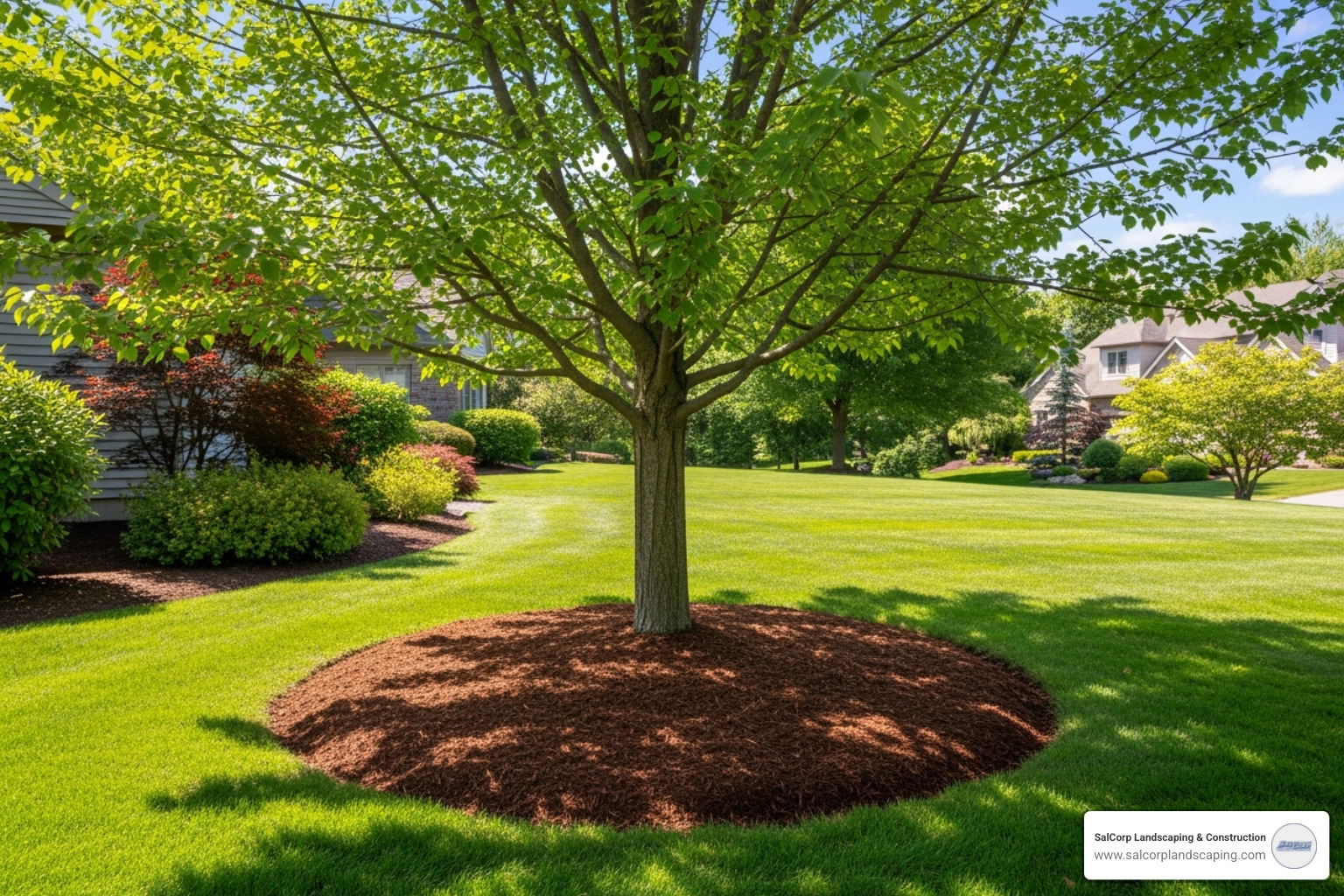
Avoiding “mulch volcanoes” is absolutely critical. We see this mistake constantly – well-meaning homeowners piling mulch high around tree trunks like they’re building a fortress. This actually creates a death trap for your trees. When mulch gets deeper than 4 inches or touches the bark directly, it holds too much moisture against the trunk, encouraging rot and inviting pests and diseases.
Always make sure you can see the root flare – that’s where the trunk naturally widens at ground level. Keep mulch a few inches away from the actual trunk, creating more of a donut shape than a volcano.
The same principle applies to smaller plants: keep mulch away from stems to allow proper air circulation. A few inches of breathing room prevents that moisture buildup that leads to stem rot and other problems.
For serious weed control, especially when starting fresh beds, sheet mulching with cardboard is incredibly effective. Lay down overlapping pieces of plain brown cardboard (remove any tape or staples), soak it thoroughly, then apply your regular mulch on top. The cardboard smothers existing weeds while gradually breaking down to feed the soil. It’s like giving your new bed a clean slate to work with.
This method works so well that many landscapers consider it the gold standard for weed prevention. The cardboard barrier lasts long enough to get your plants established while naturally decomposing without leaving any residue.
A little knowledge goes a long way in protecting your investment. Learn more about proper mulching techniques and how to Avoid the mulch volcano!
Frequently Asked Questions about Mulching Without Edging
Over the years, I’ve fielded countless questions from homeowners who are curious about mulching without edging. These are the three questions that come up most often, along with honest answers based on real-world experience.
How do you keep mulch from washing away on a slope without edging?
Slopes can definitely be tricky, but they’re not impossible to manage. The key is working with nature instead of against it.
Your mulch choice becomes absolutely critical on slopes. Stick with shredded hardwood or pine needles that naturally knit together as they settle. I’ve seen too many homeowners try to use bark nuggets on a slope, only to find them scattered across their driveway after the first heavy rain. Those individual pieces just don’t have the staying power you need.
For steeper areas, you might need to get creative with subtle terracing. This doesn’t mean building retaining walls – just creating gentle ledges within the bed itself to slow down water flow. Think of it as giving your mulch a fighting chance.
Proper drainage is your best friend here. If water is rushing down your slope like a river, even the best mulch won’t stay put. Sometimes this means redirecting downspouts or addressing bigger drainage issues. With increasingly unpredictable weather conditions becoming the norm, good drainage planning is more important than ever.
For those really stubborn spots, biodegradable mulch glue can be a lifesaver. It sounds fancy, but it’s basically a spray that creates a light crust over your mulch, holding everything together without looking artificial.
How often do you have to re-edge a natural mulch bed?
This is probably the most practical question I get, and the answer depends on your grass type and how particular you are about that crisp look.
Most homeowners find success with a simple routine: a quick pass with the string trimmer every few weeks, and a proper re-cut with the spade once or twice a year. The string trimmer maintenance is key – it’s what keeps your edge looking sharp between those deeper cuts.
Your grass type makes a huge difference in maintenance frequency. Cool-season grasses like fescue are generally more polite about staying in their lane. Warm-season grasses? Well, that’s a different story entirely.
I always tell clients that the monthly string trimmer routine becomes second nature pretty quickly. It’s actually quite satisfying – there’s something therapeutic about restoring those clean lines. Plus, it’s great exercise without feeling like you’re working out.
Can you do mulching without edging if you have an aggressive grass like Bermuda?
I’ll be completely honest with you – mulching without edging with Bermuda grass is possible, but it’s definitely not for the faint of heart.
Bermuda grass has one mission in life: world domination. It will send runners across your beautiful trench like it’s building tiny grass bridges. You’ll need to trim weekly, maybe more during peak growing season, to keep those sneaky runners in check.
Some homeowners choose to spot-treat persistent runners with herbicide, which can help reduce the workload. But if you prefer to stay chemical-free, you’re looking at a commitment to very regular maintenance. We’re talking about the difference between a casual weekend gardener and someone who’s out there with their string trimmer like clockwork.
The good news? If you’re up for the challenge, the results can be absolutely stunning. There’s something particularly satisfying about keeping aggressive grass in its place with nothing but good technique and persistence. Just make sure you’re realistic about the time commitment before you start.
Is a Natural Edge Right for Your Massachusetts Yard?
Deciding whether mulching without edging is right for your property comes down to weighing the beautiful results against your willingness to maintain them. Like many great things in landscaping, it’s not a “set it and forget it” solution – but for many homeowners, that’s perfectly fine.
The pros are compelling: you’ll save money upfront by avoiding edging materials, create a seamless look that flows naturally with your landscape, and never worry about plastic lifting from frost heave or metal becoming a tripping hazard. The crisp lines of a well-maintained natural edge have an almost magical quality – that satisfying “fizz” that comes from seeing perfectly defined garden beds.
The cons require honest consideration: you’re committing to regular maintenance that can’t be skipped if you want to maintain that professional appearance. During peak growing season, you might find yourself out there with a string trimmer more often than you’d like. If you have aggressive grass types like Bermuda, the maintenance commitment becomes even more significant.
Your commitment to maintenance is really the deciding factor here. Some homeowners find the regular trimming and occasional re-cutting meditative – a chance to stay connected with their landscape. Others prefer solutions that require less hands-on attention. Neither approach is wrong; it’s about knowing yourself and your lifestyle.
The final aesthetic payoff is undeniable when done well. A naturally edged mulch bed integrates so seamlessly with the surrounding landscape that it looks like it’s always been there. There’s something deeply satisfying about achieving professional results through technique rather than materials.
For homeowners in the Walpole, MA area and surrounding communities, the team at SalCorp Landscaping & Construction can create and maintain beautiful, crisp garden bed edges as part of our professional landscaping services. With over 20 years of experience and our own machinery, we understand the unique challenges Massachusetts weather presents and can help you decide if natural edging fits your landscape goals and maintenance preferences.