

Outdoor Wood Stairs: Perfect 2024 Guide
Why Every Massachusetts Property Needs Quality Outdoor Wood Stairs
Outdoor wood stairs are both functional necessities and beautiful design elements. They connect different levels of your property, from a deck to a garden or a raised patio, making your space safer and more accessible while enhancing curb appeal.
Quick Answer for Outdoor Wood Stairs:
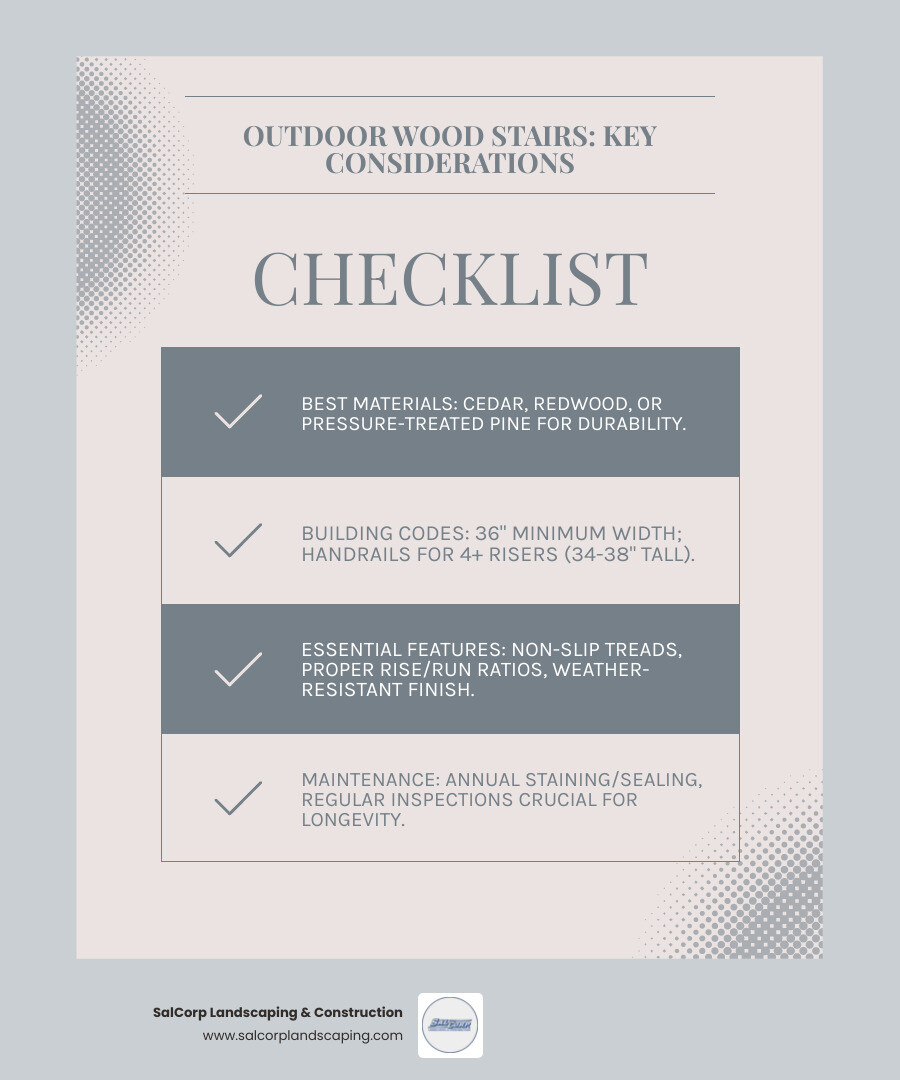
- Best Materials: Cedar, redwood, or pressure-treated pine for durability
- Key Requirements: 36″ minimum width, handrails for 4+ risers, proper drainage
- Essential Features: Non-slip treads, proper rise/run ratios, weather-resistant finish
- Professional Installation: Recommended for code compliance and longevity
- Maintenance: Annual staining/sealing, regular inspections for safety
The right timber adds significant aesthetic and monetary value to your property. Massachusetts building codes mandate safety standards, like handrails 34-38 inches high for stairs with four or more risers.
Safety considerations are paramount. Moisture is the top cause of wood rot, so proper material selection and maintenance are crucial for longevity.
As Sal Musto, owner of SalCorp Landscaping & Construction, I’ve spent over two decades designing and installing outdoor wood stairs across Massachusetts. My hands-on approach ensures every project is safe, beautiful, and meets strict requirements.
Your Comprehensive Guide to Outdoor Wood Stairs
Building or replacing outdoor wood stairs can feel overwhelming, but with the right guidance, it’s an exciting project that boosts your property’s beauty and function. With two decades of experience, I want to share what you need to know to make the best choice.
Choosing the Best Wood for Your Outdoor Stairs
Long-lasting, beautiful outdoor wood stairs start with the right material. Each wood type has a unique personality, from budget-friendly workhorses to premium options that age gracefully.
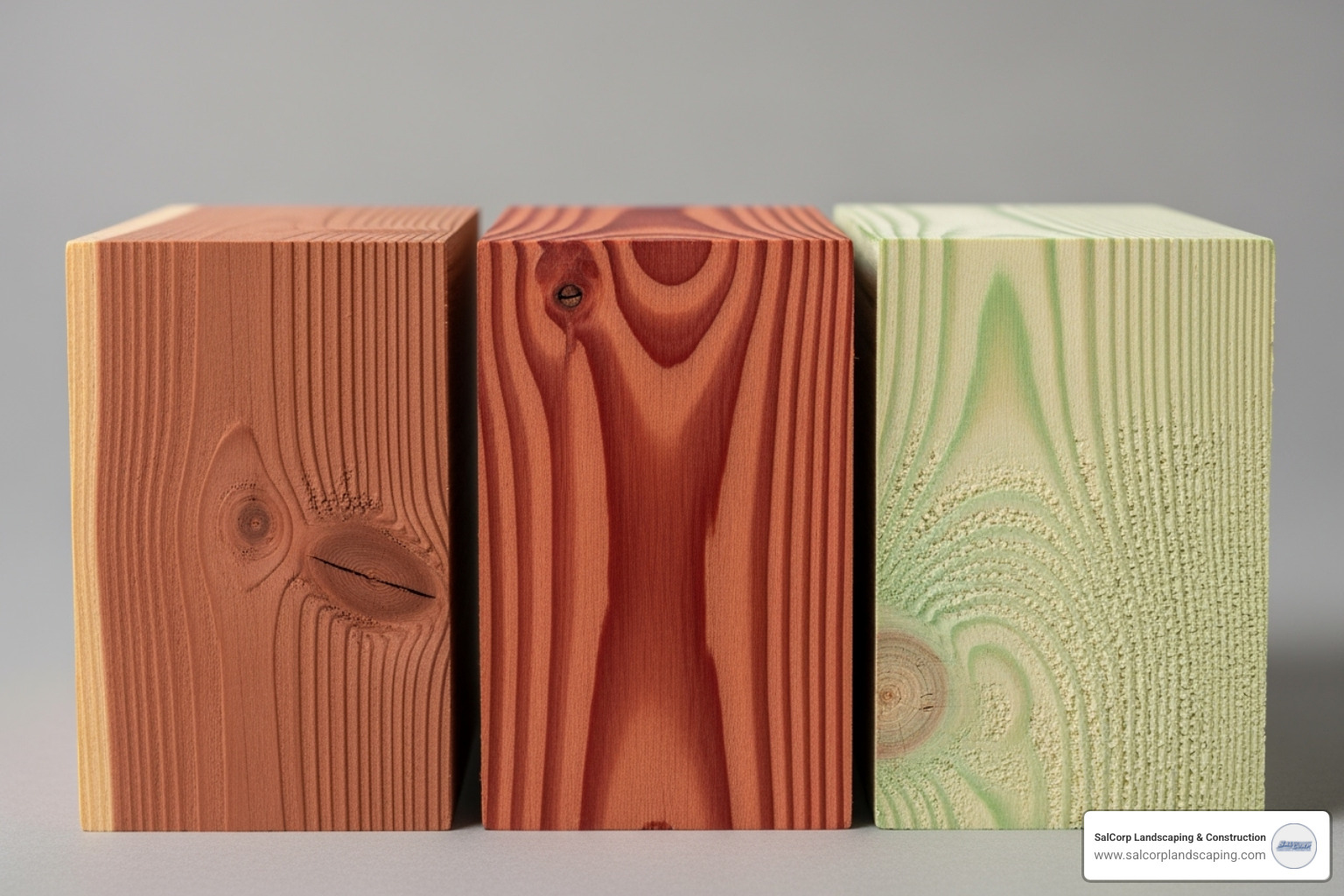
We focus on four critical factors: Durability against foot traffic and weather; Rot and insect resistance, which are vital in the Massachusetts climate; and maintenance needs, so you know the required upkeep.
Pressure-treated pine is popular for its exceptional resistance to rot, decay, and insects. It can be painted or stained to match any aesthetic. However, it’s heavy, can warp if not dried properly, and requires special fasteners to prevent corrosion. Regular finishing is needed to maintain its appearance. For technical details, see the Overview of Wood Preservative Chemicals.
Cedar offers natural beauty and protection. Its oils resist rot and insects, and it’s lightweight and easy to work with. It can be left untreated to develop a silvery-gray patina, but because it’s a softer wood, it benefits from staining or sealing every few years to preserve its color and maximize its lifespan.
Redwood provides a premium look with its rich color and straight grain. It’s dimensionally stable, resisting warping, but is more expensive and can be harder to find. Its natural resistance is primarily in the heartwood, so other parts may need extra protection.
Tropical hardwoods like Ipe are the premium choice. They are incredibly dense, resisting rot, insects, and fire, lasting for decades. The trade-off is a significant investment in materials and installation, as these heavy woods require specialized tools and expertise.
Composite materials, a blend of wood fibers and recycled plastics, are extremely low-maintenance. They resist fading, staining, mold, and insects. The main considerations are a higher upfront cost and a synthetic feel compared to real wood.
Douglas fir is a strong, budget-friendly option but lacks the natural resistance of other woods. It requires diligent and frequent sealing to protect it from moisture and decay.
Selecting the perfect material sets the foundation for your project. Our team can help you find the ideal fit for your needs and budget. Learn more about our hardscape material services to see how we can help.
Design and Construction Essentials
Once you’ve chosen your material, the design phase turns your vision into a functional reality. Proper planning ensures your outdoor wood stairs are safe, comfortable, and look amazing.
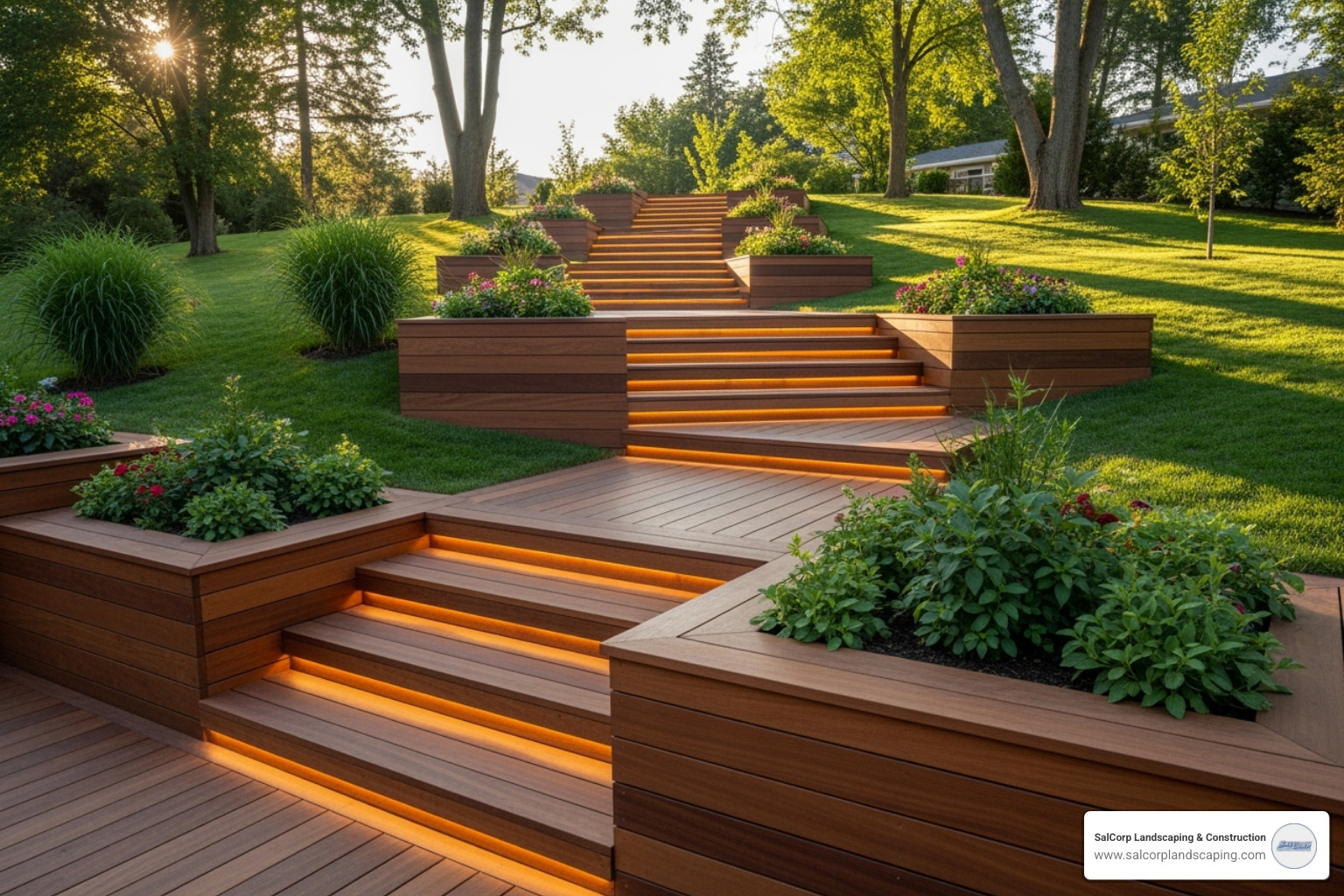
Straight stairs are the most direct and cost-effective solution. Platform stairs are ideal for long runs or steep slopes, using intermediate landings for rest and direction changes.
Landings are essential for safety. These flat surfaces at the top, bottom, or between flights provide a stable place to pause. A landing by a door must be at least as wide as the door and 36 inches deep.
The math of comfortable stairs centers on rise and run. A 7-inch rise (vertical height) and 11-inch run (horizontal depth) is a comfortable standard. Consistency is crucial for safety.
Stair width should be a minimum of 36 inches, but 48 inches is more comfortable. For two-way traffic, 60 inches is ideal.
Stringers are the stair’s backbone, typically made from 2×12 pressure-treated lumber. They are spaced about 16 inches apart for stability. Precision is key when cutting stringers to ensure consistent step height. In Massachusetts, stringer foundations must extend below the frost line to prevent shifting.
Pre-fabricated kits can simplify installation for simple projects but still require code compliance. A DIY approach can work for simple stairs if you have the experience, but complex designs benefit from professional installation to ensure structural soundness.
Our experienced hardscape designers specialize in creating solutions that work perfectly with your property’s unique characteristics. Find more about our hardscape design services.
Safety First: Building Codes and Railing Requirements
Safety is non-negotiable for outdoor wood stairs. Building codes protect users and are legally required. Cutting corners can lead to accidents and legal issues.
Massachusetts building codes dictate stair width, slope, support, and railing requirements. Local codes can vary, so always consult your local building department.
Handrail requirements are mandatory for stairs with more than four risers. They must be 34 to 38 inches high, measured from the front edge of the tread. The rail must be continuous, easy to grasp (1.25 to 2 inches in diameter), and have at least 1.5 inches of clearance from any wall. Extensions at the top and bottom are often required for safety.
Baluster spacing is critical for child safety. Gaps must be small enough that a 4-inch sphere cannot pass through.
Landing pads provide a stable transition. They must be at least 4 inches thick and extend 36 inches beyond the stair edge.
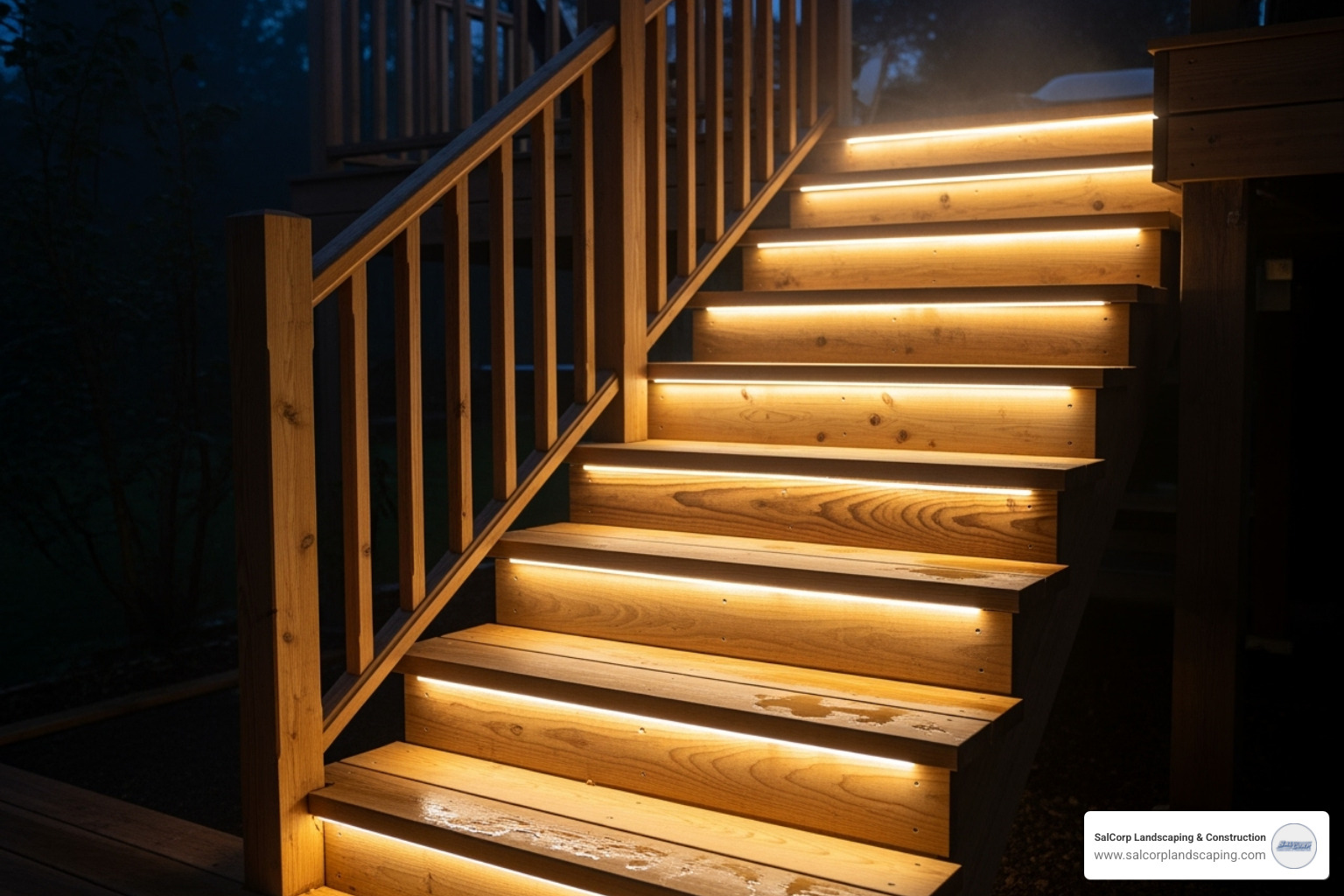
Non-slip surfaces are vital in Massachusetts weather; consider textured wood or grip tape. Proper lighting, such as step lights, makes stairs safe at night and adds aesthetic appeal.
We provide complete services for stairs and walkways throughout Massachusetts, handling all aspects from design through final inspection. Learn more about our stairs and walkway services.
Protecting Your Investment: Maintenance and Repair
Your outdoor wood stairs face harsh Massachusetts weather, so proper maintenance is essential for longevity. Neglect leads to expensive repairs.
Moisture prevention is the top priority. Good drainage is key, as moisture leads to wood rot. Look for discoloration, soft spots, or crumbling wood. Catching rot early allows for targeted repairs.
Protective finishes are your primary defense. Stains showcase the wood grain, paint creates an opaque protective layer, and sealants offer clear water-repellent protection. For best results, apply finish to all sides of each board before installation.
Conduct regular inspections twice a year. Look for loose railings, cracked treads, rot, and worn finishes. The repair versus replacement decision depends on the damage. Cosmetic issues can be repaired, but structural problems like rotted stringers usually mean it’s time for replacement.
Most common failures stem from poor construction or lack of maintenance. Seasonal maintenance is key. In spring, clean off winter grime. In fall, clear debris to prevent trapped moisture. In winter, keep stairs clear of snow and use non-corrosive de-icers.
Budgeting for Your Project: What Do Outdoor Wood Stairs Cost?
Understanding the cost of outdoor wood stairs helps you plan effectively and make informed decisions.
Please note: The following cost ranges represent average pricing based on internet research and industry data, not actual pricing for SalCorp Landscaping & Construction. Our pricing is determined through thorough consultation and assessment of your specific project requirements.
Material costs vary by wood type. Pressure-treated pine is most budget-friendly ($3-5/linear foot). Cedar ($7-12/linear foot) and redwood ($8-15/linear foot) cost more. Composite materials are also in the $8-15 per linear foot range.
Labor costs for design, demolition, construction, and finishing are a significant part of the total investment and increase with project complexity.
Repair costs can range from $200 for minor fixes to $5,500 or more for structural issues. Replacement costs for a full system start around $2,000 for simple stairs and can exceed $22,000 for complex designs with premium materials.
Factor in long-term expenses for maintenance like stains, sealants, and minor repairs. Consistent upkeep extends stair life and prevents costly replacements.
While quality outdoor wood stairs are a significant investment, they provide long-term value by improving safety, aesthetics, and property value. The key is balancing upfront cost with long-term performance.
Lift Your Landscape with Expertly Crafted Stairs
The perfect outdoor wood stairs are more than a connection between two levels; they are a beautiful, safe pathway that improves your outdoor living. The best designs blend form and function, built to withstand our New England weather.
As we’ve covered, success with outdoor wood stairs comes down to a few key things:
- Material Selection: Choose the right wood—from pressure-treated pine to cedar or composites—for your budget and needs.
- Smart Design: Proper rise/run calculations and planning create comfortable, safe steps.
- Code Compliance: Following safety codes for handrails and landings protects everyone.
- Regular Maintenance: A little seasonal care prevents moisture damage and costly repairs.
At SalCorp Landscaping & Construction, we are an owner-operated business with over 20 years of experience creating stunning outdoor spaces. We bring personal attention and quality craftsmanship to every project, using our own equipment and crews. We serve communities across Massachusetts, from Boston to Cape Cod, and understand the unique challenges of our local climate.
Every project has a story, whether it’s creating safe garden access for a young family or building graceful stairs for a retirement home. We’re here to help you write the next chapter of your home’s story.
Professional expertise and quality craftsmanship are what we deliver on every project. From the initial consultation to the final details, we handle everything with the care your home deserves.
Ready to build the perfect outdoor stairs for your home? Contact us for a consultation!
