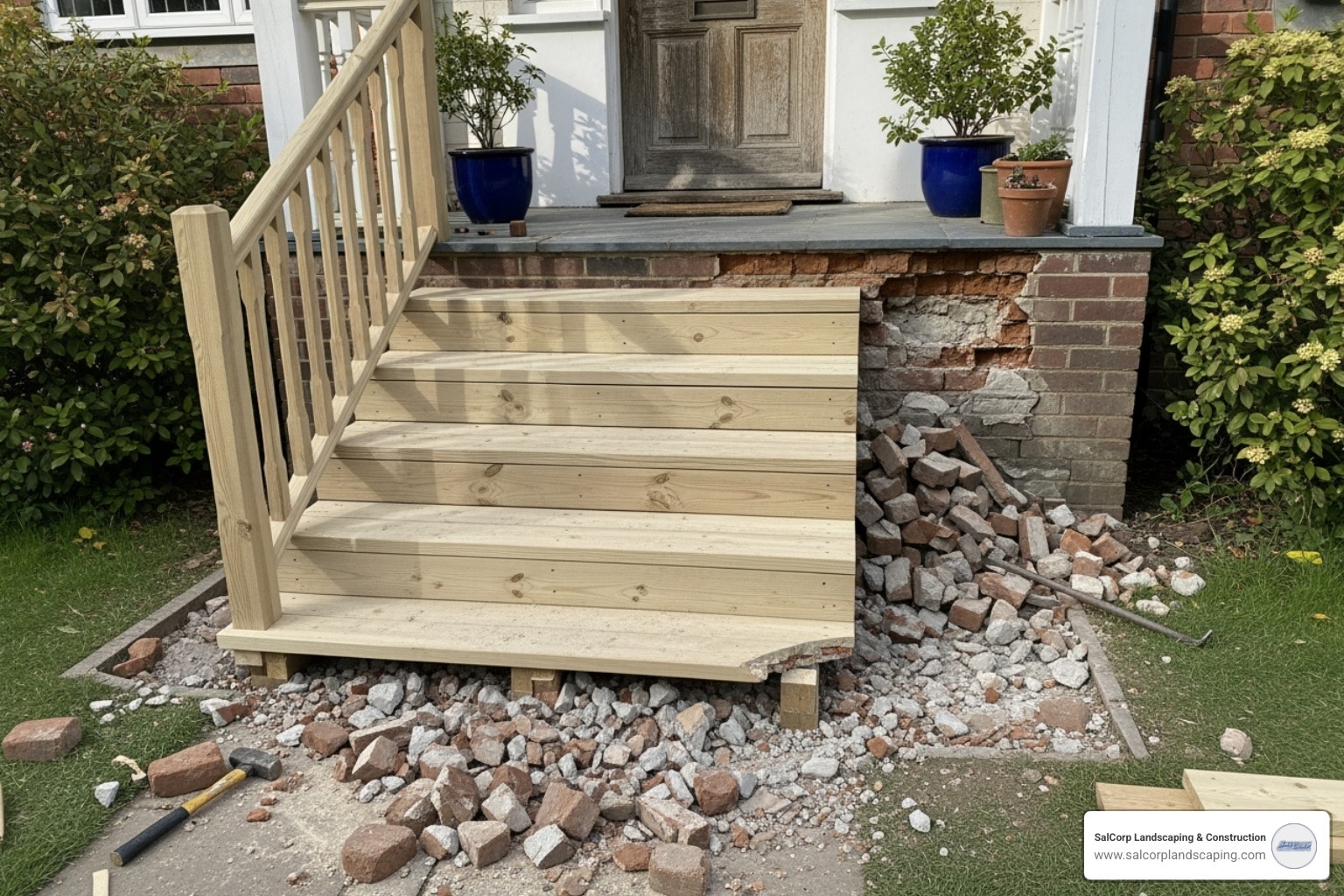
Replacing Brick Steps with Wood: Ultimate 2025 Guide
Why Replace Your Brick Steps with Wood?
Replacing brick steps with wood can transform your home’s entrance from weathered and cracked to warm and welcoming. Here’s a quick overview:
Key Benefits:
- Easier repairs: Replace individual boards instead of matching old brick.
- Design flexibility: Customize width, depth, and style.
- Cost-effective: Often less expensive than brick restoration.
- Better grip: Wood provides superior traction in wet conditions.
Main Options:
- Full replacement: Remove the old brick and build a new wood structure.
- Cover existing: Build a wood frame over a solid brick foundation.
- Hybrid approach: Keep the brick base, adding wood treads and risers.
Timeline: Most projects take 2-4 days for DIY or 1-2 days with professionals.
In Massachusetts, winter ice expansion can crack mortar joints, creating hazards. Wood steps offer easier maintenance and can be designed to match your home’s architectural style, from modern to farmhouse.
I’m Sal Musto, owner of SalCorp Landscaping & Construction. With over two decades of experience in both hardscaping and carpentry, I’ve helped many homeowners steer the process of replacing brick steps with wood. My expertise provides unique insight into whether covering existing steps is sufficient or if a full replacement is the better long-term investment.
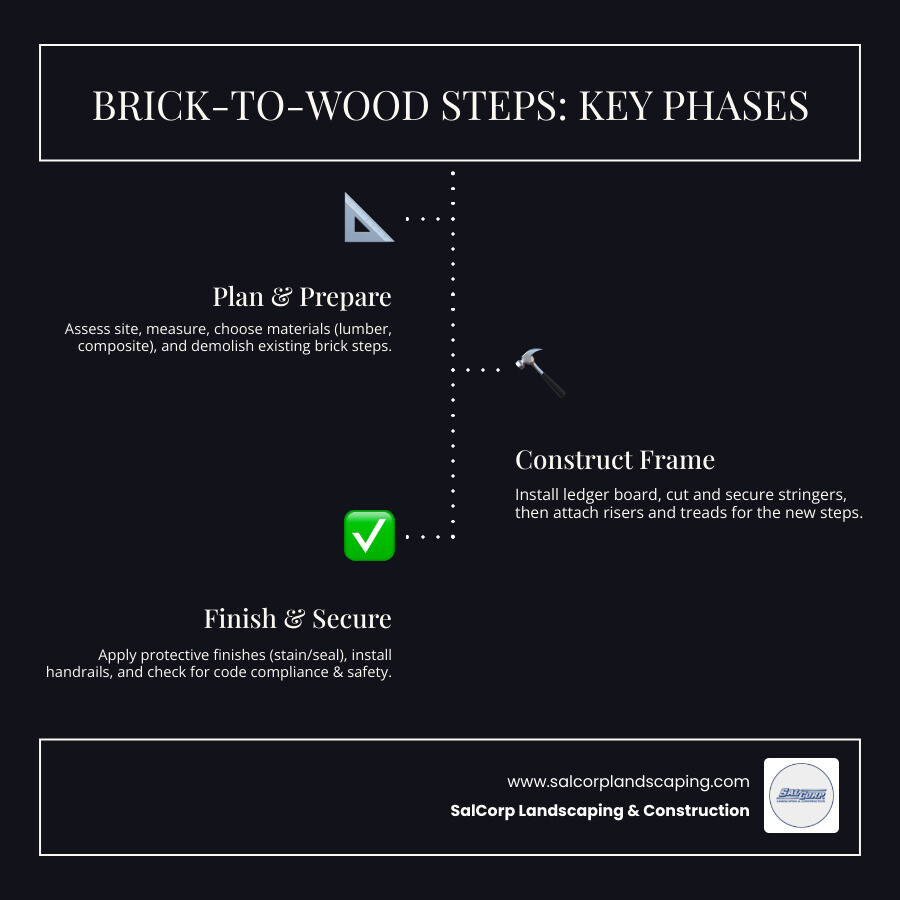
Relevant articles related to replacing brick steps with wood:
Your Guide to Replacing Brick Steps with Wood
Proper planning is crucial when replacing brick steps with wood, especially in New England where the climate impacts every decision. Choosing the right materials and tools from the start ensures a successful project.
Planning Your Project: Materials and Tools
Choosing Materials That Last
Our Massachusetts freeze-thaw cycles demand durable materials.
- Pressure-treated lumber: The go-to for framing and stringers. It’s affordable, strong, and treated to resist rot and insects. The initial green tint fades to a natural, stainable color.
- Cedar: Offers natural beauty and pest resistance. It costs more but weathers to a classic silver-gray, perfect for an authentic New England look.
- Composite decking: The low-maintenance option. Made from wood fibers and recycled plastic, it won’t rot, warp, or splinter. It requires sleeper boards, which can add thickness, so check your door clearance.
Getting Your Measurements Right
Consistency is key for safety. Every step must have the exact same rise to prevent trip hazards. A comfortable step is typically around 7 inches high with a 10-11 inch deep tread. Don’t just copy the old brick dimensions; calculate new measurements for ideal comfort and safety.
Building Codes Matter
Always check with your local building department before starting. Towns like Walpole and Needham have specific codes for step dimensions, handrails, and attachments. Ignoring them can lead to costly rework.
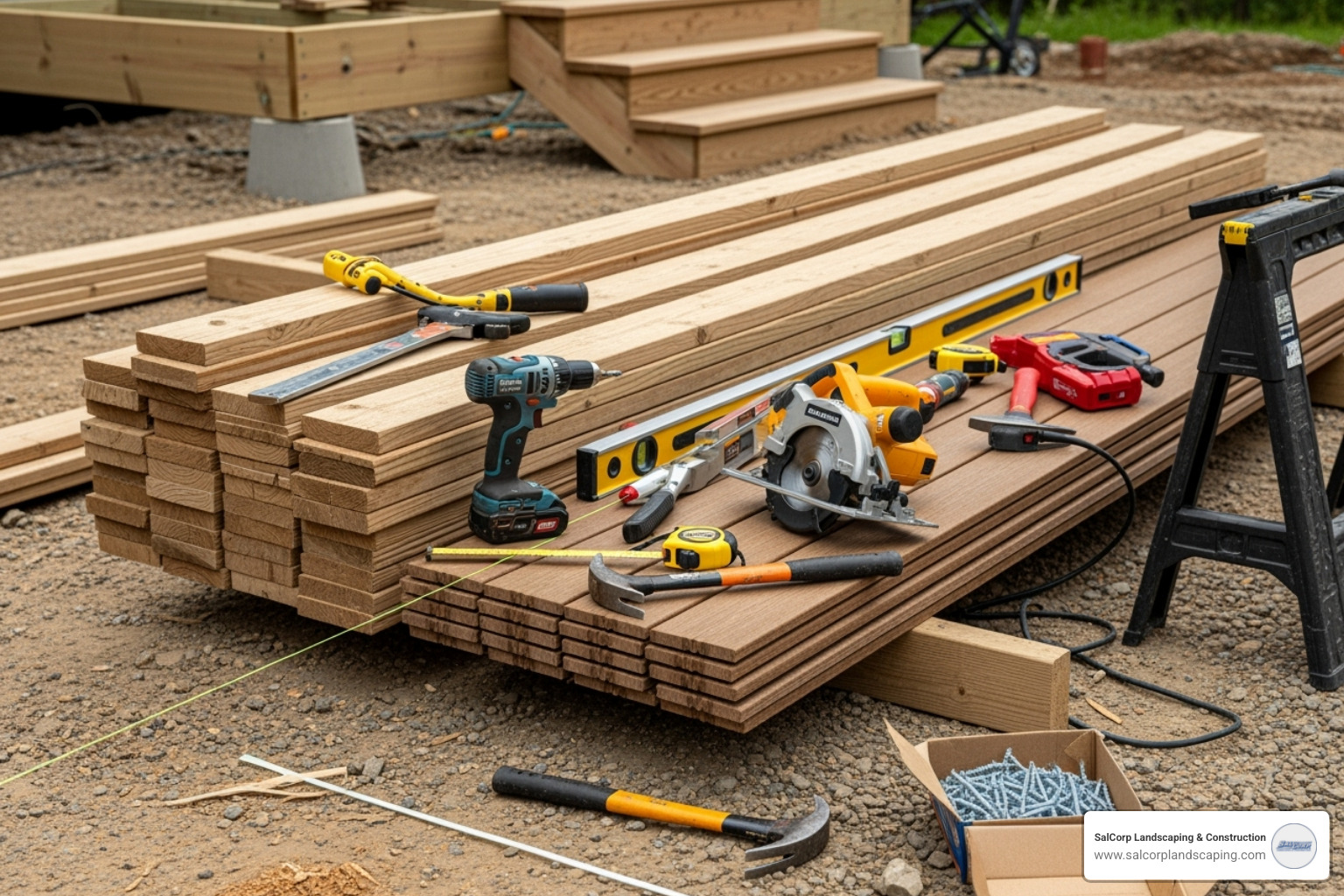
Essential Tools for Success
Gather your tools before you begin. You’ll need:
- Safety Gear: Glasses and gloves are non-negotiable.
- Demolition: Sledgehammer, pry bar (for full replacement).
- Measuring: Tape measure, level, speed square.
- Cutting: Circular saw.
- Drilling & Fastening: A hammer drill with masonry bits is essential for attaching to brick or concrete. An impact driver, exterior-grade deck screws, and masonry anchors (like Tapcon screws) are also necessary.
For comprehensive outdoor improvements beyond just steps, explore our Hardscaping Services.
Step-by-Step: From Demolition to Construction
With planning complete, it’s time to build. Follow these steps for a solid, safe result.
1. Demolition or Prep
- Full Replacement: This is physically demanding. Wear safety gear and carefully remove the old brick steps.
- Covering Existing Steps: Skip demolition, but thoroughly clean the brick surface of all debris and loose mortar. Ensure it’s solid and dry.
2. Foundation Inspection
Before building, inspect the foundation. Check for loose bricks, rot near the door, or signs of settling. Address any drainage issues, as water is the primary enemy of wood.

3. Install the Ledger Board
The ledger board is the critical connection to the house. Attach this pressure-treated board directly to the foundation using heavy-duty masonry anchors. Drill into mortar joints for the strongest hold and install flashing above the ledger to prevent water from getting behind the new structure.
4. Cut and Install Stringers
Stair stringers are the sloped boards that support the steps. Use your precise measurements to lay out and cut identical stringers from pressure-treated lumber. Attach them securely to the ledger board and anchor the bottom to a solid footing.
5. Add Risers and Treads
First, install the vertical riser boards. Then, attach the horizontal treads you’ll step on. Use at least two exterior-grade deck screws per board at each stringer. Allow a slight overhang on the treads for a finished look.
For detailed technical guidelines, see the American Wood Council’s Prescriptive Residential Wood Deck Construction Guide (DCA 6). If you’re considering masonry elements in your project, check out our Masonry Services.
Finishing Touches for Longevity and Safety
Final touches protect your investment and ensure safety, giving your project a professional look.
1. Protect the Wood
New England weather requires proper protection. Ensure the wood is clean and completely dry before applying any finish. Choose a high-quality exterior stain or sealer. Semi-transparent stains showcase wood grain, while solid stains offer more durability. Always test your stain on a scrap piece first to confirm the color.
2. Create Visual Appeal
For a classic New England look, consider staining the treads and painting the risers white with durable exterior paint.
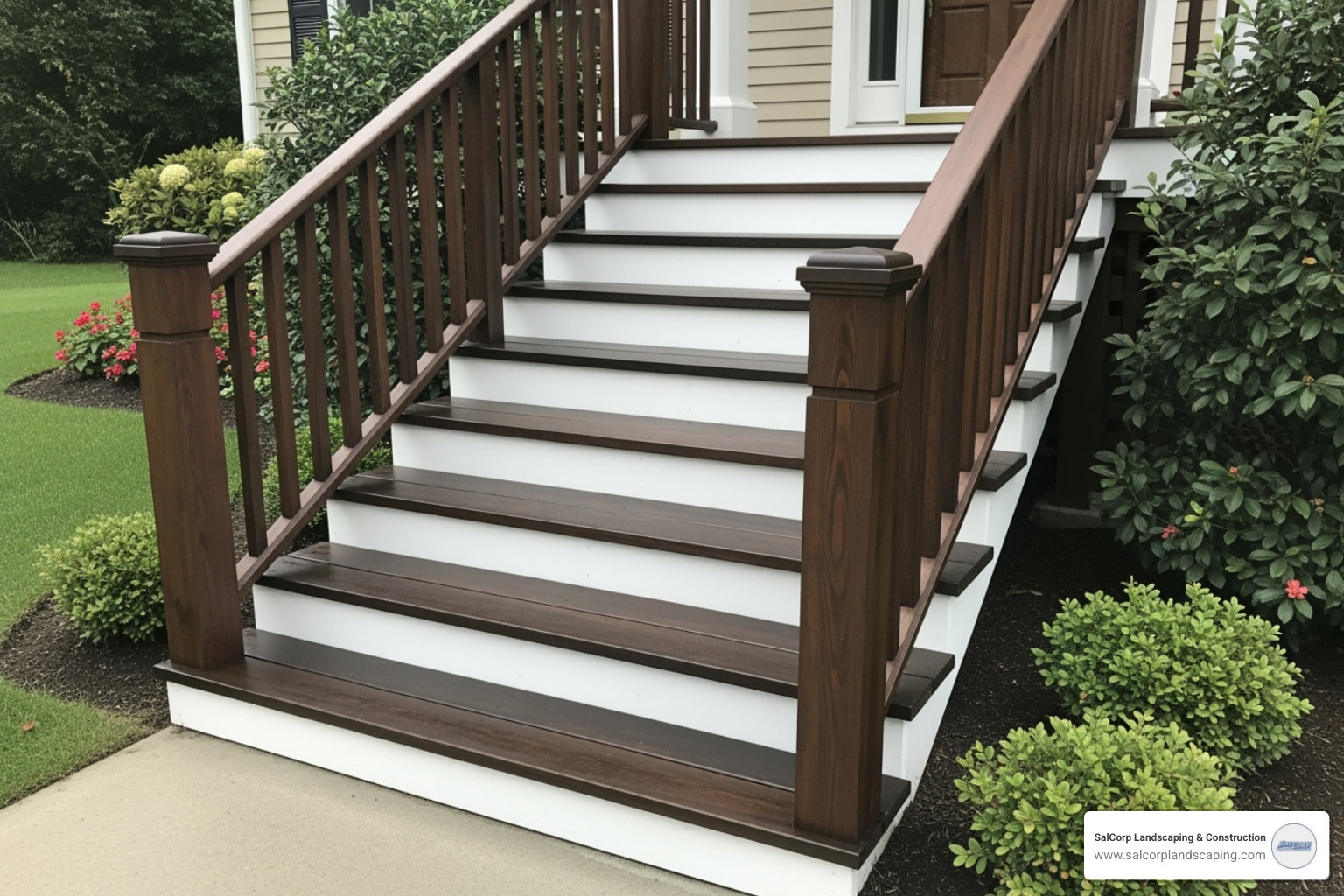
3. Install Safety Features
- Handrails: These are often required by code and are essential for safety. Securely bolt 4×4 posts for the handrails; screws alone are not strong enough. Check local codes for height requirements.
- Traction: To prevent slips in icy conditions, add anti-slip tape, textured paint, or rubber treads.
4. Final Quality Check
Walk the steps and test the handrail. Check for any loose fasteners, splinters, or uneven surfaces. Catching small issues now prevents bigger problems later.
For additional landscape stair solutions that complement your new entrance, explore our Landscape Stairs services.
Costs, Timelines, and When to Call a Pro
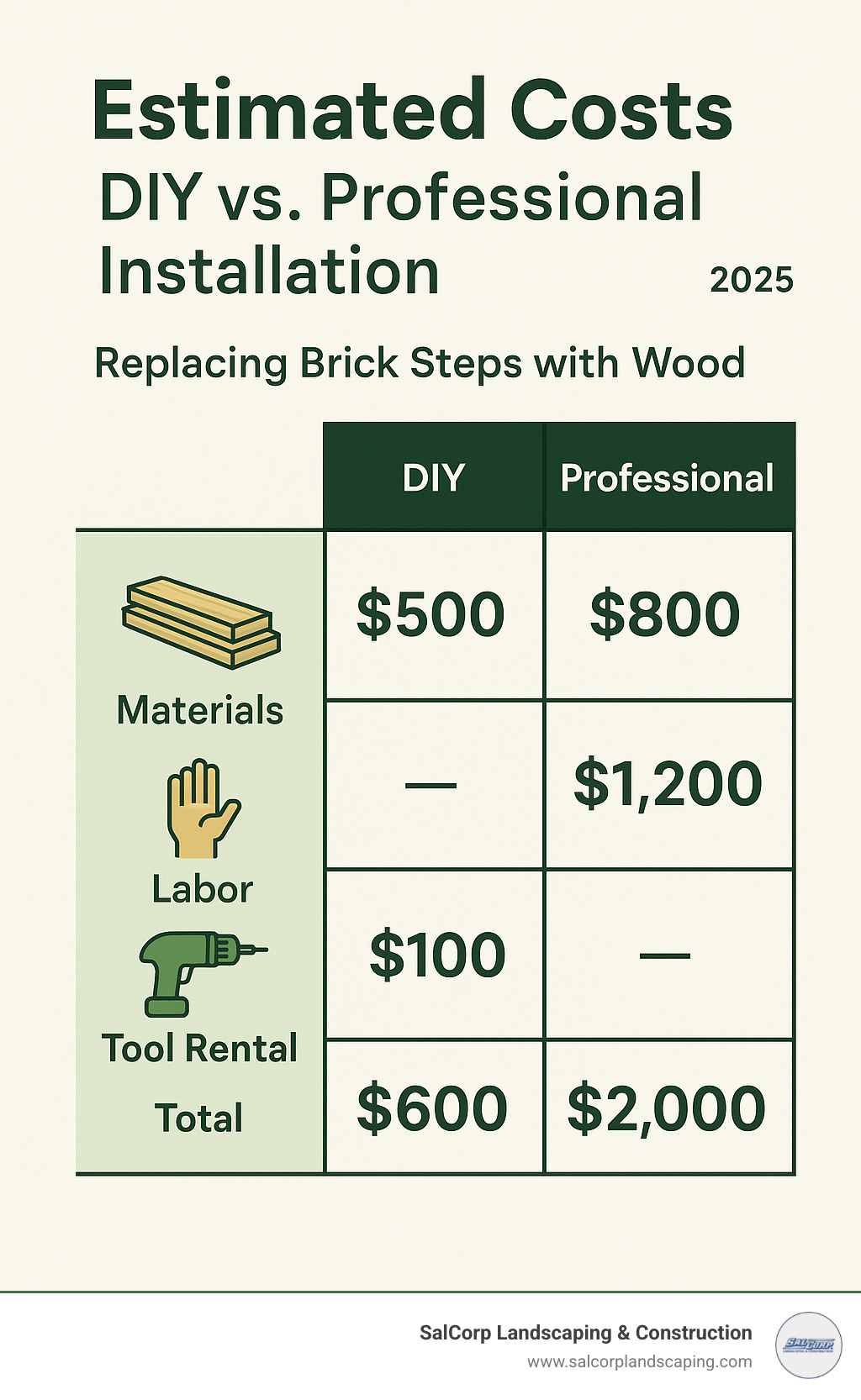
Let’s talk money and time. The cost of replacing brick steps with wood varies based on materials, complexity, and whether you DIY or hire a pro.
Budgeting for Replacing Brick Steps with Wood
Key Cost Factors:
- Materials: Pressure-treated lumber is the most budget-friendly option, while cedar and composite decking have higher upfront costs.
- Hardware & Tools: The cost of screws, anchors, and tool rentals can add up.
- Labor: Hiring a professional is the largest variable. It adds to the cost but ensures expertise, efficiency, and code compliance.
Based on average costs from internet data (not actual SalCorp Landscaping pricing), professional installation can range from $1,500 to upwards of $8,000+, depending on the project’s scope. In comparison, new brick step installation can easily exceed $3,000, making wood a cost-effective alternative with more design flexibility.
Timeline Expectations:
- DIY: 2-4 days for those with the right skills.
- Professional: 1-2 days.
If you’re exploring masonry options as an alternative, our Brick Stairs Cost page provides detailed pricing insights for comparison.
Is Replacing Brick Steps with Wood a DIY Job?
Whether you should DIY this project depends on your skills, time, and the project’s complexity.
Consider DIY if you have:
- Solid Carpentry Skills: You must be comfortable with precise measuring, cutting, and securely joining wood.
- Power Tool Proficiency: Safe use of circular saws, hammer drills, and impact drivers is essential.
- Time Commitment: This is a multi-day project, not a quick Saturday task.
Call a Pro When:
- The foundation is questionable: Assessing hidden rot, drainage problems, or settling issues requires experience.
- Structural work is complex: Proper ledger board attachment and stringer construction are critical for safety.
- You’re unsure about building codes: Professionals guarantee compliance with local regulations for step dimensions and handrails.
An honest self-assessment is key. If the project feels overwhelming, hiring a professional is the smarter, safer choice.
Ensuring a Safe and Lasting Result
Whether you DIY or hire a pro, the goal is a beautiful, safe, and durable result. Focus on these critical areas:
- Foundation Integrity: The entire project rests on a solid foundation. Ensure it’s level and structurally sound to prevent settling and trip hazards.
- Building Code Compliance: Adhering to local codes for step dimensions, load capacity, and handrails is non-negotiable for safety.
- Long-Term Maintenance: Protect your investment with regular cleaning and re-sealing. Proper drainage and ventilation underneath the steps are crucial to prevent rot.
The Value of Professional Expertise
At SalCorp Landscaping & Construction, our 20+ years of experience serving Massachusetts communities means we understand the challenges of replacing brick steps with wood in our climate. We identify hidden issues, ensure structural integrity, and guarantee code compliance.
Our owner-operated business is committed to quality, using professional machinery and refined skills to transform your entrance. We deliver lasting solutions that improve both safety and curb appeal. When you want the job done right, we’re here to make your vision a reality.
Explore our professional hardscaping and masonry solutions and find how we can bring expertise and quality to your next project.