

Understanding the Critical Relationship Between Demolition and Excavation
Demolition and excavation are two distinct but inseparable services in construction site preparation. While demolition involves tearing down existing structures, excavation focuses on moving earth to prepare the ground for new construction. For most projects, they occur in sequence: demolition first, then excavation.
Why They Work Together:
- You can’t properly excavate a foundation until existing structures are removed.
- Site preparation requires both services for most residential, commercial, and industrial projects.
- Hiring one contractor for both saves time and eliminates coordination headaches.
Understanding how these services complement each other is essential for any construction project. As Sal Musto, owner of SalCorp Landscaping & Construction with over two decades of experience, I’ve managed countless demolition and excavation projects across Massachusetts. The seamless coordination of these two services is what makes a project successful. My hands-on approach ensures that every site preparation project, from initial demolition to final grading, meets the highest standards of safety and efficiency.
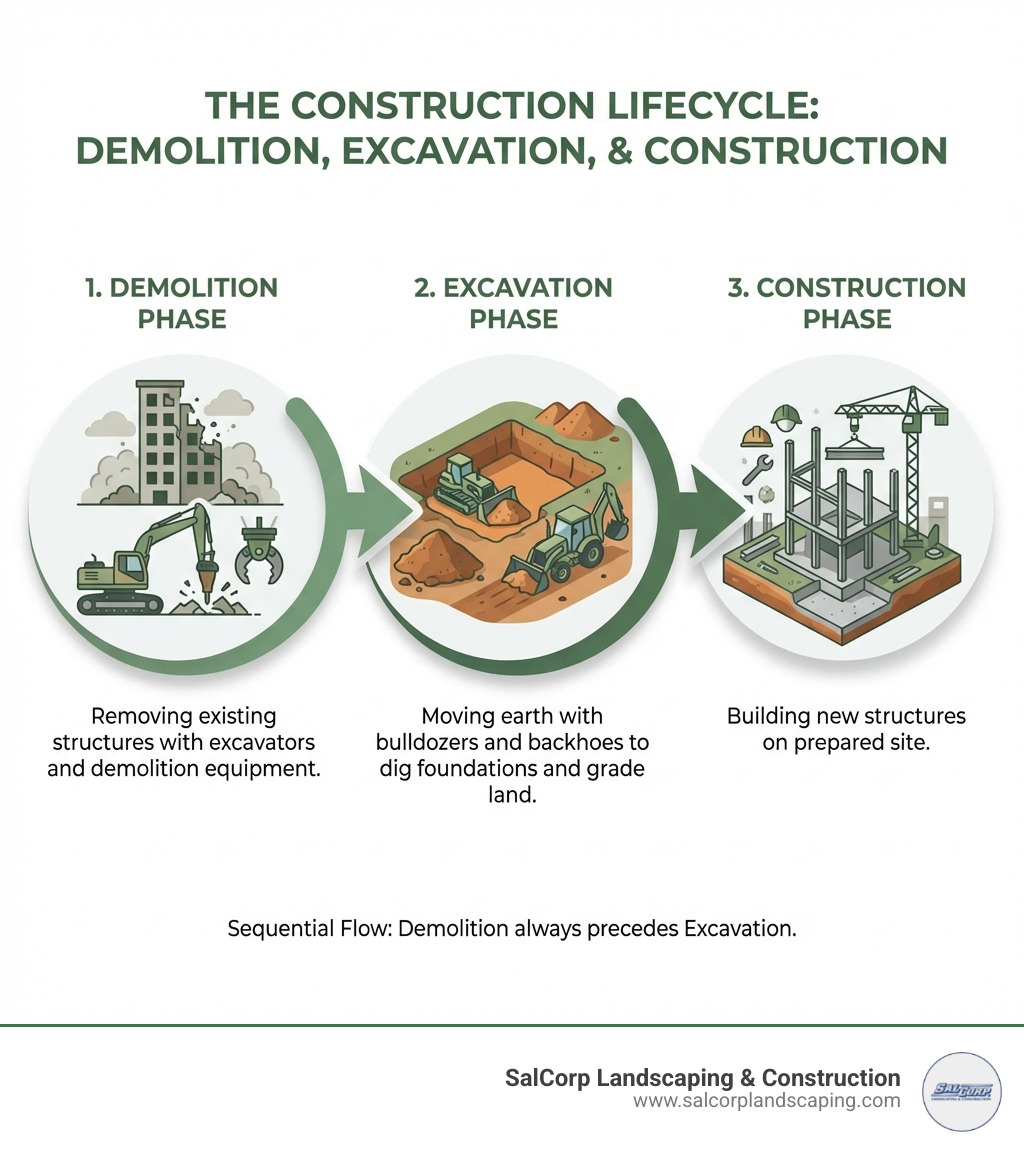
Demolition and excavation terms simplified:
The Complete Guide to Demolition and Excavation Services
This section covers the processes, methods, and equipment for both demolition and excavation, highlighting their critical sequence in site preparation. At SalCorp Landscaping & Construction, we know successful construction begins with meticulous site work, tackling both the old and the new with precision.
Demolition: Deconstructing the Old
Demolition is the art of carefully dismantling structures to clear a site. It’s a precise process, far more nuanced than simply “knocking things down.”
When is Demolition Required?
Demolition is required for:
- New Construction: To clear a site of an outdated or unsound structure for redevelopment.
- Renovation: To remove parts of a building for a new design or expansion (selective demolition).
- Safety: To remove structures damaged by fire, disasters, or age that have become hazardous.
- Site Clearing: To remove old foundations, outbuildings, or other impediments before major construction.
Demolition Methods and Techniques
The approach depends on the structure’s size, location, and materials.
- Mechanical/Controlled Demolition: The most common method, using heavy machinery like excavators with specialized attachments to dismantle entire buildings. This is our primary approach.
- Selective Demolition: Removing specific parts of a structure while leaving others intact, crucial for renovations or preserving historical facades.
- Interior Demolition (Strip-Outs): Removing internal elements like walls, ceilings, and flooring to prepare a building for a complete overhaul.
- Manual Demolition: Using hand tools for smaller structures or in tight spaces where machinery is impractical.
Typical Steps in a Demolition Project
Every project follows a structured process for safety and compliance:
- Site Survey and Assessment: An engineering survey identifies structural issues, hazards, and utilities.
- Permitting and Approvals: We obtain all necessary local permits in compliance with Massachusetts regulations.
- Utility Disconnection: All active utility services (gas, water, electricity) are safely disconnected.
- Hazardous Material Abatement: Certified specialists remove materials like asbestos or lead paint before demolition.
- Site Preparation and Safety: We establish safety fencing, exclusion zones, and proper site access.
- Demolition Execution: The structure is dismantled following a planned sequence.
- Debris Management: Materials are sorted for recycling, and waste is disposed of according to environmental regulations.
Demolition Equipment
We use an array of heavy-duty equipment for various demolition tasks:
- High-Reach Excavators: Equipped with long booms and attachments to dismantle tall structures safely.
- Shears and Grapples: Attachments that cut through steel and concrete (shears) or sort and load debris (grapples).
- Concrete Processors: Crush concrete on-site for recycling.
- Skid Steers: Versatile machines for smaller-scale demolition and cleanup.
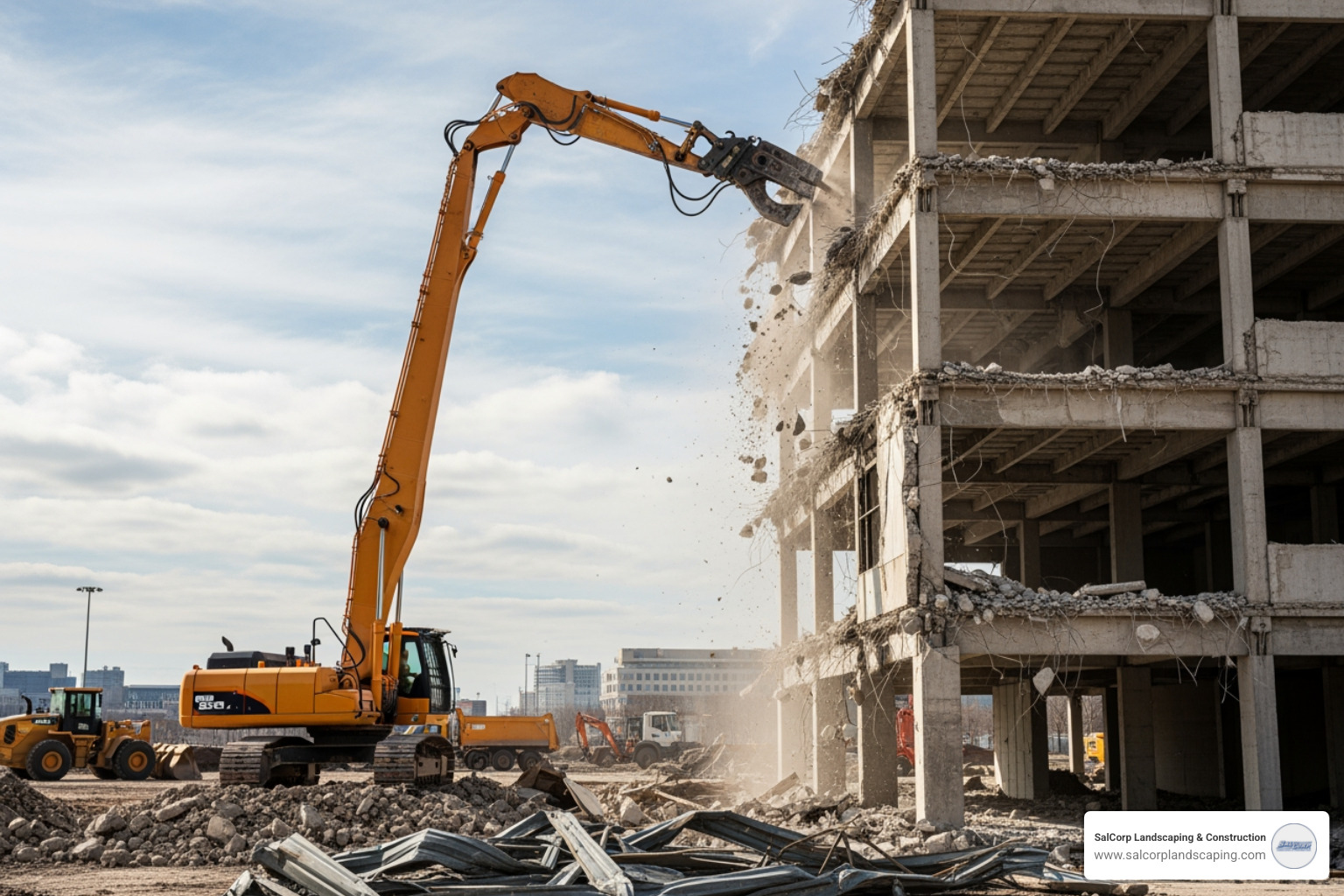
Ensuring safety is paramount in demolition. For comprehensive guidelines, we always refer to official sources, such as Demolition safety guidance from HSE.
Excavation: Shaping the New
Once the old is cleared, excavation sculpts the earth for new construction by moving soil, rock, and other materials.
When is Excavation Required?
Excavation is fundamental for:
- Foundation Digging: Creating space for building foundations, basements, and footings.
- Trenching for Utilities: Laying underground water, sewer, and electrical lines.
- Land Grading and Reshaping: Leveling sites, creating slopes for drainage, and preparing land for roads.
- Land Clearing: Removing topsoil, trees, and rocks to prepare a site.
- Erosion and Slope Repair: Stabilizing slopes and repairing damage.
Our expertise extends to all aspects of Excavation Construction, ensuring your site is perfectly prepared.
Excavation Methods and Techniques
The method depends on the soil type, depth, and purpose:
- Earthmoving: Large-scale removal and relocation of soil for grading or digging basements.
- Trenching: Digging narrow channels for utility lines or footings.
- Backfilling: Refilling an excavated area with compacted soil to create a stable base.
- Grading: Shaping the land to a specific slope for proper drainage.
Typical Steps in an Excavation Project
Excavation requires a systematic approach:
- Site Survey and Planning: A survey identifies soil type, groundwater, and existing underground utilities.
- Premarking and Calling Dig Safe (811): We mark the dig area and contact Dig Safe at least 72 business hours in advance, as required by Massachusetts law, to have utility lines marked.
- Ground Tracing: We precisely trace excavation lines and depths after utilities are marked.
- Excavation and Grading: The actual digging and initial shaping of the land is performed.
- Soil Management: Excavated soil is managed for reuse as backfill or removed from the site.
Excavation Equipment
Our fleet includes the right tools for any excavation challenge:
- Excavators: The primary tool for digging foundations, trenches, and general earthmoving.
- Bulldozers: Used for pushing large quantities of earth and rough grading.
- Backhoes: Versatile machines with both a loader and a digging bucket.
- Skid Steers: Ideal for tight spaces and smaller excavations.
- Trenchers: Specialized machines for efficiently digging narrow utility trenches.
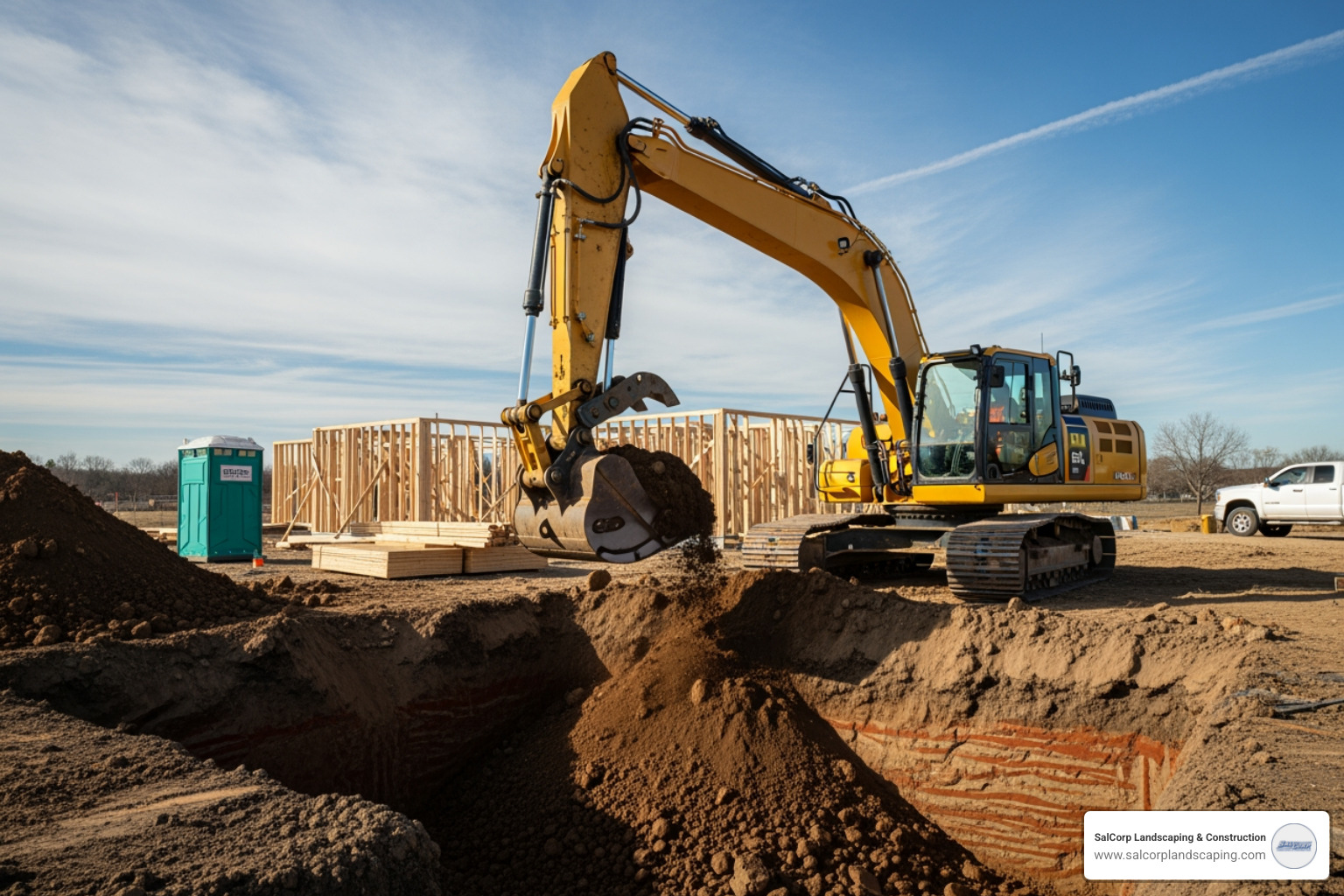
The Crucial Link: How Demolition and Excavation Work Together
Think of demolition and excavation as two acts of the same play: site preparation. They are distinct services, but for most construction projects, they are inextricably linked and performed sequentially.
Project Sequencing: Demolition Before Excavation
When a new structure is to be built on a site where an old one stands, the order is always demolition first, then excavation. You can’t dig a new foundation until the old building is safely removed. This logical flow ensures a clear workspace for each phase, and our team is adept at managing this sequence to minimize downtime.
Site Preparation Process: An Integrated Approach
From residential homes in Walpole to commercial developments in Boston, the site preparation process is integrated. A residential project might involve demolishing an old garage and excavating for a new foundation. Commercial and industrial projects require demolishing existing structures followed by extensive excavation for large foundations, parking areas, and complex utility networks. Hiring a single contractor like SalCorp for both services streamlines this process, avoiding coordination issues and saving time.
| Feature | Demolition | Excavation |
|---|---|---|
| Goal | Remove existing structures | Prepare ground for new construction |
| Primary Action | Dismantling, tearing down, clearing | Digging, moving earth, grading, trenching |
| Key Equipment | High-reach excavators, shears, grapples, pulverizers | Excavators, bulldozers, backhoes, trenchers |
| Final Outcome | Cleared site, debris removed/recycled | Prepared, graded, and stable ground |
Safety, Regulations, and Environmental Impact of Demolition and Excavation
The dynamic nature of demolition and excavation means safety, regulatory adherence, and environmental responsibility are legal and ethical imperatives. We take these responsibilities seriously on every project in Massachusetts.
Safety Considerations and Regulations
Safety is governed by stringent regulations:
- OSHA Standards: Federal OSHA standards provide comprehensive guidelines for demolition and excavation safety, covering fall protection, trenching, and hazard communication.
- Massachusetts State Regulations: Local laws are critical. The Massachusetts Dig Safe Law mandates calling 811 before any digging to prevent utility strikes, with severe penalties for non-compliance. State Trench Safety Regulations (520 CMR 14.00) require securing unattended trenches, and the State Building Code (780 CMR) dictates public protection measures and notifying adjacent properties.
- Site-Specific Safety Plans: We create a custom safety plan for every project, outlining emergency procedures and protocols.
Environmental Considerations
We are committed to minimizing environmental impact:
- Debris Recycling: We prioritize recycling concrete, asphalt, metals, and wood, often exceeding 70% recycling rates on projects to reduce landfill waste.
- Waste and Hazardous Material Disposal: Non-recyclable and hazardous materials (like asbestos or lead paint) are handled and disposed of by certified professionals in compliance with all regulations.
- Site Controls: We implement dust, noise, and erosion control measures to protect the surrounding environment and community.
Common Challenges and Risks
Projects can face challenges like:
- Utility Strikes: Inaccurate utility markings can lead to dangerous strikes.
- Structural Instability: Unforeseen weaknesses can cause premature collapse during demolition.
- Unexpected Ground Conditions: Finding rock or groundwater can cause delays.
- Hidden Hazardous Materials: Finding unexpected asbestos or lead can halt work.
- Weather: Extreme weather can create unsafe conditions and impact timelines.
Contractor Qualifications and Licensing
To mitigate these risks, it’s crucial to hire qualified professionals. In Massachusetts, contractors must be licensed, insured (liability and workers’ compensation), and experienced. Our team at SalCorp is fully licensed and insured, with a commitment to ongoing training and regulatory adherence.
Partnering with the Right Professionals for Your Project
The success of any construction project hinges on the quality of its foundation, which starts with expert demolition and excavation. These initial phases set the stage for everything that follows, impacting timelines, budgets, and safety.
Choosing the right contractor means getting the job done safely, efficiently, and in full compliance with all regulations. For property owners in Massachusetts, hiring a licensed, insured, and experienced team that understands local rules like the Dig Safe law is non-negotiable. SalCorp Landscaping & Construction is an owner-operated business with over 20 years of experience providing comprehensive Excavation and Landscaping solutions with our own fleet of machinery. Our owner, Sal Musto, is on-site to ensure personal oversight on every project, from Walpole and Canton to Needham and Dover.
When you’re ready to clear the way for your next big idea, you need a partner who can expertly manage your site preparation from start to finish. We’re here to help you lay the groundwork for success. Explore our professional excavation services and find how our expertise in demolition and excavation can bring your vision to life.
